 I’ve never received such a shock from reaching into my pocket. Having just emerged from a relaxing float in the Dead Sea, I had snapped a few photos before starting to make my way to my rental car to continue my journey through the desert. But when I reached into my bathing suit pocket to get my car keys my eyes just about popped out of my skull when I realized what I had done. I had left my keys in my pocket while floating on the surface of the dark, murky water. I rushed back to where I had been floating but I knew it was no use – it was impossible to see into the water, and impossible to feel anything at the rocky bottom. I was stranded in the middle of the desert, locked out of my car with only my camera and my wallet.
I had actually just begun my journey through the Dead Sea area, having rented a car in Tel Aviv and driven down intending to visit the ancient fortress of Masada, the Ein Gedi nature preserve and the main Dead Sea spa. I was driving through the West Bank when I reached the sea, and as soon as I saw it I couldn’t contain my excitement. I parked the car at the first spot I could enter the water and rushed in with reckless abandon. So when I realized my horrible error I was literally in the middle of nowhere, with no phone for miles, in the middle of the disputed West Bank territory, in searing 40 degree weather. It was not a good situation!
 In the end I was eventually able to find someone with a mobile phone and I called the car rental company who had to send a taxi from Tel Aviv with a replacement key. I spent the next four hours waiting in the desert for my savior taxi to arrive. Some time and many hundreds of dollars later, I was finally able to get back into my car. But by then the day was over, and it was time to go to Jerusalem. All in all it was a very strange day, trapped in a disputed territory, in the desert, at a sea you can float on.
It was the pinnacle of a very strange trip to Israel. The country was unlike any place I’ve ever been before. For one thing, I’ve never been to the Middle East before. So the landscape and climate was entirely new to me. But more importantly, it was probably the most divided country I’ve ever seen – and not just between Jews and Arabs. I came to discover that the divisions within the Jewish population of Israel are deep and profound.
The bubble
I started my trip in Tel Aviv, staying with my American friend who moved there a few months ago and meeting up with a group of friends from New York. Tel Aviv is an amazing city. It looks very European, having been built from scratch over sand dunes only during the last century. While we were there, a pride parade and party was going on. If I needed any stereotypes about Israel shattered, this was the place to have it happen.
 Tel Aviv is a very liberal and secular city. 44% of Israelis are non-religious, and Tel Aviv is the heart of secular Israel. During my four days in Tel Aviv I don’t think I met a single religious person. Without doubt, I usually see more orthodix Haredim Jews in New York than I did in Tel Aviv (I think I saw one the whole time I was there). Tel Aviv is also very liberal. Most people I met there don’t approve of the Gaza blockade and are opposed to the expansion of settlements in the West Bank.
Many Israelis refer to Tel Aviv as “the bubble”, because it is so disconnected from the realities of war and conflict that are unavoidable in the rest of the country. It is used both derisively by people in the rest of the country as well as with pride by people in Tel Aviv.
But that’s not to say that Tel Aviv residents aren’t fervent nationalists. Israeli flags are everywhere – indeed the only place I’ve ever seen so many national flags is in the US. They even had buckets at the check-out counters of convenience stores where you could buy little flags and banners in bulk, something I’ve definitely never seen outside of the US.
 The preponderance of flags was particularly noticeable during the pride parade, which had as many Israeli flags as it had rainbow flags. Now I’ve definitely never seen that in a pride parade before, and I’ve been to a lot! It was clear the movement for LGBT rights in Israel is very closely linked to Zionism, and I think this is for two reasons. On one hand, Israel is the only country in the Middle East to have any LGBT rights of any kind. Indeed, in many countries in the Middle East being gay is an offense punishable by prison or death. In the occupied Palestinian territories, LGBT people are met with threats and violence. So Israelis know that if Israel ceased to exist, the LGBT community in Palestine would cease to exist.
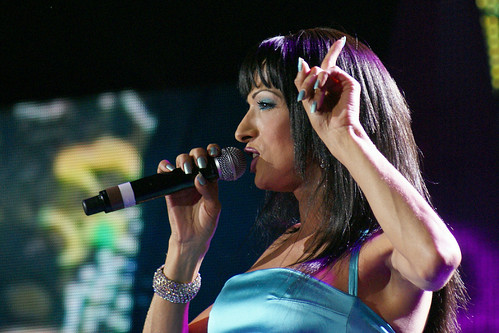 On the other hand, the prominent display of flags is to show the rest of the country that LGBT people are part of the Jewish nation, whether they like it or not. Orthodix Haredim Jews represent only 7% of the population of the country, but they are politically powerful and have been zealous in their opposition to LGBT rights. A few years ago when a pride parade was attempted in Jerusalem, one of the marchers was stabbed by a Haredim Jew. And when transsexual Dana International won the Eurovision song contest in 1998 the Orthodox community practically rose up in revolt. Displaying flags and strongly affirming Zionism is a way for the LGBT community to vocally affirm that they too are part of the Jewish nation. This is perhaps best exemplified by the fact that the most popular drag queen in Tel Aviv is named ‘Ziona Patriot’.
A nation divided
The divisions between Jews and Arabs in Palestine may be obvious, but what I was really surprised by are the divisions within the Jewish population. For one thing there are still strong divisions between Ashkenazi Jews, who came to Israel from Europe, and Sephardic Jews, who came to Israel from the Middle East and North Africa. The dark-skinned Sephardim make up 40% of the Israeli Jewish population, yet right from the founding of the nation they have been discriminated against by white Ashkenazi Jews. Part of the reason for this is that Ashkenazi Jews were the first to migrate to Palestine in the early 20th century, and they then helped bring Sephardic Jews from the Middle East to the country (particularly after the sephardim were expelled by Arab countries after 1948). There has long been a stereotype among Ashkenazim that the Sephardim are lazy and ungrateful for the ‘opportunity’ they’ve been afforded by being moved to Israel.
 Now I had heard that these kind of prejudices have gone the way of the dodo, and that today there is much intermarriage and comingling within the two groups. While I could tell that this is definitely true, I still observed that social cliques still seem to be divided between white and brown. Still, I did see many mixed Sephardim-Ashkenazi couples. But I also observed how the new Russian arrivals (Jews who were able to leave the Soviet Union in the ‘90s after its collapse) are now at the lowest point on the totem pole. Perhaps Sephardim are only now gaining acceptance as equal members of the Jewish state because they’ve been replaced by an even newer arrival, much like how Italians and Irish were accepted in the United States after new waves of immigrants arrived.
The other big division within Israeli Jews is between the secular and the religious. This is exemplified by the difference between what are, in effect, the two co-capitals of Israel – Tel Aviv and Jerusalem. Nobody I met in Tel Aviv had anything nice to say about Jerusalem. When I asked people if I should stay the night there, everyone said ‘no, it’s not worth it, it’s boring,’ etc. In Jerusalem, they seem to have the same attitude toward Tel Aviv. Tel Avivers seem to think Jerusalemites are religious fanatics, Jerusalemites seem to think Tel Avivers are hedonistic and irresponsible.
Religions stacked upon one another
 And if you want to see divisions, Jerusalem is the place to be. I entered the city after my little adventure at the dead sea, already feeling a bit overwhelmed and stressed. But as soon as I started walking around this city, this overwhelmed feeling just about tripled. You can literally feel the tension in the air in this city, particularly in the old city. It’s divided into three quarters – Jewish, Muslim and Christian. All three religions have major holy sites in the city. The Church of the Holy Sepulchre, in the heart of the Christian quarter, is supposedly the site at which Jesus was crucified. The Dome of the Rock mosque, in the Muslim Quarter, is supposedly the spot at which Mohammed ascended to Heaven on a night journey. Just below it, Jews pray at one of the walls holding the mosque up because it is the only remnant of their sacred temple that was destroyed by the Romans two centuries ago.
 The Temple Mount itself is an incredible intersection of the three religions. Originally it was the main Jewish temple, the center of Jewish life. After it was destroyed by the Romans and the Jews were expelled from Jerusalem, the Byzantine Christians moved in and built a massive cathedral over its ruins, and for hundreds of years Jerusalem was a Christian city. But when the Muslims invaded, they destroyed the cathedral and in turn built a mosque over its ruins. It’s as if the three religions just started getting stacked on top of one another. Perhaps some day a fourth will come along and add another layer.
 I must say I felt very overwhelmed and humbled by being in this city. But beyond the strange intersection of religions, it was incredible to think that I was in disputed territory, where war could break out at any moment. From 1948 to 1968 the old city was part of Jordan, and Jews were refused access to the Western wall. But when Israel won the war and took over Jerusalem, they allowed Muslims exclusive access to the Dome of the Rock mosque, even refusing to allow non-Muslims into it. That’s how the situation remains today, and you can cut the tension in there with a knife. But one other thing was painfully obvious when I was in the old city – it just looks Arab. The Christian quarter is all Arabs, so really the only Jewish part of the Old City is the Jewish quarter. And I have to say, every time I saw a white Ashkenazi Jewish face inside the old city it looked somehow incongruous.
 Once you exit the old city you are in the city center, or the ‘new city’. This part is like another world from what is just on the other side of the old city walls. It is modern, full of chain stores, and contains a sea of white faces. The contrast couldn’t have been more stark. But then again, these old city walls were an international border between two warring states for 20 years.
 Overall it was an amazing experience, and I feel like I came out of it understanding Israel much better as a state. In a way I feel like I went on two different trips, one fun holiday to the secular Tel Aviv, and one ‘pilgrimage’ of sorts to the intense, religious Jerusalem and Dead Sea. Each showed me a different side of Israel, and made me think about the conflict in new ways. One thing is for sure, I will never forget my day stranded in the desert at the Dead Sea.

3 comments:
Sounds like a real adventure! I enjoyed this article very much
Regarding who's high on the totem pole, I think you neglected the Falasha Jews, although they are probably not even allowed on to the pole at all.
They are the Ethiopic jews from a much earlier strand of Judaism than the one in Europe, New York and the movies. They were also much more integrated with their Christian (and Muslim) context in Ethiopia and they had to keep their faith secret for a long time, adapting some of the religious practices while influencing the practices of other Ethiopians.
This together prevents them from fully being accepted in Israel and integrating into society.
With RentalCars you can discover the most affordable rental cars at over 49,000 locations worldwide.
Post a Comment