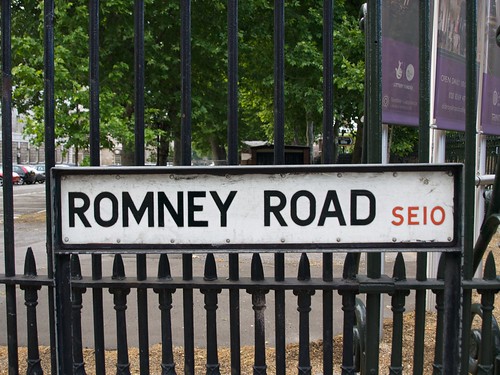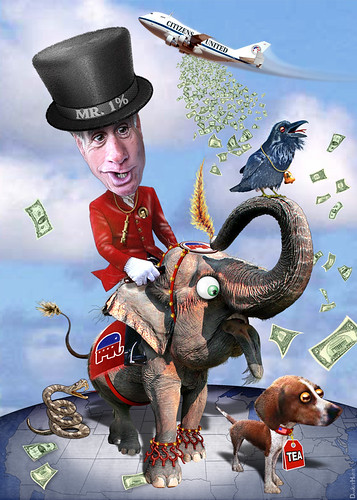
If the aim of Mitt Romney’s ‘world tour’ over the past week was to demonstrate his ability to tactfully represent the United States on the world stage, it’s safe to say the trip had the opposite effect. Professing to be on a quest to ‘restore relations with America’s most important strategic allies’, Romney managed to cause grave offense in all three of the countries he visited.
It started badly and quickly went from bad to worse. Even before he touched down in London last Wednesday, his campaign had raised eyebrows when an advisor said that Barack Obama was unable to understand the “common Anglo-Saxon heritage” of the US and the UK. Given that in English this term only refers to the Germanic tribes of Southwest England (unlike the "free-market capitalism" meaning it has in France), it came off as shockingly racist – i.e., a black man cannot understand the common Germanic heritage of the English and their descendants.
Romney then managed to enrage the British public by casting doubt on their readiness to host the Olympic Games, telling a US journalist in London that the UK’s preparedness was “not encouraging.” This sent the British media into a frenzy of anti-Romney headlines, such as “Mitt the Twit” (The Sun, owned by Rupert Murdoch) and “Who invited Party-Pooper Romney?” (The ultra-conservative Daily Mail). He even managed to enrage Conservative British Prime Minister David Cameron, who quipped at a press conference, "Of course it's easier if you hold an Olympic Games in the middle of nowhere." (Romney ran the 2002 Winter Olympics in Salt Lake City, Utah). Even London mayor Boris Johnson, himself a gaffe-magnet, used Mitt Romney’s name when speaking to crowds asif describing some kind of panto villain, quickly followed with boos from assembled Olympics-lovers.
Showing posts with label Israel. Show all posts
Wednesday, 1 August 2012
Wednesday, 25 July 2012
Romney's 'apology for the apology' tour
Mitt Romney has arrived in London today, the first stop on a three-country tour meant to shore up his foreign policy credentials. His tour opened with a remarkably tone-deaf gaffe by a campaign staffer, who told British newspaper The Telegraph that Barack Obama cannot understand the common “Anglo-Saxon heritage” of the US and the UK.
The advisor was likely using the term in the continental European context, which refers to the free-market economic heritage of English-speaking countries. He was likely trying to make some 'Obama as Socialist' characterisation. But this definition is unknown in the English-speaking countries themselves, where the term is a seldom-used ethnic description of English descent (ie, from the Germanic tribes who settled in Southwest England). So it ended up just coming off as shockingly racist. Stephen Colbert hilariously summed up the bemused reaction of Americans to the comment.
It’s a bad start to what is a very important foreign tour for Romney. Over the next few days he will be meeting with virtually every high level politician in the UK. On Friday he will attend the Olympics opening ceremony, surely excited about the prospects for his horse-dancer in the dressage competition.
The Republican presidential candidate’s choice of three countries for this visit is highly significant. After his visit to the UK he will fly to Israel, where he will make a series of high-profile appearances. He will then finish his tour in Poland. All three are countries which the Romney campaign has accused the Obama administration of at best ignoring, and at worst insulting.
The advisor was likely using the term in the continental European context, which refers to the free-market economic heritage of English-speaking countries. He was likely trying to make some 'Obama as Socialist' characterisation. But this definition is unknown in the English-speaking countries themselves, where the term is a seldom-used ethnic description of English descent (ie, from the Germanic tribes who settled in Southwest England). So it ended up just coming off as shockingly racist. Stephen Colbert hilariously summed up the bemused reaction of Americans to the comment.
It’s a bad start to what is a very important foreign tour for Romney. Over the next few days he will be meeting with virtually every high level politician in the UK. On Friday he will attend the Olympics opening ceremony, surely excited about the prospects for his horse-dancer in the dressage competition.
The Republican presidential candidate’s choice of three countries for this visit is highly significant. After his visit to the UK he will fly to Israel, where he will make a series of high-profile appearances. He will then finish his tour in Poland. All three are countries which the Romney campaign has accused the Obama administration of at best ignoring, and at worst insulting.
Friday, 18 May 2012
Eurovision under attack…by Iran
Azerbaijan’s
close historical and ethnic relationship with Iran is causing
discomfort in the lead-up to the Eurovision Song Contest final next weekend, hosted in Baku.
Last week angry Iranian demonstrators, probably government-organised, surrounded the Azerbaijani consulate in Tabriz condemning the country for hosting
a ‘gay contest’.
This week a Eurovision news website was attacked by Azeri hackers in protest of Eurovision, which they said was a “gay pride event”. It is not yet known whether these were Azeris in Azerbaijan or Iran - but the later is more likely.
The contest organisers have appeared unsure of how to respond to the protests. Eurovision is, after all, not actually a “gay event” as the Iranians have claimed. But it is true that it has a large gay following, and there has been concern about the safety of the many gay fans who will be converging on Baku this week for the show.
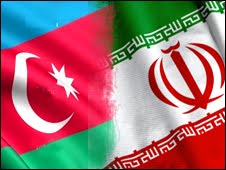
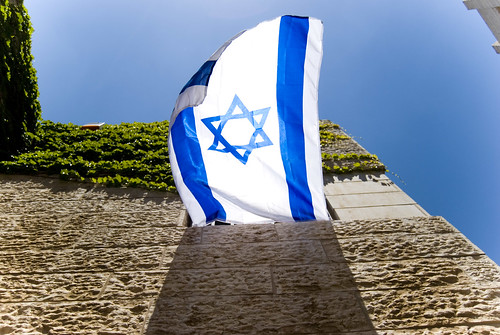
Azerbaijan, as is evident from its flag, is a Muslim country. But given that the former Soviet Socialist Republic is largely secular, it has been a matter of speculation whether this would cause problems for gay fans (homosexuality was decriminalised in the country in 2000, in order to join the Council of Europe). Turkey, another Muslim but nominally secular country, hosted the contest in 2004 without incident.
But interestingly, much of the religious-based resistance to the hosting of the conference has come from neighbouring Iran, where the majority (3/4) of the Azerbaijani people live. Iran’s population is 30% Azerbaijani.
This week a Eurovision news website was attacked by Azeri hackers in protest of Eurovision, which they said was a “gay pride event”. It is not yet known whether these were Azeris in Azerbaijan or Iran - but the later is more likely.
The contest organisers have appeared unsure of how to respond to the protests. Eurovision is, after all, not actually a “gay event” as the Iranians have claimed. But it is true that it has a large gay following, and there has been concern about the safety of the many gay fans who will be converging on Baku this week for the show.
Azerbaijan, as is evident from its flag, is a Muslim country. But given that the former Soviet Socialist Republic is largely secular, it has been a matter of speculation whether this would cause problems for gay fans (homosexuality was decriminalised in the country in 2000, in order to join the Council of Europe). Turkey, another Muslim but nominally secular country, hosted the contest in 2004 without incident.
But interestingly, much of the religious-based resistance to the hosting of the conference has come from neighbouring Iran, where the majority (3/4) of the Azerbaijani people live. Iran’s population is 30% Azerbaijani.
Friday, 23 March 2012
Don’t mention the Gaza
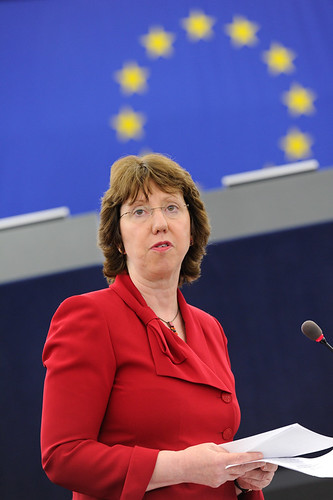
EU foreign policy chief Catherine Ashton was the object of fury in Israel this week - with the press, the pundits and even the prime minister all calling for her immediate sacking. Her crime? Mentioning the fact that children have been killed in Gaza.
Ashton was attending a Brussels conference on the subject of Palestinian children refugees on Monday when news came that three children had been shot and killed at a Jewish school in Toulouse, France. When she took to the podium to address the conference, Ashton broke the news. She then talked about how sad it is when a child loses a life, bringing up last week’s bus accident in Switzerland where 22 Belgian children were killed.
“The Belgian children have lost their lives in a terrible tragedy. And when we think of what happened in Toulouse today, when we remember what happened in Norway a year ago, when we know what is happening in Syria, when we see what is happening in Gaza and Sderot [Israel], in different parts of the world — we remember young people and children who lose their lives,” she told the audience (video here).When news of her comments reached Israel, the reactions were swift and furious. Israeli papers said her comparison of the shooting of innocent Jewish children with the deaths of Palestinian children during Israeli shelling of Gaza was “grotesque”. They labelled Ashton as anti-Semitic, people compared her to a Nazi, and the papers demanded her immediate removal from office.
Sunday, 25 September 2011
Palestinian UN bid divides Europe
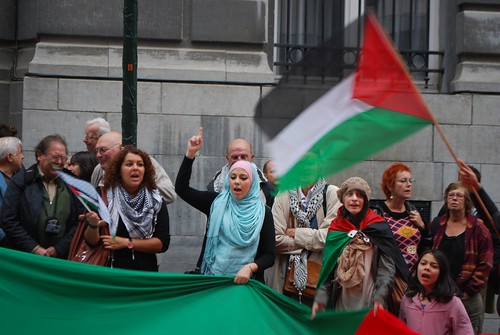
I'm at JFK about to fly back to Brussels, and all around the airport you can see signs of this week's general assembly at the United Nations. I saw several pro-Israel and pro-Palestine demonstrations scattered around the city over the past few days, mostly outside hotels where I assume diplomats and leaders were staying.
Despite the best efforts of the United States and her allies to convince him not to, Palestinian National Authority President Mahmoud Abbas went ahead on Friday with his request to have the UN recognise Palestine as a 'non-voting observer' member. The machinations around this have been described as a slow-motion "diplomatic car crash" by diplomats. Coming as it does in the middle of the 'Arab spring', the United States knows it will look bad if they use their veto in the security council to deny the request. On the other hand, their close alliance with Israel means that the US government believes it has no choice but to veto the move.
But will the US be the only one to issue the veto? And which US allies will support the bid in a full assembly vote? Europe is showing characteristic disunity on the issue. France, which also holds veto power on the security council, is supporting the Palestinian bid. Spain, Portugal, Greece, Belgium and Luxembourg have joined France with their support.
Thursday, 10 March 2011
Can the EU rebuild the Arab world like the US rebuilt Europe?
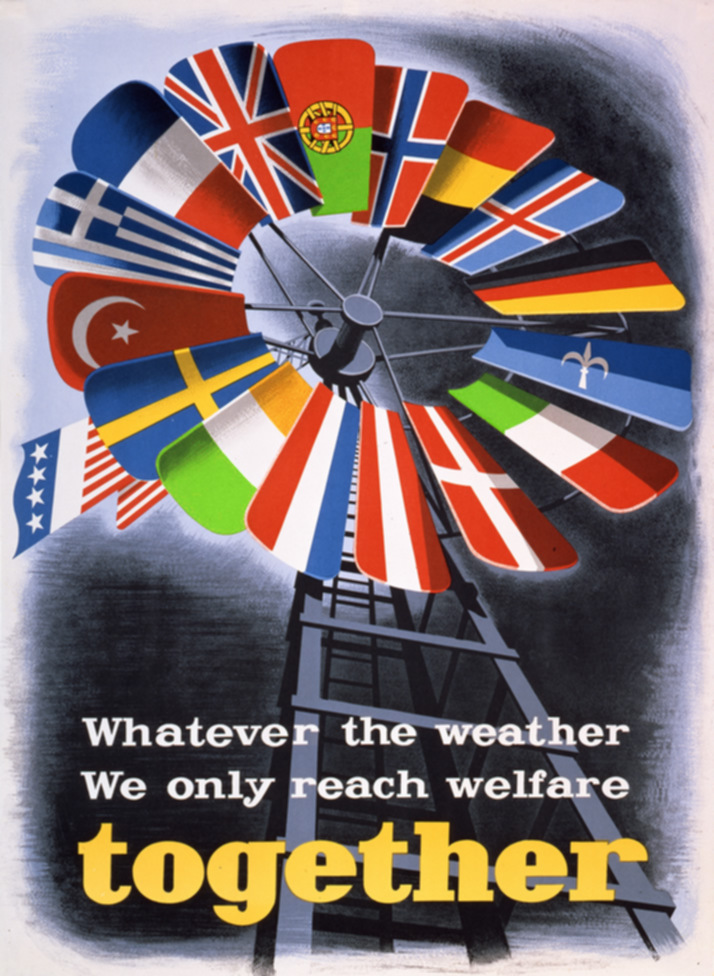
Spanish prime minister Jose Luis Rodriguez Zapatero has called on the West to create a new 'Marshall Plan for Arab states' in response to the current unrest. Such a plan, modeled on the wildly successful scheme launched by the United States in 1947 to rebuild war-ravaged Europe, would be designed to give new Arab governments the financial support they need to build stable democracies. More implicitly, it would provide a bulwark against Islamism in the same way that the Marshall Plan successfully provided a bulwark against Communism in Western Europe.
Europe is still still haunted by its failure to do anything to prevent the chaos that unfolded in its own backyard in the 1990s during the Balkan Wars. The calls for quick decisive action are coming from every corner. Most politicians now acknowledge that financial support is going to be needed, but there is disagreement about who should supply it. These thorny issues will be discussed tomorrow at a special summit of EU leaders in Brussels to discuss the crisis in Libya.
At the European Union level, there has now been begrudging admittance that the union's approach to its Southern neighbours has until this point been a misguided failure. Valuing stability and protection of Israel above all else has led to the European Union and the United States ploughing billions of dollars into despotic regimes over the past decades, earning them the enmity of the Arab street. For the EU, most of this aid was distributed through the European Neighbourhood Policy (ENP), which gives financial and political assistance to the EU's neighbours.
€2.8bn in assistance has already been pledged to the Middle East and North Africa over the next three years through the ENP. Now that it is clear that a much larger amount than this is going to be needed to support budding Democracy movements, there are questions over whether the ENP is the best tool to use. Southern European countries have long complained that the ENP was always more focused on the EU's Eastern neighbours than those to the South. Why not give the Southern Mediterranean its own new, dedicated assistance vehicle?
Monday, 7 March 2011
Germany still world's most popular country
The figures are in, and Germany has again taken the top spot in the BBC's annual poll of nations' popularity - with 62% of those surveyed ranking its influence as positive for the world. The UK was the next most-loved country, rising to second place in its highest ever placing in the annual poll.
But while Germany and the UK sit at the cool kids' table in the world lunchroom, over in the losers corner sit Iran, North Korea, Pakistan and Israel, all ranked as the most unpopular countries. The United States was ranked seventh in popularity out of the 16 countries respondents had to choose from, polling behind Canada, France, Japan and Brazil.
Friday, 18 June 2010
Diversions and divisions in Israel
I had actually just begun my journey through the Dead Sea area, having rented a car in Tel Aviv and driven down intending to visit the ancient fortress of Masada, the Ein Gedi nature preserve and the main Dead Sea spa. I was driving through the West Bank when I reached the sea, and as soon as I saw it I couldn’t contain my excitement. I parked the car at the first spot I could enter the water and rushed in with reckless abandon. So when I realized my horrible error I was literally in the middle of nowhere, with no phone for miles, in the middle of the disputed West Bank territory, in searing 40 degree weather. It was not a good situation!
Tuesday, 8 June 2010
Israel: in concept and in reality
It wasn’t so much surprising as it was illustrative. During my four years living in Europe I’ve seen firsthand how different the European media’s coverage of the Israeli-Palestinian conflict is from the American media’s portrayal. They’re two sides of a coin, and the truth is probably somewhere in the middle. It’s rare to see any criticism of Israel in American media or from American politicians, whether from the left or from the right. The main emphasis is usually on the Israeli need for security. In Europe, the main emphasis tends to be on the occupation, and the security concerns of Israel aren’t addressed as frequently.
Monday, 14 July 2008
Club Med: Levant Becomes the Focus
Though French president Nicolas Sarkozy's ambitious original plans for a Mediterranean Union have been dramatically scaled down, the group still had its first meeting yesterday in Paris.
Sarkozy was practically beaming after the meeting, calling his idea for the Mediterranean Union an “extraordinary concept,” and heralding the fact that the meeting was able to get Arab leaders and the Israeli leader in the same room. While it's still debatable what impact this new union will actually have, and whether it can really accomplish any of the goals it has set out, it was interesting to see where the media focus on the event seemed to fall.
From the time Sarkozy first suggested the concept during the French presidential campaign last year, the language was always about a union between the “North” and “South” Mediterranean, with seeming focus being on North Africa, the majority of which was formerly held by the French. But the media coverage of yesterday’s event was largely focused on the Levant. The Syrian and Lebanese leaders, both in attendance, said yesterday that the two countries might establish diplomatic relations for the first time in their history. And the Israeli leader said a peace deal with the Palestinians had never been closer. There was also a theoretical statement by the leaders saying they would like to keep the region “free of weapons of mass destruction.” Here's the coverage from ITN:
But there were also significant initiatives announced at the meeting that had nothing to do with the Middle East peace process, including a high-speed rail network from Casablanca to Istanbul, a plan to make the Mediterranean the cleanest sea in the world by 2020 and the development of a common emergency response force to deal with natural disasters in the region. For now though, it was the diplomatic aspects of the meeting that attracted most of the media attention.
Interestingly, with all the talk of the MidEast peace process and further governmental and economic ties, there was no talk about Democracy, or the lack of it, in the Middle East and North Africa. Perhaps such lecturing would have been counter-productive to the larger goal of bridging gaps between the North and South Mediterranean, but it was an interesting omission nonetheless.
Sarkozy was practically beaming after the meeting, calling his idea for the Mediterranean Union an “extraordinary concept,” and heralding the fact that the meeting was able to get Arab leaders and the Israeli leader in the same room. While it's still debatable what impact this new union will actually have, and whether it can really accomplish any of the goals it has set out, it was interesting to see where the media focus on the event seemed to fall.
From the time Sarkozy first suggested the concept during the French presidential campaign last year, the language was always about a union between the “North” and “South” Mediterranean, with seeming focus being on North Africa, the majority of which was formerly held by the French. But the media coverage of yesterday’s event was largely focused on the Levant. The Syrian and Lebanese leaders, both in attendance, said yesterday that the two countries might establish diplomatic relations for the first time in their history. And the Israeli leader said a peace deal with the Palestinians had never been closer. There was also a theoretical statement by the leaders saying they would like to keep the region “free of weapons of mass destruction.” Here's the coverage from ITN:
But there were also significant initiatives announced at the meeting that had nothing to do with the Middle East peace process, including a high-speed rail network from Casablanca to Istanbul, a plan to make the Mediterranean the cleanest sea in the world by 2020 and the development of a common emergency response force to deal with natural disasters in the region. For now though, it was the diplomatic aspects of the meeting that attracted most of the media attention.
Interestingly, with all the talk of the MidEast peace process and further governmental and economic ties, there was no talk about Democracy, or the lack of it, in the Middle East and North Africa. Perhaps such lecturing would have been counter-productive to the larger goal of bridging gaps between the North and South Mediterranean, but it was an interesting omission nonetheless.
Wednesday, 26 July 2006
US continues support of Lebanon war
The Rome summit on the future of the Middle East has wrapped up, and it was a bit of a fiasco. Condoleezza Rice is trying to sell Arab nations on her theory of “creative chaos,” in which the blood being shed in the middle east is somehow for the greater good. This is a preposterous claim and everyone knows it, including Rice. But it is the only way to buy more time for Israel to achieve it’s objective.
One problem: its objective is impossible.
Israel has set it’s goal as the eradication of Hezbollah. Even in the best circumstances this goal is impossible to meet, and these have not been the best circumstances. Israel has been caught off guard by the ferocity of Hezbollah’s defense, and especially by their ability to fire rockets deep into Israeli territory. Their “surgical strikes” have seemed to be anything but. So far Israel has killed more than 400 Lebanese, of which only 12 are known to have been members of Hezbollah. All the while the group continues to fire rockets into Israel, showing it has barely been scratched.
One problem: its objective is impossible.
Israel has set it’s goal as the eradication of Hezbollah. Even in the best circumstances this goal is impossible to meet, and these have not been the best circumstances. Israel has been caught off guard by the ferocity of Hezbollah’s defense, and especially by their ability to fire rockets deep into Israeli territory. Their “surgical strikes” have seemed to be anything but. So far Israel has killed more than 400 Lebanese, of which only 12 are known to have been members of Hezbollah. All the while the group continues to fire rockets into Israel, showing it has barely been scratched.
Wednesday, 19 July 2006
Turkey invading Iraq?
As if things in the Middle East weren't bad enough, today it was revealed that Turkey may take a page from the Israeli playbook and invade Northern Iraq, one of the disaster scenarios that was posited before the war began.
The North of Iraq, which is predominantly Kurdish and controlled as an autonomous zone, has been the most stable and nonviolent part of the country since the occupation. This has mainly been because Kurds are sitting back and watching Sunni and Shia Arabs kill each other, hoping that if they wait it out eventually the country will break apart and an independent Kurdestan will be formed.
It would not be in their interest right now to attack American or Iraqi troops (neither of which can be found in great number in the North anyway). But it is in their interest to antagonize Turkey, because many Kurds hope that an independent Kurdestan will also include the Kurdish areas of Turkey and Iran.
Tuesday, 11 July 2006
So many hijackings
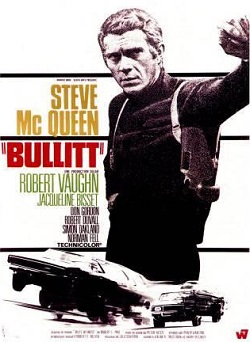
Last night my coworkers and I had a little office outing to Bryant Park for one of the HBO movie nights. They were showing Bullitt, made in 1968, apparently some kind of milestone in the action movie genre for its groundbreaking car chase. I found myself staring at the screen in bewilderment, wondering why anyone would voluntarily subject themselves to this movie, but that’s just me. Action movies, not really my thing.
Anyway at one point in the movie the detective, played by Steve McQueen, has to arrest this guy on an airplane which is about to take off. The control tower tells the plane to return to the loading dock and have the passengers disembark. As they’re leaving the plane McQueen boards and heads toward the criminal. The criminal proceeds to stand up, run to the back of the plane, open the back door, jump out and run out onto the tarmac. McQueen gives pursuit, and the criminal pulls a gun out of his pocket and starts shooting at him. For some reason McQueen seems to have forgotten he has a gun, or chooses not to use it. He proceeds to chase the main through the airport, which seems to be operating normally even though there’s a gun-wielding maniac running around the tarmac.
Now by this point in the movie I was willing to suspend my disbelief. After all the whole thing made absolutely no sense. But this seemed ludicrous. How did he get on the plane with a gun? How was he able to open the back hatch? Why isn’t the airport being evacuated? Why are planes still taking off??
Anyway at one point in the movie the detective, played by Steve McQueen, has to arrest this guy on an airplane which is about to take off. The control tower tells the plane to return to the loading dock and have the passengers disembark. As they’re leaving the plane McQueen boards and heads toward the criminal. The criminal proceeds to stand up, run to the back of the plane, open the back door, jump out and run out onto the tarmac. McQueen gives pursuit, and the criminal pulls a gun out of his pocket and starts shooting at him. For some reason McQueen seems to have forgotten he has a gun, or chooses not to use it. He proceeds to chase the main through the airport, which seems to be operating normally even though there’s a gun-wielding maniac running around the tarmac.
Now by this point in the movie I was willing to suspend my disbelief. After all the whole thing made absolutely no sense. But this seemed ludicrous. How did he get on the plane with a gun? How was he able to open the back hatch? Why isn’t the airport being evacuated? Why are planes still taking off??
Subscribe to:
Comments (Atom)