The combination of balkanised authorities and a marginalised North African population has made Brussels a natural terrorism hub.
I’m here in Brussels this week, doing a few TV spots and moderating some conferences. As soon as I arrived at the airport last night, I could sense the tension in the city as a result of this weekend's terrorist attack in Paris.
As I rode the nearly empty tram to my Brussels apartment, a group of young North African men got on the tram, engaged in a heated argument amongst themselves about the recent attacks (they were debating whether or not it was justified). I stopped into my local kebab joint and found another discussion between the Moroccan owners and a white Belgian customer, about how the authorities should respond. Outside, sirens wailed as police searched the city for one of the attackers believed to be on the loose in the city.
Showing posts with label Islam. Show all posts
Tuesday, 17 November 2015
Monday, 4 June 2012
Burqa ban leads to rioting in Brussels
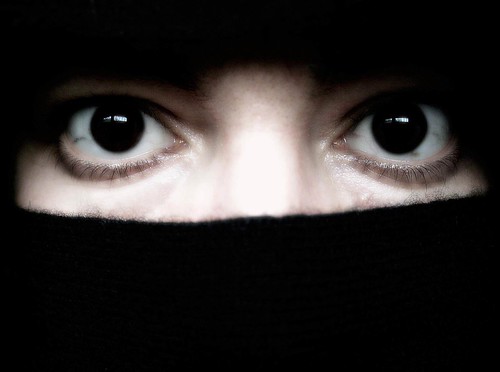
The area of Molenbeek in Brussels was the scene of low-level rioting at the end of last week following the arrest of a woman for wearing a full face-covering niqab. It is the largest and most violent incident of resistance since France and Belgium enacted bans on face-covering in 2010 and 2011.
For those who oppose the burqa ban, the rioting is evidence that it is causing more problems than it solves and giving the garment more power as a symbol of resistance. For those who support the ban, the rioting is evidence that the state was right to take a stand against the increasing radicalisation they say is taking place among Belgium’s sizable Muslim minority of mainly North Africa immigrants.
On Thursday, Brussels police arrested a 23-year-old woman in Molenbeek – one of the neighborhoods of Brussels with a very high Muslim population at over 50% - for refusing to take off her face covering. That night, police say about 100 people surrounded the Molenbeek police station where she was being held, throwing stones at officers. A large number of riot police were deployed, giving the area the feeling of a city under siege. After Muslim prayers on Friday afternoon additional skirmishes broke out in the area, forcing the authorities to shut down some metro stations. The police say the violent demonstrations were organised by the group Shariah4Belgium
For those who oppose the burqa ban, the rioting is evidence that it is causing more problems than it solves and giving the garment more power as a symbol of resistance. For those who support the ban, the rioting is evidence that the state was right to take a stand against the increasing radicalisation they say is taking place among Belgium’s sizable Muslim minority of mainly North Africa immigrants.
On Thursday, Brussels police arrested a 23-year-old woman in Molenbeek – one of the neighborhoods of Brussels with a very high Muslim population at over 50% - for refusing to take off her face covering. That night, police say about 100 people surrounded the Molenbeek police station where she was being held, throwing stones at officers. A large number of riot police were deployed, giving the area the feeling of a city under siege. After Muslim prayers on Friday afternoon additional skirmishes broke out in the area, forcing the authorities to shut down some metro stations. The police say the violent demonstrations were organised by the group Shariah4Belgium
Friday, 18 May 2012
Eurovision under attack…by Iran
Azerbaijan’s
close historical and ethnic relationship with Iran is causing
discomfort in the lead-up to the Eurovision Song Contest final next weekend, hosted in Baku.
Last week angry Iranian demonstrators, probably government-organised, surrounded the Azerbaijani consulate in Tabriz condemning the country for hosting
a ‘gay contest’.
This week a Eurovision news website was attacked by Azeri hackers in protest of Eurovision, which they said was a “gay pride event”. It is not yet known whether these were Azeris in Azerbaijan or Iran - but the later is more likely.
The contest organisers have appeared unsure of how to respond to the protests. Eurovision is, after all, not actually a “gay event” as the Iranians have claimed. But it is true that it has a large gay following, and there has been concern about the safety of the many gay fans who will be converging on Baku this week for the show.
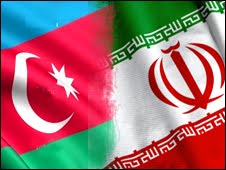
Azerbaijan, as is evident from its flag, is a Muslim country. But given that the former Soviet Socialist Republic is largely secular, it has been a matter of speculation whether this would cause problems for gay fans (homosexuality was decriminalised in the country in 2000, in order to join the Council of Europe). Turkey, another Muslim but nominally secular country, hosted the contest in 2004 without incident.
But interestingly, much of the religious-based resistance to the hosting of the conference has come from neighbouring Iran, where the majority (3/4) of the Azerbaijani people live. Iran’s population is 30% Azerbaijani.
This week a Eurovision news website was attacked by Azeri hackers in protest of Eurovision, which they said was a “gay pride event”. It is not yet known whether these were Azeris in Azerbaijan or Iran - but the later is more likely.
The contest organisers have appeared unsure of how to respond to the protests. Eurovision is, after all, not actually a “gay event” as the Iranians have claimed. But it is true that it has a large gay following, and there has been concern about the safety of the many gay fans who will be converging on Baku this week for the show.
Azerbaijan, as is evident from its flag, is a Muslim country. But given that the former Soviet Socialist Republic is largely secular, it has been a matter of speculation whether this would cause problems for gay fans (homosexuality was decriminalised in the country in 2000, in order to join the Council of Europe). Turkey, another Muslim but nominally secular country, hosted the contest in 2004 without incident.
But interestingly, much of the religious-based resistance to the hosting of the conference has come from neighbouring Iran, where the majority (3/4) of the Azerbaijani people live. Iran’s population is 30% Azerbaijani.
Wednesday, 30 November 2011
Brussels – enter at your own risk
News of the attack, which has been spreading like wildfire through social media all week, seems to have left the city’s gay community shocked yet unsurprised at the same time. The storyline has become a familiar one in Brussels. Three drunk men entered the café, began hurling homophobic abuse at the people inside, and before long a violent altercation ensued. The details of what took place are still unclear, but the incident was serious enough to shut the doors of this Brussels landmark since Sunday. And although homophobic attacks are unfortunately common in Brussels city centre - an area of the city that is known for its crime and grime - this incident has still caused huge shock because the establishment is so well-known. Even the soon-to-be Belgian prime minister, who is openly gay, can often be seen there.
A movement has been growing to try to pressure the city authorities to do more to keep the city centre safe since a gay-bashing attack in June that many saw as the straw that broke the camel's back. A man was beaten by a group of young men near the Bourse (stock exchange), just next to Grand Place, because he was gay and behaving in an effeminate manner.
Friday, 29 July 2011
Where does the Norway shooting leave Europe’s conservatives?
Last week’s far right terrorist attack in Norway has prompted a lot of questions in European capitals, and many of the hardest questions are being asked inside the party headquarters of Europe’s center-right. Many of Europe's conservative parties have spent the last few years courting the far right vote, by co-opting some of their messages on immigration and cultural identity issues. In several countries including Denmark, Italy and the Netherlands the mainstream conservative parties have even allied themselves with the far right and invited them into governing coalitions. After the Norway attack, are those days over?
To answer this question, one must understand the current political balance in Europe, and why it has come about. Conservative parties now dominate the national governments of Europe as well as the EU institutions, relegating the left to just a few Southern countries. The Guardian put out a great interactive map today where you can trace Europe’s left-right balance over the past 50 years. Contrast the map just ten years ago in 2001 on the left with today’s situation in 2011 on the right (left-of-center in red and right-of-center, including Liberal parties, in blue). Considering that Spain and Greece now have their policies dictated to them by their conservative Northern European creditors, the left has effectively disappeared from Europe.
So why has Europe veered rightward at a time of economic crisis? There are probably many contributing factors – but the biggest cause is the complete disarray of the European left. From Scandinavia to Germany to France to Italy, European Social Democrats are in complete chaos, torn by infighting, a lack of enthusiasm and confusion over ideology. Europeans have voted conservative not because of some great ideological shift toward economic liberalism and laissez-faire capitalism. They have done so because the parties of the left have not offered any credible alternative for governance.
To answer this question, one must understand the current political balance in Europe, and why it has come about. Conservative parties now dominate the national governments of Europe as well as the EU institutions, relegating the left to just a few Southern countries. The Guardian put out a great interactive map today where you can trace Europe’s left-right balance over the past 50 years. Contrast the map just ten years ago in 2001 on the left with today’s situation in 2011 on the right (left-of-center in red and right-of-center, including Liberal parties, in blue). Considering that Spain and Greece now have their policies dictated to them by their conservative Northern European creditors, the left has effectively disappeared from Europe.
So why has Europe veered rightward at a time of economic crisis? There are probably many contributing factors – but the biggest cause is the complete disarray of the European left. From Scandinavia to Germany to France to Italy, European Social Democrats are in complete chaos, torn by infighting, a lack of enthusiasm and confusion over ideology. Europeans have voted conservative not because of some great ideological shift toward economic liberalism and laissez-faire capitalism. They have done so because the parties of the left have not offered any credible alternative for governance.
Wednesday, 29 June 2011
Dutch to ban halal and kosher animal slaughter
The Dutch parliament has voted overwhelmingly to ban ritual slaughter of livestock that does not stun the animal beforehand. This would ban the production of halal and kosher meat in the country, which is the only kind of meat that can be consumed by strictly religious Muslims and Jews, respectively.
The fight has made for some strange bedfellows. The campaign against the bill has seen an unprecedented unification of the country's Muslim and Jewish populations, who both say the bill puts animal rights ahead of human rights. On the other side stands an unusual pairing of animal rights activists and the country's anti-Islamic far right.
The controversy over the bill, which came despite its widespread support in the parliament, persuaded the Dutch government to promise that no ban would go forward without the approval of the Senate (an approval not legally necessary in this case). They also inserted a provision which would allow religious groups to apply for a permit to kill animals without stunning them first. But this would only be granted if they can prove that the animals do not suffer more than in ordinary killing. But legal experts say this would be nearly impossible for the halal and kosher butchers to prove, and the burden of proof is on them. Agricultural bodies such as the British Farm Animal Welfare Council have concluded that halal and kosher killing causes severe suffering to animals.
The fight has made for some strange bedfellows. The campaign against the bill has seen an unprecedented unification of the country's Muslim and Jewish populations, who both say the bill puts animal rights ahead of human rights. On the other side stands an unusual pairing of animal rights activists and the country's anti-Islamic far right.
The controversy over the bill, which came despite its widespread support in the parliament, persuaded the Dutch government to promise that no ban would go forward without the approval of the Senate (an approval not legally necessary in this case). They also inserted a provision which would allow religious groups to apply for a permit to kill animals without stunning them first. But this would only be granted if they can prove that the animals do not suffer more than in ordinary killing. But legal experts say this would be nearly impossible for the halal and kosher butchers to prove, and the burden of proof is on them. Agricultural bodies such as the British Farm Animal Welfare Council have concluded that halal and kosher killing causes severe suffering to animals.
Tuesday, 24 May 2011
Berlusconi: Milan will be 'full of Muslims and Gypsies' if Left takes power
Italian prime minister Silvio Berlusconi may have outdone even himself with his latest inflammatory comments. Rallying supporters in Milan ahead of local elections later this month, he warned people that if the centre-Left candidate for mayor wins, the city will be handed over to Muslims and Gypsies. According to Italian news agency AKI he told the Milanese,
"Milan can't become, on the eve of the Expo 2015, an Islamic city, a city of Gypsies, full of Roma camps and swamped by foreigners, a city that gives voting rights to immigrants in municipal elections."The comments, which were not an off-the-cuff remark but rather part of a prepared speech that was also posted on the website of Berlusconi's conservative People of Freedom party, were met with open-mouthed disbelief by the leader of Italy's largest centre-left opposition Democratic Party. "Your words are laughable..you're going to need to wear a burqa to avoid people recognising you in the street," he told the Italian leader.
Thursday, 28 April 2011
Turkey from West to East
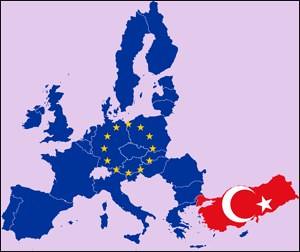
Is Turkey part of Europe? This question was at the back of my mind during a week-long visit to Istanbul over the Eastern break. Far from being an academic geographical consideration, the question has big implications for both the future of Turkey and the European Union. At least, that's what were told.
Turkey is a candidate country to join the EU, having started accession talks in 2005. Most of the countries of continental Europe are against Turkey joining, particularly France. But the UK, backed by the United States, is forcefully pushing for Turkey's membership in the union. Nicolas Sarkozy insists that Turkey is not geographically or culturally part of Europe and does not belong in the EU. David Cameron says that it is Islamophobia that is keeping Turkey out, and that the EU should not be an 'all-Christian club'. The argument for accession stresses that Turkey's largest city as well as 3% of its territory is in Europe, and that historically Turkey (as the Ottoman Empire) ruled over many countries now in the EU including Greece, Cyprus, Bulgaria, Romania and Hungary.
Wednesday, 20 April 2011
Koran burning: US and Europe have different ideas on free speech
The US military is still struggling to quell violence across Afghanistan and elsewhere caused by a Florida pastor's public burning of the Koran. The burning, which took place on 20 March, came months after the same pastor had decided to cancel his first planned book-burning after everyone from senior US military figures to President Obama told him not to do it. They said such a burning would incite violence across the Arab world and put US troops in danger.
In the end, he went ahead and did it anyway. So far at least one US military death is thought to be linked to the protests sparked by the Koran burning, but of course this is difficult to prove directly But throughout all of the warning issued to the pastor by the US military and politicians in the run-up to the burning everyone was keen to stress one thing – though the burning would put the lives of US troops at risk, the pastor had every legal right to burn the Koran under the freedom of speech entitled to him by the first amendment of the US constitution. So, the pastor faces no legal consequence for the Koran-burning he staged. And he is now planning more burnings starting on Good Friday in Michigan.
Contrast this to how a similar incident was handled across the pond in the UK. A man staged a public burning of the Koran at a shopping centre in Carlisle on 19 January. He was arrested, and yesterday a judge sentenced the man to 70 days in jail for religiously aggravated harassment. The judge called his stunt "theatrical bigotry".
In the end, he went ahead and did it anyway. So far at least one US military death is thought to be linked to the protests sparked by the Koran burning, but of course this is difficult to prove directly But throughout all of the warning issued to the pastor by the US military and politicians in the run-up to the burning everyone was keen to stress one thing – though the burning would put the lives of US troops at risk, the pastor had every legal right to burn the Koran under the freedom of speech entitled to him by the first amendment of the US constitution. So, the pastor faces no legal consequence for the Koran-burning he staged. And he is now planning more burnings starting on Good Friday in Michigan.
Contrast this to how a similar incident was handled across the pond in the UK. A man staged a public burning of the Koran at a shopping centre in Carlisle on 19 January. He was arrested, and yesterday a judge sentenced the man to 70 days in jail for religiously aggravated harassment. The judge called his stunt "theatrical bigotry".
Friday, 11 March 2011
IRA-supporting US congressman launches terrorism hearings
In order to not be considered a terrorist, Muslims in America don't just have to not participate in terrorist activities – they need to actively renounce terrorism and fight to end it. So says Republican Congressman Peter King, the new head of the Homeland Security Committee in the House of Representatives. King is leading hearings this week investigating the "radicalisation of the American Muslim community," calling Muslim religious and business leaders before congress to test their loyalty to the United States.
The hearings, which to many are reminiscent of the anti-communist hearings conducted in the 1950's by Senator Joseph McCarthy, are proving enormously controversial in the United States. Democratic Congressman Mike Honda, who was interned in Japanese internment camps in California during World War II as a little boy, wrote in an editorial this week that King's intent is, "to cast suspicion upon all Muslim Americans and to stoke the fires of anti-Muslim prejudice and Islamophobia."
Keith Ellison, who is on the homeland security committee and is one of two Muslims in congress, shed tears on the opening day of the hearings as he said the hearings may "increase suspicion of the Muslim American community, ultimately making us all a little less safe." But King has been outspoken in his defence of the hearings, saying they are completely necessary as more and more American Muslims become radicalised. He has asserted that the "vast majority" of mosques in the US are run by radicals.
The hearings, which to many are reminiscent of the anti-communist hearings conducted in the 1950's by Senator Joseph McCarthy, are proving enormously controversial in the United States. Democratic Congressman Mike Honda, who was interned in Japanese internment camps in California during World War II as a little boy, wrote in an editorial this week that King's intent is, "to cast suspicion upon all Muslim Americans and to stoke the fires of anti-Muslim prejudice and Islamophobia."
Keith Ellison, who is on the homeland security committee and is one of two Muslims in congress, shed tears on the opening day of the hearings as he said the hearings may "increase suspicion of the Muslim American community, ultimately making us all a little less safe." But King has been outspoken in his defence of the hearings, saying they are completely necessary as more and more American Muslims become radicalised. He has asserted that the "vast majority" of mosques in the US are run by radicals.
Tuesday, 15 February 2011
Angela, David and Nicolas agree: multiculturalism has failed
European leaders don't seem to be able to agree on much these days, but it seems one idea they can all get behind is that 'multiculturalism' has failed in European societies.
Over the past few months there's been a torrent of speeches from Europe's most high-profile leaders declaring the European 50-year experiment a failure. It started with Germany's chancellor Angela Merkel, who declared in October in a much-anticipated speech that the country's efforts to create a multicultural society where immigrant groups maintained their own identity and culture had "utterly failed". Weeks later, Belgian prime minister Yves Leterme said he agreed with her and the experience in Belgium has been the same.
At the start of this month British prime minister David Cameron picked up the theme while speaking at a security conference in Munich, announcing in a headline speech that "state multiculturalism" in the UK had failed, and that a stronger British identity needed to be forged and passed on to immigrants. Five days later French President Nicolas Sarkozy, responding to a question during a television interview, also condemned multiculturalism. "We have been too concerned about the identity of the person who was arriving and not enough about the identity of the country that was receiving him," he said.
Yesterday the Netherlands became the latest country to join the anti-multiculturalism club, with the leader of the ruling Christian Democrats telling a TV show that the Dutch model of a multicultural society has failed.
Over the past few months there's been a torrent of speeches from Europe's most high-profile leaders declaring the European 50-year experiment a failure. It started with Germany's chancellor Angela Merkel, who declared in October in a much-anticipated speech that the country's efforts to create a multicultural society where immigrant groups maintained their own identity and culture had "utterly failed". Weeks later, Belgian prime minister Yves Leterme said he agreed with her and the experience in Belgium has been the same.
At the start of this month British prime minister David Cameron picked up the theme while speaking at a security conference in Munich, announcing in a headline speech that "state multiculturalism" in the UK had failed, and that a stronger British identity needed to be forged and passed on to immigrants. Five days later French President Nicolas Sarkozy, responding to a question during a television interview, also condemned multiculturalism. "We have been too concerned about the identity of the person who was arriving and not enough about the identity of the country that was receiving him," he said.
Yesterday the Netherlands became the latest country to join the anti-multiculturalism club, with the leader of the ruling Christian Democrats telling a TV show that the Dutch model of a multicultural society has failed.
Friday, 1 October 2010
Hard-Right Holland
You know we've entered a different era when Spain has become the leading progressive voice in Europe while the Netherlands has come under the sway of a hard-right party. If you had posited this scenario to someone in the early 1970's they would have thought you were crazy. But Holland's years-in-the-making drift toward hard-right conservatism was again demonstrated this week when a conservative coalition government was finally formed – with the participation of the far-right Freedom Party (PVV) of Geert Wilders. The new coalition is set to ban the veil and limit the number of "non-Western" immigrants allowed to come into the country.
Dutch elections were held back in June, but the two centre-right parties did not achieve enough of a majority to form a stable government on their own. The PVV, meanwhile, greatly increased their share of the vote. After months of negotiations, this week the centre-right parties concluded a deal with the far-right PVV, led by the controversial anti-Islam crusader Wilders, that will allow them to form a government with Mark Rutte as prime minister.
Tuesday, 14 September 2010
Gypsy exile in Europe mirrors wave of Islamophobia in US
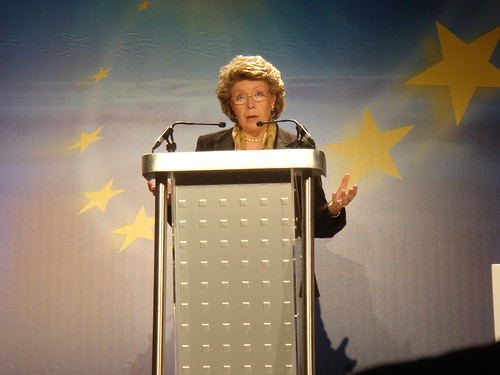
It’s been an intense day of cannon fire shooting back and forth between Brussels and Paris, as the European Commission abruptly broke its silence on France’s deportation of Roma (gypsies) and came out swinging. EU Justice Commissioner Viviane Reding held a press conference this morning calling the French deportations a “disgrace” and said the EU is now considering taking legal action against France for violating EU law. It was a shockingly strong condemnation that caught the Brussels press corps completely by surprise, considering Brussels is usually loath to criticize anything France does. Reding even thumped the podium as she spoke, comparing the expulsion campaign to the persecution of Jews during World War II.
Within minutes Paris was reeling from the shock. At a hastily organized press conference in Paris, a spokesman for the government said they were “astonished” to learn of Reding’s declarations. He then accused Reding of standing in the way of France’s efforts to "improve the situation" of Roma, which he said was “at the heart of the government’s concern and action”. Later in the day, France's Europe minister showed just how unprecedented EU criticism of France is when he warned, "This is not how you speak to a major power like France."
The issue has been on a low boil since August, when French president Nicolas Sarkozy first took the decision to deport camps of gypsies who are foreign nationals (mostly Romanian but also Bulgarian) back to where they had come from. Only problem is, Romania and Bulgaria are now part of the EU, and as such their citizens have the right to free movement within the union. But for weeks the commission was silent on the issue. That is, until today’s explosion from Reding.
Within minutes Paris was reeling from the shock. At a hastily organized press conference in Paris, a spokesman for the government said they were “astonished” to learn of Reding’s declarations. He then accused Reding of standing in the way of France’s efforts to "improve the situation" of Roma, which he said was “at the heart of the government’s concern and action”. Later in the day, France's Europe minister showed just how unprecedented EU criticism of France is when he warned, "This is not how you speak to a major power like France."
The issue has been on a low boil since August, when French president Nicolas Sarkozy first took the decision to deport camps of gypsies who are foreign nationals (mostly Romanian but also Bulgarian) back to where they had come from. Only problem is, Romania and Bulgaria are now part of the EU, and as such their citizens have the right to free movement within the union. But for weeks the commission was silent on the issue. That is, until today’s explosion from Reding.
Wednesday, 18 August 2010
Mosque hysteria: an ugly reflection on America
Le sigh. Yes, that’s it, Obama is personally flying down to the former site of the world trade center to build a mosque brick by brick. Honestly I don’t blame Europeans for being misinformed about this, the US media coverage has been almost completely fact-free, and that then gets passed on over here during a slow news month. And it’s an issue that easily resonates here in Europe because let’s face it, when it comes to Islam, America and Europe can be sisters in hysteria. So, forget whatever you’ve heard. Let’s review the facts, shall we?
Wednesday, 14 July 2010
Belgium and France in race to ban the burqa
Who will emerge victorious? Belgium and France are currently falling over each other racing to be the first country in Europe to ban full face coverings. Whoever wins the race, both bans are guaranteed to eventually become law. The bans are illustrative not just of the conflict between Europeans and Muslim immigrants, but also of the ideological divide that separates continental Europe from the Anglo-Saxon world.
Both European and the Americans/British may dislike the burqa, but when it comes to how to deal with it, the English Channel and the Atlantic present a wide gulf. On the continent I don't know one person who thinks the ban is a bad idea. Yet I don't know a single American or British person who doesn't think it is a semi-fascistic disgrace.
Yesterday French MPs voted 335 to one in favour of legislation to ban face coverings in public areas. The ban does not specifically mention the Islamic burqa, a full-body garment that covers the entire face except a small slit for the eyes. Rather, it forbids anyone to cover their face in a public place. This would include costume masks or ski masks. A police officer would first ask a person to remove their face covering, and if they refuse, they can be fined €150.
Though the ban doesn’t specifically target Muslims, many Islamic groups and human rights activists are saying its main intent seems to be to send a hostile message to Muslims. They have accused French President Nicolas Sakozy of purposefully exacerbating tensions for electoral purposes. Though only a small minority of French Muslims would be affected by the ban (police figures say fewer than 2,000 of France's 2 million Muslims wear the burqa), Muslim groups have said they think the law stigmatizes all Muslims.
Both European and the Americans/British may dislike the burqa, but when it comes to how to deal with it, the English Channel and the Atlantic present a wide gulf. On the continent I don't know one person who thinks the ban is a bad idea. Yet I don't know a single American or British person who doesn't think it is a semi-fascistic disgrace.
Yesterday French MPs voted 335 to one in favour of legislation to ban face coverings in public areas. The ban does not specifically mention the Islamic burqa, a full-body garment that covers the entire face except a small slit for the eyes. Rather, it forbids anyone to cover their face in a public place. This would include costume masks or ski masks. A police officer would first ask a person to remove their face covering, and if they refuse, they can be fined €150.
Though the ban doesn’t specifically target Muslims, many Islamic groups and human rights activists are saying its main intent seems to be to send a hostile message to Muslims. They have accused French President Nicolas Sakozy of purposefully exacerbating tensions for electoral purposes. Though only a small minority of French Muslims would be affected by the ban (police figures say fewer than 2,000 of France's 2 million Muslims wear the burqa), Muslim groups have said they think the law stigmatizes all Muslims.
Monday, 26 April 2010
Belgian government collapses, yet again
I'm in Trier, Germany today, attending a seminar for journalists on the European Court of Justice (the EU equivalent of the US Supreme Court, though with some important differences). Though I may be away from Brussels for the day the news feed on my iphone started blowing up this afternoon with news about my new host country as it became official - the Belgian government has fallen. Though the country's king worked tirelessly over the weekend to try to sort out a compromise between the warring Frencophone and Dutch-speaking parties, he has been unable to bring peace to the parliament, and today accepted the resignation of the prime minister.International media reaction to the news has been muted, most likely because this is starting to become such a routine event. The government last collapsed in July 2008, during a period where at one point there was no Belgian government for well over a year. Not that you would have noticed. Belgium has become so decentralised - with authority split between the three regions of Wallonia, Flanders and Brussels - that the national government hardly does anything any more.
Sunday, 29 November 2009
Switzerland Declares War on Architecture
The vote follows the win of the anti-immigrant Swiss People’s Party (SVP) two years ago. Now the largest party in Switzerland’s parliament, the SVP strongly backed the constitutional ban, saying that minarets (the tall slender towers on traditional mosques) are a sign of militant Islam and a threat to Switzerland. However the rest of the political parties in government opposed the ban and warned that it was not only unnecessary, but also sending a hostile message to the country’s minority populations.
Of course in Switzerland it doesn’t matter that the majority of the government strongly opposed a ban, it is easy for citizens to put virtually anything to a national referendum for people to vote on. And with a saturation of posters like the one above, it’s relatively easy to whip up hysteria about what is essentially a non-issue.As demonstrated time and time again, referendums can never be counted on to protect the rigthts of minorities.
Switzerland has 4 minarets in the entire country, an incredibly low number for a Western European country. This is the result of two factors – the Muslim population is fairly small at 400,000, and planning applications for minarets are almost always refused by local authorities.
The campaigners for the ban have insisted that minarets are a symbol of militant Islam. SVP member of parliament Ulrich Schluer said "A minaret is a political symbol. It is a symbol for introducing, step-by-step, Sharia rights also in Switzerland, parallel to the Swiss law which is a result of Swiss democracy. And this is the problem. It is nothing against Muslims."
Essentially it’s an imaginary solution to an imaginary problem. There is no Islamic extremism problem in Switzerland, and even if there were, how on earth would getting rid of minarets solve it?
The media has been making a lot of comparisons to the French head scarf ban in public schools, but I don't really think this is an apt comparison. The argument was made that the veil disrupted learning and encouraged hostility by providing visable markers of difference between students. There were also safety and practicality questions raised about students being allowed to cover their face in school. This Swiss minaret ban is entirely different, as there is no legitimate practical issue that this resolves - it's entirely symbolic. Muslim calls to prayer are already not allowed in the country because of blanket noise ordinances, so the presence of a minaret really has no practical effect on the population. A girl wearing a veil in a classroom arrguably has a very real effect on the learning environment for her, her teacher, and other pupils.
In any event, this is a dismaying result for a country that seems to be sliding into increasing xenophobia and nastiness. There is a debate to be had about Islam's place in Europe and in European law, but this largely symbolic vote has no practical effect other than alienating Swiss muslims. Perhaps even more importantly, it sends a troublingly hostile message to the world at large.
***Added 30/11/09: Analysis following the vote has found that the ban is most likely illegal under European and international law. I’ve heard a few comments in the UK about how the vote will be ok because Switzerland is not part of the EU. Actually Switzerland is a member of the Council of Europe and is party to the European Convention on Human Rights and subject to the European Court of Human Rights. Grahnlaw has a good entry summing up the various legal analysis, and the overall conclusion is that the ban is contrary to Switzerland’s obligations under European human rights law and will require corrective measures.
Friday, 30 May 2008
Welcome to the religion century
Tony Blair made some interesting comments at a fundraising dinner in Toronto last night. Coming on the eve of the launch of his new Faith Foundation, which was unveiled to the world today in New York, it offered a stark and blunt assessment of the century we are entering. While probably true, his comments will no doubt be quite troubling to secular Europe.Speaking at the Women’s College Hospital in Toronto, Blair described the impetus behind his new faith foundation as an effort to “get faith in action,” saying that the goal of his new foundation is to help various religions work together to make the process of globalisation more humane. Sounds innocuous enough. But it was his blunt assessment of the power religion will have over the world over the next century that got my attention. Spoke Blair:
“Religious faith will be of the same significance to the 21st Century as political ideology was to the 20th Century.”
Friday, 8 February 2008
The archbishop and sharia law
The big news in the UK today, splashed across the front pages of the morning rags, is yesterday’s observation by the leader of the Anglican Church, Archbishop of Canterbury Dr. Rowan Williams, who said that it "seems inevitable" that elements of Sharia Muslim law would be incorporated into British legislation.Almost instantly the comments have been greeted with shock and condemnation from nearly every corner of British society. Christian groups, secular groups, the head of the equality watchdog, several high-profile Muslims and MPs from all parties have all strongly condemned the statement. A spokesman for Prime Minister Gordon Brown said this morning, “sharia law cannot be used as a justification for committing breaches of English law, nor should the principles of sharia law be included in a civil court for resolving contractual disputes.”
The essential question is whether Muslims living in Britain should have a different set of laws that apply to them that are in accordance with Sharia law. The issue is especially pertinent in divorce proceedings, which under Sharia law are extremely strict and not very favorable to women.
Friday, 18 January 2008
Europe’s far right calls for ban on mosques
Belgium's far-right Vlaams Belang has joined with radical groups from Austria and Germany to launch a Charter to, “fight the Islamisation of West-European cities.” They announced their new coalition Thursday in the Flemish city of Antwerp. Vlaams Belang’s Filip Dewinter told Radio Netherlands Worldwide, “"We are not opposed to freedom of religion but we don't want Muslims to impose their way of life and traditions over here because much of it is not compatible with our way of life."
Tensions between Muslim communities and the majority populations in Western Europe have been growing in recent years as these largely secular societies struggle to absorb populations with deeply held religious beliefs. The crisis has been exasperated by incidents such as the 2004 murder of Dutch filmmaker Theo Van Gogh (a relative of Vincent Van Gogh) by a jihadist after Van Gogh made a movie dealing with violence against women in Islamic societies. Tensions between Muslims and the secular Dutch have been particularly strong since then.
Subscribe to:
Comments (Atom)