Showing posts with label food. Show all posts

Monday, 11 June 2012

Super size drink ban – the view from Europe


As an American living in Europe I am obviously confronted with frequent differences from my homeland. One of the most typical is the very profound difference in the way that Europeans and Americans view the state and its role in people’s daily lives.

I’ve been encountering this difference this week in the very different reactions to the news that New York mayor Mike Bloomberg wants to ban supersize soft drinks from being sold in restaurants and movie theaters. I have a number of friends here, mostly in the UK, who regularly watch the Daily Show. And they were perplexed by Jon Stewart’s rant last week against the proposal.

“I don’t understand, isn’t he on the left?” one Irish friend asked me. Given the obesity epidemic in the United States, he was confused as to why anyone would oppose the measure. This is generally the reaction I've heard from European friends. Of course this goes hand in hand with Europeans’ general impression that food sizes in the US are obscenely large.

Wednesday, 29 June 2011

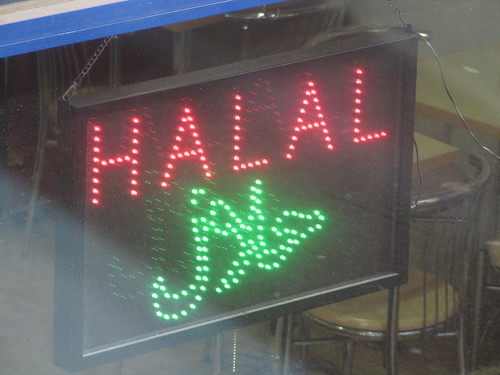
Dutch to ban halal and kosher animal slaughter

The Dutch parliament has voted overwhelmingly to ban ritual slaughter of livestock that does not stun the animal beforehand. This would ban the production of halal and kosher meat in the country, which is the only kind of meat that can be consumed by strictly religious Muslims and Jews, respectively.

The fight has made for some strange bedfellows. The campaign against the bill has seen an unprecedented unification of the country's Muslim and Jewish populations, who both say the bill puts animal rights ahead of human rights. On the other side stands an unusual pairing of animal rights activists and the country's anti-Islamic far right.

The controversy over the bill, which came despite its widespread support in the parliament, persuaded the Dutch government to promise that no ban would go forward without the approval of the Senate (an approval not legally necessary in this case). They also inserted a provision which would allow religious groups to apply for a permit to kill animals without stunning them first. But this would only be granted if they can prove that the animals do not suffer more than in ordinary killing. But legal experts say this would be nearly impossible for the halal and kosher butchers to prove, and the burden of proof is on them. Agricultural bodies such as the British Farm Animal Welfare Council have concluded that halal and kosher killing causes severe suffering to animals.

Tuesday, 29 March 2011

Cloned meat headed for EU menus as talks break down

Three years of negotiations over banning the use of cloned animals for food in the EU broke down early this morning after member states and the European Parliament could not come to an agreement. The parliament wanted to ban meat from both cloned animals and their offspring, while the national governments insisted the ban should only apply to the cloned animals themselves.

Health campaigners have said enacting a ban just on cloned animals is useless because a cloned animal is so expensive to produce it would never be used for meat. The main purpose of cloned animals is to produce genetically superior babies, and it is the offspring that would be intended to end up in your sandwich. During negotiations the parliament offered a compromise to just have labelling of meat that comes from cloned animals or their offspring, but member states said they could only agree to such labels for beef. Beef is already heavily labelled and tracked because of previous mad cow scares. The parliament negotiators said no deal.

Thursday, 18 November 2010

Will the ugly ducking CAP get a beauty makeover?

There's an episode of the 1970's sitcom The Brady Bunch where middle child Jan Brady decides she's sick of being overshadowed by her pretty, popular older sister Marcia and resolutely decides her problems will be solved by wearing a bizarre black wig at a friends birthday party. So she trots confidently down the stairs in her new 'do, announcing, "Look everyone, it's the new Jan Brady". But the wig looks so incongruous on her petite frame that the partygoers just look confused.

I started thinking about this scene (mocked hilariously in the Brady Bunch movie of the 1990's) as I sat in the European Commission press conference today unveiling its ideas for 'the new common agricultural policy (CAP)'. Agriculture commissioner Dacian Ciolos insisted that the function of CAP would have to be widened beyond just the simple mission of producing food and instead take on a climate change and biodiversity mission in order to gain legitimacy with the non-farming public. But as I listened to the raft of green measures that may be incorporated into the policy, I wondered if the CAP wasn't going to end up looking a little bit like poor Jan Brady, a 14 year old girl standing in the middle of the birthday party wearing a wig clearly designed for a 60 year old woman.

Wednesday, 6 October 2010

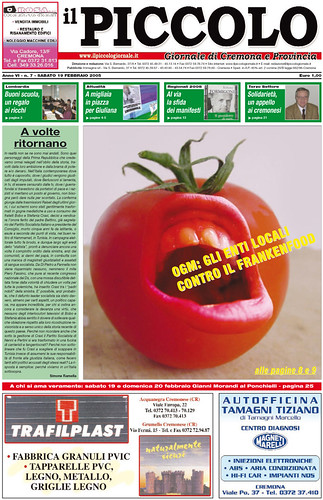
"Frankenfoods" the subject of first EU citizens initiative

The first citizens initiative petition will soon be presented to the European Commission under new rules created by the Lisbon Treaty. The treaty gives citizens the right to demand that the EU look into a specific issue if they can collect 1 million signatures. Perhaps unsurprisingly, the petition concerns one of the hottest and most controversial issues with the European public: genetically modified crops.

As an American, it’s been interesting to watch the GM debate progress here in Europe. Genetically modified crops are now widely used in the United States, and it was never a very hot or controversial topic there. GM crops and even GM food does not seem to bother the American public very much. The exact opposite is true here in Europe, where the public across member states remains concerned about GM. Across Europe the media has been very hostile to these so-called "Frankenfoods". In the US the issue has gotten barely a mention.

Wednesday, 30 June 2010

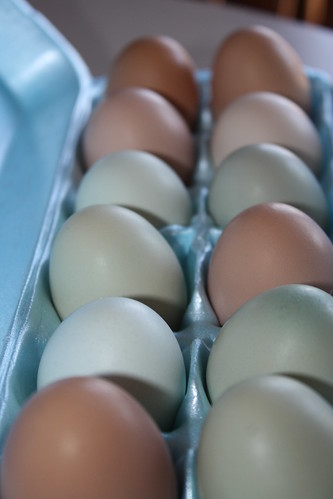
More egg-ceptional inaccuracy from the British media

When it comes to the British tabloids, you can assume that if they use the phrase "you couldn't make it up," that probably means they are making it up. At least, that's certainly the case when it comes to the EU. And it isn't just the tabloids. Blatant lies and flat-out inaccuracies about the EU are par for the course in the British media, even from respected news sources like the Independent or the BBC.

A typical example of this was floating around last week, when the British papers and the BBC were reporting that the EU is planning to ban the sale of eggs by the dozen. It followed a well-worn pattern. First, a right-wing paper like the Daily Mail runs a story about some new horrible injustice that will be perpetrated on the British people by Brussels. They base their information on either a deliberate misreading of the actual law being considered or they just flat out make things up. Eurosceptic blogs pick up the story and it receives chatter in the British blogosphere. Soon other papers are running the same story, with lazy reporters relying solely on the assumptions made by the Daily Mail. It doesn't take long for the BBC to pick it up, as they did with the eggs-by-the-dozen story. All of the subsequent lazy reporting is based solely on the assumptions made by the Daily Mail, which are almost always wrong.

Wednesday, 12 December 2007

Europe bans kiddie junk food commercials?

Well…kind of. Actually a consortium of the world’s largest food makers have voluntarily, in response to pending action by the EU commission, agreed to stop advertising unhealthy food during children’s television programs by the end of next year throughout Europe. Seriously, no joke. That means no more Coco Crispies or Count Chocula ads during Power Rangers.

In a joint statement 11 companies, which together account for more than 2/3 of cash spent each year on food and beverage advertising in the EU, agreed to stop advertising unhealthy food and beverages on television programs, Web sites or in print media where children under age 12 could be considered a target audience.

They also agreed not to engage in any commercial communications related to food and beverages in primary schools, unless part of a specifically requested educational program.

These are no small-fry companies either. They include Coca-Cola, Groupe Danone (Danon), Burger King, General Mills, Kellogg, Kraft Foods, Mars, Nestlé, PepsiCo, Ferrero and Unilever.

At some point in the next year the companies will set a “high nutritional hurdle” which foods will have to meet in order to be advertised during children’s programming.

It’s important to point out that this new policy will apply only to EUROPE, because that is where the regulatory threat was coming from. Since there’s no such regulatory threat in the US, fat American toddlers will still be transfixed by a magical little leprechaun running off with their lucky charms. USA! USA!