Showing posts with label Netherlands. Show all posts

Wednesday, 15 March 2017

Spectres of a Dutch past

Modern Holland sells itself as enlightened and peaceful, but this perception is not shared in Indonesia. Will today’s election return the Dutch to a more brutal era?

I’m flying somewhere over India at the moment, making my way to Amsterdam after a fascinating week on the Indonesian capital island of Java. Once I land in the morning I’ll be spending the day covering the Dutch election, and it’s safe to say the things I saw here on the other side of the world will be shaping my impressions.

The degree to which today’s election will say something about the direction Europe is heading has been a bit overstated in the English-speaking media. Headlines have declared breathlessly that far-right firebrand Geert Wilders is set to “win” the election and bring the Netherlands into the same axis of populism as the UK and US. But it's not quite that.

Friday, 15 November 2013

International nationalists

The far right has a poor history of working together in international forums. An alliance brokered by Geert Wilders and Marine Le Pen is seeking to reverse that trend.

"There is nothing harder to set up than a nationalists' international," wrote political scientists Michael Minkenberg and Pascal Perrineau when they analysed the performance of the radical right in the 2004 European Parliament elections. The latest attempt to disprove that truism was launched last week by Marine Le Pen, leader of France’s Front National (FN), and Geert Wilders, the Dutch maverick anti-Islam campaigner.

At a press conference held at the Dutch parliament in The Hague this week, Le Pen and Wilders announced a pact to work together to build an alliance in the next European Parliament to slay “the monster in Brussels” and wreck the Parliament from within. Given the patchy – to say the least – record of populist and nationalist groups’ attempts to join forces at European level, it was hardly surprising that scepticism dominated the initial reaction.

In the last Parliament, far-right groups briefly forged an alliance under the “Identity, Tradition, Sovereignty” group banner. But that pact fell apart after Romanian and Italian nationalists rowed over Alessandra Mussolini calling Romanians “habitual lawbreakers”. Perhaps it is not surprising that nationalists whose principal policy platform is being anti-foreigner have trouble co-operating with “foreigners”.

Wednesday, 23 October 2013

Dutch rally round ‘right to be racist’

It’s that time of year again. The stockings are being hung by the chimney with care, the hot wine stands are setting up shop, and of course, the Dutch have begun putting on their blackface, big red lips and afro wigs. It’s time again for ‘Black Pete’ to pay us a visit.

And right on cue, it’s also time for the perennial hand-wringing about whether or not this minstrel character, who tags along with Saint Nicholas as he hands out presents to Dutch and Flemish children at Christmas, is racist.

But this year, thanks to some comments by a human rights observer, the debate has taken on an almost frenzied dimension that has even seen a prominent Dutch politician call for the Netherlands to pull out of the United Nations.

The Dutch are furious that a member of the UN’s human rights committee is looking into the issue of whether Black Pete is a racist caricature. The head of the committee, who is Jamaican, told a Dutch TV station she found it impossible to understand how Dutch people do not see it as racist. Dutch people have responded with a torrent of outrage, accusing the UN of trampling on something that is an age-old tradition and is culturally important to them. A petition organised to 'save Black Pete' gathered a million endorsements in its first day. News broadcasters are dressing up as Pete in protest, and Dutch people are making YouTube videos dancing around in blackface singing about how not racist they are.

Tuesday, 13 August 2013

Ins and outs

As the British seek new EU opt-outs, Danes will likely vote to end theirs.

Over the past several years, as UK prime minister David Cameron has taken his country further and further toward the EU exit door, he has been keen to stress that the UK is not alone in its desire for a more devolved EU. He points to the increasingly Eurosceptic Dutch, who have, like the UK, recently conducted a review of the EU's powers. He points to the Danes and Swedes, who are also voluntarily remaining outside the Eurozone.

So when news came this week that it now looks likely that Denmark will hold an ‘EU referendum' next year, it may have seemed like welcome news for the British Conservatives. Cameron has attracted a large amount of ill will on the continent by scheduling an in/out EU referendum for the UK in 2017. But why should Britain be singled out for scorn, when the Danes are holding their own EU referendum?

However the Danish case is a very different animal. The British referendum will be a vote on a theoretical new EU-UK relationship which the government will negotiate, giving the UK more opt-outs from EU law. The Danish referendum will be the opposite – a vote on whether to end the opt-outs Denmark negotiated for itself back in 1992.

Tuesday, 24 April 2012

Are Europe's conservatives now dependent on the far right?

Yesterday’s news that the government of Dutch Prime Minister Mark Rutte had collapsed sent almost immediate shock waves through the world’s financial markets.

Investors, who were already feeling skittish about the first-round victory of French Socialist presidential candidate Francois Hollande on Sunday, found themselves with something much more serious to worry about. The government of the Netherlands, one of the core austerity-pushing states of the Eurozone, couldn’t even pass the tough medicine they helped design for Europe.

Holland and the three other euro-using countries that still have triple A ratings (Germany, Finland and Austria) have pushed for every eurozone country to make massive cuts by the end of the month. But yesterday Rutte was forced to tender his resignation after it became clear he could not get his own parliament to approve the tough medicine he had helped design for all of Europe.

But perhaps more interesting from a political perspective is who it was that precipitated this crisis – the infamous far right leader GeertWilders. Rutte was only able to form his governing coalition in 2010 by relying on the backing of Wilders and his far right Party of Freedom group, which had polled at 15.5% in that year's election. Wilders has been tried in the Netherlands for hate speech against Muslims, and has been banned from entering the UK in the past.

Friday, 9 September 2011

War of words between PIGS and FANGs

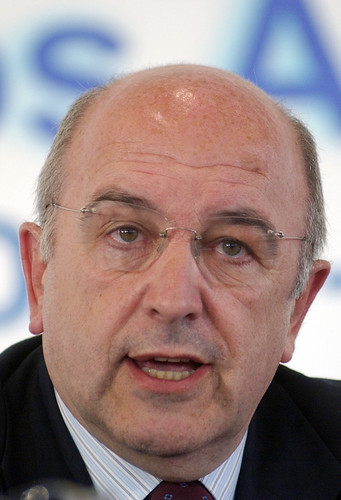
The European Commissioner from Spain delivered a surprising attack yesterday on the Northern European countries pushing Southern Europe to adopt painful austerity measures. The comments follow a controversial proposal from the Dutch prime minister earlier this week which called for EU member states struggling with debt to be put under the 'guardianship' of the European Commission, surrendering their ability to make their own financial decisions.

"There are member states, in particular some of the most powerful -- Germany, Netherlands, Finland, Austria -- who feel that they don't have this kind of problem," Almunia told a group of business executives in New York. "[They believe] they don't need to make an additional effort to compensate the lack of resources of the countries who have the most difficulties to reduce imbalances."

The rhetoric was then ratcheted up to an even more dramatic level today when the European Commissioner from Germany told the tabloid Bild that if indebted (read: Southern) EU countries refuse to comply with new rules on debts and deficits, their flags should be flown at half mast outside institutional buildings. Mourning the loss of fiscal prudence, perhaps?

Thursday, 8 September 2011

Could Strasbourg battle pit country against country?

The long-running battle between the European Parliament and France over where the institution's permanent seat should be located has reached boiling point in recent months, following the parliament's vote in March to combine two of its mandated Strasbourg sessions into one. The fight has now been taken to the European Court of Justice, and following a call from Dutch parliamentarians today, the war could for the first time pit member state against member state.

The official headquarters of the European Parliament, as mandated by the EU treaties, is Strasbourg, France. The EU treaties require the parliament to meet there twelve times a year. But for well over a decade the working offices of the parliament have been in Brussels, where the other EU institutions are based (they surreptitiously built a giant parliament building there by telling France it was going to be a "conference center"). So once a month the entire European Parliament is made to make a five hour trek from Brussels to Strasbourg to hold three-day sessions. It would be like the US Congress uprooting itself once a month to hold sessions in Pittsburgh, Pennsylvania.

The majority of members of the European Parliament (MEPs) hate the monthly "traveling circus". A 2007 survey by Liberal MEP Alexander Nuno Alvaro showed that 89% of MEPs want to end the Strasbourg sessions. MEPs have tried to force the issue several times, but changing the treaties to end the Strasbourg requirement would need the unanimous approval of all member states – and France has always promised to veto such a move. They are insistent that one of the EU capitals should remain in France – even if no actual work is done there and it is merely a place where things already agreed are rubber-stamped.

Wednesday, 29 June 2011

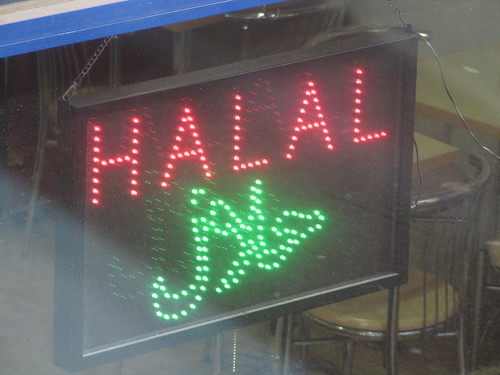
Dutch to ban halal and kosher animal slaughter

The Dutch parliament has voted overwhelmingly to ban ritual slaughter of livestock that does not stun the animal beforehand. This would ban the production of halal and kosher meat in the country, which is the only kind of meat that can be consumed by strictly religious Muslims and Jews, respectively.

The fight has made for some strange bedfellows. The campaign against the bill has seen an unprecedented unification of the country's Muslim and Jewish populations, who both say the bill puts animal rights ahead of human rights. On the other side stands an unusual pairing of animal rights activists and the country's anti-Islamic far right.

The controversy over the bill, which came despite its widespread support in the parliament, persuaded the Dutch government to promise that no ban would go forward without the approval of the Senate (an approval not legally necessary in this case). They also inserted a provision which would allow religious groups to apply for a permit to kill animals without stunning them first. But this would only be granted if they can prove that the animals do not suffer more than in ordinary killing. But legal experts say this would be nearly impossible for the halal and kosher butchers to prove, and the burden of proof is on them. Agricultural bodies such as the British Farm Animal Welfare Council have concluded that halal and kosher killing causes severe suffering to animals.

Tuesday, 15 February 2011

Angela, David and Nicolas agree: multiculturalism has failed

European leaders don't seem to be able to agree on much these days, but it seems one idea they can all get behind is that 'multiculturalism' has failed in European societies.

Over the past few months there's been a torrent of speeches from Europe's most high-profile leaders declaring the European 50-year experiment a failure. It started with Germany's chancellor Angela Merkel, who declared in October in a much-anticipated speech that the country's efforts to create a multicultural society where immigrant groups maintained their own identity and culture had "utterly failed". Weeks later, Belgian prime minister Yves Leterme said he agreed with her and the experience in Belgium has been the same.

At the start of this month British prime minister David Cameron picked up the theme while speaking at a security conference in Munich, announcing in a headline speech that "state multiculturalism" in the UK had failed, and that a stronger British identity needed to be forged and passed on to immigrants. Five days later French President Nicolas Sarkozy, responding to a question during a television interview, also condemned multiculturalism. "We have been too concerned about the identity of the person who was arriving and not enough about the identity of the country that was receiving him," he said.

Yesterday the Netherlands became the latest country to join the anti-multiculturalism club, with the leader of the ruling Christian Democrats telling a TV show that the Dutch model of a multicultural society has failed.

Thursday, 20 January 2011

Is David Cameron forming an Anti-European Union?

Nicolas Sarkozy's plans for a "Mediterranean Union" may be floundering, but at the other end of Europe British Prime Minister David Cameron is just getting started with plans to form a 'Northern European Union.'

The leaders of Britain, Sweden, Denmark, Norway, Finland, Iceland, Latvia, Lithuania and Estonia are all meeting in London today to discuss the potential for a grouping which Cameron is calling an "alliance of common interests". He wants to boost trade between the UK and the Nordic and Baltic countries, but also to increase the flow of ideas. These include ideas on technology and economic and social policy, areas in which Northern Europe has similarities and expertise that are not necessarily shared by many countries in other parts of Europe.

Cameron insinuated as much yesterday when he said a northern grouping could become an "avant garde" for economic growth in Europe. And of course, Northern European countries have deep historical ties as most were ruled by Denmark at one time or another. And before the EU came along the Nordics had their own attempted intergovernmental union, the Nordic Council.

Tuesday, 16 November 2010

David Cameron's lucky day

It's been a good day for UK Prime Minister David Cameron. This morning Britain's Prince William announced he will wed his long-time girlfriend Kate Middleton in a lavish royal wedding next year. Cameron was reportedly ecstatic when he announced the engagement to his cabinet, and it's not hard to see why. A royal wedding is exactly the sort of thing the Tories need to lift the spirits of the British public, who are suffering so much from the economic crisis and the budget cuts. In fact the engagement announcement already started fulfilling its role as a much-needed distraction today as it completely drowned out the simultaneous announcement from 10 Downing Street of a raft of new cuts including, ironically, the scrapping of legal aid for poor people getting a divorce. So while the royal family celebrates an upcoming wedding, their subjects learn it will now be harder for them to obtain an equitable separation.

Meanwhile over in Brussels, word came this morning that Cameron may get his wish for a complete freeze in the EU budget after all. Talks between member states and the European Parliament over the 2011 EU budget broke down last night. With no agreement in sight, it will mean that the 2010 budget will have to be used next year. Freezing the EU budget at 2010 levels was exactly what Cameron wanted, though this is probably not the way he wanted to get it. But Brussels was in despair today over the failure to reach an agreement, which will have very serious consequences for the EU. Both the commission and the parliament seemed to be shocked by the deliberate sabotaging of the budget that appears to have been led by the UK with the aid of their Dutch and Danish eurosceptic allies.

It was particularly shocking considering that parliament had broken precedent and completely capitulated to member states' demand that the budget not be raised by more than 3% (the parliament had originally called for a 6% raise). What appears to have happened is that certain member states are using the budget negotiations as a power play, seeking to sideline an increasingly assertive European Parliament that has sought to use the new powers it was granted by the Lisbon Treaty. The irony of the situation was lost on no one in Brussels today. The British Conservatives, who are constantly whining about the "democratic deficit" in the EU, are seeking to marginalise the only directly elected EU institution. And they are willing to play a dangerous game to do so.

Friday, 1 October 2010

Hard-Right Holland

You know we've entered a different era when Spain has become the leading progressive voice in Europe while the Netherlands has come under the sway of a hard-right party. If you had posited this scenario to someone in the early 1970's they would have thought you were crazy. But Holland's years-in-the-making drift toward hard-right conservatism was again demonstrated this week when a conservative coalition government was finally formed – with the participation of the far-right Freedom Party (PVV) of Geert Wilders. The new coalition is set to ban the veil and limit the number of "non-Western" immigrants allowed to come into the country.

Dutch elections were held back in June, but the two centre-right parties did not achieve enough of a majority to form a stable government on their own. The PVV, meanwhile, greatly increased their share of the vote. After months of negotiations, this week the centre-right parties concluded a deal with the far-right PVV, led by the controversial anti-Islam crusader Wilders, that will allow them to form a government with Mark Rutte as prime minister.

Friday, 16 July 2010

Dutch get green light to ban foreigners from coffee shops

The Netherlands has long been known, particularly by many Americans, as a drug tourism destination. For years, the Dutch have complained that while they support the decision to end the prohibition on marijuana use, the fact that other countries don’t have the same policy means the country has become a magnet for wacked-out partiers and troublemakers.

One Dutch town decided it had had enough, and it banned foreigners from its ‘coffee shops’, the name for establishments that sell marijuana. That town is Maastricht, which says it is particularly vulnerable to drug-tourism because of its geography in the thin Dutch tail at the Southeast of the country. Sandwiched between Belgium and Germany, Maastricht, much like its border neighbor Breda, has gained a reputation as the place where Belgians, French and Germans go to buy weed. So Maastricht banned its coffee shops from selling to foreigners, and when a coffee shop was shut down for selling marijuana to two non-Dutch EU citizens, that coffee shop sued.

Right from when they established the law, Maastricht must have known they would have a legal fight on their hands. Banning EU citizens from other countries from consuming a product which Dutch citizens can consume is a blatant violation of EU free movement law, which stipulates that EU citizens must be given equal treatment to native citizens in any EU country. This right is perhaps the cornerstone of the European Union.

Friday, 9 July 2010

Are the Dutch still loyal to the King of Spain?

It's been too hot to blog! Temperatures here in Belgium have been hovering around 32°C (90°F), which I know doesn't seem like a lot for those of you sitting in 102°F in New York, but 90° is very hot for us here! Most offices here don't have air conditioning because it rarely gets this hot. It is just not the right weather for blogging.

But I thought I'd share one quick little factoid. As soon as Spain beat Germany Wednesday night in the World Cup semi-final (boo!) and I realised it was going to be a Spain-Holland final, I thought of the interesting historical implications of such a game. It wasn't until the next day though that I remembered that those historical implications are going to be brought to the fore by the Netherlands' very own national anthem (which is, by the way, the oldest such anthem in the world). When the Dutch team lines up on the field to sing their national anthem, they will sing "To the King of Spain I've granted a lifelong loyalty." Awkward! What if the Juan Carlos orders them to lose the game?

Thursday, 7 January 2010

Iceland to vote on becoming pariah state

After seeing his house surrounded by a torch-wielding mob, Iceland’s president yesterday stunned the world by vetoing a parliament bill committing the country to paying back the €3.8 billion of British and Dutch citizens’ money it lost. The bold move triggered a shock wave of recrimination across the world: the country’s debt was instantly downgraded to junk status, the IMF hinted it may withhold the $2.1 billion it loaned the country in November and the UK threatened to veto Iceland’s bid to join the EU.

So now who’s going to make the incredibly difficult and complicated decision on whether or not to pay back the ‘other people’s money’ Iceland lost? Joe Q. Public, that’s who. The issue will now go to a public referendum on 20 February.

Tuesday, 8 December 2009

Dutch drop objection to Serbia in EU


Serbia moved a step closer to joining the EU today as the Netherlands withdrew its objection to the accession.

The EU had been in an 18-month deadlock over whether to grant Serbia free trade and association, which is a precursor to membership. The Dutch, who are hosting the international criminal court proceedings against Serbs accused of genocide during the Balkan civil wars, had insisted for more cooperation from Serbia in tracking down war criminals first.

Serbia had argued it legitimately couldn’t find the accused, which seemed doubtful considering many of them were walking around the country in broad daylight. However Serbia recently arrested two key leaders, and apparently that was enough to satisfy Dutch concerns. Though the Dutch foreign affairs minister said the tribunal still needs more cooperation from Serbia.

Saturday, 20 June 2009

Saving the Earth Dutch Style

This week I was in Holland, being shuttled around the country on a press tour showing journalists various environmental projects. I know it’s almost cliché to say this at this point, but coming from the Anglo-Saxon world I couldn’t help but feel a bit ashamed at how much further along countries like the Netherlands are in developing sustainable solutions to climate change. Many of these solutions have been being developed since long before climate change became a prominent issue, and people have largely gotten used to the adjustments they’ve had to make to their daily lives. One example was this houseboat, pictured right.

The other journalists on this tour were an interesting mix, coming within Europe from Brussels, Germany, Denmark, Spain and the Czech Republic as well as further afield from China, India, Brazil and South Africa. It was interesting to hear everyone’s comparisons with what’s going on in their home countries, particularly the developing BRIC countries.

There were also interesting comparisons we could make between countries in the EU, particularly with Denmark and Germany which are also quite far along in developing sustainability projects. One funny detail was that many of the Dutch presenters for the projects would wistfully say that what they have might be good, but it’s nothing compared to what they have in Germany. This made my German colleague laugh, because in Germany apparently they always think of Dutch as having the height of green achievement. Two such modest peoples!

One of the more interesting sites we visited was energy-from-waste incineration plant in Amsterdam called the Waste and Energy Company, a public utility.

Having never seen a trash incineration plant before, I wasn’t quite sure what to expect. But I had plenty of pre-conceived notions about massive industrial plants spewing out plumes of noxious gas they torch piles of needless human waste. When our bus pulled up it looked like this was going to be the reality, as we could immediately see two giant smokestacks pouring white smoke into the air. However once inside and given a tour, I was surprised by many of the things I learned about the plant. The facility, which processes over 1.4 million tonnes of municipal and industrial waste annually, is actually the largest waste processor at a single location in the world. Two freight trains and 600 garbage trucks deliver trash to the facility each day.

Gross right? But astonishingly, the facility is able to recycle nearly 99% of the waste it receives. It does so by using the heat produced from burning the garbage to generate energy, much like a coal plant burns coal to produce energy. The facility produces 1 million MWh of electricity per year, enough to cover three quarters of Amsterdam households. All of Amsterdam’s public transportation is powered from the plant, as well as all street lights. The plant also uses the excess hear generated during the burning to provide businesses and homes with heat and hot water. Thus two environmental issues are solved: what to do with garbage and how to create energy without using finite resources like oil, coal and gas.

That’s all well and good, you may say, but what about the toxic emissions that are produced from the burning process? Well the AEB plant has devised a way to treat this. During the burning process, the steam (which drives the turbine) is separated from the smoke, and the smoke is then extensively filtered through flue-gas cleaning, which actually takes up 2/3 of the whole plant! By a process of separation, new materials are extracted from the gas. The sulphur recovered is used for the production of plaster board and blocks for the building industry, and the calcium chloride extracted can be used to defrost roads in winter. And the metal waste that can’t be burned is extracted, ground into bottom ash, and made into artificial sand for use in the construction of roads and buildings. In the end 99% of the impurities are filtered out. That smoke I saw coming out of the building? Only water vapour.

Still, energy-from-waste plants remain highly controversial. Many argue that although they do reduce CO2 emissions, they provide perverse incentive for governments to do nothing about the amount of waste generated by their societies. Additionally, such plants will always generate some pollution and the facilities can also be dangerous if there are accidents. Green groups in the UK have been particularly aggressive in opposing such plants, defeating plans for them in every council that has considered it.

Another interesting site we visited was a house outside of Amersfoort which generated its own energy. Apparently this has been increasingly done with new home construction in the Netherlands, as the government has started a feed-in program where homes that generate excess electricity can give it to the power grid and be paid for it. With this particular home, the solar panels and wind turbine on the roof generate more electricity than the house needs during the day, so that electricity is sold to the state and put into the wider grid. At night, when the sun is down, the house buys electricity from the grid, but it buys less electricity than it sells during the day so the homeowner actually makes a profit. The house also has many other energy-savings tricks including a special type of insulation made of Styrofoam (pictured left). But at the same time it looks like any other house, with a typical 1930's boxy Netherlands design (pictured above).

All in all it was an interesting trip. It was especially interesting talking to all the other journalists, especially the ones from Brussels. It actually made me excited for my move there in the Autumn. This weekend I'm in Zurich, Sunday is Father's Day in the US and UK so I thought I'd come here for it. I'm basically living at Heathrow Airport these days! After this I have a few straight weeks in the UK though. Well, at least 2 weeks. Hopefully we'll get some sunshine in London finally.

Thursday, 4 June 2009

My first vote in Europe

This morning I voted in my first European election, a right newly available to me now that I have my Italian passport. An EU citizen can vote for an MEP in any EU country they live in. It was a fairly uneventful affair. Though it was 8:45am and hence prime commuting time, I was actually the only person at the Chelsea polling station.

In the UK they still use paper balloting, so they hand you a sheet, you take it over to a little desk, mark off a big x, and slip it into a box. It seemed very old-timey to me, as where I’m from in Connecticut they haven’t used paper balloting since before I was born. Even the big pull-lever voting machines with the automatic curtains - which seemed so cool to me as a child when I would go into the booth with my parents - now seem antiquated in the US with the advent of electronic voting machines. Funny enough, the paper I was given this morning was about a metre long, making it appear as if I had a lot to vote on. But in reality there was only one X to be made, next to the party you were choosing. Each party though has to list the six candidates it would field if it wins, making the list quite long with all of the small parties. It’s done on a proportional allocation basis, with the winning parties getting to put forward a certain number of MEPs based on how much of the vote they got in each district. The UK and Holland are the only countries voting today, the rest of Europe will vote on Sunday and the British results won’t be revealed until then.

I won’t say who I voted for but I will say it was a tough decision. In Brussels they complain that one of the (many) problems with the European parliament is that people vote on purely national issues, which are mostly irrelevant to the issues being considered by the European Parliament. Even knowing this, I have to admit that national political considerations in Britain probably contributed about 50% to my decision. It’s just really hard to ignore the national politics when so often the most immediate and tangible result of these euroelections is the verdict they deliver on the national party in power.

Off with their Heads!

Owing to the economic crisis, this ‘verdict’ element is more prevalent this year than ever before. Across Europe there are several countries where the governments are teetering on the brink of collapse, and a poor performance in the EP elections could topple them from power. Across Europe the parties in power are expected to do poorly while the opposition parties are expected to do well (with the bizarre exception of Italy where, though their leader is embroiled in a sex scandal involving a 17-year-old girl, it is expected that his hard-right ruling coalition will do unprecedentedly well). In Greece, where the conservative government is weak following violent demonstrations against the economic crisis, a big win for the Pan-Hellenic Socialist Movement on Sunday could cause the collapse of the current government and a general election. Similarly in Spain, a big win for the conservative Popular Party could trigger a no-confidence vote for the ruling government of the Socialist Workers Party. In Germany and Portugal, big wins from the opposition would have a dramatic effect on upcoming scheduled elections in the fall. It seems that across Europe, whether the right or the left is in power, the verdicts delivered by Sunday’s election could be the opening shot of a coup by the rival ideology.

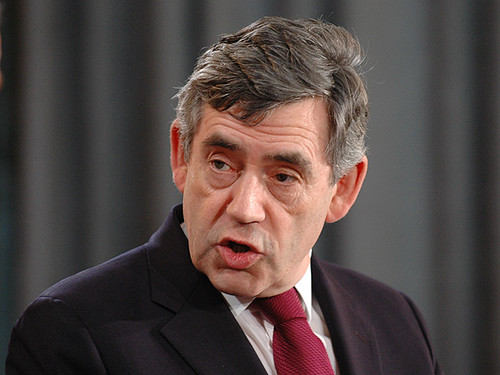
But nowhere is the euroelection being watched more closely as a barometer than in Britain, where it is being held concurrently with many local council elections across England. Gordon Brown’s government is in freefall this week. The ongoing expenses scandal has caused Brown’s already weak government to fall apart, and each hour that passes seems to get worse. The last two days have seen the resignations of several cabinet ministers, and it is thought that Chancellor Alistair Darling will be sacked within days. Brown will have to form a new cabinet next week, but if Labour MPs refuse to serve on his cabinet, he will have to step down as Labour leader. A new Labour leader would then be selected by the party, who would inevitably have to call a general election that Labour will almost certainly lose. It is thought that Labour MPs are waiting for the result of today’s vote to make their decision. If Labour does dismally (some are predicting they could even come in fourth or fifth behind the far-right British National Party) then they will force his resignation by refusing to serve on his new cabinet.

It is expected that the Tories will probably receive the largest share of today’s EP vote, thought the majority of people almost certainly don’t realize what they’re voting for with that decision. David Cameron is set to take the Tories out of the parliament’s main centre-right EPP grouping shared by Angela Merkel and Nicolas Sarkozy and form a new Eurosceptic fringe grouping by allying with far-right parties of Eastern Europe. This issue has received almost no coverage from the British media, so it is certain that most of today’s Tory voters aren’t aware that they’re voting for a coalition that will include the anti-gay, climate-denying Polish nationalist Law and Justice party. That said, perhaps even if they knew they wouldn’t be bothered by it.

Rock Stars and Royalty

Of course there are interesting non-government-toppling things to look out for in Sunday’s results as well. In the Netherlands, for instance, the country is rife with speculation over the performance of controversial populist Geert Wilder’s anti-Islam Party for Freedom, which many are expecting to do quite well. In France, people are watching to see if the newly solidified Socialist Party leadership of Martine Aubrey will give people confidence that Sarkozy’s opposition is back in the game and safe for a vote after a year of chaos and in-fighting. I think that’s unlikely and they will probably do quite poorly, especially considering that Communist Olivier Besancenot’s new Anti-Capitalist Party is expected to do well and will probably siphon off votes from them. But just how well they will do is a matter of speculation, and I imagine it will keep Sarkozy up quite late Sunday night if they have a good result.

Then of course there’s the amusing MEP entries of this year’s election. The European Parliament, often half-jokingly maligned as a refuge of freaks, cast-aways and has-beens, has attracted its fair share of celebrity candidates this year. Slovakia, which was mortified after the last EP election five years ago when it had the lowest turnout in all the EU at just 17%, has pulled out all of the stops to try to get people to the polls this year, fielding an African-born pop singer, a fitness trainer and a former ice hockey star. Who knows that their objectives for Europe are, but I suspect the main intent with fielding them was just to make sure Slovakia doesn’t come last in turnout again.

Another interesting one to watch will be Sweden’s Pirate Party, a group formed entirely in reaction to the recent prosecutions in that country of file-sharing site managers. The candidates actually dress as pirates and have used pirate speak when campaigning (and they’re expected to gain some seats on Sunday!). There’s also Elena Basescu - Romania's equivalent to Paris Hilton – who is expected to win a seat as she is the daughter of the Romanian president. Other quirky candidates include a former Czech astronaut; a Finnish racing champion and a Bulgarian Taekwondo idol.

And of course my nerdy European history fascination can’t help but be interested in the fact that the reigning heirs of two of Europe’s formerly most powerful but today ousted (and banned) monarchies – the Habsburgs and the Savoys – are both in the running in Austria and Italy respectively. The candidacy of “Prince of Venice and Piedmont” Emanuele Filiberto in Italy is particularly interesting as he was banned from entering Italy his whole life (oweing to the expulsion of members of the former Italian monarchy when the Republic was declared in until Berlusconi lifted the restriction for him and his father in 2002. Shortly after that he celebrated his triumphal return to his family’s former kingdom by entering Italy’s version of Dancing with the Stars.

Asked why he would make a good MEP, he said, "I was in exile for 31 years and I know Europe well. I speak five languages. I know half of the current heads of state personally, and the other half I'm related to." It’s an argument any Royalist could agree with!

Check out this BBC site for real-time election results on Sunday and Monday. I'll be in Berlin this weekend, but will certainly be keeping tabs on it from there!