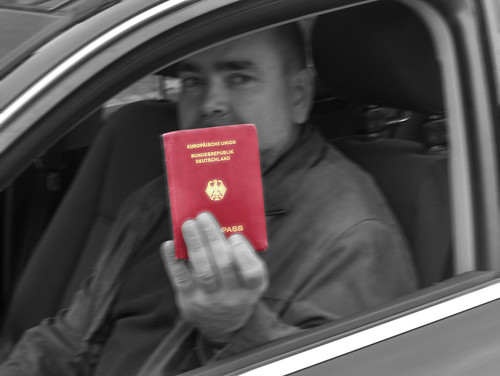
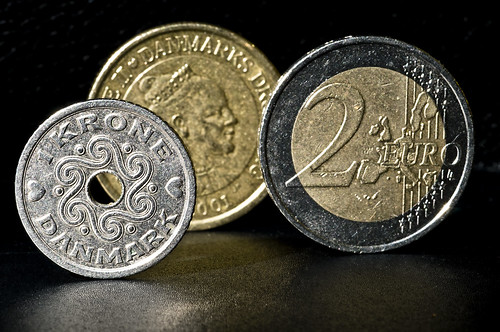
For the first time in six decades, Sweden has installed controls at its border with Denmark.
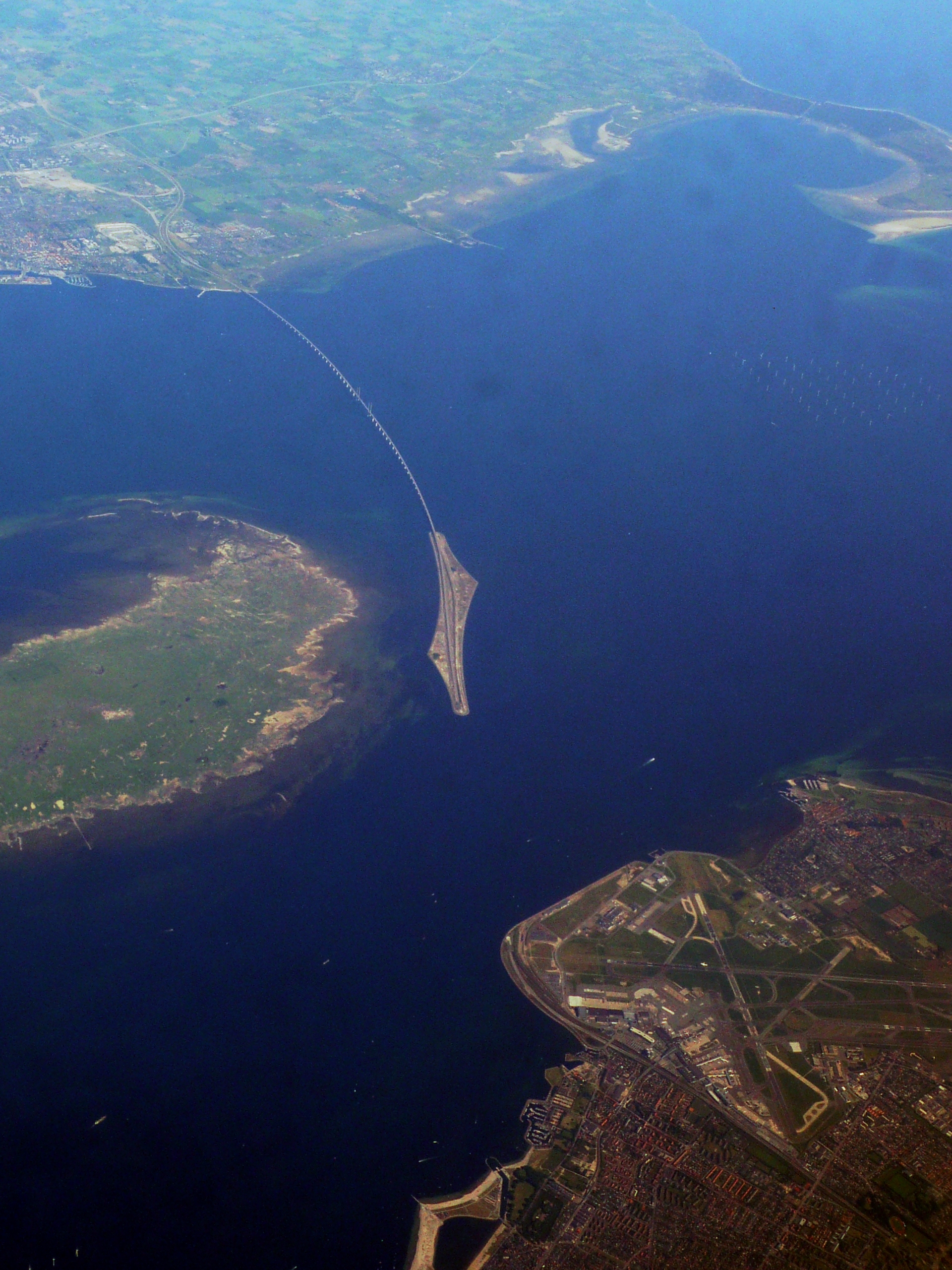
This morning, border checks took effect on the Öresund Bridge, which connects with countries of Sweden and Denmark. 30,000 people use this bridge to commute between the cities of Copenhagen and Malmo each day. For comparison, imagine New York and New Jersey setting up ID checks on the George Washington Bridge
The news might not seem particularly remarkable to British or American readers. After all, they have to go through a passport control to get to any other country, so why shouldn't Swedes or Danes?
Showing posts with label Denmark. Show all posts
Monday, 4 January 2016
Tuesday, 13 August 2013
Ins and outs
As the British seek new EU opt-outs, Danes will likely vote to end theirs.
Over the past several years, asUK
prime minister David Cameron has taken his country further and further toward
the EU exit door, he has been keen to stress that the UK is not alone
in its desire for a more devolved EU.
He points to the increasingly Eurosceptic Dutch, who have,
like the UK ,
recently conducted a review of
the EU's powers. He points to the Danes and Swedes, who are also voluntarily
remaining outside the Eurozone.
Over the past several years, as
So when news came this week that it now looks likely
that Denmark
will hold an ‘EU referendum' next year, it may have seemed like
welcome news for the British Conservatives. Cameron has attracted a
large amount of ill will on the continent by scheduling an in/out
EU referendum for the UK
in 2017. But why should Britain
be singled out for scorn, when the Danes are holding their own EU referendum?
However the Danish case is a very different animal. The
British referendum will be a vote on a theoretical new EU-UK
relationship which the government will negotiate, giving the UK more
opt-outs from EU law. The Danish referendum will be the opposite – a vote on
whether to end the opt-outs Denmark
negotiated for itself back in 1992.
Monday, 20 May 2013
Is Merkel to blame for Germany's Eurovision loss?
German commentators were wringing their hands on Sunday over
the country’s disappointing finish at the Eurovision final Saturday night. The
country came 21st out of the 26 countries performing, despite
fielding well-known dance act Cascada with a radio-friendly song which the
German media had predicted could possibly win.
Others in Germany had, before the final, predicted the opposite – that the high level of anti-German feeling in Europe today over the austerity regimes imposed by Angela Merkel would make it impossible for Germany to win even if they fielded the greatest song eversung by mankind.
Out of the 39 countries voting, 34 refused to give Germany any points at all. Austria, Switzerland, Israel and Albania were the only ones to award the country points, along with bailed-out Spain - which came as a surprise (but could be accounted for by the large amount of German pensioners living in Spain for retirement). Germany received a humiliating score of just 18 points, compared to 281 points for Denmark's winning entry.
The coordinator for Germany’s ARD TV network told German media on Sunday, "There's obviously a political situation to keep in mind - I don't want to say 'this was 18 points for Angela Merkel', but we all have to be aware that it wasn't just Cascada up there on stage, but all of Germany."
Others in Germany had, before the final, predicted the opposite – that the high level of anti-German feeling in Europe today over the austerity regimes imposed by Angela Merkel would make it impossible for Germany to win even if they fielded the greatest song eversung by mankind.
Out of the 39 countries voting, 34 refused to give Germany any points at all. Austria, Switzerland, Israel and Albania were the only ones to award the country points, along with bailed-out Spain - which came as a surprise (but could be accounted for by the large amount of German pensioners living in Spain for retirement). Germany received a humiliating score of just 18 points, compared to 281 points for Denmark's winning entry.
The coordinator for Germany’s ARD TV network told German media on Sunday, "There's obviously a political situation to keep in mind - I don't want to say 'this was 18 points for Angela Merkel', but we all have to be aware that it wasn't just Cascada up there on stage, but all of Germany."
Tuesday, 24 April 2012
Are Europe's conservatives now dependent on the far right?
Yesterday’s news that the government of Dutch Prime Minister
Mark Rutte had collapsed sent almost immediate shock waves through the world’s
financial markets.
Investors, who were already feeling skittish about the first-round victory of French Socialist presidential candidate Francois Hollande on Sunday, found themselves with something much more serious to worry about. The government of the Netherlands, one of the core austerity-pushing states of the Eurozone, couldn’t even pass the tough medicine they helped design for Europe.
Holland and the three other euro-using countries that still have triple A ratings (Germany, Finland and Austria) have pushed for every eurozone country to make massive cuts by the end of the month. But yesterday Rutte was forced to tender his resignation after it became clear he could not get his own parliament to approve the tough medicine he had helped design for all of Europe.
But perhaps more interesting from a political perspective is who it was that precipitated this crisis – the infamous far right leader GeertWilders. Rutte was only able to form his governing coalition in 2010 by relying on the backing of Wilders and his far right Party of Freedom group, which had polled at 15.5% in that year's election. Wilders has been tried in the Netherlands for hate speech against Muslims, and has been banned from entering the UK in the past.
Investors, who were already feeling skittish about the first-round victory of French Socialist presidential candidate Francois Hollande on Sunday, found themselves with something much more serious to worry about. The government of the Netherlands, one of the core austerity-pushing states of the Eurozone, couldn’t even pass the tough medicine they helped design for Europe.
Holland and the three other euro-using countries that still have triple A ratings (Germany, Finland and Austria) have pushed for every eurozone country to make massive cuts by the end of the month. But yesterday Rutte was forced to tender his resignation after it became clear he could not get his own parliament to approve the tough medicine he had helped design for all of Europe.
But perhaps more interesting from a political perspective is who it was that precipitated this crisis – the infamous far right leader GeertWilders. Rutte was only able to form his governing coalition in 2010 by relying on the backing of Wilders and his far right Party of Freedom group, which had polled at 15.5% in that year's election. Wilders has been tried in the Netherlands for hate speech against Muslims, and has been banned from entering the UK in the past.
Thursday, 1 December 2011
After 18 months, Belgium will have a government again
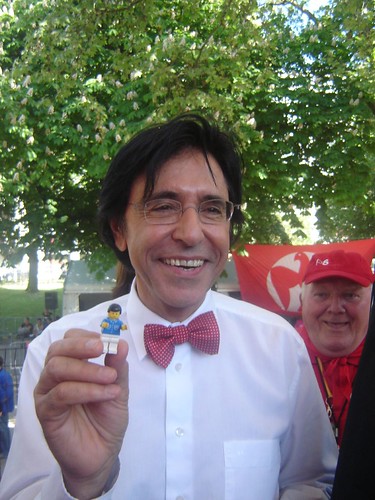
Belgium will make history this weekend in two ways. When a new government is finally formed on Sunday it will end the longest period that any country has gone without a government in modern history. And when Elio di Rupo is appointed prime minister, Belgium will become the first country in the world to have an openly gay male head of government.
I've specified 'male' because Iceland actually beat Belgium to the punch for the first gay leader of any sex – their openly lesbian Socialist Prime Minister Johanna Sigurdardottir was elected in 2009. In both countries the leader’s sexual orientation has been of little concern to the public or the media. In Belgium it is rarely ever mentioned, and in Iceland people were actually confused in 2009 when their PM’s sexual orientation received worldwide attention.
The sexual orientation of Di Rupo, also a Socialist, isn’t the only thing that makes him a different sort of politician. He is the son of Italian immigrants – a sizable population in Belgium’s Wallonia region who are descendants of the Italians who came to work in the mines in the early 20th century. This fact prompted one Belgian politician to say Di Rupo was evidence that the “American dream” is possible in Belgium.
I've specified 'male' because Iceland actually beat Belgium to the punch for the first gay leader of any sex – their openly lesbian Socialist Prime Minister Johanna Sigurdardottir was elected in 2009. In both countries the leader’s sexual orientation has been of little concern to the public or the media. In Belgium it is rarely ever mentioned, and in Iceland people were actually confused in 2009 when their PM’s sexual orientation received worldwide attention.
The sexual orientation of Di Rupo, also a Socialist, isn’t the only thing that makes him a different sort of politician. He is the son of Italian immigrants – a sizable population in Belgium’s Wallonia region who are descendants of the Italians who came to work in the mines in the early 20th century. This fact prompted one Belgian politician to say Di Rupo was evidence that the “American dream” is possible in Belgium.
Monday, 21 November 2011
Europe's left has vanished from the map
It's a process that's been long in the making, but this weekend's election in Spain seemed to be the final nail in the coffin for European Democratic Socialism - at least for the moment. With the fall of the Socialist government of Jose Luis Rodriguez Zapatero in Spain, following on the heels of the fall of Socialist prime minister George Papandreou in Greece two weeks ago, the EU is now left with only two centre-left governments - Denmark and Austria.
The already dwindling left was already not in a good position, with just five centre-left governments out of the 27 EU states at the beginning of the year. Four of those governments have since fallen, including the collapse of the Slovenian government in September (new elections, which the Left is certain to lose, will be held next month). Only the Austrian government has survived, and they were joined by the Danish social democrats who won a trend-defying election in September. Cyprus, which has a communist (but in truth more nationalist) government, does not sit with the centre-right grouping in Europe.
At the same time, five governments now have provisional or technocratic governments - effectively under the control of the markets and the dominant centre-right governments of Europe. The presidencies of the three institutions of EU governance - the commission, the parliament and the council - are all held by the centre-right. The situation is unprecedented. The irony is, at this time of crisis when Europe seems to be tearing itself apart, the governments of Europe have never been so ideologically united - at least in terms of the left-right divide.
The already dwindling left was already not in a good position, with just five centre-left governments out of the 27 EU states at the beginning of the year. Four of those governments have since fallen, including the collapse of the Slovenian government in September (new elections, which the Left is certain to lose, will be held next month). Only the Austrian government has survived, and they were joined by the Danish social democrats who won a trend-defying election in September. Cyprus, which has a communist (but in truth more nationalist) government, does not sit with the centre-right grouping in Europe.
At the same time, five governments now have provisional or technocratic governments - effectively under the control of the markets and the dominant centre-right governments of Europe. The presidencies of the three institutions of EU governance - the commission, the parliament and the council - are all held by the centre-right. The situation is unprecedented. The irony is, at this time of crisis when Europe seems to be tearing itself apart, the governments of Europe have never been so ideologically united - at least in terms of the left-right divide.
Friday, 16 September 2011
Denmark's election: is the Left clawing its way back?
The centre-left Social Democratic Party scored a victory in yesterday's closely-watched general election in Denmark, ending the 10-year reign of a conservative coalition that had been moving steadily further and further to the right.
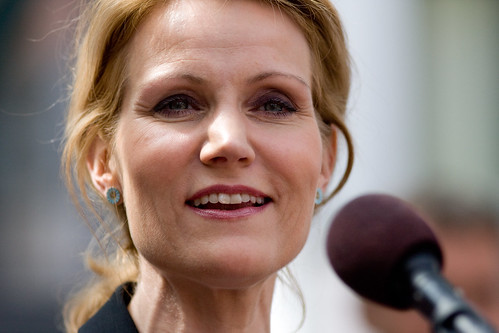
The campaign of the centre-left coalition, called the 'Red Bloc', was centred around a promise to raise taxes on the country's investment banks and wealthiest citizens, reversing a trend of decreasing corporate taxes led by the previous government. The victory for this message is a stinging rebuke to the current austerity crusade dominating the governments of Europe. The Social Democrats, led by Helle Thorning-Schmidt (pictured above), promised to actually expand Denmark's welfare system, which is already one of Europe's largest. They have also promised to use the proceeds from increasing taxes on investment banks and the wealthy to improve roads, schools and hospitals.
So is this a sign that Europe's hobbled left may be on it's way back? Are voters across Europe growing tired with the messages of the right and ready to turn to a new direction? Or are the circumstances of this change in direction limited to Denmark?
Thursday, 7 July 2011
Poland fires warning shot over Denmark's 'nationalist' moves
Poland is not usually known as a very pro-EU country. In fact, it has gotten the reputation as the most Eurosceptic of the new member states. But yesterday Polish Prime Minister Donald Tusk lambasted recent moves by Denmark, France and Italy to undermine the European project. He signalled he intends to halt the current slide, led by those Western countries, toward reintroducing border controls at internal EU borders.
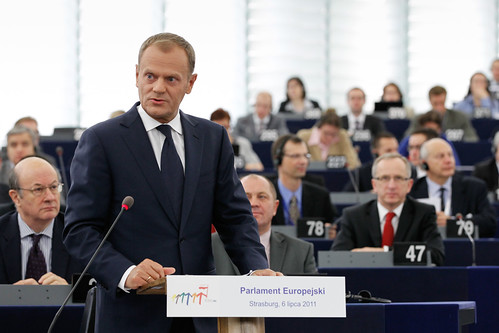
Tusk was speaking to the European Parliament in Strasbourg to mark the start of Poland's presidency of the EU, which will last the next six months. "The answer to the crisis is more Europe," he said, not less. He indicated that he will fight against efforts to further erode EU principles, and suggested he was unhappy with the deal reached among member states last month to allow temporary internal border patrols to deal with increased immigration.
"I am against any barriers to internal free movement under the pretext of dealing with migration problems. What Denmark is doing is a concern for anybody who thinks that free movement is going to be restricted even further," he told the parliament. "Europe, with its institutions, its budget and its objectives, is not the source of this crisis. And following those who say the opposite would be a fatal mistake. Undoing the European construction at this time and turning to nationalism as an answer to the crisis would be a very big mistake."It was a fairly unusual move for the incoming presidency to take such a political stance against what other member states are doing, because the presidency is supposed to be a neutral negotiator in the council. But Poland has always marched to the beat of its own drummer when it comes to the EU.
Friday, 13 May 2011
A return to walls in Europe
There's something rotten in the state of Denmark, and the rot is spreading fast throughout the European Union. Brussels is in shock today following yesterday's announcement by Denmark that it will reintroduce border controls with neighbouring Sweden and Germany.
The move is a violation of the bloc's Schengen passport-free rules and a worrying sign as EU ministers meet in Brussels today to discuss possible changes to the Schengen rules. The plan would set up the first border control between Sweden and Denmark in more than 50 years.
The move is no doubt intended as a pre-emptive strike ahead of today's negotiations, a message to the EU that if the ban on internal border controls isn't loosened member states are going to ignore it and unilaterally re-impose passport checks. Denmark likely feels confident enough to take this bold unilateral move because of the letter sent to the European Commission by Nicolas Sarkozy and Silvio Berlusconi two weeks ago.
The letter demanded that member states be allowed to reimpose internal EU borders in "exceptional circumstances." They believe that the current increase in migrants trying to come to Europe from North Africa qualifies as one of these circumstances. Denmark clearly feels that this letter from two large member states gives them cover to unilaterally impose their own border control. It is the first country ever to reimpose permanent border checks in the history of the Schengen Zone, and there is now fear of a 'chain reaction' that would see the reintroduction of controls at all internal borders.
The move is a violation of the bloc's Schengen passport-free rules and a worrying sign as EU ministers meet in Brussels today to discuss possible changes to the Schengen rules. The plan would set up the first border control between Sweden and Denmark in more than 50 years.
The move is no doubt intended as a pre-emptive strike ahead of today's negotiations, a message to the EU that if the ban on internal border controls isn't loosened member states are going to ignore it and unilaterally re-impose passport checks. Denmark likely feels confident enough to take this bold unilateral move because of the letter sent to the European Commission by Nicolas Sarkozy and Silvio Berlusconi two weeks ago.
The letter demanded that member states be allowed to reimpose internal EU borders in "exceptional circumstances." They believe that the current increase in migrants trying to come to Europe from North Africa qualifies as one of these circumstances. Denmark clearly feels that this letter from two large member states gives them cover to unilaterally impose their own border control. It is the first country ever to reimpose permanent border checks in the history of the Schengen Zone, and there is now fear of a 'chain reaction' that would see the reintroduction of controls at all internal borders.
Friday, 15 April 2011
Angry birds: Are 'True Finns' about to stage a revolution?
Those who have been tracing the recent rise of the European far right will have their eyes trained on Finland this Sunday, as that country holds a national election. According to recent opinion polls the Finnish nationalist party the "True Finns" could ride a wave of populist fervor to unprecedented electoral success on Sunday.
A Gallup poll last month put the True Finns in second place at 18.3% of the vote, just behind the ruling centre-right National Coalition Party. Led by MEP Timo Soini, the party has all the ingredients of today's far right in Europe: anti-immigration, anti-EU and pro-nationalism. They also display all the anomalies of today's far right: pro social welfare (but for ethnic Finns only), relatively pro gay rights, and working hard to project a respectable, PR-friendly image.
It is the same formula that has led to success for the Sweden Democrats in neighboring Sweden, the Danish People's Party in Denmark, the Freedom Party in the Netherlands, the National Front in France and the British National Party in the UK. And in the same way as all of these other countries, the main parties of Finland have been working to co-opt much of the far right's message in order to blunt their electoral impact.
A Gallup poll last month put the True Finns in second place at 18.3% of the vote, just behind the ruling centre-right National Coalition Party. Led by MEP Timo Soini, the party has all the ingredients of today's far right in Europe: anti-immigration, anti-EU and pro-nationalism. They also display all the anomalies of today's far right: pro social welfare (but for ethnic Finns only), relatively pro gay rights, and working hard to project a respectable, PR-friendly image.
It is the same formula that has led to success for the Sweden Democrats in neighboring Sweden, the Danish People's Party in Denmark, the Freedom Party in the Netherlands, the National Front in France and the British National Party in the UK. And in the same way as all of these other countries, the main parties of Finland have been working to co-opt much of the far right's message in order to blunt their electoral impact.
Thursday, 3 March 2011
Denmark may join the euro before the summer
It might seem counter-intuitive given the ongoing tremors within Europe's common currency, but believe it or not Denmark is considering holding a referendum on joining the euro in the next few months. Though Danes rejected joining the common currency in 2000, the country's prime minister said yesterday that they may give it another shot. And poll numbers indicate that this time it could succeed.
All EU countries are required to join the euro eventually, but Denmark and the UK have an opt-out from this requirement. But, as is the case with so many EU opt-outs, Denmark is actually a pseudo-member of the eurozone. Because Denmark is in the European Exchange Rate Mechanism, its currency is pegged to the euro. So essentially, Denmark is already on the euro, it just uses different pieces of paper. But because it doesn't technically use the euro, it can't take part in eurozone decisions. And now that Angela Merkel and Nicolas Sarkozy are pushing for the creation of Eurozone decision-making body, the situation has become quite undesirable for Denmark. It will be affected by the decisions made in this new body, but it won't be able to join it. And that is why, despite the eurozone trouble, this might be exactly the right time for Denmark to join the euro.
Thursday, 20 January 2011
Is David Cameron forming an Anti-European Union?
Nicolas Sarkozy's plans for a "Mediterranean Union" may be floundering, but at the other end of Europe British Prime Minister David Cameron is just getting started with plans to form a 'Northern European Union.'
The leaders of Britain, Sweden, Denmark, Norway, Finland, Iceland, Latvia, Lithuania and Estonia are all meeting in London today to discuss the potential for a grouping which Cameron is calling an "alliance of common interests". He wants to boost trade between the UK and the Nordic and Baltic countries, but also to increase the flow of ideas. These include ideas on technology and economic and social policy, areas in which Northern Europe has similarities and expertise that are not necessarily shared by many countries in other parts of Europe.
Cameron insinuated as much yesterday when he said a northern grouping could become an "avant garde" for economic growth in Europe. And of course, Northern European countries have deep historical ties as most were ruled by Denmark at one time or another. And before the EU came along the Nordics had their own attempted intergovernmental union, the Nordic Council.
The leaders of Britain, Sweden, Denmark, Norway, Finland, Iceland, Latvia, Lithuania and Estonia are all meeting in London today to discuss the potential for a grouping which Cameron is calling an "alliance of common interests". He wants to boost trade between the UK and the Nordic and Baltic countries, but also to increase the flow of ideas. These include ideas on technology and economic and social policy, areas in which Northern Europe has similarities and expertise that are not necessarily shared by many countries in other parts of Europe.
Cameron insinuated as much yesterday when he said a northern grouping could become an "avant garde" for economic growth in Europe. And of course, Northern European countries have deep historical ties as most were ruled by Denmark at one time or another. And before the EU came along the Nordics had their own attempted intergovernmental union, the Nordic Council.
Tuesday, 16 November 2010
David Cameron's lucky day
It's been a good day for UK Prime Minister David Cameron. This morning Britain's Prince William announced he will wed his long-time girlfriend Kate Middleton in a lavish royal wedding next year. Cameron was reportedly ecstatic when he announced the engagement to his cabinet, and it's not hard to see why. A royal wedding is exactly the sort of thing the Tories need to lift the spirits of the British public, who are suffering so much from the economic crisis and the budget cuts. In fact the engagement announcement already started fulfilling its role as a much-needed distraction today as it completely drowned out the simultaneous announcement from 10 Downing Street of a raft of new cuts including, ironically, the scrapping of legal aid for poor people getting a divorce. So while the royal family celebrates an upcoming wedding, their subjects learn it will now be harder for them to obtain an equitable separation.
Meanwhile over in Brussels, word came this morning that Cameron may get his wish for a complete freeze in the EU budget after all. Talks between member states and the European Parliament over the 2011 EU budget broke down last night. With no agreement in sight, it will mean that the 2010 budget will have to be used next year. Freezing the EU budget at 2010 levels was exactly what Cameron wanted, though this is probably not the way he wanted to get it. But Brussels was in despair today over the failure to reach an agreement, which will have very serious consequences for the EU. Both the commission and the parliament seemed to be shocked by the deliberate sabotaging of the budget that appears to have been led by the UK with the aid of their Dutch and Danish eurosceptic allies.
It was particularly shocking considering that parliament had broken precedent and completely capitulated to member states' demand that the budget not be raised by more than 3% (the parliament had originally called for a 6% raise). What appears to have happened is that certain member states are using the budget negotiations as a power play, seeking to sideline an increasingly assertive European Parliament that has sought to use the new powers it was granted by the Lisbon Treaty. The irony of the situation was lost on no one in Brussels today. The British Conservatives, who are constantly whining about the "democratic deficit" in the EU, are seeking to marginalise the only directly elected EU institution. And they are willing to play a dangerous game to do so.
Meanwhile over in Brussels, word came this morning that Cameron may get his wish for a complete freeze in the EU budget after all. Talks between member states and the European Parliament over the 2011 EU budget broke down last night. With no agreement in sight, it will mean that the 2010 budget will have to be used next year. Freezing the EU budget at 2010 levels was exactly what Cameron wanted, though this is probably not the way he wanted to get it. But Brussels was in despair today over the failure to reach an agreement, which will have very serious consequences for the EU. Both the commission and the parliament seemed to be shocked by the deliberate sabotaging of the budget that appears to have been led by the UK with the aid of their Dutch and Danish eurosceptic allies.
It was particularly shocking considering that parliament had broken precedent and completely capitulated to member states' demand that the budget not be raised by more than 3% (the parliament had originally called for a 6% raise). What appears to have happened is that certain member states are using the budget negotiations as a power play, seeking to sideline an increasingly assertive European Parliament that has sought to use the new powers it was granted by the Lisbon Treaty. The irony of the situation was lost on no one in Brussels today. The British Conservatives, who are constantly whining about the "democratic deficit" in the EU, are seeking to marginalise the only directly elected EU institution. And they are willing to play a dangerous game to do so.
Friday, 14 August 2009
Songs, Sailing and Slaughter in Denmark
“Don’t worry, we will try it again.” The headmaster’s frustrated yet encouraging words were met with smirks and giggles by the journalists around the piano struggling to keep a straight face as we half-heartedly sang ‘Let it Be’. One had to admire his tenacity in trying to convert this group of hardened (and tone-deaf) international journalists to his lifestyle of self-enlightenment through group singing of ‘60’s hippie anthems, all sung out of a small blue-binded book that resembled a church hymnal.I was part of a group of journalists being led on a tour of Denmark taking a look at environment-related projects they have there. As a base we stayed at a “folk high school” in central Jutland overlooking a beautiful lake, normally populated by young adults on a quest to find themselves (a quest that is half government-funded I might add). The headmaster’s efforts to teach us the ways of being in harmony with the earth were quite adorable, if in the end unsuccessful. We may have been environment reporters, but we’re still cynical journalists after all!
Yet as cynical as we were, you didn’t have to be a hippie to be impressed by Denmark’s pioneering green efforts. The tour was linked in to the hugely important UN climate change summit that will be held in Copenhagen in December. The meeting was pushed three years ago by Denmark with the intention of giving nations a firm deadline by which to be ready for a worldwide agreement on how to combat climate change. Denmark has been a natural leader in this fight, having been one of the earliest movers in environmental legislation. It was the first country to establish an environment ministry in 1973. Since a dispute with OPEC in the ‘70’s it has weaned itself almost completely off oil, now getting its electricity from a mixture of renewable energy and coal. It set up its first wind turbines in the 70’s and today wind power provides 20% of Denmark’s power generation (renewables in total provide 28%), The country is well positioned to meet the EU’s requirement of 30% energy consumption from renewables by 2020, and it is planning to go even further.Seasick Journos
We were on our way to visit one of these wind turbine farms far out in the North Sea on Tuesday when some of us realized we were in for more than we had bargained for. We were taken out for the 8 hour sea voyage in a small wooden boat which, though beautiful, took us for a wild ride as we bounced up and down on the tempestuous sea. It was quite an experience, and as the wooden boat creaked and moaned its way out from the Danish port of Estbjerg in Southwest Jutland, I could really get a sense of what ye olde long sea voyages must have been like (i.e., not pleasant!).
As we neared the windfarm site of Horns Rev, feared by sailors for centuries because of its wild winds and shallow waters, the boat began to literally leap up and down from the sea, and we all had to hold on to keep from being knocked over. A number of the journalists started losing their lunch over the side of the boat. Luckily I had taken a motion sickness tablet in the morning so I was ok.
When we finally reached the garden of turbines jutting majestically up from the sea, it was undeniably impressive. These things are massive, rising 115 metres into the air. The blades alone are 45 metres in length. Much of the objection to setting up wind turbines has been that they make a lot of noise, and yet I can attest that even though these blades are the size of a football pitch, I couldn’t hear anything even when the ship was right next to them (granted, the waves were pretty loud). Just one of these turbines supplies energy to 2,200 households. In total the whole Horns Rev site provides 350,000 households with power.But the project hasn’t been an unblemished success. When they first installed the turbines there was a problem with the gears. Essentially they weren’t strong enough to handle the massive amount of wind in this area of the ocean. So all of the turbines had to be retrofitted with new motors, costing wind turbine company Vestas a massive amount to fix them.
We met with the CEO of Vestas on Wednesday, and I asked him about their recent decision to pull out of the UK which has resulted in demonstrations and a plant takeover on the Isle of Wight. He said straight up that the UK is not an attractive market for investment in onshore wind power right now, and now that the US has opened up as a renewables market with the Obama administration’s climate bill, they are focusing their energy there. That may be making the UK government quite nervous, as environment minister Ed Milliband just announced a big target for wind energy in the UK. Does this target reflect economic reality when the private sector seems to be wary of wind in the UK? I’m working on an article on this topic for the September ENDS Europe report.Clean Houses and Dirty Waste
I actually had the opportunity on this junket to do two things I had also done on the Holland junket in June – visit a waste incineration plant and an energy-generating house.It was interesting to compare and contrast the Dutch and Danish versions of these two things. The waste incineration plant was pretty similar, both in terms of its capacity to generate electricity and district heating and in its set-up. But the energy house was different in some significant ways. Whereas the Dutch version had been specifically designed to look like an average home and to be affordable in scale, the Danish house we looked at was designed as a luxury home.
I have to admit, the one in Denmark was a gorgeous house. It had an enormous amount of windows, meant to reduce the need to use lights during the day but that were also able to stop the sun from heating up the interior by being recessed. It also had a wind/temperature reading device at the top that would adjust the settings in the house to be the most energy-efficient. It would use its calculation of the speed and direction of the wind and temperature to automatically open and shut windows in the house and close/open shades. The entire thing was controlled by this futuristic control panel in the kitchen that gave out readings for the energy use of the whole home.
However the cost, at 5 million Danish crowns, would be prohibitive for any middle-class family in Denmark. Looking at it I got the impression I was seeing the house of the future, but perhaps not the practical energy-efficient house of today. It definitely looked nicer than the Dutch house, with almost unnoticeable solar panels built right into the roof as opposed to the obvious ones on the roof of the Dutch house (and also no wind turbine, which was good because the turbine on the roof of the Dutch house didn’t look very nice). But realistically, could anyone really afford to live in the Danish luxury house?Both Denmark and the Netherlands are one of the few countries to offer feed-in tariffs for households with solar panels or wind turbines, letting customers actually output the excess energy they generate into the power grid. They then build up a credit with the power company and they can work off that credit when they need to take in energy from the grid at night whhile the sun isn’t out (a battery for just one house would be prohibitively expensive even for the luxury home). One interesting difference though was that in the Dutch house, if you didn’t use all the excess energy you had generated at day during the night, the power company would pay you for the leftover energy. In the Danish feed-in tariff system, that payment is not available.
Next week I’m going to pop up to Camden in London to take a look at such an energy house in the UK, where there is no feed-in tariff regime available at all. With the UK rather notoriously lacking in sunlight, I wonder how this Camden house can possibly be cost-effective.
Green Slaughterhouses
One of our final stops yesterday was at the main Danish Crown abattoir outside Arhus. It’s the second largest slaughterhouse in Europe, in a country which leads the continent in pork exports. It kills an astonishing 87,000 pigs a week (17,500 every weekday) and we saw the whole process from start to finish. The facility is brand new, and almost everything in it is automatic. Each pig is stunned, killed, bled, gutted, chopped up and ready in less than a minute.
I’d never seen a slaughterhouse before, and wondered how I would react to it. It’s kind of a gross thing to watch, but as a meat-eater I felt I’m obligated to watch the process. It actually wasn’t all that surprising, in fact it was cleaner and more efficient than I was expecting. The actual moment of death was fascinating to watch, a man shoves a blade into each pigs throat one after the other in rapid succession as they come through hanging on a conveyor belt, limp and unconscious. It’s an almost constant in-out-in-out with the blade. Gruesomely efficient. Seeing it didn’t really change my opinion about eating meet. I’m dating a vegetarian right now and my flatmate is one as well, so I get a lot of pressure to convert.After the slaughterhouse we went next door to see the biogas plant that uses the fat and unused organs from the pigs to produce biodiesel for use in cars. The EU has set a discretionary target for using biodiesel, although this is a bit up in the air now given the controversy over ethanol disrupting food supply. Biodiesel from animal fat is really the “good” kind of such fuel, as it’s made from animal parts that would just have been thrown out anyway rather than from food that could have been eaten.
Uncover the Bridge!
I spent Wednesday evening in Arhus, which is really a lovely town. It was amazing to see its transformation from a rather gritty port to a lovely preserved Scandinavian town. The river running through it had long ago been covered over and made into a road, with the water running under it in pipes (something unfortunately done in many European cities during industrialisation). But earlier this decade they decided to uncover it, making an actual river with a lovely pedestrian walkway running along it. We were given a tour by an architect instrumental in the design, who is now also involved in the redevelopment of the port into a knowledge-based business centre. Seeing the results, I wondered if the same thing could be accomplished in Brussels, where the Senne river was covered up a century ago. It would certainly go a long way in making Brussels a nicer place to be, something it badly needs.Overall it was impressive to see all the green progress Denmark has made, and it was interesting to hear the observations and comparisons by the other journalists from around the world. Just like on the Holland trip we had a significant contingent from Brazil, who were particularly interested in the biodiesel. And once again I was the only American in the group.
Sitting in the main hall at the folk high school, I had a rather funny experience that showed how much my self-identification has changed over the past three years. At one point the headmaster was telling a story about an epiphany he had in Africa on a safari, and he was about to say something unflattering about some Americans with him there (Americans are often used as a foil in European anecdotes!) when he stopped and checked – “Oh, do we have any Americans here tonight?” There was a period of silence, and then I suddenly realized everyone was looking at me. “Oh right, I’m kind of American, I guess” I said sheepishly. I had literally forgotten for a minute there! Perhaps I only remember I’m American when people are telling flattering stories, not when someone’s about to launch into a diatribe. But usually, European stories about Americans fall into the second category!All in all a fun trip. Now I’ve got two whole weeks in London without travel. Time to relax!
Sunday, 9 August 2009
Jetting Around Jutland
I'm in Denmark this week, on a press tour organsied by the Danish government showing journalists different environmental sites around the country. I'm in Copenhagen tonight, came a bit early to spend the weekend here and visit some friends. I was last here two years ago, so it's good to be back. It's a beautiful city.
Tomorrow we're heading out to Jutland, the mainland part of Demark (that "juts" out into the North Sea. It should be pretty interesting. On Tuesday we'll be taking a boat out to an offshore windfarm out in the North Sea off the Western coast. We're also staying in a "folk high school" which is a form of live-in adult education popular in Northern Europe.
I suppose I'll be blogging about the trip when I'm back in London on Friday, until then here's a map of where I'll be going. Being an environmental journalist kind of rocks!
View Larger Map
Tomorrow we're heading out to Jutland, the mainland part of Demark (that "juts" out into the North Sea. It should be pretty interesting. On Tuesday we'll be taking a boat out to an offshore windfarm out in the North Sea off the Western coast. We're also staying in a "folk high school" which is a form of live-in adult education popular in Northern Europe.
I suppose I'll be blogging about the trip when I'm back in London on Friday, until then here's a map of where I'll be going. Being an environmental journalist kind of rocks!
View Larger Map
Friday, 1 February 2008
Denmark to probe CIA terror flights
A documentary broadcast Wednesday by the DR1 TV network in Denmark made a claim that CIA flights transporting terror suspects touched down at an airport in Greenland in 2005. The Danish prime minister responded on Thursday by saying it is fully investigating the claim. Greenland is an overseas province of Denmark.
The flight would have been part of the controversial and top-secret “extraordinary rendition” program the CIA has been running in which terror suspects were transported to countries outside the United States. Human rights groups have claimed the flights were intended to transfer the prisoners to countries or jurisdictions that allow torture.
Sunday, 20 May 2007
Copenhagen-Malmo
Here are some things that there are a lot of in Copenhagen:
-7/11s
-bicycles
-squares
-Americans
There really were tons of Americans there, you couldn’t shake a stick without hitting one (and not just because they’re so fat). Even beyond just Americans, you hear tons of English there. So much so that there’s no need to ask if someone speaks English before you just start speaking, as opposed to France or Germany where that would be rude and somewhat presumptuous (I did ask the Danes I met if they were ok with that). 7/11 seems to have taken over all of Scandinavia, it’s almost eery. Literally there’s one on every corner.
Subscribe to:
Comments (Atom)