Showing posts with label Party of European Socialists. Show all posts

Monday, 19 September 2011

Another small victory for Europe's Left - or is it?

Saturday's general election in Latvia yielded a victory for the country's centre-left coalition Harmony Centre. The coalition won the largest amount of seats in the parliament. But though this may seem like yet another promising victory for Europe's left following Thursday's election in Denmark, the facts on the ground are a bit more complicated than that.

Harmony Centre is a coalition between the Social Democratic Party and the Socialist Party (the communists). The SP is essentially an ethnic Russian party, formed in 1991 to replace the Communist party after the country achieved independence from the USSR. Though the new state was formed around the Latvian ethnic and linguistic identify, in fact less than 60% of people in Latvia are ethnically Latvian. Almost 30% of the country is made up of ethnic Russians, some of whom moved there during the Soviet period but others of whom have lived there hundreds of years. The majority of the ethnic Russians cannot speak Latvian. In some of latvia's largest cities they constitute the majority of residents by far.

Friday, 16 September 2011

Denmark's election: is the Left clawing its way back?

The centre-left Social Democratic Party scored a victory in yesterday's closely-watched general election in Denmark, ending the 10-year reign of a conservative coalition that had been moving steadily further and further to the right.

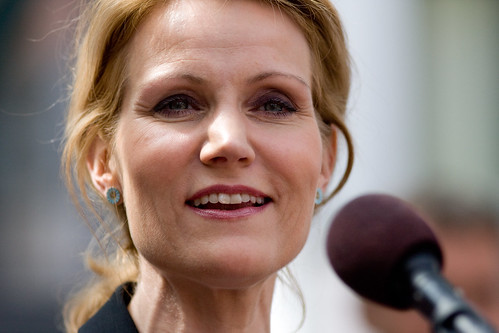
The campaign of the centre-left coalition, called the 'Red Bloc', was centred around a promise to raise taxes on the country's investment banks and wealthiest citizens, reversing a trend of decreasing corporate taxes led by the previous government. The victory for this message is a stinging rebuke to the current austerity crusade dominating the governments of Europe. The Social Democrats, led by Helle Thorning-Schmidt (pictured above), promised to actually expand Denmark's welfare system, which is already one of Europe's largest. They have also promised to use the proceeds from increasing taxes on investment banks and the wealthy to improve roads, schools and hospitals.

So is this a sign that Europe's hobbled left may be on it's way back? Are voters across Europe growing tired with the messages of the right and ready to turn to a new direction? Or are the circumstances of this change in direction limited to Denmark?

Monday, 6 June 2011

Europe's left continues to disappear

Yet another centre-left European government was ousted yesterday as the Portuguese voted overwhelmingly for the country's conservatives. Prime Minister Jose Socrates' Socialists, who have been in power since 2005, received just 28% of the vote. The centre-right party, bizarrely named the 'Social Democrats' (a legacy of Portugal's desire to avoid conservative-sounding names reminiscent of the dictatorship) got 37% of the vote, just short of an overall majority. They will form a coalition with the further right People's Party who polled at 11%.

"Centre-right wins in _____" is becoming a familiar headline for European Monday mornings. Conservative governments are re-elected, while centre-left governments are voted out. The left hasn't won an election here since the Socialists took power in Greece in 2009. With the Portuguese Socialists gone, this leaves the EU with only five centre-left governments - Greece, Cyprus, Austria, Slovenia and Spain. Compare this to the 19 governments controlled by the centre-right - plus three controlled by the right-leaning free-market Liberals.

Given the disastrous local election results for Spain's Socialists two weeks ago one can assume they will fall from power in the country's general election next year, if not earlier. This will leave the left with essentially no presence in Europe. It is an unprecedented situation in modern European history - the first time since the advent of widespread Democracy that the European left has had no voice.

Wednesday, 2 June 2010

The European left: an endangered species?

At the moment, Europe is a conservative-dominated continent. The anecdotal evidence that Europeans have been veering to the right at this time of economic crisis has been evident for some time, especially in last year’s European Parliament elections where voters handed a strong majority to the conservative EPP. But the string of centre-right victories over the past few months has demonstrated clearly that the European public is gravitating toward conservative ideologies as their own economic situations become more uncertain. And looking at the geographic location of the few centre-left governments left in Europe, once can see that Europe’s Social Democrats are really in trouble.

This weekend Czechs went to the polls to select a new government. They faced a stark choice between the centre-left Social Democrats who promised during the campaign to increase spending and social benefits, and the centre-right Civic Democratic Party (ODS) who pledged to make drastic budget cuts and reduce the deficit. It is a battle economists have been waging as well. As most countries emerge from recession, is it better to maintain state spending to fuel the recovery or to make drastic cuts to tackle the large deficits and public debt?

Thursday, 13 May 2010

So who are these "liberals" anyway?

I've had a lot of Americans ask me this week "what the hell is a Liberal Democrat?" The UK election has received some coverage across the pond over the past weeks, and I've been watching with interest how the American media has been covering it. Some have chosen to leave any mention of the Liberal Democrats out for fear of confusing people. Others (Fox News notably) have described them as being "another liberal party" with Labour.

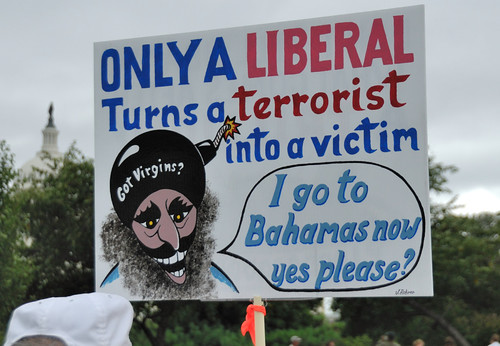
The confusion seems to be the result of the fact that "liberal" has different meanings in America and Europe. In the US "liberal" means someone on the left who believes in a combination of social liberalism, public welfare and a mixed economy. The American right wing has been relatively successful in giving the word "liberal" a negative connotation since the 1980's, hence the rise of the word "progressive".

But in Europe "liberal" is associated with classical liberalism, which is someone committed to the ideal of limited government, individual liberty and free markets. The difference has to do with the fact that the term, which originated in 19th century England, was never adopted in the US until the 1930's when FDR coined it to describe his New Deal policies. European liberals can be thought of more as "Libertarians" in the American context. Think Bill Maher.

Monday, 30 November 2009

Zapatero: the left’s last hope?

Spain’s rather shy, gentle prime minister Jose Luis Zapatero has never been one to seek out the limelight. But with the EU’s top jobs now all handed out, Zapatero has become the lone Socialist voice at the top level of the EU. In fact, the Spanish prime minister may be the last hope of relevance for European Democratic Socialism in the coming decade. Given his personality, this is likely a position he does not relish.

In the last week the European Council has chosen the first people to occupy the much anticipated President and Foreign Policy High Representative positions, and European Commission president Jose Manuel Barroso has unveiled the faces and portfolios of the new commissioners. Looking at the line-up one thing is clear: the next five years will see an EU dominated by the centre-right.

The Commission presidency, which will likely remain the most powerful position following the council’s decision to go with a low-profile presidency pick, is still occupied by the centre-right former Portuguese prime minister Barroso. Former Belgian prime minister Herman Van Rompuy, chosen as the first Council President (or “EU president” if you like), is also a Conservative. Baroness Ashton of the British Labour party was chosen to be the first foreign minister, but though she is technically in the Socialist camp, New Labour hardly fits comfortably in that grouping and she will be significantly to the right of most Western European Socialist parties. Even if she weren’t, she has already signalled she intends to maintain a low profile.

With the commission announcement on Friday it was clear that the most important positions had all gone to people from conservative parties. Centre-right Frenchman Michel Barnier got the all-important Internal Market position, for which Nicolas Sarkozy could barely contain his glee over the weekend. Denmark’s centre-right Connie Hedegaard got the newly-created Climate Change assignment, while Centre-right German Gunther Oettinger got the very important Energy post. Conservatives took the Industry, Development, Regional Policy, Health, Budget and Agriculture posts. So what did the Socialists and Liberals get? Something called “Digital Agenda”, Enlargement, Research and Innovation and Maritime Affairs to name a few. Nothing too flashy. It seems to me the only very important DG the Socialists got is Competition. That went to Joaquin Almunia, Zapatero’s colleague in Spain.

Following the pan-European conservative victory in the June European Parliament elections, which made the centre-right the largest party in parliament, that body also has a conservative president in Jerzy Buzek of Poland. This means the presidents of all three branches of EU government – the Commission, the Council and the Parliament – are all from the centre-right.

Wanted: a Sarkozy for the left

Contrary to what had been widely reported in the English-language press (I myself was guilty of the misunderstanding as well), the new Council presidency is not replacing the rotating council presidency that is held by a country. Here’s where it gets a little confusing. The European Council is actually made up of many different councils, each focusing on a different subject area. So for instance, there is a council of finance ministers that meets periodically with the finance ministers from each member state. Likewise for environment, agriculture or trade. Those meetings will still be chaired by the country holding the rotating EU presidency. And starting January 1st, that country will be Spain.

However the European Council of national leaders, when all the prime ministers/presidents meet, will no longer be chaired by the rotating country presidency. That all-important group will be chaired by Mr. Van Rompuy. This will take much of the pomp and ceremony out of the rotating presidency, but will leave it intact with practical power. Of course the question remains, how much power will it have? That detail will largely be settled over the coming months by Messieurs Von Rompuy and Zapatero.

It will be a critically important power struggle waged by two low-key, soft-spoken men. The Lisbon Treaty theoretically gives both men significant powers. Van Rompuy can call special summits of EU leaders, draw up the agenda of the meetings, decide on whether to hold a vote and decide if people outside the EU can attend the meetings. However Zapatero will be running the day-to-day running of the council, and the power over the details could end up eclipsing the power over the big picture. In addition the monthly general affairs council, which is extremely powerful, will still be chaired by Spain.

Zapatero has made statements in the past that he does not intend to role over and allow the rotating presidency to be sidelined. There may be ever-increasing pressure from his Socialist colleagues elsewhere in Europe for Zapatero to assert himself even further, considering he and Almunia appear to be the lone continental Socialists in positions of power anywhere in Brussels.
Of course all of this reflects the will of the voters, who have consistently elected conservatives to office in national elections over the past few years with the exception of Iberia and Greece.

Following UK election in April where the Conservatives will likely win, all three of the main EU countries will be under Conservative governments. In this kind of environment, does Zapatero stand a chance of maintaining a place at the table for European socialists? He’s hardly proved himself to be much of an internationalist in the past. Speaking only Spanish, he has largely relegated himself to focusing on Spain’s domestic issues rather than pushing for a Socialist agenda on the European stage. In this way he is almost the polar opposite of his zealous conservative counterpart Nicolas Sarkozy in neighbouring France.

Perhaps Zapatero could defy all expectations and emerge from his shell to become a sort of “Sarkozy of the left”. As the saying goes, cometh the hour cometh the man. Is this the mild-mannered Spanish leader’s time to shine?
Wednesday, 16 September 2009

It’s Official – Five More Years of President Barroso

It’s unusual for an EU commission president to serve more than one term, and many in the parliament and member states opposed him. So how exactly did the former Portuguese prime minister squeak by on re-appointment to the EU’s highest office today?

The short answer is, there wasn’t really any alternative.

Barroso is from the centre-right European People’s Party (EPP), which currently has a majority in the European Parliament and the leadership of most EU member states (including Germany, France and Italy – and though the current British government is not technically centre-right, Brown strongly supported Barroso’s re-appointment). Still, there was great concern about his re-appointment resulting in a “lame duck” commission presidency for the next five years.

Barroso’s first term as president of the EU’s executive body has been fairly lacklustre, having overseen the defeat of both the EU Constitution and the Lisbon Treaty (although the latter will likely soon pass in the Irish re-vote next month). Many have accused him of not having a “grand vision” for Europe, or even a cohesive idea of where the union should go. His tenure has been marked by a drift into Euro-stasis, a paralysation over the past five years that stands in marked contrast to the gung-ho attitude in Brussels before his tenure at the turn of the millennium.

But the fact that he was re-appointed handily despite all these misgivings (he was even able to obtain an absolute majority of 389 votes today – a big triumph for him) shows just how severe the Brussels leadership crisis is. Despite their intense opposition to Borroso’s re-appointment, the Socialists failed to come up with any candidate to oppose him. No candidate emerged from those who had misgivings on the right either, though France’s prime minister did seem to be toying with the idea for a bit earlier this month.

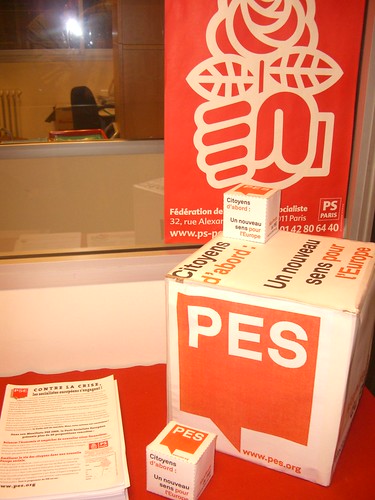
Immediately after the vote the Party of European Socialists (PES) issued this press release saying that as the second largest block in the parliament, they will insist on being given one of the “three key EU posts”. By that they appear to mean the Commission President, the High Representative (which will be empowered by the Lisbon Treaty) and the Council President (a post that will be created by the Lisbon Treaty).

But considering that they weren’t even able to field an opposition candidate for the commission presidency, who exactly are they thinking they could field for the first “president of Europe”? Tony Blair has been floated as an idea, and as a Labourite he is technically in the PES. But considering his support for the Iraq War and his role as a champion of free-market Anglo-Saxon economics, its doubtful continental PES members would be too pleased with this choice.

If Barroso’s second term does indeed turn out to be a “lame duck presidency” it will be interesting to see how this affects the development of the two new positions created by the Lisbon Treaty. Both of them have been really vaguely defined, and their remit and power will be largely shaped by their first holders. If the offices are held by two socialists in opposition to a weak or irrelevant Barroso, it could have the effect of strengthening the Council at the expense of the Commission. This could go some way in satisfying those who complain about Europe’s “democratic deficit”, as the Commission is an unelected institution.

Thursday, 12 March 2009

A busy week for eurosceptics

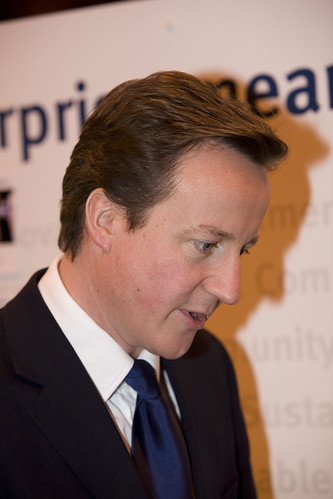
He may have promised to do it years ago, but it was only yesterday that UK opposition leader David Cameron officially started the process of taking the Tories out of the European Parliament's centre-right grouping, the European People's Party. And with that, the Tories' 'slow walk from Europe' has begun.

Cameron's intent, which he outlined in his 2005 campaign to become the Conservative Party's leader, is to form a new European party that would be more hostile to the federalist viewpoint. The EPP is the largest of seven Europarties in the parliament. It's the main centre-right party standing astride the Party of European Socialists, the main centre-left grouping. Both parties are more or less federalist in their platform.

Since he came to power Cameron has been attempting to take the conservatives in a strongly Eurosceptic direction, something fraught with danger since the party is split over the Europe issue. As time has gone on the inconsistencies between Cameron's platform in the UK and the EPP's platform has become politically awkward for him. For instance, the EPP was opposed to the UK having a referendum on the Lisbon Treaty while Cameron was loudly calling for one. The EPP also wants more common European policies on the economy, immigration, defence and foreign policy - while Cameron seems to be opposed to any expansion of the EU's remit.