 This week, Emmanuel Macron threw down the gauntlet for his vision of a stronger, more federal European Union. But his bold words were tempered by the election result in Germany two days earlier. And just a few days later, violence in Catalonia further undermined his vision of European unity.
Showing posts with label FDP. Show all posts
Showing posts with label FDP. Show all posts
Sunday, 1 October 2017
The future of Europe - Macron vs. Lindner
This week, Emmanuel Macron threw down the gauntlet for his vision of a stronger, more federal European Union. But his bold words were tempered by the election result in Germany two days earlier. And just a few days later, violence in Catalonia further undermined his vision of European unity.
Sunday, 24 September 2017
Angela's bad night - a German election special
Sunday, 27 August 2017
Who will be Merkel's dance partner?
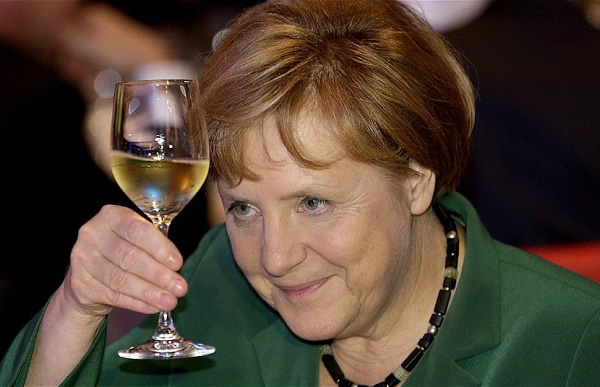
Compared to some of its neighbors, Germany isn’t known for having elections with edge-of-your-seat excitement. Particularly in the past decade, as Angela Merkel’s conservative CDU/CSU bloc has dominated politics, federal elections haven’t had much in the way of surprises.
But this year was supposed to be different. People expected a real contest between two credible candidates on September 24. That didn’t pan out.
Merkel has now been in power for twelve years, and she is running for a historic fourth term that could make her, along with Helmut Kohl, the longest-serving chancellor in modern German history. But many of her decisions have proved unpopular, particularly her controversial move to welcome Syrian refugees fleeing that country’s civil war in August 2015. It was thought that voters were ready for change.
Thursday, 10 August 2017
Will Germans really deliver Merkel a historic fourth term?
Tuesday, 20 September 2011
Lib Dems declare 'rhetoric war' on Conservative allies
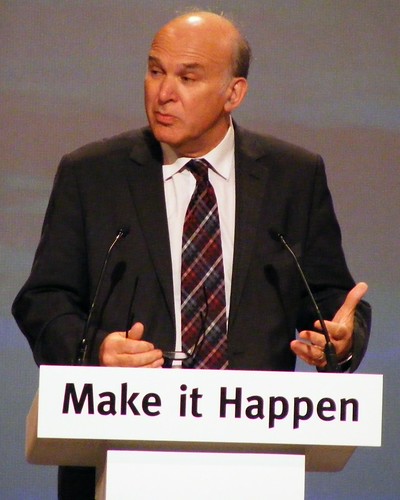 This week's Liberal Democrat party conference in the UK has been generating big headlines in the British press as each successive speaker tries to outdo the previous one in denouncing the party's coalition allies. But do the harsh words signal an impending divorce with the Conservative Party, or are they merely a move to stop the freefall in Lib Dem support.
 According to opinions polls the party has lost more than half of its supporters since its decision to join with the Conservatives to form a coalition government last year. A subsequent u-turn on tuition fees and the loss of the alternative votereferendum – the prize they had been awarded for allying with the Conservatives – has sent the party to what some think could be their lowest popularity ever. This despite the fact that they are now in government for the first time.
The language being used at this week's conference shows the party is going to try a drastic change of tact in order to stop the haemorrhaging of support. Though they have been restrained in showing major disagreement with their coalition partners over the past year, after this week the honeymoon is clearly over - rhetorically at least.
Thursday, 13 May 2010
So who are these "liberals" anyway?
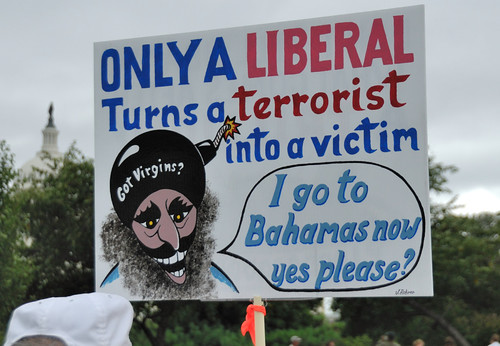 I've had a lot of Americans ask me this week "what the hell is a Liberal Democrat?" The UK election has received some coverage across the pond over the past weeks, and I've been watching with interest how the American media has been covering it. Some have chosen to leave any mention of the Liberal Democrats out for fear of confusing people. Others (Fox News notably) have described them as being "another liberal party" with Labour.
 The confusion seems to be the result of the fact that "liberal" has different meanings in America and Europe. In the US "liberal" means someone on the left who believes in a combination of social liberalism, public welfare and a mixed economy. The American right wing has been relatively successful in giving the word "liberal" a negative connotation since the 1980's, hence the rise of the word "progressive".
But in Europe "liberal" is associated with classical liberalism, which is someone committed to the ideal of limited government, individual liberty and free markets. The difference has to do with the fact that the term, which originated in 19th century England, was never adopted in the US until the 1930's when FDR coined it to describe his New Deal policies. European liberals can be thought of more as "Libertarians" in the American context. Think Bill Maher.
Wednesday, 30 September 2009
"Das ist Deutschland Hier"
Oh SNAP! One expects this kind of thing from the French, but from the Germans??
Here is video of the new German foreign minister Guido Westerwelle admonishing a BBC reporter who asked him a question in English on Monday, snapping: "We're in Germany here."
The snippy retort has raised eyebrows in Germany and across Europe, most notably because Germany has long been one of the European countries with the least “language pride”, happy to operate in English as the ‘lingua franca’ of international diplomacy and business. Westerwelle’s comments are particularly surprising coming from a soon-to-be foreign minister, who presumably will need to use his command of English frequently when meeting with foreign dignitaries from around the world.
And incidentally, this BBC reporter was actually reporting for the World Service, which is an English language global news service that doesn't broadcast within the UK, but rather across the world to Africa, Asia, Europe and the Americas.
The French are notorious for this kind of defensive language pride. Could this be a sign that the Germans are starting to feel more confident about defending their own national identity? The BBC reporter’s question was about how German foreign policy would change with Westerwelle as foreign minister. Though he grumpily refused to directly answer the question, his rant may have revealed plenty about how Germany's foreign policy will change under his leadership. Was this a calculated signal to the international community, or a momentary bout of crankiness?
Germany is now the largest and most economically powerful country in Europe by far. Yet Germans are also renowned for their humble and realistic approach to their relative size and importance on the world stage. They have historically accepted the fact that German is not a world language and that English is the lingua franca (hence even though there are three co-equal working languages of the EU – English German and French – German is not often used in an official working capacity). This has set them apart from the French who many view as delusional about the importance of their language in the world. Germany, because of it’s WW2 legacy, has for the past half-century been very self-effacing and accommodating – particularly with English. As is often noted, 'it's not allowed to have German pride'.
Does Westerwelle’s rant signal the rebirth of a newly assertive Germany?
The snippy retort has raised eyebrows in Germany and across Europe, most notably because Germany has long been one of the European countries with the least “language pride”, happy to operate in English as the ‘lingua franca’ of international diplomacy and business. Westerwelle’s comments are particularly surprising coming from a soon-to-be foreign minister, who presumably will need to use his command of English frequently when meeting with foreign dignitaries from around the world.
And incidentally, this BBC reporter was actually reporting for the World Service, which is an English language global news service that doesn't broadcast within the UK, but rather across the world to Africa, Asia, Europe and the Americas.
The French are notorious for this kind of defensive language pride. Could this be a sign that the Germans are starting to feel more confident about defending their own national identity? The BBC reporter’s question was about how German foreign policy would change with Westerwelle as foreign minister. Though he grumpily refused to directly answer the question, his rant may have revealed plenty about how Germany's foreign policy will change under his leadership. Was this a calculated signal to the international community, or a momentary bout of crankiness?
Germany is now the largest and most economically powerful country in Europe by far. Yet Germans are also renowned for their humble and realistic approach to their relative size and importance on the world stage. They have historically accepted the fact that German is not a world language and that English is the lingua franca (hence even though there are three co-equal working languages of the EU – English German and French – German is not often used in an official working capacity). This has set them apart from the French who many view as delusional about the importance of their language in the world. Germany, because of it’s WW2 legacy, has for the past half-century been very self-effacing and accommodating – particularly with English. As is often noted, 'it's not allowed to have German pride'.
Does Westerwelle’s rant signal the rebirth of a newly assertive Germany?
Subscribe to:
Comments (Atom)