Showing posts with label Nick Clegg. Show all posts

Friday, 9 June 2017

So where does this leave Brexit?

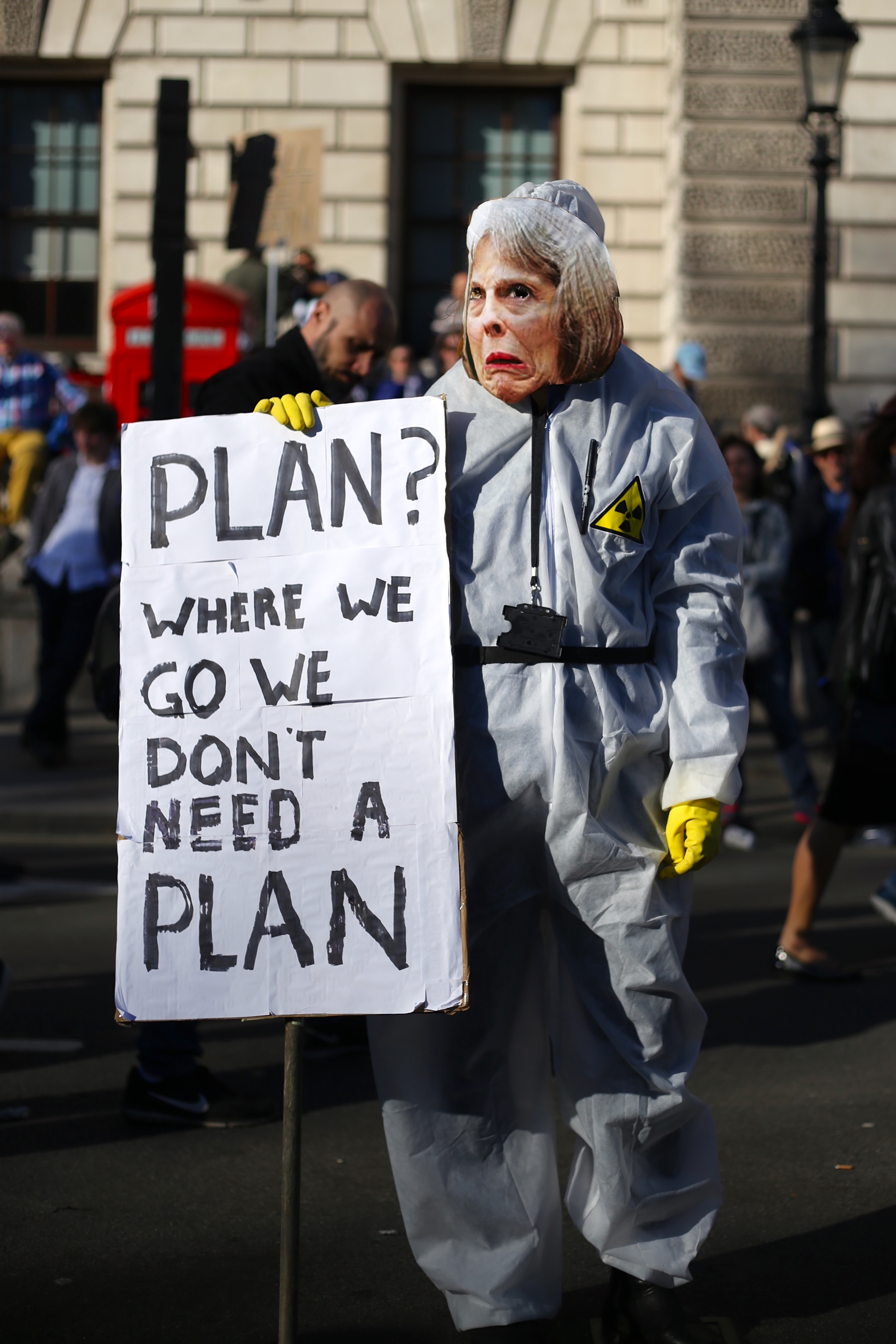
Theresa May scored an own goal with her disastrous decision to call a snap UK election, but her humiliating defeat was not a plea from the public to stay in the EU. 

When Theresa May called a snap election in April, it was a nakedly opportunistic move. 

The opposition Labour Party was in disarray, 20 points behind the Conservatives in the polls. Their leader, Jeremy Corbyn, did not command the loyalty of his MPs and had only held on to his position because of grassroots support. 

The UK Independence Party essentially had no raison d'etre any more. The one-issue party had gotten their wish - Britain was leaving the EU. The Scottish National Party looked to be in trouble in Scotland as well. May saw an opportunity to hoover up Labour, UKIP and SNP votes and give her perhaps the largest majority in UK history - making the country effectively a one-party state. It would be a big improvement from her existing situation, having inherited a razor-thin majority government from David Cameron.

Tuesday, 15 November 2011

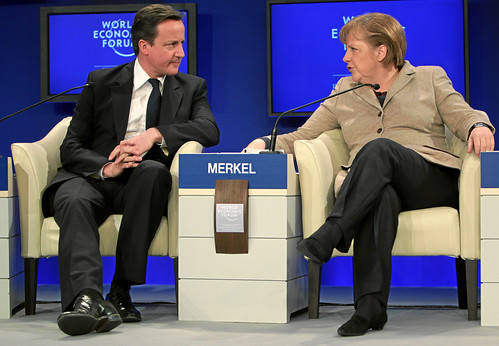
Angela and Dave fight it out over EU's future

It’s the fundamental question facing the EU today: should the union integrate, or disintegrate? In two duelling speeches yesterday the British prime minister and the German chancellor took polar opposite positions on the answer.

David Cameron’s speech, delivered just hours after Angela Merkel delivered a speech to her conservative CDU party conference calling for further European integration, appeared to be a direct response to the German chancellor. Describing himself as a Eurosceptic, Cameron said the EU had overreached in its ambitions and that the euro crisis is "an opportunity, in Britain's case, for powers to ebb back instead of flow away and for the European Union to focus on what really matters".

Merkel’s speech hours earlier had delivered the opposite message. Telling the audience that Europe faced its greatest challenge since the second world war, she said, “The task of our generation is to complete economic and monetary union and build political union in Europe step by step…that does not mean less Europe, it means more Europe.”

Considering the influence of the UK in Europe compared with the influence of Germany, it was a bit like a pygmy picking a fight with a giant. Cameron’s argument may find a sympathetic audience with the British press, but among national governments – even those in his ‘Northern bloc’ – the idea that the crisis is an opportunity to pull Europe apart is not very alluring. But whether or not the UK actually has the influence to sell Europe on the idea of downgrading the EU to merely a free trade zone, the fact is this may happen anyway. But few outside Britain would describe this as a desirable outcome.
Wednesday, 26 October 2011

US-EU trade war looming over airline emissions

This week the US House of Representatives passed a bill that would ban US airlines from participating in the EU's emissions cap-and-trade scheme. It is just the opening shot in what is likely to be a nasty trade war between the two blocs over the coming months. The winner will determine whether 72 million tonnes of CO2 are emitted into the Earth's atmosphere over the next eight years.

While international climate talks have stalled the EU has pushed ahead with its own unilateral action on climate change, the keystone of which is the Emissions Trading Scheme (ETS). Under the scheme industries with heavy emissions are capped on the amount of greenhouse gases they can produce, and if they want to emit more they must buy credits from others who are using less than their cap. The scheme is already up and running, but starting in January airlines will be included. The decision to include airlines in the scheme was taken back in 2008.

This will mean all airlines that fly in or out of the EU must purchase carbon permits. The plan has not met with significant resistance from the European airline industry, but it has met ferocious resistance from American, Indian and Chinese airlines. US Airlines have challenged the law at the European Court of Justice, but the court has already indicated it will rule against them. So the airlines have now turned to the US Congress, and they have found a receptive ear.

Tuesday, 20 September 2011

Lib Dems declare 'rhetoric war' on Conservative allies

This week's Liberal Democrat party conference in the UK has been generating big headlines in the British press as each successive speaker tries to outdo the previous one in denouncing the party's coalition allies. But do the harsh words signal an impending divorce with the Conservative Party, or are they merely a move to stop the freefall in Lib Dem support.

According to opinions polls the party has lost more than half of its supporters since its decision to join with the Conservatives to form a coalition government last year. A subsequent u-turn on tuition fees and the loss of the alternative votereferendum – the prize they had been awarded for allying with the Conservatives – has sent the party to what some think could be their lowest popularity ever. This despite the fact that they are now in government for the first time.

The language being used at this week's conference shows the party is going to try a drastic change of tact in order to stop the haemorrhaging of support. Though they have been restrained in showing major disagreement with their coalition partners over the past year, after this week the honeymoon is clearly over - rhetorically at least.

Monday, 25 July 2011

Political games are exacerbating both Atlantic debt crises

These are not exactly inspiring times for leadership in the Western world. On both sides of the Atlantic, a potential catastrophic default is looming largely as a result of short-sighted political manoeuvring. This is leading some to question whether the 20th century democratic institutions we have built our societies around are adequate to handle the challenges of this century.

In the United States, Republicans are holding hostage an authorisation to raise the amount of money the US is authorised to borrow – normally a routine housekeeping operation done by every congress – until the Obama administration agrees to massive cuts in government spending. The Democrats have offered to give them those cuts, but only if they are accompanied by an increase in taxes on the wealthiest Americans and the closure of corporate tax loop holes. The Republican leadership, terrified of the reaction of their base voters to any tax increase (even if it will have no effect on 98% of Americans) have refused the offer.

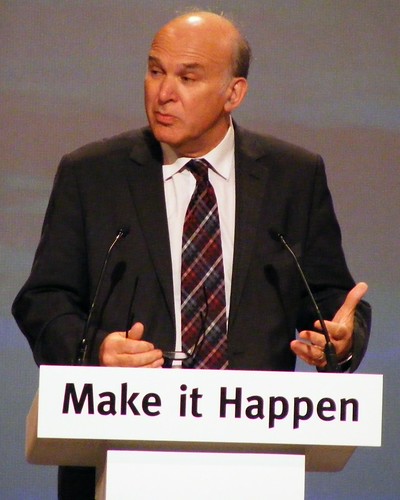
If the United States does not raise the debt ceiling by 2 August, it will go into default. This would almost surely have a disastrous effect on the worldwide economy. This weekend UK Business Secretary Vince Cable said that the "rightwing nutters" who are holding the debt ceiling authorisation hostage for their short-term political gain are a bigger threat to the world economy than the problems in the eurozone.

But conservatives in America aren't the only ones playing with fire in order to reap short-term political gain. The same kind of thinking seems to be guiding Cable's coalition boss. Over the past week UK Prime Minister David Cameron and his ministers have been saying that the UK intends to exploit the current eurozone crisis in order to "maximise what we want in terms of our engagement in Europe."

Friday, 22 July 2011

Eurozone agrees second bailout for Greece

Stocks are rising today as the markets digest the news that Europe has taken a step back from the brink of economic disaster. Eurozone leaders yesterday agreed on a second €109bn bailout for Greece, something economists said had to come in the next few days to avoid calamity. Once again, Europe's leaders have taken a small step to narrowly avert disaster. But without a big step to reform the Eurozone, is there any end to the debt crisis in sight?

Greece's private lenders will be forced to participate in the bailout and take an estimated 21% loss on their loans to the country, in what is being called a 'selective default'. But it is still unclear whether the ratings agencies will decide this qualifies as a default or not. The private lender participation was something German Chancellor Angela Merkel wanted, but French President Nicolas Sarkozy and the European Central Bank had been resisting.

Thursday, 5 May 2011

Today Britain votes on how to vote

Today's the big day in the UK – the nation goes to the polls for a referendum on whether the country's voting system should be changed from a US-style first-past-the-post method to something closert to a European-style proportional system.

Polls going into the voting today indicate that the likely result will be a 'no', which would be a crushing blow for the Liberal Democrats who made this referendum their central demand for entering into a governing coalition with the Conservatives. Then again, so much about this referendum depends on who actually turns out, and voter interest in this referendum is incredibly low. No matter how people have been responding to the pollsters, it may only be the people who are enthusiastic about switching to a new system that turn out today.

Wednesday, 12 May 2010

An unholy alliance

Well, that was a crazy couple days. But last night it all came to a dramatic and sudden end as Gordon Brown abruptly drove to Buckingham Palace to hand in his resignation to Queen Elisabeth II, making Conservative leader David Cameron prime minister. So now it’s all done and dusted right? Hardly.

The excitement started Monday afternoon when, as the Conservatives and Liberal Democrats were still holding their negotiations, Gordon Brown emerged from 10 Downing Street to announced that Lib Dem leader Nick Clegg had approached the Labour Party to see what they could offer instead. And, most dramatically, Brown announced that he would be resigning as leader of the Labour Party.

That announcement soon sparked breathless speculation throughout the media. Gordon Brown stepping down was considered by many to be a precondition for a Liberal Democrat – Labour coalition. Surely, the media inferred, Brown would not have made that dramatic (and rather humiliating) announcement unless some kind of deal had been worked out. For the rest of the day Monday the assumption was that some kind of Lib-Lab coalition was being formed. The problem of course was that a Lib-Lab union would still not meet the threshold of reaching a majority in the parliament.

Monday, 10 May 2010

Brussels holds breath as leaked Tory memo shows plan of attack

It’s safe to say that EU leaders have bigger things to worry about today than the UK general election. But a leaked memo about the Conservatives’ Europe strategy is likely causing extra heartburn throughout Brussels today. And it’s likely also added an extra dose of complication to the fertive negotiations going on between David Cameron and Nick Clegg.

The talks are proving difficult because the two parties are so far apart on major issues, and it’s going to be difficult for them to come to some kind of an understanding on how they can govern together. One of those major issues is Britain’s relationship with the EU, and hopes of agreement in this area were dramatically undermined last night when a top-secret letter from shadow foreign secretary William Hague to David Cameron was leaked.

The letter, written last week, assumed a Tory victory on Thursday and outlined a plan for a brash and aggressive introduction of the new UK government to EU foreign ministers at a meeting today. According to the document, Hague planned to tell the foreign ministers "the British relationship with the EU has changed with our election". Hague then planned to tell the ministers there would be no further integration of the UK with the rest of Europe. Instead, the UK would be clawing back national powers over criminal justice, social policy and employment policy during the first term of the Tory government. He also planned to tell the foreign ministers bluntly "we will never join the euro".

Saturday, 8 May 2010

The British election explained

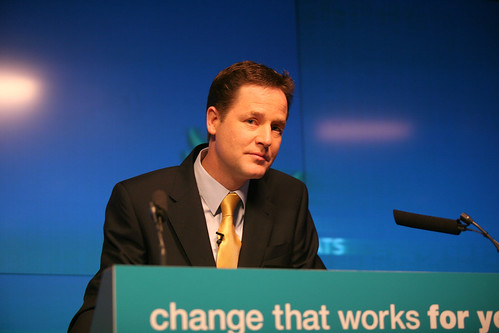
Nick Clegg is holding intense talks with David Cameron today, and it looks like these negotiations could go on for days. At the heart of the complications is this fact - even if the two men can work out an agreement and trust between them on how they would join together to form a government, they would still need to get that agreement approved by their parties. And given the big political differences between the Conservatives and the Liberal Democrats, that could be a herculean task.

Many Americans I've talked to have been confused about what exactly is going on here, and I can certainly sympathize. First they were hearing that this was the Liberal Democrats' year, that following the televised debates the "Clegg effect" was going to transform this election and make the UK's third party politically relevant for the first time in decades. But then when the results came in Thursday night, Americans heard that the Liberal Democrats had suffered a stunning defeat, actually losing seats in the parliament. Oh well, so much for that then. But wait, come Friday they learn that the Liberal Democrats are now the most important factor in these post-election days, as they will be selecting who will be prime minister. So how does someone lose so badly and yet end up selecting who the winner will be?

Friday, 7 May 2010

Westminster in chaos

It was a long night, and it was only just a moment ago that the BBC was finally able to declare an official UK election result – or non-result, as the case may be. For the first time in decades, a British election has yielded a hung parliament. No single party has a majority, with the Conservatives falling well short of the 326 seats they needed to form a government. Now the clock is ticking as politicians scramble to come up with some kind of solution.

It’s looking as if a Liberal Democrat – Labour coalition may not be enough for a majority either, which may rule out that option. It was a disastrously disappointing night for the Lib Dems and their supporters. Despite all the speculation after the first televised debate that this could be their year, the Lib Dems actually lost seats in this election. It’s truly stunning.

Of course along with all the polling showing surging support for the Lib Dems after the first debate came notes of caution that the pollsters did not know how the increased support would affect the actual vote. UK elections still use a peculiar first-past-the-post system for their elections which heavily favours the two main parties. This type of electoral system is normal in the presidential system of the US, but it is unusual in a parliamentary system. Most other parliamentary democracies use a ranked voting system where people indicate your first choice and then a second choice. The Lib Dems have made switching to a proportional representation or ranked system a cornerstone of their campaign, and recently Labour agreed to put it to a referendum. The Tories have refused to consider such a change, but it is likely that the Lib Dems would demand this if they were to enter into a coalition with the Conservatives..

Friday, 23 April 2010

The Anti-American vs. the Anti-European

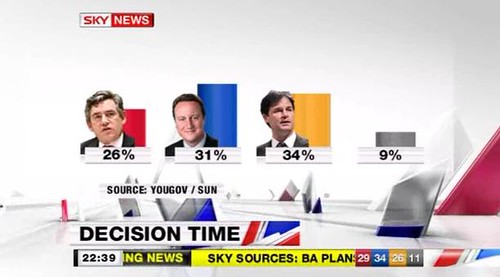
If we are to believe Gordon Brown, last night’s British election debate was between himself - the thoughtful moderate, Nick Clegg - the naïve anti-American, and David Cameron – the nationalistic anti-European. And Brown didn’t want us to forget this point, saying it over and over and even at one point pointing at the other two candidates saying forcefully “YOU are a risk to the economy and YOU are a risk to our security!” Really Gordon? Did this guy not receive any debate training at all?

I was eagerly awaiting this debate because it was meant to be focused on foreign policy. Unfortunately Sky News made a bit of a muck of it, the moderator was awful and the debate got off topic very easily. Bizarrely the moderator allowed the conversation to stay for long periods of time on silly questions (like “what are you personally doing in your daily life to help the earth?”) or questions that had already been covered in the previous debate (like immigration), while he cut questions on actual foreign policy topics (like the EU) short.

Still, I did get a solid 15 minutes of good EU discussion right at the start of the debate, so I was pleased. By far the most encouraging words came from Nick Clegg, the most pro-EU of the three candidates. Rather than lay off the usual meaningless populist nonsense that David Cameron comes up with or the usual “EU? What’s an EU?” of Gordon Brown, Clegg walked people through why the EU is important and why the UK cannot achieve its goals alone. His example of the EU pedophile law that the Conservatives opposed was brilliant (a friend of mine quipped, “The EU helps catch pedophiles? The Daily Mail is going to be so confused”). He also explained how he had worked in Brussels representing the UK to the EU under Margaret Thatcher and also represented the EU in its negotiations with China. He actually knows the EU, he has connections there and he would work to make the UK more influential in Europe instead of sitting on the sidelines as it does now.

Friday, 16 April 2010

The big debate

The UK election debate last night focused on domestic policy, so sadly I didn’t get my EU fix from them. Still, it was very interesting to watch the first-ever televised political debate in British history after having watched so many in America.

There was a lot of skepticism in the UK over whether this was really a useful exercise. After all, the party leaders already have a televised debate every week with prime ministers questions, when the full parliament sits and the leaders ask each other questions for 30 minutes. PMQs get very raucous, with hooting and hollering, accusations, jeers, laughter, you name it. Over the years they’ve gotten increasingly theatrical and bombastic, to the point where these days it seems a lot more like political theatre than legitimate debate.

There have been calls for the UK to start doing American-style televised debates during their general elections for decades, but every prime minister from Thatcher to Blair has always refused. It was, according to conventional wisdom, the sitting prime minister who had the most to lose by participating in a debate that would put them on an equal playing field with the opposition. But this year Gordon Brown relented, and of course, there’s no putting the lid back on that jar. Last night was the dawn of a new era in British politics. Never again will a sitting prime minister be able to avoid a televised debate.

Thursday, 15 April 2010

The UK election and the EU – a stark choice

It’s really an incredible thing to witness – British elections apparently don’t slowly emerge and gather pace, but instead arrive with a loud thud. Last week Prime Minister Gordon Brown called an election, and on Monday the Queen ceremoniously dissolved parliament. Almost on cue, my Facebook feed suddenly lit up with status messages from Brits asking who they should vote for.

It’s strange, because it’s been known for months that the election would be at some point in May. it’s literally the last moment at which Gordon Brown could have called an election since the last one was 5 years ago. But I guess it isn’t ok to start thinking about how you will vote until the Queen tells you to!

This will be the first UK election I will have observed since moving there. The process is extremely different from that in the US. Once the parliament is dissolved, MPs have just a few weeks to rush home to their constituencies to campaign. On 6 May the Brits will go to the polls, and whichever party gets the most votes will be able to appoint the prime minister. But one part of this year’s election will be very American. For the first time ever, the leaders from the three main parties will take place in an American-style TV debate. The first one will air tonight.

Thursday, 6 March 2008

A new Europe strategy for Labour?

Well it’s official, the UK has ratified the Lisbon treaty. Brussels can breathe a big sigh of relief. It was a fiery scene in the commons yesterday as they debated the ratification. Tory leader David Cameron was doing his best to sufficiently rattle his saber to appease the tabloid press.

But Cameron’s predictable bravado was hardly the most interesting thing about the proceedings. Rather it was the behavior of the other two party leaders, Labour’s Gordon Brown and the Liberal Democrats’ Nick Clegg.

As The Times’ Peter Riddell pointed out in his column today, Gordon Brown seems to have finally “seen the light” when it comes to Europe. That, or he’s adopted a fundamental (and perhaps politically necessary) shift in strategy on how to deal with the European question. During the commons debate yesterday Brown was passionate and unequivocal in not only his defense of the treaty but in the wider benefit of membership in the EU. At a time when few politicians have had the courage to present the case for Europe to the British public, Brown seems to have suddenly shifted his tone. Having always been reticent to talk about Europe before, he suddenly was emphasizing the need for Britain to take a leading role in the union in order to achieve prosperity in security in a globalised world.