Showing posts with label Brexit. Show all posts
Showing posts with label Brexit. Show all posts
Wednesday, 31 January 2018
The latest on Brexit and German coalition formation

Wednesday, 27 December 2017
As 2017 ends, are we also coming to the end of the US-EU military alliance?
Saturday, 21 October 2017
Today's divides aren't between states, they're across them

In Europe and America, today's urban educated elites have more in common with their counterparts in other countries than their own compatriots. It is resulting in a new type of international nationalism.
I was in Belgrade last week moderating at the Belgrade Security Forum, an annual policy dialogue about Balkan and European issues.
During a discussion on challenging inequality, one of the panelists made a point that stuck with me. Responding to a comment from former Greek prime minister George Papandreaou about the uneven benefits of globalization, Hakan Altinay from the Global Civics Academy noted that the benefits are being felt by a certain class in each country, and that is bringing them closer together across borders while they drift ever-further apart from their countrymen.
People working in and around the European Union institutions in Brussels are often accused of living in a bubble, forming an international echo chamber in which they have more in common with each other than with people back home in their own countries. But in fact, this is a phenomenon that is linking national capitals across Europe - and it has little connection to the EU. The bubble isn't just in Brussels. It is spread across Europe's cities.
A few days later, I heard a very similar description of the situation in the US on NBC's Meet the Press, America's main public affairs program. During a 'data download' segment, host Chuck Todd described how NBC News had crunched the numbers. Despite the caricature of America being divided between red and blue states, the divide is really between red and blue people - and that split defies geography.
Sunday, 24 September 2017
The speeches podcast: May in Florence, Trump at UNGA
 It's a week of speeches - Theresa May asking for extra Brexit time in Florence, Donald Trump ushering in the dog-eat-dog era at the UN, and Emmanuel Macron spelling out his vision of EU reform.
Friday, 22 September 2017
Pseudo-independence
Desperate to salvage Brexit talks which have gone off the rails, British Prime Minister Theresa May gave a much-anticipated speech in Florence today. She surely hopes it will stem the panic over the country’s lack of preparedness for the ‘cliffs edge’. That is March 29, 2019, when the country must leave the EU.
There is now little prospect that an agreement on Britain’s post-Brexit relationship with the EU can be agreed by that date. And so the prime minister had little choice but to do something to calm the jitters of British businesses and markets.
Saturday, 9 September 2017
Juncker's Wallonia bypass could save Brexit
Next week the Commission is expected to outline a plan in which governments will no longer have veto power over most EU trade deals. It could be a game-changer for the Brexit negotiations.
 One year ago, as Canadian Prime Minister Justin Trudeau prepared to board a plane tp Brussels to sign a landmark free trade deal with the European Union, he had a bone to pick with some fellow Francophones 4km to the south of the EU capital.
The deal was done and all 28 EU national governments had agreed to it. But the tiny region of Wallonia, the French-speaking, politically far-left Southern part of Belgium, was threatening to wield a veto. A region of 3.5 million people was about to unilaterally kill the trade deal agreed by the other 509 million.
The premier of Wallonia asked Trudeau to cancel the visit, saying it would be a "provocation" to do so while Wallonia had not yet given its assent. The Canadian PM cancelled his flight, but he was not pleased. "If, in a week or two, we see that Europe is unable to sign a progressive trade agreement with a country like Canada, well then with whom will Europe do business in the years to come?" he asked.

The deal was done and all 28 EU national governments had agreed to it. But the tiny region of Wallonia, the French-speaking, politically far-left Southern part of Belgium, was threatening to wield a veto. A region of 3.5 million people was about to unilaterally kill the trade deal agreed by the other 509 million.
The premier of Wallonia asked Trudeau to cancel the visit, saying it would be a "provocation" to do so while Wallonia had not yet given its assent. The Canadian PM cancelled his flight, but he was not pleased. "If, in a week or two, we see that Europe is unable to sign a progressive trade agreement with a country like Canada, well then with whom will Europe do business in the years to come?" he asked.
Friday, 1 September 2017
Fake Brexit: Is Britain heading for pseudo-independence from the EU?
Tuesday, 22 August 2017
My prediction: Britain will join the EEA

The political class was stunned. After a nationwide in/out referendum on EU membership, expected to yield an 'in' result because the entirety of the political and business establishment supported it, people awoke to the news that people had voted out, by 52%. A yearning for national sovereignty had won the day.
This wasn't 24 June 2016. It was 29 November 1994, the day after Norway's referendum on whether to join the European Union. 52% voted for Norway to be outside the EU, while 47% voted to be in it - an almost exact mirror of the UK result 22 years later. The result was a political shock that sent reverberations through the government and business establishment.
What happened in Norway in the ensuing years was a lesson in how politicians must sometimes pull their citizens along begrudgingly, or even unwittingly. Because even though EU membership had been rejected, Norway effectively ended up becoming an EU pseudo-member - under terms much worse than if it had become a member state. The same fate awaited Iceland and Switzerland.
Friday, 21 July 2017
On the way in, and on the way out?
Thursday, 20 July 2017
“Why are you still here?”

This week, the difficult negotiations over the UK’s exit from the European Union began in earnest in Brussels. David Davis, the UK’s chief negotiator, squared off against Michel Barnier, his EU counterpart.
Davis called for both sides to “get down to business” for arranging a swift British exit from the EU. He then promptly went back to London, 60 minutes later. He gave no explanation for his own swift departure, which left the EU negotiators perplexed. Just days earlier, Barnier had warned the UK that it is is running out of time to negotiate its exit, which must be completed by March 2019. “The clock is ticking” he said sternly.
Friday, 9 June 2017
So where does this leave Brexit?
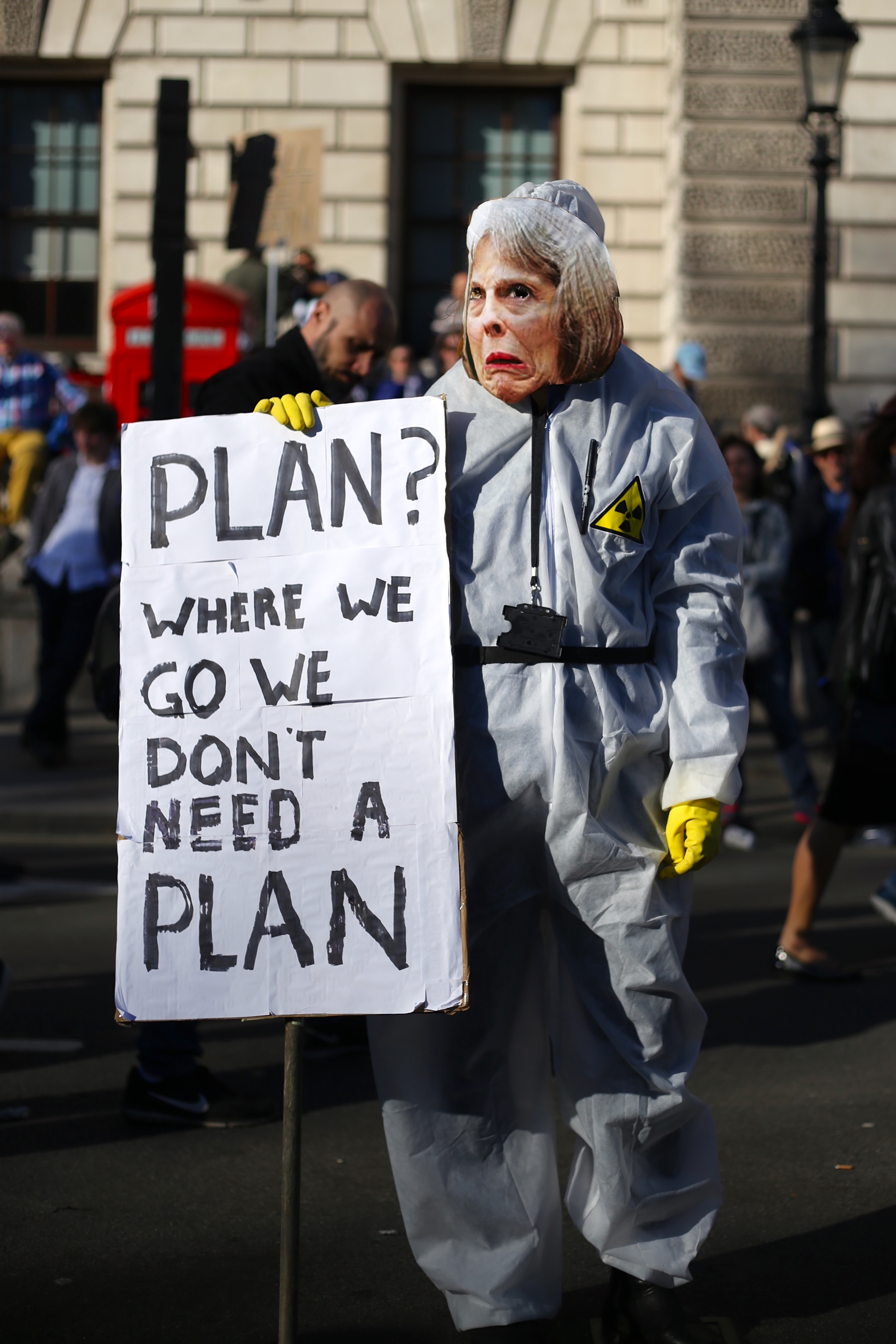
When Theresa May called a snap election in April, it was a nakedly opportunistic move.
The opposition Labour Party was in disarray, 20 points behind the Conservatives in the polls. Their leader, Jeremy Corbyn, did not command the loyalty of his MPs and had only held on to his position because of grassroots support.
The UK Independence Party essentially had no raison d'etre any more. The one-issue party had gotten their wish - Britain was leaving the EU. The Scottish National Party looked to be in trouble in Scotland as well. May saw an opportunity to hoover up Labour, UKIP and SNP votes and give her perhaps the largest majority in UK history - making the country effectively a one-party state. It would be a big improvement from her existing situation, having inherited a razor-thin majority government from David Cameron.
Thursday, 4 May 2017
Le Pen and Trump: politics-as-entertainment

Last night marked the one and only debate between the two candidates who will participate in Sunday's final round of French presidential elections, far-right nationalist Marine Le Pen and centrist internationalist Emmanuel Macron. For me, it had eery similarities to last year's Trump-Clinton debates in the United States.
Donald Trump had a way of getting under his opponents' skin. He would mock them, call them names, and laugh in their face. Marco Rubio was "Little Marco". Ted Cruz was "Lyin' Ted". Hillary Clinton was "Crooked Hillary". He dragged the Republican presidential primary into the mud, as his opponents desperately tried to counter his popularity by sinking to his level. Trump even goaded Rubio, a US Senator, into challenging his penis size.
Saturday, 22 April 2017
There is no such thing as Frexit

You cannot exit something that no longer exists.
I'm in Paris this weekend covering the first round of French presidential elections, a historic contest which will have a profound impact on Europe and the world.
Tomorrow's first round of voting could result in a run-off between a far-left and a far-right candidate, both of whom are hostile to the European Union and have in the past called for France to leave the EU. The latest polls show a race that is anyone's game, and could result in any number of second round combinations across the political spectrum. It is an election like France has never seen, and nobody knows that tomorrow will bring.
A first round win for far-right nationalist Marine Le Pen and far-left communist Jean-Luc Mélenchon would send shock waves throughout the world. It would not only mean the collapse of the mainstream political infrastructure in France. It would put the future of Europe, and of Western liberal democracy as a whole, in terrifying doubt.
Wednesday, 29 March 2017
With Brexit looming, time for a Celtic Union?
Today British Prime Minister Theresa May took the historic step of requesting a divorce from the European Union.
It will be remembered as a defining moment in history. Some are predicting it is the beginning of the European Union's disintegration. But others say, perhaps more convincingly, that it signals the start of the British union's disintegration.
Yesterday the Scottish Parliament voted to back First Minister Nicola Sturgeon's call for a new referendum on Scottish independence. The timing was no accident. Sturgeon timed her announcement of the new referendum push earlier this month to be one day before May planned to submit her divorce letter to the EU, upstaging the British PM and forcing her to delay the delivery until today. Scotland is remaining one step ahead of Westminster.
Thursday, 2 March 2017
Five paths for the post-Brexit EU27

Should the European Union separate or federate, or somewhere in between?
This was the question posed in yesterday's remarkably honest and self-reflective white paper on the future of the EU, published by the union's executive body in preparation for a 'declaration of purpose' to be adopted at a summit in Rome next month by the 27 member states who will remain in the EU after Brexit (if it ever happens, that is).
The paper outlines five scenarios for how the EU should react to the Brexit vote - not in terms of how it should proceed with the divorce negotiations, but whether and how it should change itself to avoid any more member states choosing to leave.
Thursday, 9 February 2017
Europe's 2017 elections are turning into referendums on Trump
_(1).jpg/1024px-Emmanuel_Macron_(11_d%C3%A9cembre_2014)_(1).jpg)
Three years ago, when a former investment banker named Emmanuel Macron was appointed as interior minister in the French government, nobody had ever heard of him.
Today, he has come out of nowhere to second place in the French presidential election. It looks increasingly likely that he will be in a head-to-head with French far-right leader Marine Le Pen in May's second round of voting. More than anything else, there is one element that explains his meteoric rise: he is presenting himself as the anti-Trump.
His candidacy comes at a time when many in France, and indeed the entire European continent, are terrified that the French presidency will be snatched by Le Pen's far-right National Front - a party with anti-Semitic routes from the ashes of the Second World War. Were Le Pen to win, it would not only have implications for France. It would probably mean the collapse of the European Union, or at least its transformation into an irrelevance.
Thursday, 2 February 2017
Europeans have been lied to their whole lives. They have three months to learn the truth.

At the tail end of 2016, as Europeans adjusted to the reality that Donald Trump had won the presidential election, I found myself having two very different conversations in Europe.
One was with my Brussels and Berlin friends from what some might derisively term the 'educated elite'. They were scared, talking about what the result meant for Europe and how things on the 'old continent' were about to change.
Then there was the conversation I found myself having with people I just met, or acquaintances - people who don't follow politics or world events very closely. "What do you think about Trump?" they snickered, as if he was entirely my problem and not theirs. They expected a reaction of, "I'm so embarrassed for my country" or "things are going to be bad in my homeland". I've told them the entire global order is about to be thrown into chaos, starting first here in Europe. They stared back at me in confusion. Surely, Trump is America's problem, not Europe's.
Tuesday, 17 January 2017
May's Brexit vision depends on the goodwill of Australians

This morning in London, Theresa May will make what is probably the most important speech of her political career.
The British people "voted to leave the European Union and embrace the world" she will say, outlining a vision for the UK to completely cut itself off from the EU and instead focus on rebuilding a globally-focused maritime trading empire. The first focus will be on the countries which share a monarch with Britain - Australia, New Zealand and Canada.
I've been travelling through Australia for the past two weeks as part of a month-long visit, and I've been asking Australians how they feel about being part of Britain's glorious new trading vision. The reaction has largely been bemusement. But more on that later.
Friday, 2 December 2016
The EU may get its first far-right president. But does it matter?

In May, when Austria held its first attempt at holding a presidential election, newspapers in the UK and the US were full of breathless coverage. "Austria is on the brink of electing Europe's first far-right president since WWII" they declared.
The BBC and The Guardian both used the occasion to run features about the 'rise of nationalism and populism in Europe', both of which curiously left out Britain's own UK Independence Party. 'Populism is other people' they convinced themselves. Now, after Brexit and Trump, the Anglo-American coverage is quite different.
And the coverage has returned, because the Austrian election is being re-run this Sunday, 4 December.
In May, the far-right candidate Norbert Hofer, the leader of the Freedom Party, was beaten by Alexander Van der Bellen from the Green Party by just a few thousand votes. The two were facing each other in a shock second round after the country's main center-right and center-left candidates were eliminated. It was the first time a candidate from either the Greens or Freedom Party made it to the second round.
Friday, 18 November 2016
3/4 of electorate gave their nod to Trumpism

While it is true that only 19.5% of Americans cast a vote for Donald Trump last Tuesday (versus 19.8% for Clinton), one cannot then make the leap to say that 80% of Americans are opposed to Trump and are being dragged along unwillingly. That is nonsense.
First off, 29% of Americans are not eligible to vote, either because they are too young or because they have committed a crime. We have no way of knowing how those people feel about Trump. Then we have to people who were eligible to vote but chose not to - 45% of the eligible population.
Subscribe to:
Comments (Atom)