Sunday may be a pivotal turning point for Europe, but not because of the presidential election in Austria. A referendum in Italy could bring the euro back to crisis point.
In May, when Austria held its first attempt at holding a presidential election, newspapers in the UK and the US were full of breathless coverage. "Austria is on the brink of electing Europe's first far-right president since WWII" they declared.
The BBC and The Guardian both used the occasion to run features about the 'rise of nationalism and populism in Europe', both of which curiously left out Britain's own UK Independence Party. 'Populism is other people' they convinced themselves. Now, after Brexit and Trump, the Anglo-American coverage is quite different.
And the coverage has returned, because the Austrian election is being re-run this Sunday, 4 December.
In May, the far-right candidate Norbert Hofer, the leader of the Freedom Party, was beaten by Alexander Van der Bellen from the Green Party by just a few thousand votes. The two were facing each other in a shock second round after the country's main center-right and center-left candidates were eliminated. It was the first time a candidate from either the Greens or Freedom Party made it to the second round.
Showing posts with label Viktor Orban. Show all posts
Friday, 2 December 2016
Friday, 15 July 2016
Europe will referenda itself to death
From Budapest to Paris to Cleveland, the West‘s blind idolatry of direct democracy will be its own undoing.
"The referendum is a device of dictators and demagogues," declared UK prime minister Clement Attlee in 1949. No surprise, then, that Europe’s next anti-EU referendum following Brexit has been called by Hungary’s Viktor Orban.
The Hungarian prime minister’s absolute control over the political, judicial and media institutions in his country have been likened by many to the power of a dictator, including by European Commission President Jean-Claude Juncker.
Hungary has attracted particularly negative international attention because of its brutal treatment of Syrian refugees trying to cross through the country to Germany. It is the latter issue that has prompted the referendum, scheduled for 2 October.
Thursday, 3 September 2015
The coalition of the unwilling
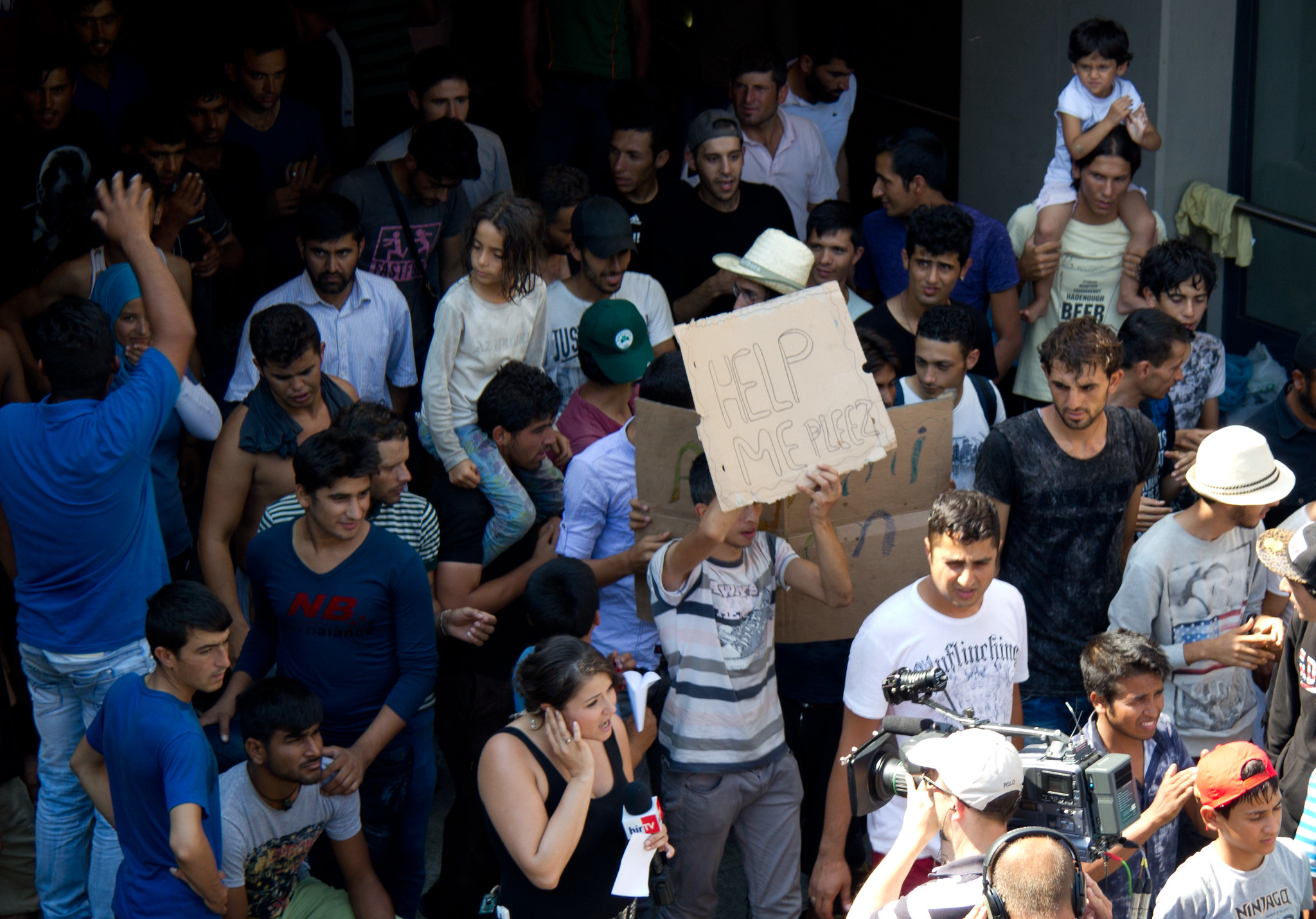
Today I bought a ticket for the overnight train from Berlin to Budapest, to interview people next week for a radio story I'm working on about the disappearance of Europe's cross-border rail routes. As I was making the booking at the DB ticket office, the woman gave me a look of concern. "That train is going from Hungary to Germany," she said. "Be careful."
Despite watching the news reports about what is happening at Budapest Keleti Station the past few days, it did not occur to me until that moment that I am going to be on one of these international trains next week. This international train travel piece could end up being very different from what I had planned.
The images of Middle East refugees trampling each other trying to get onto trains to Western Europe in Budapest broadcast today were truly horrific. I'm still a bit unclear about whether these are regularly scheduled trains or specific migrant trains, and whether or not my Budapest-Berlin train will be affected at all. But it's hard to imagine it won't be.
Wednesday, 5 January 2011
Belgium's 'invisible' EU presidency comes to an end
As the clock struck midnight last Friday, it wasn't just 2010 that was coming to an end. Here in Brussels, the new year also meant the end of Belgium's six-month period at the helm of the EU, as the country handed over the baton to Hungary. It was an interesting period for the rotating presidency, held for the entire six months by a country with no government. Yet despite the domestic political chaos, the presidency actually seemed to run fairly smoothly - or at least there weren't any noticable disasters. In fact if you weren't looking for it, you might have missed the Belgian presidency alltogether. It was a low-key, almost invisible affair.
Perhaps this was exactly the type of presidency that the EU needed at this time. After all, the Lisbon Treaty's creation of the new posts of President of the European Council and High Representative for Foreign Affairs was meant to downgrade the role of the rotating presidency to that of just a coordinator. Spain was the first country to take over the presidency after the treaty's adoption 13 months ago, and for those first six months of 2010 there seemed to be some confusion about the rotating presidency's new role. The Spanish foreign minister got in hot water a few times for appearing to speak for EU states when that role is meant to now be held by the new EU foreign affairs chief Catherine Ashton. And Spanish Prime Minister Jose Luis Zapatero, effectively the last Socialist leader left in power in Europe, seemed to be pushing for high-profile agenda items in a way that overlapped with the role of the new European Council president Herman Van Rompuy.
Contrast this with Yves Leterme, who is temporarily holding the Belgium prime minister position as a caretaker while the country continues to struggle forming a government. Leterme was pretty much invisable during the entirety of the Belgian presidency. At the European Councils he was happy to hand the reigns over to Van Rompuy, who as luck would have it is not only a fellow Belgian but also a member of Leterme's own political party. And I'm not even aware of the name of the Belgian caretaker foreign minister, I never heard from him or her at all last year. Given that the caretaker government is not authorised to propose new policy, perhaps this is unsurprising.
Perhaps this was exactly the type of presidency that the EU needed at this time. After all, the Lisbon Treaty's creation of the new posts of President of the European Council and High Representative for Foreign Affairs was meant to downgrade the role of the rotating presidency to that of just a coordinator. Spain was the first country to take over the presidency after the treaty's adoption 13 months ago, and for those first six months of 2010 there seemed to be some confusion about the rotating presidency's new role. The Spanish foreign minister got in hot water a few times for appearing to speak for EU states when that role is meant to now be held by the new EU foreign affairs chief Catherine Ashton. And Spanish Prime Minister Jose Luis Zapatero, effectively the last Socialist leader left in power in Europe, seemed to be pushing for high-profile agenda items in a way that overlapped with the role of the new European Council president Herman Van Rompuy.
Contrast this with Yves Leterme, who is temporarily holding the Belgium prime minister position as a caretaker while the country continues to struggle forming a government. Leterme was pretty much invisable during the entirety of the Belgian presidency. At the European Councils he was happy to hand the reigns over to Van Rompuy, who as luck would have it is not only a fellow Belgian but also a member of Leterme's own political party. And I'm not even aware of the name of the Belgian caretaker foreign minister, I never heard from him or her at all last year. Given that the caretaker government is not authorised to propose new policy, perhaps this is unsurprising.
Subscribe to:
Comments (Atom)