Showing posts with label Angela Merkel. Show all posts
Showing posts with label Angela Merkel. Show all posts
Tuesday, 13 March 2018
A Trumpian trade war, a new German government, and an Italian election mess

Monday, 26 February 2018
In rejecting spitzenkandidaten, Macron has let the perfect be the enemy of the good
National leaders, led by Emmanuel Macron, have refused a European Parliament demand that citizens should select the next EU president. The reasons have more to do with institutional rivalries than citizens’ interests.

“Don’t count your spitzens before they hatch,” tweeted Lithuanian President Dalia Grybauskaitė ominously as she entered Friday’s summit of EU leaders in Brussels.
The Lithuanian president was referring to the so-called ‘spitzenkandidaten’ process, used in the last European Parliament elections in 2014 for the first time to select the European Commission President as a result of the public vote. National leaders of the 27 future EU member states (that is, all except the UK) were meeting Friday to decide whether to use the process again in next year’s election.

“Don’t count your spitzens before they hatch,” tweeted Lithuanian President Dalia Grybauskaitė ominously as she entered Friday’s summit of EU leaders in Brussels.
The Lithuanian president was referring to the so-called ‘spitzenkandidaten’ process, used in the last European Parliament elections in 2014 for the first time to select the European Commission President as a result of the public vote. National leaders of the 27 future EU member states (that is, all except the UK) were meeting Friday to decide whether to use the process again in next year’s election.
Wednesday, 31 January 2018
The latest on Brexit and German coalition formation
Wednesday, 27 December 2017
As 2017 ends, are we also coming to the end of the US-EU military alliance?
Monday, 27 November 2017
The coalitions podcast: chaos in Berlin, calm in Bonn

Sunday, 1 October 2017
The future of Europe - Macron vs. Lindner
This week, Emmanuel Macron threw down the gauntlet for his vision of a stronger, more federal European Union. But his bold words were tempered by the election result in Germany two days earlier. And just a few days later, violence in Catalonia further undermined his vision of European unity.Sunday, 24 September 2017
Angela's bad night - a German election special
Friday, 15 September 2017
One speed or two? Juncker challenges Macron's EU vision
Friday, 1 September 2017
Fake Brexit: Is Britain heading for pseudo-independence from the EU?
Sunday, 27 August 2017
Who will be Merkel's dance partner?
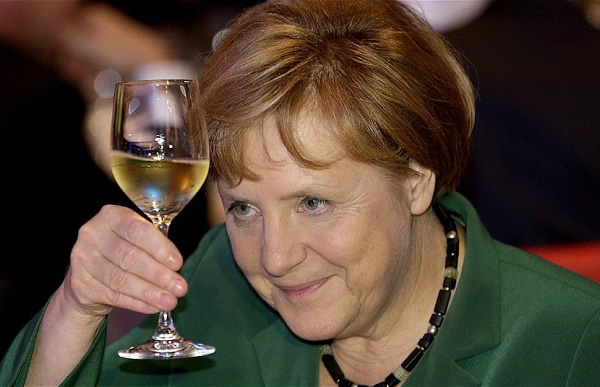
Compared to some of its neighbors, Germany isn’t known for having elections with edge-of-your-seat excitement. Particularly in the past decade, as Angela Merkel’s conservative CDU/CSU bloc has dominated politics, federal elections haven’t had much in the way of surprises.
But this year was supposed to be different. People expected a real contest between two credible candidates on September 24. That didn’t pan out.
Merkel has now been in power for twelve years, and she is running for a historic fourth term that could make her, along with Helmut Kohl, the longest-serving chancellor in modern German history. But many of her decisions have proved unpopular, particularly her controversial move to welcome Syrian refugees fleeing that country’s civil war in August 2015. It was thought that voters were ready for change.
Thursday, 10 August 2017
Will Germans really deliver Merkel a historic fourth term?
Thursday, 3 August 2017
Auto chiefs win again in Berlin. But beware Hendricks revenge

At the press conference following yesterday's crisis summit in Berlin to deal with the unfolding Dieselgate scandal, you would have been forgiven for losing track of who was who.
With only five lecterns and around 20 participants, they had to play a round-robin of auto executives, each taking the stand to say how very, very sorry he was over revelations of cheating and collusion that have come out. Each middle-aged white German man was more indistinguishable than the next.
But all the while there was one woman standing to their left, looking very out of place. It was the summit's co-host, the center-left German environment minister Barbara Hendricks. And as the German auto chiefs detailed the agreement reached inside, an agreement in which she had been politically defeated, you would see on her face that she was already plotting her revenge.
Tuesday, 1 August 2017
Is Berlin overthinking dieselgate and Russia sanctions?
Friday, 28 July 2017
The German autostate

The allegations that have surfaced this month against German automakers seem to confirm the worst suspicions that many in Europe hold about the EU’s largest country: while they insist on rigid enforcement of rules for everyone else, Germans seem to think the rules don’t apply to them.
A report by Der Spiegel magazine last week alleged that Germany’s five biggest automakers - Volkswagen, BMW, Daimler, Porsche and Audi - have been colluding for two decades on pricing, suppliers and diesel technical standards, in order to give them leverage over foreign competitors. This week the European Union said it is investigating the issue, and has appointed a vice president to oversee the investigation.
Friday, 21 July 2017
On the way in, and on the way out?
Monday, 10 July 2017

Friday, 30 June 2017
Germany’s late but welcome turn on gay marriage

For several years, Germany has seemed like a strange anomaly in Western Europe on one of the key cultural issues of the modern era.
As country after country passed gay marriage in Europe and the Americas, Germany held out.
On the gay marriage map of Europe, a wave of dark blue came rushing in from the West. Starting with The Netherlands and Belgium in 2001, countries adopted full gay marriage.
The most surprising development came in 2015, when the Irish voted in a referendum to allow gay marriage - the first country to do so by public vote. Long known as a conservative country dominated by the Catholic church, it was a chance for the country to demonstrate just how much it has changed over the past three decades.
But meanwhile in central Europe, everything remained frozen.
Saturday, 27 May 2017
Who is Germany’s anti-Trump?
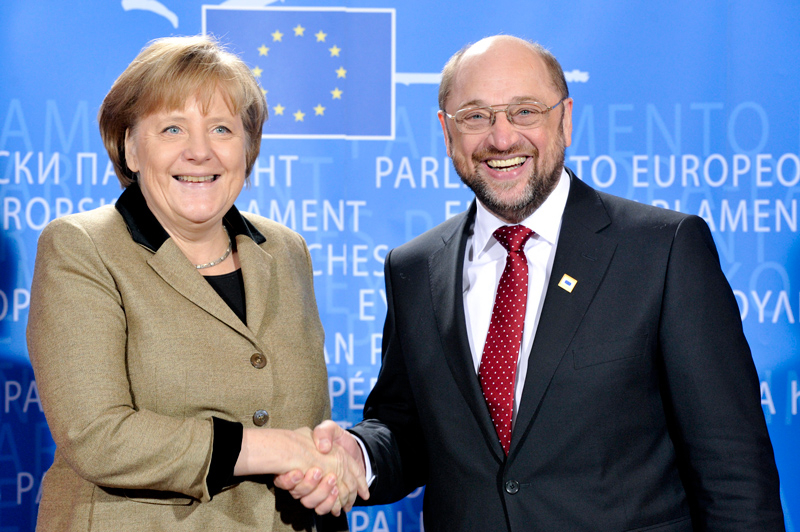
Even before last week’s NATO and G7 summits in Europe, Angela Merkel knew that Donald Trump would not have kind words for the Germans.
Having already suffered the indignity of having him refuse to shake her hand during her state visit to Washington - possibly as revenge for her frosty response to his election - Merkel could have expected that Trump’s obsession with the German trade surplus and lack of military spending would again bring hostility during their second meeting. It did.
Friday, 26 May 2017
Hurricane Trump comes to Brussels
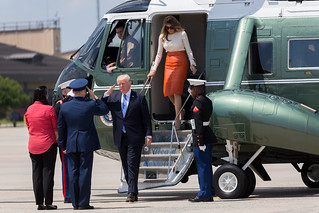
While the current US president bullied and berated in Brussels, Obama awed and inspired in Berlin. Which man truly represents the American people?
Perhaps no image of Donald Trump's visit to Brussels will be more enduring than the now-notorious video of him pushing the prime minister of Montenegro out of the way so that he could get to the front of a shot of NATO leaders.
As an US citizen, I felt a deep sense of shame watching the incident. There was something painfully American about it. The worst part was his expression after the shove - the brash sense of entitlement, the obscene strutting. In just a few seconds Trump had confirmed the stereotypes that so many Europeans have about Americans. And it was consistent with his behavior during the entire Brussels visit - bullying, gloating, preening.
Tuesday, 16 May 2017
After trauma of Lisbon, Macron faces uphill battle for EU treaty change
Emmanuel Macron made his first foreign visit as French president yesterday, coming here to Berlin for a meeting with Angela Merkel.
That Berlin was his first destination is no surprise. The Franco-German relationship is the most important for Paris, and also the most important relationship in the European Union as a whole. But there was an added importance to this first visit. During his campaign Macron made promises about a process of renewal and reform of the EU. None of that will be possible without the cooperation of Germany's chancellor.
We still do not know if Merkel, a conservative, will be that chancellor. Germany is having a general election in September and she may be unseated by her center-left challenger Martin Schulz, a former president of the European Parliament.
Subscribe to:
Comments (Atom)