Showing posts with label Russia. Show all posts
Showing posts with label Russia. Show all posts
Wednesday, 27 December 2017
As 2017 ends, are we also coming to the end of the US-EU military alliance?

Sunday, 20 August 2017
Eurovision imperialism?
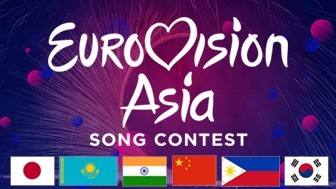
The Eurovision Song Contest has come a long way since it was established as a small project between Western European countries in 1956.
Since the contest was extended to post-Communist countries in the 1990s, it has grown to become the most-watched non-sporting live television event in the world. Last year it attracted 204 million viewers, achieving an audience share of 36.3% across the markets in which it aired. That means that 1/3 of the people watching television on that night were watching Eurovision. That's more people than watch the Oscars or the Superbowl. In fact, it's only beaten by the World Cup.
Compare this to the 1990s, when the struggling song contest was weighed down by a French-imposed rule that countries could only sing in their national language and with a live orchestra. Viewing figures averaged around 50 million.
All of this has opened the question of what the contest should do with the increasing global success of its brand. This week, the European Broadcasting Union, the association of broadcasters that organizes the conference, announced the launch of Eurovision Asia. It will use the Eurovision format but for Asia Pacific countries. The official website was launched on Friday - EurovisionAsia.tv.
Tuesday, 1 August 2017
Is Berlin overthinking dieselgate and Russia sanctions?

Tuesday, 9 May 2017
Italy should win Eurovision 2017, but it won't
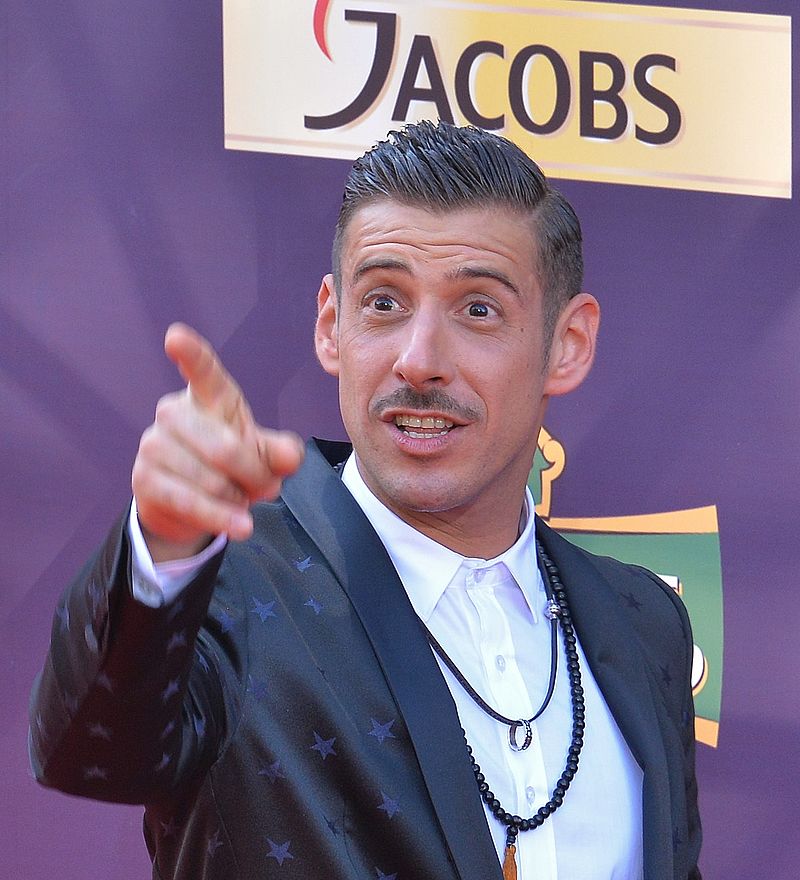
With the defeat of far-right nationalist Marine Le Pen in Sunday's French election, Europe breathed a sigh of relief. It's no time to relax just yet, but at least for the rest of the week the continent can turn to more fun diversions. And on that note - Sunday also marked the start of Eurovision week.
Of course, the Eurovision Song Contest isn't the same politics-free distraction it once was. This year's competition is in Kiev, following Ukraine's shock win last year with an unabashedly anti-Russian song. After a viciously clever trap set my Moscow, Russia has pulled out of the 2017 contest. Their absence will be keenly felt this week.
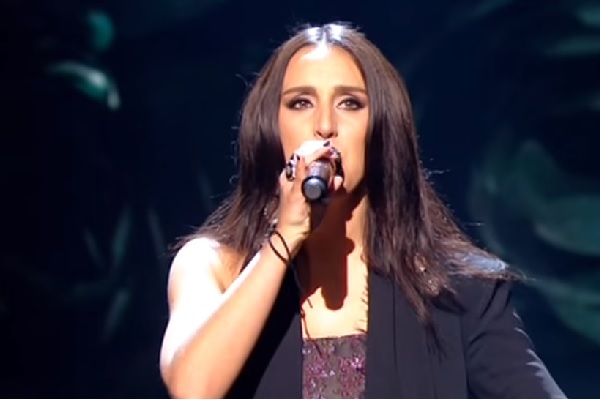
Every year, countries try to emulate the previous year's winner. 2017 has been no exception. To match Jamala's haunting winning song about the Soviet genocide and deportation of Crimean Tatars, we have a whole crop of dark, brooding songs this year about serious subjects. But none match the emotional intensity of Jamala's performance last year.
Friday, 14 April 2017
It's official - Russia has pulled out of Eurovision
 For the first time since the country entered the song contest in 1994, Russia will not broadcast the event. Will they ever come back? Or will they launch their own 'illiberal' Eurovision alternative?
After weeks of protracted negotiations, the organiser of the Eurovision Song Contest announced the news everyone expected: Russia will not participate in this year's competition.
The big question now becomes - will they ever come back?
Eurovision is hugely popular in Russia, and the loss of this significant audience is a big blow to the European Broadcasting Union, the coalition of national broadcasters that stages the contest. What is terrifying for the EBU is the prospect that Russia will now permanently pull out of the contest.
Russian politicians have been calling for it to do so for years, ever since a bearded drag queen named Conchita Wurst won for Austria in 2014. One Russian MP said the contest had become 'a celebration of perversion', and said Moscow should revive the old Cold War alternative, Intervision, as a family-friendly alternative.
Friday, 7 April 2017
Europe's misplaced relief after Trump's Syria strikes

Last night at a mixer of policy wonks here in Berlin, I could feel the relief in the air.
The details were still emerging, but we knew at that point that President Trump was launching airstrikes against Bassar Al Assad's forces in Syria in retaliation for a brutal chemical weapons attack against his own people.
"It took some time but he's finally becoming serious," one Berliner told me. "He can say all he wants on the campaign trail but now that he's president he has to live up to American responsibilities."
Wednesday, 22 March 2017
Russia just won the Eurovision propaganda war
Eurovision, the annual contest in which European nations compete against one another to produce the best song, has been no stranger to political controversies over its 60 years. But nothing compares to what is now unfolding in Kiev.
This year, the song contest has become entangled in today's most controversial and beguiling geopolitical conflict - Russia's 2014 invasion and annexation of Crimea.
The stage was set last May, when Ukrainian contestant Jamala scored a shock win in the 2016 contest with a song about Crimea. It wasn't explicitly about the current conflict. Instead, it was an emotionally intense song about the Soviet Union's mass deportations of Crimean Tatars to Siberia in 1944.
Monday, 20 February 2017
A Canada-EU alliance is forming against a Russia-US-UK axis

If Mike Pence was expecting a warm welcome in Brussels today, he will have been unpleasantly surprised. The arrival of the US vice-president was greeted with protests from citizens on the streets and scowls from European Union lawmakers, in scenes reminiscent of the 2003 fallout from the Iraq War.
The hostility in the air was all the more palpable when compared to the reception of the Canadian prime minister Justin Trudeau just three days earlier. The European Parliament had Trudeau-mania, and some lawmakers were even seen being moved to tears by Trudeau's call for EU-Canadian unity, as detailed hilariously by Euractiv's James Crisp on Friday:
Thursday, 3 November 2016
As America votes, Europe holds its breath

If you think things are tense in the United States right now, you should try it here in Central and Eastern Europe.
People are incredibly anxious about what might happen on 8 November. There are the obvious concerns - a volatile and unpredictable man being given access to America's nuclear arsenal after a victory sending global markets into freefall. In an age when America is still the bedrock of the global military and economic order, such an earthquake would send shockwaves throughout the world.
These are the worries of the whole globe right now. But in Europe, they have additional reason to fear. No area of the world is more dependent on the United States for its peace and prosperity than Europe. And it is this dependence that makes the media's coverage of US presidential elections here so breathless. In many ways, Europeans devote more attention to the American election than they do their own.
Thursday, 11 August 2016
Do the Olympics promote harmony, or suckle nationalism?
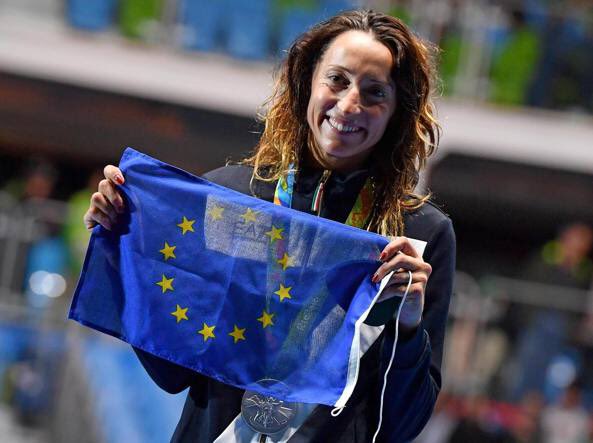
Over the past decade living here in Europe, I've noticed a curious phenomenon every four years. While my American friends back home get wildly excited about the Olympic Games, my friends in Europe seem to greet them with a collective yawn.
This pattern is being bourne out again this year. In the morning, while the Americans are sleeping, my Facebook timeline is bereft of Olympics information. Then, around 2pm, it starts. 'America won this. It lost that. Chinese people are bad at X. Australians are good at Y. Russians are cheaters. This Moldovan athlete is attractive so all Moldovans are attractive. What is Moldova again?'
I posted this observation on Facebook and asked people why they thought the difference exists. No one in Europe disagreed that Europeans are not so into the games, particularly compared to the Olympics-obsessed Americans. Funny enough, I think Americans assume the rest of the world is watching the games as closely as they are. I certainly did until I moved to Europe.
Sunday, 15 May 2016
Will Russia quit Eurovision next year?
In 2014, Russia was the unnamed enemy at the Eurovision Song Contest.
Ostensibly, the competition had nothing to do with Moscow. The shock winner was Conchita Wurst, a bearded drag queen from Austria who sang a song about overcoming adversity. All well and good. But the context behind the win was that Russian politicians and media had waged a campaign to discredit her - as a degenerate, and a symbol of a weak, effeminate West.
It backfired.
Austria won in 2014 - largely because of public voting from former Soviet satellite states. The juries of music experts - which count for 50% of the vote - voted overwhelmingly against her in Eastern Europe. But the public in Eastern Europe (the other 50% of the vote) voted for her. Because in the weeks before the concert, she had come to represent an anti-Russian stance (whether she meant to or not).
Monday, 9 May 2016
Ukraine's unabashedly anti-Russian Eurovision song
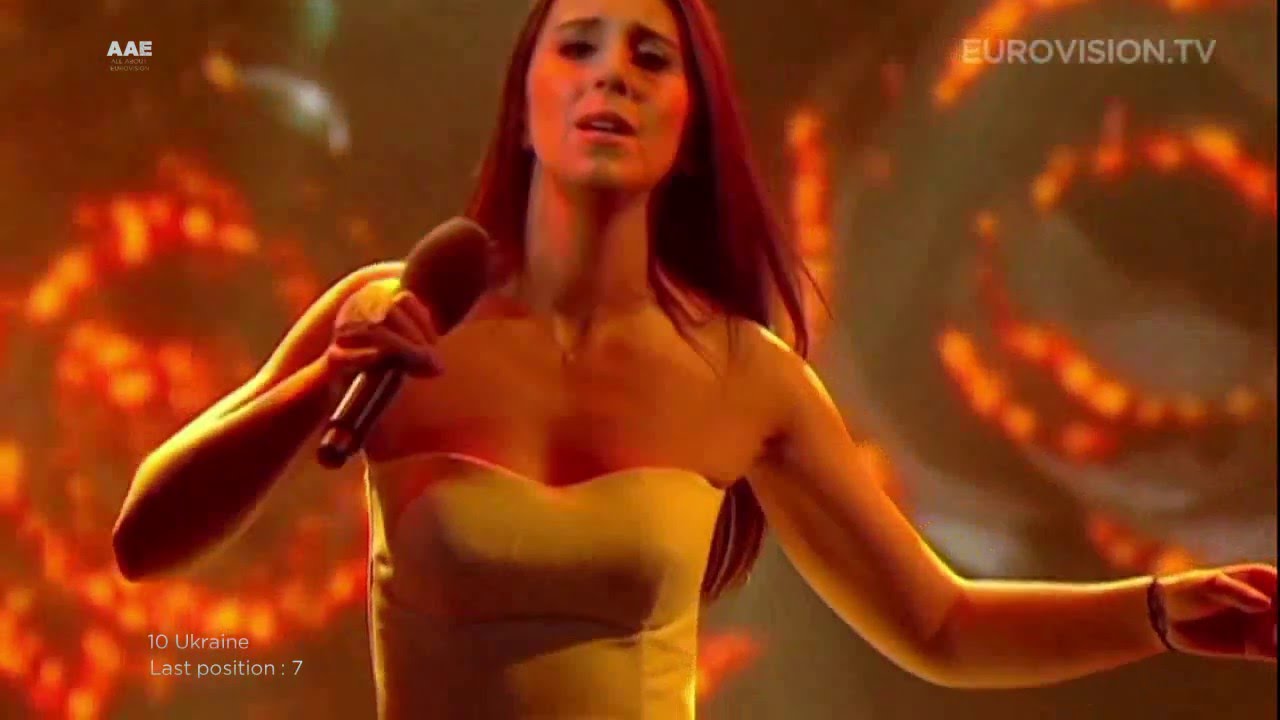
In 2009, as the war between Georgia and Russia raged on, Georgian public broadcaster GPB tried to pull a fast one on the Eurovision censors.
They fielded a song called "We Don't Wanna Put In", a disco anthem ostensibly about not wanting to stop dancing. The Eurovision organisers weren't having it. Songs with political themes are not allowed in the contest.
The title of the song, and it's main chorus, did not grammatically make sense in English. Though this could be said about a lot of Eurovision entries, this one was clearly meant to be "We don't want a Putin".
Tuesday, 5 November 2013
Eastern enthusiasm

Lithuania is a land in between. Part of the Soviet Union until just two decades ago, it today finds itself sandwiched between two dangerous and unpredictable neighbours. It’s not a very comfortable geography, to say the least.
To its East lies the pariah state of Belarus - Europe’s last dictatorship and, one might also say, Europe’s last Russian satellite state. To its West lies the Russian exclave of Kaliningrad - a barren, unforgiving place that few dare enter, repopulated by Russians in 1949 after its German inhabitants were killed or expelled.
But to its North and South lie fellow countries of the European Union – Latvia and Poland. The 103km border between Poland and Lithuania therefore forms a perilous land bridge between unfriendly Russian talons. Since2009 the two countries have been part of the EU’s passport-free Schengen area, giving the border additional importance as the only way to get to the Baltic and Finnic countries to the North without a visa.
But despite this pivotal importance, this narrow passageway faces a dearth of infrastructure connections. As I write this I am on a plane flying back from Vilnius, the Lithuanian capital, where I spent the last two days at a conference devoted to this lack of connection.
Thursday, 8 August 2013
Russia's '1936 games'?

After years of tension over Syria, missile defense and human rights, Russia's decision to grant asylum to NSA leaker Edward Snowdon was the straw that broke the camel's back. But the real low point in relations may have come during an appearance this week by the US president on America's most watched comedy show.
During an interview on The Tonight Show on Tuesday (6 August), the US president sat impassively as the show's long-time host Jay Leno compared the Russian regime to the Nazis and Vladimir Putin to Hitler. Leno was referring specifically to Russia's recent passage of a law banning the ‘promotion' of homosexuality and an accompanying rise of gruesome vigilante attacks on Russian gays by far-right groups.
Monday, 20 May 2013
Is Merkel to blame for Germany's Eurovision loss?

Others in Germany had, before the final, predicted the opposite – that the high level of anti-German feeling in Europe today over the austerity regimes imposed by Angela Merkel would make it impossible for Germany to win even if they fielded the greatest song eversung by mankind.
Out of the 39 countries voting, 34 refused to give Germany any points at all. Austria, Switzerland, Israel and Albania were the only ones to award the country points, along with bailed-out Spain - which came as a surprise (but could be accounted for by the large amount of German pensioners living in Spain for retirement). Germany received a humiliating score of just 18 points, compared to 281 points for Denmark's winning entry.
The coordinator for Germany’s ARD TV network told German media on Sunday, "There's obviously a political situation to keep in mind - I don't want to say 'this was 18 points for Angela Merkel', but we all have to be aware that it wasn't just Cascada up there on stage, but all of Germany."
Wednesday, 20 March 2013
A Cyprus whodunit
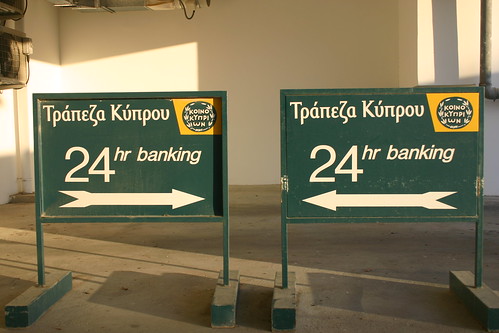 Brussels
is in full blame-game mode today following last night’s rejection by the
Cypriot parliament of the bailout package offered to the country by the EU. It’s a
veritable whodunit mystery, with the answer depending on whether you’re inclined
to believe the President of Cyprus, or the rest of Europe.
Brussels
is in full blame-game mode today following last night’s rejection by the
Cypriot parliament of the bailout package offered to the country by the EU. It’s a
veritable whodunit mystery, with the answer depending on whether you’re inclined
to believe the President of Cyprus, or the rest of Europe.
All sides agree on one thing – the decision taken by European finance ministers in the
early hours of Saturday morning to require a
one-time levy on all Cypriot bank accounts in exchange for the bail-out was
colossally stupid, plunging the Eurozone into a new crisis and risking a bank
run in the country. What cannot be agreed upon is whose idea it was.
Raiding people’s savings accounts is an unprecedented move.
Such conditions were not imposed on any other country receiving bailout money,
and indeed no such idea was ever even discussed. But Cyprus is a special case. As the
likelihood of an EU bailout for the small Mediterranean island increased, worry
began growing that the move would actually be a bail-out for wealthy Russian
oligarchs who use the island for money-laundering or tax-evading.
Monday, 19 September 2011
Another small victory for Europe's Left - or is it?
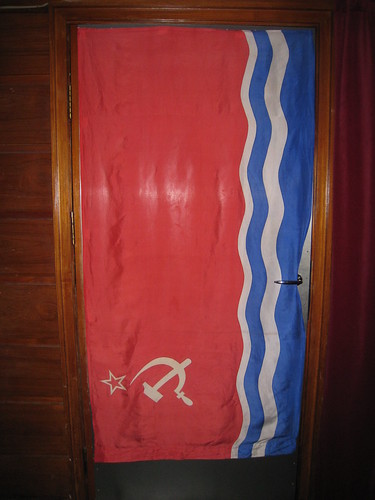
Saturday's general election in Latvia yielded a victory for the country's centre-left coalition Harmony Centre. The coalition won the largest amount of seats in the parliament. But though this may seem like yet another promising victory for Europe's left following Thursday's election in Denmark, the facts on the ground are a bit more complicated than that.
Harmony Centre is a coalition between the Social Democratic Party and the Socialist Party (the communists). The SP is essentially an ethnic Russian party, formed in 1991 to replace the Communist party after the country achieved independence from the USSR. Though the new state was formed around the Latvian ethnic and linguistic identify, in fact less than 60% of people in Latvia are ethnically Latvian. Almost 30% of the country is made up of ethnic Russians, some of whom moved there during the Soviet period but others of whom have lived there hundreds of years. The majority of the ethnic Russians cannot speak Latvian. In some of latvia's largest cities they constitute the majority of residents by far.
Thursday, 20 January 2011
EU targets Europe's last dictatorship
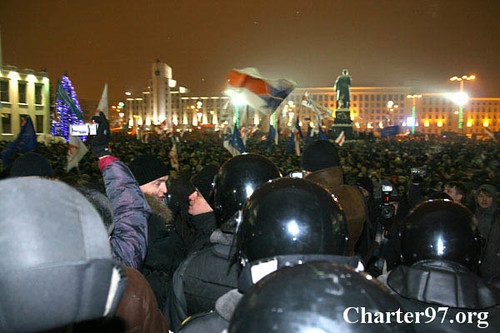
It is perhaps the most crucial test of will yet for the EU's first foreign affairs chief Catherine Ashton, who is expected to issue an ultimatum to 'Europe's last dictatorship': release the political prisoners arrested during the election or fact a travel ban in the West. She will push EU foreign ministers to adopt the travel ban on 31 January, and all indications are that they will all comply. The US may then follow the EU's lead with joint sanctions.
Today the European Parliament adopted a resolution calling for the EU to impose a travel ban and asset freeze on all Belarusian officials, judges and security officers involved in the violent crackdown. They are demanding that Belarus re-run the elections in accordance with international standards before the sanctions can be lifted.
Monday, 13 December 2010
Anti-Caucasian football riots in Moscow expose World Cup problem
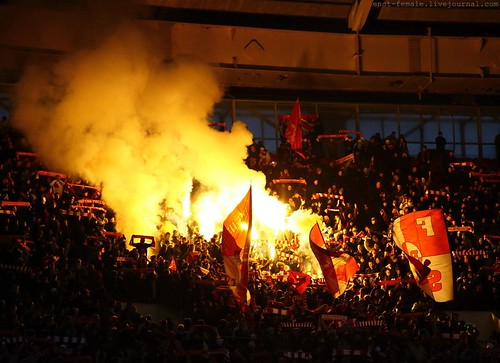
In Russia, as in much of Europe, football hooliganism often goes hand-in-hand with white supremacy and neo-nazi movements. The spark that lit the fuse for this particular riot came several weeks ago, when an ethnic Russian football fan was killed during a fight with a group of men from the predominantly Muslim North Caucasus region of the Russian Federation. He was a fan of the Spartak Moscow football team and a member of one of its most aggressive fan groups - or "firms" as the Russian hooligan groups like to call themselves. The Caucasian man arrested for the murder was subsequently released, prompting outrage from the Spartak Moscow fans who say the police are favoring the ethnic minorities.
Monday, 6 December 2010
The Wikileaks dump and Europe
 As the wikileaks "dump" continues to drip drip drip into the media, journalists here in Europe have been scrambling to find important policy-affecting observations from American diplomats about the old world. But while revelations about diplomacy in the Middle East and East Asia have been serious and consequential, observations about Europe have veered more toward tabloid gossip. Perhaps it's a reflection of what little strategic importance Europe has to the United States these days.
While diplomats in Asia were writing about how China may be signalling it will no longer protect North Korea, how Saudi Arabia may be gunning for a war with Iran and how Yemen may be taking credit for US attacks, diplomats in Europe apparently thought it was more interesting that French President is thin-skinned and "an emperor with no clothes" or that Italian Prime Minister Silvio Berlusconi is "feckless, vain and ineffective." The cables from US diplomats in Europe released by Wikileaks so far have often seem dismissive or mocking when speaking about European politicians.
Subscribe to:
Posts (Atom)