Showing posts with label EU Presidency. Show all posts

Wednesday, 6 July 2016

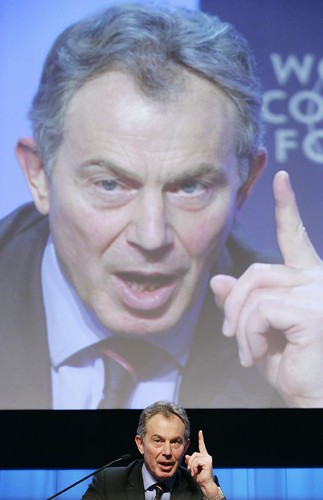
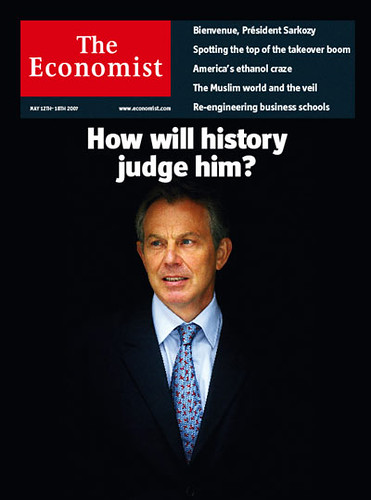
A myopic focus on Tony Blair

Judging by the public discourse, you might think Tony Blair was a dictator who railroaded the UK into war in 2003. But he was just one part of a foreign policy orientation incapable of saying no to the United States.

Today the long-awaited results of the Chilcot Enquiry into the UK's involvement in the 2003 Iraq War, the consequences of which the world is still living with, were finally published. 

Like the 9/11 Commission's report in the United States in 2004, it contains little in the way of bombshell revelations. Instead it paints an overall damning picture of the leadership of Tony Blair, the centre-left politician who was prime minister at the time. It gives ammunition to those who want to see Blair prosecuted. Perhaps the most memorable line of the report's executive summary is this:
"I will be with you, whatever."
These words were in a 2002 private memo between Blair and US President George W Bush. The line seems to vindicate a long-held perception in the UK that Blair was Bush's poodle. Indeed, the memo suggests that even a year before the war's launch, Blair had decided to go along with whatever the American president proposed.

The entirety of the media coverage of the report today has centred on Blair. But as I've written before, I find the UK's myopic focus on Blair in the aftermath of the Iraq disaster to be counter-productive. 

Why personalise it so? Was it really Blair who was Bush's poodle? Or was it the UK that was America's poodle?

Friday, 10 June 2016

No, the EU does not have 'five presidents'

How many Brits could name John Bercow, Mark Carney or George Osborne? Well these are the equivalents for three of the "five presidents" cited by Michael Gove in the Sky News debate.

During the live Brexit debate on Sky News last week, 'out' campaigner Michael Gove, the former UK minister for education, was taken to task by interviewer Faisal Islam.

Asked to back up his claims with hard facts, Gove deflected. Asked to name notable experts saying the UK would be economically better off outside Europe, he demurred. But he could tell he was on to a winner when he distracted from the questions by turning to the audience and asking them a question himself, "There are five presidents run the EU. Can you name them all?"

There was an awkward silence from the audience, and from Islam. No, it turns out, nobody could name them. Since then the Leave campaign has ran with this 'five presidents' line, and the British media has heralded it as an excellent point for the leave camp (The Guardian called it a "superb" moment for Gove in the debate).

There's only one problem - it's completely bogus. 

Just because there are a number of people with the title "president" in the European institutions does not make them all comparable to the "president" of the United States, France or Russia. But this is what Gove is implying.

Tuesday, 12 November 2013

Torch the rainbow

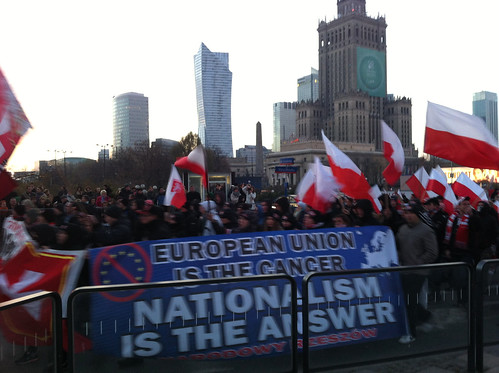
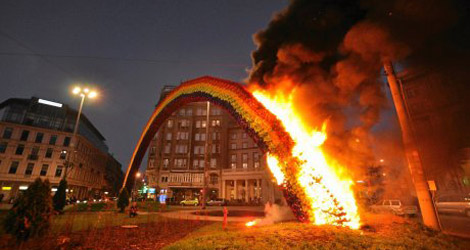
A monument to peace displayed by Poland outside the European Parliament during that country's presidency of the EU was burnt to the ground last night in Warsaw.

Chalk it up to some very unfortunate timing. Yesterday, as delegates arrived for this year's UN climate summit in Warsaw, they were warned to exercise caution and to stay out of the city centre. Violent demonstrations had broken out throughout the city.

The demonstrations actually had nothing to do with the climate summit. The meeting just happened to be opening on the same day as Polish national day, when far right and far left Polish groups have traditionally clashed in street brawls during demonstrations.

The violence isn't ordinarily noticed by the world's media. But given that international journalists have converged on the city this week for the climate summit, it was embarrassing timing for the Polish government.

It didn't help that the most iconic image from the violence was the sight of a giant rainbow in central Warsaw burnt to the ground last night. Those in Brussels might recognize the rainbow shown burning in this photo. It was displayed in front of the European Parliament by the Polish government during their EU presidency in 2011.

Tuesday, 5 November 2013

Eastern enthusiasm

A visit to Lithuania this week showed me how history and geography make such a difference to attitudes toward the EU.

Lithuania is a land in between. Part of the Soviet Union until just two decades ago, it today finds itself sandwiched between two dangerous and unpredictable neighbours. It’s not a very comfortable geography, to say the least.

To its East lies the pariah state of Belarus - Europe’s last dictatorship and, one might also say, Europe’s last Russian satellite state. To its West lies the Russian exclave of Kaliningrad - a barren, unforgiving place that few dare enter, repopulated by Russians in 1949 after its German inhabitants were killed or expelled.

But to its North and South lie fellow countries of the European Union – Latvia and Poland. The 103km border between Poland and Lithuania therefore forms a perilous land bridge between unfriendly Russian talons. Since2009 the two countries have been part of the EU’s passport-free Schengen area, giving the border additional importance as the only way to get to the Baltic and Finnic countries to the North without a visa.

But despite this pivotal importance, this narrow passageway faces a dearth of infrastructure connections. As I write this I am on a plane flying back from Vilnius, the Lithuanian capital, where I spent the last two days at a conference devoted to this lack of connection.

Wednesday, 5 January 2011

Belgium's 'invisible' EU presidency comes to an end

As the clock struck midnight last Friday, it wasn't just 2010 that was coming to an end. Here in Brussels, the new year also meant the end of Belgium's six-month period at the helm of the EU, as the country handed over the baton to Hungary. It was an interesting period for the rotating presidency, held for the entire six months by a country with no government. Yet despite the domestic political chaos, the presidency actually seemed to run fairly smoothly - or at least there weren't any noticable disasters. In fact if you weren't looking for it, you might have missed the Belgian presidency alltogether. It was a low-key, almost invisible affair.

Perhaps this was exactly the type of presidency that the EU needed at this time. After all, the Lisbon Treaty's creation of the new posts of President of the European Council and High Representative for Foreign Affairs was meant to downgrade the role of the rotating presidency to that of just a coordinator. Spain was the first country to take over the presidency after the treaty's adoption 13 months ago, and for those first six months of 2010 there seemed to be some confusion about the rotating presidency's new role. The Spanish foreign minister got in hot water a few times for appearing to speak for EU states when that role is meant to now be held by the new EU foreign affairs chief Catherine Ashton. And Spanish Prime Minister Jose Luis Zapatero, effectively the last Socialist leader left in power in Europe, seemed to be pushing for high-profile agenda items in a way that overlapped with the role of the new European Council president Herman Van Rompuy.

Contrast this with Yves Leterme, who is temporarily holding the Belgium prime minister position as a caretaker while the country continues to struggle forming a government. Leterme was pretty much invisable during the entirety of the Belgian presidency. At the European Councils he was happy to hand the reigns over to Van Rompuy, who as luck would have it is not only a fellow Belgian but also a member of Leterme's own political party. And I'm not even aware of the name of the Belgian caretaker foreign minister, I never heard from him or her at all last year. Given that the caretaker government is not authorised to propose new policy, perhaps this is unsurprising.

Monday, 21 June 2010

Flemish nationalists win big in Belgium

I’m back in cold, rainy Belgium, which is truly painful after a week in the warm sunshine. I spent this past weekend in the muddy, rain-soaked fields south of Waterloo, attending a reenactment of the decisive battle 200 years ago that spelled the final defeat for Napoleon. Despite the rain it was quite an experience (check out the video I shot below). I was particularly impressed with the international diversity of the people there, - both of the spectators and the 3,000 people participating in the battle. Most significantly, I noted that there seemed to be an even mix of Flemings and Walloons who had come to watch the battle. The harmony on the battlefield seemed a contrast to the battle going on at the moment between the country’s politicians.

The country went to the polls last Sunday to vote for a new government, and as predicted the result was inconclusive. But surprisingly, the election delivered more certainty than had been expected. There was a clear winner in both French-speaking Wallonia and Dutch-speaking Flanders. There was a large (though not surprising) victory for the Socialists in Wallonia, and a shock victory for the New Flemish Alliance (N-VA), a nationalist party, in Flanders. Because the parties did so well in each of their regions, there is now a realistic prospect that the two could form a coalition by September, with the Socialist MP Elio di Rupo to be appointed prime minister. Significantly, he would become Belgium’s first Wallonian prime minister in decades.

Thursday, 25 February 2010

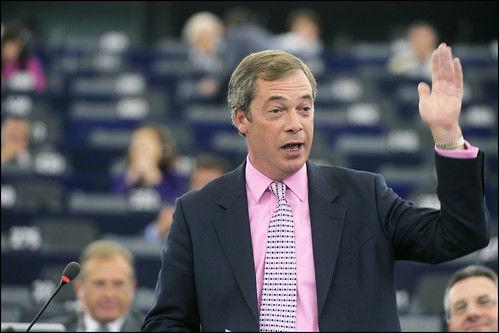
Nigel Farage, europhile hero?

Has the world gone topsy turvey? It's safe to say there is little that unites the rabidly Eurosceptic Nigel Farage of the UK Independence Party with pro-Europeans. Yet during newly-appointed European Council president Herman van Rumpuy's first appearance before the European Parliament this week, Farage was the only MEP to even remotely express the frustration many Europhiles are feeling with the presidential selection. And when Nigel Farage is the only one willing to say what the europhiles are thinking, it's a strange time indeed!

Farage delivered yesterday a blisteringly insulting attack on the new "EU President", telling him he has the "charisma of a damp rag" and the "appearance of a low-grade bank clerk". Now, such personal attacks may be commonplace in Westminster, but that is not how the European Parliament operates (or any other parliament I know of! Except maybe Australia...). MEPs today have been furious about the outburst. The parliamen's president is considering disciplinary action against him, and has summoned him for a meeting on Tuesday to discuss the incident.

Wednesday, 3 February 2010

Obama 'snubs' Europe

Given that this is a blog about EU-US issues, I would be remiss if I didn’t mention the sad, sad tears that are being shed today over Barack Obama’s decision to ditch the planned EU-US summit in Madrid in May.

Spain appears to be livid about it, while papers across Europe seem to be responding not in anger but rather in a rather depressed and humiliated shrug. The White House announced yesterday that Obama would not be attending the planned joint summit, which apparently came as quite a shock to its organisers. Apparently EU officials found out about the decision, first reported by The Wall Street Journal, through the news media.

Spain, which currently holds the rotating EU ministerial presidency (not to be confused with the newly-created council presidency), is now saying it will postpone the summit until the president can attend. Holding it without him would be humiliating for Europe and would lack symbolic significance.

Wednesday, 6 January 2010

Mr Bean – EU President

Today the euroblogosphere was receiving more attention than it’s used to, thanks to a surprising visit from Mr. Bean on the EU presidency’s web site. But now it’s turned into a war of words between bloggers – who insist they saw the image – and Spain – which insists no such image ever appeared.

I myself didn’t become aware of the story until late this afternoon, after an entire day of being frustrated by attempts to open the Spanish EU presidency’s web site and having them time out. Spain took over the rotating EU presidency from Sweden on 1 January*, and I had to write a story about their platform but couldn’t access their documents. As soon as I opened my twitter account I could see why. Everyone in Brussels was tweeting about ‘Beangate’, commenting both on the hack itself and the enormous amount of media attention it was receiving.

Friday, 20 November 2009

EU Low Representatives?


The look on Catherine Ashton’s face last night said it all. Shocked, flustered and almost a little embarrassed, the largely unknown British commissioner chosen to be the EU’s first “foreign minister” said it was a sign of her surprise that she had no acceptance speech prepared. Speaking in a softly reassuring tone, she said she would pursue a “quiet diplomacy” - characteristic of her low-profile approach to politics. 

Standing beside her, the expression of the unassuming Belgian prime minister Herman Van Rompuy was equally telling. Constantly switching languages every few minutes, he spoke of his reluctant acceptance of the offer from member state leaders to become the European Council’s first president. Oscillating between English, French and his native Dutch, a portrait emerged of a man who has gained a reputation as a quiet consensus-builder, having rescued the national Belgian government from collapse two years ago. 

And with them on the podium stood a beaming European Commission President José Manuel Barroso, a clear winner from last night’s announcement. In these two very low-profile picks Barroso will not have the competition for leadership he feared from a pick like Tony Blair or Jean-Claude Juncker. Since Rompuy will largely relegate his role to being a secretary-coordinator for the European Council, Barroso will continue to be the EU’s de facto leader. And with the demise of the rotating council presidency, he no longer has the prospect of an upstart national leader stealing the show every once in awhile. 

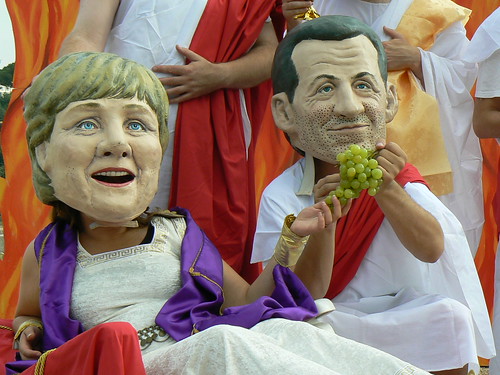
Together the three of them have been dubbed by bloggers today as the “Troika of Boredom” - three rather unengaging and unambitious politicians who are unlikely to give the EU the respected high profile it had sought to achieve by creating these new positions. Indeed, the reaction from Brussels blogs last night and this morning has been overwhelmingly unimpressed. Many are seeing the choice of two rather weak personalities as a deliberate effort by Angela Merkel and Nicolas Sarkozy to ensure that there is no strong supranational EU figure that could challenge their authority in the council. 

As for the fourth man standing in the group, his body language made it clear where his institution is headed. Frederik Reinfeldt, Prime Minister of Sweden (which currently holds the rotating council presidency), was practically being edged off the stage. The rotating country leadership will still continue to host meetings for the Council of Ministers, but it will no longer have any symbolic leadership role.

Franco-German Stitch-Up

Though the people selected for these new EU positions are being seen as boring, the selection itself is anything but. In fact, it is incredibly important. The remit of these two positions was left very vague in the text of the Lisbon Treaty, and all along its been said that the presidency would be defined by the first person who holds the job. 

If it were a high-profile person with much political clout, the presidency could become a powerful position capable of speaking with one voice for the EU on the world stage. If it was a low-profile choice, the presidency would become merely a coordinator role, a consensus-builder who would work behind the scenes to get the different leaders of member states to reach agreement. With the selection of Van Rompuy, member state leaders have made a clear decision about which way the presidency should go. His term length may just be two-and-a-half years, but if Rompuy takes a ‘low-profile coordinator’ approach to it as expected, it would be difficult for the next president to fundamentally reshape the precedent the Belgian set. 

But is this really what EU leaders wanted? Gordon Brown may have had his differences with Tony Blair in the past, but he seems to have been legitimately insistent that Blair should get the position. Indeed, it appears the choice of Ashton was made as a compromise to Brown in exchange for his abandoning the Blair cause. Sweden’s foreign minister seemed less than enthusiastic about the choice this morning, and many in Eastern Europe have been voicing grumbling discontent with the decision today. Certainly the Socialist leaders of Spain, Portugal and Greece can’t be pleased about it, considering they got the short end of the stick. Ashton is a fairly moderate politician who has little to no foreign policy experience. 

This will be largely seen as a Franco-German stitch-up. Merkel had indicated her preference for Van Rompuy early on, and after she persuaded Sarkozy to give up his preference for Tony Blair, the two announced they would be presenting a united front in their selection. This provoked accusations of bullying, with Sweden’s prime minister saying the decision should not be made by just the French and Germans. Certainly, it is a sign of Britain’s lack of influence in Europe that even as one of the ‘big three,’ it was unable to fight against a Franco-German alliance.

“Political Pygmies”

Certainly these two new ‘high representative’ positions were not the only part or even the main part of the Lisbon Treaty. Still, they were a significant part. And after eight long years of fighting for it, this decision has many asking, “What was the point?” The intention of the positions was to give someone the authority and clout to represent the EU on the world stage and stand toe-to-toe with the US and China. These two are unlikely to be able to do that, which bounces authority back to Barroso and back to the status quo, with no united voice for Europe. 

Many federalist Europhiles found themselves in the strange position of agreeing with UKIP leader Nigel Farage last night. Bizarrely, he told the BBC, "We've got the appointment of two political pygmies. In terms of a global voice, the European Union will now be much derided by the rest of the world."  But…isn’t that exactly what UKIP wants? The cognitive dissonance is even more impressive than usual on this one. 

For their part, the Tories praised the decision to go with a low-profile person rather than Tony Blair, with shadow foreign secretary William Hague saying, "I am very pleased that those of us across Europe who said that the president should be a chairman, not a chief, have won the argument.” 

Both the Tories and UKIP were also quick to point out that Baroness Ashton has actually never been elected to anything in her life. She spent most of her career working for a charity run by Prince Charles before being appointed as leader of the House of Lords in 2007 by Gordon Brown. When Peter Mandelson left his “Brussels exile” to return to Westminster in 2008, she took his place as EU Commissioner for Trade, where she’s served for about a year. Trade Commissioner is one of the most important roles in the EU and involves a lot of negotiation with foreign trade bodies (particularly those in the US and China). However it doesn’t necessarily involve any areas of foreign policy outside of trade. 

For his part, Van Rompuy is being lauded by his supporters as someone who united the warring Flemish and Frencophone factions of the Belgian parliament and brought the national government back from its year-long long shutdown in 2008. He reportedly took that job reluctantly after being asked by the Belgian king, who pleaded with him for 90 minutes. He had been set for retirement, and had already been on a long hiatus from politics. Merkel and Sarkozy have argued that his skills as a quiet consensus builder make him perfectly suited to coordinate the diverse member states of the EU. 

But it’s unclear whether this skill will translate to a European level. The disagreements in Belgium are between two parties, not 27. And authority in Belgium has been so devolved to the regions of Flanders and Wallonia by this point that the national government barely does anything at all – as evidenced by the fact that it was barely noticeable when the national government shut down for about a year. Is it that impressive that he was able to bring back to function a body that is largely symbolic by this point anyway? The EU may have it’s problems but it is by no means dysfunctional and is not about to shut down.

Realism

Perhaps the consensus reached last night appropriately reflects the fact that many Europeans are not ready for the notion of an “EU President.” The Liberal Democrats in the UK had an interesting interpretation of the decision yesterday, telling the BBC that the decision would expose the stupidity of the Eurosceptic British media referring to the Lisbon Treaty as if it was solely designed to create a powerful EU presidency for Tony Blair. Foreign affairs spokesman Ed Davey said,
"With low-profile appointees, no-one can take seriously any longer the Eurosceptic deception that these positions would challenge the supremacy of nation states acting together when they agree."
From the perspective of the UK and Scandinavia, where the prospect of an “EU President” was most unpopular, this may be true. But what about the many other Europeans who wanted the EU to speak with a stronger, more coherent voice on the world stage? Who now will have the clout to stand up to the United States in situations like the Iraq War? Who now will bring trade power to bear in negotiations over climate change? The decision to choose low-profile people may allay some of the fears expressed in the British media, but does it do so at the expense of offering a solution to the problem the Lisbon Treaty was trying to solve? 

Time will tell how these two will use their roles, but it looks like the wild card is more likely to be Ashton than Van Rompuy. She is younger, newer, and there is less known about her political stances on foreign policy issues (she by the way has a very left-of-centre husband I understand). Van Rompuy is unlikely to surprise anyone and will probably stick to a low-profile role. But it she wants to, the Baroness could shape the EU's foreign policy positions to be far more powerful than the presidency. 

That is, if she is so inclined.

Tuesday, 10 November 2009

Miliband says there’s no place like home

It would appear David Miliband decided to click his ruby slippers three times yesterday in Berlin, definitively turning down the new position of EU ‘foreign minister’ and opting to return home to a troubled government in the UK.

Of course this could all just be a ruse to take him out of the ‘frontrunner’ status, a notorious handicap when it comes to getting EU appointments. But all indications are that his conversation with the head of Europe’s socialist group yesterday in Berlin was genuine – he will not take the new high representative position if offered. Given that it appears Tony Blair is now out of the running for the position of EU president, it looks like there will be no Brits filling either of these two new roles. Given the UK’s lack of participation within the EU, there will be many on the continent who feel this result is appropriate.

Miliband had gained increased attention after a remarkably pro-Europe speech he delivered two weeks ago, saying the UK needed to abandon its ‘hubris and nostalgia’ and engage fully with the EU, working to reform it and make it strong. Given that this kind of talk is so rarely heard from a senior British politician, many Socialists in Europe were so elated they immediately began pushing for Miliband to take the foreign minister post.

However there was always some trouble with this logic. Miliband’s words were so encouraging precisely because he was such a senior politician delivering a pro-Europe speech in the UK. Take him out of the UK, and the beneficial aspect of that is nullified. David Miliband may have a moderately high profile in Britain, but its doubtful that his presence in Brussels would have focused British media attention on the EU in the way that Tony Blair being there would have. As I’ve written about before, a posting to Brussels is often considered a ‘banishment’ in the UK, and politicians sent there quickly disappear from the British media landscape. Having a pro-European in Brussels rather than in Westminster won’t do much to change the UK’s attitude toward the EU.

There was also a question on the mind of continental Socialists as to what sort of benefit he would bring for them as foreign minister. Though New Labour is part of Europe’s socialist grouping it is certainly at the more centrist, Atlanticist end of the spectrum. Miliband is after all a committed Blairite, which taints him with the brush of the Iraq War legacy. There were concerns that an EU foreign policy under Miliband would too often acquiesce to the plans of the United States, rather than offering a strong alternative. Then again, given that the governments of Europe will be dominated by conservative parties next year, it’s difficult to see how a far-left Socialist foreign policy chief could bring Europe to a consensus.

Miliband is still viewed by many as the last great hope for the dying Labour party, and there will be many within Labour who are relieved at today’s news. Many would have seen Miliband’s move to Brussels as a rat fleeing a sinking ship, given that Labour is almost guaranteed to lose the upcoming UK general election next year. In fact there are many who think Miliband is Labour’s last hope, and that the only way the party can win the upcoming election is if he leads a revolt against Gordon Brown and stands as Labour’s leader instead.

Given the widespread loathing of the British Conservative party in Europe these days, there were probably many on the continent from both the left and the right who thought their best hope was to keep Miliband in the UK and hope that he can somehow deal a miracle defeat to David Cameron. Of course if Labour does lose and Miliband becomes the head of the opposition, it's hard to see what benefit his pro-European views will bring then. It's all a bit up in the air, but one thing is certain - you haven't heard the last of David Miliband.

Friday, 30 October 2009

Little Support for 'President Blair'

The big European Council meeting is wrapping up this afternoon, and it looks like two definite conclusions are emerging: the Lisbon Treaty will shortly be signed by Czech president Klaus and Tony Blair will not be the first “president of Europe”.

Sources at the council
meeting are saying that almost all EU leaders are now unfavourable toward the prospect of Blair getting the presidency - most notably the leaders of Portugal, Spain and Greece (basically the only socialist governments in the EU other than the UK) and Angela Merkel, the main power broker as the leader of the largest EU country. It looks like the only leader supporting Tony Blair is his former rival, Gordon Brown. How bitterly ironic.

The British media has run with this story today
, effectively proclaiming the idea of a Blair presidency dead. In fact the story has been so widespread, and Downing Street so willing to publicly accept defeat, that I can’t help but wonder if this is an attempt by New Labour to feed this story to the media in order to take Blair out of the “frontrunner” status. Frontrunners are notoriously handicapped when it comes to getting nominated for EU positions. It may be that Blair now thinks the best way of getting the position is by appearing to be out of the race.

Much of the British media has been focusing on Blair’s role in Iraq and economic policies that stoked the financial crisis as the reason so may on the continent are opposed to his presidency. But I can tell you the biggest objection I hear coming from Brussels is there mere fact that he is British. They say the presidency should not go to someone from a country that is not really a fully participatory member of the EU – considering that it doesn’t use the euro, is not in the borderless Schengen zone, is the only country to receive a rebate from its EU financial contributions and has opted out of the charter of fundamental human rights.

Interestingly it would appear that the socialists are not backing Blair because they’ve made the political calculation that David Miliband is the only socialist who stands a chance of getting the new foreign policy chief position. And since both new positions can’t go to Brits, they want to squash talk of Blair right now in order to get Miliband in the running early. And his very pro-European speech earlier this week certainly ingratiated him to many on the continent.

So it looks like we’re back to square one, though Blair could conceivably pull it off. There is a lot working against him, but in the end the powers that be in continental Europe may decide that the appeal of having a “heavy hitting” president outweighs the baggage that Blair would bring to the position with him.

Thursday, 8 October 2009

"We Face an Aggressive Secular Attack"

The words above raised some eyebrows when they were bellowed yesterday at a conference at Georgetown University in Washington, but they weren’t from a fiery American evangelical – they were from former UK Prime Minister Tony Blair. The same Tony Blair who is currently the bookies’ favourite to become the first “president of Europe”.

Continuing my look
at the factors in the choice of the first person to take up the President of the European Council position, I thought I'd look at how these comments yesterday might affect the debate. Considering he is currently lobbying to be the symbolic leader of largely secular Europe, the speech seems remarkably ill-timed in its vitriolic attack on atheism (full text of the speach here). According to the Times, Blair said of the world’s religions:
“We face an aggressive secular attack from without. We face the threat of extremism from within.” Arguing that there was “no hope” from atheists who scorn God, he said the best way to confront the secularist agenda was for all faiths to unite against it. “Those who scorn God and those who do violence in God’s name, both represent views of religion. But both offer no hope for faith in the twenty first century.”
Apparently to Blair, Atheists and terrorists are two sides of the same coin. To call the comments incendiary is an understatement, and they may well come up during the difficult deliberations over the next month over who should take up the position of Europe’s first symbolic “president”. And it certainly won’t help Blair with secular Europeans that his speech was delivered in ultra-religious America.

Indeed it is Blair’s ties with America that are proving the biggest stumbling block to his candidacy, particularly his relationship with former President George W. Bush. The European left already reviles him for tearing Europe apart in 2003 by being an unquestioning defender of the Iraq war.

For me personally, there is just no way I could support someone for this position who said those words above. So my hesitation is over, I can unequivocally say that putting Tony Blair in that position would be a bad move for Europe, and it would not be worth the celebrity and energy he would bring to the role.

Contrary to the conclusions already drawn by the British tabloid media, I actually don’t even think it is very likely he will get the position. As the Economist’s Charlemagne column points out today, the fact that Tony Blair's name has been connected with this position for two years now actually works against him, as front-runners rarely secure euro-jobs in the end. And the reasons for various and disparate groups to oppose him are too high in number to see how he could overcome them easily. Small states don’t want to see the position go to anyone from the big three. The left hates him for the Iraq War, his abandonment of socialism to win UK elections and his sudden conversion to aggressive religiosity. The continental right is at best lukewarm toward him and at worst jealous of his celebrity. The British right reviles him. Who exactly is supporting this man?

So who am I backing? He may not be famous or charismatic, but my hopes are being placed in Luxembourg’s Jean-Claude Juncker. As leader of the Eurozone finance ministers he is keenly placed to help Europe through the recovery and to put in place new safeguards and regulatory regimes to prevent another crisis. Of course there are significant hurdles for him to overcome as well. Both Labour and the Tories hate him for his unabashed federalism, and Sarkozy reportedly thinks he bungled the start of the financial crisis.

So even though I was on the fence, there’s just no way I can hold my nose and cast my lot for Blair after hearing what he said in Washington yesterday, no matter how much his celebrity would give the EU some much-needed glamour and cache. Juncker may not be a Barack Obama, but given the disillusion many American progressives are now feeling about that presidency across the pond, maybe celebrity presidencies aren’t all they’re cracked up to be.

Tuesday, 6 October 2009

Both the Best and Worst Man for the Job


Now that the Irish have passed the Lisbon Treaty and it’s set to be ratified within months, the British press has transferred its characteristically ferocious obsession to what the treaty will do. And to hear them tell it, the sole purpose of this document is to make Tony Blair the “President of Europe”. Of course that is not true, and in reality no such position is being created. The position being referred to is the President of the European Council, which has always existed but will now go to a person rather than to a country (Sweden currently holds the presidency). The position doesn’t come imbued with much specific power like an American president, it's more of a symbolic coordinator role like the Secretary General of the United Nations.

But though it doesn’t come with executive power, the intention of the position – to designate a high-profile figure who can speak with one voice for all of the EU - is ambitious. Right now, the member state holding the Council presidency is unable to do that because they can essentially only speak for themselves, and they don’t have much time to develop a cohesive presentation of EU objectives given that they only hold the position for six months. So having an actual person in place for a longer term will make a big difference, although he is essentially "working for" the 27 European heads of government that make up the Council, not the other way around. He can only speak when he's been given permission by the entire council, a position he may find frustrating since he is used to the unilateral system of Westminster government.

The de facto “leader” of the EU up till now has been the president of the European Commission, a position currently held by Jose Manuel Barroso. But given that the Commission (made up of independent commissioners) and the Council (made up of the prime ministers of each member state) are often in conflict, Barrosso has never been able to convincingly speak for all of the EU even when he’s sitting in as its representative in bodies such as the G8. The Commission has no control over member states’ foreign or military policy. Of course the President of the European Council won't be able to unilaterally make foreign policy decisions (and nether can the new position of EU High Representative on Foreign Policy). The president is subject to the prime ministers of the member states, but he can work to attain a consensus amongst them and then announce and coordinate that policy (much in the same way Switzerland's executive branch works).

So the new presidency position calls for someone who has talents in two distinct areas: he or she needs to know how to work a room and twist arms in order to reach group consensus, and they need to be a high-profile, charismatic figure who can represent the EU on the world stage. Obviously, Tony Blair meets both of these requirements.

The problem is he also has one giant albatross hanging around his neck: Iraq. The fact that he was prime minister when the UK followed the US in its war with Iraq hasn’t endeared him to the British public or to Europeans in general. The centre-left of Europe is deeply mistrustful of Blair because of his role in the war, and this is a stigma he is never likely to live down. And in the UK, as has been evidenced by the vitriolic reaction by the British press to the likelihood of his presidency, Blair is still widely reviled by both the left and the right. The right hates him because he presided over the humiliating defeat of the Tories and pushed for a marginal social democratic agenda, the left hates him because he acquiesced to American power, and because they feel betrayed by many of New Labour's policies and promises it did not fulfil. He’s also become an openly religious Catholic since leaving office, and that doesn’t exactly endear him to the secular left either in Britain or on the continent.

Given the painful divisions that emerged in Europe in 2003 over the Iraq War, and how those divisions exposed how weak and incoherent Europe still is in the area of foreign policy, picking someone as president who conjures up those memories may at first seem like something Europe would want to avoid. But the reality is there just isn’t any other logical choice – such is the dearth of high-profile, charismatic politicians in Europe. The runners-up? Jan Peter Balkenende of Holland, François Fillon of France, Herman Van Rompuy of Belgium and Jean-Claude Juncker of Luxembourg. Not exactly household names.

Hated at Home

With this reality in mind I had long ago concluded that despite the Iraq problem Blair was probably the best pick. But in the past few days speaking with some of my friends here in the UK, I’m starting to get the full sense of how the wounds of the Iraq war have still not healed here. Even my most liberal friends have reacted with horror to the idea that Blair will assume the presidency, saying that after the British public and media worked so hard to push him to resign it would be an insult to see him appointed to an unelected position where he seems to be lording over them.

A recent survey showed that a majority of the British public (53%) is opposed to Blair becoming president. Perhaps even more surprising is the fact that only 66% of Labour party members want him to get the job. At their party conference this week the Conservatives seem to be content to make a bogeyman out of Blair, with Boris Johnson saying Britain is faced with the prospect of Blair “suddenly pupating into an intergalactic spokesman for Europe”. The media has been almost salivating with hostility toward the idea as well, with the Telegraph newspaper actually referring to a proposed British referendum on the Lisbon Treaty in a headline yesterday as the “Stop Tony Blair Referendum”.

Certainly, these fears are misguided. Logically the Tories should be rooting for the first president of the council to be British – that would give the UK the influence in Brussels to be able to push through the EU reforms they claim they are so intent on achieving. Opposing Blair is certainly a case of the Tories cutting off their nose to spite their face, perhaps succumbing to mob-pleasing populism over sound policy.

But this isn’t just the usual British paranoia about the EU revealing its ugly head. There is a real feeling of ill will toward Tony Blair in this country, and I’m starting to wonder if its really worth it for Brussels to further antagonize the British, who are already so hostile to the EU. It’s a bizarre situation – Blair being president would undoubtedly be a good thing for the UK (the vast majority of respondents to that survey admitted as much), but he remains so controversial in his home country that the appointment would infuriate many in the UK – particularly the liberal left which the EU so badly needs in its corner.

Perhaps this initial discomfort with the choice of Blair will go away after a short while, and the British people eventually will come to remember what it was that inspired and enthused them about Blair in the first place. If that were the case Blair could actually serve as the ambassador for Brussels who could finally make the British like Europe, or at least make them finally accept that they need Europe. It was always a shame that the Iraq War intervened to derail Mr. Blair’s hopes of making Britain a fully active and contributory member of the EU. Perhaps this is the opportunity for him to finally see out that goal. It would be one failed promise that New Labour could belatedly deliver on.

Tuesday, 24 March 2009

Czech Government Falls

They're falling like dominos in Eastern Europe. The government of the Czech Republic has become the latest to fall as a result of the financial crisis, following Hungary, Latvia and Iceland. The timing is not only scary for the struggling non-Eurozone EU member states, it's also potentially disastrous for the EU presidency, which the Czech Republic still holds until July.

The resignation of the country's center-right prime minister Mirek Topolanek has thrown the government into chaos. With the G20 talks coming up, and an EU-US summit in Prague on 5 April, it remains unclear who is going to be representing the Czech EU presidency, as this role would normally fall to the prime minister. Topolanek was supposed to represent the EU at the G20 talks in London next week. Now it could end up being an empty chair. Or perhaps even more worrying to Brussels, the EU could instead be represented by the controversial Eurosceptic Czech president Vaclav Klaus.

There were more than a few people in Brussels today pointing out that this very bad situation wouldn't be happening if the Lisbon Treaty had already been adopted, as it would end the rotating EU presidency and instead create a permanent president. But the Czech Republic still hasn't ratified the treaty, and the government's collapse will likely delay any ratification until Autumn at the earliest.

It's not a good situation for the EU.

Friday, 9 January 2009

1968 Tensions in the Gazprom Crisis

The EU has struck a deal with Russia, and it appears the gas crisis may be coming to an end, as millions of people in the Balkans continue to be without heat during a brutal cold snap across Europe. In exchange for Russia immediately reopening its gas pipeline through the Ukraine, who it has accused of stealing gas, the EU will send monitors to supervise supplies of Russian gas through the country. However according to the latest reports, gas is still not flowing through the pipeline as of this afternoon.

Given that this is the first crisis faced by the new Czech presidency of the European Union, many are doing some hand-wringing over whether the bad blood between the Czech Republic and Russia is going to affect the negotiations over this crisis. The history between the Czech Republic and its former occupier, as well as its current diplomatic tension over the missile defense system being installed by the US, mean that negotiations taking place between the Czech presidency and Russia are going to have some baggage.

Today the FT's EU correspondent Tony Barber wrote in his blog that these fears are misplaced, but I have to say that his his analysis doesn't conform with my experience there. I lived in Prague back in 2002-2003, and during this time I found antipathy toward the Russians to still be alive and well, especially among the older generation. I had a Ukranian friend there who spoke fluent Russian, but no Czech. But although most older Czechs can understand Russian because they learned it in school, when she would walk into a store and speak in Russian she would be met with just cold stares. She would then ask again in English and then they would respond, even though it was clear they had understood her the first time.

I found this same attitude existed with older Czech coworkers where I worked in Prague. Whenever something about Russia came up I could see their expressions harden. This is probably only to be expected, after all we are talking about a country that brutally crushed their political movement in 1968 and then occupied their country until for the next 20 years.

Of course this is just anecdotal evidence, and not the same as the Czech foreign minister's assertions to the contrary. But of course it's any diplomat's job to gloss over tensions. So far Czech-Russian tension doesn't seem to have had an affect on the current crisis, but even once this is resolved there are serious implications of what has happened here that need to be dealt with. This incident will surely bring home the fact that the EU is dangerously dependent on Russia for its energy supply. Could hostile words from a Czech presidency have the effect of exacerbating the conflict? At a time when Brussels is already worried about the effect the Czech presidency will have on the Lisbon Treaty ratification, the last thing they probably want is another cause for hand-wringing.

Friday, 26 December 2008

An Awkward 6 Months in Prague

The end of the year is fast approaching, and with it the EU reign of SuperSarko is coming to an end as well. On December 31 at Midnight France will pass the rotating EU presidency to the Czech Republic, which will hold the position for the next six months. With the ratification of the EU reform treaty still up in the air, it will be an incredibly volatile time to hold the leadership position. And with the Czech president a notorious EU-hater, it's going to be an awkward few months

It is perhaps ironic that the EU reform treaty is set to abolish the cumbersome rotating EU presidency, which is handed off to a new country every six months. During this critical time, it could be the holder of the rotating presidency that kills the treaty.

The tension that the next six months will bring was in evidence at a recent lunch for European ambassadors to the Czech Republic. As recounted by the Economist, the guest of honour at the meeting, Czech president Vaclav Klaus, made the meeting extreemly uncomfortable. After being politely asked about how the Czech EU presidency might handle various EU policies, Klaus responded with an angry diatribe about how since he is against the EU's existence, he has no reason to answer such questions. He then followed this with an angry speech about how the Czech presidency is irrelevant anyway because the EU is always dominated by the big founding nations no matter who holds the presidency. He even turned to the envoy from Slovenia and accused that country's presidency for the first half of this year of being a farce.

Now it's important to point out that the Czech presidency is a largely ceremonial position with no direct power over domestic or foreign policy, as many in the Czech government have been quick to point out. But his symbolic importance is huge. At a time when Irish millionaires are seeking to build a pan-European movement against the EU reform treaty, the fact that the current ceremonial figurehead of the EU himself is against it is not insignificant. Comments like the ones made at this recent lunch will become a rallying cry for Eurosceptics across the continent over the next six months, and Vaclav Klaus will be the hero of the anti-treaty movement. Klaus had a well-publicized dinner with millionaire Irish anti-Lisbon campaigner Declan Ganley in November, and he still refuses to fly the EU flag over Prague Castle.

My former professor while I was studying in Prague, Jiri Pehe, told the BBC this week that the EU "has the right to be worried a bit about the Czech presidency." Pehe, an advisor to the first post-communist Czech president Vaclav Havel, should know. The Czech Republic itself is only 19 years old, and it's only been a member of the EU since 2002. "This 19-year-old teenager is now taking over a bus with 26 other people on board," Pehe told the BBC. "Maybe the rest of the European Union would be OK if this particular teenager was driving the bus on an empty road with no intersections ahead, but I think we are facing very difficult traffic, with several complicated intersections."

So it's perhaps not surprising that French president Nicolas Sarkozy has been reluctant to hand over the reigns to his Czech counterpart. Over the past few weeks there have been rumours of a secret French plan for Sarkozy to continue hosting European summits after the new year, inviting only those countries that use the euro. This plan, according to insiders would allow Sarko to maintain control if Klaus attempts to "sabotage" the EU during the Czech presidency. Recently an official from the Elysee Palace used that exact word to describe the process.

It will probably become clear within the first month of 2009 how Klaus, and the Czech government, intend to proceed with the presidency. But a confrontational tact would throw the EU into pandemonium just as it is desperately seeking to get the reform treaty ratified. Fasten your seatbelts, it's going to be a bumpy year.

Wednesday, 2 July 2008

Sarko to the rescue

Can Sarkozy save Europe? This was the question being asked in France over the weekend, featured in big bold letters in Sunday’s Le Parisien. As France took the helm of the rotating European presidency yesterday, it seemed as if the only person who would confidently answer yes to that question was M. Sarkozy himself.

For the moment, the French president and the French capital were brimming with euroconfidence yesterday, with the Eiffel Tower lit up with the EU colours and stars, and with Sarkozy listing off a laundry list of ambitious goals that he’s had planned for this presidency for some time. The energetic and ambitious new French president has been urging a shakeup of European institutions for some time, demanding that the union focus on issues popular with the public in order to re-establish legitimacy and that it change its monetary policies to combat inflation. 

But Sarkozy’s day in the spotlight was overshadowed by the tumultuous events around him. After the Irish ‘no’ vote France’s time on the EU throne will not be as Sarkozy envisioned it. Instead of strengthening and reforming the union, he will likely spend the next six months desperately trying to save it. As the president outlined his ambitious policy agenda yesterday, he was being upstaged by comments from Poland’s president Lech Kaczynski, saying that for him to ratify the treaty after the Polish parliament passes it would be “pointless”. Both Lech and his twin brother Jaroslaw, who was until recently prime minister of the country until he was voted out, have been deeply unfriendly toward the EU, while the new prime minister, Donald Tusk, is pro-EU.