Showing posts with label Ukraine. Show all posts

Tuesday, 9 May 2017

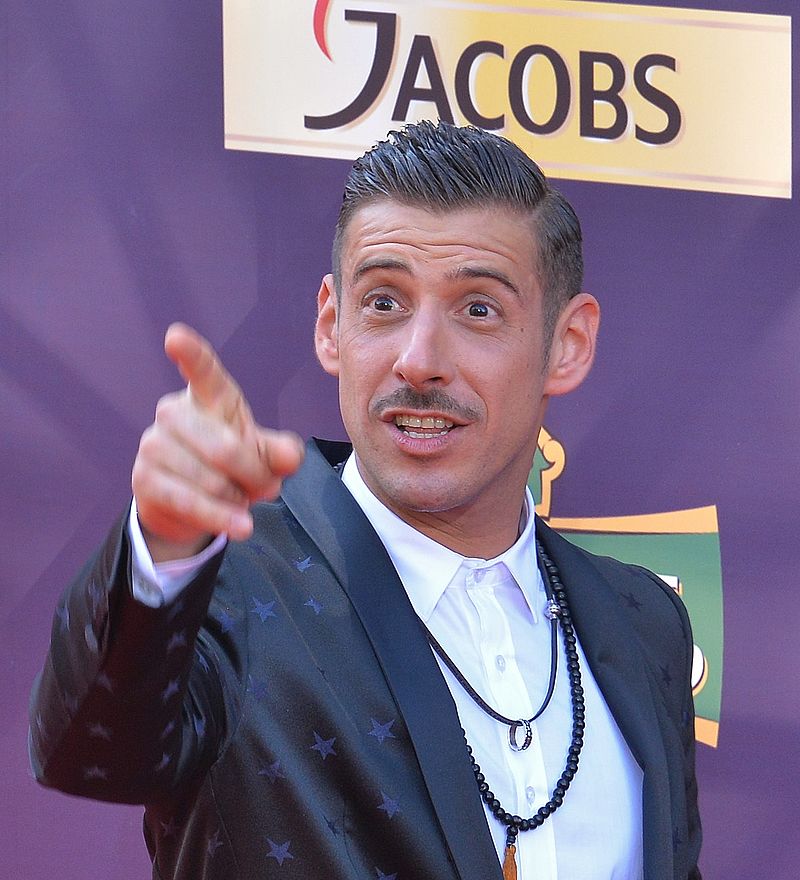
Italy should win Eurovision 2017, but it won't

Bookies think Francesco Gabbani is the man to bring Eurovision back to Rome for the first time since Italy won with a song about the EU in 1990. But language and performance issues present high hurdles.

With the defeat of far-right nationalist Marine Le Pen in Sunday's French election, Europe breathed a sigh of relief. It's no time to relax just yet, but at least for the rest of the week the continent can turn to more fun diversions. And on that note - Sunday also marked the start of Eurovision week.

Of course, the Eurovision Song Contest isn't the same politics-free distraction it once was. This year's competition is in Kiev, following Ukraine's shock win last year with an unabashedly anti-Russian song. After a viciously clever trap set my Moscow, Russia has pulled out of the 2017 contest. Their absence will be keenly felt this week.

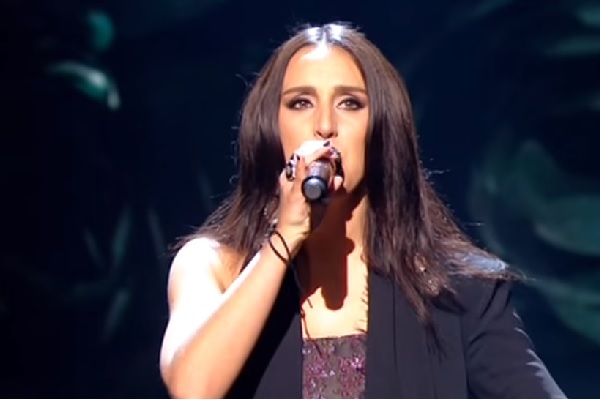
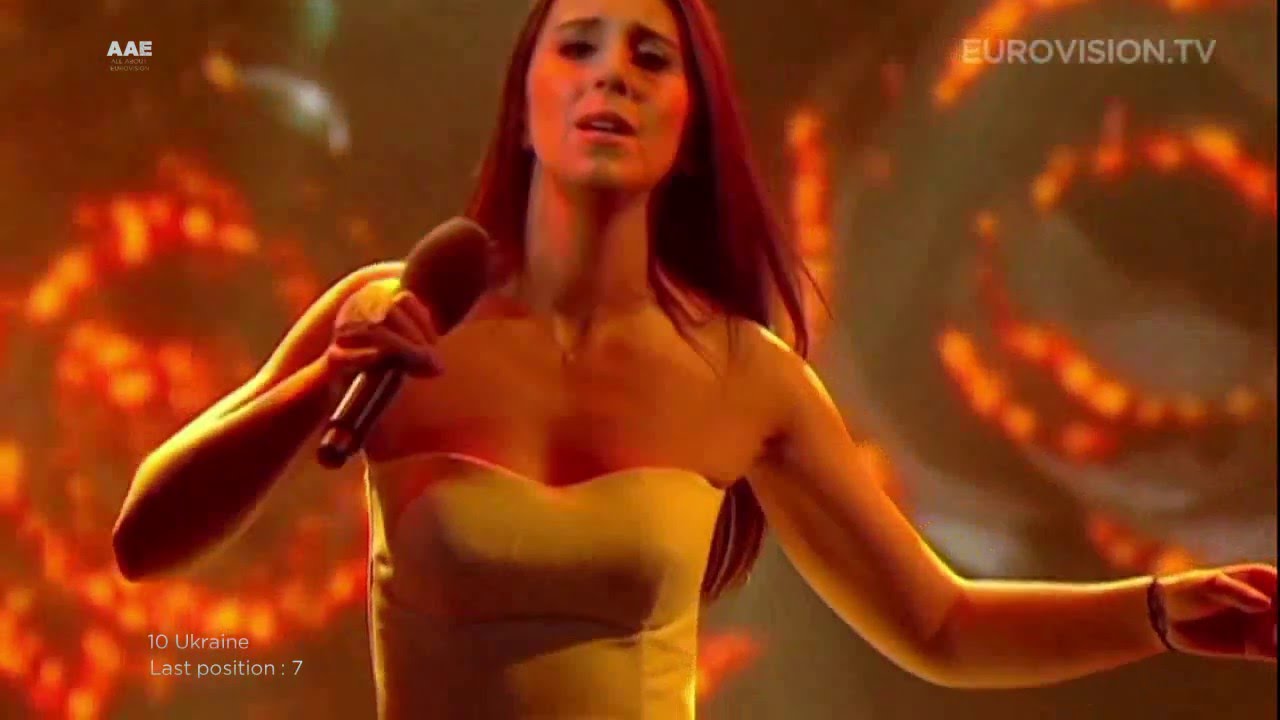
Every year, countries try to emulate the previous year's winner. 2017 has been no exception. To match Jamala's haunting winning song about the Soviet genocide and deportation of Crimean Tatars, we have a whole crop of dark, brooding songs this year about serious subjects. But none match the emotional intensity of Jamala's performance last year.


Friday, 14 April 2017

It's official - Russia has pulled out of Eurovision

For the first time since the country entered the song contest in 1994, Russia will not broadcast the event. Will they ever come back? Or will they launch their own 'illiberal' Eurovision alternative?

After weeks of protracted negotiations, the organiser of the Eurovision Song Contest announced the news everyone expected: Russia will not participate in this year's competition.

The big question now becomes - will they ever come back?

Eurovision is hugely popular in Russia, and the loss of this significant audience is a big blow to the European Broadcasting Union, the coalition of national broadcasters that stages the contest. What is terrifying for the EBU is the prospect that Russia will now permanently pull out of the contest. 

Russian politicians have been calling for it to do so for years, ever since a bearded drag queen named Conchita Wurst won for Austria in 2014. One Russian MP said the contest had become 'a celebration of perversion', and said Moscow should revive the old Cold War alternative, Intervision, as a family-friendly alternative.

Wednesday, 22 March 2017

Russia just won the Eurovision propaganda war

Ukraine’s decision to ban Russia's Eurovision contestant from entering the country makes Kiev look like the bad guy. Once again, Moscow has outmaneuvered its enemies.

Eurovision, the annual contest in which European nations compete against one another to produce the best song, has been no stranger to political controversies over its 60 years. But nothing compares to what is now unfolding in Kiev.

This year, the song contest has become entangled in today's most controversial and beguiling geopolitical conflict - Russia's 2014 invasion and annexation of Crimea.

The stage was set last May, when Ukrainian contestant Jamala scored a shock win in the 2016 contest with a song about Crimea. It wasn't explicitly about the current conflict. Instead, it was an emotionally intense song about the Soviet Union's mass deportations of Crimean Tatars to Siberia in 1944.

Thursday, 3 November 2016

As America votes, Europe holds its breath

Once again, Europeans wait while 300 million people on another continent determine their future. Why do they accept this state of affairs?

If you think things are tense in the United States right now, you should try it here in Central and Eastern Europe. 

People are incredibly anxious about what might happen on 8 November. There are the obvious concerns - a volatile and unpredictable man being given access to America's nuclear arsenal after a victory sending global markets into freefall. In an age when America is still the bedrock of the global military and economic order, such an earthquake would send shockwaves throughout the world.

These are the worries of the whole globe right now. But in Europe, they have additional reason to fear. No area of the world is more dependent on the United States for its peace and prosperity than Europe. And it is this dependence that makes the media's coverage of US presidential elections here so breathless. In many ways, Europeans devote more attention to the American election than they do their own.

Sunday, 15 May 2016

Will Russia quit Eurovision next year?

A song about Russian-orchestrated genocide in Crimea has won Eurovision. This is more serious than you think.

In 2014, Russia was the unnamed enemy at the Eurovision Song Contest.

Ostensibly, the competition had nothing to do with Moscow. The shock winner was Conchita Wurst, a bearded drag queen from Austria who sang a song about overcoming adversity. All well and good. But the context behind the win was that Russian politicians and media had waged a campaign to discredit her - as a degenerate, and a symbol of a weak, effeminate West.

It backfired.

Austria won in 2014 - largely because of public voting from former Soviet satellite states. The juries of music experts - which count for 50% of the vote - voted overwhelmingly against her in Eastern Europe. But the public in Eastern Europe (the other 50% of the vote) voted for her. Because in the weeks before the concert, she had come to represent an anti-Russian stance (whether she meant to or not).

Monday, 9 May 2016

Ukraine's unabashedly anti-Russian Eurovision song

As tensions between Russia and the West continue, Ukraine fields an entry about the Soviet Union's horrific mass deportations in Crimea. How did it get past the censors?

In 2009, as the war between Georgia and Russia raged on, Georgian public broadcaster GPB tried to pull a fast one on the Eurovision censors.

They fielded a song called "We Don't Wanna Put In", a disco anthem ostensibly about not wanting to stop dancing. The Eurovision organisers weren't having it. Songs with political themes are not allowed in the contest.

The title of the song, and it's main chorus, did not grammatically make sense in English. Though this could be said about a lot of Eurovision entries, this one was clearly meant to be "We don't want a Putin". 

Thursday, 26 November 2015

For the first time, I'm considering leaving Europe

Europe and America are both facing problems, but Europe's governing structures are more vulnerable and seem ready to collapse. It's left me pondering my future.

Since I first moved to Europe ten years ago, I've been surprised by how often I am asked one particular question - "will you ever move back to America?"

It always struck me as unusual, because I don't think a European who moved to America would get that question all the time. But in the four European cities I've lived in, people have seemed genuinely perplexed about why I'm here. Why would someone prefer to be in Europe rather than the United States? The question always annoyed me, and my answer was resolute.

"No, I'm not planning to move back," I responded. "I have a better quality of life here, I'm no longer in an American bubble separated from the rest of the world and, most importantly, I feel more hopeful for the future here than I did in the United States."

As we come to the end of 2015 I have to ask, is there reason for me to feel hopeful for Europe any more?

Friday, 9 January 2009

1968 Tensions in the Gazprom Crisis

The EU has struck a deal with Russia, and it appears the gas crisis may be coming to an end, as millions of people in the Balkans continue to be without heat during a brutal cold snap across Europe. In exchange for Russia immediately reopening its gas pipeline through the Ukraine, who it has accused of stealing gas, the EU will send monitors to supervise supplies of Russian gas through the country. However according to the latest reports, gas is still not flowing through the pipeline as of this afternoon.

Given that this is the first crisis faced by the new Czech presidency of the European Union, many are doing some hand-wringing over whether the bad blood between the Czech Republic and Russia is going to affect the negotiations over this crisis. The history between the Czech Republic and its former occupier, as well as its current diplomatic tension over the missile defense system being installed by the US, mean that negotiations taking place between the Czech presidency and Russia are going to have some baggage.

Today the FT's EU correspondent Tony Barber wrote in his blog that these fears are misplaced, but I have to say that his his analysis doesn't conform with my experience there. I lived in Prague back in 2002-2003, and during this time I found antipathy toward the Russians to still be alive and well, especially among the older generation. I had a Ukranian friend there who spoke fluent Russian, but no Czech. But although most older Czechs can understand Russian because they learned it in school, when she would walk into a store and speak in Russian she would be met with just cold stares. She would then ask again in English and then they would respond, even though it was clear they had understood her the first time.

I found this same attitude existed with older Czech coworkers where I worked in Prague. Whenever something about Russia came up I could see their expressions harden. This is probably only to be expected, after all we are talking about a country that brutally crushed their political movement in 1968 and then occupied their country until for the next 20 years.

Of course this is just anecdotal evidence, and not the same as the Czech foreign minister's assertions to the contrary. But of course it's any diplomat's job to gloss over tensions. So far Czech-Russian tension doesn't seem to have had an affect on the current crisis, but even once this is resolved there are serious implications of what has happened here that need to be dealt with. This incident will surely bring home the fact that the EU is dangerously dependent on Russia for its energy supply. Could hostile words from a Czech presidency have the effect of exacerbating the conflict? At a time when Brussels is already worried about the effect the Czech presidency will have on the Lisbon Treaty ratification, the last thing they probably want is another cause for hand-wringing.

Wednesday, 7 January 2009

Energy Wars

It's been freezing the past week here in Zurich, a situation I'm sharing with the rest of Europe as a brutal cold snap extends from London to Warsaw. And just as the chill is forcing us all to huddle around our heaters, a crisis is unfolding that could cut off the energy keeping us warm.

Since New Years Day, Russia has been steadily restricting its gas supply to Europe amid a dispute with Ukraine, which it accuses of siphoning off gas in transit. Now seven days later, exports of Russian gas to Europe via Ukraine appear to have completely stopped. With the EU dependant on Russia for about a quarter of its total gas supplies, 80 percent of which is pumped through Ukraine, the situation is quickly becoming a crisis. It is a crisis many have predicted as they have warned of Europe's over-dependence on Russian energy.

Now the Balkans are facing a situation where they could in a matter of days face rolling blackouts. Bulgaria says it has sufficient supplies for just a few more days, and already thousands of Bulgarian homes are without heat as temperatures in some parts of the country hit -16 degrees celcius. Other countries have now dipped into their strategic reserves. Germany and Italy, which together account for nearly 50 percent of the gas consumed in the EU, are also in danger. So far the Ukraine disruption has only been felt in the Balkans and in Greece, but this could change as soon as tomorrow.

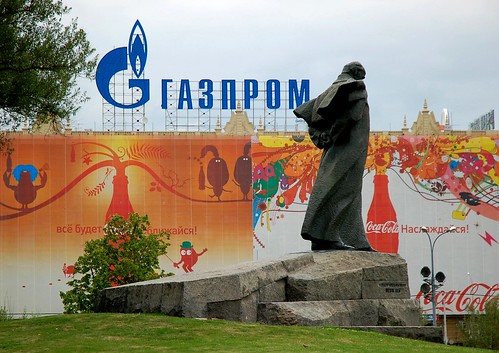
Russia's state-owned energy company Gazprom has accused Ukraine of stealing 15 percent of gas flowing through that country intended for Western Europe, however the Ukrainian government has insisted that amount is being lost through technical malfunctions only.

A Preview of Things to Come

Even if this energy crisis is resolved, it will still likely be an important lesson for the EU. Analysts have been warning that energy independence for the block is the most pressing issue it currently faces. With Russia proving to be an increasingly assertive and sometime hostile neighbor, the fact that the country could, if it wanted, plunge Europe into a deep freeze is very worrying. Even these minor disputes over one pipeline can cause huge disruptions.

Now that Serbia’s government has agreed to sell its oil and gas company, NIS, to Russia’s Gazprom, it looks like Russia will achieve its goal of building a pipeline called "South Stream" to send gas directly into the EU. Gazprom has also done similar deals with EU members Italy, Hungary and Bulgaria, all of which is a direct challenge to the European pipeline project Nabucco, which would bring gas to Europe from Iran and Azerbaijan via Turkey, reducing EU dependence on Russia. But the Nabucco project seems to be going nowhere while Russia's plans to build dedicated pipeways to the EU moves quickly ahead.

Russia insists that the Ukraine siphoning off energy is the real threat to EU gas supplies, but foreign policy analysts know better. It is precisely the fact that the EU is reliant on Russia for energy, no matter how or through whom it is supplied, that is worrying to many here.

Friday, 21 December 2007

Today Eastern Europe wakes to no borders

It’s official. As of this morning you can now drive from the Russian border in Estonia to the Atlantic beaches of Portugal, across 24 countries, without passing through a single border crossing. As of midnight, the 2004 EU entrants are now part of the Schengen Zone, the border-free area that allows you to pass through European countries as easily as if you were going from Indiana to Illinois.

Considering the post-cold war implications of this day (all but one of the 2004 entrants are former Warsaw Pact countries), the scenes last night were dripping with symbolism. As Canada’s Global Mail reports, at the border of Germany and Poland the guards spent yesterday removing kilometres of tall steel fence, leaving unmarked and unguarded fields between them. Fireworks lit up the border bridge between Poland and Germany in Frankfurt on Oder early this morning. On the road between Vienna and Bratislava, Austrian and Slovakian leaders met to saw through border-crossing barriers. And in Estonia, the government put its border-inspection stations up for auction. Perhaps nowhere was the scene more striking than on the Czech-Slovak border, as the countries were split apart just in 1993 and now find themselves without a border between them once again.