Showing posts with label US Elections. Show all posts

Friday, 18 November 2016

3/4 of electorate gave their nod to Trumpism

In the week since the US presidential election I've seen a lot of people posting that "only one in five Americans" endorsed Trump for president. No.

While it is true that only 19.5% of Americans cast a vote for Donald Trump last Tuesday (versus 19.8% for Clinton), one cannot then make the leap to say that 80% of Americans are opposed to Trump and are being dragged along unwillingly. That is nonsense.

First off, 29% of Americans are not eligible to vote, either because they are too young or because they have committed a crime. We have no way of knowing how those people feel about Trump. Then we have to people who were eligible to vote but chose not to - 45% of the eligible population.

Tuesday, 15 November 2016

Obama passes the torch to Merkel

For the past 70 years the US President has been known as the 'leader of the free world'. Tomorrow Barack Obama arrives in Berlin to hand that title to the German chancellor.

Barack Obama's European farewell tour, which is kicking off in Athens today, was meant to be a triumphant farewell to a continent where he remains enormously popular.

Instead, the trip has become a crisis tour. The US president must urgently reassure the European public that the continent is not about to be plunged into war by a Donald Trump presidency, and that American moral leadership remains intact. In his private meetings, however, he will have to acknowledge that he cannot assure any such thing. He will have to urgently plan with European leaders for how to peacefully transition to a post-Trump world.

The most important of these meetings will come tomorrow in Berlin, when he meets with the reluctant new leader of Western liberal democracy - Angela Merkel.

Thursday, 10 November 2016

Think you can escape America? Think again


Horrified by what I was seeing from Americans, I left the country a decade ago. But I came to learn that wherever I go, the American people determine my fate.

On 2 November 2004 I made a fateful choice. I was living in Chicago at the time, and was watching that year’s presidential election results at a friend’s apartment. We were all pretty sure that Democrat John Kerry was going to win. After all, sitting president George W Bush had been completely discredited by the Iraq War debacle, right?

It didn’t work out that way. Despite polls predicting a Kerry win, Bush emerged victorious. People at the apartment were perplexed, some were crying. I left by myself and walked to Lake Michigan. I stared out at the water and decided I did not see a future for myself in the United States. I vowed to move to Europe.

Thursday, 3 November 2016

As America votes, Europe holds its breath

Once again, Europeans wait while 300 million people on another continent determine their future. Why do they accept this state of affairs?

If you think things are tense in the United States right now, you should try it here in Central and Eastern Europe. 

People are incredibly anxious about what might happen on 8 November. There are the obvious concerns - a volatile and unpredictable man being given access to America's nuclear arsenal after a victory sending global markets into freefall. In an age when America is still the bedrock of the global military and economic order, such an earthquake would send shockwaves throughout the world.

These are the worries of the whole globe right now. But in Europe, they have additional reason to fear. No area of the world is more dependent on the United States for its peace and prosperity than Europe. And it is this dependence that makes the media's coverage of US presidential elections here so breathless. In many ways, Europeans devote more attention to the American election than they do their own.

Sunday, 18 September 2016

Europe's Trump remedy

France and Germany this week launched a proposal for common EU military defence. If Europeans are worried about developments in the US election, they should be open to the idea.

Here in Europe, reactions to the election fiasco taking place across the Atlantic vacillate between bemusement and panic. "He can't really win, can he?" is a question I am asked almost daily.

On Friday, the question was asked by my hairdresser, a Turkish-German woman who lives in the Wedding area of Berlin. There was a real look of fear in her eyes.

US presidential elections have for the past half century been watched closely by the rest of the world - particularly after 1990. As the world's sole superpower (for now), the US government takes decisions that directly impact the entire globe.

Nowhere is that more true than in Western Europe, where people have been living under American suzerainty since the end of the Second World War. In some parts of Europe, particularly the UK, people follow US elections closer than they do their own. It is an item of endless fascination, and the most mundane developments in the campaign make the front pages of European newspapers.

Tuesday, 28 June 2016

Can we stop the 'Democracy is beautiful' platitudes? This vote was a travesty

In the West we are brainwashed to always view more democracy as better. But the Brexit fiasco shows how inappropriate referenda are.

Being a Swiss person in England on Saturday, British journalists were keen to get tennis star Roger Federer's take on the Brexit chaos taking place around him. He gave a politician's answer. "It’s nice to have democracy here, that you have an opportunity to vote. It’s a beautiful thing."

Really Roger? You think what we've seen over the past days is "a beautiful thing?"

David Cameron expressed similar sentiments in his resignation speech after losing the vote. "The country has just taken part in a giant democratic exercise, perhaps the biggest in our history," he said. "We should be proud of the fact that in these islands we trust the people for these big decisions."

Thursday, 21 April 2016

Laissez-faire politics: how America's free-market elections compare to Europe's

Election campaigning is tightly controlled in Europe, where even political TV ads are banned. Is it time for America to do the same?

Few would disagree that the 2016 US presidential election in is a low point for American politics. But what has frustrated me over the past months is that there doesn't seem to be much serious conversation about what to do to fix the problem.

On this Sunday's Meet the Press, I was relieved to hear Washington Post columnist Kathleen Parker bring up a subject that few in America seem to grasp. The American structure of running election campaigns is an entirely different animal from most other democracies. It is the fundamental structure that is broken. The 'money in politics' problem that Bernie Sanders rails about is only a symptom of the broken foundation.
"What I want to know is, is there ever any serious consideration given to a possibility of just limiting campaigns as other countries do, to two months, say, and make them completely publicly funded?" she asked Debbie Wasserman Schulz, the chairwoman of the Democratic Party. "Is that ever anything that gets serious consideration and would it be possible?"

Friday, 26 February 2016

Brexit is the British Trump

After years of vilifying the EU, the English elite have created a Frankenstein's monster they cannot control.

It now looks increasingly likely that Donald Trump will be the Republican nominee for the US Presidency, and the world is looking on in bemused horror. What kind of hysteria has propelled this man toward becoming the American right's standard-bearer?

It has been widely observed over the past months that this is a monster of the Republican Party's own making. For years the party has driven turnout by peddling a narrative of fear, and stoking the worst instincts of its base. Truth became relative, and 'truthiness' was the name of the game. If it felt true, then go with it.

Wednesday, 3 February 2016

Please, Europeans, stop obsessing over the US election

"American exceptionalism itself has something of a Sunset Boulevard feel to it, a black comedy where a faded silent movie star believes she is still the most luminous presence on the screen."

Over my decade in Europe I've seen a lot of BBC correspondents come and go from their American postings. But none has seemed to grasp the real affliction facing America like Nick Bryant (quoted above).

His observations during this absolute farce of an election season have been particularly spot-on. And Europeans, who tend to be far more interested in American politics than they really should be, should give him a read.

Thursday, 8 November 2012

A relief for Europe - but will gridlock persist?

Anxious Europeans have been able to breathe easier the past two days, after Tuesday’s reelection of US president Barack Obama. But the relief has much more to do with the defeat of Mitt Romney than with Obama himself.

Europe isn’t the only place feeling relieved because of a dislike for Romney. Outside Israel, there probably wasn’t one country on the globe that was excited about the prospect of a Romney presidency.

The Republican candidate's dangerous rhetoric seemed almost guaranteed to launch a war with Iran which no US allies would have been keen to sign up to. He had described Russia as America’s “greatest geopolitical foe” and had spoken of China as if it was the evil empire, promising to “get tough” with them in a way Obama hadn’t (although he never provided details about what that would mean). Latin America recoiled at his extreme anti-immigration rhetoric, and Africa was less than excited about his promises to cut US overseas aid.

In Brussels, there is a sense that long-stalled bilateral issues that were waiting until the resolution of the election can finally be taken off the back burner. There is (perhaps naïve) hope that a second-term Obama can show up to the UN climate summit in Doha next month with a reverse-course on the US intransigence in taking action to combat global warming. Negotiations on a US-EU free trade deal can now begin. Most importantly – fears that Europe was about to see a return to the trans-Atlantic tensions that marked the George W. Bush era have now been allayed.

Tuesday, 6 November 2012

The case for four more years? Look at the previous four

Rachel Maddow had an excellent review of Obama's first term last night. It's bizarre that anyone would say the American president "hasn't done anything" in his first term. Historic legislative actions were taken during the first two years. And even after the Republican takeover of the US Congress in 2010 ground all legislative activity to a halt, Obama still took important executive decisions over the following two years that could bypass the congress. Let's take a little stroll down memory lane, shall we?


Europeans are very anxious about the result of today's election in the US. It would appear that it is now up to 8 million people in Ohio to decide the fate of the world. Hopefully they will make the right decision.

Thursday, 16 August 2012

One car, one vote

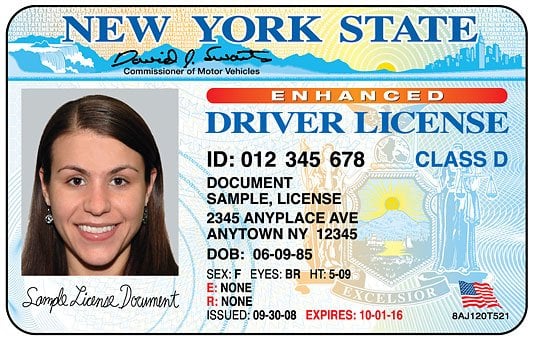
The US presidential campaign switched into high gear this week with Mitt Romney’s selection of Wisconsin congressman Paul Ryan as a running mate. But with a raft of voter ID laws now going into effect in crucial swing states across the country, it’s looking increasingly likely that the result in November could be shaped more by who is allowed to vote than by who is on the ticket. Thanks to these new laws, if an American doesn’t drive, he or she may not get to vote.

Until 2003, no state in America required voters to show a photo ID in order to vote. For Europeans this may seem strange, since showing your national ID is often a requirement here for things as simple as using a solarium. But English-speaking countries tend to not have national IDs. For some reason I’ve never understood, there’s just some deep-rooted Anglo-Saxon distrust of them.

In the United States, this leaves drivers licenses as the only government-issued photo identification most people have. Because such a large proportion of adult Americans (85%) have a drivers license, this has more or less worked out. Many people obtain a drivers license even if they do not routinely drive, in order to have a photo ID.

But that leaves 10% of eligible American voters who do not have a drivers license or any other form of photo ID, according to NYU's Brennen Center for Social Justice. This group is overwhelmingly made up of African-Americans, Hispanics and college students. And these three groups are statistically the most likely to vote Democratic.

Wednesday, 1 August 2012

Romney’s offend-a-thon comes to an end

If the aim of Mitt Romney’s ‘world tour’ over the past week was to demonstrate his ability to tactfully represent the United States on the world stage, it’s safe to say the trip had the opposite effect. Professing to be on a quest to ‘restore relations with America’s most important strategic allies’, Romney managed to cause grave offense in all three of the countries he visited.

It started badly and quickly went from bad to worse. Even before he touched down in London last Wednesday, his campaign had raised eyebrows when an advisor said that Barack Obama was unable to understand the “common Anglo-Saxon heritage” of the US and the UK. Given that in English this term only refers to the Germanic tribes of Southwest England (unlike the "free-market capitalism" meaning it has in France), it came off as shockingly racist – i.e., a black man cannot understand the common Germanic heritage of the English and their descendants.

Romney then managed to enrage the British public by casting doubt on their readiness to host the Olympic Games, telling a US journalist in London that the UK’s preparedness was “not encouraging.” This sent the British media into a frenzy of anti-Romney headlines, such as “Mitt the Twit” (The Sun, owned by Rupert Murdoch) and “Who invited Party-Pooper Romney?” (The ultra-conservative Daily Mail). He even managed to enrage Conservative British Prime Minister David Cameron, who quipped at a press conference, "Of course it's easier if you hold an Olympic Games in the middle of nowhere." (Romney ran the 2002 Winter Olympics in Salt Lake City, Utah). Even London mayor Boris Johnson, himself a gaffe-magnet, used Mitt Romney’s name when speaking to crowds asif describing some kind of panto villain, quickly followed with boos from assembled Olympics-lovers.

Wednesday, 25 July 2012

Romney's 'apology for the apology' tour

Mitt Romney has arrived in London today, the first stop on a three-country tour meant to shore up his foreign policy credentials. His tour opened with a remarkably tone-deaf gaffe by a campaign staffer, who told British newspaper The Telegraph that Barack Obama cannot understand the common “Anglo-Saxon heritage” of the US and the UK.

The advisor was likely using the term in the continental European context, which refers to the free-market economic heritage of English-speaking countries. He was likely trying to make some 'Obama as Socialist' characterisation. But this definition is unknown in the English-speaking countries themselves, where the term is a seldom-used ethnic description of English descent (ie, from the Germanic tribes who settled in Southwest England). So it ended up just coming off as shockingly racist. Stephen Colbert hilariously summed up the bemused reaction of Americans to the comment.

It’s a bad start to what is a very important foreign tour for Romney. Over the next few days he will be meeting with virtually every high level politician in the UK. On Friday he will attend the Olympics opening ceremony, surely excited about the prospects for his horse-dancer in the dressage competition.

The Republican presidential candidate’s choice of three countries for this visit is highly significant. After his visit to the UK he will fly to Israel, where he will make a series of high-profile appearances. He will then finish his tour in Poland. All three are countries which the Romney campaign has accused the Obama administration of at best ignoring, and at worst insulting.

Tuesday, 3 April 2012

Are we entering the fact-free century?

America appears to have a lying problem. It’s hard to come to any other conclusion when looking at the string of easily disprovable untruths that have come out of the mouths of mainstream politicians during this season's Republican presidential primary.

The fact that these untruths have mostly gone unchallenged is an alarming reflection on American society. When you look at both the amount and the sheer audacity of the lies told on the campaign trail, and the fact that little to none of it has been challenged, it's truly bewildering. It would appear some kind of pseudo-reality is gaining an increasing foothold in the United States. And it leads to a disturbing question - is this a phenomenon that is unavoidable for the world at large in the internet age?

This week US presidential candidate Rick Santorum, polling second in the race to become the Republican nominee, told an audience, “I was just reading something last night from the state of California. The California universities – I think it’s seven or eight of the California system of universities - don’t even teach an American history course. It’s not even available to be taught. Just to tell you how bad it’s gotten in this country, that we’re trying to disconnect the American people from the routes of who we are.”

Just a five minute search on the University of California website reveals that this is completely untrue. It’s not even a little bit true. Not only does every university in the California system offer American history courses, but all UC bachelors programs actually require students to take one.

Dutch killing machines

Friday, 20 January 2012

The biggest American political story Europeans haven't heard of

The US presidential primary race has attracted its usual amount of fascination here in Europe, and yesterday’s developments - with the Iowa race being re-called for Santorum and Rick Perry dropping out - were front page material. But behind the spectacle of the drawn-out US primaries, there is a far more interesting story going on in the state capitals.

Of course it’s not surprising that the European media is ignoring these huge developments at state level, because the Washington beltway media has also ignored them. They also ignored the unprecedented political revolution in 2010 that the recent events are a reaction to. While in Europe the media tends to ignore ‘federal’ (EU) politics and focus only on member state politics, in the US it is the opposite. The US media (even local state media) tends to focus on federal politics in Washington and there is little interest in what goes on in state capitals.

Thus, when the Republicans enjoyed an unprecedented victory in the 2010 midterm elections, the focus was almost entirely on the fact that they had taken control of the US House of Representatives. What was largely ignored was the fact that they had at the same time taken over state legislatures with unprecedented majorities – giving Republicans the most power in state governments they have had in decades. Republicans wrested six governorships from Democrats, giving them control of 30 of the 50 state executives. Five states saw both legislative chambers (state senate and state house) switch from Democrat to Republican majorities. In seven other states they gave themselves control of the entire legislature by picking up huge majorities in an additional chamber. The elections left Republicans controlling the entire government of half of US states, leaving them with Hungary-like majorities capable of passing whatever state legislation they like.

Wednesday, 4 January 2012

Is Iowa the problem, or is it the primary system?

While I was home in the US over the past few weeks I witnessed the quadrennial spectacle of the Iowa caucuses - shivering reporters in front of the capital dome in Des Moines, candidates eating corn on the cob while clutching plump cord-fed babies, the usual fare. And I was also able to witness the quadrennial griping about why the United States allows “a few hundred farmers” to pick its president.

The complaining about the Iowa caucus, where the first nominating primary for both political parties’ presidential candidates is held, is both predictable and legitimate – even if the language used sometimes smacks of regional snobbery. The Iowa caucus makes or breaks politicians running for the presidency. Barack Obama owes his presidency to winning the Iowa Democratic caucus in 2008. This year, the result of the Republican caucus will force Michele Bachman and Rick Perry to drop out of the race. And the Iowans have elevated Rick Santorum from obscurity to be the main challenger to frontrunner Mitt Romney.

But the Iowa caucus is a big deal only because it is first. And being first means presidential candidates promise Iowa all sorts of lovely things (just look at the corn subsidies of the past four decades – and you wonder why Americans have corn syrup in most of their food for no reason?). The Iowans go through outrageous lengths to make sure they are first. When South Carolina and New Hampshire tried to move their primaries ahead of them this year, Iowa moved theirs to the earliest possible day in 2012 – 3 January.

This year the criticism went perhaps a little too far. A professor at the University of Iowa (himself a transplant from New Jersey) wrote a column for The Atlantic about a much-asked question – why should a state that is not ethnically or ideologically reflective of the country as a whole be given such a prominent role in selecting the nation’s president? But he asked it in a way that was incendiary to say the least, calling Iowa a place that's "culturally backward" and teeming with "slum towns”, where the 96% white population “clings to guns and religion.”

Thursday, 28 May 2009

Still, After All, a Centre-Right Country

Europe could be forgiven for thinking that now that Americans have put their government entirely in the hands of Democrats, the nation itself has made some sort of fundamental ideological shift. But as the opening stages of President Obama’s Supreme Court nomination show, the American political spectrum is still firmly grounded to the right.

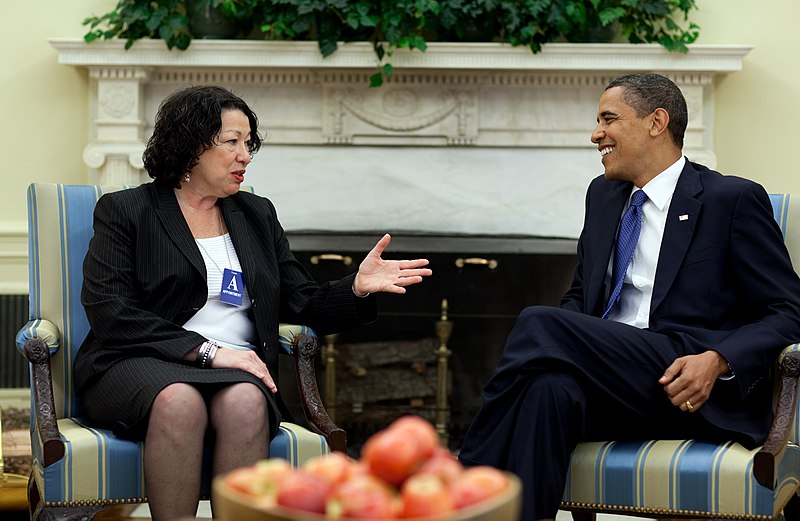
Following the retirement of Justice David Souter, generally considered to be on the left side of moderate in his votes on the court, Obama has nominated Sonia Sotomayor, a moderate appellate court judge who would be entering the highest court in the land with more experience on the bench than any of the current justices. The media has focused largely on Sotomayor’s personal history, having been born to Puerto-Rican parents on a housing estate in the Bronx. She would be the first Hispanic person to serve on the court, and only the third woman.

Bizarely the right has latched on to this detail of her background to make the case that she is a “liberal activist judge,” even though her judicial record, largely moderate or unclear, doesn’t seem to reflect this. Apparently for the right, the fact that she is a Hispanic woman who was born poor means she'll make it illegal to be a white man and redistribute wealth. Obviously!

Funny enough, when arch-conservative justice Clarence Thomas was up for confirmation, his history of having been born a poor black man was considered an asset by the right.

Perhaps this kind of talk from the hard right was inevitable. In fact it wouldn’t even be worth talking about were it not for one other interesting development – in selling their supreme court nominee, the Obama Administration’s talking points have been actively stressing Sotomayor’s conservative credentials.

The Obama administration has wove a conservative narrative around Sotomayor, using much of the same language as Bush did to sell his supreme court nominees, in order to appeal to middle America. The administration has been at pains to point out how moderate she is, pointing out at every opportunity that she voted with conservative judges 95% of the time. They’ve also pointed out her anti-abortion rulings, such as when she upheld a ban on federal funds going to family planning groups that provided abortions overseas, or when she ruled in favour of a group of Connecticut anti-abortion protesters who asserted that police used excessive force against them at a demonstration.

Does anyone else find this a little bizarre? Barack Obama was elected in a landslide victory. The American public kicked the Republicans out of both the House and the Senate, handing the entire government over to the Democrats. Currently only 21% of Americans identify as Republicans. You would think that was a pretty big mandate for change right? So why does the Obama administration (and Congressional Democrats, as evidenced by their recent cave on closing Guantanamo Bay) seem to be bending over backwards to please a practically non-existent Republican party?

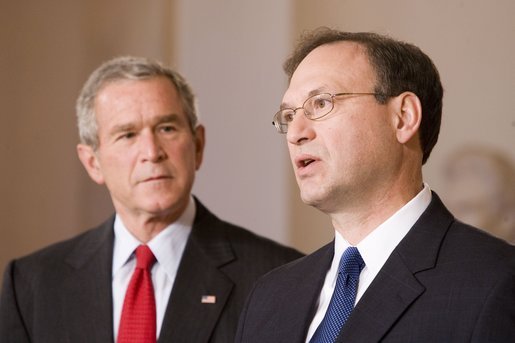
Can you imagine George W. Bush, when he nominated his two Supreme Court Justices, issuing talking points about how frequently they voted with their liberal colleagues, or highlighting cases in which they voted for abortion rights? The very idea is laughable. When the Bush administration went to sell their nominees they used the language of their base, talking about how Alito and Roberts represented “solid American values” and touting the conservative credentials, especially when working to sell the nominees to the religious right (at some points they even seemed to be implicitly promising that the two would vote to overturn Roe v. Wade).

And yet George W. Bush entered office having lost the popular vote, put into office by a Supreme Court ruling. By the time he was nominating his justices he was already spiralling down to the lowest approval rating of any US president in history. But was there serious talk of him selecting a moderate justice as a copromise with liberals? None.

And even though W appointed two unabashedly conservative justices (to join the other two ultra-conservative justices Scalia and Thomas already on the court), it seemed to go without saying before Obama made his selection that an unabashedly liberal justice wouldn’t even be a consideration. Given that following Bush’s appointments the court is now skewed fundamentally to the right (4 conservatives, 2 liberals and 2 moderates without Souter), adding another moderate to the mix isn’t going to significantly change the conservative direction of the court. If it’s unquestioned that a Republican president can appoint a conservative justice but a Democratic president can only appoint a moderate, it won’t be long before the idea of a “liberal justice” goes the way of the dodo. Rachel Maddow had a funny metaphor discussing this on her show Tuesday night.


This isn’t an isolated incident. Throughout the Obama presidency it’s been incredible to watch how many times the Democratic president and congress have caved in to an imaginary opposition. But here’s the explanation – while the political opposition may be imaginary – the popular opposition is not.

On a global political spectrum, the US political spectrum is still positioned firmly to the right. For instance in Europe, the Democrats would be centre-right and Republicans would be the hard right (and sometimes even the far right). This pretty much reflects the political ideology of Americans, a formula which has long favoured Republicans in US elections. This is, after all, a country where “liberal” and “Left” are still dirty words that most Democrats are loathe to identify themselves as. Even after Bill Clinton’s New Democrats shifted the party to the right (followed by Tony Blair doing the same with Labour across the pond) the Democrats seem to constantly be on the defensive, unable to stand up for progressive policies even when they occupy the presidency. Now that the Democrats control both the legislative and executive branches for the first time since the Carter administration, it seems their old curse is again rearing its ugly head. Even when they’re in power, Democrats are unable to push progressive policies on a fundamentally conservative population.

So Europeans shouldn’t fool themselves into thinking that the American political spectrum is inching back their way. For 40 years the only thing that’s gotten Democrats elected into the White House is the ineptitude and corruption of their predecessors (two Bushes and a Nixon), and once they've put him there there’s been little achieved for the Left.

Strangely, even when the American left is in power, they remain isolated, ineffective and ignored.

Friday, 22 May 2009

Should Britain Become America?

As the debate over the “complete overhaul” of British democracy has unfolded this week, I’ve been surprised (ok maybe not all that surprised) at how quickly the conversation has turned to starry-eyed wistful gazing across the pond toward Washington. Despite there being plenty of examples of democracies that function better than Britain’s just across the English Channel, it seems that virtually every article about the possibility of a “quiet revolution” in the UK following the expenses crisis now contains an inevitable comparison to the US system. An increasing number of (mostly Tory) MPs are also making the comparison. Considering the fact that it took an enterprising American journalist to finally expose the expenses system for what it is, perhaps its not surprising that the British are looking across the pond for guidance at this humiliating time. But is it a productive exercise?

Putting aside the fact that I’m not sure how helpful it is to be comparing a parliamentary system to a congressional system, I’ve also noted a lot of inaccuracies being stated about the supposedly awe-inspiring success of American democracy. Granted, I’ll be the first to admit that American government is much more efficient, logical, stream-lined and accountable than UK government. But considering the dysfunctional state British democracy has found itself in, I’m not sure that’s saying much! Still, I thought it would be helpful to look at the arguments comparing the two governments. To be honest I think it might be more productive to do a side-by-side comparison with some continental parliamentary democracies like Germany’s or the Netherlands’, but I’m not exactly an expert on those – plus you’ve got to give your readers what they want!

Argument: A written constitution as in the US would prevent power concentration
My Response: Yes and no

Much of the trouble with British government is that it is the only democracy in the world that is completely uncodified. It is also the mother of modern democracy, and because it was formed slowly over centuries and inventing as it went along, it operates on a set of assumptions and traditions rather than on a constitution. Therefore the Queen is the head of state and technically can still wield some significant power, but it is ‘understood’ that she won’t use it.

The effect of this over the long term has been that the lack of a constitution has allowed governments to make up the rules as they go along. Since World War I, prime ministers have taken more and more power away from the broader parliament and concentrated it in the hands of the government. The result has been the emergence of a sort of “presidential prime minister” who has most of the same powers of a unitary executive yet is not directly elected, instead being nominated by his party. This has left backbench MPs with pretty much nothing to do, functioning just as a rubber stamp for the government. I can tell you it makes British politics pretty boring to watch, because there isn’t any conflict on an executable level. There is one government - composed of the prime minister and his cabinet - which makes all the decisions. The rival parties merely form “shadow cabinets” with no actual power, so all they can do is say what they would do if they were in power. The monarch no longer executes any authority, leaving the prime minister as the sole, unchecked authority. The UK doesn’t even have a Supreme Court to check the government’s power!

Many in Britain have pointed out that in the US, the constitution has acted as a bulwark against those who would wish to monopolize power, maintaining a system of checks-and-balances with three theoretically co-equal branches of government - the executive (president), the legislative (congress) and the judicial (the Supreme Court). While it is true that this has been the sacred formula of US government, it is also true that the presidency has grown unprecedentedly powerful since World War II, turning into the so-called “imperial presidency”. More and more power has been taken away from congress and instead given to presidential agencies, and more and more is done these days by executive order. And when you have an acquiescent congress of the same party as the president - as existed during the Bush Administration - congress becomes in practice little more than a rubber stamp itself. Still, the rubber-stamp congress of the past eight years was more of an anomaly, whereas the rubber-stamp nature of the British parliament seems to be built into the system.

Argument: There are too many people in the British parliament
My Response: Well duh!


Here’s an embarrassing comparison for you - there are 535 members of the US congress representing 307 million people, and there are 1,384 members of the UK parliament representing 62 million people. Seems a little screwy no? In fact, British citizens are the most over-represented people in the world. And it gets worse. The majority of those parliamentarians (738) serve in the House of Lords, a historically unelected, hereditary institution for the landed aristocracy. The UK’s method of dealing with this strange relic over the past century, rather than majorly reforming the House of Lords or getting rid of it, has been instead to just strip it of almost all its powers and giving them to the House of Commons. Today the House of Lords is basically useless (other than a select few “Law Lords”, the UK equivalent of the Supreme Court), and its seats are handed out to anybody who have donated money or composed some catchy tunes.

Most of the members of the House of Lords don’t even bother to show up to the chamber. Many have called for the House of Lords to be replaced with a US-style popularly-elected regional senate. I would point out, however, that US Senators weren’t popularly elected until the mid-20th century. Before that, they were chosen by their individual state’s legislatures. At the time it was thought that this kept them out of the dog-and-pony show that is political campaigning and made the upper chamber a more deliberative, intelligent body. Personally, I think the US senate would function better if members were elected by state legislatures once again.

Argument: British MPs should be as independent as their American counterparts.
My Response: Maybe

It might surprise some Americans to learn that British MPs marvel at the way American congressmen and women are allowed to be so independent of their party. It may not seem like it sometimes, but the US congressional system actually allows independent lawmakers to vote their conscience in a way that would be impossible in the UK. The whips in the British parliament are extremely powerful, and it’s basically impossible to vote against your party. In fact on the rare occasion that party members vote against their leader in a parliamentary democracy it often causes the downfall of the government. Many here in the UK have been arguing over the past week that the independence of US congressmen makes them more directly accountable to their constituents. While this may be true, rogue lawmakers can often make passing legislation extremely difficult, and a lack of party unity can slow progress in the US congress to a glacial pace. I would strongly disagree with the some in the British media who have claimed this week that the US congress works much quicker than the British Parliament. On the contrary, my observation has been the many independent egos needing to be wooed in the US means legislation can be much harder to pass than in the UK where an all-powerful government can railroad things through with a simple rubber stamp from MPs. While this may seem anti-democratic, it does mean that the UK government can act (and respond to crises) much quicker than in the UK.

Argument: MP candidates should be selected by a popular primary as in the US, rather than by the party.
My Response: This leads to celebrity politics and mob rule


Another increasing demand this week is that MP candidates should be selected in party primaries like in the US, rather than being put forward by the party to which they belong. After this exciting (and egregiously long) US presidential season of two years, I can see why Brits might be a little jealous that they don’t get the excitement of these primaries deciding party candidates by public votes. But I would posit that these primaries do not result in the selection of the best, most able candidates but rather the most recognized, attractive, personable and pandering. The whole idea of public primaries was another thing that didn’t emerge until the mid-20th century in the US. Before then candidates were selected by local party officials just like in the UK. Slowly various state parties started offering the public the chance to cote for the nominee, and after public pressure soon every state had followed suit. In my view this has lead to an increase in personality-driven politics, the selection of candidates based on their ability to charm people or their name recognition rather than on their actual skills and merits.

Some here in the UK have argued that forcing sitting MPs to undergo a challenge to their seat in a local primary would make them more accountable to voters and dislodge the complacent or ineffective. But this has not been the case in the US. With the exception of the 2006 and 2008 elections, which were in extraordinary circumstances, usually 98% of sitting congressmen are re-elected in each US election.

Argument: The prime minister should be popularly elected and serve a fixed term.
My Response: Don’t throw the baby out with the bath water.

Gordon Brown has now been prime minister for nearly two years, and yet he was never directly elected by the British people as a whole. That’s because no prime minister in any parliamentary system is ever popularly elected to that position, he or she is chosen by the MPs of whichever party obtained a majority in the election. Because Tony Blair led Labour to a re-election in the 2006 elections (and then stepped down in the summer of ’07 handing the reigns to Gordon Brown), Labour does not have to call another election until June of 2010. Many have argued that allowing leaders to pick and choose when they’re going to call an election gives them an unfair advantage (because they can call it whenever would be most politically advantageous) and allows leaders to serve without a mandate from the public.

I’ve been increasingly hearing this rather silly argument from people, but what they’re proposing is giving the UK a president. But that’s a different system of government! The fact is the prime minister does operate with a mandate from the public whether he was the face of the party during the last election or not, because the people elected the party and he is the representative of that party.

When people propose this idea, I don’t fully understand what it is they’re suggesting. The UK is a parliamentary democracy, like every other country in Europe with the exception of France. This is the way parliamentary democracies work. And in my opinion, a system in which elected MPs select the leader of a country rather than the public is better able to place the most skilled, able people into the leadership rather than the most attractive, personable or convincing. One only needs to look at the last eight years in the US to see how the public can often make very bad decisions when selecting a leader, preferring someone they could “have a beer with” (the famous quote from exit polling of people who voted for Bush in 2000) over someone who seemed smarter than them. Increased direct democracy – as Tory MP Douglas Carswell is advocating for - does not always lead to a better-functioning democracy. In fact it usually ends up being much worse. Just look at the paralysis of government in Switzerland, or California’s inability to pass desperately needed budget cuts by public referendum this week.

In the end, it would be hard to argue that the British government doesn’t need reform badly. And the reform should really come in the drastic category and not through the little tweaks that some MPs are suggesting. There’s differing theories on which of the party leaders would be best-equipped to do this (Brown is universally acknowledged to have basically no chance of winning the next election, so why not drive home drastic reforms in the next year as long as he’s got nothing to lose?). But in any event, Britain would be best advised to look to other parliamentary democracies for ideas rather than to the US. Parliamentary democracy can and does work. At the moment, it just doesn’t work in Britain.

Thursday, 11 December 2008

Blagogate: Obama's first scandal?

Interestingly, the unfolding scandal around the arrest of Illinois governor Rod Blagojevich has received zero coverage over here in Europe. But the implications of this huge political development could profoundly affect the Obama presidency even before he's taken office, and that would likely be of great interest to Europeans. To me the scandal is fascinating, bringing back memories of my days as a reporter in Chicago covering the truly staggering level of corruption in that area of the US.

The fact that a governor of Illinois is corrupt isn't what's surprising about this development, after all Blago's (that's his nickname in Illinois) two predecessors were also arrested for corruption. It's the sheer audacity of his crimes that's so staggering. Among a long list of corruption charges, one of them is that he was trying to sell Barack Obama's senate seat. Obama was previously a senator for Illinois before he won the presidency, and when a senator departs it is the governor of that state who appoints the new senator. Blagojevich is a Democrat, so the Democratic Party didn't have to worry about losing that seat. But the governor can appoint anyone he wants, and apparently he was planning to sell the seat to interesting parties.

The language he's using in the wiretaps is straight out of the 1950's, it's astonishing any politician could be so stupid in this day and age. Not only does he explicitly say he's planning to sell Obama's senate seat, he uses language so mafioso-like it sounds like it's coming out of Tamany Hall. He even litterally says that someone interested in the seat was willing to "pay to play" at one point in the tapes.