Showing posts with label US Politics. Show all posts

Saturday, 21 October 2017

Today's divides aren't between states, they're across them


In Europe and America, today's urban educated elites have more in common with their counterparts in other countries than their own compatriots. It is resulting in a new type of international nationalism.

I was in Belgrade last week moderating at the Belgrade Security Forum, an annual policy dialogue about Balkan and European issues. 

During a discussion on challenging inequality, one of the panelists made a point that stuck with me. Responding to a comment from former Greek prime minister George Papandreaou about the uneven benefits of globalization, Hakan Altinay from the Global Civics Academy noted that the benefits are being felt by a certain class in each country, and that is bringing them closer together across borders while they drift ever-further apart from their countrymen. 

People working in and around the European Union institutions in Brussels are often accused of living in a bubble, forming an international echo chamber in which they have more in common with each other than with people back home in their own countries. But in fact, this is a phenomenon that is linking national capitals across Europe - and it has little connection to the EU. The bubble isn't just in Brussels. It is spread across Europe's cities.

A few days later, I heard a very similar description of the situation in the US on NBC's Meet the Press, America's main public affairs program. During a 'data download' segment, host Chuck Todd described how NBC News had crunched the numbers. Despite the caricature of America being divided between red and blue states, the divide is really between red and blue people - and that split defies geography.

Friday, 9 December 2016

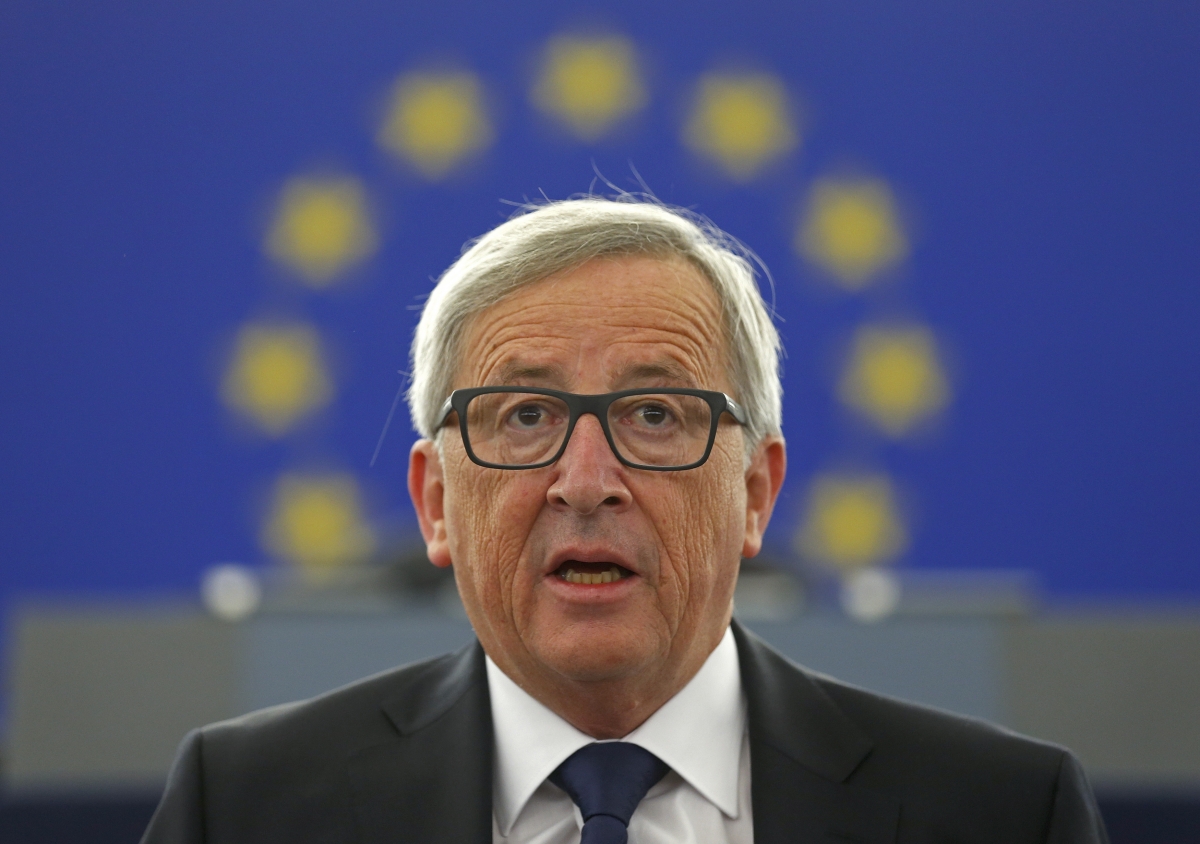
Is Trump pulling a Juncker with his cabinet picks?

While EU chief Jean-Claude Juncker's strategy was designed as a trap for national European capitals, it's hard to gauge whether there's any method to Trump's madness.

Last night on The Daily Show, host Trevor Noah came up with a theory behind the extreme hard-right cabinet appointments of Donald Trump.
"You know, sometimes I think Trump is trolling us, people,” he said. “It’s like the ultimate troll! Because you realize, every single person he’s picked for his cabinet wants to destroy the thing that they’ve been put in charge of."
Trump has appointed a man who hates the Environmental Protection Agency (and is even currently suing it) to run that same agency. He's appointed a fast food executive opposed to workers rights and the minimum wage as labor secretary. He's appointed a conspiracy-peddling alarmist as national security adviser. The list goes on.

Friday, 7 October 2016

"I hate Britain, but I love Brits"

British people are going to have to get used to their new most-hated-nation status. As an American in Europe, I can give some tips on how to endure it.

"I hate America, but I love Americans". It's a line I've heard so many times in the past decade of living in Europe that I barely notice it any more.

I got it particularly often when I first moved to Europe in 2006. It was just three years since the launch of the Iraq War, which the vast majority of Europeans opposed. George W. Bush, immensely unpopular in Europe, was still the president. I had to face down a lot of hostility toward the country I came from.

But usually, after an energetic rant against the crimes of America, the person speaking to me would finish by saying something like, "but I love Americans. They're so creative, so full of energy. I love their TV and movies. I just don't understand how these same people can vote for leaders like this."

Friday, 15 July 2016

Europe will referenda itself to death


From Budapest to Paris to Cleveland, the West‘s blind idolatry of direct democracy will be its own undoing. 

"The referendum is a device of dictators and demagogues," declared UK prime minister Clement Attlee in 1949. No surprise, then, that Europe’s next anti-EU referendum following Brexit has been called by Hungary’s Viktor Orban.

The Hungarian prime minister’s absolute control over the political, judicial and media institutions in his country have been likened by many to the power of a dictator, including by European Commission President Jean-Claude Juncker

Hungary has attracted particularly negative international attention because of its brutal treatment of Syrian refugees trying to cross through the country to Germany. It is the latter issue that has prompted the referendum, scheduled for 2 October. 

Thursday, 21 April 2016

Laissez-faire politics: how America's free-market elections compare to Europe's

Election campaigning is tightly controlled in Europe, where even political TV ads are banned. Is it time for America to do the same?

Few would disagree that the 2016 US presidential election in is a low point for American politics. But what has frustrated me over the past months is that there doesn't seem to be much serious conversation about what to do to fix the problem.

On this Sunday's Meet the Press, I was relieved to hear Washington Post columnist Kathleen Parker bring up a subject that few in America seem to grasp. The American structure of running election campaigns is an entirely different animal from most other democracies. It is the fundamental structure that is broken. The 'money in politics' problem that Bernie Sanders rails about is only a symptom of the broken foundation.
"What I want to know is, is there ever any serious consideration given to a possibility of just limiting campaigns as other countries do, to two months, say, and make them completely publicly funded?" she asked Debbie Wasserman Schulz, the chairwoman of the Democratic Party. "Is that ever anything that gets serious consideration and would it be possible?"

Friday, 26 February 2016

Brexit is the British Trump

After years of vilifying the EU, the English elite have created a Frankenstein's monster they cannot control.

It now looks increasingly likely that Donald Trump will be the Republican nominee for the US Presidency, and the world is looking on in bemused horror. What kind of hysteria has propelled this man toward becoming the American right's standard-bearer?

It has been widely observed over the past months that this is a monster of the Republican Party's own making. For years the party has driven turnout by peddling a narrative of fear, and stoking the worst instincts of its base. Truth became relative, and 'truthiness' was the name of the game. If it felt true, then go with it.

Saturday, 14 September 2013

Total recall

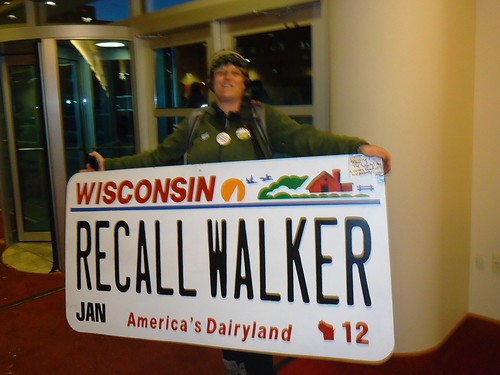
In the coming months, the UK is set to enact a right to recall elected politicians. But the American example shows this may not be the boon to democracy it appears.

Recently, the disgraceful tale of a Scottish politician refusing to resign in the face of 23 (yes, 23) separate domestic abuse convictions has revived talk in the UK of that old populist hobby-horse – the right to recall.

Bill Walker, a Scottish National Party member of the Scottish Parliament (pictured below), was convicted last month of a series of domestic abuse offenses against three different ex wives and a stepdaughter over three decades.

Though he was expelled from the SNP after the conviction, for weeks Walker refused to vacate his seat – and there was nothing the SNP or the Scottish Parliament could do to make him leave. As the British media examined the bizarre situation, those who advocate establishing a citizen's recall law in the UK came out in force to argue that this disgraceful state of affairs makes their case.

Thursday, 16 August 2012

One car, one vote

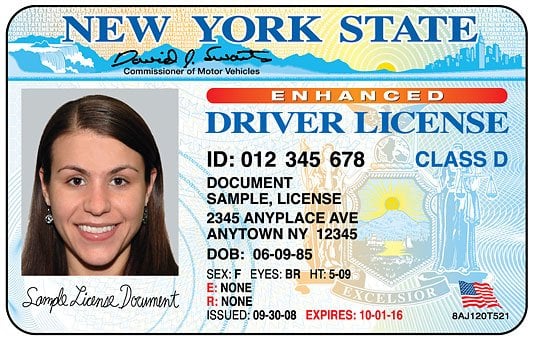
The US presidential campaign switched into high gear this week with Mitt Romney’s selection of Wisconsin congressman Paul Ryan as a running mate. But with a raft of voter ID laws now going into effect in crucial swing states across the country, it’s looking increasingly likely that the result in November could be shaped more by who is allowed to vote than by who is on the ticket. Thanks to these new laws, if an American doesn’t drive, he or she may not get to vote.

Until 2003, no state in America required voters to show a photo ID in order to vote. For Europeans this may seem strange, since showing your national ID is often a requirement here for things as simple as using a solarium. But English-speaking countries tend to not have national IDs. For some reason I’ve never understood, there’s just some deep-rooted Anglo-Saxon distrust of them.

In the United States, this leaves drivers licenses as the only government-issued photo identification most people have. Because such a large proportion of adult Americans (85%) have a drivers license, this has more or less worked out. Many people obtain a drivers license even if they do not routinely drive, in order to have a photo ID.

But that leaves 10% of eligible American voters who do not have a drivers license or any other form of photo ID, according to NYU's Brennen Center for Social Justice. This group is overwhelmingly made up of African-Americans, Hispanics and college students. And these three groups are statistically the most likely to vote Democratic.

Wednesday, 25 July 2012

Romney's 'apology for the apology' tour

Mitt Romney has arrived in London today, the first stop on a three-country tour meant to shore up his foreign policy credentials. His tour opened with a remarkably tone-deaf gaffe by a campaign staffer, who told British newspaper The Telegraph that Barack Obama cannot understand the common “Anglo-Saxon heritage” of the US and the UK.

The advisor was likely using the term in the continental European context, which refers to the free-market economic heritage of English-speaking countries. He was likely trying to make some 'Obama as Socialist' characterisation. But this definition is unknown in the English-speaking countries themselves, where the term is a seldom-used ethnic description of English descent (ie, from the Germanic tribes who settled in Southwest England). So it ended up just coming off as shockingly racist. Stephen Colbert hilariously summed up the bemused reaction of Americans to the comment.

It’s a bad start to what is a very important foreign tour for Romney. Over the next few days he will be meeting with virtually every high level politician in the UK. On Friday he will attend the Olympics opening ceremony, surely excited about the prospects for his horse-dancer in the dressage competition.

The Republican presidential candidate’s choice of three countries for this visit is highly significant. After his visit to the UK he will fly to Israel, where he will make a series of high-profile appearances. He will then finish his tour in Poland. All three are countries which the Romney campaign has accused the Obama administration of at best ignoring, and at worst insulting.

Tuesday, 3 April 2012

Are we entering the fact-free century?

America appears to have a lying problem. It’s hard to come to any other conclusion when looking at the string of easily disprovable untruths that have come out of the mouths of mainstream politicians during this season's Republican presidential primary.

The fact that these untruths have mostly gone unchallenged is an alarming reflection on American society. When you look at both the amount and the sheer audacity of the lies told on the campaign trail, and the fact that little to none of it has been challenged, it's truly bewildering. It would appear some kind of pseudo-reality is gaining an increasing foothold in the United States. And it leads to a disturbing question - is this a phenomenon that is unavoidable for the world at large in the internet age?

This week US presidential candidate Rick Santorum, polling second in the race to become the Republican nominee, told an audience, “I was just reading something last night from the state of California. The California universities – I think it’s seven or eight of the California system of universities - don’t even teach an American history course. It’s not even available to be taught. Just to tell you how bad it’s gotten in this country, that we’re trying to disconnect the American people from the routes of who we are.”

Just a five minute search on the University of California website reveals that this is completely untrue. It’s not even a little bit true. Not only does every university in the California system offer American history courses, but all UC bachelors programs actually require students to take one.

Dutch killing machines

Friday, 20 January 2012

The biggest American political story Europeans haven't heard of

The US presidential primary race has attracted its usual amount of fascination here in Europe, and yesterday’s developments - with the Iowa race being re-called for Santorum and Rick Perry dropping out - were front page material. But behind the spectacle of the drawn-out US primaries, there is a far more interesting story going on in the state capitals.

Of course it’s not surprising that the European media is ignoring these huge developments at state level, because the Washington beltway media has also ignored them. They also ignored the unprecedented political revolution in 2010 that the recent events are a reaction to. While in Europe the media tends to ignore ‘federal’ (EU) politics and focus only on member state politics, in the US it is the opposite. The US media (even local state media) tends to focus on federal politics in Washington and there is little interest in what goes on in state capitals.

Thus, when the Republicans enjoyed an unprecedented victory in the 2010 midterm elections, the focus was almost entirely on the fact that they had taken control of the US House of Representatives. What was largely ignored was the fact that they had at the same time taken over state legislatures with unprecedented majorities – giving Republicans the most power in state governments they have had in decades. Republicans wrested six governorships from Democrats, giving them control of 30 of the 50 state executives. Five states saw both legislative chambers (state senate and state house) switch from Democrat to Republican majorities. In seven other states they gave themselves control of the entire legislature by picking up huge majorities in an additional chamber. The elections left Republicans controlling the entire government of half of US states, leaving them with Hungary-like majorities capable of passing whatever state legislation they like.

Wednesday, 4 January 2012

Is Iowa the problem, or is it the primary system?

While I was home in the US over the past few weeks I witnessed the quadrennial spectacle of the Iowa caucuses - shivering reporters in front of the capital dome in Des Moines, candidates eating corn on the cob while clutching plump cord-fed babies, the usual fare. And I was also able to witness the quadrennial griping about why the United States allows “a few hundred farmers” to pick its president.

The complaining about the Iowa caucus, where the first nominating primary for both political parties’ presidential candidates is held, is both predictable and legitimate – even if the language used sometimes smacks of regional snobbery. The Iowa caucus makes or breaks politicians running for the presidency. Barack Obama owes his presidency to winning the Iowa Democratic caucus in 2008. This year, the result of the Republican caucus will force Michele Bachman and Rick Perry to drop out of the race. And the Iowans have elevated Rick Santorum from obscurity to be the main challenger to frontrunner Mitt Romney.

But the Iowa caucus is a big deal only because it is first. And being first means presidential candidates promise Iowa all sorts of lovely things (just look at the corn subsidies of the past four decades – and you wonder why Americans have corn syrup in most of their food for no reason?). The Iowans go through outrageous lengths to make sure they are first. When South Carolina and New Hampshire tried to move their primaries ahead of them this year, Iowa moved theirs to the earliest possible day in 2012 – 3 January.

This year the criticism went perhaps a little too far. A professor at the University of Iowa (himself a transplant from New Jersey) wrote a column for The Atlantic about a much-asked question – why should a state that is not ethnically or ideologically reflective of the country as a whole be given such a prominent role in selecting the nation’s president? But he asked it in a way that was incendiary to say the least, calling Iowa a place that's "culturally backward" and teeming with "slum towns”, where the 96% white population “clings to guns and religion.”

Wednesday, 26 October 2011

US-EU trade war looming over airline emissions

This week the US House of Representatives passed a bill that would ban US airlines from participating in the EU's emissions cap-and-trade scheme. It is just the opening shot in what is likely to be a nasty trade war between the two blocs over the coming months. The winner will determine whether 72 million tonnes of CO2 are emitted into the Earth's atmosphere over the next eight years.

While international climate talks have stalled the EU has pushed ahead with its own unilateral action on climate change, the keystone of which is the Emissions Trading Scheme (ETS). Under the scheme industries with heavy emissions are capped on the amount of greenhouse gases they can produce, and if they want to emit more they must buy credits from others who are using less than their cap. The scheme is already up and running, but starting in January airlines will be included. The decision to include airlines in the scheme was taken back in 2008.

This will mean all airlines that fly in or out of the EU must purchase carbon permits. The plan has not met with significant resistance from the European airline industry, but it has met ferocious resistance from American, Indian and Chinese airlines. US Airlines have challenged the law at the European Court of Justice, but the court has already indicated it will rule against them. So the airlines have now turned to the US Congress, and they have found a receptive ear.

Wednesday, 21 September 2011

DADT repeal: US joins the Western world

Yesterday America's infamous Don't Ask, Don't Tell ban on gays in the military was officially repealed. It was a hard-fought battle for the Democratic Party, and the Obama administration was keen to publicize the fulfillment of one of the president's key campaign promises. It wasn't easy, and the past three years have been met with opposition and setbacks.

The level of jubilation from Democrats was incredible, but understandable considering how long they have fought to end this ban. But looking at the situation in a global context, the excitement over a rather small policy change might seem strange. After all, until Tuesday the United States was the only country in the developed world that still had a ban on gays serving in the military.

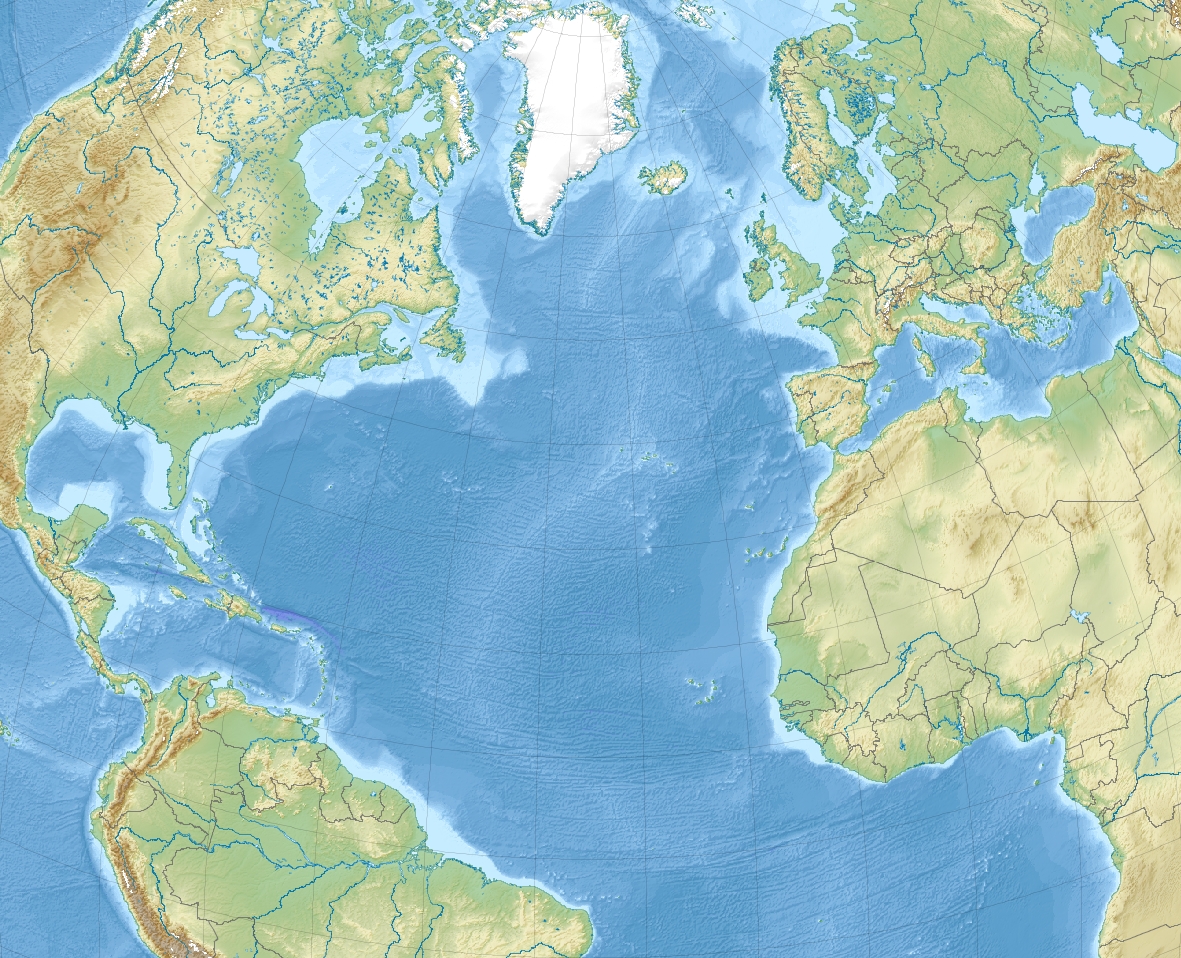
Barring gays from military service is illegal under European law, and no such ban exists in any EU state - even in ultra-Catholic Poland or Italy. In fact the only country in all of Europe to have a ban on gays in the military is Serbia. In Latin America, the only countries to have bans on gays in the military are Cuba and Venezuela. As can be seen in the map above, the divide between gay bans (in red) and no gay bans (in blue and gray) mirrors the divide between the developed and developing world. Gay service bans are common in Africa and the Middle East.

Tuesday, 30 August 2011

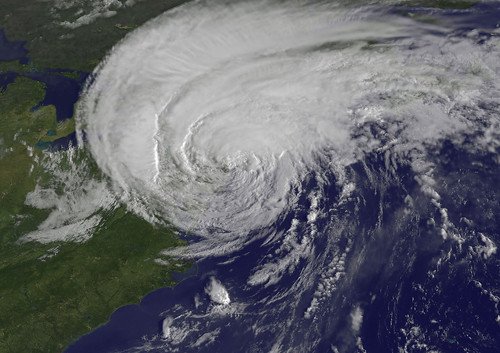
As US recovers from Irene, GOP may hold relief funding hostage

I've just returned to Brussels after a weekend of trying to navigate the hurricane-hit Northeast US. It was a bit of an adventure trying to get from Connecticut to JFK airport yesterday, navigating around floods and downed trees. As I flew out on Monday I had the feeling I was being airlifted out of a disaster zone.

Though Hurricane Irene itself may have packed less of a punch than the worst-case-scenario predictions, the aftermath of inland flooding and power outages is creating a mess from New Jersey to Vermont. And according to reports, funding for the recovery effort may be the subject of political brinksmanship in Washington over the coming weeks and possibly months.

I had gone to New York for two weeks for my grandparents' 60th wedding anniversary and my new nephew's baptism, both of which were scheduled for this past weekend. Needless to say, both were cancelled. I had to quickly make adjustments to my plans on Friday as predictions for the hurricane got progressively worse and the New York City mayor announced all public transport would be suspended from noon on Saturday.

Tuesday, 2 August 2011

Is America too old to function?

One of the most frequent clichĂ©s I hear as an American living in Europe is that the US is a 'new country' while nations on this continent are 'old'. It is usually used to explain away American peculiarities, as if the US is a naĂ¯ve child who just hasn't had the time to attain the wisdom of the more mature, centuries-old European states.

But however often it's repeated, this common wisdom is patently false. As a country, the United States is older than the vast majority of European states. At the time of the US declaration of independence in 1776, the states of Belgium, Germany, Italy, Finland, Romania, Slovakia, Greece and Latvia had all never existed yet in any form. And that's just to name a few. The fact is that European nations are actually quite young - and that is what makes them more agile in the face of modern problems than the United States.

Even the European countries which did exist in some form in 1776 - such as Spain, Portugal, the Netherlands and France - today barely resemble what they were at that time. The Kingdoms of France and Portugal in 1776 are now republics with completely different systems of government. And going in the other direction, the Dutch Republic in 1776 - a loose confederation of provinces - bears little resemblance to today's Kingdom of the Netherlands.

The US has had the same governing structure since 1789, the date that marks the founding of the current American republic with the adoption of the US constitution (which replaced the previous Articles of Confederation in place since 1776). The US has used the same government system since then. Contrast this with France - whose current republic has only been in place since 1958 – or the Federal Republic of Germany, which dates from 1949. Other founding dates of current European government systems include: Italy – 1947, Spain – 1978 and Poland – 1997.

In fact the only European governments that could legitimately claim to be older than the US government system are the constitutional monarchies of Britain, Denmark and Sweden – but even this is arguable since they have had significant constitutional changes over the past 200 years.

Monday, 25 July 2011

Political games are exacerbating both Atlantic debt crises

These are not exactly inspiring times for leadership in the Western world. On both sides of the Atlantic, a potential catastrophic default is looming largely as a result of short-sighted political manoeuvring. This is leading some to question whether the 20th century democratic institutions we have built our societies around are adequate to handle the challenges of this century.

In the United States, Republicans are holding hostage an authorisation to raise the amount of money the US is authorised to borrow – normally a routine housekeeping operation done by every congress – until the Obama administration agrees to massive cuts in government spending. The Democrats have offered to give them those cuts, but only if they are accompanied by an increase in taxes on the wealthiest Americans and the closure of corporate tax loop holes. The Republican leadership, terrified of the reaction of their base voters to any tax increase (even if it will have no effect on 98% of Americans) have refused the offer.

If the United States does not raise the debt ceiling by 2 August, it will go into default. This would almost surely have a disastrous effect on the worldwide economy. This weekend UK Business Secretary Vince Cable said that the "rightwing nutters" who are holding the debt ceiling authorisation hostage for their short-term political gain are a bigger threat to the world economy than the problems in the eurozone.

But conservatives in America aren't the only ones playing with fire in order to reap short-term political gain. The same kind of thinking seems to be guiding Cable's coalition boss. Over the past week UK Prime Minister David Cameron and his ministers have been saying that the UK intends to exploit the current eurozone crisis in order to "maximise what we want in terms of our engagement in Europe."

Wednesday, 20 July 2011

North Atlantic crisis: US, Europe edge toward economic disaster

Normally at this time of year, politicians on both sides of the Atlantic would be preparing for their August break. But there will be no relaxing getaways this year, in what is turning into probably the most anxiety-packed summer of my lifetime.

Both Europe and the US may be just days away from serious financial troubles. And if situations on either continent spin out of control, a worldwide economic panic could be ahead.

On both sides, there are obvious and straightforward solutions that could avert disaster. But in the US, the recent electoral success of a Tea Party movement that wants to see the US default on its debts has rendered the political process incapable of taking action. In Europe, the recent surge toward nationalism and a lack of political courage has rendered the EU incapable of confronting the debt crisis head on. It is a massive failure of the political systems of the Western world.

Wednesday, 25 May 2011

He likes us, he really likes us!

Barack Obama has just concluded an unprecedented address to both houses of the British Parliament in Westminster Hall, and the British press is already elated. He's the first US president to ever give a speech in this ancient coronation spot of kings and queens. From the adulation being heaped upon him by the British press, one might think Obama had a coronation of his own. But the reaction shows just how much the British, and Europe in general, needed to hear those three magic words from the US president- 'I like you'. After a series of snubs, Europe was beginning to doubt his affection.

Today's speech was the key communication of Obama's six-day, four-nation European fence-mending (and domestic politicking) tour. The centerpiece is tomorrow's G8 meeting in Deauville, France. But today's visit to the UK was all about reassuring the Brits that they still enjoy a 'relationship' with America - though the exact nature of that relationship seems to be being redefined.

The British press and political class spends an inordinate amount of time fretting about whether their country still has a "special relationship" with the United States. In the US, this term is virtually unheard of (which should answer their question). Earlier this year the British media was sent into a tizzy when Obama said during a state visit by French president Nicolas Sarkozy, “We don’t have a stronger friend and stronger ally than Nicolas Sarkozy and the French people.”

Thursday, 7 April 2011

US government on verge of shutdown

The Tea Party Republicans weren't kidding around when they said they were coming to Washington to make war on government. Because agreement on a new budget has been blocked by the new Tea Party caucus, the government will shut down midnight Friday night unless Republicans who control the House of Representatives and the Democrats who control the Senate can come to an agreement. Given that Tea Party protesters are now gathering around Washington chanting "Shut it down!", House Republican leader John Boehner is unlikely to find any way to compromise and save the government without infuriating the new Tea Party caucus.

The consequences of a shutdown would be dire. Unlike when a country has 'no government' - as has been the case in Belgium for about a year - a government shutdown literally means a shutdown of government services. 800,000 federal employees would be put out of work. "Essential workers" like soldiers and police officers would continue to work but would not be paid. National parks and museums would close. Government mortgages and small business loans would be halted. Economists are saying that a shutdown could put America's very fragile economic recovery in danger. Millions of people who depend on government services, like veterans or the disabled, will suddenly be on their own. And don't even try getting a passport to leave or a visa to enter the US during the shut down. All of these things will grind to a halt.