Showing posts with label Theresa May. Show all posts
Showing posts with label Theresa May. Show all posts
Wednesday, 31 January 2018
The latest on Brexit and German coalition formation

Sunday, 24 September 2017
The speeches podcast: May in Florence, Trump at UNGA
 It's a week of speeches - Theresa May asking for extra Brexit time in Florence, Donald Trump ushering in the dog-eat-dog era at the UN, and Emmanuel Macron spelling out his vision of EU reform.
Friday, 22 September 2017
Pseudo-independence
Desperate to salvage Brexit talks which have gone off the rails, British Prime Minister Theresa May gave a much-anticipated speech in Florence today. She surely hopes it will stem the panic over the country’s lack of preparedness for the ‘cliffs edge’. That is March 29, 2019, when the country must leave the EU.
There is now little prospect that an agreement on Britain’s post-Brexit relationship with the EU can be agreed by that date. And so the prime minister had little choice but to do something to calm the jitters of British businesses and markets.
Tuesday, 22 August 2017
My prediction: Britain will join the EEA

The political class was stunned. After a nationwide in/out referendum on EU membership, expected to yield an 'in' result because the entirety of the political and business establishment supported it, people awoke to the news that people had voted out, by 52%. A yearning for national sovereignty had won the day.
This wasn't 24 June 2016. It was 29 November 1994, the day after Norway's referendum on whether to join the European Union. 52% voted for Norway to be outside the EU, while 47% voted to be in it - an almost exact mirror of the UK result 22 years later. The result was a political shock that sent reverberations through the government and business establishment.
What happened in Norway in the ensuing years was a lesson in how politicians must sometimes pull their citizens along begrudgingly, or even unwittingly. Because even though EU membership had been rejected, Norway effectively ended up becoming an EU pseudo-member - under terms much worse than if it had become a member state. The same fate awaited Iceland and Switzerland.
Friday, 21 July 2017
On the way in, and on the way out?
Friday, 9 June 2017
So where does this leave Brexit?
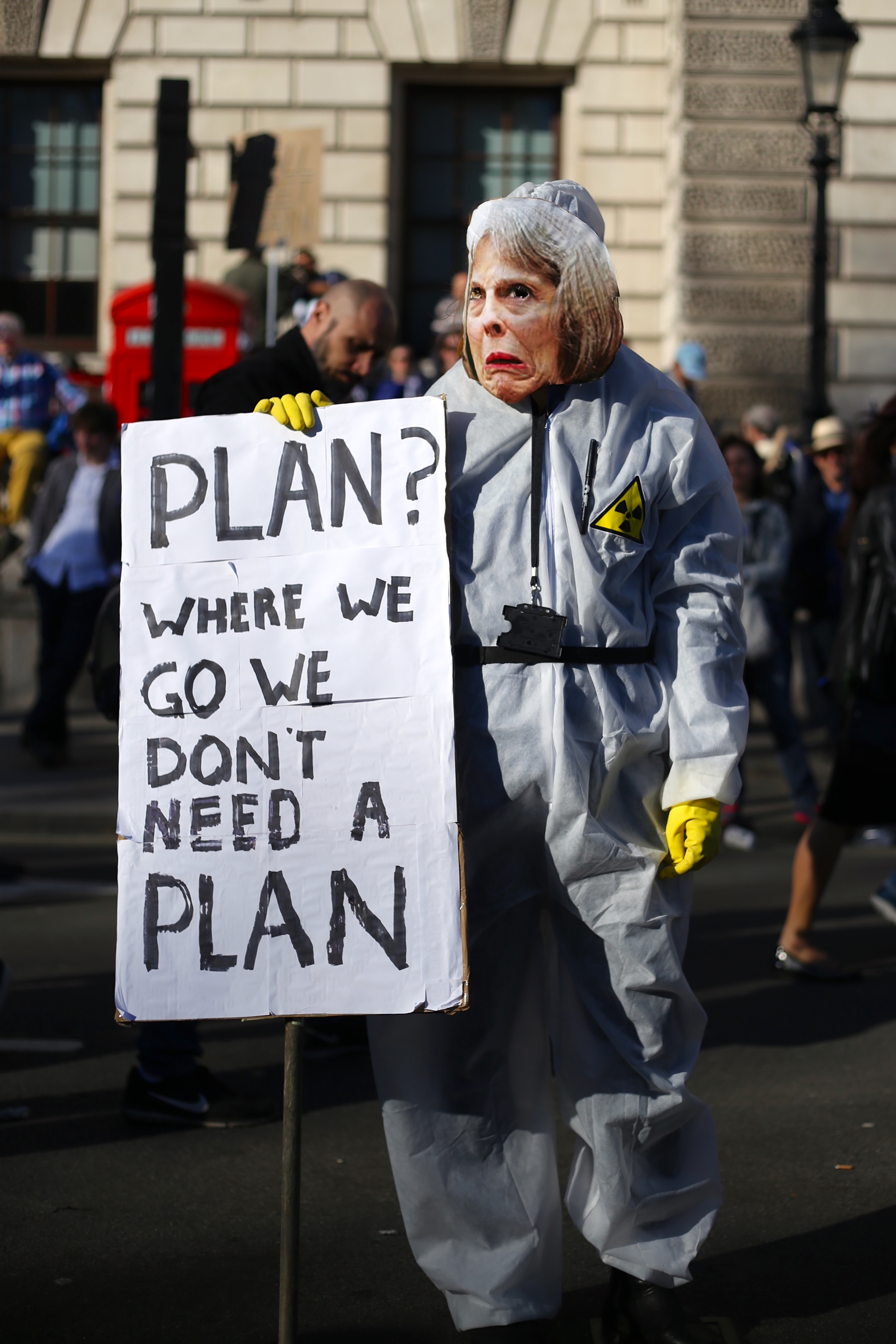
When Theresa May called a snap election in April, it was a nakedly opportunistic move.
The opposition Labour Party was in disarray, 20 points behind the Conservatives in the polls. Their leader, Jeremy Corbyn, did not command the loyalty of his MPs and had only held on to his position because of grassroots support.
The UK Independence Party essentially had no raison d'etre any more. The one-issue party had gotten their wish - Britain was leaving the EU. The Scottish National Party looked to be in trouble in Scotland as well. May saw an opportunity to hoover up Labour, UKIP and SNP votes and give her perhaps the largest majority in UK history - making the country effectively a one-party state. It would be a big improvement from her existing situation, having inherited a razor-thin majority government from David Cameron.
Thursday, 2 February 2017
Europeans have been lied to their whole lives. They have three months to learn the truth.

At the tail end of 2016, as Europeans adjusted to the reality that Donald Trump had won the presidential election, I found myself having two very different conversations in Europe.
One was with my Brussels and Berlin friends from what some might derisively term the 'educated elite'. They were scared, talking about what the result meant for Europe and how things on the 'old continent' were about to change.
Then there was the conversation I found myself having with people I just met, or acquaintances - people who don't follow politics or world events very closely. "What do you think about Trump?" they snickered, as if he was entirely my problem and not theirs. They expected a reaction of, "I'm so embarrassed for my country" or "things are going to be bad in my homeland". I've told them the entire global order is about to be thrown into chaos, starting first here in Europe. They stared back at me in confusion. Surely, Trump is America's problem, not Europe's.
Tuesday, 15 November 2016
Obama passes the torch to Merkel

Barack Obama's European farewell tour, which is kicking off in Athens today, was meant to be a triumphant farewell to a continent where he remains enormously popular.
Instead, the trip has become a crisis tour. The US president must urgently reassure the European public that the continent is not about to be plunged into war by a Donald Trump presidency, and that American moral leadership remains intact. In his private meetings, however, he will have to acknowledge that he cannot assure any such thing. He will have to urgently plan with European leaders for how to peacefully transition to a post-Trump world.
The most important of these meetings will come tomorrow in Berlin, when he meets with the reluctant new leader of Western liberal democracy - Angela Merkel.
Friday, 14 October 2016
Soft Brexit or Hard Brexit? It's a false choice

Over the past weeks, people in the UK have been engaged in a tortured debate - should we have a "hard Brexit" or a "soft Brexit"?
A hard Brexit, viewed by most people (even the Brexiteers) as the worst outcome, would mean that the UK cuts economic ties with Europe, and continues to trade with the EU only on WTO terms. In other words, the UK is left with the same relationship with the EU enjoyed by Morocco.
A 'soft Brexit' would mean the UK retains market access while formally leaving the EU. This would occur either by the UK joining the EEA (à la Norway and Iceland) or negotiating bilateral treaties (à la Switzerland). Either of the latter two options would involve compromise. Crucially, the EU has made clear that the UK can't have either of these "soft Brexit" scenarios without maintaining freedom of movement (the ability for EU citizens to live and work in any EU country).
Friday, 7 October 2016
"I hate Britain, but I love Brits"

"I hate America, but I love Americans". It's a line I've heard so many times in the past decade of living in Europe that I barely notice it any more.
I got it particularly often when I first moved to Europe in 2006. It was just three years since the launch of the Iraq War, which the vast majority of Europeans opposed. George W. Bush, immensely unpopular in Europe, was still the president. I had to face down a lot of hostility toward the country I came from.
But usually, after an energetic rant against the crimes of America, the person speaking to me would finish by saying something like, "but I love Americans. They're so creative, so full of energy. I love their TV and movies. I just don't understand how these same people can vote for leaders like this."
Monday, 26 September 2016
The Brexit diaspora
I'm in Brussels this week, and have spent much of it catching up. I was away all summer, and though I was here briefly for work in early September, this is the first time I've been able to see a lot of my friends since that fateful day on 22 June.
Belgium may be experiencing a sunny Indian summer at the moment, but somehow the city still feels dark. There is a palpable fear about where the world is going. Post-Brexit, and possibly pre-Trump, we find ourselves in a moment of extraordinary unease. In my entire life, I've never felt such an overwhelming air of pessimism and fear all around me. It seems as if everyone has lost hope.
Nobody seems to be feeling this more acutely right now than Brits in Brussels. They've dedicated much of their lives to the idea that they were part of a grand project - citizens of a unifying Europe. Suddenly, half of their countrymen have pulled the rug out from under them, upending their entire lives. You are no longer a European citizen, they have been told. Come home at once.
Sunday, 3 July 2016
Thousands marched, but what are the options for keeping UK in EU?

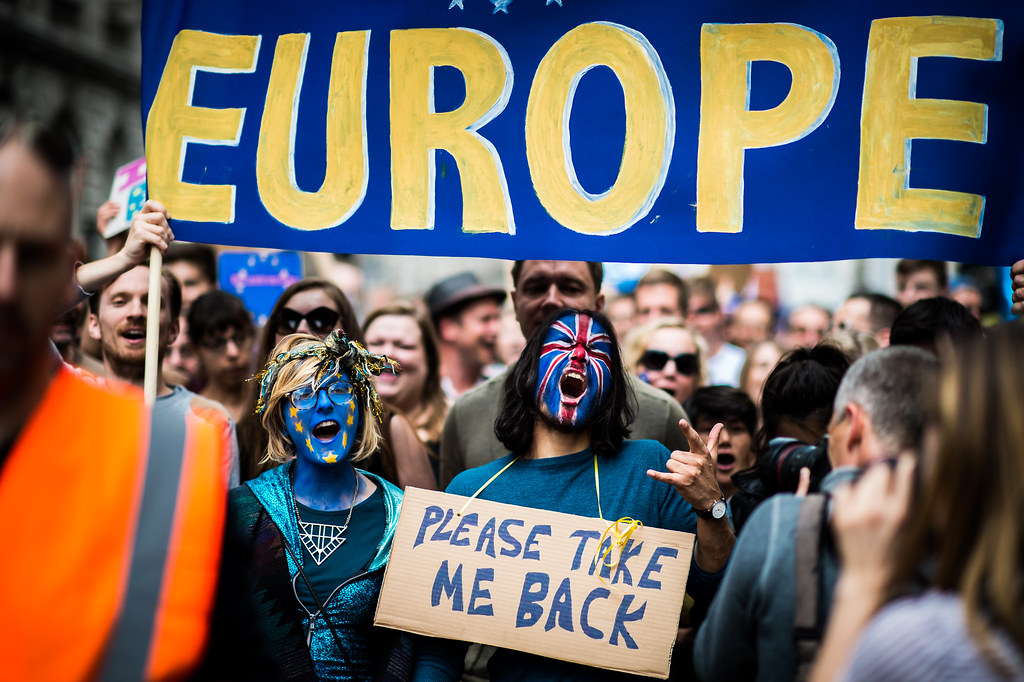
Yesterday saw an unprecedented, and uncharacteristic, outpouring of love for the European Union on the streets of London.
Tens of thousands of people marched on the British Parliament in a protest hastily organised on Facebook called 'March for Europe'. It was a show of European love not ordinarily seen in the British capital, where EU flags are normally verboten. And it wasn't a vague outpouring of sentiment either. The protesters had a specific demand for the parliament - do not pull the trigger on Brexit. That trigger is known as article 50 (more on that later).
The crowd was overwhelmingly young and educated. As The Guardian's Ed Vulliamy noted, "the hollow, bitter wit of the banners and placards was a fair indication of who took to the streets". “Un-Fuck My Future”, the placards pleaded. “No Brex Please, We’re British”. "Fromage, not Farage". Pictures of Whitney Houston singing “I Will Always Love EU” and Rick Astley singing "Never gonna give EU up, never gonna let EU down".
“Hell no, we won’t go!” they chanted.
Tens of thousands of people marched on the British Parliament in a protest hastily organised on Facebook called 'March for Europe'. It was a show of European love not ordinarily seen in the British capital, where EU flags are normally verboten. And it wasn't a vague outpouring of sentiment either. The protesters had a specific demand for the parliament - do not pull the trigger on Brexit. That trigger is known as article 50 (more on that later).
The crowd was overwhelmingly young and educated. As The Guardian's Ed Vulliamy noted, "the hollow, bitter wit of the banners and placards was a fair indication of who took to the streets". “Un-Fuck My Future”, the placards pleaded. “No Brex Please, We’re British”. "Fromage, not Farage". Pictures of Whitney Houston singing “I Will Always Love EU” and Rick Astley singing "Never gonna give EU up, never gonna let EU down".
“Hell no, we won’t go!” they chanted.
Saturday, 2 July 2016
Why England in the EEA would be a victory for France

In 1963, when the United Kingdom first applied to join the European Community, the answer from Paris was a resolute 'non'.
French President Charles de Gaulle vetoed the application in '63 and again in '67. He said that "a number of aspects of Britain's economy, from working practices to agriculture...made Britain incompatible with Europe". He added that the UK had a “deep-seated hostility” to any pan-European project.
It wasn't until De Gaulle relinquished the French presidency that Paris finally relented and allowed the UK to join the club in 1972.
So what were the "aspects of Britain's economy" that De Gaulle was so worried about? It was free market liberal economics. De Gaulle, and his successors, distrusted the "Anglo-Saxon" (The French term for Anglo-American) model of capitalism and had a very different vision for Europe.
Subscribe to:
Comments (Atom)