Showing posts with label Turkey. Show all posts

Thursday, 15 March 2018

Will Cyprus stay in perpetual division?

With EU-Turkey relations at an all-time low, the reunification of Cyprus seems like a distant prospect. This week I saw an island where the frozen conflict has become largely normalized. Unlike in Berlin, this wall doesn't look like its falling any time soon.


Sometimes, old wounds just won't heal. So it is with the island of Cyprus, where a 180 kilometer scar runs from shore to shore, and has been festering for four decades.

I visited the island for the first time this week, and those wounds were on display right from the start. As my plane flew across Greek Cyprus, over the capital Nicosia, I could see the giant Turkish flag painted on the mountains to the north, taunting the Greeks. It reminded me of the Alexanderplatz TV Tower in Berlin, built to be unavoidably visible everywhere in West Berlin during the Cold War.

The trip was, admittedly, somewhat of a box-checking exercise. Of the 32 European Union and EFTA countries, there are three left that I haven't visited - Cyprus, Slovenia and Romania. I'm heading to Slovenia next month for a conference, and have resolved to do a weekend in Bucharest before the year is done. Then - I win?

Sunday, 20 August 2017

Eurovision imperialism?

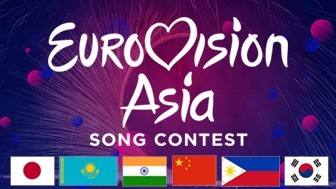
Eurovision Asia is coming. Get ready for the battle of the song contests, as the European Broadcasting Union tries to head off global upstarts.

The Eurovision Song Contest has come a long way since it was established as a small project between Western European countries in 1956. 

Since the contest was extended to post-Communist countries in the 1990s, it has grown to become the most-watched non-sporting live television event in the world. Last year it attracted 204 million viewers, achieving an audience share of 36.3% across the markets in which it aired. That means that 1/3 of the people watching television on that night were watching Eurovision. That's more people than watch the Oscars or the Superbowl. In fact, it's only beaten by the World Cup.

Compare this to the 1990s, when the struggling song contest was weighed down by a French-imposed rule that countries could only sing in their national language and with a live orchestra. Viewing figures averaged around 50 million.

All of this has opened the question of what the contest should do with the increasing global success of its brand. This week, the European Broadcasting Union, the association of broadcasters that organizes the conference, announced the launch of Eurovision Asia. It will use the Eurovision format but for Asia Pacific countries. The official website was launched on Friday - EurovisionAsia.tv

Friday, 21 July 2017

Friday, 30 December 2016

Could the US have a military coup?

The military is the only American institution left with public trust, and that trust is enormous. As a new era dawns, the previously unthinkable is on the table.

Each year, I come home to the United States for an extended break over the Christmas holiday. Ordinarily it’s a time to relax, recharge, and spend some quality time with family. But this year a dark cloud is hanging over my visit.

I’m from the New York area, so it’s no surprise that people here are still feeling a sense of shell shock about November’s election result. But this isn’t the same disappointment people felt during the George W era. This isn’t about politics. There is a palpable sense of anxiety and fear in the air. Nobody knows what’s coming next.

There is a sense that everything people thought they knew about their own country has suddenly evaporated. More than one person has described the feeling as being one of a “living nightmare” that they still expect to wake up from. Someone else told me that the sudden shock of having the world you thought you knew come tumbling to the ground gave him “the same feeling as on September 11th”.

Monday, 1 August 2016

Erdogan’s Germans

Politicians in Austria and Germany are becoming increasingly alarmed over the Turkish president’s influence in their countries.

Yesterday in Cologne, 30,000 German residents amassed in the city center to pledge allegiance to a foreign leader.

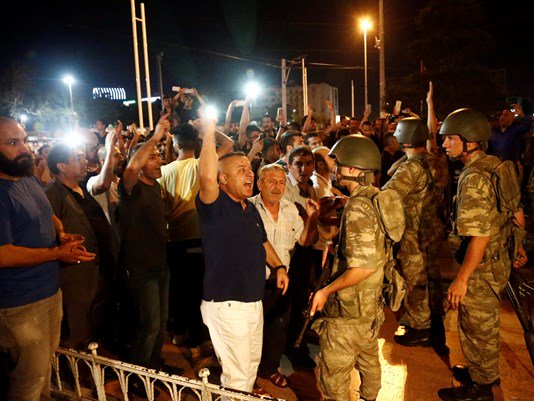
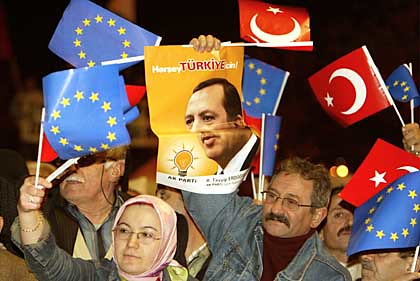
The demonstrators, Turkish immigrants or people of Turkish decent, were following a call to action from Turkish President Recep Tayyip Erdogan, asking people to show solidarity against the attempted military coup on 15 July. They brandished iconographied pictures of the Turkish strongman, waved Turkish flags and chanted their fidelity to Erdogan’s Islamist AKP party.

The Turkish president himself was supposed to address the crowd via a live video address, but this was banned by the police for fear that it would cause the crowd to become "overexcited".

Tuesday, 19 July 2016

It's time for the EU to drop the Turkish accession charade

Whether the coup was real or staged, it is beyond time that the EU drop the pretence that Erdogan's Turkey will ever join the bloc.

As the implications of the events of Friday night have sunk in, world leaders have started to suggest what they dared not say over the weekend.

Since Friday Turkish President Recep Tayyip Erdogan has rounded up and arrested more than 6,000 members of the military and judiciary, accusing them of being involved in the supposed coup. "It looks at least as if something has been prepared," Johannes Hahn, the European Commissioner from Austria, said today. "The lists [of people to arrest] are available, which indicates it was prepared and to be used at a certain stage."

"I'm very concerned. It is exactly what we feared," he added.

Hahn's words carry significance because he happens to be the commissioner for EU enlargement. He is directly responsible for Turkey's accession process to join the EU. But in realty, that process is as theatrical and illusory as Friday night's coup probably was (more on that below).

Monday, 23 May 2016

What planet are the Brexiters on?

No, Turkey is not about to join the EU. And the only country that wants it to is the UK.

Yesterday, on one of the UK's main Sunday morning politics shows, the UK's defence minister Penny Mordaunt made an astonishing claim. 

The pro-Brexit Tory politician told the BBC's Andrew Marr that Turkey is about to join the European Union, which would open the flood gates to Turkish immigrants coming into the UK. Asked if the UK has veto power over Turkish accession, Mordaunt replied, "No, it doesn't".

Except that it does - quite obviously. Any new EU member state must be approved unanimously by every county in the union, something that UK Prime Minister David Cameron, who is trying to stop the UK from voting to leave the EU, was quick to point out later in the day. 

Monday, 9 May 2016

Ukraine's unabashedly anti-Russian Eurovision song

As tensions between Russia and the West continue, Ukraine fields an entry about the Soviet Union's horrific mass deportations in Crimea. How did it get past the censors?

In 2009, as the war between Georgia and Russia raged on, Georgian public broadcaster GPB tried to pull a fast one on the Eurovision censors.

They fielded a song called "We Don't Wanna Put In", a disco anthem ostensibly about not wanting to stop dancing. The Eurovision organisers weren't having it. Songs with political themes are not allowed in the contest.

The title of the song, and it's main chorus, did not grammatically make sense in English. Though this could be said about a lot of Eurovision entries, this one was clearly meant to be "We don't want a Putin". 

Wednesday, 20 June 2012

In Cypriot hands

When Cyprus was admitted to the European Union in 2004, it was hoped that membership would help unify the divided island into a single state once again. But in an ironic twist of fate, the EU itself may be divided while it is under the leadership of Cyprus over the next six months.

On 1 July Cyprus will take over the rotating 6-month presidency of the European Union from Denmark. It is almost the perfect storm of fragility – the union is set to be led by one of its weakest members at a time when its own weakness threatens to tear it apart.

The Greek Cypriot government, which is the one that will be taking over the presidency, rules over just 800,000 people - fewer than live in the EU’s ‘capital city’ Brussels. This of course excludes the 300,000 Turkish-speaking people in Northern Cyprus, a self-governing break-away territory that has been separate since the country’s civil war in 1974. But as the EU does not recognise the existence of Northern Cyprus, nominally the entire island is taking over the presidency.

Turkey, whose military still occupies Northern Cyprus, is the only country that recognises it as a country. The Greek Cypriot government considers itself to be the ruler of the whole island, as does the EU. But they are effectively two separate countries in an open state of war, but with a cease-fire.

Thursday, 28 April 2011

Turkey from West to East

Is Turkey part of Europe? This question was at the back of my mind during a week-long visit to Istanbul over the Eastern break. Far from being an academic geographical consideration, the question has big implications for both the future of Turkey and the European Union. At least, that's what were told.

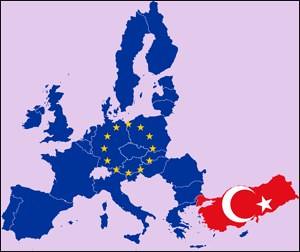
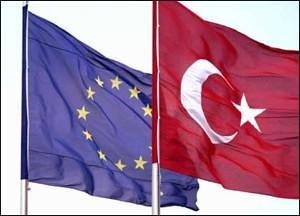
Turkey is a candidate country to join the EU, having started accession talks in 2005. Most of the countries of continental Europe are against Turkey joining, particularly France. But the UK, backed by the United States, is forcefully pushing for Turkey's membership in the union. Nicolas Sarkozy insists that Turkey is not geographically or culturally part of Europe and does not belong in the EU. David Cameron says that it is Islamophobia that is keeping Turkey out, and that the EU should not be an 'all-Christian club'. The argument for accession stresses that Turkey's largest city as well as 3% of its territory is in Europe, and that historically Turkey (as the Ottoman Empire) ruled over many countries now in the EU including Greece, Cyprus, Bulgaria, Romania and Hungary.

Monday, 10 January 2011

Mexico on the Aegean

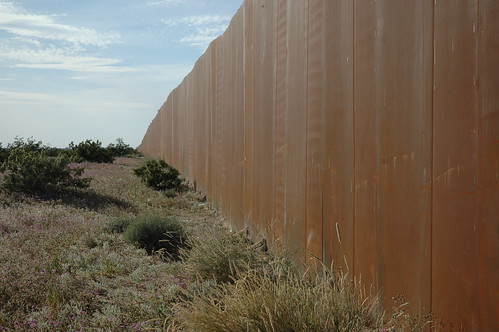
Is there anything more controversial than a wall? From Berlin to Palestine to Mexico, border walls have often proven to be as incendiary as they are ineffective. Recently, Greece signaled to the European Union that it wants to build a wall along its border with Turkey similar to the wall that has been partially built along the US-Mexico border. But the European Commission was quick to shoot down the idea last week, saying walls and barriers are merely short-term measures that cannot solve the EU's immigration problems.

Greece has been struggling to deal with a huge influx of illegal migrants trying to cross its land border with Turkey after the EU cracked down on illegal sea crossings from Africa to Europe via the Mediterranean over the past two years. According to the Greek government, 200 illegal migrants are crossing its land border with Turkey every day. These migrants aren't Turkish, instead they have crossed through Turkey from countries further afield in Central Asia and Africa. And since Greece is in the passport-free Schengen Zone, once the migrants get in they can travel to almost all other EU countries (with the notable exception of the UK and Ireland who have opted out of Schengen) without having to show identification.

Friday, 26 November 2010

Putin suggests an EU-Russia union

Should Russia and the EU link up in a "common continental market?" Vladimir Putin thinks so. The Russian prime minister made the case for such a union in an editorial appearing in a German newspaper yesterday ahead of a two-day visit to Germany. But German Chancellor Angela Merkel quickly made her feelings on the subject known. Asked about Putin's editorial at a press conference yesterday she said she would have to "pour cold water" on the idea when she meets with Mr. Putin, though she said an EU-Russia free trade zone is a possibility.

The idea of a pan-European free trade zone, similar to the North American Free Trade Agreement (NAFTA) struck in the 1990's, has been floated for some time. But Putin's editorial seems to go further than this. "We propose the creation of a harmonious economic community stretching from Lisbon to Vladivostok," he wrote. "The result would be a unified continental market with a capacity worth trillions of euros." He said "the global economic crisis has revealed both Russia and the EU to be economically very vulnerable," adding that Russia is too dependent on its oil and gas exports while the EU is too dependant on imports, and the EU has lost its competitive edge because of de-industrialisation. Linking the two economies, Putin wrote, could solve problems on both sides.

Monday, 13 September 2010

Referendum in Turkey - Careful what you wish for, Europe

Yesterday's referendum in Turkey, which saw 58% of Turks vote 'yes' to a dramatic reform of the country's constitution, was being warmly welcomed in press releases from both Brussels and the European capitals today. But despite their warm words for the vote's institution of Democratic reforms, there are no doubt worries behind the scene in Europe today as they take in what the vote really means for the direction Turkey is headed in. Paradoxically, although this is exactly the type of reform the EU has been demanding of Turkey in order for it to be able to join the EU, the vote's outcome can actually be seen as an indication of how quickly the Turkish population is drifting away from Western influence.

The changes are mostly aimed at reducing the role of the military in the country, and were champtioned by Turkey's current Islamo-conservative prime minister Recep Tayyip Erdogan. The vote represents a huge victory for Erdogan over the country's uncompromisingly secular military. It indicates that his Islamnic party will likely win the upcoming elections next year. And, it satisfies a main demand of the EU for Turkey to be able to join the union. But considering that the legitimate concern over the wisdom of a Turkish accession is now a consensus everywhere in Western continental Europe, this could actually cause some real headaches for European policy makers. It is likely they will just move the goal posts further out for Turkey's accession, a tactic criticised by last year's report on EU policy toward Turkey.

Friday, 30 July 2010

Cameron promises the world to Turkey

This week's speech by UK prime minister David Cameron in Ankara was notably aggressive – not toward his Turkish hosts, but toward Britain’s EU allies. Perhaps it shouldn’t come as too much of a surprise from a leader who promised to be combative with the EU when sticking up for Britain’s interests. But Cameron’s strong (and unrealistic) guarantees to Turkey and his condemnation of Germany and France will set UK foreign relations on a tricky tightrope walk. What exactly is Mr. Cameron playing at here?

In his speech, Cameron was unusually outspoken about his support for Turkey’s membership in the EU. Of course this is long-held British policy, and the previous Labour government was also supportive of the membership. But Cameron went above and beyond this by ratcheting up the rhetoric. Saying he wanted to “pave the road from Ankara to Brussels,” Cameron stated that “the EU would be poor without Turkey.” Pointing to Turkey’s membership in NATO, Cameron said “It’s just wrong to say Turkey can guard the camp but not be allowed to sit inside the tent.”

By contrast German foreign minister Guido Westerwelle, who was in Ankara with Mr. Cameron, was much more cautious. Westerwelle, the leader of Germany’s Liberal party, also supports Turkey’s membership in the EU. But his party is in a governing coalition with Angela Merkel’s Christian Democrats, who strongly oppose such an accession. He’s already been in trouble with Merkel for being too effusive in his public support for Turkish membership in the union, and this time around it was clear he had learned his lesson. Though he encouraged Turkey to carry on in its efforts to join, he gave a frank assertion that Turkey is “not ready” to join the EU. Even more importantly, he pointed out that the EU is not ready to absorb Turkey.

But guess which speech the Turkish media splashed across the front pages? The Turkish press was positively effervescent over Cameron’s lavish praise for Turkey, and his face was all over Turkish TV screens this week. A quick and easy diplomatic coup for the UK no doubt, which is keen to establish strong ties with Turkey’s new Islamist-leaning government.

Tuesday, 8 December 2009

Dutch drop objection to Serbia in EU


Serbia moved a step closer to joining the EU today as the Netherlands withdrew its objection to the accession.

The EU had been in an 18-month deadlock over whether to grant Serbia free trade and association, which is a precursor to membership. The Dutch, who are hosting the international criminal court proceedings against Serbs accused of genocide during the Balkan civil wars, had insisted for more cooperation from Serbia in tracking down war criminals first.

Serbia had argued it legitimately couldn’t find the accused, which seemed doubtful considering many of them were walking around the country in broad daylight. However Serbia recently arrested two key leaders, and apparently that was enough to satisfy Dutch concerns. Though the Dutch foreign affairs minister said the tribunal still needs more cooperation from Serbia.

Tuesday, 8 September 2009

Should Turkey Join the EU?

Yesterday’s much-anticipated report from a high-level commission blasting Brussels for its handling of the Turkey accession issue was predictable in many ways. It was perhaps even a little tiresome in the way it relied so heavily on the oft-repeated claim that racism and xenophobia are what drive opposition to Turkey’s membership. But even more predictable still was the very different way the British and continental media covered the report.

The Independent Commission on Turkey’s denunciation of Brussels’ foot-dragging was a headline-generator in the British media. Yet it received scant attention on the continent - even in France, the country which took the most punches in the document. Google news English finds 30 stories about the report, while Google News French finds only three working links (one of which is actually a blog). France24, Le Monde, and Le Figaro all seem to have ignored the news. Perhaps not surprising considering the continental powers are opposed to Turkey’s membership, while the UK is in favour. Those national media outlets on the continent that did cover it took a very different angle than their British counterparts, proving much more sceptical of the report’s conclusions.

The commission condemns the EU for delaying accession talks with Turkey, saying it is violating its previous promises that Turkey will eventually become a member while many (perhaps most) in Brussels have no intention of ever seeing this become a reality, preferring to string Turkey along in order to make it friendly to EU interests and more inclined to push through pro-Western reforms at home. The report accuses national political leaders (read: Sarkozy) for coming out strongly against Turkey’s membership in order to exploit domestic concerns about immigration, job security and Islam. It even goes so far as to say that this contradiction between what the EU had previously publicly avowed in the 1990’s and what its national leaders are saying today “put in question EU credibility, reliability and the principle…that agreements are to be honoured.”

To an outsider it might seem bizarre that the traditionally euroskeptic UK would be the one pushing most vocally for Turkey to enter the EU. Indeed, in the British media the issue is often presented as a no-brainer. Of course Turkey should enter the EU, people here seem to think. Any efforts to keep them out, according to the Brits, are just due to continental (read: French) racism and Islamophobia.

So it isn’t surprising that I find most people here are a bit confused about the debate, and some of the larger issues involved. So, I thought I’d make a little Q&A based on some of the questions someone was asking me last night. Whether or not Turkey should join is a very complex issue that essentially goes to the heart of the larger question about what the EU should be – a federal union or a free trade zone. Countries have therefore split on Turkey’s accession based on their feelings about European federalism – the idea that the EU should have supranational power in areas outside of trade. The fact is that the day Turkey joins the EU is the day the dream of a federal Europe is over. A federal Europe is simply not possible in a union with Turkey as a member.

Questions? Shoot.

Is Turkey part of Europe?


A very small part of Turkey (about 5%) is geographically within what has historically been considered Europe. Of course, the issue gets a little tricky because unlike its ocean border to the west, Europe’s eastern border is not as clearly defined (owing to the fact that geologically speaking it is more accurately part of a larger Eurasian continent). But the traditional border has been understood to run from the Mediterranean and Aegean, through the Dardanelles and the Bosporus straight, across the Black Sea, and North along the Ural mountains in Russia. This makes Turkey and Russia the only two countries straddling the two continents of Europe and Asia. However the 10% of Turkey that lies in Europe is relatively sparsely populated because it is not very hospitable terrain.

Some argue that because the Ottoman Empire (Turkey’s progenitor) at one time controlled all of the Balkans up to Vienna, it is culturally part of Europe. However this is a tenuous claim because if such logic were applied across the board the states of North Africa should also be invited to join, as their progenitors once controlled Spain. Historically speaking it would have been a tough sell to convince the Austrian emperor (or anyone else in 15th century Europe for that matter) that the Ottomans were “European”. The successful defence of Vienna which halted the Ottoman advance into Western Europe gave the city the nickname as the ‘savior of Europe’ at the time. Their motivations may have been racist or religionist, but there can be no doubt that during the Ottoman Empire’s many centuries of existence, few in Europe would have considered the Turks to be “European”.

Additionally, the Ottomans never took much of an interest in actively governing their Balkan or Greek territories, preferring to leave the actual administration to local rulers. They were much more preoccupied with their Middle Eastern and North African territories, which constituted the majority of the empire.

As a secular nation, isn’t Turkey more linked to Europe than to the Middle East?

It is true that the Turkish state founded by Ataturk is rabidly secular, but unlike in Europe, that secularism has had to be enforced through repression and authoritarianism. To this day religious practice is heavily restricted in Turkish public life by law. Ataturk and his successors have considered this necessary because there is a significant amount of the country that is fervently religious, which the ruling class (mainly the military) fears. The rural population is growing increasingly religious with time, following the revival of Islam that has occurred across the Middle East in the past two decades. The recent success of the openly Islamic AKP party demonstrated how much more powerful Islam is becoming as a political force in the country. The fact that secularism has always hung by a thread in Turkey and has had to be guarded by authoritarian means reflects the fact that Turkish secularism does not even resemble the secularism of Europe, which has arisen naturally among the population and not been enforced by the state.

Turkey is the only stable Muslim democracy in the Middle East. Wouldn’t it integrate seamlessly into the EU?

To hear the proponents of Turkey’s accession talk, you would think Turkey was some kind of earthly paradise of humanism and democracy. But while it is true that Turkey is a democracy, it is anything but stable, particularly at the moment. The country is still involved in two ongoing conflicts, one against Kurdish separatists in the East and the other in the Turkish occupation zone of Cyprus to the west, both still unresolved issues. And just this week Turkey took the first move to establish diplomatic ties with its neighbour Armenia for the first time. That tension is unlikely to be resolved any time soon because Turkey still refuses to acknowledge the genocide of ethnic Armenians that took place during World War I.

Turkey doesn’t just have instability in its foreign relations. Its domestic politics are teetering on a wire at the moment as well. With the Islamist AKP taking civilian power in 2007, there is a constant risk of the army staging a coup to preserve Turkey’s secularist code. In the mean time the country maintains one of the Western World’s most authoritarian regimes in the area of human rights. Press freedom is still severely limited in Turkey, where it is still a crime to insult “Turkishness”. Just yesterday Turkey decided it would be the only country in Europe to refuse to sign a resolution in support of a jailed reporter in Kazakhstan, because it contained a provision which stated that journalists, “should be free to report on all issues of interest to the public, including commentary on how the state is run.” Turkey of course couldn’t sign it, because it can technically be a crime in Turkey to criticize how the state is run.

But the EU is taking in Eastern European countries that also have corruption and human rights problems, but who happen to be Christian. Isn’t this hypocrisy?


It is true that the EU took on the countries of Romania and Bulgaria in 2007 despite complicated corruption problems, with an eye to providing support and guidance to those countries to help them transition to being transparent and stable democracies. This has been referred to as the “transformative” strategy of EU enlargement and has been very controversial as an idea in and of itself, especially now that the appetite for enlargement has waned. But though Sarkozy and other opponents of Turkish entry have said that enlargement should stop for now, they have held the door open for Croatia, Serbia, Bosnia, Macedonia and Albania (a Muslim country, by the way) to join eventually. Obviously, these are countries with some fairly significant, and recent, problems.

But there is one key difference between all of these post-communist countries and Turkey, and it’s not just that they are Christian or all indisputably in Europe. They also all have very small populations. They are therefore more easily manageable for an EU that is taking on a “transformative” role. Additionally, these countries’ entry would not make a big demographic difference to the EU.

Turkey, on the other hand, has a population of 75 million, larger than either Britain or France. If it entered the EU it would become the second biggest member of the block. And given that Turkey’s population is expected to reach 85 million or more by 2020, by the time it could feasibly enter it would probably be the largest member and have the largest voting block in all decisions of the European Parliament.

So this isn’t just a question of saying, “Oh well, it’s Europe-ish, they respect human rights ok I guess, sure let them in, why not?” Turkey’s entry would fundamentally change the nature of the union itself, leading to the bizarre situation where the most powerful country in the EU has only 5% of its territory actually in Europe! There’s no way the rest of the EU member states would accept that scenario in a federal Europe, therefore Turkey’s entry into the EU would mean a federal EU is an impossibility, and it would have to be scaled back to be just a free trade zone like NAFTA. Of course, British Euroskeptics would like nothing more than to see this happen.

So when I see the British media go on and on about how Germany and France’s objection to Turkish entry is motivated by racism and Islamophobia, I’m left rather perplexed. If the Independent Commission on Turkey was being a bit more intellectually honest, they really should have pinned more of the blame for the EU’s Turkey double-speak on the British, who are really the ones stringing the Turks along. Using Turkish entry as a backhanded way of changing the EU is hardly a fair thing to do to Turkey, considering that they are promising them membership in a union that would cease to exist as a result of their very entry.

The commission is right about one thing – Brussels needs to stop stringing Turkey along and give them a firm yes or no. But it is wrong in concluding that the recent vocal objection to Turkey’s entry is some kind of populist political ploy by national leaders. It is a legitimate concern and goes to the very heart of what the EU is meant to be. And in that way, this debate really had very little to do with Turkey and much more to do with the conflict between federalists and euroskeptics. And until that conflict is resolved, it is likely Turkey will continue to be unfairly strung along.

Thursday, 9 April 2009

Obama's Europe Verdict

Barack Obama is back home after his busy week abroad, and the time for reflection on what his trip to Europe says about his presidency is well underway. In London, Strasbourg, Prague and Istanbul Obama wowed the crowds and charmed the leaders, but what do his words say about how the relationship between Europe and the US is going to be defined during his presidency?

There's no doubt that a dramatic change in US foreign policy was officially unveiled during this trip. On the most symbolic level, the change in tone was striking. Obama seemed to be concentrating on putting distance between his policies and those of his predecessor. He admitted the mistakes America has made, while at the same time arguing that America is still the greatest hope for the world.

His speech in Prague, at the EU-US summit, was the main vehicle to deliver this message. "We must be honest with ourselves," he told the crowd. "In recent years, we've allowed our alliance to drift. I know that there have been honest disagreements over policy. But we also know that there's something more that has crept into our relationship. In America, there's a failure to appreciate Europe's leading role in the world. Instead of celebrating your dynamic union and seeking to partner with you to meet common challenges, there have been times where America's showed arrogance and been dismissive, even derisive. But in Europe, there is an anti-Americanism that is at once casual but can also be insidious. Instead of recognizing the good that America so often does in the world, there have been times where Europeans choose to blame America for much of what's bad."

"On both sides of the Atlantic, these attitudes have become all too common. They are not wise; they do not represent the truth. They threaten to widen the divide across the Atlantic and leave us both more isolated."


It is precisely because Obama remains so popular in Europe that he was able to deliver the critical second part of this message. Just imagine George W. Bush in Prague lecturing Europeans on their anti-Americanism. But Obama also warned Europe not to think it can sit back and relax now that Obama has been elected, expecting him to solve all their problems. "America is changing," he said, "but it cannot be America alone that changes."

This later expression of consternation was perhaps essential, as throughout all of these summits European leaders seemed to melt like jelly in Obama's presence, and there is a real risk that Europeans will think that Obama's election means that everything can return to the way it was before. As much as Obama insisted that he respects Europe as an equal partner and he will listen to it, the personal dynamic between the leaders seemed to suggest a very different sort of relationship. It was almost embarrassing to watch Gordon Brown smiling ear to ear during his press conference with Obama in London ahead of the G20, as he basked in the byproduct of the US president's celebrity. And Berlusconi was so overcome with Obamania during the group photo with the queen that he couldn't stop himself from screaming out the US president's name, which earned him a royal rebuke from her majesty.

But after all of Obama's talk about respect for the EU as an equal partner, his speech in Turkey seemed to undermine that. He affirmed the United State's continued support for Turkey's membership in the EU, a very controversial issue within the union. For many this statement not only betrayed a bit of American arrogance in meddling in the internal affairs of the EU, but also seemed to place Obama firmly in the 'EU as a merely a free trade zone' camp. Many have argued, most notably Nicolas Sarkozy, that the issue of Turkey joining the union is really fundamentally about what type of EU Europe wants. They argue that a strong, federal EU could never work after taking on Turkey as a member, and that the Anglo-Saxon desire to see Turkey as a member is reflective of the British/American desire to see the EU be only a free trade zone. Whether or not one agrees with this analysis, it was perhaps unwise of Obama to wade into the thorny issue immediately after affirming is respect and admiration for the EU. Sarkozy has been willing to look the other way in response to the comments, but privately he must be pretty displeased.

All in all it was an impressive visit, plagued by some hypocrisy and inconsistencies of message but as a whole wildly successful in the main thing it set out to accomplish: unveiling a new US foreign policy that will be a dramatic departure from the previous eight years.

Thursday, 1 May 2008

Labour movements cry 'mayday!'

May 1 is a traditional workers' day holiday across most of Europe, with most of the countries on the continent having the day off (the UK and Ireland save the day off for the following Monday). It coincides with a traditional pagan holiday welcoming spring, and such festivities are a big part of the celebrations. But it is also a traditional day for labour protests, although the intensity of those has tapered off over the years.

Berlin, for example, used to see massive street protests. But over the past five years they've dwindled to almost nothing. In fact May Day in Europe is quickly coming to resemble the watered-down version that is celebrated in September in the United States, Labour Day. The American version was put at that time as a compromise with unions because the government thought the traditional May 1 was too radical). Like in the United States, where few people could tell you what Labor Day celebrates, May 1 in the Europe has now also begun to lose its meaning in Europe.

Tuesday, 18 December 2007

Turkish troops enter Iraq

The AP is reporting that about 300 Turkish troops have crossed into northern Iraq. Ankara hasn’t confirmed the reports but Kurdish officials are saying that Turkish troops entered Iraq overnight and moved up to three kilometres (1.9 miles) inside

The operation follows air raids over the weekend in which Turkish warplanes bombed suspect Kurdish Workers Party (PKK) bases in northern Iraq over the weekend. Iraqi officials say the bombs hit 10 villages.

Today’s development is the first deployment of Turkish troops inside Iraq since Turkey’s parliament voted to allow the military to conduct operations into Iraq to fight the PKK. Ankara has since then assembled up to 100,000 troops near the Iraq border.

Thursday, 1 November 2007

Why are we bound by borders?

A Turkish friend of mine just sent me this map which I find extremely interesting. He was pointing to the AFJ-designed hypothetical creation as an example of “US arrogance,” but I think it makes for an interesting study as the crisis with the PKK pushes Turkey further and further toward an invasion of Iraq.

The map is a redrawing of the national borders of the Middle East based on ethnic and religious lines. It accompanied this 2006 article in the Armed Forces Journal about what a fair Middle East would look like. Apparently the map has been circulating around Turkey without the accompanying article (I had to do some super sleuthing to even find the article) and is being presented as actual plans of the US military to redraw the Middle East. This assumption, of course, is not only wrong but idiotic, considering that much of this redrawing would be not in American interest and the US is actively resisting such a redrawing by clumsily trying to hold together the nonsensical, European-drawn borders of Iraq. A group in Turkey even announced a competition to redraw the US map in retaliation. Check them out here, they’re absolutely absurd. Isn’t the fact that no Turk was able to draw new borders for the US that make any sense evidence against their own point? The US is a culturally and linguistically homogenous nation, and the ethnic and religious divisions that exist are spread out. None of these entries even takes into account the political differences that might actually be astute (like the infamous “Jesusland and United States of Canada” map that came out after the 2004 election).