Showing posts with label Borders. Show all posts

Sunday, 26 June 2016

Ireland faces its doomsday scenario

Both sides of Ireland are in a panic because Brexit could make the peace process unravel. But perhaps the North has come far enough to allow a non-violent reunification of the island.

"Of all the things that could happen to an Irish government short of the outbreak of war, this is pretty much up there with the worst of them," wrote The Irish Times, the republic's main newspaper, as the world woke up to the "Brexit nightmare" on Friday morning.

"Ever since David Cameron announced that he would hold a referendum back in 2012, Irish officials have regarded the prospect of a British exit from the EU as the worst thing that could happen [to Ireland]," the paper wrote. "[Irish PM] Kenny now faces leading Ireland through a period of difficulty and uncertainty unprecedented in the last 50 years, more complex and unpredictable than the recent financial crisis, more destabilising the Northern Troubles."

The UK is Ireland's biggest trading partner. One billion euros worth of goods flow freely across the Irish Sea each week, tariff-free because both countries are in the European Union. If the UK leaves the EU while the Republic of Ireland stays in, customs duties will have to be imposed on that trade. That is, unless the UK joins the EEA, but I've written before on why that is unlikely.

Thursday, 5 May 2016

Gleisdreieck: the new Berlin wall

The old border between East and West may be imperceptible these days, but Berlin still feels like two different cities.

This week, after I had finished moving into my new apartment in the Neukolln neighbourhood of Berlin, I went to the annual re:publica conference nearby. It's an event focused on the politics of the internet - a subject close to German hearts

It is held at The Station, an extraordinary event facility housed in a former postbahnhof - a train station for mail. Today it sits under a dizzying intersection of several different train lines at Gleisdreieck Station - where U2, U1 and DB long-distance tracks converge. It has a beautiful outdoor area that faces Gleisdreieck Park. 

But this spot wasn't always so lovely. For decades this area was a barren weed-filled wasteland under and along the railroad tracks, separating the West Berlin neighbourhoods of Schoneberg and Kreuzberg.

Monday, 15 February 2016

Is Latin America a vision of Europe's fenced future?

Europeans should look at the hassles faced by other continents before they thoughtlessly toss out Schengen's decades of free movement.

I'm spending this weekend at Iguazu Falls, the mammoth waterfalls at the border of Brazil, Argentina and Paraguay. It's a truly spectacular sight, more powerful than Niagara and wider than Victoria (the falls, not the queen).

Perhaps even more interesting than visiting the falls has been exploring the three towns at the 'triple frontier', Foz do Iguacu, Puerto Iguazu and Ciudad del Este. It is essentially one large urban conurbation spanning three borders. I've taken to collecting visits to sites like this. It's my fourth triple border, after NL-BE-DE, CH-FR-DE and CH-LI-AU.

Friday, 20 November 2015

Longer waits to get back home for EU citizens

EU interior ministers in Brussels agreed today to put in place the same screening procedures for their own citizens as for foreign citizens at the EU's external borders.

As someone with both US and EU nationality, I've been amazed at the very different experience I encounter when entering each one.

When I go home to New York, I always have to wait in a very long line at JFK airport, even though I am entering with my US passport. I have to fill out a customs declaration form, then bring it to a border guard (after a wait of usually around 40 minutes). He runs it through the database, and asks me a serious of questions. Where have I been? Why do I live in Belgium? What is my job? Where am I staying? The whole interview process can take between three to ten minutes.

Contrast this to my experience coming home to the Schengen area using my Italian passport. I've never once been asked any question at the border. Usually, they just glance at my passport and wave me through. Sometimes they quickly run my passport through a scanner. Given how quick the process is I doubt it's running my name through an extensive database.

Friday, 2 October 2015

German unity, but not reunification

Tomorrow is the 'Day of German Unity', marking 25 years since East and West Germany were merged. But don't call it 'reunification day'.

The area around Brandenburg Gate, once home to the 'no mans land' between the two layers of the Berlin Wall, is tonight being decked out for a massive celebration. Tomorrow, 3 October, is the annual celebration of 'German Unity Day'. This year's holiday is no ordinary one. It is marking 25 years since German reunification.

But don't make the mistake of calling it 'Reunification Day'. I called it by this name with a German friend today. I was swiftly deutsched, and told that despite the fact that it is held on the anniversary of the day the East German government was merged into the West, the proper name is 'unity day'.

I was only repeating the term I have read in English-speaking media, as there have been several reports this week about the 25th anniversary. But there are two important reasons why this is not called Reunification Day: it corresponds to an older holiday name, and because pre-war Germany has not been entirely reunited.

Monday, 10 June 2013

A week of border concerns

I'm on a train to Strasbourg for this week's plenary session of the European Parliament, for what promises to be a week largely focused on borders and travel. The fact that my train via Luxembourg has been plagued with delays seems appropriate given the travel/border legislation which is coming up this week.

On Wednesday MEPs will vote on two legislative packages seeking to change the EU rules on asylum seekers and Schengen area of passport-free travel. Both of these pieces of legislation were put forward in the early days of the Arab Spring, when a sudden influx of refugees from North Africa cast doubt on the EU's existing rules.

Border states like Italy, Greece and Malta said the existing rules, in which member states can return asylum-seekers to the EU country they first entered, complained that the existing system was unfair. 

Among other things, the new rules will put in place a monitoring system for any sudden influx of migrants and allow a suspension of the rules.

Saturday, 3 December 2011

Customs, security and immigration - learn it, live it, love it

I have many irrational pet peeves, and many seem to involve air travel. One of the most silly may be my disproportional irritation when people use the word 'customs' when they really mean immigration or airport security. But as silly as this little hang-up is, it actually does make a big difference not only to public policy but also to your rights and plans as a traveler. And yet I hear people confuse these three things very often when they're telling their travel stories, even frequent travelers. I'm in Switzerland this weekend visiting my father, himself a very frequent traveler, and I was just explaining the difference to him. So I thought it might be helpful to write a blog post about it.

Customs, immigration and airport security checks are three distinct processes you may encounter at an airport or border crossing. Sometimes you may have to go through all three, other times you just encounter one or two and other times you won't go through any. It all depends on which countries you're traveling between. For instance, when you travel between Belgium and the UK you go through immigration, but not customs. When you travel between Belgium and Switzerland you go through customs, but not immigration. If you're flying between Belgium and Finland you would only go through security, the same as you would if you were flying between Florida and California. Confused yet? Here's a quick guide.

Monday, 18 April 2011

Tensions flare at French-Italian border

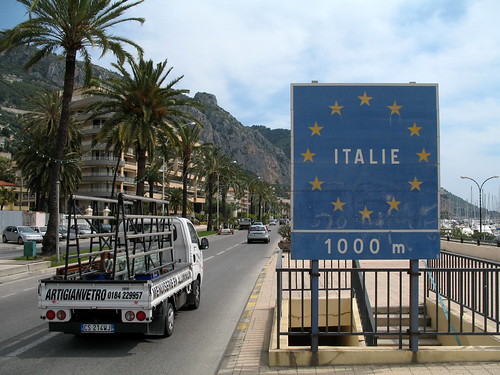
France and Italy are locked in a war of words today after France stopped several trains from crossing the border between the two countries over the weekend. France, suspecting that Italy was trying to dump North African immigrants into the country, stopped the trains at the old border station between Ventimiglia and Menton, 20km east of Nice. Now, each country is accusing the other of violating the rules of the EU's passport-free Schengen Zone.

Since the pan-Arab uprising began in January in Tunisia, Italy has been sounding the alarm bell about an increase in migrants trying to cross the Mediterranean to escape the chaos in North Africa. The tiny Italian island of Lampedusa, just off the Tunisian coast, has been inundated with refugees washing up on its shores in makeshift boats. There are now more migrants housed in a refugee camp on the island than there are residents.

Italy has asked the EU for assistance in dealing with the migrants, most specifically through deployment of the EU's Frontex border patrol force. They have also asked other member states to contribute financially to the effort, saying that Italy can't afford to patrol the EU's borders all on its own. Because the Schengen Zone is a passport-free area, most of the migrants crossing into Italy are just trying to get into the EU. Once they get into Italy they can go to France, Sweden or Germany without facing a border check.

Wednesday, 10 November 2010

EU to crack down on Schengen border violations

Today the European Commission announced a crackdown on member state compliance with the Schengen passport-free area rules, and during the press conference I couldn't help but smile to myself. The other week I had a bit of a rant with my friends after I encountered a British woman on a airport shuttle bus in Prague who didn't know what Schengen was. Since then the joke has been that I'm obsessed with Schengen. So naturally, I had to write a blog entry about the new proposal.

So, the Prague airport story. I was taking the airport shuttle to the airport and we were just pulling in to terminal 1 (the "international" terminal with flights to the US, China, etc) when an announcement came on saying that this terminal was for non-Schengen countries, and the following terminal would be for Schengen Area countries. I had my headphones on but I could see that there was a woman a few seats away from me with a confused expression on her face asking her neighbour something. By the time I took my headphones off we were already on our way to terminal 2, but I could then hear that the woman was frantically asking people what Schengen was. Apparently her neighbour, also a Brit, had reassured her "Oh Schengen means EU. You're going to London? Then terminal 2, definitely."

Monday, 6 September 2010

“We must prepare for the end of Belgium”

Is it a bluff, or are they serious? That’s the question all the Belgian media is asking today after the Francophone Socialist party leaders made an abrupt U-turn this weekend and, for the first time, started openly talking about the break-up of the country.

Up until now only the Flemish Dutch-speaking politicians that have seriously proposed breaking up the country, while the Francophone parties have refused to even entertain the possibility. But that seemed to change quite suddenly this weekend after talks on forming a new Belgian government collapsed yet again and the king accepted the resignation of Socialist leader Elio di Rupo as lead negotiator. Francophone socialist Philippe Moureaux came out saying Belgium is on the verge of an orderly separation. Rudy Demotte, the head of the government of Wallonia, said that “all options” are now on the table for them. Francophone Socialist Laurette Onkelinx told the magazine DH Dimanche, “We must prepare for the end of Belgium, otherwise we might be the ones to suffer.”

Thursday, 22 January 2009

What's Going on at Switzerlands Borders??

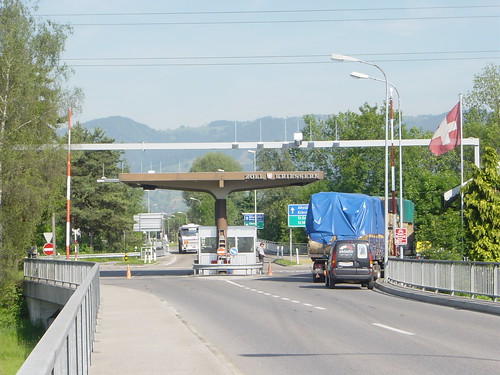
Something very strange is going on here. Back on 12 December, Switzerland joined the passport-free Schengen Zone, which enables travel between it and all of its EU neighbors without a passport check. Yet from stories I've been hearing it seems that Switzerland's borders have actually become harder to cross since it entered Schengen.

In the past two weeks two friends of mine have come to visit from Paris, both taking the direct high-speed TGV train. Both of their trains were stopped at Basel for 30 minutes while authorities came on board and checked people's passports. On the first visitor's train into Switzerland two weeks ago, the authorities adked everyone for a passport and searched everyone's luggage. The second visitor who came last week also had his train stopped. He hadn't brought his passport, and only had his French national ID. The border guard took his ID to the other end of the train car and made a phone call about it for ten minutes before eventually handing it back and continuing down the train. Last night I was talking to a German friend who lives here in Zurich and he said he encountered the same thing when driving up to Germany for Christmas. All of the cars were being stopped and passports were demanded.

Now this strikes me as rather unusual because under the precepts of the Schengen Agreement authorities at borders within the zone are actually not allowed to ask people for passports just because they are crossing the border. And before Switzerland joined the zone last month, passport checks on trains and roads leaving/entering Switzerland were sporadic and not frequent. Both me and my father have taken that TGV between Zurich and Paris many times before last month and neither of us has ever been asked for a passport (the train never stopped for thirty minutes in Basel either). The same goes for trains I've taken from Geneva into France and from Lugano into Italy.

So why has Switzerland's Schengen entry resulted in the exact opposite of what the entry was supposed to accomplish? I've been searching for answers this week. Switzerland's Schengen status is a bit different from the others because it is still a separate trade zone from the EU and therefor can still have customs checks at its borders, unlike borders within the EU. But my understanding is that the current arrangement allows them to search luggage but not to ask for travel documents. But on the other hand Swiss, French, German and Italian police all have the right to demand identification from anyone, anywhere, at any time. Does that invalidate the Schengen clause about not being allowed to demand travel documents?

A contact who works for the Cantonal government in Schaffhausen tells me he's heard that Switzerland has cracked down on its border with Germany in response to Germany doing so immediately after 12 December. He says starting on 13 December the Germans started manning every single one of their border checks with Switzerland (usually around 30 percent of these are not staffed at any given time). So in response, Switzerland started aggressively checking everyone coming the other way, and perhaps, he speculated, they've followed suit with their other borders now as well. In other words, Germany started it. That's all well and good, but when is it going to end? And is what the Swiss (and their neighbors) are doing at the borders allowed under the Schengen Agreement? I'll keep trying to get to the bottom of this.

All of the friends who have been stopped have been aware of Schengen Rules, but none of them has had the nerve to challenge the border guards on their right to ask them for a passport (it's not the type of situation you want to make trouble in!). But this weekend I might take a drive up to Germany's black forest and see if I can ask some questions to the border guards there on what their instructions are currently.

If Switzerland isn't going to follow the rules of the Schengen Agreement, one wonders what the point of them joining was.

Friday, 12 December 2008

Happy 'Switzerland Joins Schengen' Day!

After so much anticipation, I rose early this morning at dawn to creep down to the fireplace and see if I had received a visit from Schengen Clause. I gasped with joy to find it was true, he'd come! The border check with Germany had disappeared!

Ok I can't really see the German border from my dad's house in Zurich (although I can see the border with the next Canton), but I did eagerly check the news this morning to see if it had indeed come to pass. I have no idea why, but the moment which countries open their borders with other countries really excites me.

At midnight CET this morning Switzerland joined the Schengen Zone, the 25-member European block that allows passport-free travel between the member states. Switzerland is not technically in the EU, but it has a series of bilateral treaties with the EU which make it in many ways a "virtual member," bound to follow EU regulation although it has no representation in the EU parliament.

Monday, 3 March 2008

Liechtenstein licked?

An interesting story is developing over Switzerland's impending entry into a border-free Europe. It looks like its tiny neighbor Liechtenstein may see its status as a tax haven challenged as a result of the change.

Switzerland is not part of the European Union, but the treaty which has dismantled the internal borders of continental Europe actually has nothing to do with the EU. It is a separate treaty called the Schengen Treaty (named after the town in which it was signed) and membership in the so-called "Schengen Zone" is separate from membership in the EU.

Switzerland is set to enter the zone in November, so after then there will be two large non-EU nations in the zone (Switzerland and Norway) and two large EU nations not in the zone (the UK and Ireland). There will also be no border between Switzerland and its neighbors. Good thing my brother and I got this picture at the France-Switzerland-Germany border while we could!

Friday, 21 December 2007

Today Eastern Europe wakes to no borders

It’s official. As of this morning you can now drive from the Russian border in Estonia to the Atlantic beaches of Portugal, across 24 countries, without passing through a single border crossing. As of midnight, the 2004 EU entrants are now part of the Schengen Zone, the border-free area that allows you to pass through European countries as easily as if you were going from Indiana to Illinois.

Considering the post-cold war implications of this day (all but one of the 2004 entrants are former Warsaw Pact countries), the scenes last night were dripping with symbolism. As Canada’s Global Mail reports, at the border of Germany and Poland the guards spent yesterday removing kilometres of tall steel fence, leaving unmarked and unguarded fields between them. Fireworks lit up the border bridge between Poland and Germany in Frankfurt on Oder early this morning. On the road between Vienna and Bratislava, Austrian and Slovakian leaders met to saw through border-crossing barriers. And in Estonia, the government put its border-inspection stations up for auction. Perhaps nowhere was the scene more striking than on the Czech-Slovak border, as the countries were split apart just in 1993 and now find themselves without a border between them once again.

Tuesday, 6 November 2007

New EU terror laws

The EU got one step closer today to establishing a coordinated anti-terrorism policy through all member states. And they didn’t pull any punches this time. The ambitious plan calls for banning web sites that show how to make a bomb or advocate violence, and creating a Europe-wide registry keeping extensive information on the people flying into and out of the EU.

The changes, of course, closely mirror what’s taken place in the United States since September 11th and in fact, such directives were put in place by the EU way back then. But with all the chaos over the failure of the constitution, it got lost in the shuffle and little has been done on a coordinated basis.

The report accompanying the new laws issued by Franko Frattini, the feisty and ambitious European Justice Commissioner, basically criticizes every European country for being too soft on terrorism. Frattini is calling for countries to have a specific category of “terrorist murder” offences with tougher penalties spelt out in law. In addition the commission wants all 27 EU members states to have similar separate crimes for terrorist incitement to violence, terrorist recruitment, terrorist planning, etc.

The commission targets the UK, Italy, Germany, Spain and Ireland in particular on this front, saying they have developed few or none of the specific terrorism offenses the EU called for after September 11.

Thursday, 1 November 2007

Why are we bound by borders?

A Turkish friend of mine just sent me this map which I find extremely interesting. He was pointing to the AFJ-designed hypothetical creation as an example of “US arrogance,” but I think it makes for an interesting study as the crisis with the PKK pushes Turkey further and further toward an invasion of Iraq.

The map is a redrawing of the national borders of the Middle East based on ethnic and religious lines. It accompanied this 2006 article in the Armed Forces Journal about what a fair Middle East would look like. Apparently the map has been circulating around Turkey without the accompanying article (I had to do some super sleuthing to even find the article) and is being presented as actual plans of the US military to redraw the Middle East. This assumption, of course, is not only wrong but idiotic, considering that much of this redrawing would be not in American interest and the US is actively resisting such a redrawing by clumsily trying to hold together the nonsensical, European-drawn borders of Iraq. A group in Turkey even announced a competition to redraw the US map in retaliation. Check them out here, they’re absolutely absurd. Isn’t the fact that no Turk was able to draw new borders for the US that make any sense evidence against their own point? The US is a culturally and linguistically homogenous nation, and the ethnic and religious divisions that exist are spread out. None of these entries even takes into account the political differences that might actually be astute (like the infamous “Jesusland and United States of Canada” map that came out after the 2004 election).

Monday, 15 October 2007

All set for Schengen

We’re getting down to the last months of the year and, surprisingly, we may actually see the Schengen expansion come to pass by year’s end, according to recent reports.

The Schengen Agreement is the system that came into effect in 1995 that got rid of border checks between certain European countries. So now, for instance, when you travel between Germany and France you don’t go through any border check, and when you fly between these countries you don’t have a passport control check point. It was named after Schengen, Germany, where the agreement was signed (there's now a little monument to it there which I've seen, pictured at right).

But, the Schengen membership is different from the EU membership, which makes it rather interesting. The UK and Ireland, for instance, are both in the EU but not part of the Schengen Agreement (they just love that whole ‘island nation’ thing). Norway and Iceland, on the other hand, are not in the EU but are part of the Schengen Zone. So, when I fly from London to anywhere in Europe, I have to go through passport control, which is quite annoying (particularly if you don’t have an EU passport, since they get a separate and shorter line). But if I flew from France to Norway, I would not go through a passport check. Switzerland, which is not part of the EU, is scheduled to join Schengen next year.