 As Estonia takes over the EU presidency, we talk on this week's podcast about two issues central to the Baltic country - technology and historical memory.
Showing posts with label Eastern Europe. Show all posts
Showing posts with label Eastern Europe. Show all posts
Thursday, 24 August 2017
Estonian issues: Charlottesville, collective memory and technology
As Estonia takes over the EU presidency, we talk on this week's podcast about two issues central to the Baltic country - technology and historical memory. 
Thursday, 10 September 2015
Eastern Europe's discomfort with diversity

This week I took a train to Prague from Berlin, in order to talk to people continuing on the train to Budapest for a radio report I was working on about Europe's disappearing overnight trains. I lived in Prague back in 2002, and it was nice to be back. I met up with a few Czech friends, and at each meeting the subject of the refugee crisis came up. My Czech friends said they were very embarassed of the images being shown to the world, of Czech security officers marking Syrian refugees with numbers and treating them inhumanely. I told them, at least the Hungarians are making you lookmore humane by comparison.
A real East-West split has emerged in the EU over how to deal with the refugee crisis. Right now the 'Vyshegrad Four' - Poland, Slovakia, Hungary and the Czech Republic - are furiously resisting a proposal to resettle the Syrian refugees pouring into Europe in a proportionate way across EU member states. Much ink has been spilled analysing why Eastern European governments are behaving in this way.
Sunday, 15 May 2011
Eurovision leaves Europe

It will be an awkward host city given that the country is in an ongoing conflict with its neighbour Armenia which has sometimes spilled over into the contest, most notably in 2009 when people in Azerbaijan who had voted for Armenia were interrogated by the police. Azerbaijan was almost banned from the contest as a result, but the European Broadcasting Union decided to only give them a fine.
Many people were left scratching their heads Saturday night asking, "Erm, where is Azerbaijan again?". Depending on which definition you use, this will be just the third time that the Eurovision Song Contest will not be hosted outside Europe, following the contests in Israel in 1979 and 1999. The border between Europe and Asia is generally taken to be the Caucasus Mountains, which Baku is technically just South of. It will be the first time the ESC will go to a region with several active military conflicts - the Caucasus is home to disputed territories and ongoing military conflicts in Chechnya, South Ossetia and Nagorno-Karabakh just to name a few. It will be the second time an ESC will be held in a Muslim country, following the final in Istanbul in 2004. That contest, incidentally, was hosted in the European side of that city, west of the Bosphorus Strait.
Monday, 12 April 2010
What next for decapitated Poland?

It’s safe to say the notorious Polish president Lech Kaczynski was not much-loved in Brussels. His fierce Euroscepticism and opposition to climate change efforts had made him public enemy number one here for awhile. But you wouldn’t know that from the way the EU capital is reacting today. EU flags are flying at half mast, virtually every EU leader has issued statements of shock and sadness, and a moment of silence was observed during today’s midday press briefing. Whatever disagreements existed between Kaczynski and Brussels, it seems to have been forgotten in the face of this shocking event.
Monday, 28 September 2009
Return to Prague
 Shiny new trams, freshly-cleaned buildings and, believe it or not, some smiling waitresses - Prague has come a long way since I lived there in 2002.
This past weekend I made a pilgrimage of sorts back to where my European adventure began. I had been to Europe before I moved to Prague to study and do an internship at Radio Free Europe in 2002 (just once on a trip to Austria and Germany with my high school band). But Prague was the first place in Europe I lived, and it was experience that changed my life. I had always been fascinated by European history, but it was in Prague that I was introduced to the possibility of living on this continent.
It was quite a setting in which to be introduced to Europe. Having survived both world wars largely undamaged, and containing a treasure-trove of OTT counter-reformation architectural delights, it’s truly a stunning city. To be sure, the oft-levelled criticism that the refab following the Velvet Revolution have turned the city into a fairy tale Disney World are fair. At times the city centre does seem a little too much like a contrived veneer set up for tourists. But as opposed to other such cities which get that description such as Venice or Florence, Prague is also a living, functioning capital city. And its fascinating history is not limited to the fairy tale buildings of Stare Mesto and Hradchany, it is also a living museum of sorts to the communist era.
 That is really what I found so thrilling about living in Prague. The city has gone through so many distinct periods – from early success as an independent medieval kingdom, to various control by German Luxembourg and Habsburg dynasties, a hotbed of the reformation, the centre of production for the Austo-Hungarian empire, 40 dark years under Communist rule, and finally to a member state of the EU. All of this history is reflected in the city’s architecture and layout, not too mention in the unique personality of its inhabitants.
 Of course, these impressions were all shaped back in 2002, when the country was not yet in the EU and still very much in transition. It’s still a society in transition to be sure, but the city felt quite different this time around. But perhaps it’s me that’s changed more than Prague. Living in the UK I’ve become well aware that Prague has turned into one of those cities where Brits go to get drunk for cheap, often in the form of stag and hen dos (Bachelor and Bachelorette parties). I was a bit concerned that seeing British tourists peeing and vomiting all over everything might take away some of the magic in my memory of Prague!
To be sure there were plenty of groups of drunk Brits stumbling about, but the most unavoidable tourists were Americans. They were literally everywhere, so much so that after awhile I started to feel like I could have been walking around in Boston. Unlike the British tourists, the Americans were perfectly well behaved and nice enough. Still, it’s not so nice to hear that nasal, loud accent everywhere. I began to wonder if it had been like that when I lived there and I just hadn’t noticed, because I hadn’t yet come to view hearing American accents as hearing something obtrusive or ‘foreign’.
Czesky Changes
Whether or not the hordes of Americans were there back in 2002, there were plenty of things that have changed since then. The most startling was seeing my old place of employment, Radio Free Europe, turned into a museum. Back in 2002 it was housed in the old Czechoslovak federal assembly building (which had closed in ’93 after there was no longer a Czech-Slovak federation to assemble) located next to the National Museum on Wenceslas Square (pictured left).
 RFE is a radio broadcaster set up during the Cold War by the United States congress in order to broadcast programming into Eastern Europe. Listening to the broadcasts was often a criminal offense back then. After the cold war ended RFE began gradually closing its Eastern European stations and opening new ones in the Middle East and Central Asia. After 9/11, the US government decided that the building needed a huge cordon of security around it, because it was broadcasting into the middle east. So the traffic flow at the top of Wenceslas Square was severely disrupted as all the roads around it were closed off. To get into the building I had to go through an elaborate system of security checks at 4 different points!
 Because of the chaos this was creating RFE had to move out, and today the area around the building is completely opened up and a museum about the federal assembley is now housed inside. What a strange feeling, being able to see the desk you used to work at being shown to you on a guided museum tour.
Down at Old Town Square I came across a thoroughly nauseating change that’s taken place below the NYU in Prague building, where I went to school. There right below it was a new Hard Rock Café, screaming out in all its tacky glory (pictured). I really hope NYU kids aren’t going there all the time. Really, how horrid!
Blocked by Floods and Popes
I first arrived in Prague in September of 2002, just after the worst floods in the country’s history swelled the Vltava across vast swathes of the city. I stepped off the plane into what was still a disaster area. The metro had been flooded, streets had been ripped apart, and cultural institutions like the Rudolfinium were in ruin. It all added to the learning experience really, it was incredibly interesting to watch as the city slowly recovered and rebuilt.
 But unfortunately Prague’s very efficient and comprehensive metro system was shut down almost the entire time I lived there, and I never ended up taking it. So I was excited to finally use it this time around. It’s a really great system, and it made it so much easier to get around rather than having to use the tram to get everywhere. Still, I guess travelling by tram is nicer because you can get a better feel for the layout of the city, plus it’s much more old-timey!
However our transportation wasn’t completely unfettered, as this time around it was the pope rather than rising flood waters which blocked my path. The pontiff happened to be making an official visit to the Czech Republic while we were there, closing off sections of the city as he moved around. The castle was effectively closed the whole weekend because the pope was there addressing Czech politicians. This video of a spider crawling around his robes while he spoke to them has been circulating across the internets.
The stated purpose of his visit was to bring the largely atheist Czechs back to the fold of Catholicism. The Czech Republic is the most atheistic country in Europe, with 60% identifying as Atheist or Agnostic and few regular church attenders. In his speech to the politicians the pope blamed the communist government for this current state of affairs, recounting how they closed churches and arrested priests. But it’s quite a stretch to say that Czech atheism is entirely the result of just 40 years of Communist suppression, particularly when the Czech Republic’s fellow post-communist neighbour, Poland, is the most religious country in Europe. The reality is that it was the Catholic church itself which engendered this disgust with religion in the Czech people, coming down brutally and severely against the country’s attempts to switch to protestantism during the Hussite and 30 Years wars.
 The counter-reformation came with a fierce and imposing blow, the leaders of the Hussite protestant religion were executed by the Catholic Habsburgs and grand building projects were instituted throughout Prague in order to show the Czechs who was boss and intimidate them into nominally returning to Catholicism. In fact, that is why Prague is such a beautiful city, because this massive building project was undertaken after the 30-years war to win back the Czech people. They nominally returned to Catholicism but it never really took, and their enthusiasm for the religion was sufficiently low that when the communists came in and suppressed the church, few people complained. Even now it was evidence how little impact religion has in this country, as there were no picture of the pope around the city or cheering crowds anywhere to be seen. Indeed, everyone seemed to be either indifferent to or unaware of his visit.
It was notable too that even St. Vitus Cathedral he celebrated mass in is still owned by the Czech governmentand is operated as a museum, not as a place of worship. The Catholic Church has been trying for years to get the most important Czech cathedral back but has so far been unable to do so.
The Rudeness Thing
One consistent observation from Western tourists about Czechs is the almost unbelievable rudeness of service staff. I’ve always thought this was rather unfair to the Czech Republic, as this is a trait common to all the post-communist countries of Eastern Europe. Prague just happens to be the most visited city in that region. But it is true, ideas about customer service vary differently between Western and Eastern Europe.
 While there this weekend I noticed perhaps a slight improvement in customer service, but there were still plenty of almost comically unfriendly staff interactions. One thing that does seem to be unique to the Czechs is that their unfriendly interactions with strangers, be it in the context of customer service or not, seem to be tinged with an explosive and inexplicable rage.
For instance, as we were visiting the Loretto monastery in Hradchany, we entered about ten minutes before they were closing for a lunch break. We were still in the courtyard when they wanted to close it up, but there were still plenty of people milling about. A staff woman yelled at me from across the courtyard that we had to leave, but her directions on where to go were confusing and I was unclear on what she wanted me to do, come toward her or go along the ropes. My hesitation seemed to infuriate her, she became flustered and belted out with exasperated rage ‘You must leave!!”
The British person I was with was confused by the interaction, but I recalled from living in Prague that I encountered this kind of thing a lot. Once I was quietly humming to myself while riding the tram and listening to my discman, and a woman of about 35 came over and said something to me in Czech. I removed my headphones and told her I don’t speak Czech, and she glared at my icily. She then spat out, literally almost quaking with fury, “Stop…singing.”
 I have no idea where this bizarre rage in customer service comes from, but I would be interested to hear any theories from Czechs! I did notice that it’s perhaps gotten a little better, in that we did encounter a few service people who were nice, and one waitress who even smiled!
For the most part all my old haunts were still there: Radost, Chapeau Rouge, Roxy. But I did notice that the gay scene in Prague has changed dramatically. When I was living there there were lots of gay bars and clubs but they were mostly underground, with doorbells to get in. The most popular bar, Friends, was down in a dank cellar. Now Friends has moved down the street in a very open bar with big windows. The biggest club, now renamed Valentino’s, has undergone such a transformation that it barely resembles its former self. That was really interesting to see.
 It did take a bit of the edge out of the experience, I no longer felt like I was at some kind of dangerous periphery of Europe. But as the Czech Republic becomes more integrated into the EU and Western Europe, it was bound to happen. It’s still an amazing city and I’ll always look back at my time there with affection. But seeing the city this weekend with my new ‘Europeanised’ eyes, Prague became more of a real city rather than an ‘idea’ in my head. And that’s really what I wanted, to integrate my experience in Prague with my current life in Europe. It might not be as edgy or as adventurous, but Europe has become home now. And I’m glad that I now feel like Prague is part of that.
Wednesday, 25 February 2009
Six Strangers in Bulgaria
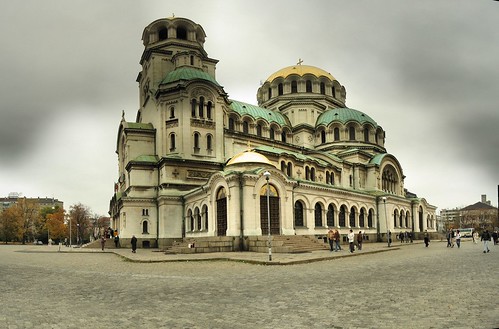 I'm flying to Sofia, Bulgaria later today to take part in a rather interesting project. CafeBabel, a web site I write for, is sending five journalists and one photographer to live in the city for about a week in order to participate in one of their ongoing EU Debate on the Ground forums. The forums have been taking place once a month in various cities throughout Europe, hosting debates about the EU with the local population as a run-up to the European Parliament elections in June. Several journalists are chosen from various corners of Europe and they assemble in the city, reporting on a specific issue and speaking at the forum. I'll be writing a feature on vote-buying in the country, as well as a second feature looking at how the global economic crisis is likely to effect Bulgaria.
We have quite a diverse group. There will be a Bulgarian from Sofia, a Spaniard living in Berlin, a Romanian living in Paris, an Italian from Turin, a Spaniard living in Paris, and an Italo-American living in Brussels (that's me). None of us know each other, but we'll be staying together in a large hostel room in the center of the city. We'll each be reporting on different issues, but I imagine we'll be swapping observations and ideas throughout the stay.
It should be interesting, it will actually be my first time back in Eastern Europe since I lived in Prague. One thing that's already throwing me is the country's use of the Cyrillic alphabet. It makes it very difficult to locate addresses on Google maps! I have appointments scheduled tomorrow and Friday with various government officials and NGOs, hopefully I've arranged them in some kind of logical order geographically. I learned from reporting in India that in a city with bad traffic, trying to zigzag across town going from interview to interview can quickly spell disaster.
 The EU Debate on the Ground panel will take place this weekend. The purpose of the panel is to get a snapshot of the feelings on the ground about the EU, and to analyze those opinions in a way that can be meaningful for the upcoming parliament elections. I'll be particularly curious to hear the impressions of Bulgarians, who were promised much after their entry into the EU two years ago but have seen their economy teeter on the brink of collapse since then as a result of the global economic crisis. After many years of double digit growth in Eastern Europe, the sudden reversal of fortunes could lead Eastern Europeans to be more skeptical about what the EU can do for them. Additionally, Bulgarians were less than impressed with how the EU handled the recent gas crisis in January which left thousands of Bulgarians without heat for several days during a bitter cold snap.
All in all, it should be an enlightening trip.
Wednesday, 21 January 2009
Rioting in Iceland
When there's rioting in Iceland, you know we're in trouble. The small Scandinavian country in the middle of the Atlantic isn't usually associated with domestic strife, but rather high quality of life and abundant natural resources. But yesterday thousands of people took to the streets to protest the government's handling of the economy, which has plunged in recent months as a result of the larger global turmoil. Gross national product is down two-thirds, there has been a 45 percent rise in unemployment and the country is defaulting on loan repayments. In October the country's financial system collapsed and its currency plunged under the weight of billions of dollars in foreign debt taken on by its banks.
These weren't just mild demonstrations. Riot police had to fight with a large number of violent protesters outside the country's parliament. Pepper spray was fired at the protesters and 30 arrests were made.
Coming on the heels of the riots in Greece last month, many in Europe are becoming increasingly worried that the economic turmoil could lead to violent clashes between disaffected people and their governments across the continent. Eastern Europe is seen as particularly vulnerable to such violence, with some even predicting a "spring of discontent" in the region to be around the corner.
Eastern Europe has been hit hard by the financial crisis, especially Bulgaria, Romania and the Baltic states - all recent EU entrants. As the Guardian recently reported, incidents have been steadily increasing. Last week police in Vilnius, Lithuania had to tear-gas a crowd of demonstrators protesting tax rises and benefit cuts designed to save the state from bankruptcy. Sofia, Bulgaria has also seen recent widespread violence in which 150 people were arrested. Riga, Latvia has seen street battles as well.
These Eastern European economies are increasingly experiencing unexpected turmoil after years of posting double-digit growth. Their anger will likely be compounded by the fact that they were expecting that growth to continue, particularly after they joined the EU. The post-cold war governments are still new and relatively weak, and could be unprepared to deal with widespread unrest. And the increasing hostility isn't just being directed at the governments. Attacks on minorities are also becoming increasingly common, particularly against Roma (gypsy) communities. Recently 700 members of the far-right Workers' Party in the Czech Republic fought with police when they were prevented from marching on a Roma area.
Of course Iceland is just about as far as you can get from Eastern Europe without leaving the continent. If the global economic turmoil can cause rioting in a country with one of the highest quality of life ratings in the world, could rioting be far behind in the major Western economies? And even if it isn't, how will the major economies of Western Europe respond to growing political unrest to their east, in countries with which they are now united? Clearly the EU has an obligation to help Eastern Europe through the financial turmoil, but if the situation becomes fundamentally dangerous, can the EU do anything to stem the violence without a proper policing military force?
The "spring of discontent" will be an anxious time for Europe.
These weren't just mild demonstrations. Riot police had to fight with a large number of violent protesters outside the country's parliament. Pepper spray was fired at the protesters and 30 arrests were made.
Coming on the heels of the riots in Greece last month, many in Europe are becoming increasingly worried that the economic turmoil could lead to violent clashes between disaffected people and their governments across the continent. Eastern Europe is seen as particularly vulnerable to such violence, with some even predicting a "spring of discontent" in the region to be around the corner.
Eastern Europe has been hit hard by the financial crisis, especially Bulgaria, Romania and the Baltic states - all recent EU entrants. As the Guardian recently reported, incidents have been steadily increasing. Last week police in Vilnius, Lithuania had to tear-gas a crowd of demonstrators protesting tax rises and benefit cuts designed to save the state from bankruptcy. Sofia, Bulgaria has also seen recent widespread violence in which 150 people were arrested. Riga, Latvia has seen street battles as well.
These Eastern European economies are increasingly experiencing unexpected turmoil after years of posting double-digit growth. Their anger will likely be compounded by the fact that they were expecting that growth to continue, particularly after they joined the EU. The post-cold war governments are still new and relatively weak, and could be unprepared to deal with widespread unrest. And the increasing hostility isn't just being directed at the governments. Attacks on minorities are also becoming increasingly common, particularly against Roma (gypsy) communities. Recently 700 members of the far-right Workers' Party in the Czech Republic fought with police when they were prevented from marching on a Roma area.
Of course Iceland is just about as far as you can get from Eastern Europe without leaving the continent. If the global economic turmoil can cause rioting in a country with one of the highest quality of life ratings in the world, could rioting be far behind in the major Western economies? And even if it isn't, how will the major economies of Western Europe respond to growing political unrest to their east, in countries with which they are now united? Clearly the EU has an obligation to help Eastern Europe through the financial turmoil, but if the situation becomes fundamentally dangerous, can the EU do anything to stem the violence without a proper policing military force?
The "spring of discontent" will be an anxious time for Europe.
Monday, 26 May 2008
Moscow 2009: A Eurovision boycott?
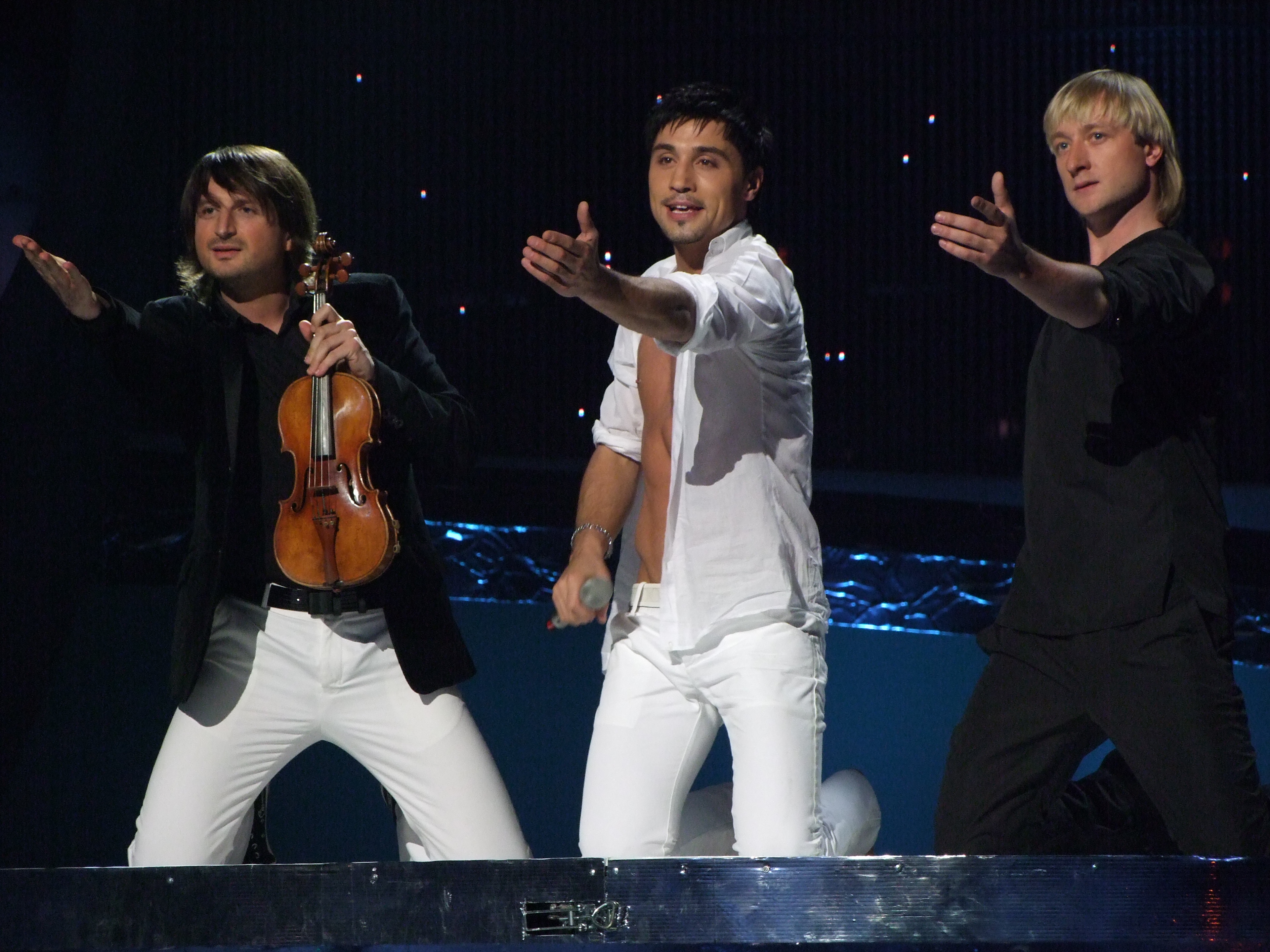
As yet another Eurovision comes and goes, the next day analysis here in the UK is as predictable as the sequins, feathers and glitter that accompany the song contest each year. Once again there is collective hand wringing over what the contest has become, and questioning over whether the UK should continue funding it. But as standard as all of the British complaining over the contest has become, there was a new starkness to the exasperation of perennial British host Terry Wogan this year when Russia emerged the winner, as he muttered at the end of the program, "Western participants have to decide whether they want to do this again.”
For my American readers, perhaps a little explanation is in order. Eurovision is a yearly song contest which has been held in Europe since 1956. Each country selects a song to represent them, and they all battle it out in the grand finale, with people all over Europe phoning in their votes to determine the winner. The contestants could be already famous in their given countries or they could be previously unheard of. Some famous past winners of the competition include Abba and Celine Dion.
Friday, 21 December 2007
Today Eastern Europe wakes to no borders
It’s official. As of this morning you can now drive from the Russian border in Estonia to the Atlantic beaches of Portugal, across 24 countries, without passing through a single border crossing. As of midnight, the 2004 EU entrants are now part of the Schengen Zone, the border-free area that allows you to pass through European countries as easily as if you were going from Indiana to Illinois.
 Considering the post-cold war implications of this day (all but one of the 2004 entrants are former Warsaw Pact countries), the scenes last night were dripping with symbolism. As Canada’s Global Mail reports, at the border of Germany and Poland the guards spent yesterday removing kilometres of tall steel fence, leaving unmarked and unguarded fields between them. Fireworks lit up the border bridge between Poland and Germany in Frankfurt on Oder early this morning. On the road between Vienna and Bratislava, Austrian and Slovakian leaders met to saw through border-crossing barriers. And in Estonia, the government put its border-inspection stations up for auction. Perhaps nowhere was the scene more striking than on the Czech-Slovak border, as the countries were split apart just in 1993 and now find themselves without a border between them once again.
 Considering the post-cold war implications of this day (all but one of the 2004 entrants are former Warsaw Pact countries), the scenes last night were dripping with symbolism. As Canada’s Global Mail reports, at the border of Germany and Poland the guards spent yesterday removing kilometres of tall steel fence, leaving unmarked and unguarded fields between them. Fireworks lit up the border bridge between Poland and Germany in Frankfurt on Oder early this morning. On the road between Vienna and Bratislava, Austrian and Slovakian leaders met to saw through border-crossing barriers. And in Estonia, the government put its border-inspection stations up for auction. Perhaps nowhere was the scene more striking than on the Czech-Slovak border, as the countries were split apart just in 1993 and now find themselves without a border between them once again.
Wednesday, 17 October 2007
Lisbon Looming
There's just one day until Brown goes off to Lisbon to endorse (or maybe not endorse) the Lisbon Treaty, and news reports like these should be making some people in Brussels awfully nervous.
Now that the disastrous election fiasco has delivered a firm punch in the jaw to Brown, the Conservatives are eager to continue the momentum and renew demands that he put the treaty endorsement to a referendum. The British tabloid press has also got in on the act.

On its Web site, the British tabloid The Sun has superimposed Brown's face onto a picture of Winston Churchill, turning around Churchill’s tribute to British airmen in World War II, "Never in the field of human conflict was so much owed by so many to so few,” into a jibe at Brown, saying, "Never have so few decided so much for so many." The graphic was accompanied by an online poll.
Now that the disastrous election fiasco has delivered a firm punch in the jaw to Brown, the Conservatives are eager to continue the momentum and renew demands that he put the treaty endorsement to a referendum. The British tabloid press has also got in on the act.

On its Web site, the British tabloid The Sun has superimposed Brown's face onto a picture of Winston Churchill, turning around Churchill’s tribute to British airmen in World War II, "Never in the field of human conflict was so much owed by so many to so few,” into a jibe at Brown, saying, "Never have so few decided so much for so many." The graphic was accompanied by an online poll.
Monday, 15 October 2007
All set for Schengen
We’re getting down to the last months of the year and, surprisingly, we may actually see the Schengen expansion come to pass by year’s end, according to recent reports.
 The Schengen Agreement is the system that came into effect in 1995 that got rid of border checks between certain European countries. So now, for instance, when you travel between Germany and France you don’t go through any border check, and when you fly between these countries you don’t have a passport control check point. It was named after Schengen, Germany, where the agreement was signed (there's now a little monument to it there which I've seen, pictured at right).
But, the Schengen membership is different from the EU membership, which makes it rather interesting. The UK and Ireland, for instance, are both in the EU but not part of the Schengen Agreement (they just love that whole ‘island nation’ thing). Norway and Iceland, on the other hand, are not in the EU but are part of the Schengen Zone. So, when I fly from London to anywhere in Europe, I have to go through passport control, which is quite annoying (particularly if you don’t have an EU passport, since they get a separate and shorter line). But if I flew from France to Norway, I would not go through a passport check. Switzerland, which is not part of the EU, is scheduled to join Schengen next year.
The Schengen Agreement is the system that came into effect in 1995 that got rid of border checks between certain European countries. So now, for instance, when you travel between Germany and France you don’t go through any border check, and when you fly between these countries you don’t have a passport control check point. It was named after Schengen, Germany, where the agreement was signed (there's now a little monument to it there which I've seen, pictured at right).But, the Schengen membership is different from the EU membership, which makes it rather interesting. The UK and Ireland, for instance, are both in the EU but not part of the Schengen Agreement (they just love that whole ‘island nation’ thing). Norway and Iceland, on the other hand, are not in the EU but are part of the Schengen Zone. So, when I fly from London to anywhere in Europe, I have to go through passport control, which is quite annoying (particularly if you don’t have an EU passport, since they get a separate and shorter line). But if I flew from France to Norway, I would not go through a passport check. Switzerland, which is not part of the EU, is scheduled to join Schengen next year.
Wednesday, 11 July 2007
Budapest pride Marred by Violence
 My friend Lee was at the Budapest gay pride parade on Saturday and he said it was really scary. He’s in an opera in Vienna right now, and he had been to the pride parade in that city the previous week and said it was very nice and pleasant, your standard pride parade.
So the following Saturday he went to the Budapest parade, which is literally 90 minutes away by train. But the difference couldn't have been more stark. Apparently there were as many protestors of the parade as there were marchers. It was like one of those old-timey gay pride parades in New York from the 70’s, where they were literally protesting something rather than just having a big street party. He took some pictures which you can see here. Apparently people were throwing eggs, bricks, beer bottles, anything really, and a couple people got beat up really bad. And lining the route of the parade (which really was more of a ‘march’ than a parade) there were no cheering onlookers, either indifferent stares or menacing taunts.
Tuesday, 20 February 2007
Secret prisons in Europe
 Europe delivered a rebuke to the United States last week, although it was hardly without controversy on the continent. The EU Parliament approved a report yesterday that accuses key European nations of colluding or turning a blind eye to the CIA practice of “extraordinary renditions” and allowing the CIA “secret prisons” to be allowed on the continent.
The report is significant because it requires the countries in question, the UK, Italy, Germany and other nations, to conduct investigations into what has been happening over the past five years. It comes at the same time an Italian judge has indicted 26 Americans and 5 Italians for involvement in the kidnapping of Egyptian cleric Abu Omar on the streets of Milan in 2003. Abu Omar was abducted in Milan, taken to Aviano Air Base and then flown via Ramstein in Germany to Egypt, where he says he was tortured. The indictment is the first time the practice of extraordinary rendition could face scrutiny in open court, with the trial set to begin in June.
So, the approval of the report by both the EU Parliament and the EU Commission is sort of the first shot in what could be a long battle between the EU and the US over what went on the last five years here. And essentially the question that could be asked is this: Has the US overstepped its bounds in its military relationships with European nations, and has Europe been too accommodating to the military wishes of the US? The question that I think needs to be asked is this. Is it time to end the US military occupation of Europe?
Saturday, 6 May 2006
Cheney's Russia Rant
 At the “Common Vision for a Common Neighborhood” (sounds very common) conference in Lithuania yesterday,Vice President Dick Cheney essentially told a gathering of former Soviet and Eastern Bloc countries that Russia is an anti-democratic menace to Democracy and has a decision to make very soon: to be either an ally or an enemy to the West.
"From religion and the news media, to advocacy groups and political parties, the government has unfairly and improperly restricted the rights of the people," Cheney bellowed. He talked of the problems facing a country that, “has compromised the rule of law” and has “little official respect for human rights, a corrupt beaurocracy, and an intimidated press corps.”
Cheney knows that Russia-bashing is a popular sport in the former Eastern Bloc countries. For the last 15 years the former Eastern Bloc countries have been worshipfully devoted to the United States in a misconception that America single-handedly ended Soviet domination over them. But as they join the EU, neo-cons are increasingly concerned that they will fall into the European camp of geopolitical thought and develop interests contrary to those of the United States over the long term. These eastern bloc and ex-soviet countries were some of the most vocal and demonstrative supporters of the Iraq war, for instance. But of late that support has been slipping.
Wednesday, 26 January 2005
Europe
Note: Welcome to my Euroblog. This blog spun out of a personal blog I've been keeping for years. After I decided to devote a new blog to European politics, I took all entries from my personal blog from the last few years that pertained to Europe and brought them over here. Enjoy. New blogs written for this site exclusively began in June of 2007.
--------------------------------------------------------------------------------------------
Last night I went out with a friend, and during our dinner conversation we started to swap stories about our respective travels through Europe. I realized as we were talking how intensely I miss it.
My semester abroad in Prague was the best semester of my entire undergrad experience, and probably the only redeemable semester I had at NYU - the only one where I actually learned something. I remember when I left Prague to come back to New York to finish my last semester. I was so incredibly miserable.
Even the whole time I was in Prague I was having slight anxiety about having to leave eventually. I would keep having these dreams where it was time to leave and go back to the US, but I wasn't ready to leave. Then I would wake up in a panic, and realize that it was only October and I didn't have to leave for a long time.
But eventually I did have to leave, and it was difficult. Once the semester was over I went to Paris by myself for a week, but had a hard time enjoying myself because I was so depressed about my semester ending. My last semester at NYU was quite melancholy. I didn't want to be there, I was angry with NYU for having wasted so much of my time and money. And I just wanted to be back in Europe, where I had felt so excited and engaged.
So now I've been thinking, why not just go back? I had entertained the idea before, and I was planning on doing the "Global Journalism" quarter in my program, where I would work for a broadcast news agency in London or Dublin for a quarter.
However, now that I'm doing this fellowship with PBS, I feel as if it would be foolish to pay full tuition for a quarter of working unpaid, when I'm essentially doing that now here, paying no tuition and being paid. And I would just be producing at one of these placements, which is what I'm doing now.
Of course, I could do a print placement, work for the AP in one of their European bureaus, maybe even Prague. But, now that all my quarters have been pushed forward, I would have to do the global quarter in the fall and then come back to do my last quarter in DC.
My original plan was to do the global quarter last and then stay in whatever country I did my placement in. I figured I could either try to get a job where I was placed or use my time there to do some job searching. But, maybe instead of spending all that money for tuition, I could take that money and use it to just get a ticket to London, find a flat, and try like hell to find a job. Maybe I could even travel around Europe for a bit first, handing out resumes.
The more I think about it, the more I become convinced that Europe is where I want to spend the rest of my life. When I think about my passion, the thing that I daydream about or maintain an affinity for, it's not really journalism, or filmmaking, or anything like that. My passion is really Europe. In my spare time I study Europe, I go into random chat rooms in Europe just to talk to people there, it's all I think about really.
The fact is I'm excited about where Europe is going, and I'm concerned about where the US is going.
I'm reading T.R. Reid's "The United States of Europe" right now. It's really fascinating the way he ties together all of the trends happening in Europe right now in a way that creates a larger picture of a new Europe that could potentially be on its way to becoming the newest superpower, a counter-balance to the United States. Since the most recent expansion in May 2004, the EU now has a larger population, higher GDP, and more trade than the United States. And it's a society which has a different moral orientation than the United States. It's a society that takes care of its citizens, provides a safety net. It operates a social model which I personally find more appealing than that of the US.
So I guess there's plenty of time to mull that over. But somehow I've got to make it happen. When I graduated college I had contemplated going to Europe and trying to find a job, but I wasn't ready. The idea of living so far away from all my friends and family was pretty daunting. But being in Chicago has, I think, prepared me for such a drastic move. We shall see.
--------------------------------------------------------------------------------------------
Last night I went out with a friend, and during our dinner conversation we started to swap stories about our respective travels through Europe. I realized as we were talking how intensely I miss it.
My semester abroad in Prague was the best semester of my entire undergrad experience, and probably the only redeemable semester I had at NYU - the only one where I actually learned something. I remember when I left Prague to come back to New York to finish my last semester. I was so incredibly miserable.
Even the whole time I was in Prague I was having slight anxiety about having to leave eventually. I would keep having these dreams where it was time to leave and go back to the US, but I wasn't ready to leave. Then I would wake up in a panic, and realize that it was only October and I didn't have to leave for a long time.
But eventually I did have to leave, and it was difficult. Once the semester was over I went to Paris by myself for a week, but had a hard time enjoying myself because I was so depressed about my semester ending. My last semester at NYU was quite melancholy. I didn't want to be there, I was angry with NYU for having wasted so much of my time and money. And I just wanted to be back in Europe, where I had felt so excited and engaged.
So now I've been thinking, why not just go back? I had entertained the idea before, and I was planning on doing the "Global Journalism" quarter in my program, where I would work for a broadcast news agency in London or Dublin for a quarter.
However, now that I'm doing this fellowship with PBS, I feel as if it would be foolish to pay full tuition for a quarter of working unpaid, when I'm essentially doing that now here, paying no tuition and being paid. And I would just be producing at one of these placements, which is what I'm doing now.
Of course, I could do a print placement, work for the AP in one of their European bureaus, maybe even Prague. But, now that all my quarters have been pushed forward, I would have to do the global quarter in the fall and then come back to do my last quarter in DC.
My original plan was to do the global quarter last and then stay in whatever country I did my placement in. I figured I could either try to get a job where I was placed or use my time there to do some job searching. But, maybe instead of spending all that money for tuition, I could take that money and use it to just get a ticket to London, find a flat, and try like hell to find a job. Maybe I could even travel around Europe for a bit first, handing out resumes.
The more I think about it, the more I become convinced that Europe is where I want to spend the rest of my life. When I think about my passion, the thing that I daydream about or maintain an affinity for, it's not really journalism, or filmmaking, or anything like that. My passion is really Europe. In my spare time I study Europe, I go into random chat rooms in Europe just to talk to people there, it's all I think about really.
The fact is I'm excited about where Europe is going, and I'm concerned about where the US is going.
I'm reading T.R. Reid's "The United States of Europe" right now. It's really fascinating the way he ties together all of the trends happening in Europe right now in a way that creates a larger picture of a new Europe that could potentially be on its way to becoming the newest superpower, a counter-balance to the United States. Since the most recent expansion in May 2004, the EU now has a larger population, higher GDP, and more trade than the United States. And it's a society which has a different moral orientation than the United States. It's a society that takes care of its citizens, provides a safety net. It operates a social model which I personally find more appealing than that of the US.
So I guess there's plenty of time to mull that over. But somehow I've got to make it happen. When I graduated college I had contemplated going to Europe and trying to find a job, but I wasn't ready. The idea of living so far away from all my friends and family was pretty daunting. But being in Chicago has, I think, prepared me for such a drastic move. We shall see.
Subscribe to:
Comments (Atom)