Showing posts with label Kaczynski Twins. Show all posts

Thursday, 7 July 2011

Poland fires warning shot over Denmark's 'nationalist' moves

Poland is not usually known as a very pro-EU country. In fact, it has gotten the reputation as the most Eurosceptic of the new member states. But yesterday Polish Prime Minister Donald Tusk lambasted recent moves by Denmark, France and Italy to undermine the European project. He signalled he intends to halt the current slide, led by those Western countries, toward reintroducing border controls at internal EU borders.

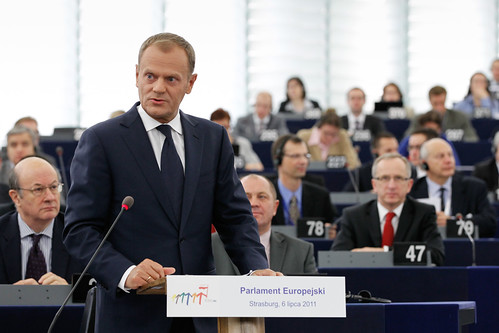
Tusk was speaking to the European Parliament in Strasbourg to mark the start of Poland's presidency of the EU, which will last the next six months. "The answer to the crisis is more Europe," he said, not less. He indicated that he will fight against efforts to further erode EU principles, and suggested he was unhappy with the deal reached among member states last month to allow temporary internal border patrols to deal with increased immigration.
"I am against any barriers to internal free movement under the pretext of dealing with migration problems. What Denmark is doing is a concern for anybody who thinks that free movement is going to be restricted even further," he told the parliament. "Europe, with its institutions, its budget and its objectives, is not the source of this crisis. And following those who say the opposite would be a fatal mistake. Undoing the European construction at this time and turning to nationalism as an answer to the crisis would be a very big mistake."
It was a fairly unusual move for the incoming presidency to take such a political stance against what other member states are doing, because the presidency is supposed to be a neutral negotiator in the council. But Poland has always marched to the beat of its own drummer when it comes to the EU.

Monday, 12 April 2010

What next for decapitated Poland?


I literally gasped this weekend when I turned on the TV in my hotel in Amsterdam and saw that a plane carrying the Polish president and 95 top officials in the Polish government had crashed in Russia. Before long the reports had been verified – the Polish government has been virtually decapitated by this mysterious crash.

It’s safe to say the notorious Polish president Lech Kaczynski was not much-loved in Brussels. His fierce Euroscepticism and opposition to climate change efforts had made him public enemy number one here for awhile. But you wouldn’t know that from the way the EU capital is reacting today. EU flags are flying at half mast, virtually every EU leader has issued statements of shock and sadness, and a moment of silence was observed during today’s midday press briefing. Whatever disagreements existed between Kaczynski and Brussels, it seems to have been forgotten in the face of this shocking event.

Tuesday, 23 June 2009

Tories Form “Anti-EU” EU Party

Well he’s gone ahead and done it. David Cameron has made good on his leadership contest pledge four years ago to leave the mainstream centre-right party in the European Parliament and form a new anti-federalist minority party, the “European Conservatives and Reformists” group. Considering the big impact this will have on the UK’s influence in the EU, I’ve been shocked (and frankly a bit disgusted) by the barely perceptible amount of coverage yesterday’s announcement received in the British media.

The new block will be the fourth largest in the parliament, which sounds big until you realize that the parliament is made up of three main blocks (the conservatives, the socialists, and the liberals) and then a whole lot of side parties. Really, it’s a bit like bragging that the Democratic Unionist party is the fourth largest block in the British House of Commons, both in terms of size and influence. Ideologically it would be more like the 7th largest Commons party Sinn Fein actually, considering the Tory MEPs apparently don’t think their constituents should be part of the EU in the same way Sinn Fein doesn’t believe their constituents should be part of the UK.

The Tories’ allies in the party are a ragtag group of mostly Eastern European far-right parties including Poland’s PIS and the Czech Republic’s ODS, but the Tories are the overwhelming majority in the party (they needed to join with MEPs from at least 8 member states to form a Brussels party, and they met the bare minimum). Leaving the EPP, which is currently the largest party in the parliament and is also the party of the Commission President (the most powerful position in the EU), will mean a huge loss of power for the UK in shaping EU policy. Tory MEPs will lose all of the committee seats they had held by virtue of being part of the largest bloc, and as members of a small party they will be unlikely to be chosen as rapporteurs – the people who escort legislation through the parliament and shape the changes the parliament will make. This defection, along with the increased seats for the UK Independence Party and the two new seats for the BNP, means the UK will effectively not be using 30 of its 72 seats.

I nearly spit out my drink last night when I saw the way Channel 4 News mentioned the official formation of the party. It was literally the last item in their quick news roundup, a 10 second sentence tossed in as a seeming afterthought. It was the same on the BBC, and this is after the British media basically completely ignored the issue during the run-up to the Parliament election. Newsnight was the only show I saw that gave the issue more than passing lip service, and that was only in a roughly two minute interview with a correspondent in Brussels.

To the extent that today’s papers have covered the development at all, they’ve tended to focus on salacious details about the unsavoury characters the Tories have chosen to align themselves with, Both the Daily Mail and the Guardian devoted most of their articles to this aspect, rather than on the loss of influence for the UK in Brussels. The Financial Times was the only paper I saw that focused on the loss-of-influence angle, quoting Labour party officials as saying the Tories have ‘moved to extremism in allying with the extreme right’. The FT quotes foreign secretary David Miliband as saying Cameron has throw away influence in Europe "in favour of ideological isolationism".

What’s Next for the ECR?

So what was the point of this move? It’s hard to tell what productive purpose this could possibly serve other than scoring political points back home, tapping into the ever-popular Europhobia in Britain. The stated reasoning is that the EPP was too federalist in its attitude, and the Tories wanted to form a new party to oppose moves that would give Brussels any more power, and advance moves that would give power back to the individual member states. That’s all well and good except for the fact that the parliament has very little to do with such issues. The parliament doesn’t make legislation, it merely approves it. It is in the Commission, the EU’s executive branch, where law is made. And it is in the Commission where any decisions about the makeup, membership or structure of the EU are taken. So there’s really very little a minority party could hope to achieve in the parliament in terms of “opposing federalism”.

The Tories argue, however, that losing British influence in the short term is worth the sacrifice if in the long term they can eventually form a viable, strong anti-federalist party that could put the kibosh on Commission attempts to further integrate and harmonize EU law. While this could be true, with the way the parliament works their little party would have to grow exponentially in order to have that kind of influence, and with their lack of interest in Europe it’s hard to see the Tories grabbing the bull by the horns for that project. It’s strange that a national party that is not very interested in Europe and indeed quite internally divided by the subject would choose to take on this quite ambitious project of “reforming” the EU.

And perhaps therein lies the problem with British euroscepticism. So much of what the UK does to resist EU federalism are empty gestures, symbolic grumblings of discontent that do nothing to advance British interests and instead shut the Brits out of influence in Brussels. They are quite simply cutting off their nose to spite their face.

It will be interesting to observe where this drama goes from here, though after months of following this subject I suspect this is the end of the story rather than the beginning. The Tories are unlikely to take much of an interest in this new party they’ve formed, and it will probably sit in the back of the parliament somewhere in stagnation, all but forgotten by the rest of Brussels. A few of the Tory MEPs will probably stop showing up to vote at all now that their position in the parliament has been so substantially weakened.

Who knows, I could be wrong. The far-right fascist parties that were given seats across Europe have given indications that they would like to join, which would not only increase the size of the party but also spice it up a bit. But the Tories are almost certain not to let them in - and why would they, when they already got their requisite number of foreign MEPs from eight countries? I suspect the end goal here was really just to form a party, not for the party to actually accomplish anything.

Thursday, 4 June 2009

My first vote in Europe

This morning I voted in my first European election, a right newly available to me now that I have my Italian passport. An EU citizen can vote for an MEP in any EU country they live in. It was a fairly uneventful affair. Though it was 8:45am and hence prime commuting time, I was actually the only person at the Chelsea polling station.

In the UK they still use paper balloting, so they hand you a sheet, you take it over to a little desk, mark off a big x, and slip it into a box. It seemed very old-timey to me, as where I’m from in Connecticut they haven’t used paper balloting since before I was born. Even the big pull-lever voting machines with the automatic curtains - which seemed so cool to me as a child when I would go into the booth with my parents - now seem antiquated in the US with the advent of electronic voting machines. Funny enough, the paper I was given this morning was about a metre long, making it appear as if I had a lot to vote on. But in reality there was only one X to be made, next to the party you were choosing. Each party though has to list the six candidates it would field if it wins, making the list quite long with all of the small parties. It’s done on a proportional allocation basis, with the winning parties getting to put forward a certain number of MEPs based on how much of the vote they got in each district. The UK and Holland are the only countries voting today, the rest of Europe will vote on Sunday and the British results won’t be revealed until then.

I won’t say who I voted for but I will say it was a tough decision. In Brussels they complain that one of the (many) problems with the European parliament is that people vote on purely national issues, which are mostly irrelevant to the issues being considered by the European Parliament. Even knowing this, I have to admit that national political considerations in Britain probably contributed about 50% to my decision. It’s just really hard to ignore the national politics when so often the most immediate and tangible result of these euroelections is the verdict they deliver on the national party in power.

Off with their Heads!

Owing to the economic crisis, this ‘verdict’ element is more prevalent this year than ever before. Across Europe there are several countries where the governments are teetering on the brink of collapse, and a poor performance in the EP elections could topple them from power. Across Europe the parties in power are expected to do poorly while the opposition parties are expected to do well (with the bizarre exception of Italy where, though their leader is embroiled in a sex scandal involving a 17-year-old girl, it is expected that his hard-right ruling coalition will do unprecedentedly well). In Greece, where the conservative government is weak following violent demonstrations against the economic crisis, a big win for the Pan-Hellenic Socialist Movement on Sunday could cause the collapse of the current government and a general election. Similarly in Spain, a big win for the conservative Popular Party could trigger a no-confidence vote for the ruling government of the Socialist Workers Party. In Germany and Portugal, big wins from the opposition would have a dramatic effect on upcoming scheduled elections in the fall. It seems that across Europe, whether the right or the left is in power, the verdicts delivered by Sunday’s election could be the opening shot of a coup by the rival ideology.

But nowhere is the euroelection being watched more closely as a barometer than in Britain, where it is being held concurrently with many local council elections across England. Gordon Brown’s government is in freefall this week. The ongoing expenses scandal has caused Brown’s already weak government to fall apart, and each hour that passes seems to get worse. The last two days have seen the resignations of several cabinet ministers, and it is thought that Chancellor Alistair Darling will be sacked within days. Brown will have to form a new cabinet next week, but if Labour MPs refuse to serve on his cabinet, he will have to step down as Labour leader. A new Labour leader would then be selected by the party, who would inevitably have to call a general election that Labour will almost certainly lose. It is thought that Labour MPs are waiting for the result of today’s vote to make their decision. If Labour does dismally (some are predicting they could even come in fourth or fifth behind the far-right British National Party) then they will force his resignation by refusing to serve on his new cabinet.

It is expected that the Tories will probably receive the largest share of today’s EP vote, thought the majority of people almost certainly don’t realize what they’re voting for with that decision. David Cameron is set to take the Tories out of the parliament’s main centre-right EPP grouping shared by Angela Merkel and Nicolas Sarkozy and form a new Eurosceptic fringe grouping by allying with far-right parties of Eastern Europe. This issue has received almost no coverage from the British media, so it is certain that most of today’s Tory voters aren’t aware that they’re voting for a coalition that will include the anti-gay, climate-denying Polish nationalist Law and Justice party. That said, perhaps even if they knew they wouldn’t be bothered by it.

Rock Stars and Royalty

Of course there are interesting non-government-toppling things to look out for in Sunday’s results as well. In the Netherlands, for instance, the country is rife with speculation over the performance of controversial populist Geert Wilder’s anti-Islam Party for Freedom, which many are expecting to do quite well. In France, people are watching to see if the newly solidified Socialist Party leadership of Martine Aubrey will give people confidence that Sarkozy’s opposition is back in the game and safe for a vote after a year of chaos and in-fighting. I think that’s unlikely and they will probably do quite poorly, especially considering that Communist Olivier Besancenot’s new Anti-Capitalist Party is expected to do well and will probably siphon off votes from them. But just how well they will do is a matter of speculation, and I imagine it will keep Sarkozy up quite late Sunday night if they have a good result.

Then of course there’s the amusing MEP entries of this year’s election. The European Parliament, often half-jokingly maligned as a refuge of freaks, cast-aways and has-beens, has attracted its fair share of celebrity candidates this year. Slovakia, which was mortified after the last EP election five years ago when it had the lowest turnout in all the EU at just 17%, has pulled out all of the stops to try to get people to the polls this year, fielding an African-born pop singer, a fitness trainer and a former ice hockey star. Who knows that their objectives for Europe are, but I suspect the main intent with fielding them was just to make sure Slovakia doesn’t come last in turnout again.

Another interesting one to watch will be Sweden’s Pirate Party, a group formed entirely in reaction to the recent prosecutions in that country of file-sharing site managers. The candidates actually dress as pirates and have used pirate speak when campaigning (and they’re expected to gain some seats on Sunday!). There’s also Elena Basescu - Romania's equivalent to Paris Hilton – who is expected to win a seat as she is the daughter of the Romanian president. Other quirky candidates include a former Czech astronaut; a Finnish racing champion and a Bulgarian Taekwondo idol.

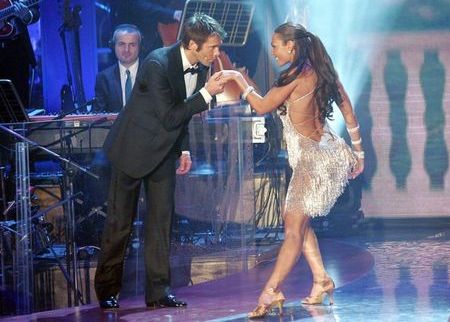
And of course my nerdy European history fascination can’t help but be interested in the fact that the reigning heirs of two of Europe’s formerly most powerful but today ousted (and banned) monarchies – the Habsburgs and the Savoys – are both in the running in Austria and Italy respectively. The candidacy of “Prince of Venice and Piedmont” Emanuele Filiberto in Italy is particularly interesting as he was banned from entering Italy his whole life (oweing to the expulsion of members of the former Italian monarchy when the Republic was declared in until Berlusconi lifted the restriction for him and his father in 2002. Shortly after that he celebrated his triumphal return to his family’s former kingdom by entering Italy’s version of Dancing with the Stars.

Asked why he would make a good MEP, he said, "I was in exile for 31 years and I know Europe well. I speak five languages. I know half of the current heads of state personally, and the other half I'm related to." It’s an argument any Royalist could agree with!

Check out this BBC site for real-time election results on Sunday and Monday. I'll be in Berlin this weekend, but will certainly be keeping tabs on it from there!

Wednesday, 6 May 2009

Cameron Set to Leave Europe's Centre-Right

The European Parliament elections traditionally have a low level of interest in the UK, but David Cameron’s decision to form a new European grouping with far-right parties in Brussels may make next month’s elections a little more interesting.

The details are still being worked out, but it looks certain that Cameron will push ahead with a plan to take the Tories out of the European parliament’s centre-right grouping, the European People’s Party (EPP), and form a new eurosceptic party. The plan would unite the Tories with several far-right parties across Europe, one of which warns that homosexuality will cause the “downfall of civilisation.”

It’s a strange move considering that the Tories are not a far-right party but rather a centre-right one, and that some of the European parties they will be joining with more closely resemble philisophically the British National party (BNP) than themselves. It is even more strange considering the Tories are probably poised to take over the British government next year, and yet they are bolting from the EPP which is composed of the governments of Europe’s most important countries including the parties of Germany’s Angela Merkel and France’s Nicolas Sarkozy.

According to The Independent on Sunday, separation talks with the EPP have been completed and 20 MEPS from seven countries have signed on, giving the new grouping enough members to receive EU funding as a party. That grouping will include the Polish Law and Justice Party (PiS), the party of the infamous Kaczynski twins who until recently were president and prime minister of the country. That party has banned gay rights marches for being "sexually obscene” and a prominent member has warned that Barack Obama's victory would mean "the end of the civilisation of the white man". The grouping will also reportedly include a Latvian hardline nationalist party.

So what do all these parties have in common? Seemingly, only that they don’t think the EU should exist. The only problem is that Tory party is hardly of one mind on that subject. Cameron pledged to leave the EPP in his 2005 campaign for the Tory leadership, winning over the Conservative right wing and giving him the edge to defeat David Davis. So Cameron could be in hot water if he reneges on his promise. On the other hand many Tory MPs and MEPs are very worried about this decision to leave the EPP, fearing it will leave the Conservatives as an isolationist party outside the mainstream of Europe.

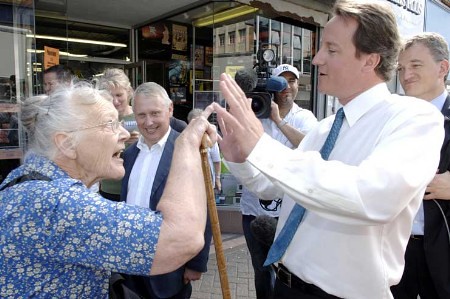
At the event launching the Conservative’s 4 June election campaign yesterday, Cameron was clearly trying to make the upcoming vote a referendum on Gordon Brown’s handling of the economic crisis. “With every Conservative vote, the message will be simple, 'Enough is enough - you're the past'," he sad at a community centre in north-east England, referring to Gordon Brown. "With every day that passes, this government is running our country into the ground. Borrowing eye-watering amounts of money, presiding over social decline, letting our politics descend into the quagmire.”

Labour would be wise to quickly educate voters about Cameron’s plans for the far-right European alliance, reminding them that though they may be dissatisfied with Labour, they may be cutting off their nose to spite their face by casting a vote that could indirectly create a new far-right block in Europe. However, considering the reticense of any British politician to talk about Europe (It was telling that Cameron’s speech today focused almost entirely on domestic issues in the local elections rather than the EP), I think it’s unlikely Labour will be able to get this message out clearly over the next month.

Wednesday, 20 August 2008

US gets its missiles in Poland

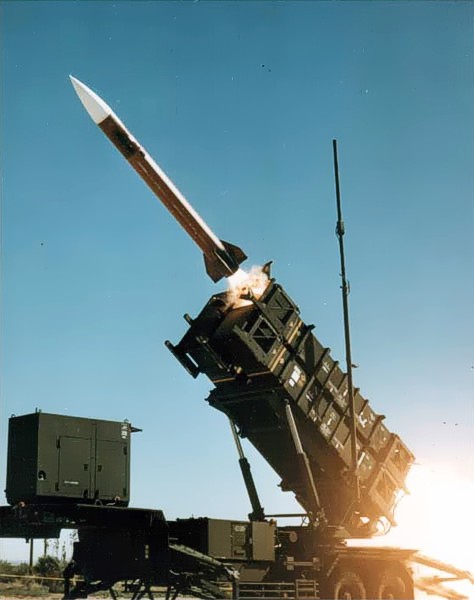
It’s official, the United States will install missiles in Poland pointed at Russia. The historic and highly controversial deal was signed in Warsaw this afternoon by Condoleezza Rice, ushering in a new era in Russo-Western relations.

The decision by Poland to allow the US to build its missile base there, and a mirror decision by the Czech Republic to build a twin radar facility in that country, seemingly couldn’t come at a worse time for relations between Russia and the West. Set as it is with the backdrop of the Georgia conflict, the timing is likely to enrage Russia even further.

The US insists the missiles are not directed at Russia but are rather for Europe’s protection from rogue states such as Iran. But there is no denying that the missiles are within easy striking distance of Russia, right at its doorstep. As part of the deal, the Americans will get a permanent garrison of US troops along with an agreement that the US will give Poland complete protection in the event of any conflict. All of this is outside the framework of NATO. Russia is obviously far from pleased that this is happening in its former satellite state. After all, they point out, the US didn't tolerate Russia putting missiles in Cuba. Why should the Russians tolerate this?

Wednesday, 2 July 2008

Sarko to the rescue

Can Sarkozy save Europe? This was the question being asked in France over the weekend, featured in big bold letters in Sunday’s Le Parisien. As France took the helm of the rotating European presidency yesterday, it seemed as if the only person who would confidently answer yes to that question was M. Sarkozy himself.

For the moment, the French president and the French capital were brimming with euroconfidence yesterday, with the Eiffel Tower lit up with the EU colours and stars, and with Sarkozy listing off a laundry list of ambitious goals that he’s had planned for this presidency for some time. The energetic and ambitious new French president has been urging a shakeup of European institutions for some time, demanding that the union focus on issues popular with the public in order to re-establish legitimacy and that it change its monetary policies to combat inflation. 

But Sarkozy’s day in the spotlight was overshadowed by the tumultuous events around him. After the Irish ‘no’ vote France’s time on the EU throne will not be as Sarkozy envisioned it. Instead of strengthening and reforming the union, he will likely spend the next six months desperately trying to save it. As the president outlined his ambitious policy agenda yesterday, he was being upstaged by comments from Poland’s president Lech Kaczynski, saying that for him to ratify the treaty after the Polish parliament passes it would be “pointless”. Both Lech and his twin brother Jaroslaw, who was until recently prime minister of the country until he was voted out, have been deeply unfriendly toward the EU, while the new prime minister, Donald Tusk, is pro-EU.

Friday, 23 November 2007

Poland changes its tune

The effects of the election in Poland that ousted the Kaczynski stranglehold on power is already being seen, with the new government saying it wants to be the first to ratify the Lisbon Treaty.

The speaker of the Polish parliament Bronislaw Komorowski said yesterday "I hope that Poland will be the first country to ratify the treaty. This would be a symbolic gesture, signifying Poland's return to the heart of Europe."

At the same time, that signature is going to have one notable caveat - Poland will still be exempt from the the Charter of Fundamental Rights. Komorowski said that to try to undue the exemption worked out by the country's previous far-right regime would be too much of a risk, saying "We won't run the risk of the president not ratifying the treaty (..) That would be the worst for Poland and for Europe."

That document, which outlines citizens' rights and is technically legally binding by the treaty, is seen in conservative circles as a backdoor to allowing abortions, euthanasia or gay marriages.

The fear is that the older Kaczynski twin, who is still president, would refuse to sign any agreement which embraced the human rights declaration, throwing the whole treaty into jeapordy. Poland, as wella s all of Europe, he argues, can't risk it.

Interestingly, the new government is also signalling a change in its relationship with Russia and the US, possibly softening toward the former and hardening toward the latter. He says Warsaw is also willing to "open dialogue" with the Kremlin on two thorny issues – the US ambition to place parts of a missile shield in Poland. That project, which the US desperately wants, may now be in jeopardy.

Monday, 22 October 2007

Poles go to the polls

It’s official, the right-wing government of the Kaczynski twins in Poland has been toppled. Poles turned up in record numbers in yesterday’s snap election (the highest turnout since the fall of communism in 1989), overwhelming the Polish election authorities and forcing polling stations to be open late into the night. And even before the exit polls were in yesterday, it was clear that the high turnout meant that the twins were in trouble.

The Kaczynski Twins are JarosÅ‚aw, the prime minister of Poland, and Lech, the president of Poland. They are former child actors (see photo) who in 2000 created the Law and Justice Party, a far-right, fervently Catholic party that has been running the country for a number of years now. With an absolute lock on power, the twins have pursued an aggressive agenda of going after former communists and alienating their neighbors and allies. During their time in power the twins have managed to irritate just about every other country in Europe, most notably with their comments about Germany and World War II. They’ve also been unfriendly toward the EU, holding up negotiations on the reform treaty by demanding that Poland get more seats in the European Parliament. They've also had an aggressive agenda on 'morality policy'. One Law and Justice minister even wanted to ban the Teletubbie Tinkie Winky from the country because of he is allegedly gay.

Thursday, 5 July 2007

Pesky Poland

I had an interesting conversation with a Polish person I met last night, and it shed a bit of light into the Polish character and why the country has been such a thorn in Brussels' side over the past few weeks.

To recap, the big news in Europe over the last month has been the meetings over the new treaty being hammered out to replace the EU constitution, which died when it was voted down by referendums in France and The Netherlands two years ago. There were two member states that were the biggest obstacles to progress in the talks. The first was, predictably, the UK, which has been the most historically uncooperative member and wanted all sorts of special exemptions from the treaty for itself. But the second was Poland, a new member state that was admitted just three years ago.

Poland is currently run by a pair of eccentric, very conservative twins. They caused quite a stir at the meetings by demanding that the EU adopt a voting system in which each country gets an amount of votes proportional to the square root of the population, rather that proportional to the actual population. This would give smaller countries more voting power and bigger ones less, and would essentially give Poland (population 38 million) the same voting power as Germany (population 82 million). The twins were intractable on this, and although all the other members states warned them that this type of hard-headed obstinacy doesn’t work in the EU and they should use softer diplomacy, in the end I guess they were wrong because the twins won and got no permanent decision on the voting system for at least another seven years, even though all 26 other members were opposed to this. The twins are now claiming that there was an “oral agreement” for further concessions to Poland and they want to redo the deal that was finally worked out.