Showing posts with label World War II. Show all posts

Thursday, 19 July 2018

An Americaless NATO: should they be pushed before they jump?

Donald Trump threatened to pull the United States out of NATO at last week's summit in Brussels. Perhaps European leaders should call his bluff. A European Treaty Organisation may be the only logical way forward.


As Donald Trump stood beside Vladimir Putin on Monday and stated that he believes the Russian president over his own intelligence agencies, you could feel a collective shudder pass across Europe.

"If Trump isn't even willing to side with his own intelligence agencies over Russia right now, why would anyone think he would side with us?” one Latvian friend sent me in a text. “NATO is finished. And if NATO is finished, Latvia is finished."

There has been much speculation since Monday over why Trump would defy his own intelligence, his own party and even his own advisors in refusing to acknowledge that Russia interfered in the 2016 US election. But whatever the reason, Trump’s summit with Putin, immediately following his aggressive attacks on NATO during his visit to Brussels, have left many Europeans with only one conclusion: we’re on our own now.

Friday, 2 October 2015

German unity, but not reunification

Tomorrow is the 'Day of German Unity', marking 25 years since East and West Germany were merged. But don't call it 'reunification day'.

The area around Brandenburg Gate, once home to the 'no mans land' between the two layers of the Berlin Wall, is tonight being decked out for a massive celebration. Tomorrow, 3 October, is the annual celebration of 'German Unity Day'. This year's holiday is no ordinary one. It is marking 25 years since German reunification.

But don't make the mistake of calling it 'Reunification Day'. I called it by this name with a German friend today. I was swiftly deutsched, and told that despite the fact that it is held on the anniversary of the day the East German government was merged into the West, the proper name is 'unity day'.

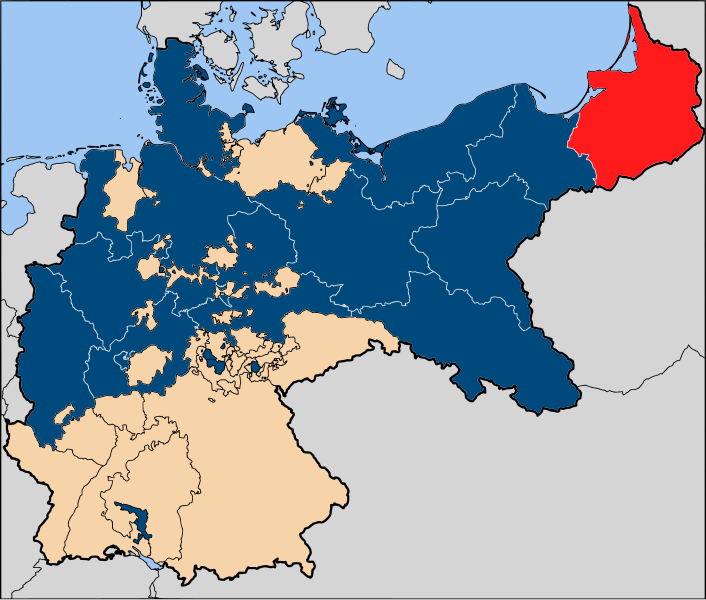
I was only repeating the term I have read in English-speaking media, as there have been several reports this week about the 25th anniversary. But there are two important reasons why this is not called Reunification Day: it corresponds to an older holiday name, and because pre-war Germany has not been entirely reunited.

Thursday, 24 September 2015

Incredible Krakow museums

I hadn't been to Krakow since 2002, and my how the city has changed.

This week I spent a few days in Krakow, Poland. I had to do a bit of work there for my book, and a friend visiting from home in New York wanted to come check out the city.

The last time I was in Krakow was in 2002, while I was living in Prague as a student. Me and a few friends rented a car and drove the six hours to Poland, stopping at Ostrava in Moravia along the way. We also visited Auschwitz, and to be honest that is the only part of the trip I remember well. Krakow city was a bit forgettable for me. I remember that we were not terribly impressed with the cultural activities or the nightlife.

Wednesday, 26 August 2015

A Hanseatic holiday

I've made it my mission to visit all the principle cities of the Hanseatic League. I started with the most powerful one.

This week I took a little trip to Hamburg and Lübeck. I had planned to do a lot of these trips within Germany when I moved to Berlin, but in fact this is the first one I've done since I moved here on 2 July.

No coincidence then that Hamburg is also the easiest German city to get to from Berlin. The high-speed ICE train travels the 260km in just an hour and a half, making no stops along the way. It doesn't make any stops because there is essentially nowhere to stop between these two cities, the train zips across the wide open flat fields of Northern Germany. High-speed lines are always the easiest to implement in unpopulated areas.

Monday, 10 August 2015

Wandering the Wannsee

When it comes to parks and lakes, Berlin can't be beat.

One of the pleasures of living in West Berlin is that I am just a 15-minute train ride from the beautiful Wannsee, the beautiful lake in the West of the city. It boasts a beautiful sandy beach (the largest inland beach in Europe), stunning castles, breathtaking biking trails and even an island full of peacocks.

This is the Berlin I've dreamed about living in for so long.

Tuesday, 21 July 2015

Berlin's slightly awkward Holocaust memorial

The Memorial to the Murdered Jews of Europe can sometimes seem more like a playground than a place for somber reflection.

Today I made a visit to the holocaust memorial in the center of Berlin. I had been there once before, shortly after it opened in 2006. My impressions this time were the same as the last; this would be a powerful memorial, were it not for all the other people in it.


The memorial is a forest of 2,711 concrete slabs, arranged in a maze with varying elevation. The architect, Peter Eisenman, took his inspiration from the Jewish cemetery in Prague, where the gravestones are crammed in tightly at odd angles. I used to visit that cemetery often when I lived in Prague in 2002, it's very moving (photo below).

Friday, 6 May 2011

Europe uncomfortable with US Bin Laden celebrations

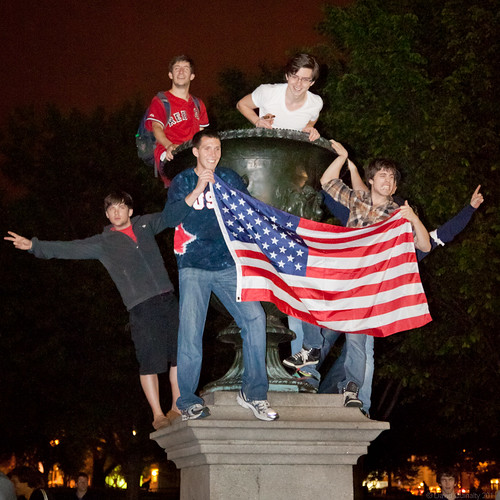
I've had a rather surreal experience this week watching reaction to the news that Osama Bin Laden was killed by American forces. On Monday morning I woke up and opened Facebook (before anything else, naturally), and saw a string of cryptic statuses chanting things like "USA! USA!" or "I'm so proud to be American today". But for whatever reason none of them said what had actually happened. So I had to open up Google News to learn what had inspired these rather unlikely chants from my "liberal elitist" friends in New York City.

The news was, of course, that Osama Bin Laden had been killed. The announcement by President Obama Sunday night prompted sudden exuberant celebrations in cities across America, the biggest outside the White House and in Times Square. It was reminiscent of the Victory Day celebrations at the end of World War II, a cathartic celebration unleashing a decade of angst Americans had felt since the 9/11 attacks. I found the magnitude of the celebrations a little surprising, but perhaps I had underestimated the effect that America's inability to capture Osama Bin Laden has had on the US psyche. A profound sense of anxiety and humiliation seems to have been lifted from Americans' minds with this killing. And both the left and right are jubilant over it. The American media seems to have regarded these celebrations as a universal good, heralding the way they have brought left and right together and united Americans in the same way that they were united after 9/11. The question does not seem to be asked whether Americans can be 'unified' in a counter-productive instinct.

Thursday, 10 March 2011

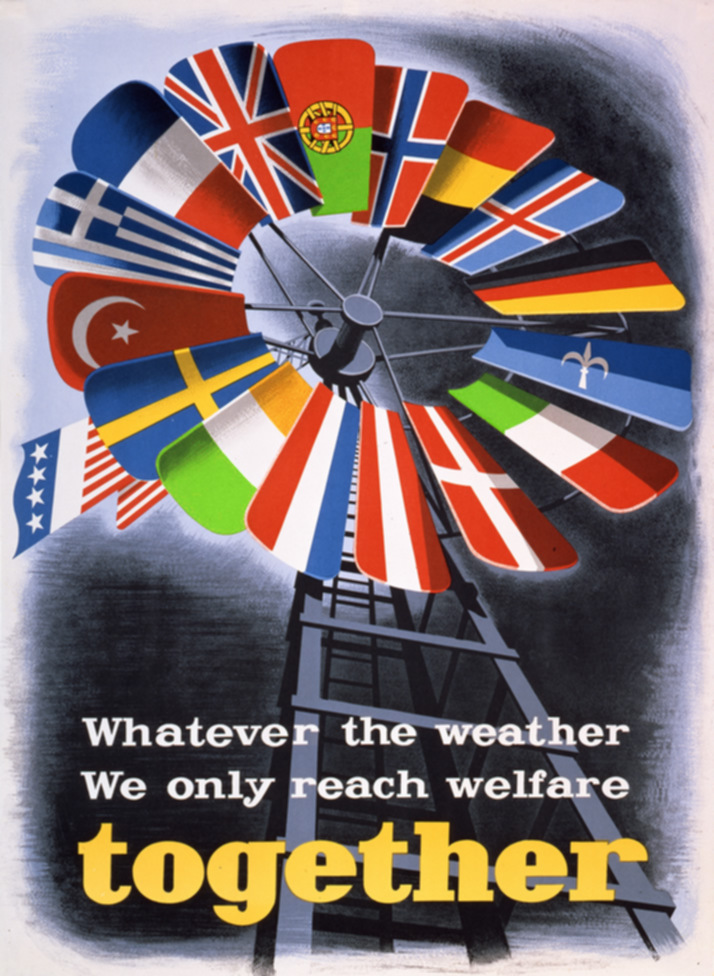
Can the EU rebuild the Arab world like the US rebuilt Europe?

Spanish prime minister Jose Luis Rodriguez Zapatero has called on the West to create a new 'Marshall Plan for Arab states' in response to the current unrest. Such a plan, modeled on the wildly successful scheme launched by the United States in 1947 to rebuild war-ravaged Europe, would be designed to give new Arab governments the financial support they need to build stable democracies. More implicitly, it would provide a bulwark against Islamism in the same way that the Marshall Plan successfully provided a bulwark against Communism in Western Europe.

Europe is still still haunted by its failure to do anything to prevent the chaos that unfolded in its own backyard in the 1990s during the Balkan Wars. The calls for quick decisive action are coming from every corner. Most politicians now acknowledge that financial support is going to be needed, but there is disagreement about who should supply it. These thorny issues will be discussed tomorrow at a special summit of EU leaders in Brussels to discuss the crisis in Libya.

At the European Union level, there has now been begrudging admittance that the union's approach to its Southern neighbours has until this point been a misguided failure. Valuing stability and protection of Israel above all else has led to the European Union and the United States ploughing billions of dollars into despotic regimes over the past decades, earning them the enmity of the Arab street. For the EU, most of this aid was distributed through the European Neighbourhood Policy (ENP), which gives financial and political assistance to the EU's neighbours.

€2.8bn in assistance has already been pledged to the Middle East and North Africa over the next three years through the ENP. Now that it is clear that a much larger amount than this is going to be needed to support budding Democracy movements, there are questions over whether the ENP is the best tool to use. Southern European countries have long complained that the ENP was always more focused on the EU's Eastern neighbours than those to the South. Why not give the Southern Mediterranean its own new, dedicated assistance vehicle?

Friday, 21 January 2011

Germany ends the draft

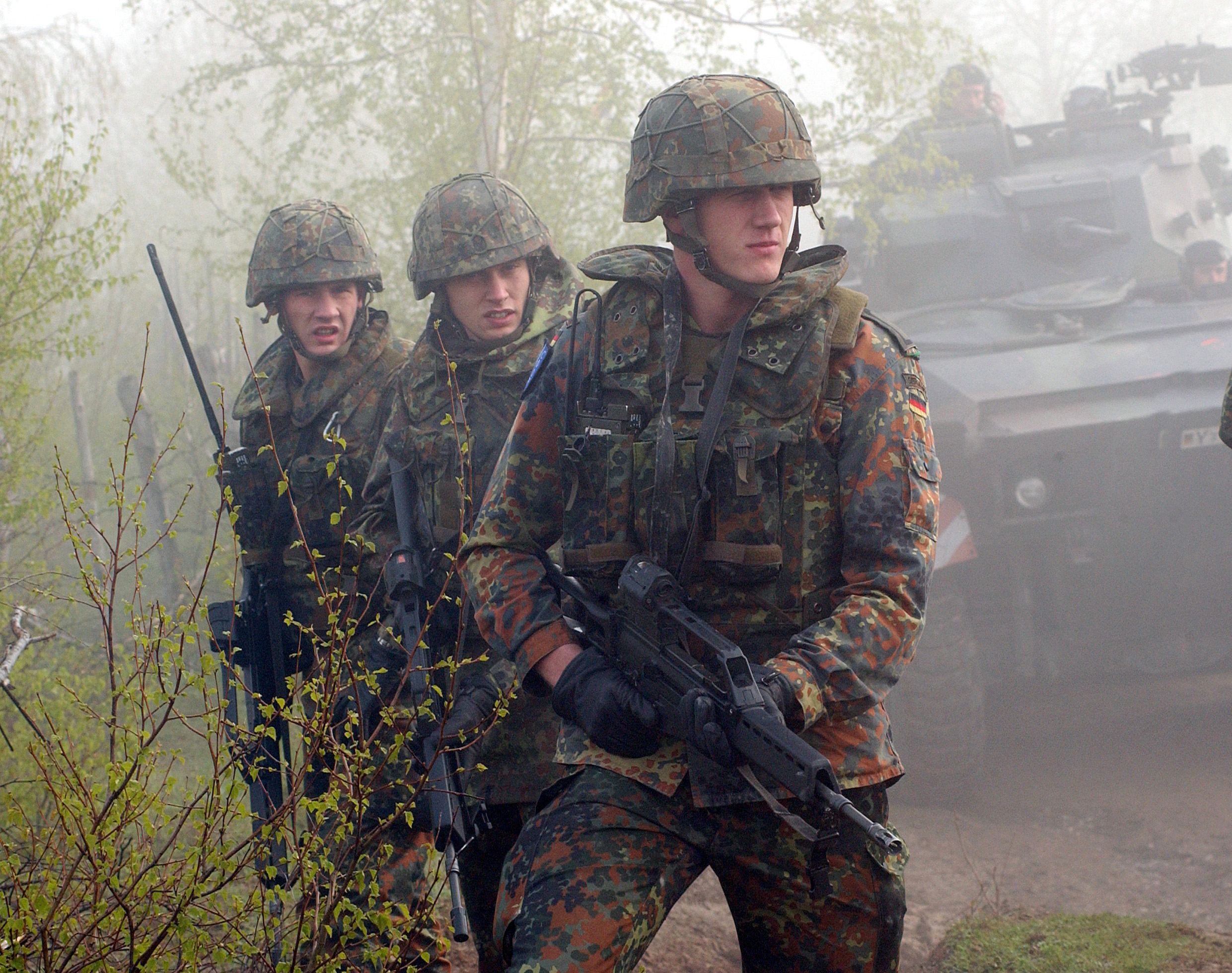
This month, with little fanfare, Germany saw the end of the military draft that has been in place since the end of the second world war. German commentators seem to be having a mixed reaction - with some saying it will end an era of shared service that will be replaced by an army where only the poorest and least educated serve. On the other hand others have said the change was long overdue, and that such a draft, particularly in modern pacifist Germany, was an antiquated idea and a perverse violation of individual freedom.

Conscription was introduced in West Germany in 1957 in an effort to ensure that the military could never again become an elitist 'state within a state' with its own political power, as existed during the Nazi period. If the military was made up of all different types of citizens – regardless of social class, ethnicity or political affiliation – it would become an extension of the state that couldn't be turned against the state (or any segment of its population).

Tuesday, 29 June 2010

The world cup and the war

I was in rural England this past weekend, on a little road trip through the Cotswolds, and it was definitely an interesting time to be there. The Germany-UK world cup match that took place Sunday afternoon literally dominated the media the entire weekend. You couldn’t get away from it, it was all anyone could talk about. Even in the tiny villages we stopped in as we drove through the countryside, everyone had World Cup. The English flag was literally everywhere, something you normally never see in England.

Being American I don’t have too much interest in soccer…er…“football”, so I have to admit I didn’t understand what all the fuss was about. But I do know that however worked up you get about football, there’s really no excuse for the vile clichéd headlines I saw in British newspapers last week.

Right from when I stepped off the train in London Thursday night they were everywhere. “ "It's war - we will fight jeering Jerries on the pitches," screamed the Daily Star. "Get ready for germ warfare!" shouted The Sun. Even TV personalities were getting in on the constant World War II references. Apparently the actual reason for the significance of this game is a history of close and controversial world cup games between the two nations in the past. But you wouldn’t know it from the British newspaper headlines, which gave the impression the nation was gearing up for World War III.

Wednesday, 12 November 2008

The Kaliningrad Question

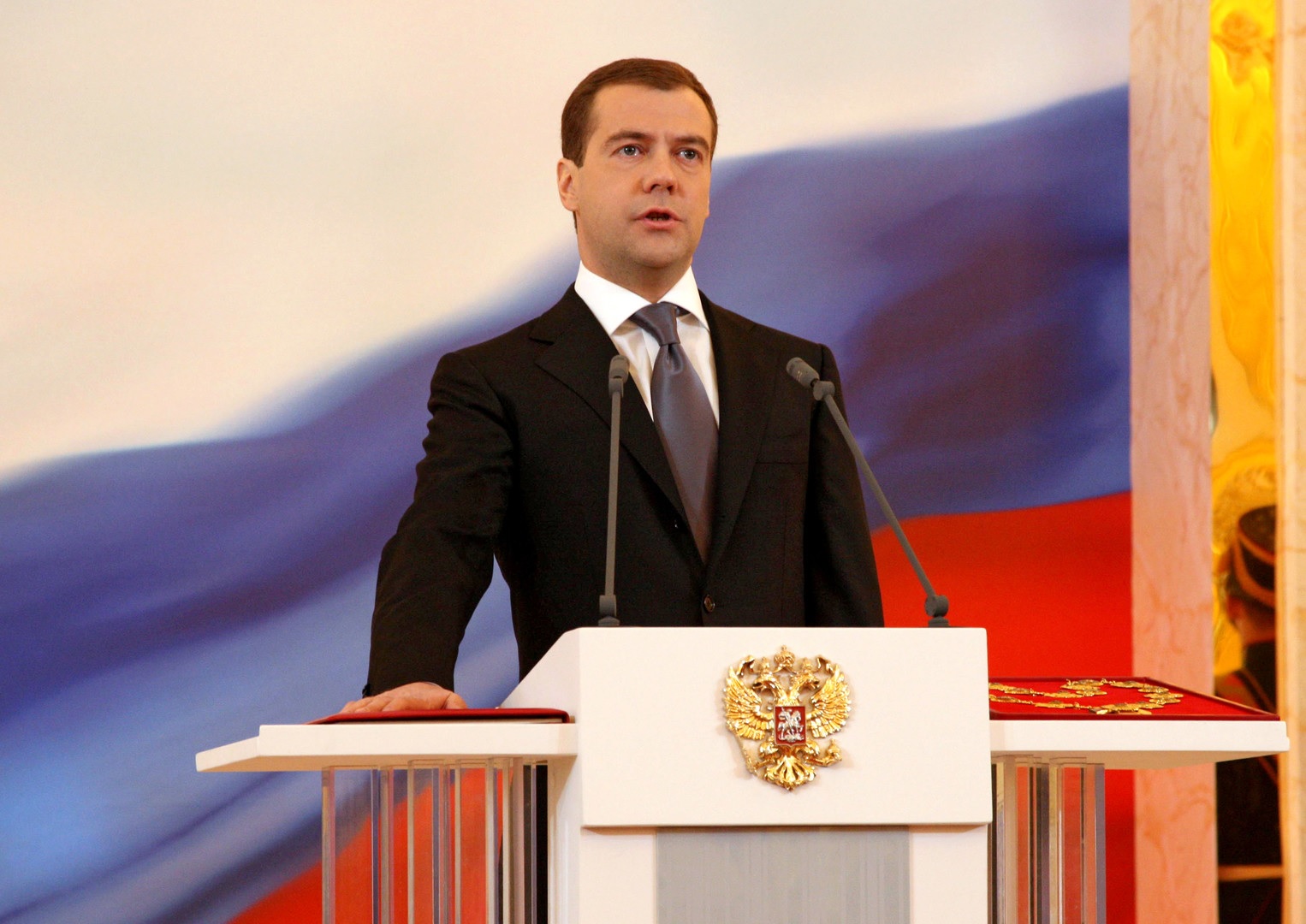
Having written an in-depth article on Russia's Kaliningrad oblast for an article I was working on back in 2002, I'm always interested when the territory makes its way into the news. Most people don't even know of the existence of this strange corner of the earth, but judging from Russian President Medvedev's state of the union speech last week, it could feature very prominently in relations between Russia, the US and Europe over the next decade.

Russia didn't waste any time testing Obama's mettle, with President Dmitry Medvedev delivering a speech the day after the historic election lambasting the United States for provoking the Georgian conflict, leading the world into economic disaster, and threatening Russia with its missile defense system it is installing in Poland and the Czech Republic. These complaints aren't new, but on the last point President Medvedev matched actions to words, saying Russia would install short-range missiles just off the Polish border in its territory of Kaliningrad, in response to the US "provocation." If Russia were to carry out this threat, it could provoke a new Cuban missile crisis for the EU and the new US president Obama. A spokesperson for Obama said today that the president-elect hasn't yet made a decision on whether to continue the Bush Administration's plans for the missile defense system.

So I think this is big news, but coming as it did after Obama's historic election, its been largely overshadowed. Additionally, I've been struck by some of the basic points the media seems to be missing with this news. For one, they keep referring to Kaliningrad as an "enclave" of Russia, when in fact it is an exclave (a territory is an enclave of a country it is completely surrounded by, it is an exclave of the country it belongs to). This may seem like a trivial semantic difference, but by failing to highlight the fact that Kaliningrad is an exclave of Russia it seems to me the media is missing the point. When they refer to the territory as being "on the border of Lithuania and Poland" they fail to mention that it is surrounded by those countries, which are both now in the EU. That means the Russian territory of Kaliningrad is located within the EU. It would be as if Russia owned the US state of Connecticut and was going to install missiles there. Keep in mind this is no insignificant territory, being larger than Connecticut and located on the strategically important Baltic Sea.

So why does Russia have this territory anyway? It's actually a peculiar accident of history and I think an incredibly sad one. The city of Kaliningrad was until the 1950s a German city named Konigsberg. The entire area was settled by crusading Germans in the 13th century and became
the kingdom of Prussia. It was actually the nucleus of what eventually became Germany, with the capital of the growing German Empire only moving from Konigsberg to Berlin in the 18th century. However after World War I, with the re-creation of a Polish state, the allied powers decided that the new country needed access to the Baltic Sea, so they created a "Polish Corridor" cutting through Germany, separating East Prussia from the rest of the German state. One of Hitler's main initial aims was to retake Poland to unite east Prussia with the remainder of Germany. But in the end of course Germany lost the war, and Russia demanded huge territorial concessions. It was decided at the Potsdam Conference that East Konigsberg should be given to Russia, resulting on one of the largest forced population moves following World War II. Before Potsdam East Prussia was almost completely inhabited by ethnic Germans, Russians had never lived in the territory. But at the end of the war about 2 million ethnic Germans were evacuated or forcibly expelled, and ethnic Russians moved in to the territory, which had been almost completely destroyed by World War II.

Kaliningrad was made into an SSR within the Soviet state, and at the time it was contiguous with the rest of the country because the Baltic states were part of the USSR. And with Poland and East Germany in the Warsaw Pact, Kaliningrad was located comfortably well within the Soviet sphere. But with the collapse of the USSR in 1991, things suddenly changed dramatically. Lithuania and Belarus broke away from the USSR and became independent countries. However it didn't make sense for Kaliningrad to become an independent country since it was still inhabited mainly by the ethnic Russians who had moved in during the 1950's. So the territory became a Russian island hundreds of miles away from Russia. Now that Lithuania and Poland have joined the EU and the Schengen Zone, the situation has become tricky.

What makes this situation especially complicated is that Kaliningrad is a sparsely populated, barren wasteland. Russia seemed to almost purposefully punish the territory after they acquired it. Rather than developing this incredibly strategic piece of land - now Russia's only year-round Baltic port - they ignored it. It is very difficult for foreigners to be granted a visa to enter the territory, and even Russians need permission to go there. It is an incredibly sad, desolate place.

For the past 15 years, while the West considered the new Russia to be a friend, the awkward situation of Kaliningrad didn't seem so important. But now with tensions rising between the West and Russia, and with Russia threatening to build up its military presence there, the territory's status could quickly become an issue. Can the EU handle a hostile enclave within its territory?

**Fun semantic trivia for your next cocktail party: Kaliningrad is an exclave of Russia and an enclave of the EU, but it is not an exclave or enclave of Lithuania or Poland because it is not completely surrounded by either.

Thursday, 5 July 2007

Pesky Poland

I had an interesting conversation with a Polish person I met last night, and it shed a bit of light into the Polish character and why the country has been such a thorn in Brussels' side over the past few weeks.

To recap, the big news in Europe over the last month has been the meetings over the new treaty being hammered out to replace the EU constitution, which died when it was voted down by referendums in France and The Netherlands two years ago. There were two member states that were the biggest obstacles to progress in the talks. The first was, predictably, the UK, which has been the most historically uncooperative member and wanted all sorts of special exemptions from the treaty for itself. But the second was Poland, a new member state that was admitted just three years ago.

Poland is currently run by a pair of eccentric, very conservative twins. They caused quite a stir at the meetings by demanding that the EU adopt a voting system in which each country gets an amount of votes proportional to the square root of the population, rather that proportional to the actual population. This would give smaller countries more voting power and bigger ones less, and would essentially give Poland (population 38 million) the same voting power as Germany (population 82 million). The twins were intractable on this, and although all the other members states warned them that this type of hard-headed obstinacy doesn’t work in the EU and they should use softer diplomacy, in the end I guess they were wrong because the twins won and got no permanent decision on the voting system for at least another seven years, even though all 26 other members were opposed to this. The twins are now claiming that there was an “oral agreement” for further concessions to Poland and they want to redo the deal that was finally worked out.

Friday, 19 January 2007

What do they teach the Belgians?

Tuesday night I went out for a beer with this Belgian guy I met when I was here in September, Leiven. We were talking about my usual favourite topic of conversation, the EU and European history. He’s pretty strongly anti-US, but I found a lot of his perceptions of the country are just wrong.

I find handling these types of situations to be rather delicate. After all, in correcting their perception and telling them the way it actually is, I don’t want to come off as an arrogant American who thinks he knows everything. But at the same time, it’s not in my nature to look the other way when someone says something that’s factually incorrect.

But this isn’t the point of my story. During the course of the conversation one of the incorrect things he said was that the sinking of the Lusitania by the Germans was what brought the US into World War II (he was so sure of it he even bet money on it, I won £10!). I informed him that it was in fact the Japanese bombing of Pearl Harbor that brought the US into WWII, and that the sinking of the Lusitania was the cause of our entry into WWI. To my astonishment, he wasn’t even aware the US had participated in WWI! We only ended the war for you, you ingrate! But I digress…