
Showing posts with label Poland. Show all posts
Showing posts with label Poland. Show all posts
Monday, 10 July 2017

Friday, 2 December 2016
The EU may get its first far-right president. But does it matter?

In May, when Austria held its first attempt at holding a presidential election, newspapers in the UK and the US were full of breathless coverage. "Austria is on the brink of electing Europe's first far-right president since WWII" they declared.
The BBC and The Guardian both used the occasion to run features about the 'rise of nationalism and populism in Europe', both of which curiously left out Britain's own UK Independence Party. 'Populism is other people' they convinced themselves. Now, after Brexit and Trump, the Anglo-American coverage is quite different.
And the coverage has returned, because the Austrian election is being re-run this Sunday, 4 December.
In May, the far-right candidate Norbert Hofer, the leader of the Freedom Party, was beaten by Alexander Van der Bellen from the Green Party by just a few thousand votes. The two were facing each other in a shock second round after the country's main center-right and center-left candidates were eliminated. It was the first time a candidate from either the Greens or Freedom Party made it to the second round.
Friday, 2 October 2015
German unity, but not reunification

The area around Brandenburg Gate, once home to the 'no mans land' between the two layers of the Berlin Wall, is tonight being decked out for a massive celebration. Tomorrow, 3 October, is the annual celebration of 'German Unity Day'. This year's holiday is no ordinary one. It is marking 25 years since German reunification.
But don't make the mistake of calling it 'Reunification Day'. I called it by this name with a German friend today. I was swiftly deutsched, and told that despite the fact that it is held on the anniversary of the day the East German government was merged into the West, the proper name is 'unity day'.
I was only repeating the term I have read in English-speaking media, as there have been several reports this week about the 25th anniversary. But there are two important reasons why this is not called Reunification Day: it corresponds to an older holiday name, and because pre-war Germany has not been entirely reunited.
Thursday, 24 September 2015
Incredible Krakow museums

This week I spent a few days in Krakow, Poland. I had to do a bit of work there for my book, and a friend visiting from home in New York wanted to come check out the city.
The last time I was in Krakow was in 2002, while I was living in Prague as a student. Me and a few friends rented a car and drove the six hours to Poland, stopping at Ostrava in Moravia along the way. We also visited Auschwitz, and to be honest that is the only part of the trip I remember well. Krakow city was a bit forgettable for me. I remember that we were not terribly impressed with the cultural activities or the nightlife.
Thursday, 10 September 2015
Eastern Europe's discomfort with diversity

This week I took a train to Prague from Berlin, in order to talk to people continuing on the train to Budapest for a radio report I was working on about Europe's disappearing overnight trains. I lived in Prague back in 2002, and it was nice to be back. I met up with a few Czech friends, and at each meeting the subject of the refugee crisis came up. My Czech friends said they were very embarassed of the images being shown to the world, of Czech security officers marking Syrian refugees with numbers and treating them inhumanely. I told them, at least the Hungarians are making you lookmore humane by comparison.
A real East-West split has emerged in the EU over how to deal with the refugee crisis. Right now the 'Vyshegrad Four' - Poland, Slovakia, Hungary and the Czech Republic - are furiously resisting a proposal to resettle the Syrian refugees pouring into Europe in a proportionate way across EU member states. Much ink has been spilled analysing why Eastern European governments are behaving in this way.
Tuesday, 26 November 2013
Climate nationalism

Many having given up on the international process delivering solutions to climate change, and eyes are turning to national solutions to fill the void.
But travel upstairs to the ‘national pavilions' located at the top of the stadium, where individual countries hosted events and showcased their climate actions, and the mood couldn't be more different. The Chinese pavilion was exuberantly showcasing their regional emissions trading schemes. The Americans were trumpeting the new emissions standards for power plants. In the EU pavilion, individual member states were announcing new financial contributions to fighting climate change and deforestation left and right.
Tuesday, 12 November 2013
Torch the rainbow
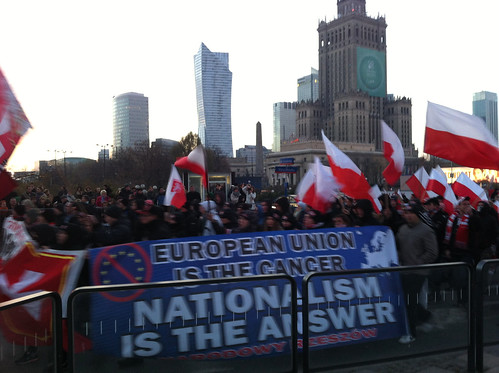
Chalk it up to some very unfortunate timing. Yesterday, as delegates arrived for this year's UN climate summit in Warsaw, they were warned to exercise caution and to stay out of the city centre. Violent demonstrations had broken out throughout the city.
The demonstrations actually had nothing to do with the climate summit. The meeting just happened to be opening on the same day as Polish national day, when far right and far left Polish groups have traditionally clashed in street brawls during demonstrations.
The violence isn't ordinarily noticed by the world's media. But given that international journalists have converged on the city this week for the climate summit, it was embarrassing timing for the Polish government.
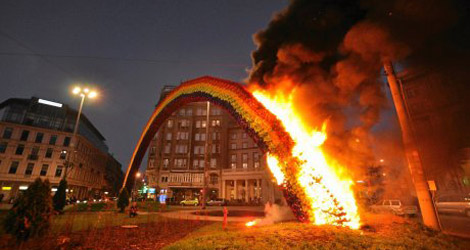
It didn't help that the most iconic image from the violence was the sight of a giant rainbow in central Warsaw burnt to the ground last night. Those in Brussels might recognize the rainbow shown burning in this photo. It was displayed in front of the European Parliament by the Polish government during their EU presidency in 2011.
Tuesday, 5 November 2013
Eastern enthusiasm

Lithuania is a land in between. Part of the Soviet Union until just two decades ago, it today finds itself sandwiched between two dangerous and unpredictable neighbours. It’s not a very comfortable geography, to say the least.
To its East lies the pariah state of Belarus - Europe’s last dictatorship and, one might also say, Europe’s last Russian satellite state. To its West lies the Russian exclave of Kaliningrad - a barren, unforgiving place that few dare enter, repopulated by Russians in 1949 after its German inhabitants were killed or expelled.
But to its North and South lie fellow countries of the European Union – Latvia and Poland. The 103km border between Poland and Lithuania therefore forms a perilous land bridge between unfriendly Russian talons. Since2009 the two countries have been part of the EU’s passport-free Schengen area, giving the border additional importance as the only way to get to the Baltic and Finnic countries to the North without a visa.
But despite this pivotal importance, this narrow passageway faces a dearth of infrastructure connections. As I write this I am on a plane flying back from Vilnius, the Lithuanian capital, where I spent the last two days at a conference devoted to this lack of connection.
Wednesday, 1 August 2012
Romney’s offend-a-thon comes to an end
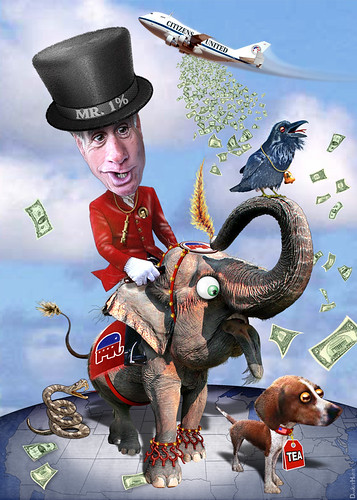
It started badly and quickly went from bad to worse. Even before he touched down in London last Wednesday, his campaign had raised eyebrows when an advisor said that Barack Obama was unable to understand the “common Anglo-Saxon heritage” of the US and the UK. Given that in English this term only refers to the Germanic tribes of Southwest England (unlike the "free-market capitalism" meaning it has in France), it came off as shockingly racist – i.e., a black man cannot understand the common Germanic heritage of the English and their descendants.
Romney then managed to enrage the British public by casting doubt on their readiness to host the Olympic Games, telling a US journalist in London that the UK’s preparedness was “not encouraging.” This sent the British media into a frenzy of anti-Romney headlines, such as “Mitt the Twit” (The Sun, owned by Rupert Murdoch) and “Who invited Party-Pooper Romney?” (The ultra-conservative Daily Mail). He even managed to enrage Conservative British Prime Minister David Cameron, who quipped at a press conference, "Of course it's easier if you hold an Olympic Games in the middle of nowhere." (Romney ran the 2002 Winter Olympics in Salt Lake City, Utah). Even London mayor Boris Johnson, himself a gaffe-magnet, used Mitt Romney’s name when speaking to crowds asif describing some kind of panto villain, quickly followed with boos from assembled Olympics-lovers.
Wednesday, 25 July 2012
Romney's 'apology for the apology' tour
The advisor was likely using the term in the continental European context, which refers to the free-market economic heritage of English-speaking countries. He was likely trying to make some 'Obama as Socialist' characterisation. But this definition is unknown in the English-speaking countries themselves, where the term is a seldom-used ethnic description of English descent (ie, from the Germanic tribes who settled in Southwest England). So it ended up just coming off as shockingly racist. Stephen Colbert hilariously summed up the bemused reaction of Americans to the comment.
It’s a bad start to what is a very important foreign tour for Romney. Over the next few days he will be meeting with virtually every high level politician in the UK. On Friday he will attend the Olympics opening ceremony, surely excited about the prospects for his horse-dancer in the dressage competition.
The Republican presidential candidate’s choice of three countries for this visit is highly significant. After his visit to the UK he will fly to Israel, where he will make a series of high-profile appearances. He will then finish his tour in Poland. All three are countries which the Romney campaign has accused the Obama administration of at best ignoring, and at worst insulting.
Thursday, 7 July 2011
Poland fires warning shot over Denmark's 'nationalist' moves
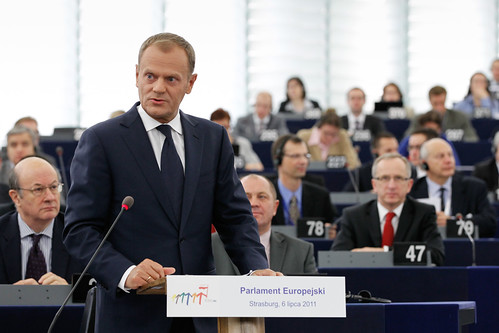
Tusk was speaking to the European Parliament in Strasbourg to mark the start of Poland's presidency of the EU, which will last the next six months. "The answer to the crisis is more Europe," he said, not less. He indicated that he will fight against efforts to further erode EU principles, and suggested he was unhappy with the deal reached among member states last month to allow temporary internal border patrols to deal with increased immigration.
"I am against any barriers to internal free movement under the pretext of dealing with migration problems. What Denmark is doing is a concern for anybody who thinks that free movement is going to be restricted even further," he told the parliament. "Europe, with its institutions, its budget and its objectives, is not the source of this crisis. And following those who say the opposite would be a fatal mistake. Undoing the European construction at this time and turning to nationalism as an answer to the crisis would be a very big mistake."It was a fairly unusual move for the incoming presidency to take such a political stance against what other member states are doing, because the presidency is supposed to be a neutral negotiator in the council. But Poland has always marched to the beat of its own drummer when it comes to the EU.
Tuesday, 5 July 2011
Tory Euro-MPs defy Cameron on climate change

By a margin of ten votes, the parliament voted today to remove the call for the EU to up its commitment in UN negotiations from 20% to 30% from a resolution, prompting the resolution's collapse. Conservative British Prime Minister David Cameron could have swung the vote the other way if he had been able to convince even just a few of his 26 euro-MPs to support the call for 30%. But he was unable to do so, despite considerable effort. Cameron has made action on climate policy a cornerstone of his political platform and he took the lead among EU leaders in calling for the increased commitment.
Last week Cameron sent his energy minister to Brussels to tell the euro-MPs to vote for the measure, but they refused. It's an uncomfortable setback for the British leader and an indication of just how little control he has over his rebellious motley crew in Brussels. They are, as one London-based Tory told me, "completely beyond London's control". The political wild west in which Tory euro-MPs operate has caused problems for Cameron in the past, particularly when their actions seem to clash with the progressive social agenda Cameron has adopted in order to bring the party back into the British mainstream. He has been criticised in the past for allowing Tory euro-MPs to vote against pro gay rights resolutions in the European Parliament.
But the British Conservatives weren't the only ones bucking their party leadership on this issue. The centre-right leaders of Germany and France have also called for the EU to raise its commitment to 30%. But Merkel and Sarkozy's party members in Brussels also defied their party leaders' positions and voted with the centre-right grouping in the parliament to block the resolution. The seeming incongruity will be an awkward reality for those leaders as well. But neither of them have made the environment such a core issue of their political appeal like David Cameron has. And he is being heavily criticised by the left-leaning British press today as a result.
Wednesday, 22 June 2011
Here comes Poland: the EU's 'anti-environment' presidency?
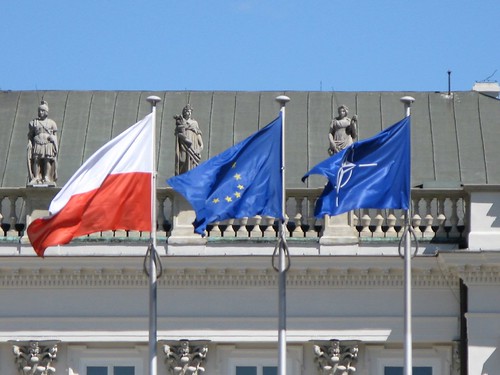
Hungary eventually relented, a little, but the timing of the law's enactment meant that for the last six months the Hungarian presidency has been associated with media repression. Many were questioning how a country which seemed to be so far outside the European mainstream in respecting press freedom could lead the bloc. And really, these sorts of questions never went away - particularly as a new controversy erupted with the ruling party unilaterally drawing up a new constitution for the country.
That pattern may be about to be repeated with the Polish presidency. Just nine days before Poland is set to take over the EU presidency, the Polish environment minister shocked his counterparts by announcing at an environment ministers meeting in Luxembourg yesterday that Poland would single-handedly block adoption of the EU's 2050 energy roadmap. The policy document sets a non-binding EU goal for a 40% cut in carbon emissions by 2030, a 60% cut by 2040 and an 80% cut by 2050, compared to 1990 levels. The Polish minister said it was just all too much for Poland, which generates 90% of its electricity from coal. "We expect higher solidarity in Europe, understanding the situation of particular Member States," the minister complained.
Monday, 2 May 2011
A royal weekend of symbolism

Last night's news that after a decade of efforts the United States has at long last killed Osama Bin Laden is just about the only news story people are talking about today. This is to be expected for such a symbolically important event – regardless of its actual real-world impact. The news finished off a weekend when the US was paying more attention than normal to events going on abroad, with the royal wedding in London and the huge mass in Rome that declared Pope John Paul II ready to be a saint. All three of these events were short on real-world impact but high on symbolic value.
Thursday, 9 September 2010
Gay marriage conflict brewing in European Parliament
On Tuesday night, members of the European Parliament meeting in Strasbourg held a debate with Justice Commissioner Viviane Reding seeking an answer to a complicated but inevitable question: Now that a majority (16 out of 27) of EU member states have some form of gay marriage, how are free movement rules going to work if those married couples wish to move to one of the 11 member states that do not have gay marriage?
As I wrote earlier this summer, now that Ireland has become the latest country to adopt gay civil unions, a clear pattern is emerging of a two-speed Europe when it comes to gay rights. In Western Europe, every country except Italy has now adopted some form of gay marriage. While in Eastern Europe, nine countries have adopted constitutional amendments banning gay marriage. It is a geographic divide reminiscent of the situation in the United States, where states on the East and West coasts have adopted gay marriage while states in the center and South have adopted constitutional bans. It would seem both the EU and the US are soon going to have to grapple with the challenge of establishing how a marriage can be valid in one state and invalid in another.


As I wrote earlier this summer, now that Ireland has become the latest country to adopt gay civil unions, a clear pattern is emerging of a two-speed Europe when it comes to gay rights. In Western Europe, every country except Italy has now adopted some form of gay marriage. While in Eastern Europe, nine countries have adopted constitutional amendments banning gay marriage. It is a geographic divide reminiscent of the situation in the United States, where states on the East and West coasts have adopted gay marriage while states in the center and South have adopted constitutional bans. It would seem both the EU and the US are soon going to have to grapple with the challenge of establishing how a marriage can be valid in one state and invalid in another.
Friday, 23 July 2010
Ireland gets civil unions: now only Italy is left
This week the final signature was put on Ireland's civil partnership bill for gay and lesbian couples. For a fervently Catholic country that only decriminalised homosexuality in 1993, this was a big step. But even more importantly, it's reflective of the sudden rapid advancement Europe is making in the area of gay rights. Well, half of Europe anyway. Yes, the fact that this advance was made despite the historic power of Catholicism over Irish government is a promising sign for proponants of same-sex marriage. But could Ireland's change of heart have more to do with geography than a cultural shift? Let's look at the map.
As you can see from the map above, Italy is now the only remaining Western European country to have no form of gay marriage. The vast swathe of what Donald Rumsfeld used to deride as "Old Europe" is now awash in various shades of blue. And some of those light blues are due to change to dark blue quite soon. David Cameron's conservative-libdem coalition has already said they will upgrade Britain's civil unions to full marriage soon. Anything to not be compared to the Irish I suppose.
As you can see from the map above, Italy is now the only remaining Western European country to have no form of gay marriage. The vast swathe of what Donald Rumsfeld used to deride as "Old Europe" is now awash in various shades of blue. And some of those light blues are due to change to dark blue quite soon. David Cameron's conservative-libdem coalition has already said they will upgrade Britain's civil unions to full marriage soon. Anything to not be compared to the Irish I suppose.
Tuesday, 20 July 2010
Atheists and Freemasons - best buds?
 Is Atheism a religion? A controversial application of the Lisbon Treaty's new requirements for holding regular meetings with all European religious leaders is putting that question to the test.
 Yesterday the presidents of the European Commission, European Council and European Parliament held a rather awkward press conference with various religious leaders from across Europe. Watching the leaders crowd together for the 'family photo', there was a temptation to make some kind of joke about a priest, a rabbi and an immam walking into a bar. Inevitably, reporters pressed the EU and religious leaders for their opinions on the upcoming burqa bans in France and Belgium, but the leaders wouldn't take the bait. Both Barroso and Van Rompuy said this was a member state issue that does not involve the EU.
The occasion of this very holy family photo (courtesy of the commission) was the first ‘annual dialogue’ between the EU and Europe’s religious leaders since the Lisbon Treaty came into force. The meeting has actually been taking place every year since 2005, but the Lisbon Treaty has now made the meeting mandatory. This has introduced new political issues that weren’t present before.
Monday, 12 April 2010
What next for decapitated Poland?

It’s safe to say the notorious Polish president Lech Kaczynski was not much-loved in Brussels. His fierce Euroscepticism and opposition to climate change efforts had made him public enemy number one here for awhile. But you wouldn’t know that from the way the EU capital is reacting today. EU flags are flying at half mast, virtually every EU leader has issued statements of shock and sadness, and a moment of silence was observed during today’s midday press briefing. Whatever disagreements existed between Kaczynski and Brussels, it seems to have been forgotten in the face of this shocking event.
Wednesday, 21 October 2009
US Alarmed by Cameron’s Europe Moves
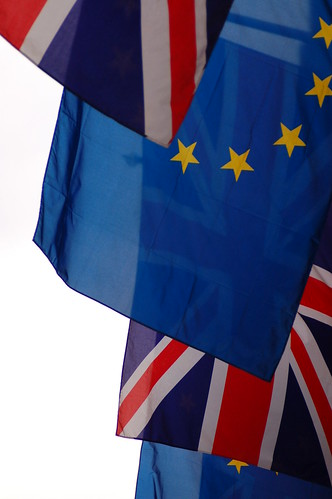
It looks like worries about a future Tory government aren’t limited to Paris and Berlin. Reports are circulating today that US Secretary of State Hillary Clinton expressed concern last week during her visit to Europe over David Cameron’s increasingly combative stance toward the EU, saying the US is worried that the “direction of travel” from what will most likely be the next governing party of the UK could lead to a rupture between Britain and the rest of Europe.
Her concern is not in isolation. The Obama administration has been increasingly questioning the wisdom of Tory leader David Cameron’s recent hostile moves toward Europe, including his decision to take the Tories out of the main centre-right grouping in the European Parliament to form a new alliance with hard-right Eastern European parties and his antagonism toward the Lisbon Treaty. The Times reports today that the US Ambassador to Britain has also been voicing alarm over Cameron’s Europe plans, and that Jewish groups within the Democratic Party are expressing alarm over Cameron’s new ties to anti-Semitic politicians in Poland.
The concerns are further evidence that the Obama administration considers the so-called “special relationship” (a term I’ve never heard used in the US, though it is used almost obsessively in the UK) to be obsolete, and would prefer a united Europe to deal with in foreign policy. This is a sea change from the previous US administration, which notoriously used the idea of the “special relationship” to drive a wedge between the UK and Europe in the run-up to the Iraq war. As The Times notes,
 Wheras the Bush administration was hostile toward the EU and seemed to repeatedly seek to undermine it, the Obama administration has so far been an enthusiastic supporter, as demonstrated by Hillary Clinton’s speech in Brussels earlier this year. In fact I think I could without hyperbole call Obama a European federalist. He wants a strong, united Europe as a partner in combating terrorism, dealing with the financial crisis and providing a counterweight to China.
The administration’s reported comments seem to suggest that Obama has little patience for European leaders who cow-tow to old instincts of nationalism and divisiveness. And he has also demonstrated impatience with some of the more archaic, slow-moving aspects of the EU, and is likely eager for the streamlined reforms the Lisbon Treaty will bring about. Of course this is just speculation, but it’s what his administration’s statements and behaviour seem to suggest.
Her concern is not in isolation. The Obama administration has been increasingly questioning the wisdom of Tory leader David Cameron’s recent hostile moves toward Europe, including his decision to take the Tories out of the main centre-right grouping in the European Parliament to form a new alliance with hard-right Eastern European parties and his antagonism toward the Lisbon Treaty. The Times reports today that the US Ambassador to Britain has also been voicing alarm over Cameron’s Europe plans, and that Jewish groups within the Democratic Party are expressing alarm over Cameron’s new ties to anti-Semitic politicians in Poland.
The concerns are further evidence that the Obama administration considers the so-called “special relationship” (a term I’ve never heard used in the US, though it is used almost obsessively in the UK) to be obsolete, and would prefer a united Europe to deal with in foreign policy. This is a sea change from the previous US administration, which notoriously used the idea of the “special relationship” to drive a wedge between the UK and Europe in the run-up to the Iraq war. As The Times notes,
“[Obama] believes that Britain should be at the heart of Europe — a position that has been put in doubt by French and German anger over Mr Cameron’s decision to sever ties with the federalist centre right grouping in the Strasbourg Parliament. Mr Obama is enthusiastic about the idea of a permanent EU president to replace the revolving chairmanship of the EU council, a measure opposed by the Conservatives.”
 Wheras the Bush administration was hostile toward the EU and seemed to repeatedly seek to undermine it, the Obama administration has so far been an enthusiastic supporter, as demonstrated by Hillary Clinton’s speech in Brussels earlier this year. In fact I think I could without hyperbole call Obama a European federalist. He wants a strong, united Europe as a partner in combating terrorism, dealing with the financial crisis and providing a counterweight to China.
The administration’s reported comments seem to suggest that Obama has little patience for European leaders who cow-tow to old instincts of nationalism and divisiveness. And he has also demonstrated impatience with some of the more archaic, slow-moving aspects of the EU, and is likely eager for the streamlined reforms the Lisbon Treaty will bring about. Of course this is just speculation, but it’s what his administration’s statements and behaviour seem to suggest.
Thursday, 17 September 2009
Obama Throws the Russians a Bone
 In a major foreign policy move, President Obama announced today he is abandoning the Bush Administration's missile defence system plan for Eastern Europe. The plan, which would have seen long-range missiles installed in Poland and a radar system in the Czech Republic, had infuriated Russia, who saw it as a direct threat. The Bush administration had always insisted it was not meant to threaten Russia but rather to defend Europe from rogue states like Iran, but this seemed dubious to the Russians considering that the missiles themselves would have been pointed at Russia, been far more powerful than needed to take out the small-arms capability of Iran, and were to be placed just a few miles away from Russia’s border.
Obama said today that after a thorough review of the program he had decided that a more “cost-effective" system using land- and sea-based interceptors would be better suited to Iran's short- and medium-range missile threat. Though the administration stressed that this decision is “not about Russia”, the reality is that it largely is, and that’s not necessarily a bad thing. While it is true that the system Bush planned to install seemed geared more for the Cold War than for the realities of modern dangers, it is also true that it was proving to be a huge obstacle in US-Russian relations. Considering that those relations are in desperate need of improvement in order to have a peaceful world, dismantling this plan could be good for America’s security in more ways than one.
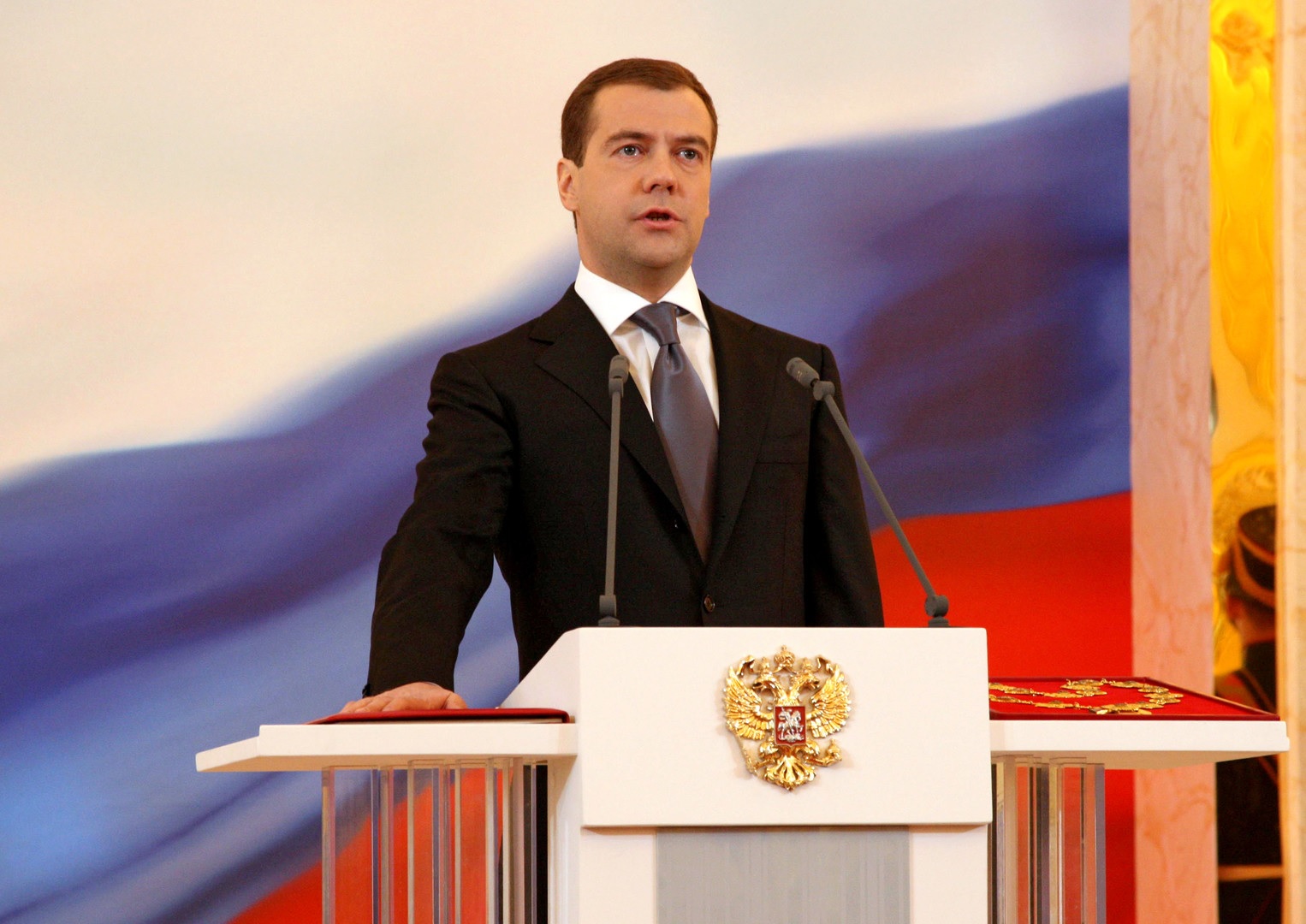 Shortly after Obama was elected Russia had made a bold move showing that they were serious about their objections to the missile system. President Dmitry Medvedev delivered a speech the day after the historic election saying that if the missile shield were installed Russia would install short-range missiles just off the Polish border in its territory of Kaliningrad, in response to the US "provocation." All indications were that they were serious about this threat, and the resulting tit-for-tat could have resulted in a missile defence arms race that no one wants to see.
Reaction from the American right was predictable, decrying Obama for “selling out” American allies (the narrative for the right seems to be that he is a lilly-livered coward abroad while being some kind of Hitler like tyrant at home). But reaction from the international community, and from Russia in particular, reflected a collective sigh of relief. Russia's ambassador to NATO called it a “breakthrough" for US-Russian relations, saying that with this obstacle removed the two countries could move ahead with talks about reducing their nuclear weapons stockpiles. NATO Secretary-General Anders Fogh Rasmussen said it was "a positive step", reflecting the fact that few in Europe were excited about this system which was ostensibly meant to protect them. The missile defence system, after all, was going to outside the scope of NATO and completely US-controlled.
 And the conservative governments of Poland and the Czech Republic who had agreed these deals with the Bush Administration, although surely disappointed, were muted in their reaction. The Czech public on the other hand have expressed elation today, as the plan was very unpopular there. The Poles were more mixed in how they felt about the plan, but my Polish friend tells me the media reaction there so far hasn't been too dramatic.
So was this a big concession to Russia? As the title suggests, it was a 'bone', an easy gesture to make considering it wasn't in US defense interest to have it anyway. Essentially no one, including the US military, thought the missile defense system made any sense except the American and Polish right-wing. Iran does not have the capability to deploy or make long-range missiles, and it's never been proven that these systems being installed actually work. As Joe Cirincione told MSNBC last night, the Bush Administration was installing "a technology that doesn't work against a threat that doesn't exist".
Of course the missile defence system has just been one aspect of American foreign policy that Russia has seen as a provocation by the US. They've also seen US invitations to the nations of the caucasus and Central Asia to join NATO as an anti-Russian provocation. It's doubtful Obama will recognise the "Soviet sphere of influence" Russia is trying to claim, nor will he rule out the possibility of these nations joining. But he is unlikely to persue the NATO-expanding policy with the same irresponsible gusto that the Bush Administration did. That gusto was largely to blame for the Georgian War, an entirely avoidable conflict brought on by Georgia misinterpreting Bush's neocon rhetoric for actual promises of future military assistance.
 So it seems as if everyone is happy with this announcement except the American Neo Conservatives. And as the never-confirmed limited-term ex-UN ambassador John Bolton makes the rounds today describing this as “a concession to the Russians with absolutely nothing in return” (I’ve never seen anyone get so much media exposure for themselves out of such a limited public career) you have to wonder what decade he’s living in. Altering this plan will result in a more cooperative Russia and probably in the long run a more logical defence capability for the United States.
Subscribe to:
Posts (Atom)