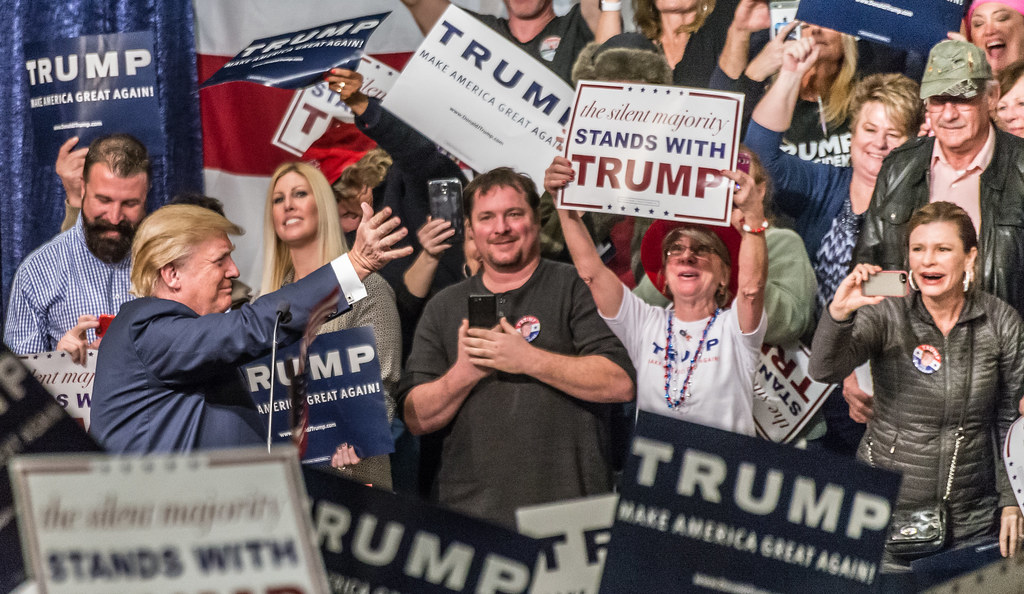
The Tory-led ECR group will attend Donald Trump's nominating convention, but Merkel's center-right EPP will not. It reflects the path British Conservatives have chosen to take.
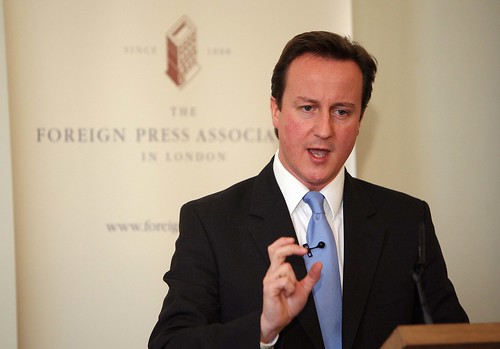
Years before his faustian bargain to offer an EU referendum to maintain his Conservative Party leadership, David Cameron tossed the eurosceptics another bone to become party leader.
In his 2005 campaign to become Conservative leader, he promised to take the Tories out of the main-centre-right bloc in Europe, the European Peoples Party (EPP), and form a new eurosceptic bloc. For years, the eurosceptic wing of the Conservative Party had complained that the EPP, which contains the main center-right parties of Europe including those of Germany, France, Italy and Spain, was too 'federalist' in its approach to the European Union.
Showing posts with label ECR. Show all posts
Tuesday, 5 July 2016
Friday, 11 April 2014
The greenest government ever?
British Conservatives have among the worst voting records in the European Parliament on climate issues, according to a new analysis.
In May 2010, David Cameron, the UK's prime minister, made a bold claim. As he finalised talks on forming a governing coalition with the Liberal Democrats, he told an audience of civil servants that his would be “the greenest government ever”.
It is a claim that Cameron may have come to regret. Over the past four years, the quote has been repeatedly thrown back at him by environmentalists upset over a variety of issues – whether cuts to renewable energy subsidies or fracking for shale gas. Yet Cameron has maintained that his government is doing more to combat climate change than any previous UK government, and that the UK is playing a more constructive role in the climate fight than other European countries.
But green campaigners say this claim is hard to justify when you look at the voting record of Conservative members of the European Parliament. An analysis by campaign group CAN Europe published this week, scoring MEPs based on how they voted on ten key pieces of climate legislation over the 2009-14 term, ranks the British Conservatives among the worst parties in the Parliament for climate action.
In May 2010, David Cameron, the UK's prime minister, made a bold claim. As he finalised talks on forming a governing coalition with the Liberal Democrats, he told an audience of civil servants that his would be “the greenest government ever”.
It is a claim that Cameron may have come to regret. Over the past four years, the quote has been repeatedly thrown back at him by environmentalists upset over a variety of issues – whether cuts to renewable energy subsidies or fracking for shale gas. Yet Cameron has maintained that his government is doing more to combat climate change than any previous UK government, and that the UK is playing a more constructive role in the climate fight than other European countries.
But green campaigners say this claim is hard to justify when you look at the voting record of Conservative members of the European Parliament. An analysis by campaign group CAN Europe published this week, scoring MEPs based on how they voted on ten key pieces of climate legislation over the 2009-14 term, ranks the British Conservatives among the worst parties in the Parliament for climate action.
Thursday, 12 September 2013
The pan-sceptic ticket
Nigel Farage's state of the union response suggests UKIP will make climate change denial a centrepiece of their European election campaign.
I was a bit taken aback on Wednesday when, during his response to President Barroso's State of the European Union speech in Strasbourg, UKIP leader Nigel Farage devoted almost the entirety of his speech not to warnings about the creeping European super-state, but to an impassioned denial of climate change.
The subject is nothing new for UKIP. The official party line is that there is no proof that climate change is man-made, and this is often brought up by UKIP MEPs. The party has been particularly vocal about renewable energy, blasting “ugly” wind turbines blotting the English countryside and biofuel subsidies it says are responsible for fuel poverty in the UK. This was made clear by UKIP MEPs during Monday's debate on biofuel legislation, which strangely put UKIP on the same side as the Greens.
But it was surprising to see Farage devote so much time to the issue during a big-picture debate on the EU that had nothing to do with climate change. The EU had fallen victim to a “green obsession”, he said. The resulting legislation had driven manufacturing away from the UK and forced people into fuel poverty.
I was a bit taken aback on Wednesday when, during his response to President Barroso's State of the European Union speech in Strasbourg, UKIP leader Nigel Farage devoted almost the entirety of his speech not to warnings about the creeping European super-state, but to an impassioned denial of climate change.
The subject is nothing new for UKIP. The official party line is that there is no proof that climate change is man-made, and this is often brought up by UKIP MEPs. The party has been particularly vocal about renewable energy, blasting “ugly” wind turbines blotting the English countryside and biofuel subsidies it says are responsible for fuel poverty in the UK. This was made clear by UKIP MEPs during Monday's debate on biofuel legislation, which strangely put UKIP on the same side as the Greens.
But it was surprising to see Farage devote so much time to the issue during a big-picture debate on the EU that had nothing to do with climate change. The EU had fallen victim to a “green obsession”, he said. The resulting legislation had driven manufacturing away from the UK and forced people into fuel poverty.
Wednesday, 12 September 2012
The peril and promise of a new treaty
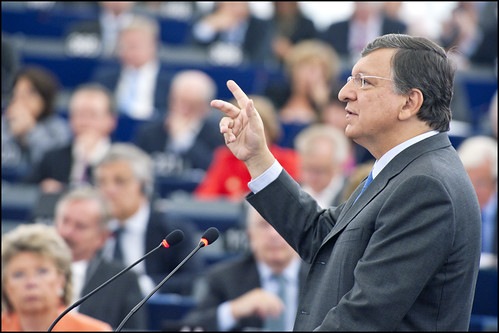
European Commission president Jose Manuel Barroso dared to use the ‘F word’ in his state of the union address here in Strasbourg today – federalism.
“Let’s not be afraid of the word, we will need to move towards a federation of nation states,” he told the European Parliament. “Today, I call for a federation of nation states. Not a superstate.” This federation, he continued, will ultimately require a new treaty, as German Chancellor Angela Merkel had suggested last week. EU leaders, still traumatized by the painful experience of ratifying the Lisbon Treaty in the last decade, have been desperate to avoid this.
“Before the next European Parliament elections in 2014, the Commission will present its outline for the shape of the future European Union. And we will put forward explicit ideas for treaty change in time for a debate.”
Barroso has been hesitant to use the word federal in the past when describing the future direction of the European Union, aware of the images of a power-grab it can conjure up in member states. But in his state of the union addresses, a yearly tradition itself created by the Lisbon Treaty, Barroso has been keen to make the European Parliament happy. He clearly thought that by finally using the F-word, he could do it.
“Let’s not be afraid of the word, we will need to move towards a federation of nation states,” he told the European Parliament. “Today, I call for a federation of nation states. Not a superstate.” This federation, he continued, will ultimately require a new treaty, as German Chancellor Angela Merkel had suggested last week. EU leaders, still traumatized by the painful experience of ratifying the Lisbon Treaty in the last decade, have been desperate to avoid this.
“Before the next European Parliament elections in 2014, the Commission will present its outline for the shape of the future European Union. And we will put forward explicit ideas for treaty change in time for a debate.”
Barroso has been hesitant to use the word federal in the past when describing the future direction of the European Union, aware of the images of a power-grab it can conjure up in member states. But in his state of the union addresses, a yearly tradition itself created by the Lisbon Treaty, Barroso has been keen to make the European Parliament happy. He clearly thought that by finally using the F-word, he could do it.
Location:
Strasbourg, France
Tuesday, 5 July 2011
Tory Euro-MPs defy Cameron on climate change
British Conservatives in the European Parliament rebelled against the climate change policy of their party leader today and cast the deciding votes against a resolution calling for the EU to increase its commitment to reduce greenhouse gas emissions by 2020.
By a margin of ten votes, the parliament voted today to remove the call for the EU to up its commitment in UN negotiations from 20% to 30% from a resolution, prompting the resolution's collapse. Conservative British Prime Minister David Cameron could have swung the vote the other way if he had been able to convince even just a few of his 26 euro-MPs to support the call for 30%. But he was unable to do so, despite considerable effort. Cameron has made action on climate policy a cornerstone of his political platform and he took the lead among EU leaders in calling for the increased commitment.
Last week Cameron sent his energy minister to Brussels to tell the euro-MPs to vote for the measure, but they refused. It's an uncomfortable setback for the British leader and an indication of just how little control he has over his rebellious motley crew in Brussels. They are, as one London-based Tory told me, "completely beyond London's control". The political wild west in which Tory euro-MPs operate has caused problems for Cameron in the past, particularly when their actions seem to clash with the progressive social agenda Cameron has adopted in order to bring the party back into the British mainstream. He has been criticised in the past for allowing Tory euro-MPs to vote against pro gay rights resolutions in the European Parliament.
But the British Conservatives weren't the only ones bucking their party leadership on this issue. The centre-right leaders of Germany and France have also called for the EU to raise its commitment to 30%. But Merkel and Sarkozy's party members in Brussels also defied their party leaders' positions and voted with the centre-right grouping in the parliament to block the resolution. The seeming incongruity will be an awkward reality for those leaders as well. But neither of them have made the environment such a core issue of their political appeal like David Cameron has. And he is being heavily criticised by the left-leaning British press today as a result.
By a margin of ten votes, the parliament voted today to remove the call for the EU to up its commitment in UN negotiations from 20% to 30% from a resolution, prompting the resolution's collapse. Conservative British Prime Minister David Cameron could have swung the vote the other way if he had been able to convince even just a few of his 26 euro-MPs to support the call for 30%. But he was unable to do so, despite considerable effort. Cameron has made action on climate policy a cornerstone of his political platform and he took the lead among EU leaders in calling for the increased commitment.
Last week Cameron sent his energy minister to Brussels to tell the euro-MPs to vote for the measure, but they refused. It's an uncomfortable setback for the British leader and an indication of just how little control he has over his rebellious motley crew in Brussels. They are, as one London-based Tory told me, "completely beyond London's control". The political wild west in which Tory euro-MPs operate has caused problems for Cameron in the past, particularly when their actions seem to clash with the progressive social agenda Cameron has adopted in order to bring the party back into the British mainstream. He has been criticised in the past for allowing Tory euro-MPs to vote against pro gay rights resolutions in the European Parliament.
But the British Conservatives weren't the only ones bucking their party leadership on this issue. The centre-right leaders of Germany and France have also called for the EU to raise its commitment to 30%. But Merkel and Sarkozy's party members in Brussels also defied their party leaders' positions and voted with the centre-right grouping in the parliament to block the resolution. The seeming incongruity will be an awkward reality for those leaders as well. But neither of them have made the environment such a core issue of their political appeal like David Cameron has. And he is being heavily criticised by the left-leaning British press today as a result.
Wednesday, 22 June 2011
Here comes Poland: the EU's 'anti-environment' presidency?
The Hungarian presidency of the EU, which is now drawing to a close, got off to a rough start. Just before taking the reigns of the rotating ministerial presidency, which goes to a different EU country every six months, they passed a media law which critics said severely curtailed press freedom in the country. The European Commission became so concerned that in January, just 48 hours into the Hungarian presidency, they warned Hungary that the media crackdown could be a violation of EU law.
Hungary eventually relented, a little, but the timing of the law's enactment meant that for the last six months the Hungarian presidency has been associated with media repression. Many were questioning how a country which seemed to be so far outside the European mainstream in respecting press freedom could lead the bloc. And really, these sorts of questions never went away - particularly as a new controversy erupted with the ruling party unilaterally drawing up a new constitution for the country.
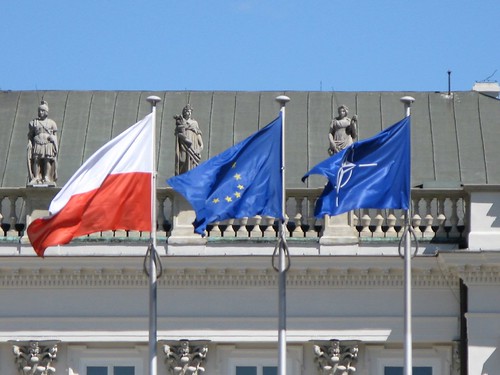
That pattern may be about to be repeated with the Polish presidency. Just nine days before Poland is set to take over the EU presidency, the Polish environment minister shocked his counterparts by announcing at an environment ministers meeting in Luxembourg yesterday that Poland would single-handedly block adoption of the EU's 2050 energy roadmap. The policy document sets a non-binding EU goal for a 40% cut in carbon emissions by 2030, a 60% cut by 2040 and an 80% cut by 2050, compared to 1990 levels. The Polish minister said it was just all too much for Poland, which generates 90% of its electricity from coal. "We expect higher solidarity in Europe, understanding the situation of particular Member States," the minister complained.
Hungary eventually relented, a little, but the timing of the law's enactment meant that for the last six months the Hungarian presidency has been associated with media repression. Many were questioning how a country which seemed to be so far outside the European mainstream in respecting press freedom could lead the bloc. And really, these sorts of questions never went away - particularly as a new controversy erupted with the ruling party unilaterally drawing up a new constitution for the country.
That pattern may be about to be repeated with the Polish presidency. Just nine days before Poland is set to take over the EU presidency, the Polish environment minister shocked his counterparts by announcing at an environment ministers meeting in Luxembourg yesterday that Poland would single-handedly block adoption of the EU's 2050 energy roadmap. The policy document sets a non-binding EU goal for a 40% cut in carbon emissions by 2030, a 60% cut by 2040 and an 80% cut by 2050, compared to 1990 levels. The Polish minister said it was just all too much for Poland, which generates 90% of its electricity from coal. "We expect higher solidarity in Europe, understanding the situation of particular Member States," the minister complained.
Wednesday, 9 March 2011
'One down, eleven to go' in Strasbourg battle
Travel-weary members of the European Parliament issued an aggressive challenge to France today, voting to skirt the requirement that they meet in Strasbourg twelve times a year by combining two of the 'Strasbourg sessions' into one. It remains to be seen whether member states, who are the only ones who can decide where the institutions meet, are going to challenge this.
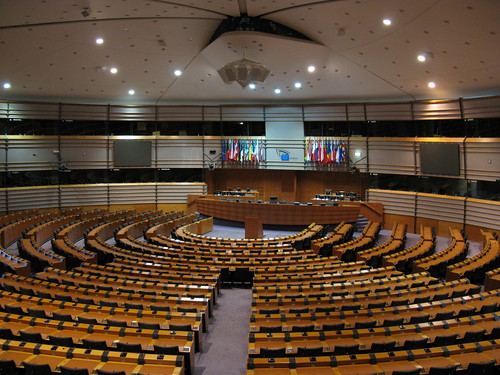
Every month the entire European Parliament is made to trek from Brussels to Strasbourg, France - which lies on the German-French border not far from Switzerland. This is because the original European Treaties designated Strasbourg as the headquarters of the parliament. Over time, the real work of the parliament has moved to Brussels in order to be closer to the other two EU institutions as well as lobbyists and NGOs. But the founding treaties still require the parliament to meet in Strasbourg twelve times a year, and all binding votes must take place there. The majority of members of the European Parliament (MEPs) hate the monthly "traveling circus" which requires them to go to Strasbourg for five days every month. A 2007 survey by Liberal MEP Alexander Nuno Alvaro showed that 89% of MEPs want to end the Strasbourg sessions.
But MEPs don't have a say in where they meet. Changing the Strasbourg requirement in the treaties would need the unanimous support of all member states, and France has always refused to support moving the parliament permanently to Brussels. In 1999 France built a massive new building for the parliament in Strasbourg, despite objections from MEPs who said they didn't want it. Now France points to the expense of the building to justify maintaining the Strasbourg seat.
Every month the entire European Parliament is made to trek from Brussels to Strasbourg, France - which lies on the German-French border not far from Switzerland. This is because the original European Treaties designated Strasbourg as the headquarters of the parliament. Over time, the real work of the parliament has moved to Brussels in order to be closer to the other two EU institutions as well as lobbyists and NGOs. But the founding treaties still require the parliament to meet in Strasbourg twelve times a year, and all binding votes must take place there. The majority of members of the European Parliament (MEPs) hate the monthly "traveling circus" which requires them to go to Strasbourg for five days every month. A 2007 survey by Liberal MEP Alexander Nuno Alvaro showed that 89% of MEPs want to end the Strasbourg sessions.
But MEPs don't have a say in where they meet. Changing the Strasbourg requirement in the treaties would need the unanimous support of all member states, and France has always refused to support moving the parliament permanently to Brussels. In 1999 France built a massive new building for the parliament in Strasbourg, despite objections from MEPs who said they didn't want it. Now France points to the expense of the building to justify maintaining the Strasbourg seat.
Wednesday, 21 October 2009
US Alarmed by Cameron’s Europe Moves
It looks like worries about a future Tory government aren’t limited to Paris and Berlin. Reports are circulating today that US Secretary of State Hillary Clinton expressed concern last week during her visit to Europe over David Cameron’s increasingly combative stance toward the EU, saying the US is worried that the “direction of travel” from what will most likely be the next governing party of the UK could lead to a rupture between Britain and the rest of Europe.
Her concern is not in isolation. The Obama administration has been increasingly questioning the wisdom of Tory leader David Cameron’s recent hostile moves toward Europe, including his decision to take the Tories out of the main centre-right grouping in the European Parliament to form a new alliance with hard-right Eastern European parties and his antagonism toward the Lisbon Treaty. The Times reports today that the US Ambassador to Britain has also been voicing alarm over Cameron’s Europe plans, and that Jewish groups within the Democratic Party are expressing alarm over Cameron’s new ties to anti-Semitic politicians in Poland.
The concerns are further evidence that the Obama administration considers the so-called “special relationship” (a term I’ve never heard used in the US, though it is used almost obsessively in the UK) to be obsolete, and would prefer a united Europe to deal with in foreign policy. This is a sea change from the previous US administration, which notoriously used the idea of the “special relationship” to drive a wedge between the UK and Europe in the run-up to the Iraq war. As The Times notes,
Wheras the Bush administration was hostile toward the EU and seemed to repeatedly seek to undermine it, the Obama administration has so far been an enthusiastic supporter, as demonstrated by Hillary Clinton’s speech in Brussels earlier this year. In fact I think I could without hyperbole call Obama a European federalist. He wants a strong, united Europe as a partner in combating terrorism, dealing with the financial crisis and providing a counterweight to China.
The administration’s reported comments seem to suggest that Obama has little patience for European leaders who cow-tow to old instincts of nationalism and divisiveness. And he has also demonstrated impatience with some of the more archaic, slow-moving aspects of the EU, and is likely eager for the streamlined reforms the Lisbon Treaty will bring about. Of course this is just speculation, but it’s what his administration’s statements and behaviour seem to suggest.
Her concern is not in isolation. The Obama administration has been increasingly questioning the wisdom of Tory leader David Cameron’s recent hostile moves toward Europe, including his decision to take the Tories out of the main centre-right grouping in the European Parliament to form a new alliance with hard-right Eastern European parties and his antagonism toward the Lisbon Treaty. The Times reports today that the US Ambassador to Britain has also been voicing alarm over Cameron’s Europe plans, and that Jewish groups within the Democratic Party are expressing alarm over Cameron’s new ties to anti-Semitic politicians in Poland.
The concerns are further evidence that the Obama administration considers the so-called “special relationship” (a term I’ve never heard used in the US, though it is used almost obsessively in the UK) to be obsolete, and would prefer a united Europe to deal with in foreign policy. This is a sea change from the previous US administration, which notoriously used the idea of the “special relationship” to drive a wedge between the UK and Europe in the run-up to the Iraq war. As The Times notes,
“[Obama] believes that Britain should be at the heart of Europe — a position that has been put in doubt by French and German anger over Mr Cameron’s decision to sever ties with the federalist centre right grouping in the Strasbourg Parliament. Mr Obama is enthusiastic about the idea of a permanent EU president to replace the revolving chairmanship of the EU council, a measure opposed by the Conservatives.”
The administration’s reported comments seem to suggest that Obama has little patience for European leaders who cow-tow to old instincts of nationalism and divisiveness. And he has also demonstrated impatience with some of the more archaic, slow-moving aspects of the EU, and is likely eager for the streamlined reforms the Lisbon Treaty will bring about. Of course this is just speculation, but it’s what his administration’s statements and behaviour seem to suggest.
Tuesday, 23 June 2009
Tories Form “Anti-EU” EU Party
The new block will be the fourth largest in the parliament, which sounds big until you realize that the parliament is made up of three main blocks (the conservatives, the socialists, and the liberals) and then a whole lot of side parties. Really, it’s a bit like bragging that the Democratic Unionist party is the fourth largest block in the British House of Commons, both in terms of size and influence. Ideologically it would be more like the 7th largest Commons party Sinn Fein actually, considering the Tory MEPs apparently don’t think their constituents should be part of the EU in the same way Sinn Fein doesn’t believe their constituents should be part of the UK.
I nearly spit out my drink last night when I saw the way Channel 4 News mentioned the official formation of the party. It was literally the last item in their quick news roundup, a 10 second sentence tossed in as a seeming afterthought. It was the same on the BBC, and this is after the British media basically completely ignored the issue during the run-up to the Parliament election. Newsnight was the only show I saw that gave the issue more than passing lip service, and that was only in a roughly two minute interview with a correspondent in Brussels.
To the extent that today’s papers have covered the development at all, they’ve tended to focus on salacious details about the unsavoury characters the Tories have chosen to align themselves with, Both the Daily Mail and the Guardian devoted most of their articles to this aspect, rather than on the loss of influence for the UK in Brussels. The Financial Times was the only paper I saw that focused on the loss-of-influence angle, quoting Labour party officials as saying the Tories have ‘moved to extremism in allying with the extreme right’. The FT quotes foreign secretary David Miliband as saying Cameron has throw away influence in Europe "in favour of ideological isolationism".
What’s Next for the ECR?
The Tories argue, however, that losing British influence in the short term is worth the sacrifice if in the long term they can eventually form a viable, strong anti-federalist party that could put the kibosh on Commission attempts to further integrate and harmonize EU law. While this could be true, with the way the parliament works their little party would have to grow exponentially in order to have that kind of influence, and with their lack of interest in Europe it’s hard to see the Tories grabbing the bull by the horns for that project. It’s strange that a national party that is not very interested in Europe and indeed quite internally divided by the subject would choose to take on this quite ambitious project of “reforming” the EU.
And perhaps therein lies the problem with British euroscepticism. So much of what the UK does to resist EU federalism are empty gestures, symbolic grumblings of discontent that do nothing to advance British interests and instead shut the Brits out of influence in Brussels. They are quite simply cutting off their nose to spite their face.
Who knows, I could be wrong. The far-right fascist parties that were given seats across Europe have given indications that they would like to join, which would not only increase the size of the party but also spice it up a bit. But the Tories are almost certain not to let them in - and why would they, when they already got their requisite number of foreign MEPs from eight countries? I suspect the end goal here was really just to form a party, not for the party to actually accomplish anything.
Subscribe to:
Comments (Atom)