British people are going to have to get used to their new most-hated-nation status. As an American in Europe, I can give some tips on how to endure it.
"I hate America, but I love Americans". It's a line I've heard so many times in the past decade of living in Europe that I barely notice it any more.
I got it particularly often when I first moved to Europe in 2006. It was just three years since the launch of the Iraq War, which the vast majority of Europeans opposed. George W. Bush, immensely unpopular in Europe, was still the president. I had to face down a lot of hostility toward the country I came from.
But usually, after an energetic rant against the crimes of America, the person speaking to me would finish by saying something like, "but I love Americans. They're so creative, so full of energy. I love their TV and movies. I just don't understand how these same people can vote for leaders like this."
Showing posts with label UK Politics. Show all posts
Friday, 7 October 2016
Monday, 26 September 2016
The Brexit diaspora
I'm in Brussels this week, and have spent much of it catching up. I was away all summer, and though I was here briefly for work in early September, this is the first time I've been able to see a lot of my friends since that fateful day on 22 June.
Belgium may be experiencing a sunny Indian summer at the moment, but somehow the city still feels dark. There is a palpable fear about where the world is going. Post-Brexit, and possibly pre-Trump, we find ourselves in a moment of extraordinary unease. In my entire life, I've never felt such an overwhelming air of pessimism and fear all around me. It seems as if everyone has lost hope.
Nobody seems to be feeling this more acutely right now than Brits in Brussels. They've dedicated much of their lives to the idea that they were part of a grand project - citizens of a unifying Europe. Suddenly, half of their countrymen have pulled the rug out from under them, upending their entire lives. You are no longer a European citizen, they have been told. Come home at once.
Friday, 15 July 2016
Europe will referenda itself to death
From Budapest to Paris to Cleveland, the West‘s blind idolatry of direct democracy will be its own undoing.
"The referendum is a device of dictators and demagogues," declared UK prime minister Clement Attlee in 1949. No surprise, then, that Europe’s next anti-EU referendum following Brexit has been called by Hungary’s Viktor Orban.
The Hungarian prime minister’s absolute control over the political, judicial and media institutions in his country have been likened by many to the power of a dictator, including by European Commission President Jean-Claude Juncker.
Hungary has attracted particularly negative international attention because of its brutal treatment of Syrian refugees trying to cross through the country to Germany. It is the latter issue that has prompted the referendum, scheduled for 2 October.
Sunday, 3 July 2016
Thousands marched, but what are the options for keeping UK in EU?
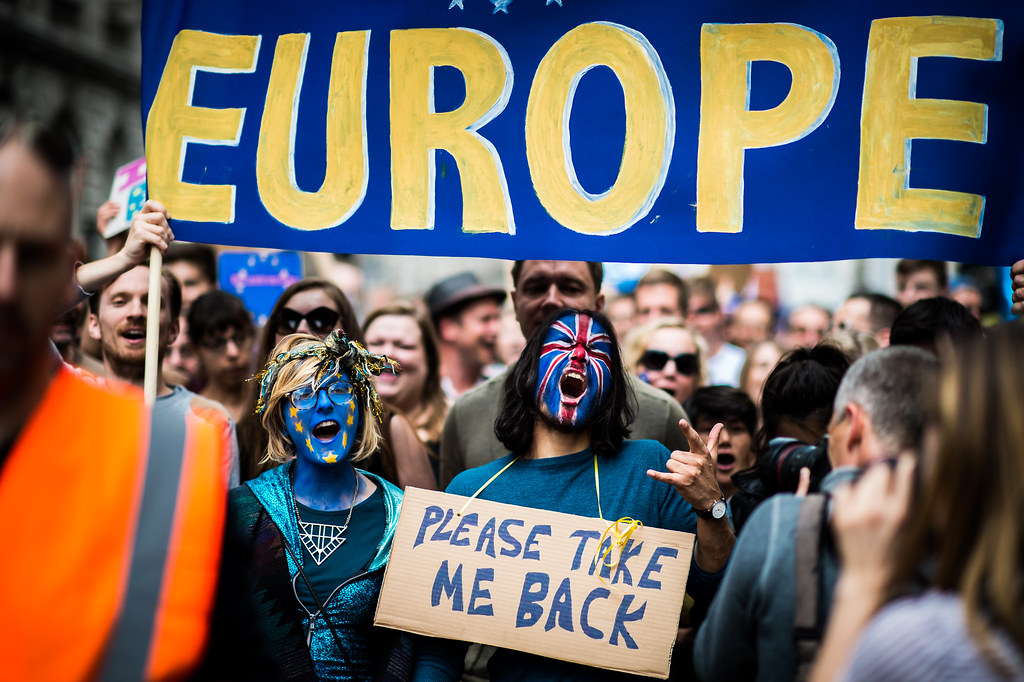
Yesterday saw an unprecedented, and uncharacteristic, outpouring of love for the European Union on the streets of London.
Tens of thousands of people marched on the British Parliament in a protest hastily organised on Facebook called 'March for Europe'. It was a show of European love not ordinarily seen in the British capital, where EU flags are normally verboten. And it wasn't a vague outpouring of sentiment either. The protesters had a specific demand for the parliament - do not pull the trigger on Brexit. That trigger is known as article 50 (more on that later).
The crowd was overwhelmingly young and educated. As The Guardian's Ed Vulliamy noted, "the hollow, bitter wit of the banners and placards was a fair indication of who took to the streets". “Un-Fuck My Future”, the placards pleaded. “No Brex Please, We’re British”. "Fromage, not Farage". Pictures of Whitney Houston singing “I Will Always Love EU” and Rick Astley singing "Never gonna give EU up, never gonna let EU down".
“Hell no, we won’t go!” they chanted.
Tens of thousands of people marched on the British Parliament in a protest hastily organised on Facebook called 'March for Europe'. It was a show of European love not ordinarily seen in the British capital, where EU flags are normally verboten. And it wasn't a vague outpouring of sentiment either. The protesters had a specific demand for the parliament - do not pull the trigger on Brexit. That trigger is known as article 50 (more on that later).
The crowd was overwhelmingly young and educated. As The Guardian's Ed Vulliamy noted, "the hollow, bitter wit of the banners and placards was a fair indication of who took to the streets". “Un-Fuck My Future”, the placards pleaded. “No Brex Please, We’re British”. "Fromage, not Farage". Pictures of Whitney Houston singing “I Will Always Love EU” and Rick Astley singing "Never gonna give EU up, never gonna let EU down".
“Hell no, we won’t go!” they chanted.
Saturday, 14 September 2013
Total recall
Recently, the disgraceful tale of a Scottish politician refusing to resign in the face of 23 (yes, 23) separate domestic abuse convictions has revived talk in the UK of that old populist hobby-horse – the right to recall.
Bill Walker, a Scottish National Party member of the Scottish Parliament (pictured below), was convicted last month of a series of domestic abuse offenses against three different ex wives and a stepdaughter over three decades.
Though he was expelled from the SNP after the conviction, for weeks Walker refused to vacate his seat – and there was nothing the SNP or the Scottish Parliament could do to make him leave. As the British media examined the bizarre situation, those who advocate establishing a citizen's recall law in the UK came out in force to argue that this disgraceful state of affairs makes their case.
Monday, 25 March 2013
Violence erupts at French anti-gay-marriage protests
Across Europe and the Americas, gay
marriage has been enacted peacefully and with minimal protest. Meanwhile, in France...
Yesterday, an estimated one million people flooded the streets of Paris to protest plans to enact same-sex marriage in France. It was the second such massive demonstration, following one held in January against French President Francois Hollande’s effort to enact gay marriage - a fulfilment of a promise made during last year’s presidential campaign.
This time, the demonstration took a nasty turn. The
protestors became violent. The police resorted to using tear gas, which
allegedly injured some of the many children being used in the protest. The
police counter that the anti-gay-marriage protestors were using children as
human shields. The president of France's Christian Democrat party says she was injured by police during the protest. Today, the opposition UMP party of Nicolas Sarkozy is calling
for the resignation of the Paris
chief of police and French interior minister Manuel Valls in response to the
tear gas 'used against children'.
Tuesday, 5 February 2013
UK rejects ‘separate but equal’ marriage
The British House of Commons has just concluded a historic
vote, voting 400 to 175 to adopt gay marriage in England. But despite its historic nature, the legislation will prove to be of more symbolic than practical importance –
particularly for its author, Conservative Prime Minister David Cameron.
In effect, the UK has already had gay marriage for eight years – but by another name. The Civil Unions signed into UK law in 2004 confer the exact same rights as a marriage – to the letter. Interestingly, as I’ve written about before, this made the gay marriage debate fade out of the limelight for many years in the UK. Because the civil unions were theoretically “equal”, gay rights activists weren’t really pushing too hard to have the word changed to ‘marriage’.
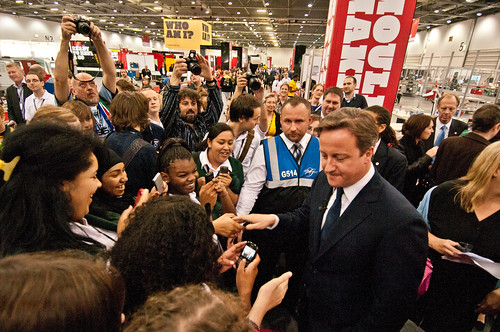
That was until an unlikely hero came along – David Cameron, leader of the British Conservative party. Cameron made it the central mission of his leadership to “detoxify” the conservative brand in the UK after years of being successfully cast as the “nasty Tories” by Tony Blair. Part of his effort to modernise the party was an campaign pledge in 2010 to enact gay marriage if elected. The response from gay UK was, “well, alright then I guess.”
In effect, the UK has already had gay marriage for eight years – but by another name. The Civil Unions signed into UK law in 2004 confer the exact same rights as a marriage – to the letter. Interestingly, as I’ve written about before, this made the gay marriage debate fade out of the limelight for many years in the UK. Because the civil unions were theoretically “equal”, gay rights activists weren’t really pushing too hard to have the word changed to ‘marriage’.
That was until an unlikely hero came along – David Cameron, leader of the British Conservative party. Cameron made it the central mission of his leadership to “detoxify” the conservative brand in the UK after years of being successfully cast as the “nasty Tories” by Tony Blair. Part of his effort to modernise the party was an campaign pledge in 2010 to enact gay marriage if elected. The response from gay UK was, “well, alright then I guess.”
Wednesday, 23 January 2013
Brexit begins
But despite its rhetorical
flaws, Cameron’s speech will be one for the history books. With three words - "in/out
referendum" – Cameron has plunged the UK into four years of economic
uncertainty. The prime minister will have the dreaded ‘Brexit vote’, but only
in 2017, after the next election. With this he hopes to placate the fiercely eurosceptic
wing of his party while at the same time kicking the can down the road. But the
long time frame, business leaders and non-EU governments have warned, could be hugely damaging to the
British economy. Investors will likely be hesitant to invest in the UK when their
future in the European market is uncertain.
Friday, 7 October 2011
Two different animals
Conservative Prime Minister David Cameron stood before the yearly gathering of Conservative Party members – similar to the 'national conventions' in the US – and said he wholeheartedly supports gay marriage and will work to enact it in the UK next year (to replace the current civil unions). This was met with thundering applause in the hall. Try to imagine the reaction if a presidential candidate said this to the Republican National Convention!
In the second example, a huge row has developed after the Conservative Home Secretary Theresa May used an incorrect fact in her speech to the conference. Explaining why she wants to dismantle the Human Rights Act, which is the British transposition of the European Convention on Human Rights, she listed as an example a case where the act's requirements meant that there was an "illegal immigrant who cannot be deported because – and I am not making this up – he had a pet cat."
As it turns out, she was making this up. As the decision shows, the actual verdict against deportation had nothing to do with a pet cat, the decision was instead due to a mistake made by the Home Office's prosecution. A pet cat, which had been mentioned in the appellant's brief along with his partner as reasons why he has a home life in the UK, was merely mentioned by the judge in his verdict as an attempt at humour. It was later revealed that May had taken the cat story from a speech made by UK Independence Party leader Nigel Farage.
Tuesday, 20 September 2011
Lib Dems declare 'rhetoric war' on Conservative allies
According to opinions polls the party has lost more than half of its supporters since its decision to join with the Conservatives to form a coalition government last year. A subsequent u-turn on tuition fees and the loss of the alternative votereferendum – the prize they had been awarded for allying with the Conservatives – has sent the party to what some think could be their lowest popularity ever. This despite the fact that they are now in government for the first time.
The language being used at this week's conference shows the party is going to try a drastic change of tact in order to stop the haemorrhaging of support. Though they have been restrained in showing major disagreement with their coalition partners over the past year, after this week the honeymoon is clearly over - rhetorically at least.
Monday, 5 September 2011
Conservative Party may disband in Scotland
In an attempt to shed its image as an 'English party', members of the Conservative Party in Scotland are considering splintering off from the Tories and forming a new Scottish centre-right party. The move, which would not be the result of any policy disagreement with the Tory leadership but rather for identification issues, reflects just how strong regionalism has become in Europe in recent years.
The change is being proposed by Murdo Frasier, a candidate in the current race for a new leader of the Conservatives in Scotland. The Tories have been pretty much banished from power by Scottish voters for over a decade now, ever since a massive defeat in 1997. They currently hold only 15 of the 129 seats in the Scottish Parliament and only one of Scotland's 59 seats in the British Parliament. Since 2007 the largest party in the Scottish Parliament has been the Scottish National Party, which wants to seceed from the UK.
Frasier has centred his leadership campaign around a promise to break this trend by dissolving the party, which he says has become a "toxic brand" in Scotland because people see it as representing the interests of Westminster over Edinburgh. The new party would likely not even have the words "conservative" or "tory" in its name.
The change is being proposed by Murdo Frasier, a candidate in the current race for a new leader of the Conservatives in Scotland. The Tories have been pretty much banished from power by Scottish voters for over a decade now, ever since a massive defeat in 1997. They currently hold only 15 of the 129 seats in the Scottish Parliament and only one of Scotland's 59 seats in the British Parliament. Since 2007 the largest party in the Scottish Parliament has been the Scottish National Party, which wants to seceed from the UK.
Frasier has centred his leadership campaign around a promise to break this trend by dissolving the party, which he says has become a "toxic brand" in Scotland because people see it as representing the interests of Westminster over Edinburgh. The new party would likely not even have the words "conservative" or "tory" in its name.
Tuesday, 16 August 2011
British police don't want American supercop
David Cameron's announcement last week that he is appointing former New York City police chief Bill Bratton to guide the UK through its response to the riots has been met with a barrage of criticism from the country's police chiefs. The war of words over the appointment of the controversial 'supercop', who implemented New York's "zero tolerance" approach to policing in the 1990's, has exposed a deep rift between Westminster and Scotland Yard, and the atmosphere is only getting more heated.
Bratton gained fame as New York Mayor Rudy Giuliani's right-hand man in implementing the "broken windows theory" of policing in the city. The theory states that petty crime leads to serious crime, so the 1990's led to a serious crackdown on minor offenses. It turned New York from one of the most crime-ridden cities in the Western world to the safest large city in the United States. But on the flip side, many say it has turned New York into a virtual police state, where officers can arrest you for anything.
The original plan was reportedly to appoint Bratton as London's police commissioner, but this was shot down because he is not a British citizen. So instead he has been appointed as a government adviser. But even this has angered Britain's police chiefs, who say Bratton's 'zero tolerance' approach to policing in America is not appropriate for the UK.
Bratton gained fame as New York Mayor Rudy Giuliani's right-hand man in implementing the "broken windows theory" of policing in the city. The theory states that petty crime leads to serious crime, so the 1990's led to a serious crackdown on minor offenses. It turned New York from one of the most crime-ridden cities in the Western world to the safest large city in the United States. But on the flip side, many say it has turned New York into a virtual police state, where officers can arrest you for anything.
The original plan was reportedly to appoint Bratton as London's police commissioner, but this was shot down because he is not a British citizen. So instead he has been appointed as a government adviser. But even this has angered Britain's police chiefs, who say Bratton's 'zero tolerance' approach to policing in America is not appropriate for the UK.
Friday, 12 August 2011
David Cameron's 'Katrina moment'
Members of the British parliament were called back from their vacations for an emergency session yesterday to deal with the country's riots earlier this week. The past two nights have been quiet - a combination of bad weather and a surge in police forces seems to have done the trick. But now the political storm begins, with the public demanding to know how the situation could have gotten so out of control.
The focus of much of the public's ire has been prime minister David Cameron. He was seen to be back-footed during the crisis, spending the first few days of the rioting insisting he would not cut short his vacation in Italy, and only returning to the country after the riots got very serious Monday night. The media has been referring to it as his "Katrina moment", referencing the back-footed response of US president George W. Bush to Hurricane Katrina in 2005. The incident is being seen as a defining moment of his premiership, and he has been much maligned for it. The above gag photo of his speech on Tuesday from photoshoplooter illustrates the public's perception of his response.
Cameron has been working overtime to dispel that image over the past few days. In yesterday's emergency session he aggressively denounced the riots, saying the behavior of this bad element of society could not be excused by social factors or circumstances. And though his party often criticised the opposition Labour party for introducing "knee-jerk legislation" after crises during their time in government, he floated no fewer than six new policies. These include a ban on face masks in public, increased curfew powers, allowing courts to ban children from gathering in certain places and, most controversially, he said he is considering allowing temporary bans on social media during times of social unrest.
The focus of much of the public's ire has been prime minister David Cameron. He was seen to be back-footed during the crisis, spending the first few days of the rioting insisting he would not cut short his vacation in Italy, and only returning to the country after the riots got very serious Monday night. The media has been referring to it as his "Katrina moment", referencing the back-footed response of US president George W. Bush to Hurricane Katrina in 2005. The incident is being seen as a defining moment of his premiership, and he has been much maligned for it. The above gag photo of his speech on Tuesday from photoshoplooter illustrates the public's perception of his response.
Cameron has been working overtime to dispel that image over the past few days. In yesterday's emergency session he aggressively denounced the riots, saying the behavior of this bad element of society could not be excused by social factors or circumstances. And though his party often criticised the opposition Labour party for introducing "knee-jerk legislation" after crises during their time in government, he floated no fewer than six new policies. These include a ban on face masks in public, increased curfew powers, allowing courts to ban children from gathering in certain places and, most controversially, he said he is considering allowing temporary bans on social media during times of social unrest.
Friday, 8 July 2011
Is Murdoch's influence in British politics coming to an end?
The News of the World phone hacking scandal in the UK has literally exploded this week, with fresh allegations that the Rupert Murdoch-owned paper hacked into the phones of murder victims, victims of the 7/7 terrorism attacks, relatives of dead soldiers and detectives investigating cases. Late yesterday it was announced that the 160-year-old paper will shut down as a result of the scandal, news that sent shock waves through Britain.
The allegations of bribing police officials and hacking into phones began several years ago, but the latest revelations are so distasteful that it seems to have given British politicians the resolve to publicly denounce Murdoch, something they never dared to do before. At the centre of the scandal is Rebekah Brooks, who was editor of News of the World at the time of the phone hacking but has since risen to become chief executive of Rupert Murdoch's global media empire News Corp. The company, which also owns Fox News and papers such as the New York Post in the US, controls a vast array of British tabloid papers and has long been known in the UK as a political power broker. Murdoch controls British politics, it is claimed, by threatening to use his papers to destroy any politician that doesn't give in to his demands.
But Murdopch's influence over British politics seemed to come to a climactic end this week, as one after another members of the British Parliament took to the floor and denounced not only News Corp, but also the fact that the parliament for so long has been bullied by the company. Conservative MP Zac Goldsmith said News Corp has "systematically corrupted the police and in my view has gelded this Parliament, to our shame.” Labour MP Chris Bryant said the hacking was symptomatic of the way News Corp operates around the world.
The allegations of bribing police officials and hacking into phones began several years ago, but the latest revelations are so distasteful that it seems to have given British politicians the resolve to publicly denounce Murdoch, something they never dared to do before. At the centre of the scandal is Rebekah Brooks, who was editor of News of the World at the time of the phone hacking but has since risen to become chief executive of Rupert Murdoch's global media empire News Corp. The company, which also owns Fox News and papers such as the New York Post in the US, controls a vast array of British tabloid papers and has long been known in the UK as a political power broker. Murdoch controls British politics, it is claimed, by threatening to use his papers to destroy any politician that doesn't give in to his demands.
But Murdopch's influence over British politics seemed to come to a climactic end this week, as one after another members of the British Parliament took to the floor and denounced not only News Corp, but also the fact that the parliament for so long has been bullied by the company. Conservative MP Zac Goldsmith said News Corp has "systematically corrupted the police and in my view has gelded this Parliament, to our shame.” Labour MP Chris Bryant said the hacking was symptomatic of the way News Corp operates around the world.
Thursday, 5 May 2011
Today Britain votes on how to vote
Today's the big day in the UK – the nation goes to the polls for a referendum on whether the country's voting system should be changed from a US-style first-past-the-post method to something closert to a European-style proportional system.
Polls going into the voting today indicate that the likely result will be a 'no', which would be a crushing blow for the Liberal Democrats who made this referendum their central demand for entering into a governing coalition with the Conservatives. Then again, so much about this referendum depends on who actually turns out, and voter interest in this referendum is incredibly low. No matter how people have been responding to the pollsters, it may only be the people who are enthusiastic about switching to a new system that turn out today.
Wednesday, 12 January 2011
UK throws a spanner into EU integration
British prime minister David Cameron survived a potential party revolt last night after successfully guiding his "European Union Bill" through a key vote in parliament. The bill, which honours a campaign promise to require every EU Treaty change be put to a public referendum in Britain, has been derided by the Conservative Party's hardcore Eurosceptic wing as being a soft touch.
The hardcore Eurosceptics are furious that the bill would make an exception for "minor" treaty changes, such as the upcoming establishment of a permanent financial rescue mechanism to aid faltering Eurozone states. The Tory leadership has insisted any designation of a treaty change as "minor" would be open to challenge by citizens, but the Eurosceptics counter that the final decision would be made by a judge and therefor the bill is not really "putting power back in the hands of the people" as Cameron claims. The rebel MPs say that what Cameron promised during the campaign was to submit every change, no matter how small, to public vote. They are alleging that the bill has been watered-down to appease the pro-European Liberal Democrats, who the Conservatives are now in coalition with.
But in a showdown vote last night the Eurosceptic rebels were only able to convince 39 coalition MPs to vote against the bill. The opposition Labour Party also voted against it, though they weren't exactly profiles in euro-defending courage in doing it - saying only that it was a 'distraction' from more pressing issues. The bill sailed through this stage of the process and looks set for passage.
Today the British media are heralding a victory for Cameron over the hardcore Eurosceptics who were unable to intimidate the prime minister into enacting a harsher bill. So hooray hoorah, on to the next subject. Brussels must be elated to have been spared this harsh retribution, right?
The hardcore Eurosceptics are furious that the bill would make an exception for "minor" treaty changes, such as the upcoming establishment of a permanent financial rescue mechanism to aid faltering Eurozone states. The Tory leadership has insisted any designation of a treaty change as "minor" would be open to challenge by citizens, but the Eurosceptics counter that the final decision would be made by a judge and therefor the bill is not really "putting power back in the hands of the people" as Cameron claims. The rebel MPs say that what Cameron promised during the campaign was to submit every change, no matter how small, to public vote. They are alleging that the bill has been watered-down to appease the pro-European Liberal Democrats, who the Conservatives are now in coalition with.
But in a showdown vote last night the Eurosceptic rebels were only able to convince 39 coalition MPs to vote against the bill. The opposition Labour Party also voted against it, though they weren't exactly profiles in euro-defending courage in doing it - saying only that it was a 'distraction' from more pressing issues. The bill sailed through this stage of the process and looks set for passage.
Today the British media are heralding a victory for Cameron over the hardcore Eurosceptics who were unable to intimidate the prime minister into enacting a harsher bill. So hooray hoorah, on to the next subject. Brussels must be elated to have been spared this harsh retribution, right?
Thursday, 9 December 2010
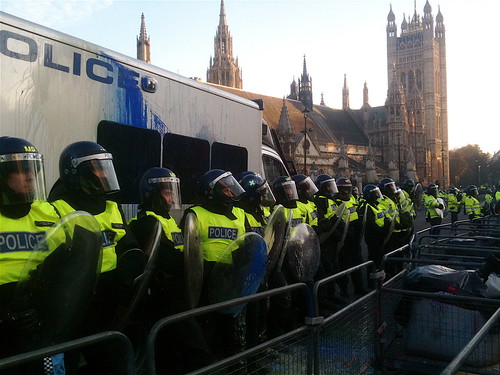
Violent protests in London as government increases tuition
London was rocked today by the most violent anti-austerity protests yet seen, with Parliament Square becoming the scene of incredible sights of mayhem. The near-rioting took place just outside the Houses of Parliament where, inside, British politicians were casting the big vote on increasing English tuition rates by 300%. Horses charged into the crowd, fires raged and several police officers were seriously injured. Protesters broke into the treasury building and ransacked it. Christmas shoppers on Oxford Street were attacked. Even Prince Charles and Camilla were attacked as they tried to drive to the theatre, with protesters surrounding their car and smashing the windows.
The turmoil outside was mirrored by turmoil inside. The Liberal Democrats, who are in the governing coalition with the Conservative Party, saw a rebellion over the issue. Half of the Liberals defected, as did several Conservatives, shrinking the coalition's 84-seat majority to a majority of just 21 on this vote. The opposition Labour Party brutally criticised the plan, which will for the first time put British students in tens of thousands of pounds of debt after finishing a four-year degree - a situation that will be unique in all of Europe.
Wednesday, 20 October 2010
UK cuts 1/5 of government spending - is it possible in the US?
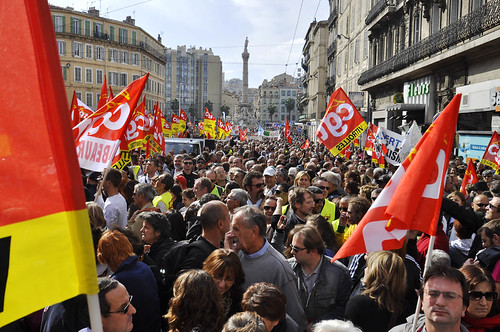
As rolling strikes and violent protests against austerity measures continue to cause chaos in France today, across the channel the new conservative government of David Cameron introduced their much-anticipated package of budget cuts, the biggest slash to the UK budget since World War II. Naturally, the stoic British public is not reacting in the same 'take to the streets' manner of the French in their reaction to Sarkozy's attempts at budget cuts. Instead, there seems to be a sense of profound sadness and anxiety in the UK today.
Put quite simply, the cuts are massive. £83 billion ($130 billion) in cuts were announced this afternoon, an average of 20% out of every government department. 490,000 government employees will lose their jobs. Government offices in London will be cut by a third. Rent will be increased for people in public housing, police services will be cut, local town councils will get less money, and prisons will have less space. The retirement age will be raised to 66 (compared to 62 in the US). Both the sales and income tax will rise, with most of the increases coming out of the salaries of top earners. University teaching budgets will be cut by 75%, meaning the cost of tuition will rise considerably. And the British military isn't immune either, it will see an 8% cut in its budget. Even the queen will have to make do with less. Cameron is giving her a 14% pay cut.
Tuesday, 28 September 2010
‘Red Ed’ elected new British Labour leader
As political theater goes, there’s nothing quite like sibling rivalry played out on the national stage. Such a drama has been playing out in the UK over the past several months as brothers David and Ed Miliband fought it out to become the next leader of the Labour party. This week it all came to a thundering climax as the Labour party conference chose younger brother Ed to be their leader.
The choice was not just between two different branches of a family tree – it was between two differing political ideologies. Or at least that’s the way it was being presented. Older brother David was the anointed successor to Tony Blair, and he was firmly entrenched in the “New Labour” makeover created by Blair and Gordon Brown in the 1990’s. That movement pulled the Labour party to the right to make it palatable to middle England and therefore electable. It came shortly after Bill Clinton remade the Democrats in the same way in the United States, though the term “New Democrat” has become almost an irrelevancy as the Democrats have settled comfortably into their new centrist role. That was never the case in the UK, where a large part of the Labour party resented Blair and Brown for pulling the party to the right and longed for a leader to end the New Labour project and return the party to its socialist routes.
Wednesday, 28 July 2010
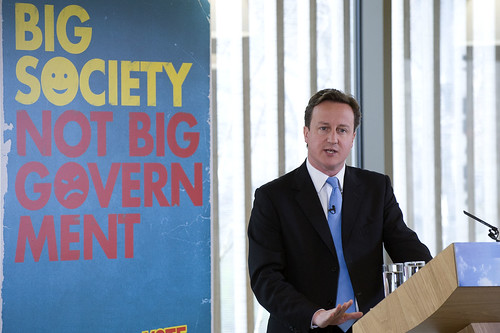
Do-it-yourself policing and garbage cleanup in Britain?
"So what's this now," the media is asking, "big society is actually a real thing?" It would be as if Barack Obama, after becoming presient, had set up a "Hope Task Force" in order to monitor and manage the levels of hope in local communities. The media didn't know what to make of it at first, but within days the consensus seems to be that this scheme is merely a cover-up for the massive budget cuts that are about to be made on local community services. Or is it?
Subscribe to:
Comments (Atom)