Showing posts with label Christian Democrats. Show all posts

Tuesday, 20 September 2011

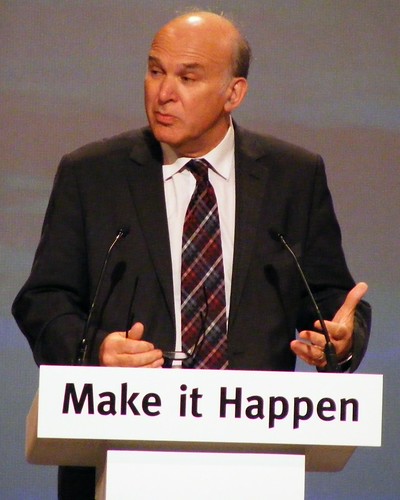
Lib Dems declare 'rhetoric war' on Conservative allies

This week's Liberal Democrat party conference in the UK has been generating big headlines in the British press as each successive speaker tries to outdo the previous one in denouncing the party's coalition allies. But do the harsh words signal an impending divorce with the Conservative Party, or are they merely a move to stop the freefall in Lib Dem support.

According to opinions polls the party has lost more than half of its supporters since its decision to join with the Conservatives to form a coalition government last year. A subsequent u-turn on tuition fees and the loss of the alternative votereferendum – the prize they had been awarded for allying with the Conservatives – has sent the party to what some think could be their lowest popularity ever. This despite the fact that they are now in government for the first time.

The language being used at this week's conference shows the party is going to try a drastic change of tact in order to stop the haemorrhaging of support. Though they have been restrained in showing major disagreement with their coalition partners over the past year, after this week the honeymoon is clearly over - rhetorically at least.

Monday, 5 September 2011

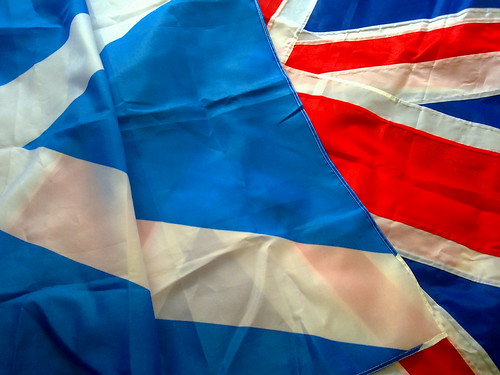
Conservative Party may disband in Scotland

In an attempt to shed its image as an 'English party', members of the Conservative Party in Scotland are considering splintering off from the Tories and forming a new Scottish centre-right party. The move, which would not be the result of any policy disagreement with the Tory leadership but rather for identification issues, reflects just how strong regionalism has become in Europe in recent years.

The change is being proposed by Murdo Frasier, a candidate in the current race for a new leader of the Conservatives in Scotland. The Tories have been pretty much banished from power by Scottish voters for over a decade now, ever since a massive defeat in 1997. They currently hold only 15 of the 129 seats in the Scottish Parliament and only one of Scotland's 59 seats in the British Parliament. Since 2007 the largest party in the Scottish Parliament has been the Scottish National Party, which wants to seceed from the UK.

Frasier has centred his leadership campaign around a promise to break this trend by dissolving the party, which he says has become a "toxic brand" in Scotland because people see it as representing the interests of Westminster over Edinburgh. The new party would likely not even have the words "conservative" or "tory" in its name.

Friday, 29 July 2011

Where does the Norway shooting leave Europe’s conservatives?

Last week’s far right terrorist attack in Norway has prompted a lot of questions in European capitals, and many of the hardest questions are being asked inside the party headquarters of Europe’s center-right. Many of Europe's conservative parties have spent the last few years courting the far right vote, by co-opting some of their messages on immigration and cultural identity issues. In several countries including Denmark, Italy and the Netherlands the mainstream conservative parties have even allied themselves with the far right and invited them into governing coalitions. After the Norway attack, are those days over?

To answer this question, one must understand the current political balance in Europe, and why it has come about. Conservative parties now dominate the national governments of Europe as well as the EU institutions, relegating the left to just a few Southern countries. The Guardian put out a great interactive map today where you can trace Europe’s left-right balance over the past 50 years. Contrast the map just ten years ago in 2001 on the left with today’s situation in 2011 on the right (left-of-center in red and right-of-center, including Liberal parties, in blue). Considering that Spain and Greece now have their policies dictated to them by their conservative Northern European creditors, the left has effectively disappeared from Europe.


So why has Europe veered rightward at a time of economic crisis? There are probably many contributing factors – but the biggest cause is the complete disarray of the European left. From Scandinavia to Germany to France to Italy, European Social Democrats are in complete chaos, torn by infighting, a lack of enthusiasm and confusion over ideology. Europeans have voted conservative not because of some great ideological shift toward economic liberalism and laissez-faire capitalism. They have done so because the parties of the left have not offered any credible alternative for governance.

Thursday, 13 May 2010

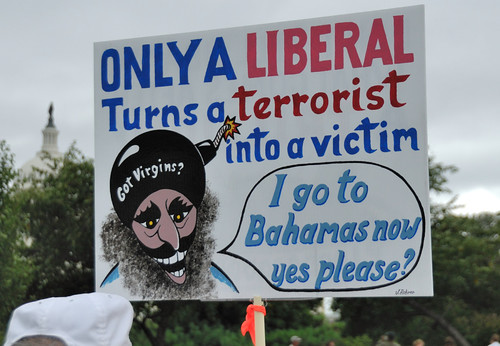
So who are these "liberals" anyway?

I've had a lot of Americans ask me this week "what the hell is a Liberal Democrat?" The UK election has received some coverage across the pond over the past weeks, and I've been watching with interest how the American media has been covering it. Some have chosen to leave any mention of the Liberal Democrats out for fear of confusing people. Others (Fox News notably) have described them as being "another liberal party" with Labour.

The confusion seems to be the result of the fact that "liberal" has different meanings in America and Europe. In the US "liberal" means someone on the left who believes in a combination of social liberalism, public welfare and a mixed economy. The American right wing has been relatively successful in giving the word "liberal" a negative connotation since the 1980's, hence the rise of the word "progressive".

But in Europe "liberal" is associated with classical liberalism, which is someone committed to the ideal of limited government, individual liberty and free markets. The difference has to do with the fact that the term, which originated in 19th century England, was never adopted in the US until the 1930's when FDR coined it to describe his New Deal policies. European liberals can be thought of more as "Libertarians" in the American context. Think Bill Maher.

Monday, 20 July 2009

Iceland and the enlargement debate

Iceland’s senate narrowly voted to begin talks for the island nation to join the EU on Thursday, and already there are those in Brussels saying the accession could be fast-tracked so quickly that Iceland would be a member by the end of next year. But with the current anti-expansion mood in Brussels, Iceland’s bid could raise uncomfortable divisions and a fundamental question for the anti-expansionists: in the heated debate over whether to take on new members states, does Iceland really count?

There’s plenty of reasons to argue that Iceland is almost irrelevant to the expansion argument. As a member of the European Economic Area (along with Norway, Liechtenstein and pseudo-member Switzerland), is it already beholden to most EU legislation and has been for some time. The EEA countries and Switzerland have worked out an arrangement with the EU where they are effectively members but are not restricted in certain areas in which they don’t want to be regulated. For Switzerland and Liechtenstein that issue has been banking secrecy (among others). For Norway the issue has been their offshore oil. And for Iceland the issue has been fishing. The trade-off is they then don’t get any representation in EU lawmaking, meaning they end up being governed by laws they had no hand in shaping. All of these countries are members of the EU’s borderless Schengen Zone (but confusingly EU member states Ireland and the UK are not).

Tuesday, 9 June 2009

Europe Goes Conservative in Crisis

If you heard a soft whimpering sound Sunday night, it was likely the sad echoes of Europe's left sobbing into their beers. All across the continent, with only the exception of Greece and Slovakia, Europe's Democratic Socialists were dealt crushing blows in the European Parliament election, whether they were the ruling party or the opposition.

Considering this result has come at a time when a majority of Europeans want to see more state action in the economy and people are reeling with anger against "fat cat capitalists", the result has left Europe's socialists scratching their heads, wondering what to do next. Though there is a mood of public anger across the EU, the ruling conservative governments in Germany, France, Italy and Poland didn't see their parties punished at the polls, in fact some of them even gained seats. On the other hand, the governing socialists in Spain, Hungary and Britain all took a drubbing at the polls. The Party of European Socialists (the block of various centre-left parties in the European Parliament that includes Britain's Labour, France's Socialists and Germany's Social Democrats) lost 20 seats.

I watched the election results while in Berlin this weekend, and I can tell you that even though the Social Democrats knew they weren't going to do great, the sheer margin between them and Angela Merkel's Christian Democrats was highly depressing for them, since it now seems certain she will no longer need to ally with them after the general election in Germany in the Fall. Sarkozy's UMP also easily defeated his socialist rivals, gaining 13 seats to put the UMP representation in the European parliament over the French socialist contingent for the first time ever. In Britain Labour received its lowest vote in the history of any UK country-wide election, coming in with a shocking 15.7%. The dismal results may even have the effect of forcing Gordon Brown to call an election, which would almost certainly lead to Labour being ousted from power.

So does this mean Europeans are turning to traditional conservative economic theory to guide them out of the current crisis? Not a chance, say most analysts. The poll result is being attributed more to the chaotic and fractured state Europe's socialists find themselves in today than any kind of ideological shift for the continent. As the Socialists have been in chaos, Europe's centre-right has hijacked the traditional tenants of socialism, co-opting the ideas of the left. Sarkozy suddenly went from being "Sarko l'Americain" to Sarko the French champion against unrestrained Anglo-Saxon-style capitalism. It would seem that Europe is now asking, what is Socialism in Europe in 2009? What is it the socialists represent?

So the coming months will see the socialists regrouping, in each country, and figuring out who they are and what they represent. It's clear they have lost control of the narrative, and they have lost credibility with much of the public. Socialist floor leader
Martin Schultz was probably right Sunday night when he called the result "a very sad evening for social democracy in Europe."

*Of course the election was also a big victory for extreem parties, particularly the far-right. But I'll write more on that tomorrow. Oh and yes, the Swedish Pirate Party did win a seat. Arrr, matey!