The News of the World phone hacking scandal in the UK has literally exploded this week, with fresh allegations that the Rupert Murdoch-owned paper hacked into the phones of murder victims, victims of the 7/7 terrorism attacks, relatives of dead soldiers and detectives investigating cases. Late yesterday it was announced that the 160-year-old paper will shut down as a result of the scandal, news that sent shock waves through Britain.
The allegations of bribing police officials and hacking into phones began several years ago, but the latest revelations are so distasteful that it seems to have given British politicians the resolve to publicly denounce Murdoch, something they never dared to do before. At the centre of the scandal is Rebekah Brooks, who was editor of News of the World at the time of the phone hacking but has since risen to become chief executive of Rupert Murdoch's global media empire News Corp. The company, which also owns Fox News and papers such as the New York Post in the US, controls a vast array of British tabloid papers and has long been known in the UK as a political power broker. Murdoch controls British politics, it is claimed, by threatening to use his papers to destroy any politician that doesn't give in to his demands.
But Murdopch's influence over British politics seemed to come to a climactic end this week, as one after another members of the British Parliament took to the floor and denounced not only News Corp, but also the fact that the parliament for so long has been bullied by the company. Conservative MP Zac Goldsmith said News Corp has "systematically corrupted the police and in my view has gelded this Parliament, to our shame.” Labour MP Chris Bryant said the hacking was symptomatic of the way News Corp operates around the world.
Showing posts with label Gordon Brown. Show all posts
Friday, 8 July 2011
Monday, 23 May 2011
Germany still punching below its weight
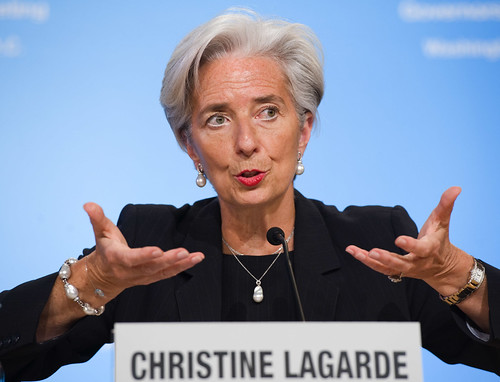
Europe hasn't wasted any time in getting its ducks in a row for the upcoming battle over naming a new IMF chief, with capitals across the continent voicing support over the weekend for French finance minister Christine Lagarde. That Europe so quickly agreed the monetary fund leadership should yet again go to someone from France reflects the political realities of Europe today. Britain can't be bothered, and Germany is too timid to take a leadership role.
Lagarde, who would be the first woman running the fund, received the backing of the British, German and Italian finance ministers over the weekend - with Luxembourg and Austria following suit. Chancellor Angela Merkel has yet to make her feelings known, but her finance minister would likely not have made the comments of support without her blessing.
The fund has been run since 2007 by Frenchman Dominique Strauss-Kahn, who has made it a mission of the fund to save Europe's faltering common currency. But following Strauss-Kahn's arrest on rape charges in the United States last week, countries like China and Brazil have signalled they intend to pressure the fund to take on a new leader from the developing world.
Lagarde, who would be the first woman running the fund, received the backing of the British, German and Italian finance ministers over the weekend - with Luxembourg and Austria following suit. Chancellor Angela Merkel has yet to make her feelings known, but her finance minister would likely not have made the comments of support without her blessing.
The fund has been run since 2007 by Frenchman Dominique Strauss-Kahn, who has made it a mission of the fund to save Europe's faltering common currency. But following Strauss-Kahn's arrest on rape charges in the United States last week, countries like China and Brazil have signalled they intend to pressure the fund to take on a new leader from the developing world.
Monday, 28 June 2010
When Dave met Barack
There’s been much speculation in the UK since the election victory of the Conservative Party’s David Cameron about how the new prime minister will get on with US president Barack Obama. The relationship between the men and women who have led the two partners in the so-called “special relationship” has been closely scrutinised for years.
There was the famously close relationship between Ronald Reagan and Maragaret Thatcher – two leaders whose ideologies had barely a hair’s length between them. Then there was the notoriously bizarre close friendship between Tony Blair and George W. Bush following September 11th - two men on opposite ends of the political spectrum united by their shared Christian evangelism and anti-terrorism crusade. That buddy-buddy relationship didn’t work out so well for Mr. Blair’s political career or for the UK as a whole.
Gordon Brown’s relationship with Barack Obama wasn’t exactly close (their first meeting was notoriously bungled) but the two men were singing from the same hymnsheet: during the economic downturn the best remedy was an injection of public spending and strong state action. Together they were able to convince the rest of the G20 nations that this was the best course of action, resulting in the consensus and unity of purpose displayed at the 2009 G20 summit in London.
There was the famously close relationship between Ronald Reagan and Maragaret Thatcher – two leaders whose ideologies had barely a hair’s length between them. Then there was the notoriously bizarre close friendship between Tony Blair and George W. Bush following September 11th - two men on opposite ends of the political spectrum united by their shared Christian evangelism and anti-terrorism crusade. That buddy-buddy relationship didn’t work out so well for Mr. Blair’s political career or for the UK as a whole.
Gordon Brown’s relationship with Barack Obama wasn’t exactly close (their first meeting was notoriously bungled) but the two men were singing from the same hymnsheet: during the economic downturn the best remedy was an injection of public spending and strong state action. Together they were able to convince the rest of the G20 nations that this was the best course of action, resulting in the consensus and unity of purpose displayed at the 2009 G20 summit in London.
Wednesday, 12 May 2010
An unholy alliance
Well, that was a crazy couple days. But last night it all came to a dramatic and sudden end as Gordon Brown abruptly drove to Buckingham Palace to hand in his resignation to Queen Elisabeth II, making Conservative leader David Cameron prime minister. So now it’s all done and dusted right? Hardly.
The excitement started Monday afternoon when, as the Conservatives and Liberal Democrats were still holding their negotiations, Gordon Brown emerged from 10 Downing Street to announced that Lib Dem leader Nick Clegg had approached the Labour Party to see what they could offer instead. And, most dramatically, Brown announced that he would be resigning as leader of the Labour Party.
That announcement soon sparked breathless speculation throughout the media. Gordon Brown stepping down was considered by many to be a precondition for a Liberal Democrat – Labour coalition. Surely, the media inferred, Brown would not have made that dramatic (and rather humiliating) announcement unless some kind of deal had been worked out. For the rest of the day Monday the assumption was that some kind of Lib-Lab coalition was being formed. The problem of course was that a Lib-Lab union would still not meet the threshold of reaching a majority in the parliament.
The excitement started Monday afternoon when, as the Conservatives and Liberal Democrats were still holding their negotiations, Gordon Brown emerged from 10 Downing Street to announced that Lib Dem leader Nick Clegg had approached the Labour Party to see what they could offer instead. And, most dramatically, Brown announced that he would be resigning as leader of the Labour Party.
That announcement soon sparked breathless speculation throughout the media. Gordon Brown stepping down was considered by many to be a precondition for a Liberal Democrat – Labour coalition. Surely, the media inferred, Brown would not have made that dramatic (and rather humiliating) announcement unless some kind of deal had been worked out. For the rest of the day Monday the assumption was that some kind of Lib-Lab coalition was being formed. The problem of course was that a Lib-Lab union would still not meet the threshold of reaching a majority in the parliament.
Saturday, 8 May 2010
The British election explained
Many Americans I've talked to have been confused about what exactly is going on here, and I can certainly sympathize. First they were hearing that this was the Liberal Democrats' year, that following the televised debates the "Clegg effect" was going to transform this election and make the UK's third party politically relevant for the first time in decades. But then when the results came in Thursday night, Americans heard that the Liberal Democrats had suffered a stunning defeat, actually losing seats in the parliament. Oh well, so much for that then. But wait, come Friday they learn that the Liberal Democrats are now the most important factor in these post-election days, as they will be selecting who will be prime minister. So how does someone lose so badly and yet end up selecting who the winner will be?
Friday, 7 May 2010
Westminster in chaos
It’s looking as if a Liberal Democrat – Labour coalition may not be enough for a majority either, which may rule out that option. It was a disastrously disappointing night for the Lib Dems and their supporters. Despite all the speculation after the first televised debate that this could be their year, the Lib Dems actually lost seats in this election. It’s truly stunning.
Of course along with all the polling showing surging support for the Lib Dems after the first debate came notes of caution that the pollsters did not know how the increased support would affect the actual vote. UK elections still use a peculiar first-past-the-post system for their elections which heavily favours the two main parties. This type of electoral system is normal in the presidential system of the US, but it is unusual in a parliamentary system. Most other parliamentary democracies use a ranked voting system where people indicate your first choice and then a second choice. The Lib Dems have made switching to a proportional representation or ranked system a cornerstone of their campaign, and recently Labour agreed to put it to a referendum. The Tories have refused to consider such a change, but it is likely that the Lib Dems would demand this if they were to enter into a coalition with the Conservatives..
Thursday, 29 April 2010
"That bigoted woman”
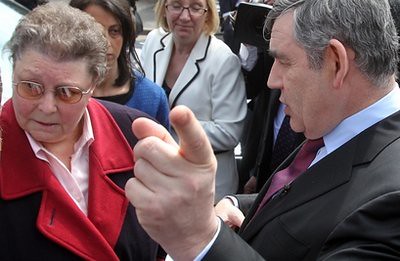
It was almost the perfect storm to sink Prime Minister Gordon Brown – an aloof, awkward politician with a reputation for behind-the-scenes temper tantrums disrespects a middle England voter by deriding her as “bigoted” because she brought up a question about immigration, the most sensitive political issue in Britain. Add to that the fact that this was an elderly woman who had actually stated her concerns to Brown in a fairly reasonable manner and you’ve got a concoction that is virtually guaranteed to spell the end of Gordon Brown’s political career.
Brown has never liked the schmoozing, glad-handing aspect of politics. He has long been known to get frustrated with the American-style 'popularity contest'that Tony Blair brought to British politics. It is likely that on this occasion, his frustration boiled over. Unfortunately for him, it happened while he was still on mic.
Friday, 23 April 2010
The Anti-American vs. the Anti-European
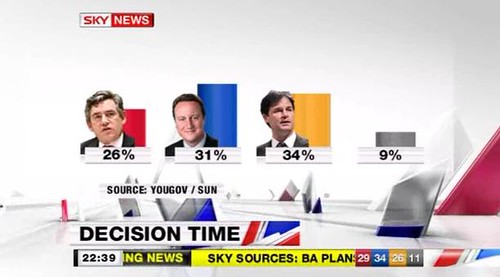
If we are to believe Gordon Brown, last night’s British election debate was between himself - the thoughtful moderate, Nick Clegg - the naïve anti-American, and David Cameron – the nationalistic anti-European. And Brown didn’t want us to forget this point, saying it over and over and even at one point pointing at the other two candidates saying forcefully “YOU are a risk to the economy and YOU are a risk to our security!” Really Gordon? Did this guy not receive any debate training at all?
I was eagerly awaiting this debate because it was meant to be focused on foreign policy. Unfortunately Sky News made a bit of a muck of it, the moderator was awful and the debate got off topic very easily. Bizarrely the moderator allowed the conversation to stay for long periods of time on silly questions (like “what are you personally doing in your daily life to help the earth?”) or questions that had already been covered in the previous debate (like immigration), while he cut questions on actual foreign policy topics (like the EU) short.
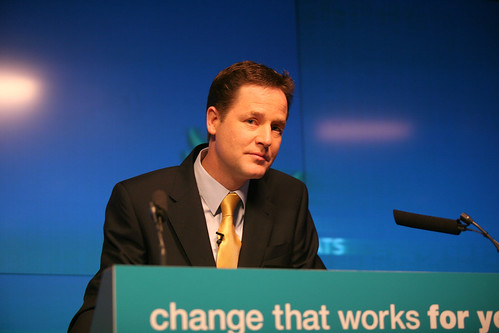
Still, I did get a solid 15 minutes of good EU discussion right at the start of the debate, so I was pleased. By far the most encouraging words came from Nick Clegg, the most pro-EU of the three candidates. Rather than lay off the usual meaningless populist nonsense that David Cameron comes up with or the usual “EU? What’s an EU?” of Gordon Brown, Clegg walked people through why the EU is important and why the UK cannot achieve its goals alone. His example of the EU pedophile law that the Conservatives opposed was brilliant (a friend of mine quipped, “The EU helps catch pedophiles? The Daily Mail is going to be so confused”). He also explained how he had worked in Brussels representing the UK to the EU under Margaret Thatcher and also represented the EU in its negotiations with China. He actually knows the EU, he has connections there and he would work to make the UK more influential in Europe instead of sitting on the sidelines as it does now.
I was eagerly awaiting this debate because it was meant to be focused on foreign policy. Unfortunately Sky News made a bit of a muck of it, the moderator was awful and the debate got off topic very easily. Bizarrely the moderator allowed the conversation to stay for long periods of time on silly questions (like “what are you personally doing in your daily life to help the earth?”) or questions that had already been covered in the previous debate (like immigration), while he cut questions on actual foreign policy topics (like the EU) short.
Still, I did get a solid 15 minutes of good EU discussion right at the start of the debate, so I was pleased. By far the most encouraging words came from Nick Clegg, the most pro-EU of the three candidates. Rather than lay off the usual meaningless populist nonsense that David Cameron comes up with or the usual “EU? What’s an EU?” of Gordon Brown, Clegg walked people through why the EU is important and why the UK cannot achieve its goals alone. His example of the EU pedophile law that the Conservatives opposed was brilliant (a friend of mine quipped, “The EU helps catch pedophiles? The Daily Mail is going to be so confused”). He also explained how he had worked in Brussels representing the UK to the EU under Margaret Thatcher and also represented the EU in its negotiations with China. He actually knows the EU, he has connections there and he would work to make the UK more influential in Europe instead of sitting on the sidelines as it does now.
Friday, 16 April 2010
The big debate
There was a lot of skepticism in the UK over whether this was really a useful exercise. After all, the party leaders already have a televised debate every week with prime ministers questions, when the full parliament sits and the leaders ask each other questions for 30 minutes. PMQs get very raucous, with hooting and hollering, accusations, jeers, laughter, you name it. Over the years they’ve gotten increasingly theatrical and bombastic, to the point where these days it seems a lot more like political theatre than legitimate debate.
There have been calls for the UK to start doing American-style televised debates during their general elections for decades, but every prime minister from Thatcher to Blair has always refused. It was, according to conventional wisdom, the sitting prime minister who had the most to lose by participating in a debate that would put them on an equal playing field with the opposition. But this year Gordon Brown relented, and of course, there’s no putting the lid back on that jar. Last night was the dawn of a new era in British politics. Never again will a sitting prime minister be able to avoid a televised debate.
Thursday, 15 April 2010
The UK election and the EU – a stark choice
It’s really an incredible thing to witness – British elections apparently don’t slowly emerge and gather pace, but instead arrive with a loud thud. Last week Prime Minister Gordon Brown called an election, and on Monday the Queen ceremoniously dissolved parliament. Almost on cue, my Facebook feed suddenly lit up with status messages from Brits asking who they should vote for.
It’s strange, because it’s been known for months that the election would be at some point in May. it’s literally the last moment at which Gordon Brown could have called an election since the last one was 5 years ago. But I guess it isn’t ok to start thinking about how you will vote until the Queen tells you to!
This will be the first UK election I will have observed since moving there. The process is extremely different from that in the US. Once the parliament is dissolved, MPs have just a few weeks to rush home to their constituencies to campaign. On 6 May the Brits will go to the polls, and whichever party gets the most votes will be able to appoint the prime minister. But one part of this year’s election will be very American. For the first time ever, the leaders from the three main parties will take place in an American-style TV debate. The first one will air tonight.
It’s strange, because it’s been known for months that the election would be at some point in May. it’s literally the last moment at which Gordon Brown could have called an election since the last one was 5 years ago. But I guess it isn’t ok to start thinking about how you will vote until the Queen tells you to!
This will be the first UK election I will have observed since moving there. The process is extremely different from that in the US. Once the parliament is dissolved, MPs have just a few weeks to rush home to their constituencies to campaign. On 6 May the Brits will go to the polls, and whichever party gets the most votes will be able to appoint the prime minister. But one part of this year’s election will be very American. For the first time ever, the leaders from the three main parties will take place in an American-style TV debate. The first one will air tonight.
Tuesday, 2 March 2010
A tea party for Britain?
This week, Tory Member of the European Parliament Daniel Hannan was on Fox News in America, where he is frequently found, and talked about his efforts to bring the anti-government “tea party” movement to the UK.
The idea that this rag-tag movement of disaffected, gun-toting right-wingers with funny hats could ever catch on in the United Kingdom is a stretch. I probably couldn’t think of a more un-British phenomenon. But, given the rising anti-EU rhetoric in this country, is it inconceivable to see Hannan's vision become a reality here?
Who knows how many people actually turned up to Hannan’s little gathering, I certainly didn’t hear anything about it in the British media (a quick check suggests about 100 people showed up). But though he may be on the fringe of British politics and is an unwanted thorn in the side of Tory leader David Cameron, it is important to remember Hannan is still a Tory politician. His brand of populist, anti-government rhetoric is just an extreme representation of a strain of thought that is active and growing in the Conservative Party.
The idea that this rag-tag movement of disaffected, gun-toting right-wingers with funny hats could ever catch on in the United Kingdom is a stretch. I probably couldn’t think of a more un-British phenomenon. But, given the rising anti-EU rhetoric in this country, is it inconceivable to see Hannan's vision become a reality here?
Who knows how many people actually turned up to Hannan’s little gathering, I certainly didn’t hear anything about it in the British media (a quick check suggests about 100 people showed up). But though he may be on the fringe of British politics and is an unwanted thorn in the side of Tory leader David Cameron, it is important to remember Hannan is still a Tory politician. His brand of populist, anti-government rhetoric is just an extreme representation of a strain of thought that is active and growing in the Conservative Party.
Monday, 21 December 2009
Europeans and Americans see Copenhagen through different eyes
So, was Copenhagen a failure or not? It would appear the answer depends on which side of the Atlantic you’re on when you ask the question.
The Copenhagen Accord, finalised after hours of intensive negotiations, theoretically recognises a goal of limiting global warming to two degrees Celsius, but contains no targets to achieve that. There are no specific emission reduction actions by developing countries and no specific commitments on long term financing for mitigation and adaptation efforts. Not only is it non-binding, the agreement wasn’t even adopted by all UN countries. Instead it has just been 'noted', which means that countries recognise its existence but don’t necessarily agree with it.
European NGOs and governments were united in their condemnation of the Copenhagen climate summit’s result this weekend, which failed to include any kind of binding agreement and was only able to muster an optional “accord”. Though the language the political leaders were using was obviously more diplomatic than that being used by the climate activists (Greenpeace’s director called Copenhagen a “crime scene”), the basic message is still the same: the summit failed. Swedish prime minister Frederik Reinfeldt, still holding the EU presidency, said the agreement, “will not solve the climate pressures, the climate threat to mankind.” Commission president Jose Manuel Barroso said, "The level of ambition is not what we were hoping for." The British leadership has been railing against the Chinese all weekend, pointing the finger of blame squarely in their court. Brown said that they were, "clinging to their version of what an international organisation should not do,” and British environment minister Ed Milliband delivered the extraordinary charge today that the Chinese hijacked the summit. If there is a mainstream European publication that did not use the word ‘failure’ today to describe the summit, I am not aware of it.
The Copenhagen Accord, finalised after hours of intensive negotiations, theoretically recognises a goal of limiting global warming to two degrees Celsius, but contains no targets to achieve that. There are no specific emission reduction actions by developing countries and no specific commitments on long term financing for mitigation and adaptation efforts. Not only is it non-binding, the agreement wasn’t even adopted by all UN countries. Instead it has just been 'noted', which means that countries recognise its existence but don’t necessarily agree with it.
European NGOs and governments were united in their condemnation of the Copenhagen climate summit’s result this weekend, which failed to include any kind of binding agreement and was only able to muster an optional “accord”. Though the language the political leaders were using was obviously more diplomatic than that being used by the climate activists (Greenpeace’s director called Copenhagen a “crime scene”), the basic message is still the same: the summit failed. Swedish prime minister Frederik Reinfeldt, still holding the EU presidency, said the agreement, “will not solve the climate pressures, the climate threat to mankind.” Commission president Jose Manuel Barroso said, "The level of ambition is not what we were hoping for." The British leadership has been railing against the Chinese all weekend, pointing the finger of blame squarely in their court. Brown said that they were, "clinging to their version of what an international organisation should not do,” and British environment minister Ed Milliband delivered the extraordinary charge today that the Chinese hijacked the summit. If there is a mainstream European publication that did not use the word ‘failure’ today to describe the summit, I am not aware of it.
Thursday, 3 December 2009
France and Britain go to war over regulator
The French president made some unusually undiplomatic comments this week gloating over his Agriculture Minister, Michel Barnier, being appointed as European Commissioner for the internal market. That position is one of the most important in the EU, especially as the world recovers from the shock of the economic crisis.
He boldly and defiantly blamed the economic collapse on the “free-wheeling Anglo-Saxon” (aka British and American) economic model, saying, “I want the world to see the victory of the European model, which has nothing to do with the excesses of financial capitalism." He said the fact that a Frenchman had been appointed, while the EU had refused to even consider a Brit for the position - despite Gordon Brown’s pleading - reflected how discredited the Anglo-Saxon model has become. The bravado was an indication that Sarko intends to push Barnier hard to create a pan-EU financial regulator based on the continental European economic model that would have power over the City of London (London’s financial centre).
It was a remark seemingly calculated to elicit the most fury possible across the channel, and boy did it work. UK Chancellor Alistair Darling almost immediately put pen to paper to fire back in an editorial in the Times, saying:
"National supervisors, such as the FSA, must remain responsible for supervising individual companies…The reality is the real competition to Europe's financial centres comes from outside our borders. And that London, whether others like it or not, is New York's only rival as a truly global financial centre."Darling signalled that he would go into Wednesday’s meeting of European finance ministers with an uncompromising stance against a pan-EU regulator that could supersede the British authorities. And thus the first Franco-British battle for economic reform commenced.
The first skirmish
The European Commission has drawn up plans for three new supervisory authorities to oversee banks, insurers and investment firms. In addition a separate body, the European Systemic Risk Board, would oversee the wider stability of the European financial system as a whole. Though the national regulators would be involved with it, it would be led by the European Central Bank. This last part would be highly controversial in Britain since it does not use the Euro and is currently not beholden to the bank in any way.
Darling came out of the meeting insisting he had negotiated a guarantee that the EU regulator could not supersede national regulators, and it could not force states to pay up for taxpayer bailouts.
But in essence both his guarantees and Legarde’s calming words are premature. The ministers only agreed on the most general of outlines for the plan yesterday, and much still has to be worked out. The thought from some in parliament is that the big ‘macroeconomic’ authority and three ‘microeconomic’ groups are being split up as a purposeful distraction. Guy Verhofstadt, the leader of the Liberals in the parliament who favours a strong authority, indicated after the meeting that the parliament will attempt to bypass this “trick” by voting on both bodies as one. He said after the meeting:
"This "forced agreement" is difficult to understand. Member States are repeatedly saying they want a single market for financial services, but now that the time has come to agree on the basic principle of creating supra-national supervisory authorities, some of them appear totally reluctant". Moreover, by separating micro-prudential supervision from the macro-prudential one, Council tries to impose its own views and its own agenda. But the European Parliament as co-legislator will play its full role and has already decided to consider the proposals on micro and macro prudential supervision as a whole."What comes out of this is anybody’s guess. A column in today’s Wall Street Journal suggested that the Square Mile was overreacting and taking Sarko’s bait, and the paper seems confident that in the end the city will not be regulated from Brussels. But if I were a betting man, I wouldn’t be putting my money on Britain winning this fight.
The UK already has dimished influence in Brussels because of its lack of engagement. And with a weakened government that will be preoccupied in the coming months with an election it is sure to lose, I don’t see them as being a very difficult foe to vanquish.
But as some commentators have pointed out, if the EU overegulates without some reform from its trading partners, there is a risk that financial services companies will flee Europe altogether. Rather than moving from Britain to France and Germany, they could be more likely to high tail it over to Switzerland.
And speaking of Switzerland, I’m about to get on a plane to fly there. My dad is having a belated Thanksgiving dinner. I’m wondering if the minaret ban vote will come up during the dinner conversation with his Swiss colleagues. It could be an interesting night!
Friday, 20 November 2009
EU Low Representatives?
The look on Catherine Ashton’s face last night said it all. Shocked, flustered and almost a little embarrassed, the largely unknown British commissioner chosen to be the EU’s first “foreign minister” said it was a sign of her surprise that she had no acceptance speech prepared. Speaking in a softly reassuring tone, she said she would pursue a “quiet diplomacy” - characteristic of her low-profile approach to politics.
Standing beside her, the expression of the unassuming Belgian prime minister Herman Van Rompuy was equally telling. Constantly switching languages every few minutes, he spoke of his reluctant acceptance of the offer from member state leaders to become the European Council’s first president. Oscillating between English, French and his native Dutch, a portrait emerged of a man who has gained a reputation as a quiet consensus-builder, having rescued the national Belgian government from collapse two years ago.
And with them on the podium stood a beaming European Commission President José Manuel Barroso, a clear winner from last night’s announcement. In these two very low-profile picks Barroso will not have the competition for leadership he feared from a pick like Tony Blair or Jean-Claude Juncker. Since Rompuy will largely relegate his role to being a secretary-coordinator for the European Council, Barroso will continue to be the EU’s de facto leader. And with the demise of the rotating council presidency, he no longer has the prospect of an upstart national leader stealing the show every once in awhile.
Together the three of them have been dubbed by bloggers today as the “Troika of Boredom” - three rather unengaging and unambitious politicians who are unlikely to give the EU the respected high profile it had sought to achieve by creating these new positions. Indeed, the reaction from Brussels blogs last night and this morning has been overwhelmingly unimpressed. Many are seeing the choice of two rather weak personalities as a deliberate effort by Angela Merkel and Nicolas Sarkozy to ensure that there is no strong supranational EU figure that could challenge their authority in the council.
As for the fourth man standing in the group, his body language made it clear where his institution is headed. Frederik Reinfeldt, Prime Minister of Sweden (which currently holds the rotating council presidency), was practically being edged off the stage. The rotating country leadership will still continue to host meetings for the Council of Ministers, but it will no longer have any symbolic leadership role.
Franco-German Stitch-Up
If it were a high-profile person with much political clout, the presidency could become a powerful position capable of speaking with one voice for the EU on the world stage. If it was a low-profile choice, the presidency would become merely a coordinator role, a consensus-builder who would work behind the scenes to get the different leaders of member states to reach agreement. With the selection of Van Rompuy, member state leaders have made a clear decision about which way the presidency should go. His term length may just be two-and-a-half years, but if Rompuy takes a ‘low-profile coordinator’ approach to it as expected, it would be difficult for the next president to fundamentally reshape the precedent the Belgian set.
But is this really what EU leaders wanted? Gordon Brown may have had his differences with Tony Blair in the past, but he seems to have been legitimately insistent that Blair should get the position. Indeed, it appears the choice of Ashton was made as a compromise to Brown in exchange for his abandoning the Blair cause. Sweden’s foreign minister seemed less than enthusiastic about the choice this morning, and many in Eastern Europe have been voicing grumbling discontent with the decision today. Certainly the Socialist leaders of Spain, Portugal and Greece can’t be pleased about it, considering they got the short end of the stick. Ashton is a fairly moderate politician who has little to no foreign policy experience.
This will be largely seen as a Franco-German stitch-up. Merkel had indicated her preference for Van Rompuy early on, and after she persuaded Sarkozy to give up his preference for Tony Blair, the two announced they would be presenting a united front in their selection. This provoked accusations of bullying, with Sweden’s prime minister saying the decision should not be made by just the French and Germans. Certainly, it is a sign of Britain’s lack of influence in Europe that even as one of the ‘big three,’ it was unable to fight against a Franco-German alliance.
“Political Pygmies”
Certainly these two new ‘high representative’ positions were not the only part or even the main part of the Lisbon Treaty. Still, they were a significant part. And after eight long years of fighting for it, this decision has many asking, “What was the point?” The intention of the positions was to give someone the authority and clout to represent the EU on the world stage and stand toe-to-toe with the US and China. These two are unlikely to be able to do that, which bounces authority back to Barroso and back to the status quo, with no united voice for Europe.
Many federalist Europhiles found themselves in the strange position of agreeing with UKIP leader Nigel Farage last night. Bizarrely, he told the BBC, "We've got the appointment of two political pygmies. In terms of a global voice, the European Union will now be much derided by the rest of the world." But…isn’t that exactly what UKIP wants? The cognitive dissonance is even more impressive than usual on this one.
For their part, the Tories praised the decision to go with a low-profile person rather than Tony Blair, with shadow foreign secretary William Hague saying, "I am very pleased that those of us across Europe who said that the president should be a chairman, not a chief, have won the argument.”
Both the Tories and UKIP were also quick to point out that Baroness Ashton has actually never been elected to anything in her life. She spent most of her career working for a charity run by Prince Charles before being appointed as leader of the House of Lords in 2007 by Gordon Brown. When Peter Mandelson left his “Brussels exile” to return to Westminster in 2008, she took his place as EU Commissioner for Trade, where she’s served for about a year. Trade Commissioner is one of the most important roles in the EU and involves a lot of negotiation with foreign trade bodies (particularly those in the US and China). However it doesn’t necessarily involve any areas of foreign policy outside of trade.
For his part, Van Rompuy is being lauded by his supporters as someone who united the warring Flemish and Frencophone factions of the Belgian parliament and brought the national government back from its year-long long shutdown in 2008. He reportedly took that job reluctantly after being asked by the Belgian king, who pleaded with him for 90 minutes. He had been set for retirement, and had already been on a long hiatus from politics. Merkel and Sarkozy have argued that his skills as a quiet consensus builder make him perfectly suited to coordinate the diverse member states of the EU.
But it’s unclear whether this skill will translate to a European level. The disagreements in Belgium are between two parties, not 27. And authority in Belgium has been so devolved to the regions of Flanders and Wallonia by this point that the national government barely does anything at all – as evidenced by the fact that it was barely noticeable when the national government shut down for about a year. Is it that impressive that he was able to bring back to function a body that is largely symbolic by this point anyway? The EU may have it’s problems but it is by no means dysfunctional and is not about to shut down.
Realism
Perhaps the consensus reached last night appropriately reflects the fact that many Europeans are not ready for the notion of an “EU President.” The Liberal Democrats in the UK had an interesting interpretation of the decision yesterday, telling the BBC that the decision would expose the stupidity of the Eurosceptic British media referring to the Lisbon Treaty as if it was solely designed to create a powerful EU presidency for Tony Blair. Foreign affairs spokesman Ed Davey said,
"With low-profile appointees, no-one can take seriously any longer the Eurosceptic deception that these positions would challenge the supremacy of nation states acting together when they agree."From the perspective of the UK and Scandinavia, where the prospect of an “EU President” was most unpopular, this may be true. But what about the many other Europeans who wanted the EU to speak with a stronger, more coherent voice on the world stage? Who now will have the clout to stand up to the United States in situations like the Iraq War? Who now will bring trade power to bear in negotiations over climate change? The decision to choose low-profile people may allay some of the fears expressed in the British media, but does it do so at the expense of offering a solution to the problem the Lisbon Treaty was trying to solve?
Time will tell how these two will use their roles, but it looks like the wild card is more likely to be Ashton than Van Rompuy. She is younger, newer, and there is less known about her political stances on foreign policy issues (she by the way has a very left-of-centre husband I understand). Van Rompuy is unlikely to surprise anyone and will probably stick to a low-profile role. But it she wants to, the Baroness could shape the EU's foreign policy positions to be far more powerful than the presidency.
That is, if she is so inclined.
Wednesday, 11 November 2009
The Sun Overplays its Hand
I first realized I was eventually going to have to write about this nonsense on Monday, as I was watching a live announcement on SkyNews from UK environment minister Ed Miliband (David’s brother) on a planning approval overhaul that will make it easier for the UK to build nuclear and coal plants. As the speech ended, the 24-hour British news network (owned by Rupert Murdoch’s News Corp) carried about three minutes of the ensuing parliamentary debate, then cut back to the studio. Ah good, I thought, now we’ll hear some analysis of what this announcement means. But no analysis came, in fact there was no mention of the speech we had just seen at all. Instead, the station delved into hour 13 of its non-stop coverage of the fact that UK prime minister Gordon Brown has bad handwriting.
Basically the story goes like this: there have been an extraordinary number of British casualties in Afghanistan over the past few months, attracting increasing public discussion about whether the UK should still be involved in the fight there and whether the troops are properly resourced. Apparently, possibly out of political calculation but more likely out of genuine concern, Gordon Brown has started writing personal handwritten letters to the families of the fallen soldiers. Seems like a nice gesture right? Only problem is the prime minister has horrible handwriting, owing to the fact that he is blind in one eye.
One mother named Jacqui Janes received such a letter from Mr Brown offering condolences for the loss of her son and found it sloppy and riddled with what are either spelling mistakes or illegibilities, depending on your perspective. She was most offended by the fact that the prime minister had appeared to spell her name with an ‘m’ instead of an ‘n’, addressing the letter to “Mrs. James”.
Janes rung up The Sun newspaper, which recently publicly switched its support from New Labour to the Conservatives, and the paper ran with it, making it a lead story two days in a row. The rest of the British media have followed suit, even the venerated BBC. The furore forced the prime minister to personally call the woman to apologise. Janes proceeded to emotionally berate Brown, tape recording the phone conversation and giving (some have speculated selling) it to the Sun, which then released it. Here is the audio below, though I warn it feels like something you shouldn't listening to. (Incidentally, and as awkward as it is to point out, a lack of equipment most likely had nothing to do with her son's death). Brown has since had to address the issue publicly twice in news conferences.
Of course the Sun is also owned by Rupert Murdoch’s NewsCorp, so it is under the same umbrella as another news organisation famous for this kind of thing across the pond – Fox News. The formula works like this: the media outlet picks up a fairly trivial but emotionally charged story, runs it relentlessly as a campaign against the government, and encourages reader/viewer outrage on the subject. It then reports on the viewer outrage, continuing coverage for several more days. Other media outlets worry that they are missing a major story (after all it must be a major story if the Sun/Fox are devoting so much time to it) so they run it as well. Pretty soon the issue is dominating all the front pages, be it manufactured outrage over bad handwriting or created controversy over a presidential address to school students.
However here in Britain there are already signs of pushback against this tried-and-true Newscorp strategy. Much of the readers’ comments under the web version of the original story were defending Brown, perhaps prompting the Sun to block commenting on their subsequent story.
Other papers have begun to note that the Sun risks overplaying its hand in its vigorous crusade against Gordon Brown, which is being fought with all the intensity the newly-converted usually display. The Standard, The Guardian and The Mirror have all been pointing out that much of the public has been disgusted with the Sun’s naked (and rather clumsy) attempt to exploit a grieving mother for its own ideological gain. Even many who dislike Brown are defending him from this rather crude attack.
Given his incredibly low approval rating, the Sun surely sees Gordon Brown as an easy target. And it is a reflection of Brown’s weak position that the paper could so easily bring him to his knees and force three separate grovelling apologies in just three days. However they may have underestimated the British public’s tolerance for cheap shots or blatant manipulation on this occasion. This kind of thing may work across the pond, but in Britain News Corp should perhaps tread a bit more carefully with these kinds of tactics.
Tuesday, 10 November 2009
Miliband says there’s no place like home
Of course this could all just be a ruse to take him out of the ‘frontrunner’ status, a notorious handicap when it comes to getting EU appointments. But all indications are that his conversation with the head of Europe’s socialist group yesterday in Berlin was genuine – he will not take the new high representative position if offered. Given that it appears Tony Blair is now out of the running for the position of EU president, it looks like there will be no Brits filling either of these two new roles. Given the UK’s lack of participation within the EU, there will be many on the continent who feel this result is appropriate.
Miliband had gained increased attention after a remarkably pro-Europe speech he delivered two weeks ago, saying the UK needed to abandon its ‘hubris and nostalgia’ and engage fully with the EU, working to reform it and make it strong. Given that this kind of talk is so rarely heard from a senior British politician, many Socialists in Europe were so elated they immediately began pushing for Miliband to take the foreign minister post.
However there was always some trouble with this logic. Miliband’s words were so encouraging precisely because he was such a senior politician delivering a pro-Europe speech in the UK. Take him out of the UK, and the beneficial aspect of that is nullified. David Miliband may have a moderately high profile in Britain, but its doubtful that his presence in Brussels would have focused British media attention on the EU in the way that Tony Blair being there would have. As I’ve written about before, a posting to Brussels is often considered a ‘banishment’ in the UK, and politicians sent there quickly disappear from the British media landscape. Having a pro-European in Brussels rather than in Westminster won’t do much to change the UK’s attitude toward the EU.
Miliband is still viewed by many as the last great hope for the dying Labour party, and there will be many within Labour who are relieved at today’s news. Many would have seen Miliband’s move to Brussels as a rat fleeing a sinking ship, given that Labour is almost guaranteed to lose the upcoming UK general election next year. In fact there are many who think Miliband is Labour’s last hope, and that the only way the party can win the upcoming election is if he leads a revolt against Gordon Brown and stands as Labour’s leader instead.
Given the widespread loathing of the British Conservative party in Europe these days, there were probably many on the continent from both the left and the right who thought their best hope was to keep Miliband in the UK and hope that he can somehow deal a miracle defeat to David Cameron. Of course if Labour does lose and Miliband becomes the head of the opposition, it's hard to see what benefit his pro-European views will bring then. It's all a bit up in the air, but one thing is certain - you haven't heard the last of David Miliband.
Friday, 30 October 2009
Little Support for 'President Blair'
Sources at the council meeting are saying that almost all EU leaders are now unfavourable toward the prospect of Blair getting the presidency - most notably the leaders of Portugal, Spain and Greece (basically the only socialist governments in the EU other than the UK) and Angela Merkel, the main power broker as the leader of the largest EU country. It looks like the only leader supporting Tony Blair is his former rival, Gordon Brown. How bitterly ironic.
The British media has run with this story today, effectively proclaiming the idea of a Blair presidency dead. In fact the story has been so widespread, and Downing Street so willing to publicly accept defeat, that I can’t help but wonder if this is an attempt by New Labour to feed this story to the media in order to take Blair out of the “frontrunner” status. Frontrunners are notoriously handicapped when it comes to getting nominated for EU positions. It may be that Blair now thinks the best way of getting the position is by appearing to be out of the race.
Much of the British media has been focusing on Blair’s role in Iraq and economic policies that stoked the financial crisis as the reason so may on the continent are opposed to his presidency. But I can tell you the biggest objection I hear coming from Brussels is there mere fact that he is British. They say the presidency should not go to someone from a country that is not really a fully participatory member of the EU – considering that it doesn’t use the euro, is not in the borderless Schengen zone, is the only country to receive a rebate from its EU financial contributions and has opted out of the charter of fundamental human rights.
Interestingly it would appear that the socialists are not backing Blair because they’ve made the political calculation that David Miliband is the only socialist who stands a chance of getting the new foreign policy chief position. And since both new positions can’t go to Brits, they want to squash talk of Blair right now in order to get Miliband in the running early. And his very pro-European speech earlier this week certainly ingratiated him to many on the continent.
So it looks like we’re back to square one, though Blair could conceivably pull it off. There is a lot working against him, but in the end the powers that be in continental Europe may decide that the appeal of having a “heavy hitting” president outweighs the baggage that Blair would bring to the position with him.
Wednesday, 30 September 2009
Gordon Brown the Populist?
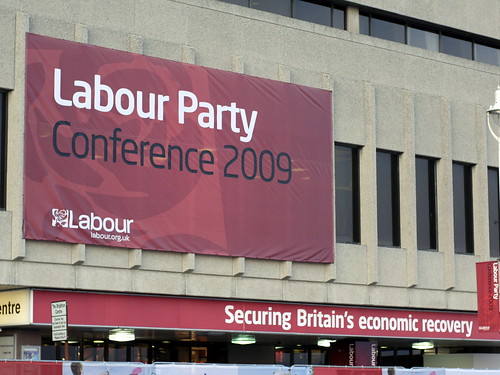
Of course this year there is a real election these conferences are preparing for, as these will be the last gatherings before the polls which should take place next April or May. The three main party conferences are all gearing up for that big showdown, and with the governing Labour party down at record low poll levels (recent polls have put them in third place behind the Liberal Democrats) it has become a natural assumption that the Conservatives will win.
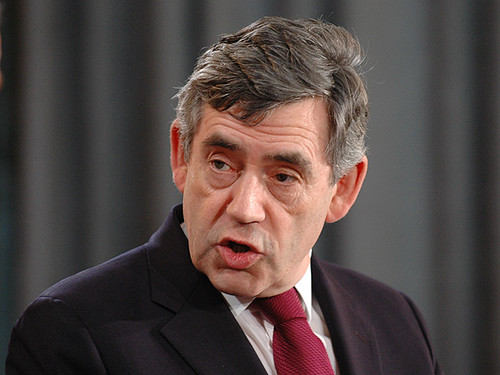
In his rally-the-troops speech yesterday “Our Prime Minister Gordon Brown” basically threw the policy kitchen sink at the crowd, announcing a barrage of blatantly populist measures in a desperate bid to reverse the Labour Party’s fortunes. In the hall it seemed to work – the talk of insurrection was ended and the delegates seemed to resign themselves to the uncomfortable reality that Gordon Brown is not going to step down, and no one in the party is going to challenge him. But considering it was just a few weeks ago that Brown uttered the dreaded ‘c word’ in a speech (cuts – what were you thinking?) and said that Labour was going to have to make some difficult choices, I couldn’t help but wonder where those difficult choices were in his speech. Despite this barrage of people-friendly policies there wasn’t any indication of how any of it would be paid for.
Responding to the MPs expenses scandal, Brown said he will change the law to allow constituents to recall their elected MP – even though this doesn’t really make much sense in a parliamentary democracy. He said Labour would scrap its plans to introduce a national identity card – even though the UK is one of the only countries in Europe to not have one. Labour will increase taxation on the very top earners – even though they already did this last year. Labour will reverse the 24-hour drinking law (which allows pubs to stay open after 11pm if they purchase a special license) in certain areas - even though numerous studies have shown that an enforced 11pm cut-off encourages closing-time punch-ups and traffic accidents. And Labour will scale up efforts to target "anti-social behavior" by menacing youths - even though already those youths are now wearing the ABSOs with pride around their necks.
‘Fat cat’ businessmen will be subject to new regulation that can curb their bonuses – even though it is unclear how this could be enforced by law. Free care for pensioners (seniors) is to be extended in England, though it is unclear where the money for that will come from. And Labour will hold a referendum on whether to change the voting system from the current first-past-the-post system (as exists in the US) to a proportional representation system (as exists in continental Europe).
Free care for old people? No identity cards? Sobering up yobs in city centres? Way to make the tough decisions Gordon. Though this conference was meant to highlight the difference between Labour and the Tories, to me it seemed to only highlight a similarity – both seem to be basing their policy decisions on popular will rather than good decision-making. Granted, several of Brown’s policy announcements are good ones. But his speech was suspiciously lacking in the belt-tightening measures he said were necessary just weeks ago.
I was pleased to hear him mention the Tories dangerous Europe policy in his speech, but I wish he had gone into more detail about it as most British people don’t know anything about the Tories’ move to the fringes of the European Parliament. Of course ‘Europe’ isn’t such a crowd-pleasing word to use in British politics, so I’m surprised it got a mention at all.
The big story of the conference however was Lord Mandelson’s speech. It’s incredibly entertaining, you really should watch it. Unsurprisingly it was almost all about him, but it was remarkably engaging and animated for a British politician’s speech. In fact the general media commentary is that it was overly so, with some comparing his performance to an overdramatic drag queen in a panto show. Of course any American watching this speech would be perplexed as to why the British media is characterising it in this way, but you have to keep in mind that British politicians are not known for their engaging speaking style.
Personally I loved the Mandelson speech. It was exactly what the Labour Party needs right now – dynamism, self-confidence, pizzazz. Mandelson was a close ally of Tony Blair and is known for his cut-throat ways, accused by many of trying to convert British politics to an “American style” of personality-driven politics. His performance was so animated that, if it weren’t for his constant praise of his former enemy Gordon Brown, I would have thought he had designs on challenging Brown for the leadership himself. Watching his speech I thought to myself, “Well, why not?” He’s engaging, intelligent, charismatic – and has a breath of new ideas and experience. I’m not sure whether it’s the fact that he’s gay or his reputation for treachery that has made him calculate that he could only ever be the power behind the throne, but as Labour’s fortunes continue to decay, maybe they should just try it. But I’m not as clued in to British politics as others, is this a crazy thing to suggest?
Incidentally, I was a bit perturbed by Mandelson’s characterisation of his time in Brussels as an EU Commissioner as a banishment to the wasteland. The UK’s EU Commissioner is arguably the second-most powerful position the British have, though it may not come with the kind of fame and recognition Lord Mandelson relishes. Mandelson is a smart man and he did great work as EU Trade Commissioner. It was a bit annoying to see him toss that off as ‘lost time’ while playing to the home troops.
The conservatives’ party conference will be next, and it will be equally as important. A lot of people I know here in London are thinking about voting Tory but have many reservations about it. Lord Mandelson on Monday told the conference that Tory party leader David Cameron is just a new face on old Tory policy, a cheap sell job presenting a face of moderation that masks old Tory intentions to gut public services and reverse socially progressive legislation. Cameron needs to convince those still on the fence that the Tory party really has changed, that it really has pulled to the centre. Right now a lot of the people who say they will vote conservative in polls may not have the guts to actually do it come election time, because they still have lingering concerns about what the Tories would do.
Cameron knows that if such a referendum was held and the vote was ‘no’ (as it would probably be), it would be a violation of international law and would most likely result in Britain leaving the EU – which would spark a diplomatic and economic crisis for Britain. It’s a delicate issue, and it will be interesting to see how Cameron dances around it next week.
Tuesday, 9 June 2009
Europe Goes Conservative in Crisis
Considering this result has come at a time when a majority of Europeans want to see more state action in the economy and people are reeling with anger against "fat cat capitalists", the result has left Europe's socialists scratching their heads, wondering what to do next. Though there is a mood of public anger across the EU, the ruling conservative governments in Germany, France, Italy and Poland didn't see their parties punished at the polls, in fact some of them even gained seats. On the other hand, the governing socialists in Spain, Hungary and Britain all took a drubbing at the polls. The Party of European Socialists (the block of various centre-left parties in the European Parliament that includes Britain's Labour, France's Socialists and Germany's Social Democrats) lost 20 seats.
So does this mean Europeans are turning to traditional conservative economic theory to guide them out of the current crisis? Not a chance, say most analysts. The poll result is being attributed more to the chaotic and fractured state Europe's socialists find themselves in today than any kind of ideological shift for the continent. As the Socialists have been in chaos, Europe's centre-right has hijacked the traditional tenants of socialism, co-opting the ideas of the left. Sarkozy suddenly went from being "Sarko l'Americain" to Sarko the French champion against unrestrained Anglo-Saxon-style capitalism. It would seem that Europe is now asking, what is Socialism in Europe in 2009? What is it the socialists represent?
So the coming months will see the socialists regrouping, in each country, and figuring out who they are and what they represent. It's clear they have lost control of the narrative, and they have lost credibility with much of the public. Socialist floor leader Martin Schultz was probably right Sunday night when he called the result "a very sad evening for social democracy in Europe."
Thursday, 4 June 2009
My first vote in Europe
In the UK they still use paper balloting, so they hand you a sheet, you take it over to a little desk, mark off a big x, and slip it into a box. It seemed very old-timey to me, as where I’m from in Connecticut they haven’t used paper balloting since before I was born. Even the big pull-lever voting machines with the automatic curtains - which seemed so cool to me as a child when I would go into the booth with my parents - now seem antiquated in the US with the advent of electronic voting machines. Funny enough, the paper I was given this morning was about a metre long, making it appear as if I had a lot to vote on. But in reality there was only one X to be made, next to the party you were choosing. Each party though has to list the six candidates it would field if it wins, making the list quite long with all of the small parties. It’s done on a proportional allocation basis, with the winning parties getting to put forward a certain number of MEPs based on how much of the vote they got in each district. The UK and Holland are the only countries voting today, the rest of Europe will vote on Sunday and the British results won’t be revealed until then.
I won’t say who I voted for but I will say it was a tough decision. In Brussels they complain that one of the (many) problems with the European parliament is that people vote on purely national issues, which are mostly irrelevant to the issues being considered by the European Parliament. Even knowing this, I have to admit that national political considerations in Britain probably contributed about 50% to my decision. It’s just really hard to ignore the national politics when so often the most immediate and tangible result of these euroelections is the verdict they deliver on the national party in power.
Off with their Heads!
But nowhere is the euroelection being watched more closely as a barometer than in Britain, where it is being held concurrently with many local council elections across England. Gordon Brown’s government is in freefall this week. The ongoing expenses scandal has caused Brown’s already weak government to fall apart, and each hour that passes seems to get worse. The last two days have seen the resignations of several cabinet ministers, and it is thought that Chancellor Alistair Darling will be sacked within days. Brown will have to form a new cabinet next week, but if Labour MPs refuse to serve on his cabinet, he will have to step down as Labour leader. A new Labour leader would then be selected by the party, who would inevitably have to call a general election that Labour will almost certainly lose. It is thought that Labour MPs are waiting for the result of today’s vote to make their decision. If Labour does dismally (some are predicting they could even come in fourth or fifth behind the far-right British National Party) then they will force his resignation by refusing to serve on his new cabinet.
It is expected that the Tories will probably receive the largest share of today’s EP vote, thought the majority of people almost certainly don’t realize what they’re voting for with that decision. David Cameron is set to take the Tories out of the parliament’s main centre-right EPP grouping shared by Angela Merkel and Nicolas Sarkozy and form a new Eurosceptic fringe grouping by allying with far-right parties of Eastern Europe. This issue has received almost no coverage from the British media, so it is certain that most of today’s Tory voters aren’t aware that they’re voting for a coalition that will include the anti-gay, climate-denying Polish nationalist Law and Justice party. That said, perhaps even if they knew they wouldn’t be bothered by it.
Rock Stars and Royalty
Then of course there’s the amusing MEP entries of this year’s election. The European Parliament, often half-jokingly maligned as a refuge of freaks, cast-aways and has-beens, has attracted its fair share of celebrity candidates this year. Slovakia, which was mortified after the last EP election five years ago when it had the lowest turnout in all the EU at just 17%, has pulled out all of the stops to try to get people to the polls this year, fielding an African-born pop singer, a fitness trainer and a former ice hockey star. Who knows that their objectives for Europe are, but I suspect the main intent with fielding them was just to make sure Slovakia doesn’t come last in turnout again.
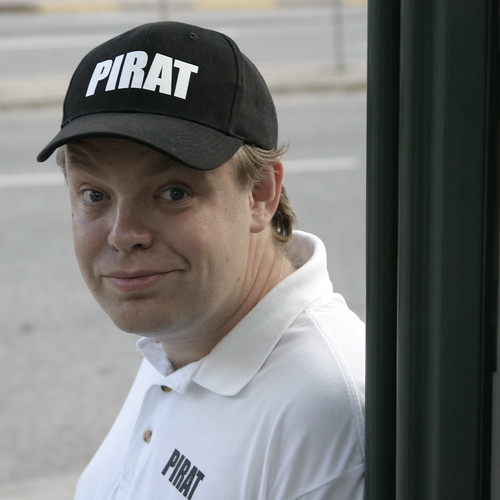
Another interesting one to watch will be Sweden’s Pirate Party, a group formed entirely in reaction to the recent prosecutions in that country of file-sharing site managers. The candidates actually dress as pirates and have used pirate speak when campaigning (and they’re expected to gain some seats on Sunday!). There’s also Elena Basescu - Romania's equivalent to Paris Hilton – who is expected to win a seat as she is the daughter of the Romanian president. Other quirky candidates include a former Czech astronaut; a Finnish racing champion and a Bulgarian Taekwondo idol.
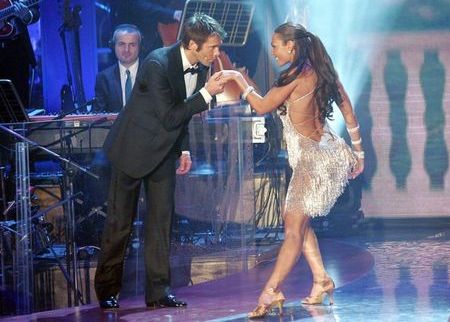
And of course my nerdy European history fascination can’t help but be interested in the fact that the reigning heirs of two of Europe’s formerly most powerful but today ousted (and banned) monarchies – the Habsburgs and the Savoys – are both in the running in Austria and Italy respectively. The candidacy of “Prince of Venice and Piedmont” Emanuele Filiberto in Italy is particularly interesting as he was banned from entering Italy his whole life (oweing to the expulsion of members of the former Italian monarchy when the Republic was declared in until Berlusconi lifted the restriction for him and his father in 2002. Shortly after that he celebrated his triumphal return to his family’s former kingdom by entering Italy’s version of Dancing with the Stars.
Asked why he would make a good MEP, he said, "I was in exile for 31 years and I know Europe well. I speak five languages. I know half of the current heads of state personally, and the other half I'm related to." It’s an argument any Royalist could agree with!
Check out this BBC site for real-time election results on Sunday and Monday. I'll be in Berlin this weekend, but will certainly be keeping tabs on it from there!
Subscribe to:
Comments (Atom)