Berlin may be an emerging tech hub, but Silicon Valley seems unaware
I’m in San Francisco this week, visiting my uncle and taking care of a few work meetings (potential freelancing clients). I haven’t been here in 12 years, so it’s been great to rediscover the city.
I’ve also been visiting a lot of old friends from journalism school, all of whom are working in or around the tech sector. There are a lot of opportunities out here for tech-focused reporting or copy writing these days. Given that Berlin is considered an emerging tech powerhouse in Europe, I was curious to get their take on the scene there. But what I encountered was either a lack of knowledge or a dismissive attitude. For the tech people I’ve talked to, Berlin is either a non-entity or a nuisance.
Showing posts with label regulation. Show all posts
Tuesday, 19 January 2016
Thursday, 29 September 2011
What would the world look like without the EU?
They used to say that when America sneezes, Europe catches a cold. That’s certainly what they (and I) were saying during the 2008 economic crisis, when misadventures on Wall Street and the subsequent collapse of Lehman Brothers created a disaster that quickly spread to Europe. How the tables have turned. Now the US is waiting helplessly to see if Europe can avoid a disaster that would eclipse Lehman Brothers in scale and could throw the US back into recession.
It’s a testament to just how important Europe has become to the global economy that it is now Europe’s sneeze that can give the world a cold. The EU is now a larger market than the United States, and over the past twenty years it has literally become the world’s regulator. Is it conceivable that this entire project could now collapse?
This is the question that is now being asked in the United States. When I was home last weekend I was asked by friends, “Is the EU going to fall apart?” Trying to show a bit of false confidence, I assured them that it is not. Germany is in the end going to suck it up and do what needs to be done to save the euro, I insisted, because the alternative is complete economic meltdown. The vote for the increased bailout fund today in the German parliament seems to go some way in justifying that optimism. The truth is that Europe’s problems are not insurmountable.
It’s a testament to just how important Europe has become to the global economy that it is now Europe’s sneeze that can give the world a cold. The EU is now a larger market than the United States, and over the past twenty years it has literally become the world’s regulator. Is it conceivable that this entire project could now collapse?
This is the question that is now being asked in the United States. When I was home last weekend I was asked by friends, “Is the EU going to fall apart?” Trying to show a bit of false confidence, I assured them that it is not. Germany is in the end going to suck it up and do what needs to be done to save the euro, I insisted, because the alternative is complete economic meltdown. The vote for the increased bailout fund today in the German parliament seems to go some way in justifying that optimism. The truth is that Europe’s problems are not insurmountable.
Location:
Brussels, Belgium
Wednesday, 16 December 2009
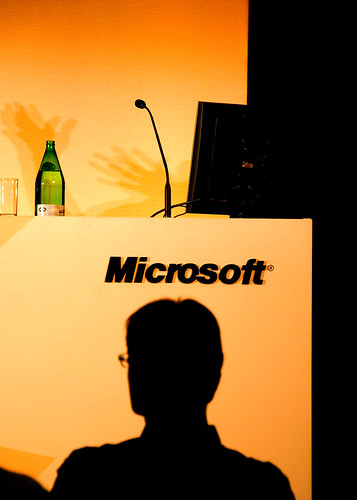
EU slaps Microsoft, again
The EU has been involved in anti-trust charges against Microsoft for years, alleging that the company has operated as a monopoly in various ways. It was the weak regulatory system in the United States that allowed this to happen in the first place, but over the last decade the EU’s competition regulator has become increasingly assertive, and today it is widely acknowledged as the world’s regulatory body.
This specific dispute centred on the fact that since the vast majority of PCs use the windows operating system, the vast majority of computer users were using internet explorer as their web browser simply because it was presented as the only option with the system – even though it isn’t. IE is used by about 56% of internet traffic. This issue is just one of many complaints against Microsoft launched by the EU. Microsoft has paid €1.7 billion in fines to the EU so far.
Thursday, 3 December 2009
France and Britain go to war over regulator
The French president made some unusually undiplomatic comments this week gloating over his Agriculture Minister, Michel Barnier, being appointed as European Commissioner for the internal market. That position is one of the most important in the EU, especially as the world recovers from the shock of the economic crisis.
He boldly and defiantly blamed the economic collapse on the “free-wheeling Anglo-Saxon” (aka British and American) economic model, saying, “I want the world to see the victory of the European model, which has nothing to do with the excesses of financial capitalism." He said the fact that a Frenchman had been appointed, while the EU had refused to even consider a Brit for the position - despite Gordon Brown’s pleading - reflected how discredited the Anglo-Saxon model has become. The bravado was an indication that Sarko intends to push Barnier hard to create a pan-EU financial regulator based on the continental European economic model that would have power over the City of London (London’s financial centre).
It was a remark seemingly calculated to elicit the most fury possible across the channel, and boy did it work. UK Chancellor Alistair Darling almost immediately put pen to paper to fire back in an editorial in the Times, saying:
"National supervisors, such as the FSA, must remain responsible for supervising individual companies…The reality is the real competition to Europe's financial centres comes from outside our borders. And that London, whether others like it or not, is New York's only rival as a truly global financial centre."Darling signalled that he would go into Wednesday’s meeting of European finance ministers with an uncompromising stance against a pan-EU regulator that could supersede the British authorities. And thus the first Franco-British battle for economic reform commenced.
The first skirmish
The European Commission has drawn up plans for three new supervisory authorities to oversee banks, insurers and investment firms. In addition a separate body, the European Systemic Risk Board, would oversee the wider stability of the European financial system as a whole. Though the national regulators would be involved with it, it would be led by the European Central Bank. This last part would be highly controversial in Britain since it does not use the Euro and is currently not beholden to the bank in any way.
Darling came out of the meeting insisting he had negotiated a guarantee that the EU regulator could not supersede national regulators, and it could not force states to pay up for taxpayer bailouts.
But in essence both his guarantees and Legarde’s calming words are premature. The ministers only agreed on the most general of outlines for the plan yesterday, and much still has to be worked out. The thought from some in parliament is that the big ‘macroeconomic’ authority and three ‘microeconomic’ groups are being split up as a purposeful distraction. Guy Verhofstadt, the leader of the Liberals in the parliament who favours a strong authority, indicated after the meeting that the parliament will attempt to bypass this “trick” by voting on both bodies as one. He said after the meeting:
"This "forced agreement" is difficult to understand. Member States are repeatedly saying they want a single market for financial services, but now that the time has come to agree on the basic principle of creating supra-national supervisory authorities, some of them appear totally reluctant". Moreover, by separating micro-prudential supervision from the macro-prudential one, Council tries to impose its own views and its own agenda. But the European Parliament as co-legislator will play its full role and has already decided to consider the proposals on micro and macro prudential supervision as a whole."What comes out of this is anybody’s guess. A column in today’s Wall Street Journal suggested that the Square Mile was overreacting and taking Sarko’s bait, and the paper seems confident that in the end the city will not be regulated from Brussels. But if I were a betting man, I wouldn’t be putting my money on Britain winning this fight.
The UK already has dimished influence in Brussels because of its lack of engagement. And with a weakened government that will be preoccupied in the coming months with an election it is sure to lose, I don’t see them as being a very difficult foe to vanquish.
But as some commentators have pointed out, if the EU overegulates without some reform from its trading partners, there is a risk that financial services companies will flee Europe altogether. Rather than moving from Britain to France and Germany, they could be more likely to high tail it over to Switzerland.
And speaking of Switzerland, I’m about to get on a plane to fly there. My dad is having a belated Thanksgiving dinner. I’m wondering if the minaret ban vote will come up during the dinner conversation with his Swiss colleagues. It could be an interesting night!
Monday, 21 September 2009
Bankers Beware: Brussels to Reveal Pan-EU Regulator
So far both America and Europe have failed to institute meaningful reform to the financial system that would prevent a similar financial collapse from happening again. This was almost painfully evident during President Obama’s stern speech to Wall Street last week on the one-year anniversary – full of tough words but backed by little action taken in the past year to better regulate American financial institutions.
This reality was angrily pointed out by some American commentators, who said that a regulatory overhaul should have been made central to the massive bail-outs a year ago. The Obama administration counters that regulatory reform at the height of the crisis would have destabilized a system already on the verge of collapse. This situation has been mirrored across the pond, where both national governments and the EU have resisted making significant regulatory reform so far.
But now it is clear that the financial sector is once again on stable ground. Whether this is a direct result of the massive cash infusion it was given over the past year is debatable, but given the windfall profits and massive bonuses that have begun to creep back in, it’s no longer tenable to argue that the sector is too fragile to introduce massive reform. It appears the Obama administration is set to introduce its overhaul in the coming weeks. Across the pond, it appears some consensus has finally been reached in order to create financial regulation at the EU level. If the plans come to pass it would mean that just two centralized, powerful regulatory regimes would govern basically the entire world’s financial sector, which would mean that the laissez-faire days of Anglo-Saxon capitalism are a thing of the past.
The EU proposal that will be unveiled on Wednesday will reportedly create three new supervisory authorities in the areas of banking, insurance and securities. The new authorities would supervise financial institutions and step in during emergency situations to take urgent action. They will reportedly have the power to shut down Europe’s stock markets during a crisis. The new authorities would also be able to rule on disputes involving financial institutions that operate across EU internal borders. For large recapitalisations or bail-outs, the decision would come directly from the European Commission by a simple majority vote of commissioners.
The UK has been the biggest objector during these negotiations, but reportedly they have been satisfied with a compromise deal that would require that member states be allowed invoke a clause taking that voting decision instead to the council, to be voted on by member states’ finance ministers, by a qualified majority vote.
A separate European Systemic Risk Board will also be created, according to EUObserver. That board would watch the financial system for risks or problems, and it can issue warnings early when it identifies problems.
Significant details of the Obama administrations plans for a regulatory overhaul have not yet emerged, but if they are as ambitious as these Brussels plans, the world could be looking at a very different regulatory environment in the near future.
Subscribe to:
Comments (Atom)