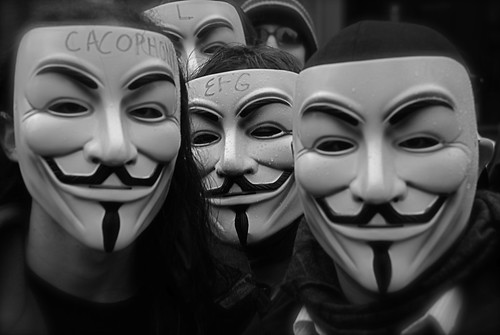
The European Parliament’s website has been shut down by hackers today, allegedly in a denial-of-service attack from Anonymous in protest of imminent anti-piracy legislation restricting internet freedom. But as the IT folks in parliament scramble to fix the problem, the functionaries are sitting around scratching their heads in confusion. Did we pass internet piracy legislation?
Their confusion is warranted. By all accounts the EU has been on the internet-freedom-lovers side during this debate. During the fallout from the Wikipedia ‘blackout’ last week, US politicians weren’t the only ones beating a path to the door to distance themselves from the now toxic SOPA legislation on internet piracy. On Friday the EU’s Digital Agenda Commissioner Neelie Kroes tweeted that she was “glad the tide is turning on #SOPA,” adding “speeding is illegal too: but you don't put speed bumps on the motorway”.
Home Affairs Commissioner Cecilia Malmström also tweeted against the US legislation, noting that ‘sopa’ in Swedish means garbage. Notably, no public statements about the US anti-piracy bills had been made before the Wikipedia blackout. It’s quite unusual for the EU to make comments about US legislation. But such was the effect of the blackout – which was, after all, global (Eurocrats felt quite helpless without Wikipedia last week!), that even politicians not involved in US lawmaking felt the need to make a statement about it.
Showing posts with label Neelie Kroes. Show all posts
Thursday, 26 January 2012
Wednesday, 6 July 2011
EU sets goal to abolish roaming charges by 2015
The move is just the latest in a long-running battle between the mobile operators and the EU, but this is the most aggressive move yet. It is also an acknowledgement that the caps the EU set in 2007 and then extended in 2009 have not been successful in fixing the dysfunct in the market. Those caps lowered roaming rates to 45 eurocents (c) per minute within the EU. Previously the rate had been, on average, around 2 euros per minute.
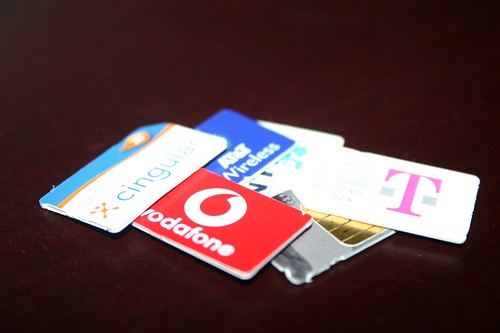
Under the new plan, from July 2014 operators will be forced to open their networks to upstart competitors who can offer customers cut rate charges for roaming. They will also have to allow their customers to sign up to a seperate carrier for roaming if they so choose. The customer's phone would automatically switch to the other carrier when they go abroad, but they would keep the same number and sim card. They would then receive a separate bill from their 'roaming carrier'. Before it becomes law, the proposal must first be approved by the European Parliament and member states.
Wednesday, 19 January 2011
Hungary refuses to budge as EU condemns media crackdown
Hungary has come out swinging in defence of its new media law which critics say curtails press freedom and seeks to stifle dissent. The country's new combative conservative prime minister Victor Orban delivered an icy rebuke today to the European Parliament assembled in Strasbourg, following two weeks in which MEPs and national governments have been strongly critical of the new law.
Even before he started his address, several MEPs covered their mouths with gags and held large banners that read 'censorship'. But Orban warned the assembled EU lawmakers that they were insulting the Hungarian people. "We lived under a dictatorship for 40 years," he chided. "I will not stand for you contesting the democratic aspirations of Hungarians."
Orban has maintained that the media law contains similar measures to what has technically existed (but has not been enforced) in many Western European countries for decades. He says the liberal media laws set up as the country transitioned to democracy after the collapse of communism were far too loose, allowing the press to say anything they want with impugnity. His new government has had to take action to rectify the problem, he says.
Even before he started his address, several MEPs covered their mouths with gags and held large banners that read 'censorship'. But Orban warned the assembled EU lawmakers that they were insulting the Hungarian people. "We lived under a dictatorship for 40 years," he chided. "I will not stand for you contesting the democratic aspirations of Hungarians."
Orban has maintained that the media law contains similar measures to what has technically existed (but has not been enforced) in many Western European countries for decades. He says the liberal media laws set up as the country transitioned to democracy after the collapse of communism were far too loose, allowing the press to say anything they want with impugnity. His new government has had to take action to rectify the problem, he says.
Friday, 5 November 2010
EU to create "right to be forgotten"
As the public's concern over internet privacy violations on sites like Facebook continues to grow, the EU unveiled new proposals yesterday to give people more control over how their online personal data is collected and used. The new update to EU privacy laws would oblige service providers to make personal information and user-supplied content easily and quickly deletable. Citing the effect such information can have on a person's professional and private life, the European Commission says the issue is important enough to take EU-wide action. The commission says it has even received complaints from its own staff about Facebook's privacy policy. And that must be a big deal, because most of the people I know who work for the commission are on Facebook all day!
Perhaps the most interesting thing about the proposal is that it would create a new right for EU citizens, a so-called "right to be forgotten." The original EU data protection rules date back to 1995, when such issues of online privacy did not yet exist. In theory the right to control over one's own personal stored information is already enshrined in EU law, but the commission said yesterday its applicability to the online world has been patchy and unclear.
Wednesday, 16 December 2009
EU slaps Microsoft, again
The EU has been involved in anti-trust charges against Microsoft for years, alleging that the company has operated as a monopoly in various ways. It was the weak regulatory system in the United States that allowed this to happen in the first place, but over the last decade the EU’s competition regulator has become increasingly assertive, and today it is widely acknowledged as the world’s regulatory body.
This specific dispute centred on the fact that since the vast majority of PCs use the windows operating system, the vast majority of computer users were using internet explorer as their web browser simply because it was presented as the only option with the system – even though it isn’t. IE is used by about 56% of internet traffic. This issue is just one of many complaints against Microsoft launched by the EU. Microsoft has paid €1.7 billion in fines to the EU so far.
Subscribe to:
Comments (Atom)