With EU-Turkey relations at an all-time low, the reunification of Cyprus seems like a distant prospect. This week I saw an island where the frozen conflict has become largely normalized. Unlike in Berlin, this wall doesn't look like its falling any time soon.
Sometimes, old wounds just won't heal. So it is with the island of Cyprus, where a 180 kilometer scar runs from shore to shore, and has been festering for four decades.
I visited the island for the first time this week, and those wounds were on display right from the start. As my plane flew across Greek Cyprus, over the capital Nicosia, I could see the giant Turkish flag painted on the mountains to the north, taunting the Greeks. It reminded me of the Alexanderplatz TV Tower in Berlin, built to be unavoidably visible everywhere in West Berlin during the Cold War.
The trip was, admittedly, somewhat of a box-checking exercise. Of the 32 European Union and EFTA countries, there are three left that I haven't visited - Cyprus, Slovenia and Romania. I'm heading to Slovenia next month for a conference, and have resolved to do a weekend in Bucharest before the year is done. Then - I win?
Showing posts with label travel. Show all posts
Thursday, 15 March 2018
Thursday, 26 January 2017
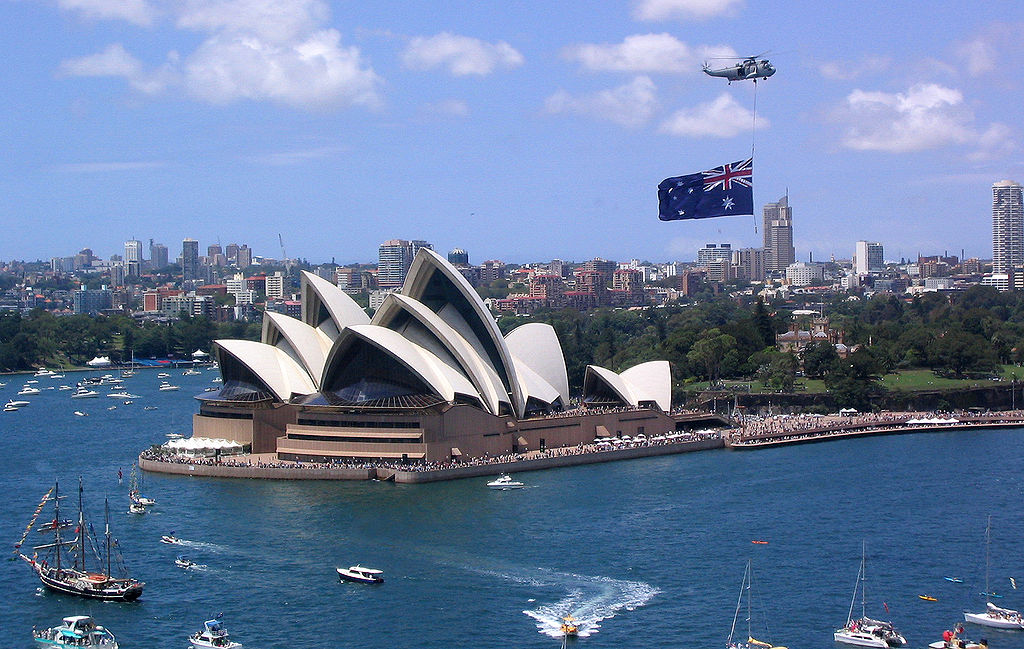
Six things that surprised me about Australia
Happy Australia Day.
I've spent the last month down under, and I just so happen to be departing this country on its national holiday. I'm on a plane now to Bangkok, where I’ll base myself for the next month while travelling around Southeast Asia.
I actually didn’t know this was Australia Day – their version of the Fourth of July - when I booked the ticket. But in the end it didn’t make much difference. From what I observed the holiday doesn’t seem to be a very big deal for Australians, and in fact many people I asked told me they are working today as normal. It was only made a formal public holiday in all states and territories in 1994 (although it had been unofficially observed since 1935). As one Australian told me, throwing in a Mean Girls reference, “the government is always trying to make Australia Day happen. It’s not going to happen”.
I've spent the last month down under, and I just so happen to be departing this country on its national holiday. I'm on a plane now to Bangkok, where I’ll base myself for the next month while travelling around Southeast Asia.
I actually didn’t know this was Australia Day – their version of the Fourth of July - when I booked the ticket. But in the end it didn’t make much difference. From what I observed the holiday doesn’t seem to be a very big deal for Australians, and in fact many people I asked told me they are working today as normal. It was only made a formal public holiday in all states and territories in 1994 (although it had been unofficially observed since 1935). As one Australian told me, throwing in a Mean Girls reference, “the government is always trying to make Australia Day happen. It’s not going to happen”.
Sunday, 4 September 2016
"The UK is over?" - America's view of Brexit
The UK's vote to secede form the EU is still an object of fascination in the US, where views range from pity to bemusement.
Last week, standing at a bar in Savannah, Georgia and drinking a 40-ounce of Miller Light, I found myself engaged in a most unlikely conversation.
I had just been introduced to the roommate of an old friend. He was telling the story of a recent unsuccessful date, aborted because of a lack of intellectual heft. "I mean, he didn't even know what Brexit was," he said incredulously.
I had to check my surroundings to remind myself of where I was. I've been working as a journalist covering EU politics in Europe for a decade now, and it's been rare indeed that I've encountered much interest in the topics I cover during my twice-yearly visits home.
Last week, standing at a bar in Savannah, Georgia and drinking a 40-ounce of Miller Light, I found myself engaged in a most unlikely conversation.
I had just been introduced to the roommate of an old friend. He was telling the story of a recent unsuccessful date, aborted because of a lack of intellectual heft. "I mean, he didn't even know what Brexit was," he said incredulously.
I had to check my surroundings to remind myself of where I was. I've been working as a journalist covering EU politics in Europe for a decade now, and it's been rare indeed that I've encountered much interest in the topics I cover during my twice-yearly visits home.
Tuesday, 23 February 2016
Argentina: Europe on the other side of the world
I’m currently halfway across the Atlantic, flying from Argentina back to Brussels after a three-month journey across North and South America. I have to say, it feels good to be going ‘home’.
This is the longest I’ve been away from Europe since I moved to London ten years ago. It was a nice opportunity to clear my head, to spend some time with my family and to experience a new part of the world. I’ve used the peace and quiet to work on my book about nationalist education and the European project, which I’m happy to report is now nearing completion.
It is perhaps fitting that I ended my trip in Argentina, a country many describe as the most ‘European’ place in the Americas. In fact, as I was travelling south through Latin America I kept hearing, “Oh, you’re going to Buenos Aires? But maybe it won’t be so interesting for you, since you live in Europe. It’s the same thing.”
Monday, 15 February 2016
Is Latin America a vision of Europe's fenced future?
Europeans should look at the hassles faced by other continents before they thoughtlessly toss out Schengen's decades of free movement.
I'm spending this weekend at Iguazu Falls, the mammoth waterfalls at the border of Brazil, Argentina and Paraguay. It's a truly spectacular sight, more powerful than Niagara and wider than Victoria (the falls, not the queen).
Perhaps even more interesting than visiting the falls has been exploring the three towns at the 'triple frontier', Foz do Iguacu, Puerto Iguazu and Ciudad del Este. It is essentially one large urban conurbation spanning three borders. I've taken to collecting visits to sites like this. It's my fourth triple border, after NL-BE-DE, CH-FR-DE and CH-LI-AU.
Wednesday, 10 February 2016
Carnival on the Ilha da Magia
For my tenth carnival, I went with the island of magic.
I’m in Florianopolis, Brazil this week, an island city in the Southeast part of the country well-known for its exuberant carnival celebrations the week before Lent.
It’s actually the tenth carnival I’ve been to. Over the past decade, sort of by accident, I started going to a new destination with a well-known carnival at the start of Lent every year. Last year I was in Venice, and in the years before that I was in Cologne, the Canaries, Rio de Janeiro, Salvador, Binche, Maastricht, Nice and New Orleans.
I’m in Florianopolis, Brazil this week, an island city in the Southeast part of the country well-known for its exuberant carnival celebrations the week before Lent.
It’s actually the tenth carnival I’ve been to. Over the past decade, sort of by accident, I started going to a new destination with a well-known carnival at the start of Lent every year. Last year I was in Venice, and in the years before that I was in Cologne, the Canaries, Rio de Janeiro, Salvador, Binche, Maastricht, Nice and New Orleans.
Thursday, 28 January 2016
Incredible - Europe has fallen behind America in providing roaming solutions
US mobile carriers now allow their customers to use data worldwide for free. Meanwhile, European carriers are still charging to roam within the EU. What's wrong with this picture?
When I first moved to Europe ten years ago, finding cell phone solutions while I was home visiting the US was a bi-annual challenge.
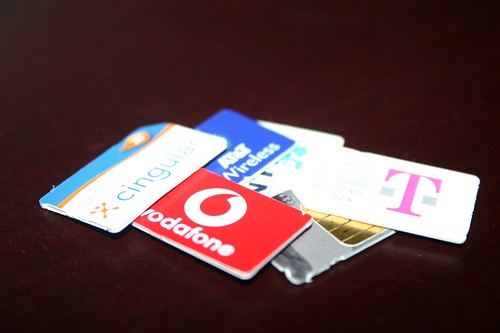
I go home twice a year - often enough to need a US cell phone while I'm there, but not often enough to maintain a monthly plan. While travelling in Europe, I would buy local prepaid sim cards for extended visits. But in the US, there were hardly any prepaid cell phone options and those that existed charged outrageous rates.
When I first moved to Europe ten years ago, finding cell phone solutions while I was home visiting the US was a bi-annual challenge.
I go home twice a year - often enough to need a US cell phone while I'm there, but not often enough to maintain a monthly plan. While travelling in Europe, I would buy local prepaid sim cards for extended visits. But in the US, there were hardly any prepaid cell phone options and those that existed charged outrageous rates.
Tuesday, 5 November 2013
Eastern enthusiasm
A visit to Lithuania this week showed me how history and geography make such a difference to attitudes toward the EU.
Lithuania is a land in between. Part of the Soviet Union until just two decades ago, it today finds itself sandwiched between two dangerous and unpredictable neighbours. It’s not a very comfortable geography, to say the least.
To its East lies the pariah state of Belarus - Europe’s last dictatorship and, one might also say, Europe’s last Russian satellite state. To its West lies the Russian exclave of Kaliningrad - a barren, unforgiving place that few dare enter, repopulated by Russians in 1949 after its German inhabitants were killed or expelled.
But to its North and South lie fellow countries of the European Union – Latvia and Poland. The 103km border between Poland and Lithuania therefore forms a perilous land bridge between unfriendly Russian talons. Since2009 the two countries have been part of the EU’s passport-free Schengen area, giving the border additional importance as the only way to get to the Baltic and Finnic countries to the North without a visa.
But despite this pivotal importance, this narrow passageway faces a dearth of infrastructure connections. As I write this I am on a plane flying back from Vilnius, the Lithuanian capital, where I spent the last two days at a conference devoted to this lack of connection.
Sunday, 14 October 2012
Catalonia: on the precipice of secession?
Friday was Spanish National Day, but you wouldn’t have known
it on the streets of Barcelona. The Catalans may have been happy to take the day off work, but they were clearly
not in the mood to celebrate. There was no parade, no festivities and - most
noticeably - not even any Spanish flags.
In fact the only way one would have known it was national day
at all was that in the morning, the streets around Placa de Catalonia were filled with Police officers
preparing for a planned march by secessionist demonstrators. Helicopters
thundered above us, preparing for the possibility that the city would see a
repeat of the massive secessionist demonstrations that took place on 11
September (Catalan National Day) that saw more than a million protestors flood
the streets of Barcelona.
However from what I saw, this time around the Catalans seemed to prefer
ostentatious non-observance to demonstrations.
Though there were Catalan flags draped from nearly every window
(perhaps left over from the 11 September celebrations), I did not see one
Spanish flag except for those on government buildings.
Friday, 16 December 2011
An itinerant decade
I came to a startling realization yesterday. 2011 will be the first year in a decade that I have not moved to a different city during the course of the year. Since 2001 I have packed up and moved to a new city at least once each year. And there has actually never been a year in my adult life where I haven’t moved to a new apartment! 2001 and 2011 have the exception of being years where I moved to a new apartment, but in the same city. I say ‘startling’ because it’s a kind of bizarre way to live one’s life, constantly moving to new cities. Of course not all of those moves were to unfamiliar cities I had never lived in before – a lot of this was moving away from New York, then returning, then leaving again. But now that I’ve managed to stay in one city for an entire calendar year, does it mean I’m settled here in Belgium? If it does, I don’t feel it. I’m in a good place in my life here – I’m enjoying what I’m doing, have an interesting job, good friends and a good apartment. So I think I’ll be here at least another couple years. But could I live the rest of my life in Belgium? Absolutely not. So when will I know when it’s time to leave?
Saturday, 3 December 2011
Customs, security and immigration - learn it, live it, love it
Customs, immigration and airport security checks are three distinct processes you may encounter at an airport or border crossing. Sometimes you may have to go through all three, other times you just encounter one or two and other times you won't go through any. It all depends on which countries you're traveling between. For instance, when you travel between Belgium and the UK you go through immigration, but not customs. When you travel between Belgium and Switzerland you go through customs, but not immigration. If you're flying between Belgium and Finland you would only go through security, the same as you would if you were flying between Florida and California. Confused yet? Here's a quick guide.
Tuesday, 30 August 2011
As US recovers from Irene, GOP may hold relief funding hostage
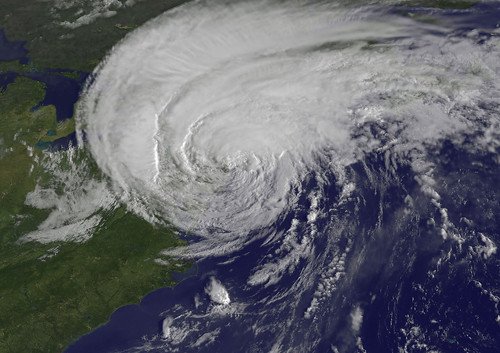
I've just returned to Brussels after a weekend of trying to navigate the hurricane-hit Northeast US. It was a bit of an adventure trying to get from Connecticut to JFK airport yesterday, navigating around floods and downed trees. As I flew out on Monday I had the feeling I was being airlifted out of a disaster zone.
Though Hurricane Irene itself may have packed less of a punch than the worst-case-scenario predictions, the aftermath of inland flooding and power outages is creating a mess from New Jersey to Vermont. And according to reports, funding for the recovery effort may be the subject of political brinksmanship in Washington over the coming weeks and possibly months.
I had gone to New York for two weeks for my grandparents' 60th wedding anniversary and my new nephew's baptism, both of which were scheduled for this past weekend. Needless to say, both were cancelled. I had to quickly make adjustments to my plans on Friday as predictions for the hurricane got progressively worse and the New York City mayor announced all public transport would be suspended from noon on Saturday.
Though Hurricane Irene itself may have packed less of a punch than the worst-case-scenario predictions, the aftermath of inland flooding and power outages is creating a mess from New Jersey to Vermont. And according to reports, funding for the recovery effort may be the subject of political brinksmanship in Washington over the coming weeks and possibly months.
I had gone to New York for two weeks for my grandparents' 60th wedding anniversary and my new nephew's baptism, both of which were scheduled for this past weekend. Needless to say, both were cancelled. I had to quickly make adjustments to my plans on Friday as predictions for the hurricane got progressively worse and the New York City mayor announced all public transport would be suspended from noon on Saturday.
Wednesday, 6 July 2011
EU sets goal to abolish roaming charges by 2015
The move is just the latest in a long-running battle between the mobile operators and the EU, but this is the most aggressive move yet. It is also an acknowledgement that the caps the EU set in 2007 and then extended in 2009 have not been successful in fixing the dysfunct in the market. Those caps lowered roaming rates to 45 eurocents (c) per minute within the EU. Previously the rate had been, on average, around 2 euros per minute.
Under the new plan, from July 2014 operators will be forced to open their networks to upstart competitors who can offer customers cut rate charges for roaming. They will also have to allow their customers to sign up to a seperate carrier for roaming if they so choose. The customer's phone would automatically switch to the other carrier when they go abroad, but they would keep the same number and sim card. They would then receive a separate bill from their 'roaming carrier'. Before it becomes law, the proposal must first be approved by the European Parliament and member states.
Thursday, 28 April 2011
Turkey from West to East
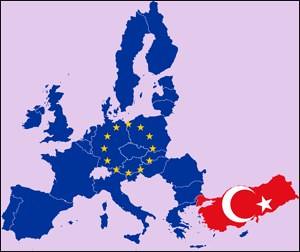
Is Turkey part of Europe? This question was at the back of my mind during a week-long visit to Istanbul over the Eastern break. Far from being an academic geographical consideration, the question has big implications for both the future of Turkey and the European Union. At least, that's what were told.
Turkey is a candidate country to join the EU, having started accession talks in 2005. Most of the countries of continental Europe are against Turkey joining, particularly France. But the UK, backed by the United States, is forcefully pushing for Turkey's membership in the union. Nicolas Sarkozy insists that Turkey is not geographically or culturally part of Europe and does not belong in the EU. David Cameron says that it is Islamophobia that is keeping Turkey out, and that the EU should not be an 'all-Christian club'. The argument for accession stresses that Turkey's largest city as well as 3% of its territory is in Europe, and that historically Turkey (as the Ottoman Empire) ruled over many countries now in the EU including Greece, Cyprus, Bulgaria, Romania and Hungary.
Wednesday, 22 December 2010
Snow Chaos: Should Western Europe prepare for colder winters?
I've been at home in the US for the past five days, and boy am I glad I got out of Europe when I did. I decided to head home for Christmas earlier than normal this year because I had a lot of holidays left to take - normally I head home two or three days before Christmas. On Friday morning I woke up to get ready for my flight to find a winter wonderland outside my window. But though the heavy snow caused a delay in my train to the airport, somehow my flight to New York wasn't delayed at all
But apparently after I left that snow just didn't stop falling. It's kept coming and coming, grounding airports in Europe to a halt from London to Milan. Brussels Airport was set to shut down yesterday after they found they had run out of de-icer fluid, but then apparently they found some more. But Heathrow Airport and Charles de Gaul are still ground to a halt as they grapple with the snow and cold. The busiest airport in Europe has now become "Hotel Heathrow" as stranded travelers have been camping out for the fourth day in a row, sure to miss Christmas with their families. The same scene has been seen at London, Paris and Brussels' international train stations, as high-speed lines have been ground to a halt. I sure feel lucky to have gotten here to spend Christmas with my family, but I can't say the same for my friends stuck in London, Brussels, Frankfurt and Paris.
The travel chaos is prompting many questions in Europe, but perhaps the most important is this - is this a freak act of nature, or an example of egregious poor planning by these Western European airports?
But apparently after I left that snow just didn't stop falling. It's kept coming and coming, grounding airports in Europe to a halt from London to Milan. Brussels Airport was set to shut down yesterday after they found they had run out of de-icer fluid, but then apparently they found some more. But Heathrow Airport and Charles de Gaul are still ground to a halt as they grapple with the snow and cold. The busiest airport in Europe has now become "Hotel Heathrow" as stranded travelers have been camping out for the fourth day in a row, sure to miss Christmas with their families. The same scene has been seen at London, Paris and Brussels' international train stations, as high-speed lines have been ground to a halt. I sure feel lucky to have gotten here to spend Christmas with my family, but I can't say the same for my friends stuck in London, Brussels, Frankfurt and Paris.
The travel chaos is prompting many questions in Europe, but perhaps the most important is this - is this a freak act of nature, or an example of egregious poor planning by these Western European airports?
Friday, 18 June 2010
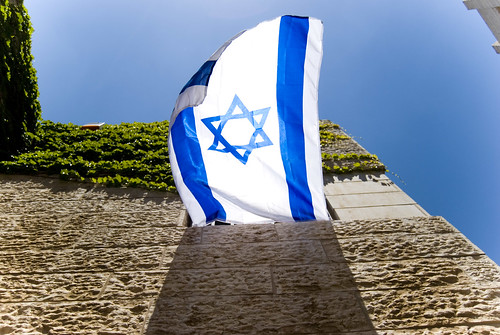
Diversions and divisions in Israel
I had actually just begun my journey through the Dead Sea area, having rented a car in Tel Aviv and driven down intending to visit the ancient fortress of Masada, the Ein Gedi nature preserve and the main Dead Sea spa. I was driving through the West Bank when I reached the sea, and as soon as I saw it I couldn’t contain my excitement. I parked the car at the first spot I could enter the water and rushed in with reckless abandon. So when I realized my horrible error I was literally in the middle of nowhere, with no phone for miles, in the middle of the disputed West Bank territory, in searing 40 degree weather. It was not a good situation!
Tuesday, 8 June 2010
Israel: in concept and in reality
It wasn’t so much surprising as it was illustrative. During my four years living in Europe I’ve seen firsthand how different the European media’s coverage of the Israeli-Palestinian conflict is from the American media’s portrayal. They’re two sides of a coin, and the truth is probably somewhere in the middle. It’s rare to see any criticism of Israel in American media or from American politicians, whether from the left or from the right. The main emphasis is usually on the Israeli need for security. In Europe, the main emphasis tends to be on the occupation, and the security concerns of Israel aren’t addressed as frequently.
Tuesday, 25 May 2010
Madrid
I had an amazing time in Madrid this past weekend – my first visit to that city. After several weeks in cold, rainy Brussels it was a welcome respite. It also made me realize just how much I’m starting to miss being in a big city.Madrid reminded me a lot of New York. With its grid street pattern of cement blocks, tall buildings, extensive and efficient metro and intense late-night nightlife, it was a bit like being back in the big apple. London is like New York in a lot of ways, but in those key areas I’ve listed above it is definitely not. So Madrid is probably the second most “like New York” city I’ve seen in Europe. The nightlife there is not only a lot of fun, but it’s also very relaxed and not as rigidly structured as the nightlife in London, where people go out very early and the rest of the evening has all sorts of rules about when things close. Comparing it to nightlife in Paris, it does have similar late-night hours, but I would definitely never describe Paris nightlife as being “relaxed”.
Thursday, 8 April 2010
The Black Forest
This weekend I was able to see firsthand the effects of a number of European environmental policies I’ve been reporting on while taking a scenic drive through the Black Forest in Southwestern Germany. I’ve lived in Europe four years now, yet every year I seem to forget that we get a 4-day weekend for Easter here. So every year I end up scrambling to find some impromptu thing to do, which usually ends with me heading down to my dad’s house in Zurich and we go on a road trip somewhere. One year in was Venice, another it was Geneva. This year we decided to drive up through the Black Forest in Germany to Baden-Baden and Freiburg.
The Black Forest, or “Schwarzwald” in German, is popular tourist destination known for its hiking and skiing. It gets its name from the closely-packed pattern of the trees, which makes the forest look very dark when you look into it. Because they get no sunlight in the interior, the trees have no leaves on them for most of the bark, creating this eery world within the forest. It sits on a low-level mountain range over the Rhine valley, so it also commands astounding views. The vast majority of the tourists who go there are German (though when we were there I overheard a lot of French Alsatians), and English was in short supply. I’ve heard from my German friends that they can’t understand any of the local Swabian dialect there, and they even have trouble understanding people in the forest when they speak high German because of their strong accents. Incidentally, the Black Forest is also the birthplace of the cuckoo clock, and of course, black forest cake.
Wednesday, 24 February 2010
Moving to Brussels, Part 2
Well it’s official – I signed the lease for a studio apartment in the St. Catherine area of Brussels yesterday. Flat-hunting turned out to be relatively painless. I looked at some really nice places. It’s insane how cheap rent is in Brussels, if I had gone with an unfurnished apartment I could have gotten a really nice place that I could never afford in London or New York. But I decided to go with a furnished smaller place with a cheaper rent. There’s really no reason I need a big one-bedroom apartment, and I’d rather use that saved money to get out of Brussels frequently! And I was really not looking forward to the prospect of having to furnish a place, especially when I don’t know how long this little Brussels adventure will last.This is, after all, essentially a trial. I’ll still be a UK employee on a temporary (one year) secondment in Brussels. Once that year is up (or possibly sooner) it will be time to decide how I like living in Brussels. I gave it a little test last year for a month, but spending the full year there will really let me see if it’s somewhere I can live comfortably.
Subscribe to:
Comments (Atom)