David Davis says Northern Ireland can opt to stay in the EU by joining with the Republic. So why can't Scotland?
Today British Prime Minister Theresa May took the historic step of requesting a divorce from the European Union.
It will be remembered as a defining moment in history. Some are predicting it is the beginning of the European Union's disintegration. But others say, perhaps more convincingly, that it signals the start of the British union's disintegration.
Yesterday the Scottish Parliament voted to back First Minister Nicola Sturgeon's call for a new referendum on Scottish independence. The timing was no accident. Sturgeon timed her announcement of the new referendum push earlier this month to be one day before May planned to submit her divorce letter to the EU, upstaging the British PM and forcing her to delay the delivery until today. Scotland is remaining one step ahead of Westminster.
Showing posts with label Scotland. Show all posts
Wednesday, 29 March 2017
Saturday, 25 June 2016
Why Spain will not object this time to an independent Scotland
Spain is less likely to veto EU accession for a Scotland that is leaving a non-EU country.
Today Nicola Sturgeon, the leader of Scotland, left an emergency cabinet meeting in Edinburgh and declared that her government will seek "immediate" bilateral discussions with Brussels to "protect Scotland's place in the EU."
She already said yesterday that a second referendum on Scottish independence was "highly likely" following the UK's vote to leave the EU. The vast majority of voters in Scotland, Northern Ireland and London voted to remain in the EU, but a majority of people in England and Wales voted to leave - resulting in a 52% vote for leave.
All of it gives the impression of a vote driven by English nationalism - whether the leave voters realised it or not. With their vote, they may have created the nation-state of England. It now seems likely Scotland and Northern Ireland will leave the union.
Sturgeon has said it would be unconstitutional for Scotland to be taken out of the EU against its will.
Today Nicola Sturgeon, the leader of Scotland, left an emergency cabinet meeting in Edinburgh and declared that her government will seek "immediate" bilateral discussions with Brussels to "protect Scotland's place in the EU."
She already said yesterday that a second referendum on Scottish independence was "highly likely" following the UK's vote to leave the EU. The vast majority of voters in Scotland, Northern Ireland and London voted to remain in the EU, but a majority of people in England and Wales voted to leave - resulting in a 52% vote for leave.
All of it gives the impression of a vote driven by English nationalism - whether the leave voters realised it or not. With their vote, they may have created the nation-state of England. It now seems likely Scotland and Northern Ireland will leave the union.
Sturgeon has said it would be unconstitutional for Scotland to be taken out of the EU against its will.
Monday, 23 May 2016
What planet are the Brexiters on?
No, Turkey is not about to join the EU. And the only country that wants it to is the UK.
Yesterday, on one of the UK's main Sunday morning politics shows, the UK's defence minister Penny Mordaunt made an astonishing claim.
The pro-Brexit Tory politician told the BBC's Andrew Marr that Turkey is about to join the European Union, which would open the flood gates to Turkish immigrants coming into the UK. Asked if the UK has veto power over Turkish accession, Mordaunt replied, "No, it doesn't".
Except that it does - quite obviously. Any new EU member state must be approved unanimously by every county in the union, something that UK Prime Minister David Cameron, who is trying to stop the UK from voting to leave the EU, was quick to point out later in the day.
Yesterday, on one of the UK's main Sunday morning politics shows, the UK's defence minister Penny Mordaunt made an astonishing claim.
The pro-Brexit Tory politician told the BBC's Andrew Marr that Turkey is about to join the European Union, which would open the flood gates to Turkish immigrants coming into the UK. Asked if the UK has veto power over Turkish accession, Mordaunt replied, "No, it doesn't".
Except that it does - quite obviously. Any new EU member state must be approved unanimously by every county in the union, something that UK Prime Minister David Cameron, who is trying to stop the UK from voting to leave the EU, was quick to point out later in the day.
Tuesday, 19 November 2013
Quebec: no need for readmission
Given that it is the only significant independence movement in the developed world outside Europe, the cause of Quebec secession is often used as an example in discussions of separatism in the European context. And so it was perhaps not surprising that at an event at the European Parliament last week about independence movements within the EU, a Quebecer was on hand to share his experiences.
The European Free Alliance (EFA), a collection of seven separatist members of the European Parliament from Scotland, Wales, Corsica, Flanders, the Russian community in Latvia and the Basque Country, hosted the event on “the right to decide” last Wednesday (13 November). The group sits in a sometimes uncomfortable common group with the Greens, who notably had little by way of promotion of the event on the group’s website.
In addition to Quebec, the event looked at the independence referendum situations in Scotland, Catalonia, the Basque Country, Wales and Galicia.
Europe has long had a strange relationship with Quebecois separatism. The situation in Belgium is often compared to that of Canada. France has been a strong supporter of Quebecois separatism, while simultaneously suppressing separatist movement sin Corsica, Brittany and Savoy. But are there really lessons for Europe from Quebec’s experience?
Saturday, 14 September 2013
Total recall
Recently, the disgraceful tale of a Scottish politician refusing to resign in the face of 23 (yes, 23) separate domestic abuse convictions has revived talk in the UK of that old populist hobby-horse – the right to recall.
Bill Walker, a Scottish National Party member of the Scottish Parliament (pictured below), was convicted last month of a series of domestic abuse offenses against three different ex wives and a stepdaughter over three decades.
Though he was expelled from the SNP after the conviction, for weeks Walker refused to vacate his seat – and there was nothing the SNP or the Scottish Parliament could do to make him leave. As the British media examined the bizarre situation, those who advocate establishing a citizen's recall law in the UK came out in force to argue that this disgraceful state of affairs makes their case.
Sunday, 14 October 2012
Catalonia: on the precipice of secession?
Friday was Spanish National Day, but you wouldn’t have known
it on the streets of Barcelona. The Catalans may have been happy to take the day off work, but they were clearly
not in the mood to celebrate. There was no parade, no festivities and - most
noticeably - not even any Spanish flags.
In fact the only way one would have known it was national day
at all was that in the morning, the streets around Placa de Catalonia were filled with Police officers
preparing for a planned march by secessionist demonstrators. Helicopters
thundered above us, preparing for the possibility that the city would see a
repeat of the massive secessionist demonstrations that took place on 11
September (Catalan National Day) that saw more than a million protestors flood
the streets of Barcelona.
However from what I saw, this time around the Catalans seemed to prefer
ostentatious non-observance to demonstrations.
Though there were Catalan flags draped from nearly every window
(perhaps left over from the 11 September celebrations), I did not see one
Spanish flag except for those on government buildings.
Friday, 3 February 2012
UK gets ready for ‘American’ mayors
In three months, on 3 May, citizens of some of England’s largest cities will hold a referendum on whether or not they want their cities to be run by mayors. Though it may not seem like a revolution-in-the-making, it would represent a big change. American-style ‘mayors’ are an new concept in the UK.
London was the first British city to adopt the concept, creating an elected mayor position for the first time in 2000, a position now held by Boris Johnson. Before a devolution referendum was approved by Londoners in 1998 the city was ruled by 32 local boroughs with drastically less power than the current mayor enjoys. The referendum essentially created ‘London’ as an entity that had never existed before – a ‘Greater London Authority’ with its own government controlling the entire London area.
The ‘City of London’, the historic city where the financial centre now is, has had, and still has, a ceremonial ‘Lord Mayor” – a position which has existed since 1189. But actual elected mayors with powers have been unknown, largely because the UK is such a unitary state. It's one of the reasons some posit the British are so hostile to federalism at the European level. Given they have one of the lowest levels of local government in the western world, the concept of federal entitites sharing power rather than having it "dictated" to them from Brussels might be hard for them to understand.
As opposed to a federal state like the US, most decisions in the UK are taken centrally by the British Parliament – even painfully local things like new building authorisations or roads. But atr the turn of the century the government of Tony Blair made a huge decision - devolving powers to four regions through a process called devolution. Scotland and Wales were ‘devolved’ and given their own parliaments to make local decisions in 1999 (Northern Ireland has had a devolved government off and on since 1921, but a new one was established in 1999). London – which could be considered a ‘region’ in its own respect considering it has a larger population than Scotland and Wales put together – was also given devolved powers at the same time.
London was the first British city to adopt the concept, creating an elected mayor position for the first time in 2000, a position now held by Boris Johnson. Before a devolution referendum was approved by Londoners in 1998 the city was ruled by 32 local boroughs with drastically less power than the current mayor enjoys. The referendum essentially created ‘London’ as an entity that had never existed before – a ‘Greater London Authority’ with its own government controlling the entire London area.
The ‘City of London’, the historic city where the financial centre now is, has had, and still has, a ceremonial ‘Lord Mayor” – a position which has existed since 1189. But actual elected mayors with powers have been unknown, largely because the UK is such a unitary state. It's one of the reasons some posit the British are so hostile to federalism at the European level. Given they have one of the lowest levels of local government in the western world, the concept of federal entitites sharing power rather than having it "dictated" to them from Brussels might be hard for them to understand.
As opposed to a federal state like the US, most decisions in the UK are taken centrally by the British Parliament – even painfully local things like new building authorisations or roads. But atr the turn of the century the government of Tony Blair made a huge decision - devolving powers to four regions through a process called devolution. Scotland and Wales were ‘devolved’ and given their own parliaments to make local decisions in 1999 (Northern Ireland has had a devolved government off and on since 1921, but a new one was established in 1999). London – which could be considered a ‘region’ in its own respect considering it has a larger population than Scotland and Wales put together – was also given devolved powers at the same time.
Wednesday, 11 January 2012
Would the EU allow a Scottish secession-accession?
Following the whirlwind events of this week, Scotland now appears to be closer to secession than it has ever been in the 300-year history of Great Britain. This week the first minister of the devolved Scottish Parliament set a date for the first referendum on Scottish independence in history. And according to polling, if the referendum were held today, Scots could very well vote to separate from the United Kingdom.
The discussion of secession has been hanging in the air for some time, ever since the secessionist Scottish National Party won a majority in the Scottish Parliament in 2007. But now with an independence referendum date set, discussion has turned for the first time toward the real practicalities of what a split would entail and the difficult questions it would present. Who does the oil in the UK's territorial North Sea waters belong to - Britain or Scotland? Who would be on the hook for the massive bailouts of Scotland's two banking giants in 2008? Would Scotland use the British pound, the euro, or a new Scottish pound?
Scottish First Minister Alex Salmond took the decision in response to a call from UK Prime Minster David Cameron to call a referendum, which the SNP had promised in their election, now. London knows that with the current economic crisis, Scots would be unlikely to be very brave at the polls. But Salmond balked, saying he would not take orders from London and setting a referendum date in 2014.
EU complications
Though there have been a lot questions asked in the British media today about what secession would mean, as far as I can tell not a lot of thought has gone into the EU implications of all this. Everyone has been asking whether or not Scotland would choose to use the euro. But there's a leap being made there. In order to use the euro, Scotland would have to be part of the EU. That is not up to them, it is up to the 27 member states. And there are plenty of member states with good reason to block Scotland's entry.
The discussion of secession has been hanging in the air for some time, ever since the secessionist Scottish National Party won a majority in the Scottish Parliament in 2007. But now with an independence referendum date set, discussion has turned for the first time toward the real practicalities of what a split would entail and the difficult questions it would present. Who does the oil in the UK's territorial North Sea waters belong to - Britain or Scotland? Who would be on the hook for the massive bailouts of Scotland's two banking giants in 2008? Would Scotland use the British pound, the euro, or a new Scottish pound?
Scottish First Minister Alex Salmond took the decision in response to a call from UK Prime Minster David Cameron to call a referendum, which the SNP had promised in their election, now. London knows that with the current economic crisis, Scots would be unlikely to be very brave at the polls. But Salmond balked, saying he would not take orders from London and setting a referendum date in 2014.
EU complications
Though there have been a lot questions asked in the British media today about what secession would mean, as far as I can tell not a lot of thought has gone into the EU implications of all this. Everyone has been asking whether or not Scotland would choose to use the euro. But there's a leap being made there. In order to use the euro, Scotland would have to be part of the EU. That is not up to them, it is up to the 27 member states. And there are plenty of member states with good reason to block Scotland's entry.
Monday, 5 September 2011
Conservative Party may disband in Scotland
In an attempt to shed its image as an 'English party', members of the Conservative Party in Scotland are considering splintering off from the Tories and forming a new Scottish centre-right party. The move, which would not be the result of any policy disagreement with the Tory leadership but rather for identification issues, reflects just how strong regionalism has become in Europe in recent years.
The change is being proposed by Murdo Frasier, a candidate in the current race for a new leader of the Conservatives in Scotland. The Tories have been pretty much banished from power by Scottish voters for over a decade now, ever since a massive defeat in 1997. They currently hold only 15 of the 129 seats in the Scottish Parliament and only one of Scotland's 59 seats in the British Parliament. Since 2007 the largest party in the Scottish Parliament has been the Scottish National Party, which wants to seceed from the UK.
Frasier has centred his leadership campaign around a promise to break this trend by dissolving the party, which he says has become a "toxic brand" in Scotland because people see it as representing the interests of Westminster over Edinburgh. The new party would likely not even have the words "conservative" or "tory" in its name.
The change is being proposed by Murdo Frasier, a candidate in the current race for a new leader of the Conservatives in Scotland. The Tories have been pretty much banished from power by Scottish voters for over a decade now, ever since a massive defeat in 1997. They currently hold only 15 of the 129 seats in the Scottish Parliament and only one of Scotland's 59 seats in the British Parliament. Since 2007 the largest party in the Scottish Parliament has been the Scottish National Party, which wants to seceed from the UK.
Frasier has centred his leadership campaign around a promise to break this trend by dissolving the party, which he says has become a "toxic brand" in Scotland because people see it as representing the interests of Westminster over Edinburgh. The new party would likely not even have the words "conservative" or "tory" in its name.
Wednesday, 28 July 2010
Do-it-yourself policing and garbage cleanup in Britain?
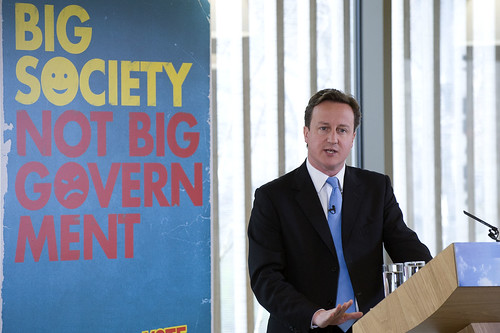
"So what's this now," the media is asking, "big society is actually a real thing?" It would be as if Barack Obama, after becoming presient, had set up a "Hope Task Force" in order to monitor and manage the levels of hope in local communities. The media didn't know what to make of it at first, but within days the consensus seems to be that this scheme is merely a cover-up for the massive budget cuts that are about to be made on local community services. Or is it?
Tuesday, 25 August 2009
Libya and the Devolution Discord
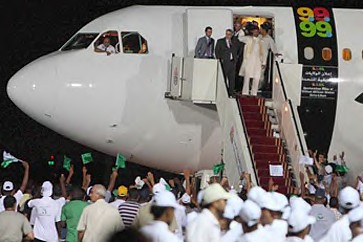
It would seem everyone is terrified of ending up like France, which was on the receiving end of a notorious boycott campaign (not to mention the renaming of “freedom fries” and “freedom toast”) when they refused to participate in the Iraq war in 2003. But beyond the fact that the 2003 France boycott was actually not economically significant in the slightest, I can assure you that the level of anger in the US about the premature release of the Lockerbie bomber isn’t anywhere near the height of vitriol against France in the run-up to Iraq. Still, the anger is real, and the incident has really gone a long way to illustrate the very deep gulf that exists between Americans and Brits on issues of criminal justice and punishment.
I must confess maybe it’s the American in me, but I also find myself perplexed by this decision by Scottish Justice Minister Kenny MacAskill. Megrahi was given a life sentence, not a ‘life sentence unless you get sick’. Even if MacAskill felt that it would be cruel to make the convicted terrorist die in prison, surely there was a hospice or hospital in Scotland he could have been taken to. Why on earth did he have to be taken to Libya?
As with most big decisions, you know there’s got to be some more complicated factors at work here. I have no doubt that MacAskill probably genuinely believes it would have been cruel to allow Megrahi to die in prison, but the fact is this probably has more to do with two larger issues – Scottish nationalism and Britain’s diplomatic relations with Libya.
Devolution D'oh!
So for my American readers – a bit of backstory. Scotland is obviously part of the United Kingdom, but through a kind of curious accident of history it has always been a separate entity from England and Wales, with its own separate civic institutions – most notably its legal system. The Act of Union in 1707 shut down the separate Scottish parliament and merged it with that of England, but Scotland’s separate institutions persisted. In the early 20th century there were calls for Scotland to be granted home rule along with Ireland, but in the end it didn’t get its own parliament again until 1997, when Labour leader Tony Blair campaigned with a promise to give Scotland a semi-autonomous status through a system known as devolution. Wales and Northern Ireland were eventually also given their own parliaments through devolution, though they have considerably less independence than Scotland. Devolution has led to the bizarre situation today where every ‘country’ of the UK has local parliaments except England (effectively giving every Scottish, Welsh and Irish UK citizen double the representation of any English citizen).
(it should be noted that the centre-left Scottish National Party should not be confused with the far-right British National Party, which bans membership for nonwhites and won two seats in the European Parliament in the British Euroelection in June).
In theory, areas of foreign policy and diplomatic relations shouldn’t be at all under the authority of the Scottish government. But in this particular case the area of law had a huge impact on foreign relations, something Labour perhaps didn’t anticipate when they set this up in 1997. Washington sees this as a UK decision, and Gordon Brown’s silence on the issue has been seen as, if not callous, downright incompetent. Yet in actuality, because of devolution, there was nothing Brown could have done about it.
Back Room Deal?
The fact is, the majority of people and governments in the Middle East and North Africa believe Megrahi is innocent. Megrahi himself has all along insisted on his own innocence, and his conviction for the terrorist act was both controversial and razor thin. His co-accused was found not guilty, and the evidence against Megrahi was anything but airtight. He was in the middle of a long process appealing the decision when he was released last week. You’d be hard pressed to find any Libyan who thinks he’s actually guilty, and most have viewed him as a political prisoner. It is feasible to believe that there are those in the Libyan political and business community who were refusing to do serious business with the UK until the Megrahi question was settled, particularly as he is so popular in his home country.
Many British people share this view. In fact a number of the Lockerbie victims’ families believe Megrahi is innocent, saying theyblieve that the US and UK governments railroaded through a false conviction in 2002 out of embarrassment at not being able to figure out who was really responsible. Many in Scotland are defending MacAskill’s decision on the basis of their belief that Megrahi is “probably innocent” and therefore doesn’t deserve to die in prison.
Of course if he is indeed innocent, the appeals process is the appropriate venue to prove that case. MacAskill’s decision not only leaves open the question of who actually perpetrated the Lockerbie bombing, it also appears to circumvent the proper exercise of justice.
It’s a mess all around, and now there is even speculation that the controversy could bring down the SNP government. An emergency session of the Scottish Parliament was called yesterday, bringing MSPs back from their summer recess early, so that members could demand that MacAskill explain his actions. He and his fellow party members were defiant, couching the decision in 'Scottish values' and appearing to hope that by presenting this as an ‘us versus them’ question of Celts versus the Anglo-Saxon English and Americans, they can stave off a revolt that would bring down their government. But considering their majority technically rests on just one seat, this strategy may not work. One thing’s for sure, it’s going to be an interesting week in Edinburgh.
Subscribe to:
Comments (Atom)