Showing posts with label devolution. Show all posts

Friday, 3 February 2012

UK gets ready for ‘American’ mayors

In three months, on 3 May, citizens of some of England’s largest cities will hold a referendum on whether or not they want their cities to be run by mayors. Though it may not seem like a revolution-in-the-making, it would represent a big change. American-style ‘mayors’ are an new concept in the UK.

London was the first British city to adopt the concept, creating an elected mayor position for the first time in 2000, a position now held by Boris Johnson. Before a devolution referendum was approved by Londoners in 1998 the city was ruled by 32 local boroughs with drastically less power than the current mayor enjoys. The referendum essentially created ‘London’ as an entity that had never existed before – a ‘Greater London Authority’ with its own government controlling the entire London area.

The ‘City of London’, the historic city where the financial centre now is, has had, and still has, a ceremonial ‘Lord Mayor” – a position which has existed since 1189. But actual elected mayors with powers have been unknown, largely because the UK is such a unitary state. It's one of the reasons some posit the British are so hostile to federalism at the European level. Given they have one of the lowest levels of local government in the western world, the concept of federal entitites sharing power rather than having it "dictated" to them from Brussels might be hard for them to understand.

As opposed to a federal state like the US, most decisions in the UK are taken centrally by the British Parliament – even painfully local things like new building authorisations or roads. But atr the turn of the century the government of Tony Blair made a huge decision - devolving powers to four regions through a process called devolution. Scotland and Wales were ‘devolved’ and given their own parliaments to make local decisions in 1999 (Northern Ireland has had a devolved government off and on since 1921, but a new one was established in 1999). London – which could be considered a ‘region’ in its own respect considering it has a larger population than Scotland and Wales put together – was also given devolved powers at the same time.

Tuesday, 25 August 2009

Libya and the Devolution Discord

Over the past few days Brits have been approaching me in hushed, frightened voices to ask the question that seems to be occupying everyone’s minds here right now – “Are they really going to boycott us?”

It would seem everyone is terrified of ending up like France, which was on the receiving end of a notorious boycott campaign (not to mention the renaming of “freedom fries” and “freedom toast”) when they refused to participate in the Iraq war in 2003. But beyond the fact that the 2003 France boycott was actually not economically significant in the slightest, I can assure you that the level of anger in the US about the premature release of the Lockerbie bomber isn’t anywhere near the height of vitriol against France in the run-up to Iraq. Still, the anger is real, and the incident has really gone a long way to illustrate the very deep gulf that exists between Americans and Brits on issues of criminal justice and punishment.

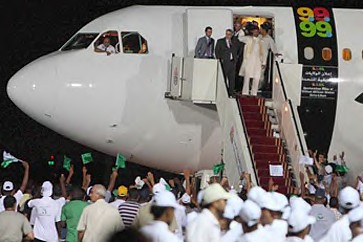
People here in the UK have tended to have mixed opinions about the decision to release the only person convicted of the 1988 Lockerbie airplane bombing, with most people I know defending the decision to release of Abdelbaset Ali Mohmed Al Megrahi on compassionate grounds - because he is suffering from terminal cancer and has three months to live. My Scottish friends in particular have been insisting that Scottish law has a long tradition of compassion, and that it shows how civilized they are as a society that they would let him go. But you’d be hard pressed to find one person in the US who agrees with this analysis. They are, quite frankly, enraged. Most Americans probably don’t understand why he’s even still alive at all (Texas would have killed him 6 times over by now). Even Chuck Schumer, one of the most liberal members of the US senate, was railing against the decision on Meet the Press on Sunday, calling it a "disgrace".

I must confess maybe it’s the American in me, but I also find myself perplexed by this decision by Scottish Justice Minister Kenny MacAskill. Megrahi was given a life sentence, not a ‘life sentence unless you get sick’. Even if MacAskill felt that it would be cruel to make the convicted terrorist die in prison, surely there was a hospice or hospital in Scotland he could have been taken to. Why on earth did he have to be taken to Libya?

As with most big decisions, you know there’s got to be some more complicated factors at work here. I have no doubt that MacAskill probably genuinely believes it would have been cruel to allow Megrahi to die in prison, but the fact is this probably has more to do with two larger issues – Scottish nationalism and Britain’s diplomatic relations with Libya.

Devolution D'oh!

Yesterday the BBC24 presenters were speaking with a Time Magazine reporter in Washington about the threats of boycotts against the UK, and one of them asked her in seeming expasperation something like, ‘Surely the Americans realise that this is the Scottish government taking this decision, not the UK.’ The Time reporter seemed a bit bemused (or maybe actually confused) by the question. Brace yourselves for a shock, but most Americans aren’t too versed in the latest news on Scottish devolution – which, after all, is a recent development.

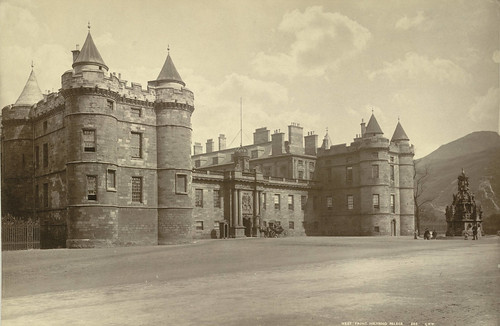
So for my American readers – a bit of backstory. Scotland is obviously part of the United Kingdom, but through a kind of curious accident of history it has always been a separate entity from England and Wales, with its own separate civic institutions – most notably its legal system. The Act of Union in 1707 shut down the separate Scottish parliament and merged it with that of England, but Scotland’s separate institutions persisted. In the early 20th century there were calls for Scotland to be granted home rule along with Ireland, but in the end it didn’t get its own parliament again until 1997, when Labour leader Tony Blair campaigned with a promise to give Scotland a semi-autonomous status through a system known as devolution. Wales and Northern Ireland were eventually also given their own parliaments through devolution, though they have considerably less independence than Scotland. Devolution has led to the bizarre situation today where every ‘country’ of the UK has local parliaments except England (effectively giving every Scottish, Welsh and Irish UK citizen double the representation of any English citizen).

So who is this Kenny MacAskill, and why is Gordon Brown claiming the British government has no control over what he does? MacAskill is a member of the Scottish National Party, which advocates for the complete secession of Scotland from the UK. The SNP was elected into a majority in the Scottish Parliament (known as ‘Holyrood’) in 2007 – an election result largely seen as a rebuke to New Labour. Therefor all the Scottish ministers are now SNP members - beyond the control of the Labour government in London. The comparable US analogy would be if Texas were to be granted semi-autonomous powers and was not subject to the final authority of Washington. The ‘Texas Independence Party’ could then be elected there and make decisions (in some areas) that Washington would have no control over. In Scotland, law is one of those areas.

(it should be noted that the centre-left Scottish National Party should not be confused with the far-right British National Party, which bans membership for nonwhites and won two seats in the European Parliament in the British Euroelection in June).

In theory, areas of foreign policy and diplomatic relations shouldn’t be at all under the authority of the Scottish government. But in this particular case the area of law had a huge impact on foreign relations, something Labour perhaps didn’t anticipate when they set this up in 1997. Washington sees this as a UK decision, and Gordon Brown’s silence on the issue has been seen as, if not callous, downright incompetent. Yet in actuality, because of devolution, there was nothing Brown could have done about it.

Back Room Deal?


Of course, that’s just one way of looking at it. But there is a much more nefarious theory making the rounds in the US – that the release was part of a secret deal to secure lucrative business contracts with Libya. Only time will tell if that allegation is true, but at the very least it is certain that the detention of Megrahi was a festering sore in relations between Libya and the UK.

The fact is, the majority of people and governments in the Middle East and North Africa believe Megrahi is innocent. Megrahi himself has all along insisted on his own innocence, and his conviction for the terrorist act was both controversial and razor thin. His co-accused was found not guilty, and the evidence against Megrahi was anything but airtight. He was in the middle of a long process appealing the decision when he was released last week. You’d be hard pressed to find any Libyan who thinks he’s actually guilty, and most have viewed him as a political prisoner. It is feasible to believe that there are those in the Libyan political and business community who were refusing to do serious business with the UK until the Megrahi question was settled, particularly as he is so popular in his home country.

Many British people share this view. In fact a number of the Lockerbie victims’ families believe Megrahi is innocent, saying theyblieve that the US and UK governments railroaded through a false conviction in 2002 out of embarrassment at not being able to figure out who was really responsible. Many in Scotland are defending MacAskill’s decision on the basis of their belief that Megrahi is “probably innocent” and therefore doesn’t deserve to die in prison.

Of course if he is indeed innocent, the appeals process is the appropriate venue to prove that case. MacAskill’s decision not only leaves open the question of who actually perpetrated the Lockerbie bombing, it also appears to circumvent the proper exercise of justice.

It’s a mess all around, and now there is even speculation that the controversy could bring down the SNP government. An emergency session of the Scottish Parliament was called yesterday, bringing MSPs back from their summer recess early, so that members could demand that MacAskill explain his actions. He and his fellow party members were defiant, couching the decision in 'Scottish values' and appearing to hope that by presenting this as an ‘us versus them’ question of Celts versus the Anglo-Saxon English and Americans, they can stave off a revolt that would bring down their government. But considering their majority technically rests on just one seat, this strategy may not work. One thing’s for sure, it’s going to be an interesting week in Edinburgh.

Tuesday, 1 July 2008

Tories consider blocking Welsh, Scottish votes

Quite a conundrum now affects the United Kingdom, ten years after devolution first gave constituent countries their own parliaments. Scotland, Wales and Northern Ireland all now have their own separate governments, legislating on matters that affect only their territory. But England, the constituent country where the vast majority of British people live, doesn't have such a local legislative body.

The result is that the national parliament in Westminster still makes the decisions that affect only England, but doesn't make decisions that affect only Scotland or Wales. And since the national parliament has elected representatives from Northern Ireland, Scotland and Wales, this means that in theory the people in those areas have more representational power. Scots get a say in local decisions in England, but the English don't get a say in local decisions in Scotland.

It might seem that the natural solution would be to give England a local government. But there is very little support for this amongst the English population. There have been attempts to start local elected assemblies for different regions of England, but after the first one attempted was voted down in a local referendum in the North East in 2004, all the other plans were abandoned. The only area in England with a local government now remains London.