Showing posts with label David Cameron. Show all posts

Monday, 26 February 2018

In rejecting spitzenkandidaten, Macron has let the perfect be the enemy of the good

National leaders, led by Emmanuel Macron, have refused a European Parliament demand that citizens should select the next EU president. The reasons have more to do with institutional rivalries than citizens’ interests.


“Don’t count your spitzens before they hatch,” tweeted Lithuanian President Dalia Grybauskaitė ominously as she entered Friday’s summit of EU leaders in Brussels. 

The Lithuanian president was referring to the so-called ‘spitzenkandidaten’ process, used in the last European Parliament elections in 2014 for the first time to select the European Commission President as a result of the public vote. National leaders of the 27 future EU member states (that is, all except the UK) were meeting Friday to decide whether to use the process again in next year’s election.

Wednesday, 12 April 2017

Mélenchon would 'renegotiate' Europe and call a referendum after. Sound familiar?

The far-left firebrand's plan to completely overhaul the EU or call a referendum on membership if he doesn't get his way is as naive and dangerous as David Cameron's 2015 gambit.

Two years ago, British Prime Minister David Cameron was running scared.

Faced with unending sniping about the European Union from his backbench MPs, and a UK Independence Party with the wind at their backs (they had finished first in the UK's European Parliament election the year before), Cameron panicked. He promised to 'renegotiate' the terms of Britain's membership of the EU, and then hold an in-out referendum based on the result.


As The Economist wrote earlier this month, it was a solution in search of a problem. Only 5% of British people saw the EU as one of the most important issues facing Britain at the time (more than half see it that way today). It was a move to placate politicians in his own party, not to address any real pressing concern from the public.

Friday, 15 July 2016

Europe will referenda itself to death


From Budapest to Paris to Cleveland, the West‘s blind idolatry of direct democracy will be its own undoing. 

"The referendum is a device of dictators and demagogues," declared UK prime minister Clement Attlee in 1949. No surprise, then, that Europe’s next anti-EU referendum following Brexit has been called by Hungary’s Viktor Orban.

The Hungarian prime minister’s absolute control over the political, judicial and media institutions in his country have been likened by many to the power of a dictator, including by European Commission President Jean-Claude Juncker

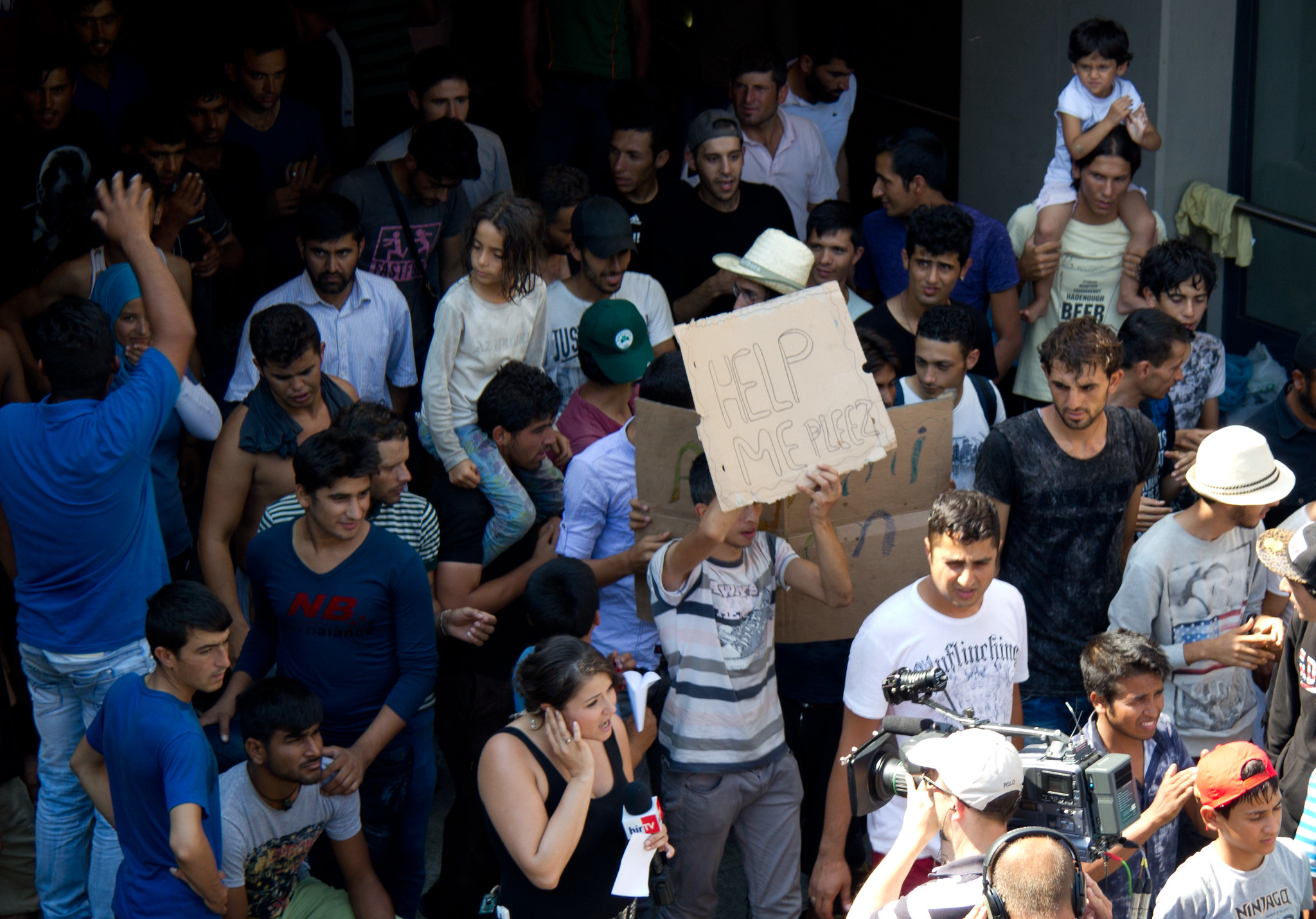
Hungary has attracted particularly negative international attention because of its brutal treatment of Syrian refugees trying to cross through the country to Germany. It is the latter issue that has prompted the referendum, scheduled for 2 October. 

Tuesday, 5 July 2016

The EU can, and should, reject any new UK commissioner

The British government is trying to find the most palatable candidate to survive European Parliament confirmation. But it is unclear why the EU should accept any British commissioner.

Prime Minister David Cameron's resignation in the hours after the Brexit referendum result on 24 June was the abdication heard round the world. But later that day, there was a less-noticed but also significant resignation in Brussels.

Lord Jonathan Hill, the European Commissioner from the UK, who is in charge of EU financial services, also stepped down. "As we move to a new phase, I don't believe it is right that I should carry on as the British Commissioner as though nothing had happened," he said in a statement. "In line with what I discussed with the President of the Commission some weeks ago, I have therefore told him that I shall stand down."

For awhile, it was unclear whether any new British commissioner would be sent to take his place. But today the Financial Times reported that the UK is about to nominate Sir Julian King, the current British ambassador to France. The Times writes that King would be considered an "apolitical appointment to ensure Britain is not left unrepresented at the EU’s executive body". 

The paper said the European Parliament is likely to reject any nominee that backed Brexit. At the same time, an incoming pro-Brexit government in the UK might be unhappy about having the pro-remain King be their man in the Commission.

But it is unclear to me why any UK nominee should be acceptable to the European Parliament.

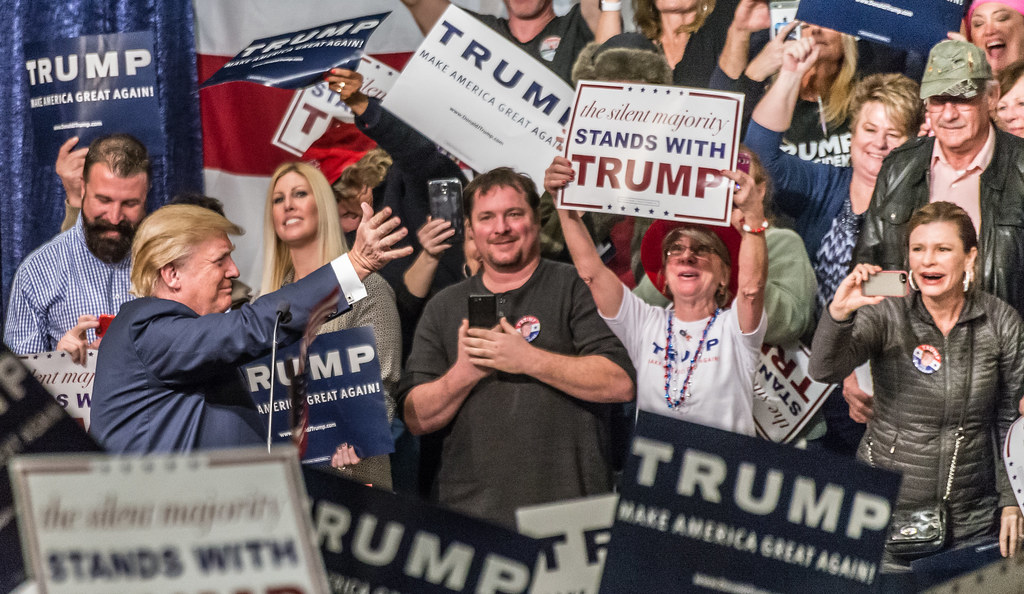
The 'Brexit delegation' at Trump's convention

The Tory-led ECR group will attend Donald Trump's nominating convention, but Merkel's center-right EPP will not. It reflects the path British Conservatives have chosen to take.

Years before his faustian bargain to offer an EU referendum to maintain his Conservative Party leadership, David Cameron tossed the eurosceptics another bone to become party leader.

In his 2005 campaign to become Conservative leader, he promised to take the Tories out of the main-centre-right bloc in Europe, the European Peoples Party (EPP), and form a new eurosceptic bloc. For years, the eurosceptic wing of the Conservative Party had complained that the EPP, which contains the main center-right parties of Europe including those of Germany, France, Italy and Spain, was too 'federalist' in its approach to the European Union.

Tuesday, 28 June 2016

Can we stop the 'Democracy is beautiful' platitudes? This vote was a travesty

In the West we are brainwashed to always view more democracy as better. But the Brexit fiasco shows how inappropriate referenda are.

Being a Swiss person in England on Saturday, British journalists were keen to get tennis star Roger Federer's take on the Brexit chaos taking place around him. He gave a politician's answer. "It’s nice to have democracy here, that you have an opportunity to vote. It’s a beautiful thing."

Really Roger? You think what we've seen over the past days is "a beautiful thing?"

David Cameron expressed similar sentiments in his resignation speech after losing the vote. "The country has just taken part in a giant democratic exercise, perhaps the biggest in our history," he said. "We should be proud of the fact that in these islands we trust the people for these big decisions."

Monday, 27 June 2016

The UK Parliament can block Brexit, but it needs a mandate

There is zero prospect for a second referendum, but a general election may be called in the next few months that would be a de-facto second vote. The result could be an unravelling of the main political parties.

In the three days since Brexit, social media has been abuzz with the prospect of holding a second referendum. The argument goes that so many leave voters did not understand what they were voting for, it justifies holding a new poll. 

An official petition asking for a second referendum has collected more than four million signatures, which will force a parliamentary debate on the subject.

But the idea of a second referendum is fanciful. The process of the first referendum was so ugly, so destabilising, that few would want to put the UK through that again. 

Like Trump, Brexit won by accident

Brexiteer fumbling this weekend gives an impression of self-interested politicians who launched a campaign they didn't expect to actually win. Sound familiar?

This morning's appearances on the Sunday shows by the politicians who campaigned for Brexit was a full-on car crash. Perhaps the most extraordinary was Ian Duncan Smith's interview with Andrew Marr.

After trying to get any shred of information from IDS, Marr finally asked, exasperated, “What’s the plan?” “How do you mean?” IDS responded defensively. So Marr cited, for example, the leave campaign's promise to spend the "£350m per week that the UK sends to Brussels" (a completely inaccurate figure) to instead fund the NHS. 

“We never said that,” IDS replied. Marr was indignant. “Yes you did. So even if there was £350m per week, which there isn’t, how are you going to fulfil all of your other spending promises?”

“We never made any commitments. We just made a series of promises that were possibilities," IDS responded.

Monday, 20 June 2016

Yes, the gig for the UK journo in Brussels is to stretch the truth

A tell-all Facebook post by a former journalist at The Times has gone viral this weekend, exposing a truth that most in the EU press corps already know.

On Friday Martin Fletcher, a former foreign correspondent for Britain's The Times newspaper, posted some explosive allegations on Facebook.

"For 25 years our press has fed the British public a diet of distorted, mendacious and relentlessly hostile stories about the EU," he wrote. "And the journalist who set the tone was Boris Johnson."

Fletcher describes how, in 1999, he arrived in Brussels as The Times' Brussels correspondent, shortly after Boris Johnson's stint covering the EU capital for The Telegraph. Johnson later went on to become the Mayor of London and the main politician backing a British secession from the European Union. If there is a vote for Brexit on Thursday, Johnson is likely to be the next UK prime minister.

Monday, 23 May 2016

What planet are the Brexiters on?

No, Turkey is not about to join the EU. And the only country that wants it to is the UK.

Yesterday, on one of the UK's main Sunday morning politics shows, the UK's defence minister Penny Mordaunt made an astonishing claim. 

The pro-Brexit Tory politician told the BBC's Andrew Marr that Turkey is about to join the European Union, which would open the flood gates to Turkish immigrants coming into the UK. Asked if the UK has veto power over Turkish accession, Mordaunt replied, "No, it doesn't".

Except that it does - quite obviously. Any new EU member state must be approved unanimously by every county in the union, something that UK Prime Minister David Cameron, who is trying to stop the UK from voting to leave the EU, was quick to point out later in the day. 

Friday, 26 February 2016

Brexit is the British Trump

After years of vilifying the EU, the English elite have created a Frankenstein's monster they cannot control.

It now looks increasingly likely that Donald Trump will be the Republican nominee for the US Presidency, and the world is looking on in bemused horror. What kind of hysteria has propelled this man toward becoming the American right's standard-bearer?

It has been widely observed over the past months that this is a monster of the Republican Party's own making. For years the party has driven turnout by peddling a narrative of fear, and stoking the worst instincts of its base. Truth became relative, and 'truthiness' was the name of the game. If it felt true, then go with it.

Thursday, 3 September 2015

The coalition of the unwilling

Hungary, Poland, Spain and the UK were willing to invade Iraq in 2003, but they are unwilling to deal with the refugee crisis which that invasion has spawned 12 years later. Germany and France are the countries shouldering the responsibility.

Today I bought a ticket for the overnight train from Berlin to Budapest, to interview people next week for a radio story I'm working on about the disappearance of Europe's cross-border rail routes. As I was making the booking at the DB ticket office, the woman gave me a look of concern. "That train is going from Hungary to Germany," she said. "Be careful."

Despite watching the news reports about what is happening at Budapest Keleti Station the past few days, it did not occur to me until that moment that I am going to be on one of these international trains next week. This international train travel piece could end up being very different from what I had planned.

The images of Middle East refugees trampling each other trying to get onto trains to Western Europe in Budapest broadcast today were truly horrific. I'm still a bit unclear about whether these are regularly scheduled trains or specific migrant trains, and whether or not my Budapest-Berlin train will be affected at all. But it's hard to imagine it won't be.

Friday, 11 April 2014

The greenest government ever?

British Conservatives have among the worst voting records in the European Parliament on climate issues, according to a new analysis.

In May 2010, David Cameron, the UK's prime minister, made a bold claim. As he finalised talks on forming a governing coalition with the Liberal Democrats, he told an audience of civil servants that his would be “the greenest government ever”.

It is a claim that Cameron may have come to regret. Over the past four years, the quote has been repeatedly thrown back at him by environmentalists upset over a variety of issues – whether cuts to renewable energy subsidies or fracking for shale gas. Yet Cameron has maintained that his government is doing more to combat climate change than any previous UK government, and that the UK is playing a more constructive role in the climate fight than other European countries.

But green campaigners say this claim is hard to justify when you look at the voting record of Conservative members of the European Parliament. An analysis by campaign group CAN Europe published this week, scoring MEPs based on how they voted on ten key pieces of climate legislation over the 2009-14 term, ranks the British Conservatives among the worst parties in the Parliament for climate action.

Thursday, 12 September 2013

The pan-sceptic ticket

Nigel Farage's state of the union response suggests UKIP will make climate change denial a centrepiece of their European election campaign.

I was a bit taken aback on Wednesday when, during his response to President Barroso's State of the European Union speech in Strasbourg, UKIP leader Nigel Farage devoted almost the entirety of his speech not to warnings about the creeping European super-state, but to an impassioned denial of climate change.

The subject is nothing new for UKIP. The official party line is that there is no proof that climate change is man-made, and this is often brought up by UKIP MEPs. The party has been particularly vocal about renewable energy, blasting “ugly” wind turbines blotting the English countryside and biofuel subsidies it says are responsible for fuel poverty in the UK. This was made clear by UKIP MEPs during Monday's debate on biofuel legislation, which strangely put UKIP on the same side as the Greens.

But it was surprising to see Farage devote so much time to the issue during a big-picture debate on the EU that had nothing to do with climate change. The EU had fallen victim to a “green obsession”, he said. The resulting legislation had driven manufacturing away from the UK and forced people into fuel poverty.

Tuesday, 13 August 2013

Ins and outs

As the British seek new EU opt-outs, Danes will likely vote to end theirs.

Over the past several years, as UK prime minister David Cameron has taken his country further and further toward the EU exit door, he has been keen to stress that the UK is not alone in its desire for a more devolved EU. He points to the increasingly Eurosceptic Dutch, who have, like the UK, recently conducted a review of the EU's powers. He points to the Danes and Swedes, who are also voluntarily remaining outside the Eurozone.

So when news came this week that it now looks likely that Denmark will hold an ‘EU referendum' next year, it may have seemed like welcome news for the British Conservatives. Cameron has attracted a large amount of ill will on the continent by scheduling an in/out EU referendum for the UK in 2017. But why should Britain be singled out for scorn, when the Danes are holding their own EU referendum?

However the Danish case is a very different animal. The British referendum will be a vote on a theoretical new EU-UK relationship which the government will negotiate, giving the UK more opt-outs from EU law. The Danish referendum will be the opposite – a vote on whether to end the opt-outs Denmark negotiated for itself back in 1992.

Thursday, 8 August 2013

Russia's '1936 games'?

Relations between the United States and Russia seemed to hit a post-cold-war low this week when president Barack Obama cancelled a bilateral meeting with Vladimir Putin ahead of next month's G20 summit in St. Petersburg.

 After years of tension over Syria, missile defense and human rights, Russia's decision to grant asylum to NSA leaker Edward Snowdon was the straw that broke the camel's back. But the real low point in relations may have come during an appearance this week by the US president on America's most watched comedy show.

 During an interview on The Tonight Show on Tuesday (6 August), the US president sat impassively as the show's long-time host Jay Leno compared the Russian regime to the Nazis and Vladimir Putin to Hitler. Leno was referring specifically to Russia's recent passage of a law banning the ‘promotion' of homosexuality and an accompanying rise of gruesome vigilante attacks on Russian gays by far-right groups.

Friday, 28 June 2013

Much ado about colouring

The Brits are in a tizzy over an EU childrens book. But their own Parliament has produced four of them.

At the last EU summit, it was olive oil. At this summit, the burning issue that UK prime minister David Cameron wanted to discuss at his post-summit press conference was even more insidious – an EU-funded colouring book.

The multilingual children's exercise book produced by the European Parliament, first reported by the Telegraph earlier this week, is called ‘Mr and Mrs MEP and their helpers'. It contains exercises centred around a day in the life of two MEPs. Cameron distributed 30 copies of the children's book to the other EU leaders at the summit, saying something had to be done to reign in this reckless EU spending.

"[The other leaders] were shocked,” he told journalists after the summit. “First of all they thought it was a hoax done by the Telegraph and I had to convince them that it was a genuine, scandalous waste of money, and pretty sexist at that as well, because Mrs MEP stops at six o clock to go shopping and Mr MEP goes on until 6:40."

The colouring book is, admittedly, pretty awful. Its layout more closely resembles an IKEA manual than children's exercises, and its depiction of Parliamentary life makes it easy fodder for mockery.

Friday, 24 May 2013

A storm in an olive cup

Yesterday, the European Commission announced a rather unusual U-turn on a new regulation that would have banned restaurants from serving olive oil in refillable bottles. The cave-in came after a week of media pressure that even saw the leaders of Britain and Holland weighing in on the subject at Wednesday's European Council.

The law was set to quietly enter into effect at the start of next year, and would have mandated that any olive oil served at a restaurant table be in labelled, pre-packaged bottles with a tamper-proof dispensing nozzle. It was approved by a recent vote of EU member states, with 15 out of 27 countries approving it.

This is probably a case of a kernel of a good intention morphing into a monster PR disaster. At heart this was supposed to be a labelling regulation – making sure that restaurant owners don't buy expensive bottles of labelled olive oil and then refill them with cheaper varieties once they are empty.

But it ended up covering all containers, even unlabelled glass bottles. This made less sense, given that a consumer can't be tricked by a misleading label if no label is present.

Thursday, 23 May 2013

UKIP voters demand referendum...on Eurovision

As the EU referendum debate has heated up in Britain over the past several months, the UK-based polling agency YouGov has conducted periodic surveys asking the voting public whether they want an in-out referendum, and how they would vote in it.

In this week's survey, they threw an additional query into the mix – asking the same question but replacing the ‘European Union' with the ‘Eurovision Song Contest'. The result is rather revealing.
The survey shows that if a referendum on Eurovision were held, the UK's voters would vote to leave the song contest, with only 29% voting to remain in it. Among UK Independence Party (UKIP) voters, only 13% would vote to remain in the contest.

32% of the survey's respondants said they want the government to hold an in-out referendum on Eurovision (44% said they were opposed, while 24% said they weren't sure). The majority of UKIP voters with an opinion said they want the UK to hold such a referendum.

Wednesday, 10 April 2013

Thatcher's rose-tinted American legacy

The American media’s reverential depiction of Margaret Thatcher this week says much about how the US and UK differ when looking at history.

As I’ve watched the international media coverage of the death of Margaret Thatcher over the past few days, I’ve almost felt like we're talking about different women.

In America, the wall-to-wall coverage – quite unusual for a foreign leader – has been downright worshipful. This tone has been matched by politicians on both sides of the aisle. "The world has lost one of the great champions of freedom and liberty, and America has lost a true friend,” declared Barack Obama on Monday. “She helped restore the confidence and pride that has always been the hallmark of Britain at its best."

Here in continental Western Europe, where Thatcher was far less popular, the coverage couldn’t be more different. One French politician remarked that Thatcher will see the miners she put out of work in hell, while German MP Michael Roth declared "her radical market policies and her Europe-sceptical politics will certainly not be missed.”

In the UK the coverage has been more nuanced. As people say, she was a bit like Marmite – you either loved her or you hated her. The political persuasions of British papers has determined which side they’ve chosen to emphasise. But no media outlet has ignored the fact that she split opinions. Even Conservative Prime Minister David Cameron’s statement to the Parliament on Monday acknowledged this.