Showing posts with label Elections. Show all posts

Monday, 26 February 2018

In rejecting spitzenkandidaten, Macron has let the perfect be the enemy of the good

National leaders, led by Emmanuel Macron, have refused a European Parliament demand that citizens should select the next EU president. The reasons have more to do with institutional rivalries than citizens’ interests.


“Don’t count your spitzens before they hatch,” tweeted Lithuanian President Dalia GrybauskaitÄ— ominously as she entered Friday’s summit of EU leaders in Brussels. 

The Lithuanian president was referring to the so-called ‘spitzenkandidaten’ process, used in the last European Parliament elections in 2014 for the first time to select the European Commission President as a result of the public vote. National leaders of the 27 future EU member states (that is, all except the UK) were meeting Friday to decide whether to use the process again in next year’s election.

Saturday, 21 October 2017

Today's divides aren't between states, they're across them


In Europe and America, today's urban educated elites have more in common with their counterparts in other countries than their own compatriots. It is resulting in a new type of international nationalism.

I was in Belgrade last week moderating at the Belgrade Security Forum, an annual policy dialogue about Balkan and European issues. 

During a discussion on challenging inequality, one of the panelists made a point that stuck with me. Responding to a comment from former Greek prime minister George Papandreaou about the uneven benefits of globalization, Hakan Altinay from the Global Civics Academy noted that the benefits are being felt by a certain class in each country, and that is bringing them closer together across borders while they drift ever-further apart from their countrymen. 

People working in and around the European Union institutions in Brussels are often accused of living in a bubble, forming an international echo chamber in which they have more in common with each other than with people back home in their own countries. But in fact, this is a phenomenon that is linking national capitals across Europe - and it has little connection to the EU. The bubble isn't just in Brussels. It is spread across Europe's cities.

A few days later, I heard a very similar description of the situation in the US on NBC's Meet the Press, America's main public affairs program. During a 'data download' segment, host Chuck Todd described how NBC News had crunched the numbers. Despite the caricature of America being divided between red and blue states, the divide is really between red and blue people - and that split defies geography.

Sunday, 27 August 2017

Who will be Merkel's dance partner?

Germany’s upcoming election is eliciting a collective yawn in Europe, with a Merkel win almost certain. But surprises may be in store in who voters choose to be with her in government.

Compared to some of its neighbors, Germany isn’t known for having elections with edge-of-your-seat excitement. Particularly in the past decade, as Angela Merkel’s conservative CDU/CSU bloc has dominated politics, federal elections haven’t had much in the way of surprises.

But this year was supposed to be different. People expected a real contest between two credible candidates on September 24. That didn’t pan out.

Merkel has now been in power for twelve years, and she is running for a historic fourth term that could make her, along with Helmut Kohl, the longest-serving chancellor in modern German history. But many of her decisions have proved unpopular, particularly her controversial move to welcome Syrian refugees fleeing that country’s civil war in August 2015. It was thought that voters were ready for change.

Thursday, 10 August 2017

Will Germans really deliver Merkel a historic fourth term?

On this week's Brussels2Berlin podcast, Tyson Barker and Dave Keating talk to Deutsche Welle reporter Sumi Somaskanda about the upcoming German election.


Thursday, 4 May 2017

Le Pen and Trump: politics-as-entertainment

The French presidential debate echoed last year's US debates. Like Trump, LePen laughed while she bullied and mocked her opponent. We are living in an age of clowns.

Last night marked the one and only debate between the two candidates who will participate in Sunday's final round of French presidential elections, far-right nationalist Marine Le Pen and centrist internationalist Emmanuel Macron. For me, it had eery similarities to last year's Trump-Clinton debates in the United States.

Donald Trump had a way of getting under his opponents' skin. He would mock them, call them names, and laugh in their face. Marco Rubio was "Little Marco". Ted Cruz was "Lyin' Ted". Hillary Clinton was "Crooked Hillary". He dragged the Republican presidential primary into the mud, as his opponents desperately tried to counter his popularity by sinking to his level. Trump even goaded Rubio, a US Senator, into challenging his penis size.

Wednesday, 15 March 2017

Spectres of a Dutch past

Modern Holland sells itself as enlightened and peaceful, but this perception is not shared in Indonesia. Will today’s election return the Dutch to a more brutal era?

I’m flying somewhere over India at the moment, making my way to Amsterdam after a fascinating week on the Indonesian capital island of Java. Once I land in the morning I’ll be spending the day covering the Dutch election, and it’s safe to say the things I saw here on the other side of the world will be shaping my impressions.

The degree to which today’s election will say something about the direction Europe is heading has been a bit overstated in the English-speaking media. Headlines have declared breathlessly that far-right firebrand Geert Wilders is set to “win” the election and bring the Netherlands into the same axis of populism as the UK and US. But it's not quite that.

Friday, 2 December 2016

The EU may get its first far-right president. But does it matter?

Sunday may be a pivotal turning point for Europe, but not because of the presidential election in Austria. A referendum in Italy could bring the euro back to crisis point.

In May, when Austria held its first attempt at holding a presidential election, newspapers in the UK and the US were full of breathless coverage. "Austria is on the brink of electing Europe's first far-right president since WWII" they declared.

The BBC and The Guardian both used the occasion to run features about the 'rise of nationalism and populism in Europe', both of which curiously left out Britain's own UK Independence Party. 'Populism is other people' they convinced themselves. Now, after Brexit and Trump, the Anglo-American coverage is quite different.

And the coverage has returned, because the Austrian election is being re-run this Sunday, 4 December. 

In May, the far-right candidate Norbert Hofer, the leader of the Freedom Party, was beaten by Alexander Van der Bellen from the Green Party by just a few thousand votes. The two were facing each other in a shock second round after the country's main center-right and center-left candidates were eliminated. It was the first time a candidate from either the Greens or Freedom Party made it to the second round.

Monday, 19 September 2016

This one map of Berlin shows all you need to know about Europe's refugee divide

Huge gains for an anti-immigrant party in East Berlin reflect the East-West divide in Europe as a whole.

Yesterday, German Chancellor Angela Merkel waited nervously in her unassuming Berlin residence while the voters in Germany's capital city determined her fate.

The vote taking place outside her door technically had nothing to do with her. It was a local election for the Berlin Parliament (landtag), not the national one (bundestag). Berlin and two other German cities (Hamburg and Bremen) are, for historical reasons, also federal states.

But the result would have a direct effect on Merkel's chancellorship because it came hot on the heels of her centre-right CDU party's humiliating defeat in her home state of Mecklenburg-Pomerania. The CDU came in third, behind the centre-left SPD and, alarmingly, the new nationalist party Alternative for Germany (AfD).

Monday, 5 September 2016

Merkel's far-right home state

The German chancellor has suffered an embarrassing electoral defeat as the dark cloud of nationalism spreads over Europe. But predictions of her political demise are premature.

Last month, I took a trip with some friends to the Northwest German island of Rügen in the Baltic Sea. It's a beautiful holiday island full of white chalk cliffs and rolling green hills. But when we were there, it was also full of sights of a more disconcerting variety - political ads for the far-right and racist messages splattered in graffiti. 

As we left Berlin on the train and travelled north through Mecklenburg-Pomerania, signs for the far-right Alternative for Germany (AfD) and the extreme-right (neo-Nazi) National Democratic Party (NPD) became more and more frequent. They were all over the island, and were an especially frequent site in the island's departure city, Stralsund. On the posters for the main centrist German parties, Angela Merkel's center-right CDU and the center-left SPD (who are currently governing the country in a coalition), was written a chillingly familiar word in graffiti: volksverräter (traitor to the nation).

The only ads not splattered with grafitti were those for the AfD and NPD, some of which called Germany's new arrivals "rapefugees".

This is Chancellor Merkel's home turf - the constituency which she represents in the German parliament. And like parts of neighbouring Poland, it is not a friendly place for people of color.

Tuesday, 10 September 2013

Selling the parliament

For any journalist who has previously covered the start of a national election, today's launch of the 2014 European Parliament elections was a different sort of animal. As I sat in today's launch in Strasbourg and watched the promotional video, I had to ask myself – what other parliament would have to sell its own existence at the same time as overseeing a campaign?

Indeed, where I come from, politicians are these days bending over backwards to criticise and disassociate themselves from the Congress they want to be elected to. Sitting at today's launch, one had the sense that a main job for MEPs campaigning will be to explain the virtue of the Parliament to their constituents. Or at the very least, to explain what the European Parliament is.

“Many do have the opposite opinion to what is actually happening,” Parliament vice president Othmar Karras told us. “It is incumbent on the members of this house to put the facts on the table so there are no more misunderstandings.”

Friday, 1 March 2013

A week of turmoil for Europe

Yesterday was a big news day for EU politics, with a series of high-profile speeches in reaction to the disastrous election result in Italy on Monday. But despite the many speeches, the message has been singular: there is “no alternative” to austerity, and hostility toward the EU in domestic politics is exascerbating the euro crisis.

The day started with a speech by humiliated ‘technocrat’ prime minister Mario Monti at the European Commission. Having been rejected by his home country, it is perhaps unsurprising that the former European Commissioner wanted to come to Brussels, where people understand him. It was Brussels after all, at the behest of Berlin, who installed Monti on the Italian throne after forcing out Silvio Berlusconi at the height of the Italian crisis in 2011.

And it is no coincidence that it was the ‘Italians abroad inEurope’ voting region in which Monti received his highest share of the vote – 30%. This compares to the 9% of the vote he received at home – less than half the vote chare received by anti-establishment comedian Beppe Grillo.

Tuesday, 26 February 2013

Send in the clowns

There are plenty of people in Europe who hold stereotype-based views about Italy - that it is and has always been an ‘unserious’ country. Italian voters won’t have helped that perception over the weekend, when half of them voted for either a comedian or a clown to lead their country. “Do they think this is a joke?” one exasperated German asked me this morning.

Elections have consequences, and people get the leaders they deserve. Those Italians who insist on re-electing the clownish SilvioBerlusconi despite the ruin and shame he’s brought to Italy - and those Italians who decided they would rather see political anarchy by voting for a comedian who will not even sit in the parliament – will get the future they deserve. The problem is that because of the Eurozone debt crisis, we are all going to get the future they deserve.

Those outside Italy have long been baffled at how such a sizable portion of the Italian population could still support Berlusconi after the corruption allegations, Bunga Bunga parties, dalliances with underage Moroccan prostitutes and – most consequentially – the disastrous handling of the Italian economy. But what is newly shocking is the other surprise winner of this election – an anti-establishment comedian. The fact that so many Italians would vote for what is essentially an anarchist party, led by a comedian who does not even intend to take a seat in the Italian parliament, has rattled the world today.

Tuesday, 6 November 2012

The case for four more years? Look at the previous four

Rachel Maddow had an excellent review of Obama's first term last night. It's bizarre that anyone would say the American president "hasn't done anything" in his first term. Historic legislative actions were taken during the first two years. And even after the Republican takeover of the US Congress in 2010 ground all legislative activity to a halt, Obama still took important executive decisions over the following two years that could bypass the congress. Let's take a little stroll down memory lane, shall we?


Europeans are very anxious about the result of today's election in the US. It would appear that it is now up to 8 million people in Ohio to decide the fate of the world. Hopefully they will make the right decision.

Thursday, 16 August 2012

One car, one vote

The US presidential campaign switched into high gear this week with Mitt Romney’s selection of Wisconsin congressman Paul Ryan as a running mate. But with a raft of voter ID laws now going into effect in crucial swing states across the country, it’s looking increasingly likely that the result in November could be shaped more by who is allowed to vote than by who is on the ticket. Thanks to these new laws, if an American doesn’t drive, he or she may not get to vote.

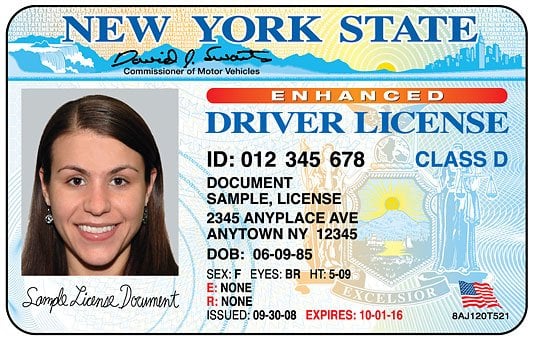
Until 2003, no state in America required voters to show a photo ID in order to vote. For Europeans this may seem strange, since showing your national ID is often a requirement here for things as simple as using a solarium. But English-speaking countries tend to not have national IDs. For some reason I’ve never understood, there’s just some deep-rooted Anglo-Saxon distrust of them.

In the United States, this leaves drivers licenses as the only government-issued photo identification most people have. Because such a large proportion of adult Americans (85%) have a drivers license, this has more or less worked out. Many people obtain a drivers license even if they do not routinely drive, in order to have a photo ID.

But that leaves 10% of eligible American voters who do not have a drivers license or any other form of photo ID, according to NYU's Brennen Center for Social Justice. This group is overwhelmingly made up of African-Americans, Hispanics and college students. And these three groups are statistically the most likely to vote Democratic.

Wednesday, 13 June 2012

Is this the Élysée or Melrose Place?

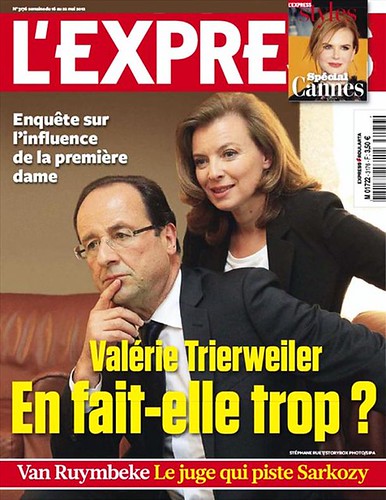
The French papers can hardly contain their excitement this morning over the catty details of the first scandal to come out of the Élysée Palace since the election of Socialist François Hollande – the self-styled “Mr. Normal”.

Journalist Valerie Trierweiler, Hollande’s partner (Americans – ‘partner’ is French for ‘unmarried fornicator’) made the faux pas of endorsing a rebel challenger to Socialist party standardbearer Segolene Royal in this Sunday’s elections for the French Parliament. This might seem fairly uninteresting, until you add the fact that Royale, herself the 2007 presidential candidate for the Socialists, is the former partner of Hollande and they have four children together.

The offending endorsement of challenger Olivier Falorni from the French first lady was made in a tweet posted by Trierweiler yesterday. The reaction from Hollande’s fellow Socialists has been furious. They have pointed out that not only has the tweet exacerbated the inter-party tensions and in a way that could cost the Socialists seats on Sunday, it also seems grotesque on a personal level. For the first lady to go out of her way to publicly insult and humiliate the mother of her partner’s four children seems exceptionally cruel, French politician Daniel Cohn Bennett said. But it seems entirely consistent with her previous behaviour toward Royal (more on that later).

Tuesday, 1 May 2012

The battle for the May Day voter

The first of May is always a big deal in France. This year it’s taken on an even more politically charged tone, with groups of far-left and far-right demonstrators possibly coming into conflict during the course of today. But it might be hard today to differentiate between the two groups based on their rhetoric alone.

May Day, originally a pagan spring festival, became an international workers day in the late 19th century. Ironically this Socialist holiday is unknown in the United States, despite the fact that it actually commemorates the 1886 Haymarket Massacre in Chicago. An American ‘Labor Day’ was instead set in September so that it wouldn’t coincide with international workers demonstrations. The day has long since lost any association with workers rights in the US.

But in continental Europe, the 1st of May is still a public workers holiday during which labour unions and activists demonstrate in the streets. It is also known for anti-capitalist violence, particularly in Southern Europe.

In recent years, the increasingly mainstream far right in Europe has challenged the idea that May Day is the sole domain of the left. The National Front party in France has begun to stage May day marches to the Place de l’Opera in Paris. There they hold a rally in front of a statue of Joan of Arc, who they have adopted as a symbol. This year, following the record 18% showing of National Front leader Marine Le Pen in last Sunday’s first round of presidential elections, it is predicted that they will garner the largest turnout ever.

Tuesday, 24 April 2012

Are Europe's conservatives now dependent on the far right?

Yesterday’s news that the government of Dutch Prime Minister Mark Rutte had collapsed sent almost immediate shock waves through the world’s financial markets.

Investors, who were already feeling skittish about the first-round victory of French Socialist presidential candidate Francois Hollande on Sunday, found themselves with something much more serious to worry about. The government of the Netherlands, one of the core austerity-pushing states of the Eurozone, couldn’t even pass the tough medicine they helped design for Europe.

Holland and the three other euro-using countries that still have triple A ratings (Germany, Finland and Austria) have pushed for every eurozone country to make massive cuts by the end of the month. But yesterday Rutte was forced to tender his resignation after it became clear he could not get his own parliament to approve the tough medicine he had helped design for all of Europe.

But perhaps more interesting from a political perspective is who it was that precipitated this crisis – the infamous far right leader GeertWilders. Rutte was only able to form his governing coalition in 2010 by relying on the backing of Wilders and his far right Party of Freedom group, which had polled at 15.5% in that year's election. Wilders has been tried in the Netherlands for hate speech against Muslims, and has been banned from entering the UK in the past.

Monday, 23 April 2012

Is Europe set for a Socialist comeback?

Yesterday’s first round of presidential elections in France delivered a humiliating defeat for president Nicolas Sarkozy, who trailed over one percentage point below his Socialist Party challenger Francois Hollande - the ex-partner of Sarkozy's 2007 rival for the presidency Segolene Royal. It is the first time in the history of the fifth republic that a sitting president has not won the first round of elections.

Public polling had predicted a Sarkozy win in the first round, in which all candidates compete, followed by a Hollande victory in the final round on 6 May, where the two leading candidates face off against each other. The low showing for Sarkozy already has papers predicting that, barring a miracle, Sarkozy is finished.

Much of Sarkozy’s trouble has come from Marine Le Pen, the leader of the far right National Front party. She came in at 18%, far higher than the previous leader of the party, her father Jean-Marie Le Pen, scored in 2002 when a split Left meant he came in second in the first round. Sarkozy has been desperately trying to win over the far right vote in France, telling French television that the country has “too many immigrants,” joining a crusade against halal meat, and saying the EU’s passport-free Schengen Area should be renegotiated. But it apparently wasn’t enough to convince the far right voters to vote for him.

Sarkozy now has two weeks to convince Le Pen’s followers to support him in the final round, but it will be a difficult task. National Front voters, aside from being xenophobic, racist and anti-EU, also have a strong anti-establishment impulse. This was reflected in Le Pen’s ecstatic victory speech last night, as she declared with a clenched fist in the air, “We have blown apart the monopoly of the two parties of banking, finance and multinationals. Nothing will ever be the same.”

Friday, 20 January 2012

The biggest American political story Europeans haven't heard of

The US presidential primary race has attracted its usual amount of fascination here in Europe, and yesterday’s developments - with the Iowa race being re-called for Santorum and Rick Perry dropping out - were front page material. But behind the spectacle of the drawn-out US primaries, there is a far more interesting story going on in the state capitals.

Of course it’s not surprising that the European media is ignoring these huge developments at state level, because the Washington beltway media has also ignored them. They also ignored the unprecedented political revolution in 2010 that the recent events are a reaction to. While in Europe the media tends to ignore ‘federal’ (EU) politics and focus only on member state politics, in the US it is the opposite. The US media (even local state media) tends to focus on federal politics in Washington and there is little interest in what goes on in state capitals.

Thus, when the Republicans enjoyed an unprecedented victory in the 2010 midterm elections, the focus was almost entirely on the fact that they had taken control of the US House of Representatives. What was largely ignored was the fact that they had at the same time taken over state legislatures with unprecedented majorities – giving Republicans the most power in state governments they have had in decades. Republicans wrested six governorships from Democrats, giving them control of 30 of the 50 state executives. Five states saw both legislative chambers (state senate and state house) switch from Democrat to Republican majorities. In seven other states they gave themselves control of the entire legislature by picking up huge majorities in an additional chamber. The elections left Republicans controlling the entire government of half of US states, leaving them with Hungary-like majorities capable of passing whatever state legislation they like.

Wednesday, 4 January 2012

Is Iowa the problem, or is it the primary system?

While I was home in the US over the past few weeks I witnessed the quadrennial spectacle of the Iowa caucuses - shivering reporters in front of the capital dome in Des Moines, candidates eating corn on the cob while clutching plump cord-fed babies, the usual fare. And I was also able to witness the quadrennial griping about why the United States allows “a few hundred farmers” to pick its president.

The complaining about the Iowa caucus, where the first nominating primary for both political parties’ presidential candidates is held, is both predictable and legitimate – even if the language used sometimes smacks of regional snobbery. The Iowa caucus makes or breaks politicians running for the presidency. Barack Obama owes his presidency to winning the Iowa Democratic caucus in 2008. This year, the result of the Republican caucus will force Michele Bachman and Rick Perry to drop out of the race. And the Iowans have elevated Rick Santorum from obscurity to be the main challenger to frontrunner Mitt Romney.

But the Iowa caucus is a big deal only because it is first. And being first means presidential candidates promise Iowa all sorts of lovely things (just look at the corn subsidies of the past four decades – and you wonder why Americans have corn syrup in most of their food for no reason?). The Iowans go through outrageous lengths to make sure they are first. When South Carolina and New Hampshire tried to move their primaries ahead of them this year, Iowa moved theirs to the earliest possible day in 2012 – 3 January.

This year the criticism went perhaps a little too far. A professor at the University of Iowa (himself a transplant from New Jersey) wrote a column for The Atlantic about a much-asked question – why should a state that is not ethnically or ideologically reflective of the country as a whole be given such a prominent role in selecting the nation’s president? But he asked it in a way that was incendiary to say the least, calling Iowa a place that's "culturally backward" and teeming with "slum towns”, where the 96% white population “clings to guns and religion.”