Showing posts with label Slovakia. Show all posts

Tuesday, 24 April 2012

Are Europe's conservatives now dependent on the far right?

Yesterday’s news that the government of Dutch Prime Minister Mark Rutte had collapsed sent almost immediate shock waves through the world’s financial markets.

Investors, who were already feeling skittish about the first-round victory of French Socialist presidential candidate Francois Hollande on Sunday, found themselves with something much more serious to worry about. The government of the Netherlands, one of the core austerity-pushing states of the Eurozone, couldn’t even pass the tough medicine they helped design for Europe.

Holland and the three other euro-using countries that still have triple A ratings (Germany, Finland and Austria) have pushed for every eurozone country to make massive cuts by the end of the month. But yesterday Rutte was forced to tender his resignation after it became clear he could not get his own parliament to approve the tough medicine he had helped design for all of Europe.

But perhaps more interesting from a political perspective is who it was that precipitated this crisis – the infamous far right leader GeertWilders. Rutte was only able to form his governing coalition in 2010 by relying on the backing of Wilders and his far right Party of Freedom group, which had polled at 15.5% in that year's election. Wilders has been tried in the Netherlands for hate speech against Muslims, and has been banned from entering the UK in the past.

Thursday, 22 September 2011

Bike sharing coming to New York?

I’m in New York City today, I’ve come home again for a baptism that was rescheduled due to last month’s hurricane.  It’s just a short trip for the weekend, so I’ve only brought a carry-on bag. Because I’m traveling light, I was able to take a bike to the train station this morning, which is always nicer than taking the tram.

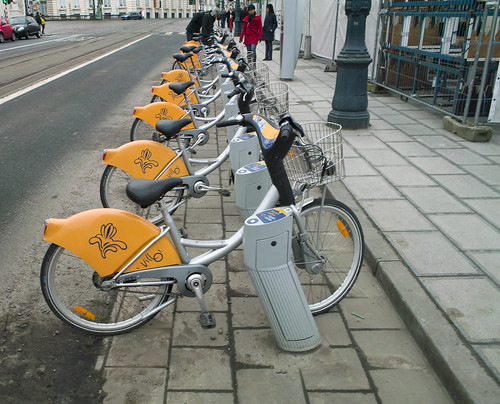
I use the Brussels bike-share scheme every day actually, it’s quite nice to have in a city with not very comprehensive public transportation. It’s quite simple really. For €30 a year I can check out a bike from any the stations scattered around Brussels and return it to a different station at my destination. It’s free as long as I return it to another station within a half hour. If I want to take it out for longer, it’s €1 for every 30 minutes. It’s particularly nice because my apartment is downhill from my office, so I take the metro to work and check out a bike to coast home.

Today I’ve learned that New York is considering implementing a similar scheme. But will it work in New York as well as it’s worked in European cities?

Tuesday, 8 February 2011

Hungary caves in to EU pressure on media law

After a month of skirmishes between Budapest and Brussels over the new Hungarian government's controversial media law, it looks like the country's defiant prime minister Viktor Orban might be ready to throw in the towel.

Yesterday the country's communication minister announced that the government had agreed to change the wording of the law following concerns from the European Commission that it restricts press freedom. The minister didn't specify what the change in wording would be, but he told the BBC it will be submitted on Thursday and that Budapest and Brussels are "very, very close" to resolving the issue.

The media law took effect at the start of this year, on the same day that Hungary assumed the rotating EU presidency. The law will create a new agency called the Media Council that will monitor news reports for "balance" and "human dignity". Offending news outlets who are found to have not been "balanced" would face large fines and possible deaccreditation in the country. The law would require all journalists, even video bloggers, to be accredited by the state. The word "balanced" had particularly alarmed the commission because the Media Council was to be packed with people from Orban's governing conservative party, Fidesz. So it is likely that this is one of the words that will be changed in the new text.

Thursday, 4 June 2009

My first vote in Europe

This morning I voted in my first European election, a right newly available to me now that I have my Italian passport. An EU citizen can vote for an MEP in any EU country they live in. It was a fairly uneventful affair. Though it was 8:45am and hence prime commuting time, I was actually the only person at the Chelsea polling station.

In the UK they still use paper balloting, so they hand you a sheet, you take it over to a little desk, mark off a big x, and slip it into a box. It seemed very old-timey to me, as where I’m from in Connecticut they haven’t used paper balloting since before I was born. Even the big pull-lever voting machines with the automatic curtains - which seemed so cool to me as a child when I would go into the booth with my parents - now seem antiquated in the US with the advent of electronic voting machines. Funny enough, the paper I was given this morning was about a metre long, making it appear as if I had a lot to vote on. But in reality there was only one X to be made, next to the party you were choosing. Each party though has to list the six candidates it would field if it wins, making the list quite long with all of the small parties. It’s done on a proportional allocation basis, with the winning parties getting to put forward a certain number of MEPs based on how much of the vote they got in each district. The UK and Holland are the only countries voting today, the rest of Europe will vote on Sunday and the British results won’t be revealed until then.

I won’t say who I voted for but I will say it was a tough decision. In Brussels they complain that one of the (many) problems with the European parliament is that people vote on purely national issues, which are mostly irrelevant to the issues being considered by the European Parliament. Even knowing this, I have to admit that national political considerations in Britain probably contributed about 50% to my decision. It’s just really hard to ignore the national politics when so often the most immediate and tangible result of these euroelections is the verdict they deliver on the national party in power.

Off with their Heads!

Owing to the economic crisis, this ‘verdict’ element is more prevalent this year than ever before. Across Europe there are several countries where the governments are teetering on the brink of collapse, and a poor performance in the EP elections could topple them from power. Across Europe the parties in power are expected to do poorly while the opposition parties are expected to do well (with the bizarre exception of Italy where, though their leader is embroiled in a sex scandal involving a 17-year-old girl, it is expected that his hard-right ruling coalition will do unprecedentedly well). In Greece, where the conservative government is weak following violent demonstrations against the economic crisis, a big win for the Pan-Hellenic Socialist Movement on Sunday could cause the collapse of the current government and a general election. Similarly in Spain, a big win for the conservative Popular Party could trigger a no-confidence vote for the ruling government of the Socialist Workers Party. In Germany and Portugal, big wins from the opposition would have a dramatic effect on upcoming scheduled elections in the fall. It seems that across Europe, whether the right or the left is in power, the verdicts delivered by Sunday’s election could be the opening shot of a coup by the rival ideology.

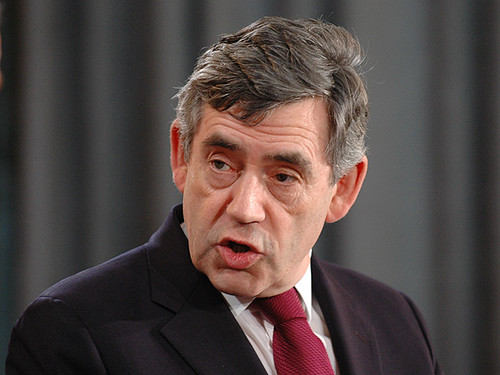
But nowhere is the euroelection being watched more closely as a barometer than in Britain, where it is being held concurrently with many local council elections across England. Gordon Brown’s government is in freefall this week. The ongoing expenses scandal has caused Brown’s already weak government to fall apart, and each hour that passes seems to get worse. The last two days have seen the resignations of several cabinet ministers, and it is thought that Chancellor Alistair Darling will be sacked within days. Brown will have to form a new cabinet next week, but if Labour MPs refuse to serve on his cabinet, he will have to step down as Labour leader. A new Labour leader would then be selected by the party, who would inevitably have to call a general election that Labour will almost certainly lose. It is thought that Labour MPs are waiting for the result of today’s vote to make their decision. If Labour does dismally (some are predicting they could even come in fourth or fifth behind the far-right British National Party) then they will force his resignation by refusing to serve on his new cabinet.

It is expected that the Tories will probably receive the largest share of today’s EP vote, thought the majority of people almost certainly don’t realize what they’re voting for with that decision. David Cameron is set to take the Tories out of the parliament’s main centre-right EPP grouping shared by Angela Merkel and Nicolas Sarkozy and form a new Eurosceptic fringe grouping by allying with far-right parties of Eastern Europe. This issue has received almost no coverage from the British media, so it is certain that most of today’s Tory voters aren’t aware that they’re voting for a coalition that will include the anti-gay, climate-denying Polish nationalist Law and Justice party. That said, perhaps even if they knew they wouldn’t be bothered by it.

Rock Stars and Royalty

Of course there are interesting non-government-toppling things to look out for in Sunday’s results as well. In the Netherlands, for instance, the country is rife with speculation over the performance of controversial populist Geert Wilder’s anti-Islam Party for Freedom, which many are expecting to do quite well. In France, people are watching to see if the newly solidified Socialist Party leadership of Martine Aubrey will give people confidence that Sarkozy’s opposition is back in the game and safe for a vote after a year of chaos and in-fighting. I think that’s unlikely and they will probably do quite poorly, especially considering that Communist Olivier Besancenot’s new Anti-Capitalist Party is expected to do well and will probably siphon off votes from them. But just how well they will do is a matter of speculation, and I imagine it will keep Sarkozy up quite late Sunday night if they have a good result.

Then of course there’s the amusing MEP entries of this year’s election. The European Parliament, often half-jokingly maligned as a refuge of freaks, cast-aways and has-beens, has attracted its fair share of celebrity candidates this year. Slovakia, which was mortified after the last EP election five years ago when it had the lowest turnout in all the EU at just 17%, has pulled out all of the stops to try to get people to the polls this year, fielding an African-born pop singer, a fitness trainer and a former ice hockey star. Who knows that their objectives for Europe are, but I suspect the main intent with fielding them was just to make sure Slovakia doesn’t come last in turnout again.

Another interesting one to watch will be Sweden’s Pirate Party, a group formed entirely in reaction to the recent prosecutions in that country of file-sharing site managers. The candidates actually dress as pirates and have used pirate speak when campaigning (and they’re expected to gain some seats on Sunday!). There’s also Elena Basescu - Romania's equivalent to Paris Hilton – who is expected to win a seat as she is the daughter of the Romanian president. Other quirky candidates include a former Czech astronaut; a Finnish racing champion and a Bulgarian Taekwondo idol.

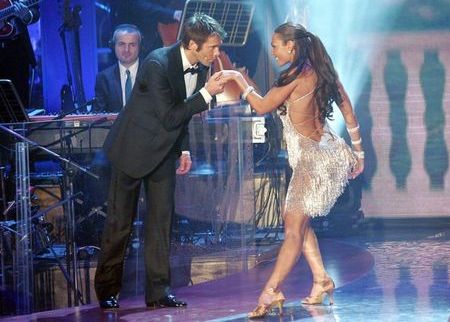
And of course my nerdy European history fascination can’t help but be interested in the fact that the reigning heirs of two of Europe’s formerly most powerful but today ousted (and banned) monarchies – the Habsburgs and the Savoys – are both in the running in Austria and Italy respectively. The candidacy of “Prince of Venice and Piedmont” Emanuele Filiberto in Italy is particularly interesting as he was banned from entering Italy his whole life (oweing to the expulsion of members of the former Italian monarchy when the Republic was declared in until Berlusconi lifted the restriction for him and his father in 2002. Shortly after that he celebrated his triumphal return to his family’s former kingdom by entering Italy’s version of Dancing with the Stars.

Asked why he would make a good MEP, he said, "I was in exile for 31 years and I know Europe well. I speak five languages. I know half of the current heads of state personally, and the other half I'm related to." It’s an argument any Royalist could agree with!

Check out this BBC site for real-time election results on Sunday and Monday. I'll be in Berlin this weekend, but will certainly be keeping tabs on it from there!