Showing posts with label Treaty of Lisbon. Show all posts

Tuesday, 16 May 2017

After trauma of Lisbon, Macron faces uphill battle for EU treaty change

The new French president may have softened Merkel's resistance to change, but leaders across Europe will be wary of opening a pandora's box.

Emmanuel Macron made his first foreign visit as French president yesterday, coming here to Berlin for a meeting with Angela Merkel.

That Berlin was his first destination is no surprise. The Franco-German relationship is the most important for Paris, and also the most important relationship in the European Union as a whole. But there was an added importance to this first visit. During his campaign Macron made promises about a process of renewal and reform of the EU. None of that will be possible without the cooperation of Germany's chancellor.

We still do not know if Merkel, a conservative, will be that chancellor. Germany is having a general election in September and she may be unseated by her center-left challenger Martin Schulz, a former president of the European Parliament.

Sunday, 7 May 2017

Today the dark clouds over Europe parted. Let's fix the roof while the sun is shining.

President Macron represents an opportunity for Europe to save itself. Will it be squandered like so many opportunities before?

When Emmanuel Macron took to the stage tonight for his enormous victory rally outside the Louvre in Paris, he did so with Beethoven's 'Ode to Joy' playing in the background. It was a truly shocking moment, because it is a tune that Europe's national leaders have been running away from for 12 years.

The Ode to Joy is the EU's unofficial anthem - unofficial because its official status was removed from the proposed European constitution after French voters rejected it in 2005. It is still played before sessions of the European Parliament nonetheless. But for national leaders, Beethoven's rousing melody has represented nothing but a headache.

For France's new president, it represents an opportunity.

The enthusiastically pro-EU centrist candidate Macron has handily defeated far-right nationalist Marine Le Pen - a woman who had promised to dismantle the EU. Brussels, and national capitals across Europe, are tonight breathing a sigh of relief.

Tuesday, 13 August 2013

Ins and outs

As the British seek new EU opt-outs, Danes will likely vote to end theirs.

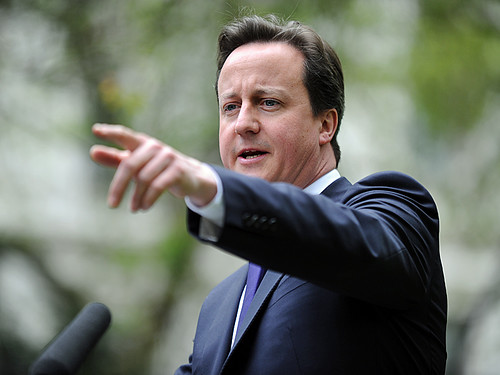
Over the past several years, as UK prime minister David Cameron has taken his country further and further toward the EU exit door, he has been keen to stress that the UK is not alone in its desire for a more devolved EU. He points to the increasingly Eurosceptic Dutch, who have, like the UK, recently conducted a review of the EU's powers. He points to the Danes and Swedes, who are also voluntarily remaining outside the Eurozone.

So when news came this week that it now looks likely that Denmark will hold an ‘EU referendum' next year, it may have seemed like welcome news for the British Conservatives. Cameron has attracted a large amount of ill will on the continent by scheduling an in/out EU referendum for the UK in 2017. But why should Britain be singled out for scorn, when the Danes are holding their own EU referendum?

However the Danish case is a very different animal. The British referendum will be a vote on a theoretical new EU-UK relationship which the government will negotiate, giving the UK more opt-outs from EU law. The Danish referendum will be the opposite – a vote on whether to end the opt-outs Denmark negotiated for itself back in 1992.

Wednesday, 22 May 2013

Backtracking on Commission size

EU leaders are expected shortly to announce that they have agreed between themselves not to reduce the size of the European Commission, overruling the text of the Lisbon Treaty. The change will likely be agreed unanimously this afternoon, according to Council sources.

The treaty had originally envisioned a reduction in the college at the start of the current Commission in 2010. Large countries would have maintained a permanent seat in the college, but smaller countries would have had to rotate the remaining chairs among themselves.

Dissatisfaction with this arrangement was cited as a reason for the Irish people rejecting the Lisbon Treaty in their first referendum in 2008. Before a second referendum was held the following year, it was agreed to add a provision into the Treaty extending the existing system until the end of the current Commission in 2014 "unless the European Council, acting unanimously, decides to alter this number." The Irish passed the treaty in the second referendum.

Wednesday, 12 September 2012

The peril and promise of a new treaty

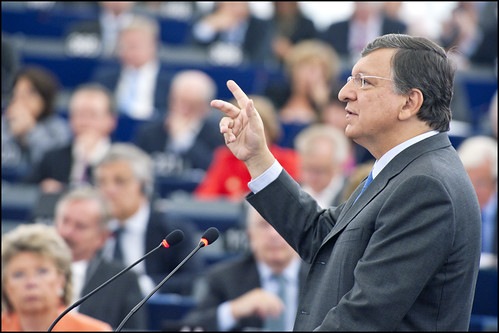
European Commission president Jose Manuel Barroso dared to use the ‘F word’ in his state of the union address here in Strasbourg today – federalism.

“Let’s not be afraid of the word, we will need to move towards a federation of nation states,” he told the European Parliament. “Today, I call for a federation of nation states. Not a superstate.” This federation, he continued, will ultimately require a new treaty, as German Chancellor Angela Merkel had suggested last week. EU leaders, still traumatized by the painful experience of ratifying the Lisbon Treaty in the last decade, have been desperate to avoid this.

“Before the next European Parliament elections in 2014, the Commission will present its outline for the shape of the future European Union. And we will put forward explicit ideas for treaty change in time for a debate.”

Barroso has been hesitant to use the word federal in the past when describing the future direction of the European Union, aware of the images of a power-grab it can conjure up in member states. But in his state of the union addresses, a yearly tradition itself created by the Lisbon Treaty, Barroso has been keen to make the European Parliament happy. He clearly thought that by finally using the F-word, he could do it.

Thursday, 8 December 2011

Cameron's choice tonight: will UK be inside or outside the room?

The degree to which the Left has become irrelevant in Europe was in evidence today as the European People’s Party (EPP), the EU grouping of Europe’s centre-right conservative parties, met in Marseille. The annual meeting of centre-right leaders, which coincidentally is this year a day before the final European Council, has toda become a first round in the treaty change talks. US Treasury Secretary Timothy Geithner has been there meeting with Europe's Conservative leaders, helping them to devise a strategy to save the Euro. Every leader who is important in this process was there today.

But it is not only the Left that is noticeable in their absence today in Marseille. Despite being a centre-right conservative leader, David Cameron is not there either. That’s because in 2009 Cameron took the decision to take his Tory party out of the EPP group and create a new, europsceptic grouping called ‘European Conservatives and Reformists’. That group is essentially just the British Conservatives, with a few hard right parties from Eastern Europe thrown in for good measure.

That decision, which was the fulfilment of a promise he made to the Eurosceptic wing of the Tory party in 2005 in order to be appointed party leader, may well be weighing heavily on the British leader’s mind today. He has already been locked out of the discussions amongst Eurozone leaders to devise a strategy to end the euro crisis. Now he is also locked out of the pre-summit meeting today in Marseille where so much of the strategy is being formulated. The later is a self-inflicted wound, and must be particularly hard to take considering it’s hard to see how creating a new EU group has benefitted the Tories in any way.

Tuesday, 6 September 2011

EU still terrified of treaty change

During today's midday briefing a European Commission spokesperson emphatically insisted that any tightening of economic integration in the Eurozone will not require treaty change. Reporters in the room didn't seem to be buying it. It's not hard to see why, after the president of the European Central Bank said yesterday that such a change would require such a treaty change.

It's an uncomfortable situation for the EU, which only recently was able to pass the long-stalled Lisbon Treaty after a painful and embarrassing six year saga. There is now a consensus that the only way to save the euro from the contagion of the debt crisis is to establish a tighter economic union between the countries that use the currency, essentially establishing a single finance ministry instead of having separate economic policies for the different states.

But there is fear that doing so will require yet another treaty change, and Brussels is worried that another round of treaty change approval by member states would be a disaster. There is still uncertainty over whether such changes would meet the threshold for UK Prime Minister David Cameron's 'cast-iron guarantee' to hold a public referendum on every treaty change. Because of the widespread antipathy toward the EU in Britain, it is guaranteed that any referendum on an EU question would fail – even if it is on a question that doesn't directly concern Britain, such as the eurozone (the UK does not use the euro and would therefore keep its own finance ministry).

Wednesday, 12 January 2011

UK throws a spanner into EU integration

British prime minister David Cameron survived a potential party revolt last night after successfully guiding his "European Union Bill" through a key vote in parliament. The bill, which honours a campaign promise to require every EU Treaty change be put to a public referendum in Britain, has been derided by the Conservative Party's hardcore Eurosceptic wing as being a soft touch.

The hardcore Eurosceptics are furious that the bill would make an exception for "minor" treaty changes, such as the upcoming establishment of a permanent financial rescue mechanism to aid faltering Eurozone states. The Tory leadership has insisted any designation of a treaty change as "minor" would be open to challenge by citizens, but the Eurosceptics counter that the final decision would be made by a judge and therefor the bill is not really "putting power back in the hands of the people" as Cameron claims. The rebel MPs say that what Cameron promised during the campaign was to submit every change, no matter how small, to public vote. They are alleging that the bill has been watered-down to appease the pro-European Liberal Democrats, who the Conservatives are now in coalition with.

But in a showdown vote last night the Eurosceptic rebels were only able to convince 39 coalition MPs to vote against the bill. The opposition Labour Party also voted against it, though they weren't exactly profiles in euro-defending courage in doing it - saying only that it was a 'distraction' from more pressing issues. The bill sailed through this stage of the process and looks set for passage.

Today the British media are heralding a victory for Cameron over the hardcore Eurosceptics who were unable to intimidate the prime minister into enacting a harsher bill. So hooray hoorah, on to the next subject. Brussels must be elated to have been spared this harsh retribution, right?

Thursday, 9 December 2010

OK, now it's the first Citizens Initiative - or not?

Back in October I wrote about how the first "European Citizens Initiative", a new right to petition the EU enabled by the Lisbon Treaty, was going to be about genetically modified crops - or so-called "Frankenfoods" as the European tabloid press likes to call them. Even though the institutions were still crafting exactly how the citizens initiative was going to work, it was thought at the time that citizens could still submit their petitions in the mean time. Plenty of legal wrangling ensued, and the Commission has come to the opinion that it does not yet have to officially accept petitions. The European Parliament, on the other hand, thinks that they do. The issue has still not been resolved, because the Commission and the Parliament can't agree on how the Citizen's Initiative should work.

Today Greenpeace got fed up with waiting and staged a demonstration outside the commission demanding that Commission President Jose Manuel Barroso come outside and officially accept their petition, which calls on the EU to stop approving GM crops. But instead of the commission president, the only one to emerge was Health Commissioner John Dalli. Meeting the activists on the giant 380 square meter carpet containing all 1 million signatures collected, Dalli said "I can assure you that there is a political will to listen to everybody and one million signatures is a voice that we should listen to." Photos were taken, handshakes were made, and Dalli walked back into the Berlaymont building. The commission then quickly put out a press statement saying that the commissioner had "received" the petition. But speculation soon spread both outside and inside the commission headquarters - what does "received" mean? Did the commission officially accept the petition?

Friday, 12 November 2010

Is direct democracy preventing a solution to the euro problem?

Angela Merkel may have won her battle for a change to eurozone rules last month, but as lawyers grapple with exactly how to make those treaty changes, the devil is proving to be in the details. The greatest irony of the whole situation may be that it is the eurosceptic populations of Northern Europe - who have been the most unfairly hurt by the euro currency crisis - that are proving the biggest block to making changes with real teeth that would stop Southern European states from from again abusing the rules of the common currency.

Ever since the German chancellor reluctantly agreed to bail out the collapsed Greek economy and create a permanent mechanism for similar crises in the future, she has insisted that EU treaty changes are needed to prevent the bail-out being challenged in Germany's constitutional court. So she has called for treaty changes explicitly allowing such bail-outs and also measures to punish eurozone states who abuse the bloc's rules as Greece did. The later element would have the objective of preventing the need for another such-bail-out in the future. The changes are needed urgently, she says, because that future may be of the not-too-distant variety considering the recent economic news coming out of Ireland and Spain.

Thursday, 28 October 2010

A day of deal-making in Brussels

As European leaders meet in Brussels today everyone seems to have something to sell. David Cameron and new Dutch prime minister Mark Rutte have stepped off their trains this morning with demands for an EU budget freeze for 2011. Angela Merkel and Nicolas Sarkozy arrived this morning having formed a pact between them a few days ago to jointly demand treaty changes allowing the EU to sanction eurozone countries who misbehave. And representatives of the European Parliament will be on hand to demand the introduction of direct EU taxation that would go directly to Brussels. It will be an intense day of horse-trading as each block tries to get what they want.

The British and Dutch conservatives want to freeze next year's budget at 2010 levels, opposing the 6% increase approved by the parliament last week. They say it would be obscene to increase the EU budget, which is financed by member states, at a time when national governments are pursuing drastic budget-cutting measures. Members of the European Parliament (MEPs), on the other hand, point out that a 6% increase is significantly lower than what they usually call for. But they say they would be willing to consider a freeze if the member states agree to new forms of direct EU taxation on things like aviation, financial trading and carbon credits. Right now the EU is entirely funded by member state governments.

Wednesday, 6 October 2010

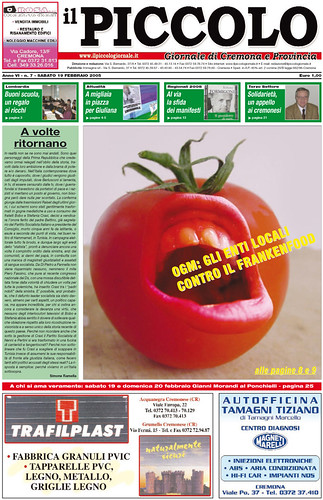
"Frankenfoods" the subject of first EU citizens initiative

The first citizens initiative petition will soon be presented to the European Commission under new rules created by the Lisbon Treaty. The treaty gives citizens the right to demand that the EU look into a specific issue if they can collect 1 million signatures. Perhaps unsurprisingly, the petition concerns one of the hottest and most controversial issues with the European public: genetically modified crops.

As an American, it’s been interesting to watch the GM debate progress here in Europe. Genetically modified crops are now widely used in the United States, and it was never a very hot or controversial topic there. GM crops and even GM food does not seem to bother the American public very much. The exact opposite is true here in Europe, where the public across member states remains concerned about GM. Across Europe the media has been very hostile to these so-called "Frankenfoods". In the US the issue has gotten barely a mention.

Tuesday, 20 July 2010

Atheists and Freemasons - best buds?

Is Atheism a religion? A controversial application of the Lisbon Treaty's new requirements for holding regular meetings with all European religious leaders is putting that question to the test.

Yesterday the presidents of the European Commission, European Council and European Parliament held a rather awkward press conference with various religious leaders from across Europe. Watching the leaders crowd together for the 'family photo', there was a temptation to make some kind of joke about a priest, a rabbi and an immam walking into a bar. Inevitably, reporters pressed the EU and religious leaders for their opinions on the upcoming burqa bans in France and Belgium, but the leaders wouldn't take the bait. Both Barroso and Van Rompuy said this was a member state issue that does not involve the EU.

The occasion of this very holy family photo (courtesy of the commission) was the first ‘annual dialogue’ between the EU and Europe’s religious leaders since the Lisbon Treaty came into force. The meeting has actually been taking place every year since 2005, but the Lisbon Treaty has now made the meeting mandatory. This has introduced new political issues that weren’t present before.

Thursday, 15 April 2010

The UK election and the EU – a stark choice

It’s really an incredible thing to witness – British elections apparently don’t slowly emerge and gather pace, but instead arrive with a loud thud. Last week Prime Minister Gordon Brown called an election, and on Monday the Queen ceremoniously dissolved parliament. Almost on cue, my Facebook feed suddenly lit up with status messages from Brits asking who they should vote for.

It’s strange, because it’s been known for months that the election would be at some point in May. it’s literally the last moment at which Gordon Brown could have called an election since the last one was 5 years ago. But I guess it isn’t ok to start thinking about how you will vote until the Queen tells you to!

This will be the first UK election I will have observed since moving there. The process is extremely different from that in the US. Once the parliament is dissolved, MPs have just a few weeks to rush home to their constituencies to campaign. On 6 May the Brits will go to the polls, and whichever party gets the most votes will be able to appoint the prime minister. But one part of this year’s election will be very American. For the first time ever, the leaders from the three main parties will take place in an American-style TV debate. The first one will air tonight.

Friday, 6 November 2009

Dangerous Democracy

In a crippling blow to the gay rights movement in the United States, citizens of the state of Maine voted in a referendum to repeal a law passed by their own elected legislature granting marriage rights to same-sex couples. It was a reminder of the reality of referendums: easily manipulated by campaigns of misinformation, public votes rarely yield progressive results, and have historically voted against protecting the rights of minorities. Out of 31 public referendums held on the gay marriage issue in the United States, every single one has voted against allowing the unions.

The success of Maine’s ‘question 1’ follows the bitter disappointment of gay rights activists following the yes vote on California’s ‘proposition 8’ a year ago, which struck down the gay marriage rights that had been granted in that state only months earlier. Though the ‘no’ campaign in Maine was fought by the same anti-gay rights groups using almost identical advertising (warning that gay marriage would mean the teaching of homosexuality in public schools), there was one significant difference between the two referendums. While gay marriage was granted in California by a ruling of the state’s supreme court, marriage rights had been passed by an act of the legislature in Maine, endorsed by the state’s governor.

This is noteworthy because one of the main arguments of opponents of same-sex unions is that they keep being granted by “activist judges” in state courts “overriding the will of the people.” But while that argument could be made in California, that has largely not been the case in the states of New England, which have enacted same-sex unions through legislative action. So in Maine, the referendum actually overturned an act passed by legislators who had been elected to represent the voters. Maine's moderate governor even campaigned against question one. To me, this is an almost painful example of how absurd these large-scale referendums are.


In talking about this issue with British friends over the past few days, they’ve all been in agreement that this Maine marriage referendum is a disgrace. After all, what is the point of having a representative democracy if people can challenge anything they do just by rounding up a few thousand signatures? In a republic, citizens elect representatives and pay them to become educated on the issues and make responsible decisions in their stead. They choose these people to act on their behalf precisely because they do not have the time or, largely, the intellectual acumen to make these decisions for themselves. Having the public make these decisions by referendum results in a ‘tyranny of the majority’, as James Madison put it, which doesn’t have the foresight to make the best decisions for the country and will rarely protect the rights of minority groups. The Brits have nodded their heads in firm agreement.

Yet these are the same British friends who have been incensed by the fact that they have not been able to vote in a public referendum on the Lisbon Treaty, a complicated foreign policy document that was instead passed by their elected representatives in parliament. They’ve been outraged that after successive ‘no’ votes in referendums in France, Holland and Ireland, the treaty has still come to pass. Never once have they questioned the wisdom of having those referendums in the first place. Their assumption has seemed to be that public votes will always result in the best policy. Nevermind the fact that the Lisbon Treaty is a complicated and rather dull international agreement that tightens up the functioning of a union that already exists.

These British friends have tended to disregard the fact that every parliament that has voted on the issue, made up of representatives who have the time and capacity to educate themselves on what the treaty really is, has passed it (which must mean something, right?). They seem to have not thought about the near certainty that publics will cast referendum votes based on national issues (such as their satisfaction or dissatisfaction with their national government), xenophobia or misinformation rather than on the realities of the actual question being put to a vote.

Favoured by Populists and Dictators

Referendums rarely result in progressive policy or well-informed decisions. Exit polling after the first Lisbon Treaty referendum in Ireland revealed that the majority of ‘no’ voters did so either based on the fact that they didn’t know enough about the treaty or based on misconceptions about it.

In Switzerland, where there is a referendum on just about everything since they are guaranteed by the Swiss constitution, women didn’t have the right to vote nationally until the 1970’s (referendums kept voting universal suffrage down). The country’s politics are well known for their near-glacial pace.

Besides Switzerland, referendums have also historically tended to be pursued vigorously by dictators such as Adolf Hitler and Benito Mussolini. Both men frequently used plebiscites to disguise oppressive policies in a veneer of populism. Largely as a result of Hitler’s enthusiasm for them, Germany does not allow referendums to take place on a national level.

So where have referendums not been used? Well funny you should ask. They are not allowed in the handful of US states that still have gay marriage, such as my home state of Connecticut. If they were allowed in Connecticut, I think it’s likely that it could have been struck down there as well. And Connecticut is one of the most progressive states in the country.

The UK is one of the countries were referendums are specifically given no validity, and I would argue that's a good thing. Although Acts of Parliament may permit referendums to take place, they cannot be constitutionally binding and can be overturned by a subsequent act of parliament. The only referendum proposal to ever be put to the entire UK electorate was in 1975, asking the British if they wanted to continue membership in the European Economic Community, progenitor to the EU.

Whatever their opinion of Britain’s membership in the EU, I would urge my British friends to acknowledge that referendums are not a wise way to make policy. If they really want the UK to disengage with the European union, they’re free to vote for representatives who will reflect that stance. But they voted in Tony Blair’s New Labour three times on a moderately pro-European platform, so they can’t complain when this is the result of the parliamentary vote.

They should really ask themselves why it is that a majority of MPs, who have the time to educate themselves on these things, supported adoption of the Lisbon Treaty. Rejecting the treaty would have been a very radical move, especially after obtaining all of the opt-outs Britain negotiated. If the British public want to elect representatives who would make such radical decisions, they’re free to do so. But they should stop and ask themselves if this is really what they want.

Thursday, 5 November 2009

France: ‘Autistic’ Tories will Castrate UK

One could argue that there’s perhaps no better vote-getter for the Tories than having the French call them names, but the rather un-PC reaction from the continent to David Cameron’s speech yesterday deserves more that just a bemused reaction in Britain. It’s a reflection of how deeply concerned the continent is about a future Tory government.

I was at a conference in Copenhagen on Tuesday when the news broke that Czech President Vaclav Klaus had finally signed the Lisbon Treaty, following a Czech court ruling that the treaty did not violate Czech sovereignty. As soon as someone announced the news the room broke into applause – which is significant because this was an industry conference, not a gathering of EU policy-makers.

The capitulation by the Czech president meant that UK conservative leader David Cameron would have to abandon his crusade to put the treaty to a public referendum in the UK. He had made a “cast-iron” guarantee that the Tories would offer the British public a referendum on the document if the Tories were elected, but he had never addressed what he would do if the treaty went into effect before the Tories came into power. On Wednesday Cameron hastily arranged a speech acknowledging the obvious: now that the treaty has been ratified it is no longer a treaty, but EU law – making a referendum at this point essentially meaningless. At the same time he said he would work to "unravel" much of the treaty through negotiations over the coming years and would seek new "opt-outs" for Britain from EU policy.

In fact, a ‘no’ vote on the treaty would at this point mean a ‘no’ vote to the EU, and the implication of such a result would be that Britain must exit the union – something Cameron knows would be a disaster for the UK. His decision to abandon his plans for a referendum is less an active policy choice that an acknowledgement of reality.


The reaction to Cameron’s speech in the British press has been strangely schizophrenic. The right-leaning papers have focused on Cameron’s “capitulation to Europe” and a supposed “abandonment” of the Eurosceptic wing of the party. The Telegraph ran this headline yesterday: “David Cameron tells Eurosceptics: get over it,” followed by an interpretation that Cameron has rejected the Tory Eurosceptics by putting Europe low on the agenda. They point to the resignation of the two most rabidly anti-Europe MEPs, Daniel Hannon and Roger Helmer, from their front-bench positions in protest over Cameron’s decision.

On the other hand the left-leaning papers have focused on the nonsensical nature of Cameron’s speech yesterday, highlighting the fact that Cameron is still being antagonistic toward Europe yet he is not being clear in exactly what he wants from it. They point out that the UK already has many of the opt-outs Cameron said he would ask for in the coming years, including not being part of the Charter of Fundamental Rights (Brown already negotiated a UK opt-out to that part of the treaty). And they have recounted the baffled reaction of many leaders on the continent to the content of Cameron’s speech. Cameron’s promise to renegotiate employment law is almost laughably absurd, the continental politicians said, considering there is almost no chance Britain's European partners would approve an opt-out as it would be seen as giving the UK an unfair advantage in attracting foreign investment. And his promise that “never again” would a treaty pass without a public referendum in Britain is an empty gesture considering the Commission has already said it will not attempt any further institutional reform for at least a decade and probably much longer.

But it was the furious reaction from the French government to Cameron’s speech which the left-leaning papers focused on the most. In a stunning abandonment of diplomatic niceties, France’s Europe Minister Pierre Lellouche came out with a remarkable condemnation of the Tories, saying he was conveying French President Nicolas Sarkozy’s “sadness and regret” over the path Cameron has chosen to take. Lellouche told the Guardian:

"It's pathetic. It's just very sad to see Britain, so important in Europe, just cutting itself out from the rest and disappearing from the radar map …. This is a culture of opposition…I have told William Hague: go away for two to three years, in your political economic situation you're going to be all by your self and you'll come back. Go ahead and do it. That is my message to them … You want to be marginalised? Well, you go for it. But it's a waste of time for all of us.”
The minister’s comments reflect the depth of the anger felt by Europe’s Conservative parties at Cameron’s decision to take the Tories out of the main centre-right European party, the European People’s Party, to form a new “anti-federalist” party in alliance with hard-right parties from Eastern Europe. Lellouche said Cameron’s decision had “castrated” British influence in the parliament, and his continued antagonism toward the EU – saying the same thing over and over but not expressing any coherent question or demand – seemed like “a very bizarre sense of autism”.

The comments were particularly surprising considering that Lellouche is one of the most Anglophile members of Sarkozy’s government. It should be kept in mind that these unusually harsh diplomatic words are not coming from socialist governments on the continent, they are coming from fellow conservatives.

Despite the very different coverage of the issues from the different British papers, it is actually really heartening to see Europe being discussed so much in the British media this week. Though Cameron seems to be trying his best to get rid of Europe as a campaign issue, it would probably be the best thing for the UK if Europe were made a central part of next year’s campaign. Labour certainly has every interest in bringing it up as much as possible, considering it has historically been an issue that has caused civil wars within the Conservative Party, and Labour will be eager to exploit lingering fears and doubts the public has about the Tories’ ability to govern.

But more importantly, having Europe as a major issue of the campaign could mean that Britain will finally get the frank, honest Europe discussion it has never had. If the Tories want to unravel the European project then they need to present to the British public what their alternative vision is for the UK to be a relevant part of the 21st century. So far the discussion of the EU in the UK has focused on silly euromyths about the length of vegetables rather than a real education on what the EU does and that its purpose is to make Europe a relevant, strong global player in the 21st century. That discussion has never been had here because most politicians dance around the central truth regarding the necessity of Britain’s EU membership: the UK is no longer a world power and it faces a future of marginalisation and irrelevance if it tries to go it alone. As Lellouche said Wednesday:

"It is a time of tumultuous waters all around us. Wars, terrorism, proliferation, Afghanistan, energy with Russia, massive immigration, economic crisis. It is time when the destiny of Europe is being defined – whether or not we will exist as a third of the world's GDP capable of fighting it out on climate, on trade, on every … issue on the surface of the Earth. We need to be united, otherwise we will be wiped out and marginalised. None of us can do it alone. Whether you're big or small, the lesson is the same. And [Britain's] risk is one of marginalisation. Irrelevance."
It remains to be seen whether similiarly outraged words will be publicly expressed from Europe’s other conservative governments in Germany, Italy, Sweden and Denmark – but such views have already been expressed privately by Conservatives from all corners of Europe. Angela Merkel is reportedly refusing to even meet with Cameron, and joint policy groups between Germany’s CDU and the Tories have been cancelled.

If the Tories are elected next spring it would mean that all three major EU countries will have Conservative governments. Yet far from being an ideologically unified block that could plow through badly-needed reforms in Europe’s social model, there will be a huge chasm between the continent and Britain as a result of Cameron’s decisions.

Tuesday, 6 October 2009

Both the Best and Worst Man for the Job


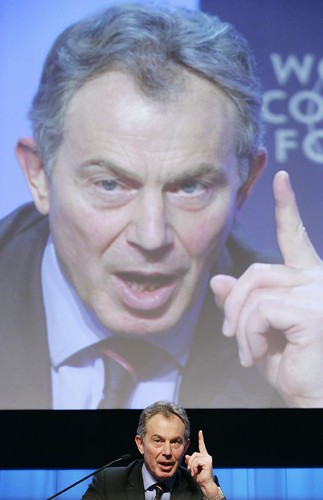
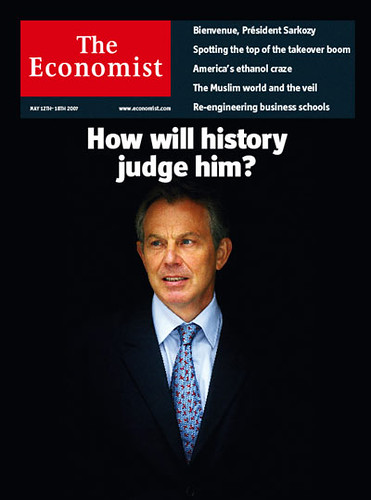
Now that the Irish have passed the Lisbon Treaty and it’s set to be ratified within months, the British press has transferred its characteristically ferocious obsession to what the treaty will do. And to hear them tell it, the sole purpose of this document is to make Tony Blair the “President of Europe”. Of course that is not true, and in reality no such position is being created. The position being referred to is the President of the European Council, which has always existed but will now go to a person rather than to a country (Sweden currently holds the presidency). The position doesn’t come imbued with much specific power like an American president, it's more of a symbolic coordinator role like the Secretary General of the United Nations.

But though it doesn’t come with executive power, the intention of the position – to designate a high-profile figure who can speak with one voice for all of the EU - is ambitious. Right now, the member state holding the Council presidency is unable to do that because they can essentially only speak for themselves, and they don’t have much time to develop a cohesive presentation of EU objectives given that they only hold the position for six months. So having an actual person in place for a longer term will make a big difference, although he is essentially "working for" the 27 European heads of government that make up the Council, not the other way around. He can only speak when he's been given permission by the entire council, a position he may find frustrating since he is used to the unilateral system of Westminster government.

The de facto “leader” of the EU up till now has been the president of the European Commission, a position currently held by Jose Manuel Barroso. But given that the Commission (made up of independent commissioners) and the Council (made up of the prime ministers of each member state) are often in conflict, Barrosso has never been able to convincingly speak for all of the EU even when he’s sitting in as its representative in bodies such as the G8. The Commission has no control over member states’ foreign or military policy. Of course the President of the European Council won't be able to unilaterally make foreign policy decisions (and nether can the new position of EU High Representative on Foreign Policy). The president is subject to the prime ministers of the member states, but he can work to attain a consensus amongst them and then announce and coordinate that policy (much in the same way Switzerland's executive branch works).

So the new presidency position calls for someone who has talents in two distinct areas: he or she needs to know how to work a room and twist arms in order to reach group consensus, and they need to be a high-profile, charismatic figure who can represent the EU on the world stage. Obviously, Tony Blair meets both of these requirements.

The problem is he also has one giant albatross hanging around his neck: Iraq. The fact that he was prime minister when the UK followed the US in its war with Iraq hasn’t endeared him to the British public or to Europeans in general. The centre-left of Europe is deeply mistrustful of Blair because of his role in the war, and this is a stigma he is never likely to live down. And in the UK, as has been evidenced by the vitriolic reaction by the British press to the likelihood of his presidency, Blair is still widely reviled by both the left and the right. The right hates him because he presided over the humiliating defeat of the Tories and pushed for a marginal social democratic agenda, the left hates him because he acquiesced to American power, and because they feel betrayed by many of New Labour's policies and promises it did not fulfil. He’s also become an openly religious Catholic since leaving office, and that doesn’t exactly endear him to the secular left either in Britain or on the continent.

Given the painful divisions that emerged in Europe in 2003 over the Iraq War, and how those divisions exposed how weak and incoherent Europe still is in the area of foreign policy, picking someone as president who conjures up those memories may at first seem like something Europe would want to avoid. But the reality is there just isn’t any other logical choice – such is the dearth of high-profile, charismatic politicians in Europe. The runners-up? Jan Peter Balkenende of Holland, François Fillon of France, Herman Van Rompuy of Belgium and Jean-Claude Juncker of Luxembourg. Not exactly household names.

Hated at Home

With this reality in mind I had long ago concluded that despite the Iraq problem Blair was probably the best pick. But in the past few days speaking with some of my friends here in the UK, I’m starting to get the full sense of how the wounds of the Iraq war have still not healed here. Even my most liberal friends have reacted with horror to the idea that Blair will assume the presidency, saying that after the British public and media worked so hard to push him to resign it would be an insult to see him appointed to an unelected position where he seems to be lording over them.

A recent survey showed that a majority of the British public (53%) is opposed to Blair becoming president. Perhaps even more surprising is the fact that only 66% of Labour party members want him to get the job. At their party conference this week the Conservatives seem to be content to make a bogeyman out of Blair, with Boris Johnson saying Britain is faced with the prospect of Blair “suddenly pupating into an intergalactic spokesman for Europe”. The media has been almost salivating with hostility toward the idea as well, with the Telegraph newspaper actually referring to a proposed British referendum on the Lisbon Treaty in a headline yesterday as the “Stop Tony Blair Referendum”.

Certainly, these fears are misguided. Logically the Tories should be rooting for the first president of the council to be British – that would give the UK the influence in Brussels to be able to push through the EU reforms they claim they are so intent on achieving. Opposing Blair is certainly a case of the Tories cutting off their nose to spite their face, perhaps succumbing to mob-pleasing populism over sound policy.

But this isn’t just the usual British paranoia about the EU revealing its ugly head. There is a real feeling of ill will toward Tony Blair in this country, and I’m starting to wonder if its really worth it for Brussels to further antagonize the British, who are already so hostile to the EU. It’s a bizarre situation – Blair being president would undoubtedly be a good thing for the UK (the vast majority of respondents to that survey admitted as much), but he remains so controversial in his home country that the appointment would infuriate many in the UK – particularly the liberal left which the EU so badly needs in its corner.

Perhaps this initial discomfort with the choice of Blair will go away after a short while, and the British people eventually will come to remember what it was that inspired and enthused them about Blair in the first place. If that were the case Blair could actually serve as the ambassador for Brussels who could finally make the British like Europe, or at least make them finally accept that they need Europe. It was always a shame that the Iraq War intervened to derail Mr. Blair’s hopes of making Britain a fully active and contributory member of the EU. Perhaps this is the opportunity for him to finally see out that goal. It would be one failed promise that New Labour could belatedly deliver on.

Monday, 5 October 2009

Ireland Rejects British Influence

As news breaks that the UK will soon be shut out of a new G4 group of major economies and could lose its seat on the board of the IMF, the bizarre reaction to the Irish referendum by much of the British press continues to look more and more out of touch with the realities of the modern world.

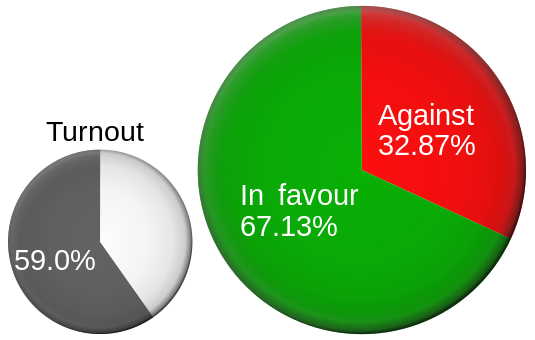
Europe-wide ratification of the Lisbon Treaty is imminent following Ireland’s massive endorsement of the EU reform agreement with a ‘yes’ vote of 67%. It looks as if Czech President Vaclav Klaus has lost his nerve and is ready to end his grandstanding talk of refusing to sign the ratification passed by the Czech parliament – a move which would have been constitutionally questionable anyway. So barring any unforeseen complications, it looks like this long effort to reform the EU to something more appropriate for its current size has been completed.

If the British media is to be believed, after rejecting the treaty in the first referendum in June 2008 Ireland voted yes this time around out of fear. Terrified by their vulnerability in the global economic downturn, the British narrative goes, the Irish have allowed themselves to be bullied into accepting dominance by Brussels, having lost confidence in their own ability to govern themselves. Under this narrative, the Irish made a courageous choice in the 2008 referendum when the treaty was, as the British press frequently puts it, “resoundingly defeated” (never mind the fact that the 2008 ‘no’ vote actually just squeaked by with 53%). Apparently in 2008 a slight majority indicated massive popular will by courageous people against an oppressive super-state, but in 2009 a large majority is the illegitimate result of misguided voters swayed by fear and intimidation. The Irish, it would seem, are only right when they agree with the British.

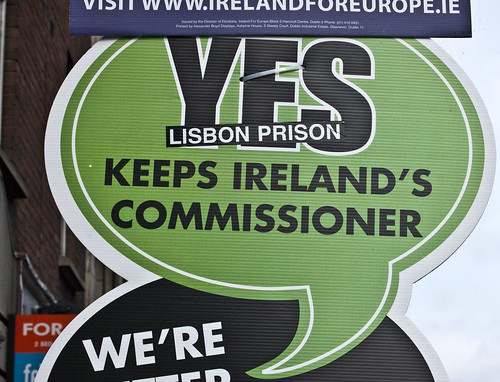
What is never mentioned in the British press is that after the June 2008 result Ireland has been given a basket of concessions and guarantees – the most significant being that the proposal to shrink the size of the European Commission from 27 commissioners to a more manageable size of around 20 has been abandoned. Under existing treaties each country is guaranteed a commissioner in the EC – even though commissioners are not supposed to represent national interests but rather fulfil a specific role of expertise such as trade, environment or energy. The large number of new member states that have joined in the past 10 years has meant there is now an excessive number of commissioners, with new remits for them being invented such as “Commissioner for Information Society and Media” and “Commissioner for Multilingualism”.

However even though it is supposed to be irrelevant which countries these commissioners come from that does not always prove true in practice, and the Lisbon solution to rotate a certain number of Commission seats between the small member states had caused some concern. There was a lot of misinformation spread in the 2008 ‘no’ campaign in Ireland, but this issue was one of the verifiable legitimate concerns that the ‘no’ campaign had – fearing the treaty would lessen the influence of small states in the EU’s executive body. So they won this concession, there will remain 27 commissioners.

While it is true that the actual text of the treaty has not changed (doing so would have required re-ratification by all 27 states and would have held up passage by another five years) the Irish have been given binding guarantees that these changes will be inserted at the time of the next Europe-wide ratification issue, likely the accession of Iceland and Croatia.

The British press also doesn’t mention that this time around there was a much more extensive education campaign on what is actually contained in the treaty – a response to the fact that the exit polling in the 2008 referendum revealed that the most frequently cited reason for voting ‘no’ was a lack of information on what the treaty is. Turnout this time around was also about 10% higher than before.

The British roots of the ‘no’ campaign were also more exposed this time around, making the claim that a ‘no’ vote was a vote for the spirit of dead Irish republicans seem laughable. As the Guardian pointed out in an article last week before the vote, the ‘no’ campaign was full of Brits who flew over to urge a rejection of the treaty, led by Tory lobbyists and Rupert Murdoch’s newspapers. All this prompted fears that a ‘no’ vote would result in what Irish Labour leader Eamon Gilmore called a “two-speed Europe” where there would be “a mainland Europe and the British Isles, where we fall under the influence of Britain." So much for a ‘no’ vote honouring the dead Republicans who fought against the British.

The Tories’ Eurochaos

The ‘yes’ vote was exceedingly bad timing for British Conservative leader David Cameron, as it means the Conservative Party conference this week will be dominated by the ‘Europe issue’, a quagmire that continues to cause rifts between different factions of the party. Cameron had promised to hold a referendum on the treaty in the UK if it remained unpassed by the time they (most likely) come into power next April. However now it looks like the treaty’s changes will be adopted by the EU by the end of the year – and the British parliament already ratified the treaty.

The Eurosceptic wing of the Conservative party is demanding that Cameron hold a referendum on the treaty anyway, asking the public whether Britain should retroactively pull out of a treaty it already signed and which has already gone into effect. The problem is this would not only be illegal under international law, it would also be impossible. If Cameron were to hold such a referendum and the result is ‘no’ (which is the position he has advocated), there is no longer a ‘treaty’ to vote on, the treaty has become the EU. So at that stage, a ‘no’ vote on the Treaty would be a ‘no’ vote on the EU, and the British would have to secede from the union.

This is not an issue Cameron wants to put to a referendum, as the risks of a ‘no’ vote would be too great. Britain pulling out of the EU, as I’ve written about before, would mean it would have to completely renegotiate almost all of its international treaties in trade, labour and markets. It would very likely cause an immediate collapse in the pound, and investors would flee the UK like rats fleeing a sinking ship.

So Cameron has an uncomfortable reality to deal with this week. Trying to throw a bone to the Eurosceptic wing, he has hinted ahead of the conference that the Tories will launch a “public consultation” instead of a referendum, with the aim of moving significant powers away from Brussels and back to Westminster. Party insiders are saying he will announce this week an intention to “repatriate” powers involving social powers, employment and justice to a national level. Of course what he effectively would be asking for are more UK opt-outs, which would be almost impossible to attain retroactively, requiring the approval of all 27 member states. Many of those member states would surely question why the UK deserves special treatment, and would laugh any Tory who demanded such a concession out of the room. Considering Cameron has already enraged the French and German conservative governments by leaving the mainstream centre-right EPP grouping in the European Parliament to form a new alliance with the Eastern European hard right, he has few friends in Brussels or other Western European capitals these days.

UK Shut Out of World Bodies

All of this Tory talk seems particularly incongruous with reality considering that just this weekend it emerged that, following the death of the G8, the US is planning to form a new G4 group of the world’s leading economies that will not include the UK. The new group would be composed of the US, China, Japan and the Eurozone. The Eurozone, remember, does not include the UK because it does not use the Euro currency. Alistair Darling has reportedly been begging for the new group to instead include all of the EU rather than the Eurozone, but US officials have reportedly rebuffed this request saying that the member needs to be able to control a unified monetary policy. The news comes at the same time that Britain is fighting to maintain its seat on the board of the International Monetary Fund.

It was amusing to see the Daily Mail try to spin this as Gordon Brown’s fault, rather than the fault of the isolationist impulse the Daily Mail and papers like it have championed over the past two decades. The fact that it is inevitable that the UK by itself will not be able to justify its seat on these international bodies in the 21st century seems to be lost on them. The paper declines to mention the fact that were the UK on the euro, it would have a seat on this new G4 body and could maintain a board seat in the IMF. Nor does it mention that France and Italy are also in the same boat now that the G8 is being dissolved, yet they will have a major place in the G4 and IMF because they are part of the Eurozone. The comments below the story would be hilarious if they weren’t so jaw-droppingly ignorant, with each commenter deciding that this news is somehow evidence that the UK should leave the EU. Come again?

It will be interesting to see how the ‘Europe issue’ is handled at this week’s Conservative Party conference. Considering Cameron’s populist tendencies, he could probably just get up on the podium and say ‘Europe’ and have the whole hall boo and jeer in order to have a successful day. But Cameron’s crowd-pleasing rhetoric on Europe is on a collision coarse with reality. His recent defection from the EPP is probably but a first instance of this.

Hopefully, Europe can now put this treaty nonsense behind it and focus on more important things, getting on to the real work of guiding the continent through the economic recovery and leading the world in the effort to combat climate change. That is, if the Tories can let a sleeping dog lie.

Wednesday, 30 September 2009

Gordon Brown the Populist?

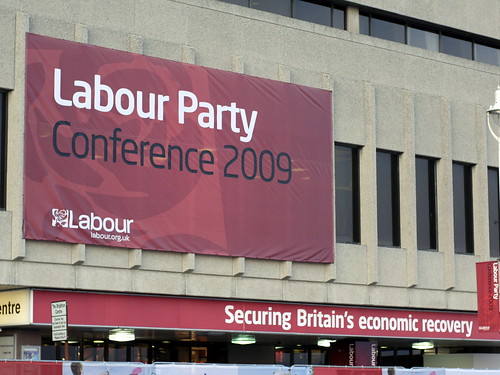
Ah party conference season in Britain. As the ocean breeze wafts in and the trains from London unload hordes of shuffling MPs, there’s always a slight whiff of desperation in these strange rituals. From an American perspective they always seem rather bizarre because they are held every September regardless of whether an election is coming up, whereas US party conventions only happen a few months before an election.

Of course this year there is a real election these conferences are preparing for, as these will be the last gatherings before the polls which should take place next April or May. The three main party conferences are all gearing up for that big showdown, and with the governing Labour party down at record low poll levels (recent polls have put them in third place behind the Liberal Democrats) it has become a natural assumption that the Conservatives will win.

In his rally-the-troops speech yesterday “Our Prime Minister Gordon Brown” basically threw the policy kitchen sink at the crowd, announcing a barrage of blatantly populist measures in a desperate bid to reverse the Labour Party’s fortunes. In the hall it seemed to work – the talk of insurrection was ended and the delegates seemed to resign themselves to the uncomfortable reality that Gordon Brown is not going to step down, and no one in the party is going to challenge him. But considering it was just a few weeks ago that Brown uttered the dreaded ‘c word’ in a speech (cuts – what were you thinking?) and said that Labour was going to have to make some difficult choices, I couldn’t help but wonder where those difficult choices were in his speech. Despite this barrage of people-friendly policies there wasn’t any indication of how any of it would be paid for.


Responding to the MPs expenses scandal, Brown said he will change the law to allow constituents to recall their elected MP – even though this doesn’t really make much sense in a parliamentary democracy. He said Labour would scrap its plans to introduce a national identity card – even though the UK is one of the only countries in Europe to not have one. Labour will increase taxation on the very top earners – even though they already did this last year. Labour will reverse the 24-hour drinking law (which allows pubs to stay open after 11pm if they purchase a special license) in certain areas - even though numerous studies have shown that an enforced 11pm cut-off encourages closing-time punch-ups and traffic accidents. And Labour will scale up efforts to target "anti-social behavior" by menacing youths - even though already those youths are now wearing the ABSOs with pride around their necks.

‘Fat cat’ businessmen will be subject to new regulation that can curb their bonuses – even though it is unclear how this could be enforced by law. Free care for pensioners (seniors) is to be extended in England, though it is unclear where the money for that will come from. And Labour will hold a referendum on whether to change the voting system from the current first-past-the-post system (as exists in the US) to a proportional representation system (as exists in continental Europe).

Free care for old people? No identity cards? Sobering up yobs in city centres? Way to make the tough decisions Gordon. Though this conference was meant to highlight the difference between Labour and the Tories, to me it seemed to only highlight a similarity – both seem to be basing their policy decisions on popular will rather than good decision-making. Granted, several of Brown’s policy announcements are good ones. But his speech was suspiciously lacking in the belt-tightening measures he said were necessary just weeks ago.

I was pleased to hear him mention the Tories dangerous Europe policy in his speech, but I wish he had gone into more detail about it as most British people don’t know anything about the Tories’ move to the fringes of the European Parliament. Of course ‘Europe’ isn’t such a crowd-pleasing word to use in British politics, so I’m surprised it got a mention at all.

The big story of the conference however was Lord Mandelson’s speech. It’s incredibly entertaining, you really should watch it. Unsurprisingly it was almost all about him, but it was remarkably engaging and animated for a British politician’s speech. In fact the general media commentary is that it was overly so, with some comparing his performance to an overdramatic drag queen in a panto show. Of course any American watching this speech would be perplexed as to why the British media is characterising it in this way, but you have to keep in mind that British politicians are not known for their engaging speaking style.


Personally I loved the Mandelson speech. It was exactly what the Labour Party needs right now – dynamism, self-confidence, pizzazz. Mandelson was a close ally of Tony Blair and is known for his cut-throat ways, accused by many of trying to convert British politics to an “American style” of personality-driven politics. His performance was so animated that, if it weren’t for his constant praise of his former enemy Gordon Brown, I would have thought he had designs on challenging Brown for the leadership himself. Watching his speech I thought to myself, “Well, why not?” He’s engaging, intelligent, charismatic – and has a breath of new ideas and experience. I’m not sure whether it’s the fact that he’s gay or his reputation for treachery that has made him calculate that he could only ever be the power behind the throne, but as Labour’s fortunes continue to decay, maybe they should just try it. But I’m not as clued in to British politics as others, is this a crazy thing to suggest?

Incidentally, I was a bit perturbed by Mandelson’s characterisation of his time in Brussels as an EU Commissioner as a banishment to the wasteland. The UK’s EU Commissioner is arguably the second-most powerful position the British have, though it may not come with the kind of fame and recognition Lord Mandelson relishes. Mandelson is a smart man and he did great work as EU Trade Commissioner. It was a bit annoying to see him toss that off as ‘lost time’ while playing to the home troops.

The conservatives’ party conference will be next, and it will be equally as important. A lot of people I know here in London are thinking about voting Tory but have many reservations about it. Lord Mandelson on Monday told the conference that Tory party leader David Cameron is just a new face on old Tory policy, a cheap sell job presenting a face of moderation that masks old Tory intentions to gut public services and reverse socially progressive legislation. Cameron needs to convince those still on the fence that the Tory party really has changed, that it really has pulled to the centre. Right now a lot of the people who say they will vote conservative in polls may not have the guts to actually do it come election time, because they still have lingering concerns about what the Tories would do.

The best thing Labour can hope for is in-fighting between difference factions of the Conservative party at next week’s conference, and it looks like they just might get it in an upcoming row over whether to hold a referendum on the Lisbon Treaty if it’s already been ratified across Europe by the time the Tories come into power. Ireland is holding its second referendum on the treaty Friday, and all polls predict that this time it will pass, completing the last hurdle for the treaty to be ratified across Europe and go into effect (barring some sabre-rattling from Czech President Vaclav Klaus).

Cameron knows that if such a referendum was held and the vote was ‘no’ (as it would probably be), it would be a violation of international law and would most likely result in Britain leaving the EU – which would spark a diplomatic and economic crisis for Britain. It’s a delicate issue, and it will be interesting to see how Cameron dances around it next week.

Friday, 21 August 2009

Don't be so Shocked, Europe - US Healthfight similiar to EU Debate

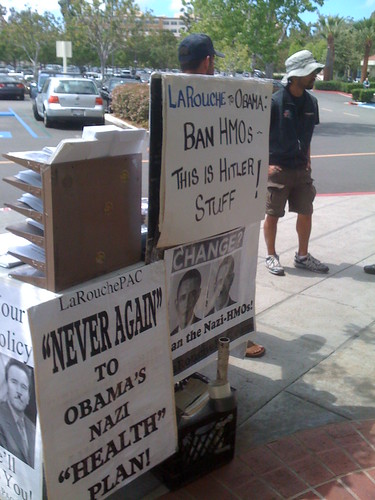
You could call it a rude awakening. Over the past few weeks Europeans have reacted with shock and incredulity as they’ve watched the “debate” over US healthcare reform unfold across the pond. How could it be, they’ve asked me in tones of sheer exasperation, that even in the face of a healthcare crisis Americans could be so credulous as to believe the outlandish lies being spread about Obama’s healthcare reform effort. Death panels? Enemy lists? Nazi euthanasia? How, they’ve asked, could anyone be so stupid?

I haven’t had a good answer to give them, except that this is the cold hard reality of the place American politics has found itself in today. As I’ve written about before, many Europeans were lulled into a premature sense of relief when Barack Obama was elected in November. But while the head may have changed, the body remains the same – this is the same American public that elected George W. Bush twice. The combination of powerful vested interests in Washington, a strong right-wing media that dominates civic discourse, and a population that is, let’s face it, rather uninformed, mean that Barack Obama has his work cut out for him if he wants to effect real change. Getting elected was just the first step.

The mobs that have turned up to congressional town halls to shout down any discussion of healthcare reform, waving placards of Obama with a Hitler moustache and screaming about his “Nazi policies”, aren’t actually concerned about healthcare. This is about something much bigger, a general right-wing paranoia and militarism that tends to arise every time a progressive Democratic president is elected. It happened in the 1960’s culminating in a wave of political assassinations, it happened in the 1990’s culminating in the terrorist bombing in Oklahoma city by right-wing fanatic Timothy McVeigh, and it’s happening again now. Progressive Democratic presidents scare the bejesus out of the right-wing fringe inspiring hysteria and violence (although why this didn’t happen with Carter I don’t know, any ideas?).

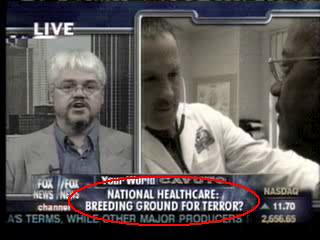
What’s different this time around is that powerful Washington forces have decided to tap into this right-wing rage and use it to their own political advantage. Fox News has seen an opportunity to define themselves in the Obama era by stoking the flames of hysteria and paranoia, increasing their viewership handily over the past several months. The healthcare and energy lobbies have been able to tap into this paranoid rage by convincing people that attempts to reform their industries are actually part of a grand fascist scheme to enforce a dictatorship.

The most absurd example of this came yesterday when protesters congregated in Texas to rail against Obama’s “Nazi” climate change bill, which would finally sign the US up to international agreements to fight climate change. At first glance it might seem bizarre that ordinary citizens are turning up to yell and scream about a piece of legislation that doesn’t have much to do with them but rather affects the oil and gas industries, right? Well if you look at the bottom of their placards many read that they are concerned “Energy Citizens”, and if you look into the origin of this group you can see it’s actually sponsored by the oil and gas industry, whose trade organisation was recently revealed in a leaked memo to be suggesting that oil company employees be mobilized for these “grass roots protests” in order to “put a human face” on the resistance to the bill.

The same has been true of the healthcare protest and the “tea-bagging” protests, both organised by powerful Washington lobby groups working with the aid of Fox news, which gets people revved up telling them the healthcare reform bill will kill their grandma.

Is this in the bill? No. Is it rational to say Obama is a racist Nazi because he’s trying to reform the nation’s healthcare system? No. But these myths persist, with the majority of Americans now saying they’re concerned about Obama’s healthcare reform effort. It now looks like the administration is going to take the public option off the table or break up the legislation, which would effectively mean the myth-spreading tactics have worked. Meaningful healthcare reform could be dead.

Don’t Get too Smug, Europe

But before Europeans shake their heads and roll their eyes at the seemingly hopeless ignorance of the American public, might I remind them that they are not immune to these impulses either. In trying to explain to Europeans the raw emotion surrounding this debate, I’ve been struggling to think of an issue here that brings out the same level of irrationality. It wasn’t long before my mind settled on the EU. When it comes to ridiculous irrational myths, European knowledge of the EU - particularly in the UK - could give these American healthcare protesters a run for their money.

Take the debate over the Lisbon reform treaty. The accusations levelled against it in the UK and Irish media have been absurd almost to the point of self-parody. According to the British media the treaty is a “massive power grab” that will turn the EU into a “totalitarian super-state”. Sound familiar? In reality, the treaty simply makes tweaks to the EU’s governing structure, changes that have been made necessary by the recent EU enlargement. The main purpose of the treaty is to make the EU more efficient and cost-effective, not to give it more power. Its goal, much like the healthcare reform bill, is to help people – not to hurt them. But that doesn't stop the totalitariansism comparisons. Just take a look at this over-the-top video from YouTube.


Euromyths are rampant in the UK. Some examples of completely baseless euromyths spread by the British media: English fish and chips shops would be forced to use Latin names for the fish (The Sun, 5 September 2001), double-decker buses would be banned (The Times, 9 April 1998), British rhubarb must be straight and barmaids would have to cover up their cleavage. (Update April 2010: Here's a recent patently absurd - and easily disprovable - example from the Daily Mail about the EU supposedly changing the name of the British Channel to the "Anglo-French Pond". That story was picked up by numerous other media outlets including the BBC's 'Have I got News for You'.) All of these are widely believed in Britain yet are completely untrue. Many euromyths can be traced directly to deliberate attempts by lobbysists to influence policy in Brussels. And they’re frequently presented in the same kind of screaming-headline, hysterical tone that is now being employed in the US healthcare debate.

And of course, a recurring complaint about both the Healthcare reform bill and the Lisbon reform treaty is that they're too long and complicated for ordinary people to understand. And because they're so long, they must be trying to pull something over on everyone. Because naturally, incredibly complex pieces of legislation should be easily understandable by your local trash collector.

In the UK, the right-leaning media makes completely baseless and false accusations about the EU and about the Lisbon Treaty, saying it will do things that are not at all in the document such as ban abortion across the EU, mandate an EU army, establish an EU constitution or subjugate member state courts. The public comes to accept these myths as fact. Then when it comes time for a vote, as occurred with the Irish referendum on the Lisbon Treaty last June, the public bases their vote on the misinformation they’ve received about the EU and the treaty. Democracy at its finest.

Can you imagine if healthcare reform were being put to a referendum in the US? It would never have any hope of passing. In fact the only way that this legislation may actually come to pass now is if the US congress does the right thing and bypasses the will of the people, making the responsible informed decision that a vast swathe of the American public cannot make themselves because they are so misinformed. This is how representative democracy is supposed to work – citizens elect representatives and entrust them with the responsibility of becoming versed in issues that ordinary citizens are not equipped to make decisions on themselves. This is why it is irresponsible to put a complex legal document like the Lisbon Treaty or healthcare reform to a public referendum. It is the worst perversion of Democracy – mob rule.

People tend to be pretty gullible, and powerful interests will always be able to manipulate them. Now that the internet has brought us what sociologists have termed the "post-fact society", this misinformation is very easy to spread - be it in America or Europe.

No Appetite for Revolution

Now to be fair, the level of hyperbole used in mainstream media around the Lisbon Treaty hasn’t reached the alarming heights of the US healthcare debate. And the Lisbon Treaty hasn’t inspired gun-totting mobs to show up at politician’s doorsteps last time I checked. Comparisons to Nazis are rarely used in continental Europe, as the memory of what the Nazis really were is still too raw to throw around the comparisons as lightly as Americans and, to a lesser extent, Brits do. But the difficulties encountered in both efforts for reform show how difficult it can be to change societal systems at the dawn of the new millennium, as we prepare to enter the 7th decade of peacetime in the Western world. 

The fact is all of these big social programs, on either side of the Atlantic, were instituted in the years following World War II at a time when the public was still traumatised enough to have the appetite for real massive change. People are living in an era of unprecedented peace in the Western world, and even if there are major problems with system X, it’s working just fine for now thank you very much. Whether it be the EU project or healthcare reform, people in 2009 are just not mentally prepared for big change. Having lived their entire lives in peace, they just don’t have the appetite for risk. And powerful interests have grown up around the existing institutions that will resist change in order to safeguard their own interests.

Yet in both situations, the seeming comfort of the status quo is an illusion. Neither current situation is tenable in the long-term. In the US, while one out of every five Americans under 65 is uninsured, the majority do have insurance and, since they don’t know any better because they’ve never seen a European healthcare system, they think their coverage is the best in the world (Americans usually by default assume their anything is the best in the world). But the system of employer-funded healthcare is untenable. The US now spends around 15% of its GDP on healthcare, second only to East Timor among United Nations member states. Left unchanged, that number could rise to something like 30% in just a few decades. The current system is literally strangling small business. But all most Americans with insurance see is that they go to the doctor, he treats them, they get better. There is no crisis, they assume.

The same can be said of Europeans and their thoughts about the place in the world of their individual member state. The fact is that in a post Cold War world, with the rising power of India and China and the fact that the US no longer has a strategic long-term interest in safeguarding European defence, no individual European member state can hope to be a significant player on the world stage in the 21st century on its own. Yet your average British person hasn’t come to grips with this fact. As far as they can see, they appear to have a big influence on the world culturally (they often mistake American cultural imperialism and the widespread use of English as somehow attributable to themselves), they are nuclear armed, they have a seat on the UN security council and they are in the G8. But the fact is in 50 years they are unlikely to have any of these things (except perhaps an ageing fleet of dangerous and dilapidated Trident submarines) if they were to go it on their own. It’s a situation where the prospect of the UK separating from the EU could easily appear to be fine to the average British person, but where people with a real knowledge of world events and future projections know that is not a viable option.

In the meantime the media, big business and right-leaning politicians are all too willing to exploit the average person’s ignorance and lack of foresight in order to serve their own interests, convincing them that reform efforts that are meant to help the average person are actually an effort to impose a dictatorial superstate. It’s the situation we find ourselves in at the dawn of the 21st century on either side of the Atlantic.

We are, it would seem, a risk-averse species by nature. And a gullible one to boot.