I was in rural England this past weekend, on a little road trip through the Cotswolds, and it was definitely an interesting time to be there. The Germany-UK world cup match that took place Sunday afternoon literally dominated the media the entire weekend. You couldn’t get away from it, it was all anyone could talk about. Even in the tiny villages we stopped in as we drove through the countryside, everyone had World Cup. The English flag was literally everywhere, something you normally never see in England.
Being American I don’t have too much interest in soccer…er…“football”, so I have to admit I didn’t understand what all the fuss was about. But I do know that however worked up you get about football, there’s really no excuse for the vile clichéd headlines I saw in British newspapers last week.
Right from when I stepped off the train in London Thursday night they were everywhere. “ "It's war - we will fight jeering Jerries on the pitches," screamed the Daily Star. "Get ready for germ warfare!" shouted The Sun. Even TV personalities were getting in on the constant World War II references. Apparently the actual reason for the significance of this game is a history of close and controversial world cup games between the two nations in the past. But you wouldn’t know it from the British newspaper headlines, which gave the impression the nation was gearing up for World War III.
In a crippling blow to the gay rights movement in the United States, citizens of the state of Maine voted in a referendum to repeal a law passed by their own elected legislature granting marriage rights to same-sex couples. It was a reminder of the reality of referendums: easily manipulated by campaigns of misinformation, public votes rarely yield progressive results, and have historically voted against protecting the rights of minorities. Out of 31 public referendums held on the gay marriage issue in the United States, every single one has voted against allowing the unions.
The success of Maine’s ‘question 1’ follows the bitter disappointment of gay rights activists following the yes vote on California’s ‘proposition 8’ a year ago, which struck down the gay marriage rights that had been granted in that state only months earlier. Though the ‘no’ campaign in Maine was fought by the same anti-gay rights groups using almost identical advertising (warning that gay marriage would mean the teaching of homosexuality in public schools), there was one significant difference between the two referendums. While gay marriage was granted in California by a ruling of the state’s supreme court, marriage rights had been passed by an act of the legislature in Maine, endorsed by the state’s governor.
This is noteworthy because one of the main arguments of opponents of same-sex unions is that they keep being granted by “activist judges” in state courts “overriding the will of the people.” But while that argument could be made in California, that has largely not been the case in the states of New England, which have enacted same-sex unions through legislative action. So in Maine, the referendum actually overturned an act passed by legislators who had been elected to represent the voters. Maine's moderate governor even campaigned against question one. To me, this is an almost painful example of how absurd these large-scale referendums are.
In talking about this issue with British friends over the past few days, they’ve all been in agreement that this Maine marriage referendum is a disgrace. After all, what is the point of having a representative democracy if people can challenge anything they do just by rounding up a few thousand signatures? In a republic, citizens elect representatives and pay them to become educated on the issues and make responsible decisions in their stead. They choose these people to act on their behalf precisely because they do not have the time or, largely, the intellectual acumen to make these decisions for themselves. Having the public make these decisions by referendum results in a ‘tyranny of the majority’, as James Madison put it, which doesn’t have the foresight to make the best decisions for the country and will rarely protect the rights of minority groups. The Brits have nodded their heads in firm agreement.
Yet these are the same British friends who have been incensed by the fact that they have not been able to vote in a public referendum on the Lisbon Treaty, a complicated foreign policy document that was instead passed by their elected representatives in parliament. They’ve been outraged that after successive ‘no’ votes in referendums in France, Holland and Ireland, the treaty has still come to pass. Never once have they questioned the wisdom of having those referendums in the first place. Their assumption has seemed to be that public votes will always result in the best policy. Nevermind the fact that the Lisbon Treaty is a complicated and rather dull international agreement that tightens up the functioning of a union that already exists.
These British friends have tended to disregard the fact that every parliament that has voted on the issue, made up of representatives who have the time and capacity to educate themselves on what the treaty really is, has passed it (which must mean something, right?). They seem to have not thought about the near certainty that publics will cast referendum votes based on national issues (such as their satisfaction or dissatisfaction with their national government), xenophobia or misinformation rather than on the realities of the actual question being put to a vote.
Favoured by Populists and Dictators
Referendums rarely result in progressive policy or well-informed decisions. Exit polling after the first Lisbon Treaty referendum in Ireland revealed that the majority of ‘no’ voters did so either based on the fact that they didn’t know enough about the treaty or based on misconceptions about it.
In Switzerland, where there is a referendum on just about everything since they are guaranteed by the Swiss constitution, women didn’t have the right to vote nationally until the 1970’s (referendums kept voting universal suffrage down). The country’s politics are well known for their near-glacial pace.
Besides Switzerland, referendums have also historically tended to be pursued vigorously by dictators such as Adolf Hitler and Benito Mussolini. Both men frequently used plebiscites to disguise oppressive policies in a veneer of populism. Largely as a result of Hitler’s enthusiasm for them, Germany does not allow referendums to take place on a national level.
So where have referendums not been used? Well funny you should ask. They are not allowed in the handful of US states that still have gay marriage, such as my home state of Connecticut. If they were allowed in Connecticut, I think it’s likely that it could have been struck down there as well. And Connecticut is one of the most progressive states in the country.
Whatever their opinion of Britain’s membership in the EU, I would urge my British friends to acknowledge that referendums are not a wise way to make policy. If they really want the UK to disengage with the European union, they’re free to vote for representatives who will reflect that stance. But they voted in Tony Blair’s New Labour three times on a moderately pro-European platform, so they can’t complain when this is the result of the parliamentary vote.
They should really ask themselves why it is that a majority of MPs, who have the time to educate themselves on these things, supported adoption of the Lisbon Treaty. Rejecting the treaty would have been a very radical move, especially after obtaining all of the opt-outs Britain negotiated. If the British public want to elect representatives who would make such radical decisions, they’re free to do so. But they should stop and ask themselves if this is really what they want.
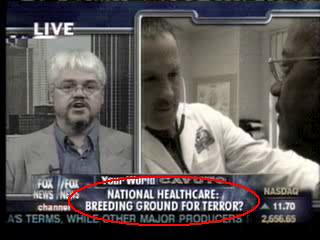
You could call it a rude awakening. Over the past few weeks Europeans have reacted with shock and incredulity as they’ve watched the “debate” over US healthcare reform unfold across the pond. How could it be, they’ve asked me in tones of sheer exasperation, that even in the face of a healthcare crisis Americans could be so credulous as to believe the outlandish lies being spread about Obama’s healthcare reform effort. Death panels? Enemy lists? Nazi euthanasia? How, they’ve asked, could anyone be so stupid?
I haven’t had a good answer to give them, except that this is the cold hard reality of the place American politics has found itself in today. As I’ve written about before, many Europeans were lulled into a premature sense of relief when Barack Obama was elected in November. But while the head may have changed, the body remains the same – this is the same American public that elected George W. Bush twice. The combination of powerful vested interests in Washington, a strong right-wing media that dominates civic discourse, and a population that is, let’s face it, rather uninformed, mean that Barack Obama has his work cut out for him if he wants to effect real change. Getting elected was just the first step.
The mobs that have turned up to congressional town halls to shout down any discussion of healthcare reform, waving placards of Obama with a Hitler moustache and screaming about his “Nazi policies”, aren’t actually concerned about healthcare. This is about something much bigger, a general right-wing paranoia and militarism that tends to arise every time a progressive Democratic president is elected. It happened in the 1960’s culminating in a wave of political assassinations, it happened in the 1990’s culminating in the terrorist bombing in Oklahoma city by right-wing fanatic Timothy McVeigh, and it’s happening again now. Progressive Democratic presidents scare the bejesus out of the right-wing fringe inspiring hysteria and violence (although why this didn’t happen with Carter I don’t know, any ideas?).
What’s different this time around is that powerful Washington forces have decided to tap into this right-wing rage and use it to their own political advantage. Fox News has seen an opportunity to define themselves in the Obama era by stoking the flames of hysteria and paranoia, increasing their viewership handily over the past several months. The healthcare and energy lobbies have been able to tap into this paranoid rage by convincing people that attempts to reform their industries are actually part of a grand fascist scheme to enforce a dictatorship.
The most absurd example of this came yesterday when protesters congregated in Texas to rail against Obama’s “Nazi” climate change bill, which would finally sign the US up to international agreements to fight climate change. At first glance it might seem bizarre that ordinary citizens are turning up to yell and scream about a piece of legislation that doesn’t have much to do with them but rather affects the oil and gas industries, right? Well if you look at the bottom of their placards many read that they are concerned “Energy Citizens”, and if you look into the origin of this group you can see it’s actually sponsored by the oil and gas industry, whose trade organisation was recently revealed in a leaked memo to be suggesting that oil company employees be mobilized for these “grass roots protests” in order to “put a human face” on the resistance to the bill.
The same has been true of the healthcare protest and the “tea-bagging” protests, both organised by powerful Washington lobby groups working with the aid of Fox news, which gets people revved up telling them the healthcare reform bill will kill their grandma.
Is this in the bill? No. Is it rational to say Obama is a racist Nazi because he’s trying to reform the nation’s healthcare system? No. But these myths persist, with the majority of Americans now saying they’re concerned about Obama’s healthcare reform effort. It now looks like the administration is going to take the public option off the table or break up the legislation, which would effectively mean the myth-spreading tactics have worked. Meaningful healthcare reform could be dead.
Don’t Get too Smug, Europe
But before Europeans shake their heads and roll their eyes at the seemingly hopeless ignorance of the American public, might I remind them that they are not immune to these impulses either. In trying to explain to Europeans the raw emotion surrounding this debate, I’ve been struggling to think of an issue here that brings out the same level of irrationality. It wasn’t long before my mind settled on the EU. When it comes to ridiculous irrational myths, European knowledge of the EU - particularly in the UK - could give these American healthcare protesters a run for their money.
Take the debate over the Lisbon reform treaty. The accusations levelled against it in the UK and Irish media have been absurd almost to the point of self-parody. According to the British media the treaty is a “massive power grab” that will turn the EU into a “totalitarian super-state”. Sound familiar? In reality, the treaty simply makes tweaks to the EU’s governing structure, changes that have been made necessary by the recent EU enlargement. The main purpose of the treaty is to make the EU more efficient and cost-effective, not to give it more power. Its goal, much like the healthcare reform bill, is to help people – not to hurt them. But that doesn't stop the totalitariansism comparisons. Just take a look at this over-the-top video from YouTube.
Euromyths are rampant in the UK. Some examples of completely baseless euromyths spread by the British media: English fish and chips shops would be forced to use Latin names for the fish (The Sun, 5 September 2001), double-decker buses would be banned (The Times, 9 April 1998), British rhubarb must be straight and barmaids would have to cover up their cleavage. (Update April 2010: Here's a recent patently absurd - and easily disprovable - example from the Daily Mail about the EU supposedly changing the name of the British Channel to the "Anglo-French Pond". That story was picked up by numerous other media outlets including the BBC's 'Have I got News for You'.) All of these are widely believed in Britain yet are completely untrue. Many euromyths can be traced directly to deliberate attempts by lobbysists to influence policy in Brussels. And they’re frequently presented in the same kind of screaming-headline, hysterical tone that is now being employed in the US healthcare debate.
And of course, a recurring complaint about both the Healthcare reform bill and the Lisbon reform treaty is that they're too long and complicated for ordinary people to understand. And because they're so long, they must be trying to pull something over on everyone. Because naturally, incredibly complex pieces of legislation should be easily understandable by your local trash collector.
In the UK, the right-leaning media makes completely baseless and false accusations about the EU and about the Lisbon Treaty, saying it will do things that are not at all in the document such as ban abortion across the EU, mandate an EU army, establish an EU constitution or subjugate member state courts. The public comes to accept these myths as fact. Then when it comes time for a vote, as occurred with the Irish referendum on the Lisbon Treaty last June, the public bases their vote on the misinformation they’ve received about the EU and the treaty. Democracy at its finest.
Can you imagine if healthcare reform were being put to a referendum in the US? It would never have any hope of passing. In fact the only way that this legislation may actually come to pass now is if the US congress does the right thing and bypasses the will of the people, making the responsible informed decision that a vast swathe of the American public cannot make themselves because they are so misinformed. This is how representative democracy is supposed to work – citizens elect representatives and entrust them with the responsibility of becoming versed in issues that ordinary citizens are not equipped to make decisions on themselves. This is why it is irresponsible to put a complex legal document like the Lisbon Treaty or healthcare reform to a public referendum. It is the worst perversion of Democracy – mob rule.
People tend to be pretty gullible, and powerful interests will always be able to manipulate them. Now that the internet has brought us what sociologists have termed the "post-fact society", this misinformation is very easy to spread - be it in America or Europe.
No Appetite for Revolution
Now to be fair, the level of hyperbole used in mainstream media around the Lisbon Treaty hasn’t reached the alarming heights of the US healthcare debate. And the Lisbon Treaty hasn’t inspired gun-totting mobs to show up at politician’s doorsteps last time I checked. Comparisons to Nazis are rarely used in continental Europe, as the memory of what the Nazis really were is still too raw to throw around the comparisons as lightly as Americans and, to a lesser extent, Brits do. But the difficulties encountered in both efforts for reform show how difficult it can be to change societal systems at the dawn of the new millennium, as we prepare to enter the 7th decade of peacetime in the Western world.
The fact is all of these big social programs, on either side of the Atlantic, were instituted in the years following World War II at a time when the public was still traumatised enough to have the appetite for real massive change. People are living in an era of unprecedented peace in the Western world, and even if there are major problems with system X, it’s working just fine for now thank you very much. Whether it be the EU project or healthcare reform, people in 2009 are just not mentally prepared for big change. Having lived their entire lives in peace, they just don’t have the appetite for risk. And powerful interests have grown up around the existing institutions that will resist change in order to safeguard their own interests.
Yet in both situations, the seeming comfort of the status quo is an illusion. Neither current situation is tenable in the long-term. In the US, while one out of every five Americans under 65 is uninsured, the majority do have insurance and, since they don’t know any better because they’ve never seen a European healthcare system, they think their coverage is the best in the world (Americans usually by default assume their anything is the best in the world). But the system of employer-funded healthcare is untenable. The US now spends around 15% of its GDP on healthcare, second only to East Timor among United Nations member states. Left unchanged, that number could rise to something like 30% in just a few decades. The current system is literally strangling small business. But all most Americans with insurance see is that they go to the doctor, he treats them, they get better. There is no crisis, they assume.
The same can be said of Europeans and their thoughts about the place in the world of their individual member state. The fact is that in a post Cold War world, with the rising power of India and China and the fact that the US no longer has a strategic long-term interest in safeguarding European defence, no individual European member state can hope to be a significant player on the world stage in the 21st century on its own. Yet your average British person hasn’t come to grips with this fact. As far as they can see, they appear to have a big influence on the world culturally (they often mistake American cultural imperialism and the widespread use of English as somehow attributable to themselves), they are nuclear armed, they have a seat on the UN security council and they are in the G8. But the fact is in 50 years they are unlikely to have any of these things (except perhaps an ageing fleet of dangerous and dilapidated Trident submarines) if they were to go it on their own. It’s a situation where the prospect of the UK separating from the EU could easily appear to be fine to the average British person, but where people with a real knowledge of world events and future projections know that is not a viable option.
In the meantime the media, big business and right-leaning politicians are all too willing to exploit the average person’s ignorance and lack of foresight in order to serve their own interests, convincing them that reform efforts that are meant to help the average person are actually an effort to impose a dictatorial superstate. It’s the situation we find ourselves in at the dawn of the 21st century on either side of the Atlantic.
We are, it would seem, a risk-averse species by nature. And a gullible one to boot.
Berlin's historic Tempelhof Airport, which has been on death row for awhile now, has finally run out of appeals. The airport, which was the site of the Berlin airlift of 1948-49, is slated to be shut down to make room for the desperately needed intercontinental airport being built. Though a grass roots campaign had been formed to save the airport because of its historical claims to fame, a referendum vote yesterday in Berlin failed to save it, because not enough Berliners turned up. The referendum didn't receive enough turnout to make it valid, evne though the people who did show up voted by a ratio of 3 to 2 to block the airport's closure.
Other than the airlift, the airport has some other claims to fame. Orville Wright tested one of his flying machines on the grounds, and Adolf Hitler later built the largest building in Europe there (which has curiously caused the Israeli press to dub it "Hitler's Airport").