Showing posts with label Ireland. Show all posts

Wednesday, 29 March 2017

With Brexit looming, time for a Celtic Union?

David Davis says Northern Ireland can opt to stay in the EU by joining with the Republic. So why can't Scotland?

Today British Prime Minister Theresa May took the historic step of requesting a divorce from the European Union. 

It will be remembered as a defining moment in history. Some are predicting it is the beginning of the European Union's disintegration. But others say, perhaps more convincingly, that it signals the start of the British union's disintegration.

Yesterday the Scottish Parliament voted to back First Minister Nicola Sturgeon's call for a new referendum on Scottish independence. The timing was no accident. Sturgeon timed her announcement of the new referendum push earlier this month to be one day before May planned to submit her divorce letter to the EU, upstaging the British PM and forcing her to delay the delivery until today. Scotland is remaining one step ahead of Westminster.

Wednesday, 31 August 2016

The rank hypocrisy of Obama’s ‘Appletax’ reaction

The US claims the EU's Apple decision is “political”, but it is the American reaction that is guided by politics. And US disrespect for EU law has a long history.

In the summer of 2001, the US government was furious with the European Union.

Iconic American firm General Electric had just seen a multi-billion dollar merger with Honeywell, which had already been cleared by the US, blocked by the European Commission on competition grounds. US politicians were furious, business leaders were flabbergasted. 

Two years later, the newly-emboldened Commission struck again. It slapped a €497 million fine on American tech giant Microsoft for abusing its dominant market position. Again, there was much sabre-rattling in Washington.

Sunday, 26 June 2016

Ireland faces its doomsday scenario

Both sides of Ireland are in a panic because Brexit could make the peace process unravel. But perhaps the North has come far enough to allow a non-violent reunification of the island.

"Of all the things that could happen to an Irish government short of the outbreak of war, this is pretty much up there with the worst of them," wrote The Irish Times, the republic's main newspaper, as the world woke up to the "Brexit nightmare" on Friday morning.

"Ever since David Cameron announced that he would hold a referendum back in 2012, Irish officials have regarded the prospect of a British exit from the EU as the worst thing that could happen [to Ireland]," the paper wrote. "[Irish PM] Kenny now faces leading Ireland through a period of difficulty and uncertainty unprecedented in the last 50 years, more complex and unpredictable than the recent financial crisis, more destabilising the Northern Troubles."

The UK is Ireland's biggest trading partner. One billion euros worth of goods flow freely across the Irish Sea each week, tariff-free because both countries are in the European Union. If the UK leaves the EU while the Republic of Ireland stays in, customs duties will have to be imposed on that trade. That is, unless the UK joins the EEA, but I've written before on why that is unlikely.

Wednesday, 22 May 2013

Backtracking on Commission size

EU leaders are expected shortly to announce that they have agreed between themselves not to reduce the size of the European Commission, overruling the text of the Lisbon Treaty. The change will likely be agreed unanimously this afternoon, according to Council sources.

The treaty had originally envisioned a reduction in the college at the start of the current Commission in 2010. Large countries would have maintained a permanent seat in the college, but smaller countries would have had to rotate the remaining chairs among themselves.

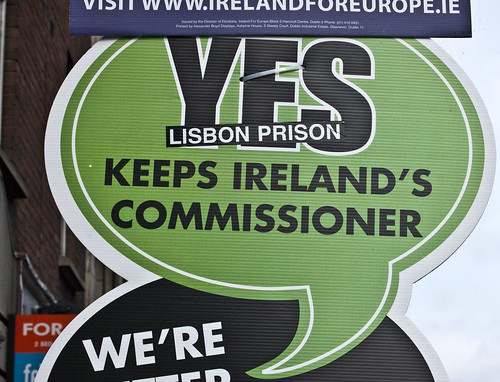
Dissatisfaction with this arrangement was cited as a reason for the Irish people rejecting the Lisbon Treaty in their first referendum in 2008. Before a second referendum was held the following year, it was agreed to add a provision into the Treaty extending the existing system until the end of the current Commission in 2014 "unless the European Council, acting unanimously, decides to alter this number." The Irish passed the treaty in the second referendum.

Wednesday, 14 December 2011

This isn’t about the UK any more

The markets have returned to panic mode today as their confidence in national governments to approve the new Eurozone financial consolidation treaty wavered. Ratification has hit some bumps in the road, with Finland’s prime minister expressing dissatisfaction with the transfer of authority over national budgets to the EU on Tuesday. In Ireland, the opposition parties seem keen to force a referendum on the issue even if the country’s legal services rule that one is not required.

The euro fell below $1.30 today, its lowest point in a year. Yields on Italian bonds widened to new highs. It’s a familiar pattern we’ve seen repeated several times now: markets rally upon news of a new European Council agreement, but then crash a few days later when they look at the details and realise it’s not as strong as they’d hoped. The UK's abandonment of Europe may have been the big story on Friday, but now the more important story sets in - the markets have not been satisfied.

But there seems to be some confusion in the British media though about what this all means vis-à-vis the UK’s decision to veto the attempt at treaty change on Friday. The Spectator has run a column from the Eurosceptic think tank Open Europe scolding the British media for describing the UK as isolated as a result of the 26 vs. 1 outcome last week. There isn’t really any such divide, Open Europe insists, because many other member states support the UK’s reticence. As evidence that all is not what it seems, they run through the list of objections to the new treaty being expressed in national capitals this week.

Wednesday, 27 July 2011

Ireland's dramatic fallout with the Catholic Church

The Vatican took the unprecedented step of recalling its ambassador to Ireland on Monday following a fiery speech from the country's prime minister denouncing the church for covering up cases of child sex abuse. The row is an indication of just how much Ireland, once a loyal foot soldier for the pope, has changed over the past two decades.

The fiery speech on the floor of the Irish Parliament by Prime Minister Enda Kenny last week was in reaction to the government's latest report on sex abuse in the Irish church. The report found that the Vatican had deliberately tried to downplay and cover up the rape and torture of children by priests in Ireland, and found that it was doing so as recently as 2009. It also found that the Vatican was trying to interfere with the Irish government's investigation into the matter. This was apparently all too much for Kenny. Denouncing the "dysfunction, disconnection, elitism and narcissism" of the Vatican, Kenny told the parliament:
"This is not Rome. Nor is it industrial-school or Magdalene Ireland, where the swish of a soutane smothered conscience and humanity and the swing of a thurible ruled the Irish-Catholic world. This is the Republic of Ireland 2011. A republic of laws, of rights and responsibilities; of proper civic order; where the delinquency and arrogance of a particular version, of a particular kind of 'morality,' will no longer be tolerated or ignored."

Wednesday, 13 July 2011

Eurozone in panic: Is Italy next domino to fall?

The Eurozone is looking at several doomsday scenarios this week after Italy emerged as the latest EU state to face serious and sudden attack by international bond and security markets. After a very public spat between Prime Minister Silvio Berlusconi and his finance minister, and with the continued political uncertainty over Berlusconi's position, the markets have decided Italy may not be safe to lend to any longer.

With the paralysis in the country's government likely to prevent decisive action to confront the crisis, some are saying Italy is perhaps days away from becoming an economic failed state. And unfortunately it is not too big to fail, but it is too big for the EU to bail out.

Such extreme rhetoric may or may not be justified, depending on who you talk to. But the risk is extreme. The countries that have so far fallen victim to the debt crisis and required an EU bailout – Portugal, Ireland and Greece – are relatively tiny and their debt makes up less than 5% of overall eurozone public debt. If worse came to worse, France and Germany could afford to buy back all of their debt combined.

Monday, 20 June 2011

EU issues Greece an ultimatum - could it backfire?

Last night Eurozone finance ministers got tough with Greece, deciding to withhold payment of €12 billion in emergency loans until the Greek Parliament enacts drastic austerity measures. The move is intended to intimidate the opposition forces (which includes the majority of the Greek public) into accepting the cuts, as the Greek prime minister faces a confidence vote in parliament this week.

But given the enormous disaster that would likely befall the Eurozone if Greece leaves the currency union, is this a threat the EU can afford to make? There is a real risk that this latest move could backfire. Massive protests continue in Athens today as people stand in front of the parliament chanting "we won't pay". Inside the building, Socialist prime minister George Papandreou is holding a confidence vote to reaffirm his mandate before he attempts to push these austerity measures through the parliament.

Now facing defection from his own party's members and extreme pressure from public opinion, Papandreou's confidence vote will be a rollercoaster ride over the next few days. There is a chance that this latest move from the finance ministers will further enrage Greek public opinion, where there is already an impression that the EU, at the insistence of Germany, is dictating draconian measures in an anti-democratic way. A perceived insult like this could put public optinion in Greece over the edge and cause even more Socialists to withdraw from the parliament. If Papandreaou's government falls it could mean a default on Greece's debt and, most chillingly, a withdrawal from the Euro. These events could spiral out of control and cause a meltdown of the European economy, and maybe even the world economy. Given that reality, is this really a threat the finance ministers can afford to make?

Wednesday, 25 May 2011

He likes us, he really likes us!

Barack Obama has just concluded an unprecedented address to both houses of the British Parliament in Westminster Hall, and the British press is already elated. He's the first US president to ever give a speech in this ancient coronation spot of kings and queens. From the adulation being heaped upon him by the British press, one might think Obama had a coronation of his own. But the reaction shows just how much the British, and Europe in general, needed to hear those three magic words from the US president- 'I like you'. After a series of snubs, Europe was beginning to doubt his affection.

Today's speech was the key communication of Obama's six-day, four-nation European fence-mending (and domestic politicking) tour. The centerpiece is tomorrow's G8 meeting in Deauville, France. But today's visit to the UK was all about reassuring the Brits that they still enjoy a 'relationship' with America - though the exact nature of that relationship seems to be being redefined.

The British press and political class spends an inordinate amount of time fretting about whether their country still has a "special relationship" with the United States. In the US, this term is virtually unheard of (which should answer their question). Earlier this year the British media was sent into a tizzy when Obama said during a state visit by French president Nicolas Sarkozy, “We don’t have a stronger friend and stronger ally than Nicolas Sarkozy and the French people.”

Wednesday, 18 May 2011

Protests greet Queen's first visit to Ireland

Queen Elizabeth II is making a historic visit to the Republic of Ireland this week, the first time a British monarch has visited Ireland in 100 years. That the visit is even happening is a sign of how much relations between the republic and its former imperial master have healed in recent times. But there are still people on the island, including both Catholics and Protestants in Northern Ireland, who are quite upset about the visit. And those people were out in force yesterday to greet the British monarch with insults and epithets.

The Queen's 'reconciliation visit' to Dublin, where she will be protected by more than 8,500 police officers backed by the army, has virtually shut down the city centre. Her visit, during which she will be dressed in all green, has been meticulously planned out to the last detail, carefully choreographed around every diplomatic sensitivity. She has been making a tour of memorial sights where Irish republican fighters died fighting against British rule. Today she will visit Croke Park stadium, the site of a notorious massacre where 14 Irish civilians were killed by British troops in 1920. She also spent this morning visiting the Guiness Storehouse, where amusingly she was offered a pint of Guiness at 9:30 in the morning. According to the AP she smiled but politely declined.

Friday, 11 March 2011

IRA-supporting US congressman launches terrorism hearings

In order to not be considered a terrorist, Muslims in America don't just have to not participate in terrorist activities – they need to actively renounce terrorism and fight to end it. So says Republican Congressman Peter King, the new head of the Homeland Security Committee in the House of Representatives. King is leading hearings this week investigating the "radicalisation of the American Muslim community," calling Muslim religious and business leaders before congress to test their loyalty to the United States.

The hearings, which to many are reminiscent of the anti-communist hearings conducted in the 1950's by Senator Joseph McCarthy, are proving enormously controversial in the United States. Democratic Congressman Mike Honda, who was interned in Japanese internment camps in California during World War II as a little boy, wrote in an editorial this week that King's intent is, "to cast suspicion upon all Muslim Americans and to stoke the fires of anti-Muslim prejudice and Islamophobia."

Keith Ellison, who is on the homeland security committee and is one of two Muslims in congress, shed tears on the opening day of the hearings as he said the hearings may "increase suspicion of the Muslim American community, ultimately making us all a little less safe." But King has been outspoken in his defence of the hearings, saying they are completely necessary as more and more American Muslims become radicalised. He has asserted that the "vast majority" of mosques in the US are run by radicals.

Monday, 24 January 2011

Irish government falls

Ireland is set to be the first country to see a government fall as a result of the eurozone crisis, following yesterday's announcement by the Green Party that it is deserting the governing coalition. The news has thrown Ireland into political turmoil as politicians tussle to set the date for an election whose result will be anything but certain.

In a hastily arranged press conference yesterday the leader of Ireland's Greens, an environmental party, said there had been a "breakdown in trust" between the two parties and the Greens patience had reached an end. The ruling Fianna Fail party, which has governed Ireland almost continuously since 1987, failed to get an outright majority at the last general election in 2007 and so formed a coalition government with the Green Party to put them over the edge.

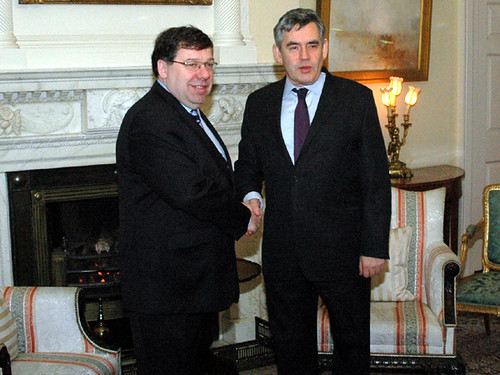
But the government has been under fire over the past year because of its handling of the debt crisis. The Irish public largely blames Fianna Fail not only for presiding over the boom period of heavy borrowing and the housing bubble, but also for its decision to bail out the Irish banks by guaranteeing their holdings and for accepting an EU bailout fund with strict conditions attached. The pressure became so acute that on Saturday Prime Minister Brian Cowen (pictured above) resigned as leader of the party, though without resigning as the prime minister - a situation highly unusual in a parliamentary democracy. Apparently this was all too much for the Green Party, which announced it was bolting just 24 hours later.

Monday, 22 November 2010

Ireland in crisis

Today was a dramatic day in Dublin. First came the news that the government was giving in and accepting an EU bail-out, prompting angry demonstrators to swarm government buildings in protest of the decision. But as the day went on Ireland’s financial crisis morphed into a political one. The Green Party, a junior partner in the governing coalition, announced it was pulling its support - prompting a collapse of the government and a general election. The Irish government now appears to be in complete meltdown.

Since last week Ireland has been under pressure from the EU to accept the bail-out as it became clear that Ireland’s banks were in so much trouble that the Irish government was going to be unable to borrow money. Brussels was afraid this insolvency would spread to the other vulnerable so-called “PIGS” countries, causing the euro currency to collapse. If such a crisis were to spread to Spain, the eurozone's fourth largest economy, it could spell the end of the euro and as a consequence, some leaders have suggested, the end of the EU. After spending a week denying that they would take the money, today the Irish government accepted a rescue package worth up to €90 billion ($124bn).

So why the initial resistance, and why the protests today? Surely Ireland getting money is a good thing for Ireland right? Well the rescue package comes with a lot of strings attached, and they will be painful strings for the Irish population. In exchange for the aid, Ireland must make €4.5 billion in public spending cuts and €1.5 billion in tax increases. Overall, the country will have to save €15 billion by 2014. This will undoubtedly cause an increase to the unemployment rate, aleady high at nearly 15%. Essentially, it doesn’t matter who the Irish public elects in the general election that will likely be called in January (after the bail-out has been approved by the current parliament). The country will be governed by the International Monetary Fund and the European Central Bank for the next three years.
Friday, 12 November 2010

Is direct democracy preventing a solution to the euro problem?

Angela Merkel may have won her battle for a change to eurozone rules last month, but as lawyers grapple with exactly how to make those treaty changes, the devil is proving to be in the details. The greatest irony of the whole situation may be that it is the eurosceptic populations of Northern Europe - who have been the most unfairly hurt by the euro currency crisis - that are proving the biggest block to making changes with real teeth that would stop Southern European states from from again abusing the rules of the common currency.

Ever since the German chancellor reluctantly agreed to bail out the collapsed Greek economy and create a permanent mechanism for similar crises in the future, she has insisted that EU treaty changes are needed to prevent the bail-out being challenged in Germany's constitutional court. So she has called for treaty changes explicitly allowing such bail-outs and also measures to punish eurozone states who abuse the bloc's rules as Greece did. The later element would have the objective of preventing the need for another such-bail-out in the future. The changes are needed urgently, she says, because that future may be of the not-too-distant variety considering the recent economic news coming out of Ireland and Spain.

Friday, 23 July 2010

Ireland gets civil unions: now only Italy is left

This week the final signature was put on Ireland's civil partnership bill for gay and lesbian couples. For a fervently Catholic country that only decriminalised homosexuality in 1993, this was a big step. But even more importantly, it's reflective of the sudden rapid advancement Europe is making in the area of gay rights. Well, half of Europe anyway. Yes, the fact that this advance was made despite the historic power of Catholicism over Irish government is a promising sign for proponants of same-sex marriage. But could Ireland's change of heart have more to do with geography than a cultural shift? Let's look at the map.

As you can see from the map above, Italy is now the only remaining Western European country to have no form of gay marriage. The vast swathe of what Donald Rumsfeld used to deride as "Old Europe" is now awash in various shades of blue. And some of those light blues are due to change to dark blue quite soon. David Cameron's conservative-libdem coalition has already said they will upgrade Britain's civil unions to full marriage soon. Anything to not be compared to the Irish I suppose.

Friday, 6 November 2009

Dangerous Democracy

In a crippling blow to the gay rights movement in the United States, citizens of the state of Maine voted in a referendum to repeal a law passed by their own elected legislature granting marriage rights to same-sex couples. It was a reminder of the reality of referendums: easily manipulated by campaigns of misinformation, public votes rarely yield progressive results, and have historically voted against protecting the rights of minorities. Out of 31 public referendums held on the gay marriage issue in the United States, every single one has voted against allowing the unions.

The success of Maine’s ‘question 1’ follows the bitter disappointment of gay rights activists following the yes vote on California’s ‘proposition 8’ a year ago, which struck down the gay marriage rights that had been granted in that state only months earlier. Though the ‘no’ campaign in Maine was fought by the same anti-gay rights groups using almost identical advertising (warning that gay marriage would mean the teaching of homosexuality in public schools), there was one significant difference between the two referendums. While gay marriage was granted in California by a ruling of the state’s supreme court, marriage rights had been passed by an act of the legislature in Maine, endorsed by the state’s governor.

This is noteworthy because one of the main arguments of opponents of same-sex unions is that they keep being granted by “activist judges” in state courts “overriding the will of the people.” But while that argument could be made in California, that has largely not been the case in the states of New England, which have enacted same-sex unions through legislative action. So in Maine, the referendum actually overturned an act passed by legislators who had been elected to represent the voters. Maine's moderate governor even campaigned against question one. To me, this is an almost painful example of how absurd these large-scale referendums are.


In talking about this issue with British friends over the past few days, they’ve all been in agreement that this Maine marriage referendum is a disgrace. After all, what is the point of having a representative democracy if people can challenge anything they do just by rounding up a few thousand signatures? In a republic, citizens elect representatives and pay them to become educated on the issues and make responsible decisions in their stead. They choose these people to act on their behalf precisely because they do not have the time or, largely, the intellectual acumen to make these decisions for themselves. Having the public make these decisions by referendum results in a ‘tyranny of the majority’, as James Madison put it, which doesn’t have the foresight to make the best decisions for the country and will rarely protect the rights of minority groups. The Brits have nodded their heads in firm agreement.

Yet these are the same British friends who have been incensed by the fact that they have not been able to vote in a public referendum on the Lisbon Treaty, a complicated foreign policy document that was instead passed by their elected representatives in parliament. They’ve been outraged that after successive ‘no’ votes in referendums in France, Holland and Ireland, the treaty has still come to pass. Never once have they questioned the wisdom of having those referendums in the first place. Their assumption has seemed to be that public votes will always result in the best policy. Nevermind the fact that the Lisbon Treaty is a complicated and rather dull international agreement that tightens up the functioning of a union that already exists.

These British friends have tended to disregard the fact that every parliament that has voted on the issue, made up of representatives who have the time and capacity to educate themselves on what the treaty really is, has passed it (which must mean something, right?). They seem to have not thought about the near certainty that publics will cast referendum votes based on national issues (such as their satisfaction or dissatisfaction with their national government), xenophobia or misinformation rather than on the realities of the actual question being put to a vote.

Favoured by Populists and Dictators

Referendums rarely result in progressive policy or well-informed decisions. Exit polling after the first Lisbon Treaty referendum in Ireland revealed that the majority of ‘no’ voters did so either based on the fact that they didn’t know enough about the treaty or based on misconceptions about it.

In Switzerland, where there is a referendum on just about everything since they are guaranteed by the Swiss constitution, women didn’t have the right to vote nationally until the 1970’s (referendums kept voting universal suffrage down). The country’s politics are well known for their near-glacial pace.

Besides Switzerland, referendums have also historically tended to be pursued vigorously by dictators such as Adolf Hitler and Benito Mussolini. Both men frequently used plebiscites to disguise oppressive policies in a veneer of populism. Largely as a result of Hitler’s enthusiasm for them, Germany does not allow referendums to take place on a national level.

So where have referendums not been used? Well funny you should ask. They are not allowed in the handful of US states that still have gay marriage, such as my home state of Connecticut. If they were allowed in Connecticut, I think it’s likely that it could have been struck down there as well. And Connecticut is one of the most progressive states in the country.

The UK is one of the countries were referendums are specifically given no validity, and I would argue that's a good thing. Although Acts of Parliament may permit referendums to take place, they cannot be constitutionally binding and can be overturned by a subsequent act of parliament. The only referendum proposal to ever be put to the entire UK electorate was in 1975, asking the British if they wanted to continue membership in the European Economic Community, progenitor to the EU.

Whatever their opinion of Britain’s membership in the EU, I would urge my British friends to acknowledge that referendums are not a wise way to make policy. If they really want the UK to disengage with the European union, they’re free to vote for representatives who will reflect that stance. But they voted in Tony Blair’s New Labour three times on a moderately pro-European platform, so they can’t complain when this is the result of the parliamentary vote.

They should really ask themselves why it is that a majority of MPs, who have the time to educate themselves on these things, supported adoption of the Lisbon Treaty. Rejecting the treaty would have been a very radical move, especially after obtaining all of the opt-outs Britain negotiated. If the British public want to elect representatives who would make such radical decisions, they’re free to do so. But they should stop and ask themselves if this is really what they want.

Monday, 5 October 2009

Ireland Rejects British Influence

As news breaks that the UK will soon be shut out of a new G4 group of major economies and could lose its seat on the board of the IMF, the bizarre reaction to the Irish referendum by much of the British press continues to look more and more out of touch with the realities of the modern world.

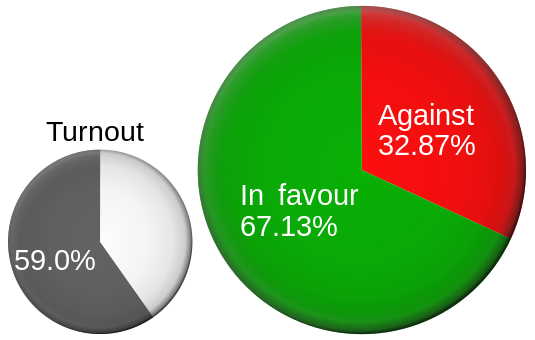
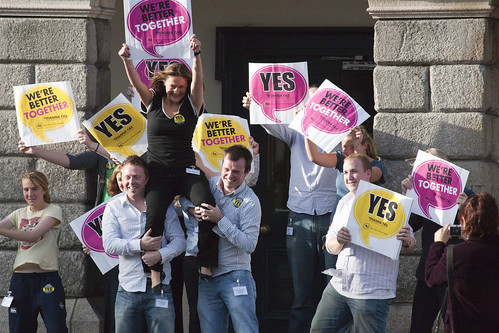
Europe-wide ratification of the Lisbon Treaty is imminent following Ireland’s massive endorsement of the EU reform agreement with a ‘yes’ vote of 67%. It looks as if Czech President Vaclav Klaus has lost his nerve and is ready to end his grandstanding talk of refusing to sign the ratification passed by the Czech parliament – a move which would have been constitutionally questionable anyway. So barring any unforeseen complications, it looks like this long effort to reform the EU to something more appropriate for its current size has been completed.

If the British media is to be believed, after rejecting the treaty in the first referendum in June 2008 Ireland voted yes this time around out of fear. Terrified by their vulnerability in the global economic downturn, the British narrative goes, the Irish have allowed themselves to be bullied into accepting dominance by Brussels, having lost confidence in their own ability to govern themselves. Under this narrative, the Irish made a courageous choice in the 2008 referendum when the treaty was, as the British press frequently puts it, “resoundingly defeated” (never mind the fact that the 2008 ‘no’ vote actually just squeaked by with 53%). Apparently in 2008 a slight majority indicated massive popular will by courageous people against an oppressive super-state, but in 2009 a large majority is the illegitimate result of misguided voters swayed by fear and intimidation. The Irish, it would seem, are only right when they agree with the British.

What is never mentioned in the British press is that after the June 2008 result Ireland has been given a basket of concessions and guarantees – the most significant being that the proposal to shrink the size of the European Commission from 27 commissioners to a more manageable size of around 20 has been abandoned. Under existing treaties each country is guaranteed a commissioner in the EC – even though commissioners are not supposed to represent national interests but rather fulfil a specific role of expertise such as trade, environment or energy. The large number of new member states that have joined in the past 10 years has meant there is now an excessive number of commissioners, with new remits for them being invented such as “Commissioner for Information Society and Media” and “Commissioner for Multilingualism”.

However even though it is supposed to be irrelevant which countries these commissioners come from that does not always prove true in practice, and the Lisbon solution to rotate a certain number of Commission seats between the small member states had caused some concern. There was a lot of misinformation spread in the 2008 ‘no’ campaign in Ireland, but this issue was one of the verifiable legitimate concerns that the ‘no’ campaign had – fearing the treaty would lessen the influence of small states in the EU’s executive body. So they won this concession, there will remain 27 commissioners.

While it is true that the actual text of the treaty has not changed (doing so would have required re-ratification by all 27 states and would have held up passage by another five years) the Irish have been given binding guarantees that these changes will be inserted at the time of the next Europe-wide ratification issue, likely the accession of Iceland and Croatia.

The British press also doesn’t mention that this time around there was a much more extensive education campaign on what is actually contained in the treaty – a response to the fact that the exit polling in the 2008 referendum revealed that the most frequently cited reason for voting ‘no’ was a lack of information on what the treaty is. Turnout this time around was also about 10% higher than before.

The British roots of the ‘no’ campaign were also more exposed this time around, making the claim that a ‘no’ vote was a vote for the spirit of dead Irish republicans seem laughable. As the Guardian pointed out in an article last week before the vote, the ‘no’ campaign was full of Brits who flew over to urge a rejection of the treaty, led by Tory lobbyists and Rupert Murdoch’s newspapers. All this prompted fears that a ‘no’ vote would result in what Irish Labour leader Eamon Gilmore called a “two-speed Europe” where there would be “a mainland Europe and the British Isles, where we fall under the influence of Britain." So much for a ‘no’ vote honouring the dead Republicans who fought against the British.

The Tories’ Eurochaos

The ‘yes’ vote was exceedingly bad timing for British Conservative leader David Cameron, as it means the Conservative Party conference this week will be dominated by the ‘Europe issue’, a quagmire that continues to cause rifts between different factions of the party. Cameron had promised to hold a referendum on the treaty in the UK if it remained unpassed by the time they (most likely) come into power next April. However now it looks like the treaty’s changes will be adopted by the EU by the end of the year – and the British parliament already ratified the treaty.

The Eurosceptic wing of the Conservative party is demanding that Cameron hold a referendum on the treaty anyway, asking the public whether Britain should retroactively pull out of a treaty it already signed and which has already gone into effect. The problem is this would not only be illegal under international law, it would also be impossible. If Cameron were to hold such a referendum and the result is ‘no’ (which is the position he has advocated), there is no longer a ‘treaty’ to vote on, the treaty has become the EU. So at that stage, a ‘no’ vote on the Treaty would be a ‘no’ vote on the EU, and the British would have to secede from the union.

This is not an issue Cameron wants to put to a referendum, as the risks of a ‘no’ vote would be too great. Britain pulling out of the EU, as I’ve written about before, would mean it would have to completely renegotiate almost all of its international treaties in trade, labour and markets. It would very likely cause an immediate collapse in the pound, and investors would flee the UK like rats fleeing a sinking ship.

So Cameron has an uncomfortable reality to deal with this week. Trying to throw a bone to the Eurosceptic wing, he has hinted ahead of the conference that the Tories will launch a “public consultation” instead of a referendum, with the aim of moving significant powers away from Brussels and back to Westminster. Party insiders are saying he will announce this week an intention to “repatriate” powers involving social powers, employment and justice to a national level. Of course what he effectively would be asking for are more UK opt-outs, which would be almost impossible to attain retroactively, requiring the approval of all 27 member states. Many of those member states would surely question why the UK deserves special treatment, and would laugh any Tory who demanded such a concession out of the room. Considering Cameron has already enraged the French and German conservative governments by leaving the mainstream centre-right EPP grouping in the European Parliament to form a new alliance with the Eastern European hard right, he has few friends in Brussels or other Western European capitals these days.

UK Shut Out of World Bodies

All of this Tory talk seems particularly incongruous with reality considering that just this weekend it emerged that, following the death of the G8, the US is planning to form a new G4 group of the world’s leading economies that will not include the UK. The new group would be composed of the US, China, Japan and the Eurozone. The Eurozone, remember, does not include the UK because it does not use the Euro currency. Alistair Darling has reportedly been begging for the new group to instead include all of the EU rather than the Eurozone, but US officials have reportedly rebuffed this request saying that the member needs to be able to control a unified monetary policy. The news comes at the same time that Britain is fighting to maintain its seat on the board of the International Monetary Fund.

It was amusing to see the Daily Mail try to spin this as Gordon Brown’s fault, rather than the fault of the isolationist impulse the Daily Mail and papers like it have championed over the past two decades. The fact that it is inevitable that the UK by itself will not be able to justify its seat on these international bodies in the 21st century seems to be lost on them. The paper declines to mention the fact that were the UK on the euro, it would have a seat on this new G4 body and could maintain a board seat in the IMF. Nor does it mention that France and Italy are also in the same boat now that the G8 is being dissolved, yet they will have a major place in the G4 and IMF because they are part of the Eurozone. The comments below the story would be hilarious if they weren’t so jaw-droppingly ignorant, with each commenter deciding that this news is somehow evidence that the UK should leave the EU. Come again?

It will be interesting to see how the ‘Europe issue’ is handled at this week’s Conservative Party conference. Considering Cameron’s populist tendencies, he could probably just get up on the podium and say ‘Europe’ and have the whole hall boo and jeer in order to have a successful day. But Cameron’s crowd-pleasing rhetoric on Europe is on a collision coarse with reality. His recent defection from the EPP is probably but a first instance of this.

Hopefully, Europe can now put this treaty nonsense behind it and focus on more important things, getting on to the real work of guiding the continent through the economic recovery and leading the world in the effort to combat climate change. That is, if the Tories can let a sleeping dog lie.

Tuesday, 4 August 2009

Ireland and its Various Dark Ages

I’ve just returned from a little weekend jaunt to Dublin, where I met my dad and my brother who flew over from Switzerland. It was actually my first time visiting Ireland, and it was great to finally visit a country that I’ve long focused on, both recently with the drama of the Lisbon Treaty ratification and in the past as a teenager when I looked to my Irish roots for a sense of identity and pride – something quite common in the US.

Ireland is a popular destination for American tourists, largely because so many Americans claim Irish heritage. Despite the fact that I’ve travelled all over Europe, the first question my relatives and friends back home always ask is if I’ve been to Ireland. It seems to have taken on the aura of a ‘holy land’ for the Irish diaspora, and for Americans the country has come to be more of a concept than an actual geographic place. To be fair, many Americans use their Irish ancestry to excuse bad behaviour like drunkenness or fighting, but many also feel a deep connection with Celtic traditions and the historical struggle of the Irish people.

I myself was not immune to this wistful gazing toward the emerald isle. I’m essentially only a quarter Irish (and Keating is an Anglo-Norman Irish surname rather than a Celtic one), yet as a teenager I went through a phase where I was fascinated by my Irish heritage, getting really into Celtic new age music and Druidic history. I dreamed of one day going to Dublin, the veritable Jerusalem of the Irish diaspora.

So I finally made it there, though by this point in my life Ireland no longer holds the same fascination for me. In fact coming from London I definitely arrived in Dublin with different expectations than I would have had coming from the US years ago. They say that many American tourists, arriving in Dublin expecting to find a gleaming Shangri-la, are struck by the issues of poverty the city still grapples with today. However living in the UK for the past three years I guess I’ve come to view Dublin as more of a regional city on the periphery of the British Isles, like Manchester or Birmingham – gritty, tough and far from London.

Actually Dublin reminded me of a smaller, grittier London. In fact it didn’t really feel like I had left the UK, not least because there is no passport check between the two countries. The Georgian and Victorian buildings, the loutish drinking culture, the use of British English and the endless array of British chain stores didn’t exactly seem foreign to me. Nor did the weather, as it was overcast and rainy most of the weekend!

Birth of a Nation: A Slow Start

In Dublin today you can really see the city existing between the three very different periods of its history: the intimidating Georgian splendour of its heyday as the second city of the British Empire, the drab and repressive first decades of the Irish republic, and the boom times of the IT and EU-fueled growth in the 1990’s.

Of course I imagine there are plenty of Irish people who would take issue with the above characterisation of recent Irish history, but listening to tour guides and locals it was impossible to ignore this distinct split. Almost every major landmark in Dublin was built by the English: Christchurch and St. Patrick’s cathedrals, Dublin Castle, the Bank of Ireland, the Four Courts, Custom house, St. Stephen’s Green, the list goes on (of course, there was a cruel tyranny these impressive monuments reflected). The guides will also proudly point to the shiny glass skyscrapers and monuments built in the years since the boom of the 1990’s: the redevelopment of the docklands, the financial centre, the new tramway, etc.

Yet as far as I could tell the only notable thing on the tourist map that was built by the Irish between the years of 1921 and 1990 is that ghastly spike in the middle of O’Connell street, which was put up after the IRA blew up a British-built mock Nelson’s Column in the 1970's. (the commenter below has alerted me to the fact that the spike was put up in 2003, so actually this wasn't built in the republic's first decades either!).

The more I read and talked to people, the more it seemed like now at the turn of the 21st century, those first decades of Irish Independence are starting to be seen as the proverbial ‘dark ages’. The country was hopelessly poor and saw its population fall throughout the period. Major literary figures, of whom the country has produced many, fled the country in reaction to the strict censorship laws imposed by the government, which was so closely aligned with the Catholic church it could almost have been considered a theocracy in all but name.

Incredibly, divorce was illegal in Ireland until 1995, and even then it only passed by a tiny margin. Homosexuality was a crime until 1993. Abortion is still illegal in the country, abut in the 1990’s rules were loosened to allow women to travel out of the country to get one.

How things have changed in 20 years. After Ireland joined the EU, it benefited from a huge wave of investment from Brussels. The government shrewdly used this money to position Ireland away from its history as an agrarian economy and toward a knowledge-based economy, instituting one of the lowest corporate tax rates in the world to entice US companies to set up shop there. The strategy paid off. Today Ireland has one of the highest GDPs per capita in the world, and in contrast to the decades after independence, it now has the highest population growth rate in Europe.

The evidence of this change can be seen in redeveloped pockets of Dublin, where a new, cosmopolitan vibe has taken hold. The boom times may have peaked off at the beginning of this decade, and Ireland may be suffering comparatively worse during the global recession, but it seems the attitude of the Irish, especially of Dubliners, has been irrevocably changed. These new Euro-Dubliners travel around the continent, sip cocktails in chic lounge bars by the river Liffey, and work in beautiful new office buildings in the redeveloped docklands by day. It doesn’t seem that anyone is in a big hurry to go back to the old days of an isolationist government under the foot of the Catholic Church (particularly after the church’s sex abuse revelations over the past two decades).

Nowhere is this more reflected than in a statistic I read in an Irish newspaper that 83% of the country favours enacting civil unions for same-sex partners (currently Italy and Ireland are the only two countries in Western Europe that don’t have a gay partnership framework).Last week the government published the civil unions law, and the gay community in Ireland right now is in the midst of a heated debate over whether to accept the proposed law (which stops far short of giving same-sex couples the same rights as heterosexual couples) or to refuse to accept anything but full marriage. It reminds me a bit of the debate that raged in Ireland after the Anglo-Irish treaty was drafted in 1920 offering Ireland conditional independence, with a civil war eventually erupting between those Irish who supported the treaty giving the lower counties autonomy under the British monarch, or those who said the country should refuse to accept anything but full independence for the entire island. I guess the age-old battle between idealists and pragmatists never changes.

EuroIreland

One thing I was really surprised by was how many tourists from continental Europe I saw in Dublin. I was expecting the vast majority of tourists to be American, with Brits, Canadians and Australians making up the rest. I figured without the mystique that Americans attach to it, rainy, quiet Ireland might not be the top destination for continentals. Yet throughout the weekend I was hearing Spanish, French Italian and German all over the place. I was especially hearing a lot of French – which I found really surprising. Even the bus tour we took of the Wicklow mountains on Saturday – which I thought would surely be all Americans – was mostly populated by continental Europeans. Colour me surprised!

Perhaps it just goes to show how much more European Ireland is these days. Despite the oft-used adage that “Dublin is closer to Boston than to Berlin” (geographically inaccurate but probably culturally true), there was plenty of evidence that Dublin, at least, is becoming Europeanised.

So where does this leave the Lisbon Treaty? Popular wisdom says that the Irish public will vote to approve the EU’s reform treaty, which it rejected last June, at the re-vote in October because the country’s financial situation has deteriorated so much since the first vote.

By this line of reasoning the Irish seem to only wanted to engage with Europe when it was going to give them money, and didn’t seem too keen to give something back once Ireland was doing well and the new entrants of Eastern Europe needed a helping hand. This is perhaps a rather cynical explanation, but given the morass the EU helped pull the country out of, it’s hard for me to understand the ‘no’ vote last year. Despite all its progress, are there still isolationist urges embedded in Ireland’s very DNA?

It seems to me that all evidence points to the fact that Ireland works best when it works in cooperation with others, not when it tries to go it alone. One need only look at the agenda for any tour of Dublin to see that.

Friday, 23 January 2009

One Letter and Six Months

Following the rioting in Iceland this week resulting from the country's economic collapse, the cruel joke making the rounds in Europe right now is that Ireland, its Atlantic island neighbor, is just one letter and six months away from being Iceland itself.

Once hailed as the "Celtic Tiger" for its economic power performance after joining the EU, Ireland today finds itself in bad economic straights. Yesterday the government announced that it would nationalize Anglo Irish Bank, the country's third largest lender. The government is also considering reducing the pay of public sector workers as it scrambles to find money anywhere, a decision which could lead to massive and possibly violent demonstrations in Dublin. In six months, Ireland could be in the same situation as Iceland.

Of course there is one key difference between the two: Ireland is on the Euro, Iceland is not. Many economists are saying that the fact that Ireland is in the euro zone is the only thing that has enabled the country's economy to stay afloat during these trying times. Though the economy is in big trouble, investors still consider the country safe because it is part of the euro zone, and its credit rating has not been downgraded.

This fact has seemed to make a few Euroskeptics across the Irish sea more than a little defensive. The British pound has virtually collapsed over the past six months, dropping today to its lowest level against the dollar in 23 years. It's fallen from $2.00 to one pound in July to $1.34 to one pound today. And the pound has lost 20 percent of its value against the euro in the same time, with the two currencies now almost equal in value. Today the UK also officially entered a recession, with commentators noting that the fact that 3/4 of the UK's economy is dependent on the services industry (the most harshly affected industry in the current global crisis) means that the country will likely be the hardest hit of any during the global downturn. And without the stability of being part of a larger currency block, it is thought the UK may have to go crawling to the International Monetary Fund begging for money, because it won't be able to finance the massive level of debt it is taking on with its currency so devalued.

This might explain the peculiarly hostile questioning the Irish finance minister received on the UK program Newsnight last night about whether it had been "too early" for the country to join the euro zone. The presenter insisted that the country's "hands are tied" by the Eurozone since it will be unable to set its own interest rates in response to the crisis (interest rates for the euro zone are set centrally by the European Central Bank in Frankfurt). The minister, Brian Lenihan, seemed hardly able to disguise his bemusement at the absurd question, pointing out that before Ireland joined the Euro its currency was pegged to the pound, and since the country has never freely floated its currency it has never been able control its own currency measures anyway. That shut the presenter up. But Lenihan must have taken a bit of satisfaction in then being able to tell the lecturing presenter that the Euro, "is the currency of our trade with many of our European partners. With the United Kingdom of course, we are at some disadvantage now because we're far stronger than sterling." Oh snap! "Small countries which have their own currencies tend to be speculated against," he continued. "We don't want to put our country in that position, so we linked to a stronger currency." Lenihan had cause for the comparison. Although the Irish economy is hurting, in the long run it may be in better shape than the UK ecnomy.

A New UK Euro Debate?

The prospect of the UK joining the Euro has long been dead in the water, but the current situation might revive the idea, particularly now that the pro-Europe Tory politician Ken Clarke has been brought back to the front benches. Rather than defending the British pound, however, British Euroskeptics seem to have fired an opening salvo by attacking the decisions of other countries to join. An opinion piece by Ruth Lea in today's Telegraph calls the euro zone "dysfunctional" and says the 'one size fits all' interest rate policy has been a disaster for smaller economies like Spain, Italy and Greece. She even blames the recent downgrading of Spain's credit rating on the Euro, seeming to suggest the Southern European economies will imminently drop out of the zone in order to devalue their own currencies out of the crisis.
But in reality, the Fitch ratings agency has kept Spain's credit rating as triple A because it's on the Euro. As the Wall Street Journal Europe pointed out today, Fitch affirmed Madrid's triple-A rating partly because "Spain's membership of the euro area supports its rating, as it eliminates the risk of a currency crisis." The Journal also points out that being part of the euro zone has kept these Southern European economies' budget deficits lower than 3 percent of GDP (or at least made them try to do so), making many euro zone countries now in a better position to absorb their rising deficits. Futher, the idea that these countries would suddenly leave the zone doesn't make sense. Aside from the enormous cost involved in converting the bills and the national debts back to the old currency, such a move would lead to massive wage inflation. And the concerns about national defaults would still exist to the same degree, only now the counties wouldn't have the security of being in thre euro zone to protect their credit rating. Perhaps it is just euroskeptic wishful thinking to think the euro zone is about to fall apart.

Celtic Tiger Laid Low

Many have been speculating on what effect the new economic reality in Ireland will have on the re-vote to be held in the country on the ratification of the EU Reform Treaty. Last night Lenihan seemed pretty confident that the crisis has made the Irish realize how much they have benefited from membership in the EU and adoption of the Euro. One of the explanations analysts had given for the no vote last year was that, although Ireland had historically been very pro-Europe, its economic success over the past decade had given the Irish the confidence to spurn the EU, thinking they could go it alone if they needed to. The recent months have certainly been humbling for the tiny country, and perhaps they will be thinking differently this time around when they enter the voting booths. That's the hope in Brussels at least.

Thursday, 4 December 2008

Ireland's Road Trip

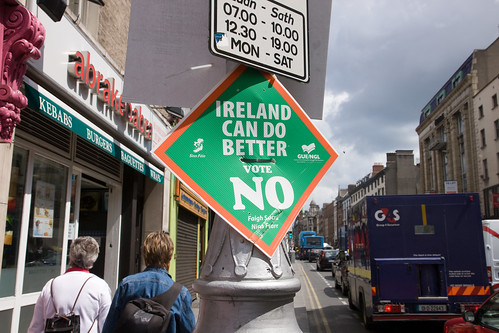
As Britney Spears makes her whirlwind tour of Europe (she hit the British, French and German versions of American Idol in quick underwhelming sucession last week), she isn't the only one criss-crossing the continent in the hope of redemption. This week Irish prime minister Brian Cowen is coming hat in hand to the European capitals delivering his proposed solution to the Lisbon standoff. By most indications, it looks like Ireland is going to have another referendum before June.

So far Cowen has been in Luxembourg and Germany. Today he's in London with Brown and tomorrow he'll be in Paris with Sarkozy.. At the same time, his Europe minister is visiting the small countries to tell them of Ireland's plans. The two of them are coordinating with the leaders for next week's proposal to the European Councilon what to do about the situation. According to reports, that solution is going to be another vote. But what they have to come up with is a way to say that this is not the exact same vote done over, but rather a different vote that will be palatable to the Irish people.

Surveys have been done over the past few months that have indicated that if the Irish government were to get specific guarantees for key areas - namey abortion, neutrality - the referendum would pass. Of course there was nothing affecting these two areas in the treaty anyway, but it is thought that if the Irish were to have the issues spelled out in disclaimaers. This will surely not be enough for the dedicated no campaigners - since their beef is with the EU itself, but it may be enbough to convince some of the fence sitters.

The revote would be a big gamble, particularly for Cowen whose government hangs by virtually a thread at home. But it is thought now that the economic turmoil has set in, it is thought voters will be more receptive to argument sthat Ireland shouldn't cut off its ties to the safety net of the European Union. The Irish may have been feeling a bit overconfident about their economy during the last vote, no doubt their optimism about whether Ireland needs the EU has changed over the past few months.

So as much as the first referendum was watched, the second one will be even more so. If Ireland votes no again, there are only two options: Scrap the treaty and allow the EU to operate in disfunction, or or go ahead with the treaty and kick Ireland out of the union. Considering that the current economic crisis means that the EU's institutions must function properly as soon as possible, the second option is perhaps the more likely. And I think that this time around, in these uncertaint times, EU leaders won't be above using this as a threat before the vote.