German commentators were wringing their hands on Sunday over
the country’s disappointing finish at the Eurovision final Saturday night. The
country came 21st out of the 26 countries performing, despite
fielding well-known dance act Cascada with a radio-friendly song which the
German media had predicted could possibly win.
Others in Germany
had, before the final, predicted the opposite – that the high level of
anti-German feeling in Europe today over the austerity regimes imposed by
Angela Merkel would make it impossible for Germany to win even if they fielded
the greatest song eversung by mankind.
Out of the 39 countries voting, 34 refused to give Germany any
points at all. Austria,
Switzerland, Israel and Albania were the only ones to award the country points, along with bailed-out Spain
- which came as a surprise (but could be accounted for by the large amount of
German pensioners living in Spain
for retirement). Germany received a humiliating score of just 18 points, compared to 281 points for Denmark's winning entry.
The coordinator for Germany’s
ARD TV network told German media on Sunday, "There's obviously a political situation
to keep in mind - I don't want to say 'this was 18 points for Angela
Merkel', but we all
have to be aware that it wasn't just Cascada up there on stage, but all of Germany."
Showing posts with label EU bailout fund. Show all posts
Monday, 20 May 2013
Friday, 4 November 2011
Who is the villain in the eurocrisis movie?
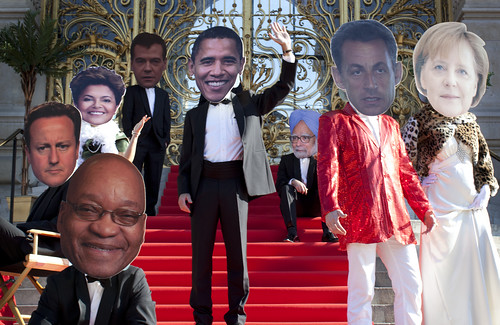
Cannes has seen its fair share of cinematic flops over the years. But this red carpet-laden city on France's south coast has never seen a political flop like the one it witnessed over the past two days. It had all the elements of an edge-of-your-seat political thriller: high stakes, sudden plot twists, personal rivalries and looming global disaster. But who is the villain in this particular script? Today there was plenty of finger-pointing to go around.
The leaders of the world's 20 richest countries intended to come to Cannes to come up with a solution to global economic crisis which is quickly spiraling out of control. But a shock announcement Tuesday from the Greek prime minister that he would hold a referendum on Greece's acceptance of the bailout package worked out last week changed all that. The resulting outcry threw the Greek government into disarray, putting it near collapse - which could have precipitated a global emergency. The leaders of the 20 richest countries in the world ended up working out nothing, spending the entire summit glued to their blackberries waiting for news from a tiny country in the Mediterranean.
The leaders left Cannes tonight with nothing to show for their meeting. No plan to save the eurozone, no funding, and no consensus. Indeed the G20 summit has ended with the world in a worse state than it was in when it started. Europe, and the world, could be just days away from economic collapse if the Greek government collapses tonight in a no-confidence vote scheduled for midnight.
The leaders of the world's 20 richest countries intended to come to Cannes to come up with a solution to global economic crisis which is quickly spiraling out of control. But a shock announcement Tuesday from the Greek prime minister that he would hold a referendum on Greece's acceptance of the bailout package worked out last week changed all that. The resulting outcry threw the Greek government into disarray, putting it near collapse - which could have precipitated a global emergency. The leaders of the 20 richest countries in the world ended up working out nothing, spending the entire summit glued to their blackberries waiting for news from a tiny country in the Mediterranean.
The leaders left Cannes tonight with nothing to show for their meeting. No plan to save the eurozone, no funding, and no consensus. Indeed the G20 summit has ended with the world in a worse state than it was in when it started. Europe, and the world, could be just days away from economic collapse if the Greek government collapses tonight in a no-confidence vote scheduled for midnight.
Location:
Cannes, France
Thursday, 27 October 2011
Just Lips service?
So the Euro is saved, for now. At 4am European leaders finally emerged from their talks to tell the fatigued journalists that after hours of very difficult negotiations, they had come to an agreement that will give the markets what they are demanding.
Perhaps it was the late hour, or the fact that the Polish presidency had closed the press bar at 11pm, but the journalists covering the summit initially greeted the announcement with scepticism. Many questioned whether the "bazooka" just unveiled really had the firepower to shield Spain and Italy from collapse. After all, this was not the first time the press had been held captive until late into the night in the Justus Lipsius building - or 'Just Lips' as I like to call it - to be told at the break of dawn that the euro would be saved. So in the end, was this just lip service? Or was this the decisive action the markets needed to see?
The agreement has three prongs:
Perhaps it was the late hour, or the fact that the Polish presidency had closed the press bar at 11pm, but the journalists covering the summit initially greeted the announcement with scepticism. Many questioned whether the "bazooka" just unveiled really had the firepower to shield Spain and Italy from collapse. After all, this was not the first time the press had been held captive until late into the night in the Justus Lipsius building - or 'Just Lips' as I like to call it - to be told at the break of dawn that the euro would be saved. So in the end, was this just lip service? Or was this the decisive action the markets needed to see?
The agreement has three prongs:
- Private banks holding Greek debt will accept a loss of 50% on their Greek bonds
- The eurozone's main bailout fund (the European financial stability facility or EFSF) will be leveraged to €1 trillion.
- Italy will implement reforms to bring down the country's staggering debt, including a lowering of the retirement age.
Thursday, 15 September 2011
Will Europe federate, or separate?
People here in Brussels have cautiously started to use the F word again. Though it has long been banned from people's vocabulary after the traumatic experience of trying to ratify the EU constitution and Lisbon Treaty, ‘federalism’ is again being heard in the corridors of power. The federalist idea – to create a "United States of Europe" – back.
European Commission President Jose Manuel Barroso signalled as much in an impassioned speech to the European Parliament this week in Strasbourg. "What we need now is a new, unifying impulse – a new federalist moment," he told MEPs. "Let’s not be afraid of the word – a federalist moment is indispensable.” Federalist parliamentarians rejoiced. The people may have rejected the idea of a European superstate, but now the markets are stepping in and demanding one. Could it be that the fulfilment of the 'European dream' could be triggered not by Europeans themselves, but by the markets they've created?
The federalist rejoicing may be premature. All that is clear right now is that the EU cannot continue operating the way it has. Europe is at a crossroads, and it is being pulled in two different directions. On one hand, the public has grown weary of the European project and the mood of the day is calling for more local control. There is an increasingly vocal minority in Europe who want to see the EU project walked back or for the institutions Brussels has built up to be dismantled. On the other hand, the economic circumstances and the euro crisis are pushing Europe toward greater federalisation in order to avert a catastrophe. The markets are calling for more integration, and European leaders agree with them.
Monday, 20 June 2011
EU issues Greece an ultimatum - could it backfire?
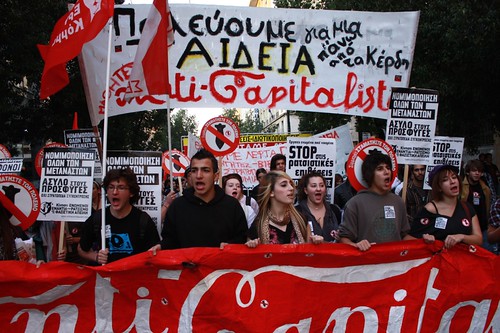
But given the enormous disaster that would likely befall the Eurozone if Greece leaves the currency union, is this a threat the EU can afford to make? There is a real risk that this latest move could backfire. Massive protests continue in Athens today as people stand in front of the parliament chanting "we won't pay". Inside the building, Socialist prime minister George Papandreou is holding a confidence vote to reaffirm his mandate before he attempts to push these austerity measures through the parliament.
Now facing defection from his own party's members and extreme pressure from public opinion, Papandreou's confidence vote will be a rollercoaster ride over the next few days. There is a chance that this latest move from the finance ministers will further enrage Greek public opinion, where there is already an impression that the EU, at the insistence of Germany, is dictating draconian measures in an anti-democratic way. A perceived insult like this could put public optinion in Greece over the edge and cause even more Socialists to withdraw from the parliament. If Papandreaou's government falls it could mean a default on Greece's debt and, most chillingly, a withdrawal from the Euro. These events could spiral out of control and cause a meltdown of the European economy, and maybe even the world economy. Given that reality, is this really a threat the finance ministers can afford to make?
Monday, 23 May 2011
Germany still punching below its weight
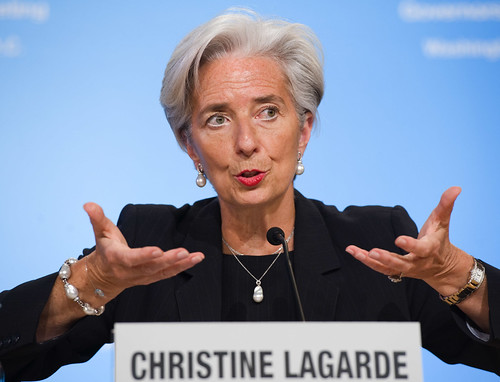
Europe hasn't wasted any time in getting its ducks in a row for the upcoming battle over naming a new IMF chief, with capitals across the continent voicing support over the weekend for French finance minister Christine Lagarde. That Europe so quickly agreed the monetary fund leadership should yet again go to someone from France reflects the political realities of Europe today. Britain can't be bothered, and Germany is too timid to take a leadership role.
Lagarde, who would be the first woman running the fund, received the backing of the British, German and Italian finance ministers over the weekend - with Luxembourg and Austria following suit. Chancellor Angela Merkel has yet to make her feelings known, but her finance minister would likely not have made the comments of support without her blessing.
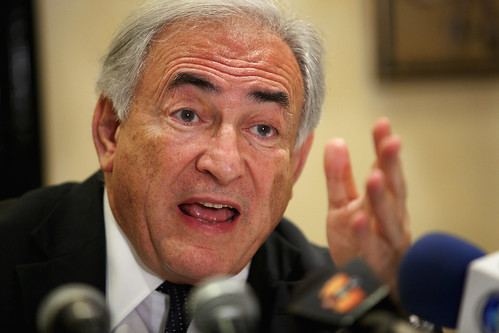
The fund has been run since 2007 by Frenchman Dominique Strauss-Kahn, who has made it a mission of the fund to save Europe's faltering common currency. But following Strauss-Kahn's arrest on rape charges in the United States last week, countries like China and Brazil have signalled they intend to pressure the fund to take on a new leader from the developing world.
Lagarde, who would be the first woman running the fund, received the backing of the British, German and Italian finance ministers over the weekend - with Luxembourg and Austria following suit. Chancellor Angela Merkel has yet to make her feelings known, but her finance minister would likely not have made the comments of support without her blessing.
The fund has been run since 2007 by Frenchman Dominique Strauss-Kahn, who has made it a mission of the fund to save Europe's faltering common currency. But following Strauss-Kahn's arrest on rape charges in the United States last week, countries like China and Brazil have signalled they intend to pressure the fund to take on a new leader from the developing world.
Wednesday, 18 May 2011
Merkel to Southern Europe: work more, play less
"People in countries like Greece, Spain and Portugal should not retire earlier than in Germany. We should all make the same efforts, this is important," German press agency DPA quotes Merkel as saying. "We cannot have a common currency where some get lots of vacation time and others very little. That won't work in the long term."The notoriously early retirement ages in Southern Europe have been a cause of serious griping in Germany since the country was forced to foot most of the bill to bail out Greece and Portugal over the past year. In Greece and Italy, a person can retire as early as 57. In Germany a person can't retire earlier than 65, and Merkel's government has voted to raise that to 67 over the next three years. Part of the conditions of Greece receiving its EU-IMF bailout was that it introduce reforms to raise the retirement age to 63.
Monday, 16 May 2011
IMF arrest rocks French politics
He could have been the next president of France, but instead Dominique Strauss-Kahn sits tonight in a New York City jail. Yesterday's news that the International Monetary Fund head was arrested for attempted rape has sent shock waves throughout Europe. DSK, as he is known in his native France, was set to become the Socialist candidate to challenge French president Nicolas Sarkozy in next year's election. Opinion polls had indicated that he could defeat the French president. Now with DSK out of the picture, France looks set for another five years of Sarkozy.
The French Socialist party has been in disarray for years now, without a clear leader who could defeat Sarkozy. Strauss-Kahn ran for president in 2007, but lost his party's nomination to Segolene Royal (who eventually lost to Sarkozy). After Sarkozy won he nominated Strauss-Kahn to head the IMF, undoubtedly to remove a formidable political enemy from the country. DSK's time at the IMF has been considered successful, as he has navigated the fund through a difficult period of economic crisis and debt bailouts in Europe.
The French media today has been all DSK all the time. It's a political earthquake that has sent the entire country spinning. Some of the media coverage has conjured up conspiracy theories, while others are blaming the "Anglo-Saxon world" for persecuting their poor misunderstood Gallic hero. Some die-hard Socialists are convinced that the whole thing is a set-up by Sarkozy's UMP. The fires of their conspiracy theories have been fanned by the fact that apparently the news was tweeted by a young UMP activist even before the arrest took place. Many have suggested that the maid making the accusation was set up as a honey trap. A poll this week found that 57% of French people believe Strauss-Kahn was set up, and the figure shoots up to 70% among Socialists.
The French Socialist party has been in disarray for years now, without a clear leader who could defeat Sarkozy. Strauss-Kahn ran for president in 2007, but lost his party's nomination to Segolene Royal (who eventually lost to Sarkozy). After Sarkozy won he nominated Strauss-Kahn to head the IMF, undoubtedly to remove a formidable political enemy from the country. DSK's time at the IMF has been considered successful, as he has navigated the fund through a difficult period of economic crisis and debt bailouts in Europe.
The French media today has been all DSK all the time. It's a political earthquake that has sent the entire country spinning. Some of the media coverage has conjured up conspiracy theories, while others are blaming the "Anglo-Saxon world" for persecuting their poor misunderstood Gallic hero. Some die-hard Socialists are convinced that the whole thing is a set-up by Sarkozy's UMP. The fires of their conspiracy theories have been fanned by the fact that apparently the news was tweeted by a young UMP activist even before the arrest took place. Many have suggested that the maid making the accusation was set up as a honey trap. A poll this week found that 57% of French people believe Strauss-Kahn was set up, and the figure shoots up to 70% among Socialists.
Wednesday, 11 May 2011
Lost in translation?
Portugal's Eurovision performance last night at the first semi-final in Dusseldorf raised more than a few eyebrows. In the midst of what many see as a German-imposed austerity drive forced on Portugal after they had to take a €78 billion bailout from the EU and IMF, their Eurovision entry performed a song dressed as protestors and chanting slogans, right in the belly of the beast. It was a bit of an awkward moment, especially considering political messages are supposed to be banned from the Eurovision Song Contest.
According to the group, the song was apparently supposed to be a sort of celebration of Portugal despite all of its bad news. Entitled "A Luta é Alegria" (The Struggle is Joy), it calls on the Portuguese to not give in to feelings of despair or rage at the restrictions being imposed on them. The message, I imagine, was intended to be like the old expression 'keep calm and carry on' used by the British during World War II. "There’s no point in tightening the belt, there’s no point in complaining," they sang. "There’s no point in frowning and rage is pointless, it won’t help you. Many people wish to silence you. Many people want you to feel resentful. Many people want to sell you the air itself."
Monday, 24 January 2011
Irish government falls
Ireland is set to be the first country to see a government fall as a result of the eurozone crisis, following yesterday's announcement by the Green Party that it is deserting the governing coalition. The news has thrown Ireland into political turmoil as politicians tussle to set the date for an election whose result will be anything but certain.
In a hastily arranged press conference yesterday the leader of Ireland's Greens, an environmental party, said there had been a "breakdown in trust" between the two parties and the Greens patience had reached an end. The ruling Fianna Fail party, which has governed Ireland almost continuously since 1987, failed to get an outright majority at the last general election in 2007 and so formed a coalition government with the Green Party to put them over the edge.
But the government has been under fire over the past year because of its handling of the debt crisis. The Irish public largely blames Fianna Fail not only for presiding over the boom period of heavy borrowing and the housing bubble, but also for its decision to bail out the Irish banks by guaranteeing their holdings and for accepting an EU bailout fund with strict conditions attached. The pressure became so acute that on Saturday Prime Minister Brian Cowen (pictured above) resigned as leader of the party, though without resigning as the prime minister - a situation highly unusual in a parliamentary democracy. Apparently this was all too much for the Green Party, which announced it was bolting just 24 hours later.
In a hastily arranged press conference yesterday the leader of Ireland's Greens, an environmental party, said there had been a "breakdown in trust" between the two parties and the Greens patience had reached an end. The ruling Fianna Fail party, which has governed Ireland almost continuously since 1987, failed to get an outright majority at the last general election in 2007 and so formed a coalition government with the Green Party to put them over the edge.
But the government has been under fire over the past year because of its handling of the debt crisis. The Irish public largely blames Fianna Fail not only for presiding over the boom period of heavy borrowing and the housing bubble, but also for its decision to bail out the Irish banks by guaranteeing their holdings and for accepting an EU bailout fund with strict conditions attached. The pressure became so acute that on Saturday Prime Minister Brian Cowen (pictured above) resigned as leader of the party, though without resigning as the prime minister - a situation highly unusual in a parliamentary democracy. Apparently this was all too much for the Green Party, which announced it was bolting just 24 hours later.
Subscribe to:
Comments (Atom)