Showing posts with label IMF. Show all posts

Wednesday, 20 March 2013

A Cyprus whodunit

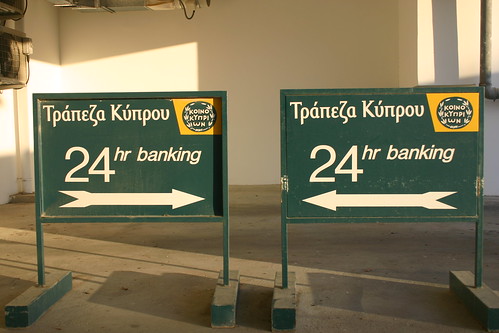
Brussels is in full blame-game mode today following last night’s rejection by the Cypriot parliament of the bailout package offered to the country by the EU. It’s a veritable whodunit mystery, with the answer depending on whether you’re inclined to believe the President of Cyprus, or the rest of Europe.

All sides agree on one thing – the decision taken by European finance ministers in the early hours of Saturday morning to require a one-time levy on all Cypriot bank accounts in exchange for the bail-out was colossally stupid, plunging the Eurozone into a new crisis and risking a bank run in the country. What cannot be agreed upon is whose idea it was.

Raiding people’s savings accounts is an unprecedented move. Such conditions were not imposed on any other country receiving bailout money, and indeed no such idea was ever even discussed. But Cyprus is a special case. As the likelihood of an EU bailout for the small Mediterranean island increased, worry began growing that the move would actually be a bail-out for wealthy Russian oligarchs who use the island for money-laundering or tax-evading.

Thursday, 27 October 2011

Just Lips service?

So the Euro is saved, for now. At 4am European leaders finally emerged from their talks to tell the fatigued journalists that after hours of very difficult negotiations, they had come to an agreement that will give the markets what they are demanding.

Perhaps it was the late hour, or the fact that the Polish presidency had closed the press bar at 11pm, but the journalists covering the summit initially greeted the announcement with scepticism. Many questioned whether the "bazooka" just unveiled really had the firepower to shield Spain and Italy from collapse. After all, this was not the first time the press had been held captive until late into the night in the Justus Lipsius building - or 'Just Lips' as I like to call it - to be told at the break of dawn that the euro would be saved. So in the end, was this just lip service? Or was this the decisive action the markets needed to see?

The agreement has three prongs:
  • Private banks holding Greek debt will accept a loss of 50% on their Greek bonds
  • The eurozone's main bailout fund (the European financial stability facility or EFSF) will be leveraged to €1 trillion.
  • Italy will implement reforms to bring down the country's staggering debt, including a lowering of the retirement age.

Monday, 27 June 2011

US getting worried and impatient over euro crisis

The Greek parliament is voting this week on the drastic austerity measures that have been ordered by the EU as a condition for the country receiving the rest of its bailout money. As Washington watches the situation unfold with unease, US officials are voicing an increasing amount of frustration that European leaders do not seem to have the situation under control. And the officials know that if the euro collapses, it could easily take the US economy down with it.

As Quatremer noted today, the euro has become such a powerful currency (now the second reserve currency of the world) that if it runs into trouble it would have a devastating impact not just in continental Europe but throughout the world.

Back in the 1970's when the US took the decision to take the dollar off the gold standard, the situation was watched intensely by the rest of the world. As the US treasury secretary noted at the time, "the dollar is our currency but your problem." Now, with the euro being used by a common market larger than America's, the opposite could be said to America. And the increasing grumblings suggest that American officials don't like being at the whim of decisions being taken across the Atlantic.

Monday, 23 May 2011

Germany still punching below its weight

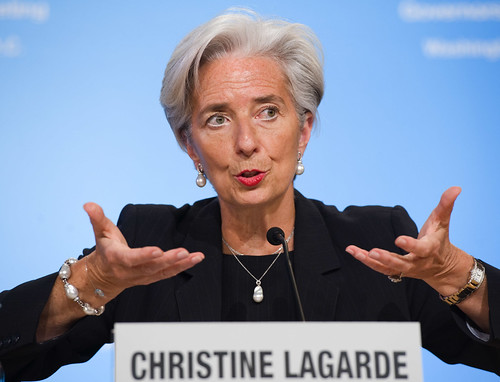
Europe hasn't wasted any time in getting its ducks in a row for the upcoming battle over naming a new IMF chief, with capitals across the continent voicing support over the weekend for French finance minister Christine Lagarde. That Europe so quickly agreed the monetary fund leadership should yet again go to someone from France reflects the political realities of Europe today. Britain can't be bothered, and Germany is too timid to take a leadership role.

Lagarde, who would be the first woman running the fund, received the backing of the British, German and Italian finance ministers over the weekend - with Luxembourg and Austria following suit. Chancellor Angela Merkel has yet to make her feelings known, but her finance minister would likely not have made the comments of support without her blessing.

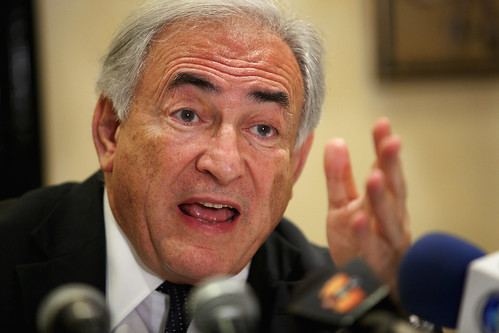
The fund has been run since 2007 by Frenchman Dominique Strauss-Kahn, who has made it a mission of the fund to save Europe's faltering common currency. But following Strauss-Kahn's arrest on rape charges in the United States last week, countries like China and Brazil have signalled they intend to pressure the fund to take on a new leader from the developing world.

Thursday, 19 May 2011

US focus on French sex attitudes echoes Lewinsky saga

Something is very wrong with France, if we are to believe the Anglophone media commentary this week. The arrest of Dominique Strauss-Kahn, the head of the International Monetary Fund and contender for the French presidency, has provoked some soul-searching in France about whether the media was right to have kept quiet about his history of unwanted sexual advances toward women. This soul-searching has been reported on with fascination by the American and British media. But for many in France, the Anglo-Saxon attention to their national trauma is bordering on smugness.

Back in the late 1990's, the French were quite vocal in their confusion and disgust with the impeachment proceedings against US President Bill Clinton. France has long had an expectation that politician's private lives are just that – private – and should have no relevance to their office. 'What kind of a society would impeach their president because he had an affair?' they asked. In fact the period during the Monica Lewinsky saga was probably the only one in which the French openly talked about their history of philandering presidents – from Mitterand to Chirac – if only to demonstrate how different their society was to America. If their politicians were oversexed "séducteurs" it was none of their business. Indeed, sometimes it was celebrated as a good thing, a sign of a healthy libido.

But what goes around comes around, and it seems that now it’s the Americans' turn to look derisively across the Atlantic, shake their heads and say, 'if only they were more like us.'

Monday, 16 May 2011

IMF arrest rocks French politics

He could have been the next president of France, but instead Dominique Strauss-Kahn sits tonight in a New York City jail. Yesterday's news that the International Monetary Fund head was arrested for attempted rape has sent shock waves throughout Europe. DSK, as he is known in his native France, was set to become the Socialist candidate to challenge French president Nicolas Sarkozy in next year's election. Opinion polls had indicated that he could defeat the French president. Now with DSK out of the picture, France looks set for another five years of Sarkozy.

The French Socialist party has been in disarray for years now, without a clear leader who could defeat Sarkozy. Strauss-Kahn ran for president in 2007, but lost his party's nomination to Segolene Royal (who eventually lost to Sarkozy). After Sarkozy won he nominated Strauss-Kahn to head the IMF, undoubtedly to remove a formidable political enemy from the country. DSK's time at the IMF has been considered successful, as he has navigated the fund through a difficult period of economic crisis and debt bailouts in Europe.

The French media today has been all DSK all the time. It's a political earthquake that has sent the entire country spinning. Some of the media coverage has conjured up conspiracy theories, while others are blaming the "Anglo-Saxon world" for persecuting their poor misunderstood Gallic hero. Some die-hard Socialists are convinced that the whole thing is a set-up by Sarkozy's UMP. The fires of their conspiracy theories have been fanned by the fact that apparently the news was tweeted by a young UMP activist even before the arrest took place. Many have suggested that the maid making the accusation was set up as a honey trap. A poll this week found that 57% of French people believe Strauss-Kahn was set up, and the figure shoots up to 70% among Socialists.

Friday, 26 March 2010

To IMF or not to IMF?

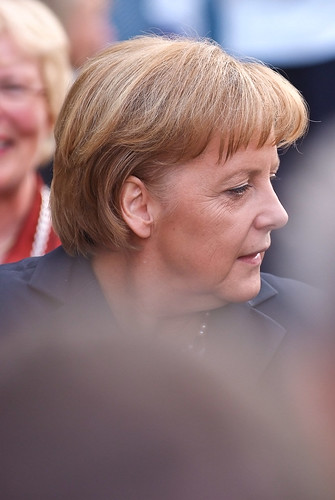
You were lucky yesterday if you caught a glimpse of Angela Merkel running around Brussels like a mad woman. The German chancellor was the center of attention during the spring summit of EU national leaders, as all of Europe looked to her to come to the rescue of Greece, and by extension, the Euro currency.

Merkel was going it alone in her unyielding objection to a bail-out for debt-ridden Greece, and she dug in her heels firmly. After much negotiation she relented and agreed to a bail-out, but on one condition – the American-controlled International Monetary Fund would have to be involved. European leaders are leaving Brussels today with a bailout plan in place, but only as an “emergency measure” to be triggered if Greece goes completely broke and cannot get any more credit.

Though it's stabilised the situation for the moment, the solution devised seems to have truly pleased no one. The euro rebounded from its long decline today in response to the news, but the markets did not reflect much confidence in the measure. Merkel is under tremendous pressure. The idea of a bail-out is extraordinarily unpopular in Germany, where many point out that such a bail-out is specifically forbiddon by the Maastricht Treaty. Many in Germany are saying that a core part of the eurozone agreement was that one state would never have to bail out another in the currency union. That, say some analysts, is why Merkel insisted on involving the IMF. Making the bail-out appear like an international effort will shield her from legal challenges that will surely be launched at home on the basis of the fund's violation of the Maastricht Treaty.

Thursday, 7 January 2010

Iceland to vote on becoming pariah state

After seeing his house surrounded by a torch-wielding mob, Iceland’s president yesterday stunned the world by vetoing a parliament bill committing the country to paying back the €3.8 billion of British and Dutch citizens’ money it lost. The bold move triggered a shock wave of recrimination across the world: the country’s debt was instantly downgraded to junk status, the IMF hinted it may withhold the $2.1 billion it loaned the country in November and the UK threatened to veto Iceland’s bid to join the EU.

So now who’s going to make the incredibly difficult and complicated decision on whether or not to pay back the ‘other people’s money’ Iceland lost? Joe Q. Public, that’s who. The issue will now go to a public referendum on 20 February.