Showing posts with label Currency. Show all posts

Thursday, 11 August 2011

Switzerland considers pegging to the euro

With the world's main currencies in crisis, the historically stable Swiss Franc has exploded in value over the past year. This has had a disastrous effect on the Swiss economy, as its exports and tourism industries struggle under the effects of a drastically overvalued franc.

This was in clear evidence earlier this month when I took a trip on the Glacier Express train across the Swiss Alps with my father. Ordinarily this scenic tourist train would be packed in August, having sold out months in advanced. But our train was nearly empty. When we finished our journey in Zermatt, home of the Matterhorn, the city was dead quiet. It looked like three-quarters of the rooms in our hotel were vacant.

It makes sense. After all, who can afford a vacation in Switzerland these days? It was already an incredibly expensive country, and the current exchange rate close to one euro to one franc (three years ago it was 60 cents to one franc) makes it unaffordable for most tourists from France, Germany and Italy. When my father moved from the US to Zurich in 2006 the exchange rate was 80 US cents to one franc. Today it's $1.37 to one franc. Given that a value meal at McDonalds costs 15 francs ($20), it's a difficult place to be if you don't make a Swiss salary.

Monday, 27 June 2011

US getting worried and impatient over euro crisis

The Greek parliament is voting this week on the drastic austerity measures that have been ordered by the EU as a condition for the country receiving the rest of its bailout money. As Washington watches the situation unfold with unease, US officials are voicing an increasing amount of frustration that European leaders do not seem to have the situation under control. And the officials know that if the euro collapses, it could easily take the US economy down with it.

As Quatremer noted today, the euro has become such a powerful currency (now the second reserve currency of the world) that if it runs into trouble it would have a devastating impact not just in continental Europe but throughout the world.

Back in the 1970's when the US took the decision to take the dollar off the gold standard, the situation was watched intensely by the rest of the world. As the US treasury secretary noted at the time, "the dollar is our currency but your problem." Now, with the euro being used by a common market larger than America's, the opposite could be said to America. And the increasing grumblings suggest that American officials don't like being at the whim of decisions being taken across the Atlantic.

Friday, 26 March 2010

To IMF or not to IMF?

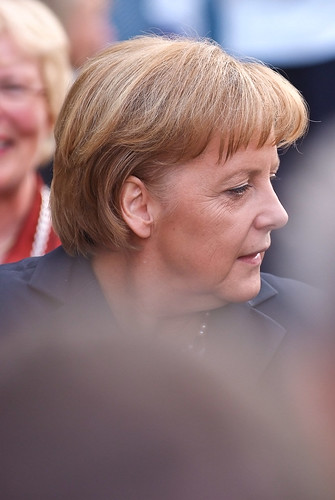
You were lucky yesterday if you caught a glimpse of Angela Merkel running around Brussels like a mad woman. The German chancellor was the center of attention during the spring summit of EU national leaders, as all of Europe looked to her to come to the rescue of Greece, and by extension, the Euro currency.

Merkel was going it alone in her unyielding objection to a bail-out for debt-ridden Greece, and she dug in her heels firmly. After much negotiation she relented and agreed to a bail-out, but on one condition – the American-controlled International Monetary Fund would have to be involved. European leaders are leaving Brussels today with a bailout plan in place, but only as an “emergency measure” to be triggered if Greece goes completely broke and cannot get any more credit.

Though it's stabilised the situation for the moment, the solution devised seems to have truly pleased no one. The euro rebounded from its long decline today in response to the news, but the markets did not reflect much confidence in the measure. Merkel is under tremendous pressure. The idea of a bail-out is extraordinarily unpopular in Germany, where many point out that such a bail-out is specifically forbiddon by the Maastricht Treaty. Many in Germany are saying that a core part of the eurozone agreement was that one state would never have to bail out another in the currency union. That, say some analysts, is why Merkel insisted on involving the IMF. Making the bail-out appear like an international effort will shield her from legal challenges that will surely be launched at home on the basis of the fund's violation of the Maastricht Treaty.

Friday, 13 March 2009

Could the Tories Bring the Euro to Britain?

Last night I attended a gathering of economists and politicians at The Center discussing the current situation vis-à-vis Britain and the Euro. Had such an event been held a year ago, you probably would have been lucky to get three people to show up. After all, the debate about Britain joining the Euro had been dead in the water for years. But things are looking very differently recently after the unprecedented collapse in the value of the pound, and the assembled speakers at the session had some surprising things to say about what may be around the corner for Britain.

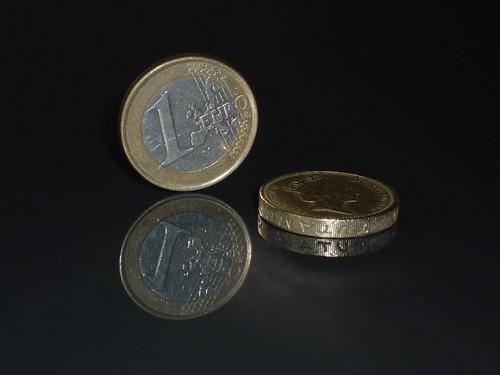
The pound has lost 30 percent of its value since last summer, the most dramatic drop in the currency's history. It's fallen from $2.00 to one pound in July to $1.39 to one pound today. The pound fell to just €1.02 recently, when it was €1.33 at the beginning of last year. So the situation for the sterling is bleak.

So now a debate which was once thought to be done and dusted is beginning to resurface, although not yet out in the open in Britain. Speaking at the session, former British MEP John Stevens observed, "It's much easier to talk about Britain and the euro outside than inside." Indeed Stevens, who just wrote a report concluding that the best monetary option for Britain is to join the euro, said that his report has received much more attention in the rest of the world than it has in the UK. In Britain, the currency problem remains the issue that dare not speak its name. Opinion polls have consistently shown that a majority of the public opposes joining the euro, and no politician in today's Britain is willing to take a principled stand on an unpopular issue. Both Labour and the Conservatives know that reawakening the euro debate could easily have the effect of spooking British consumers even further. "If the public hears talk about joining the euro, there will be mass fear that Britain is really in trouble," Stevens said, perhaps only half joking. A country's currency has much to do with its national pride, and having to give up the pound would be a massive blow to Britain's self-esteem.

Yet the country may get to a point where it has few other options. Last night's panelists seemed to agree there is a good possibility the pound may have much further to fall, and a full-on run could cause it to be worth drastically less than the euro. Stevens noted that if the UK were to start negotiations for joining the currency now they would be coming from a position of strength. "We wouldn't be coming just as supplicants, we would be bringing something to the table," he noted. "Britain joining the euro would position it as the world currency." At the same time, it would demonstrate to currency speculators that the pound is a safe currecy. On the other hand, waiting until the bottom has truly fallen out from the pound to begin negotiations would be a very weak position indeed.

But how to sell the idea politically? A representative from the British Chambers of Commerce asked how the organisation could make small-and-medium-sized enterprises come around to the idea. Stevens pointed out that SMEs actually benefit disproportionately from a common currency. Large businesses have mechanisms to get around currency barriers which small businesses do not. Studies have shown that SMEs within the Eurozone have been some of the greatest beneficiaries of the common currency, Stevens said.

But does any political party in Britain have the political will to sell the public on an unpopular issue like this? Simon Titley, a consultant who also worked on the report, said the reticence to do so may be a result of the systemic over-dependence on polls in modern British politics. Public opinion polls may show that a majority of the British are opposed to joining the euro, he said, but those same polls also show that they also don't care very much about the issue either. It's what pollsters call a 'soft issue,' something which people are willing to express an opinion on but actually isn't very important to them. "It's not an issue that would decide an election," he said. "Politicians that are in favour of the euro need to come out of the closet and stop caring what Rupert Murdoch's newspapers will say about them."

So what's likely to happen? All the panelists seemed to think that the next government of the UK will likely be the Tories under David Cameron, who just this week has signaled his intention to leave the main centre-right Europarty in the European Parliament to form a fringe Eurosceptic party, a move many have seen as making the Tories into an isolationist party. However, Titley had an interesting prediction for what may be in store for the a Conservative government. "I think a likely scenario is that a UK Tory government will adopt the euro, under the whole 'Nixon going to China' idea," he said. "Sometimes an idea seems so far to the left that only a right-wing government could do it."

These certainly have been unpredictable times, so I would say even the conservatives bringing the UK into the Eurozone wouldn't surprise me these days!

Saturday, 15 November 2008

The Imminent Collapse of the Pound?

Gordon Brown is in Washington this weekend, along with the other leaders of the G20 countries, attempting to come up with a solution to the global economic crisis. The ambitions for the group are huge, with suggestions of a global stimulus package and perhaps the creation of a global financial regulatory body. And it is the first time that the leaders of the G8 countries have met to discuss the current crisis with the growing economies like India, China and Brazil, which analysts say will be crucial in jolting the world out of the financial mess its in. But despite the big plans, everyone knows that at this weekend's meeting little is likely to be committed because of one very important absence from the conference: Barack Obama. With the Bush Administration leaving office in two months, countries see little point in making firm commitments now when everything could change come January.

Just now the summit has released a declaration of intent, with key points saying that each country has committed to financial stimulus, with each using government money to prop up the economy. It's also come out with pretty damning language about what got us into this mess, laying the blame on the door of the US and the lack of macroeconomic regulation.

But with little concrete policy news coming out of the meeting, the media in the UK has focused today largely on some side comments made by prime minister Brown on the sidelines. The comments were a response to something said by the Tory shadow chancellor George Osbourne in the Times newspaper today. Osbourne told the Times that Brown's stimulus plans could cause a "proper sterling collapse, a run on the pound." From Washington Brown lashed out at the comments as "irresponsible," suggesting that talk like that could become a self-fulfilling prophecy.

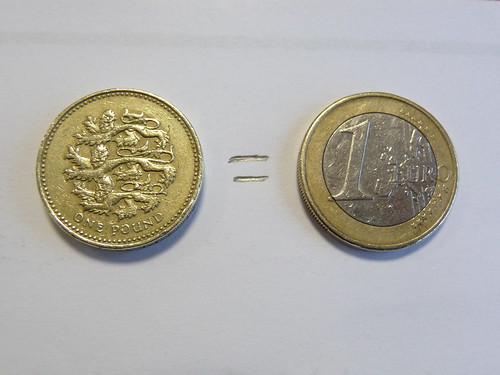
Osbourne's rant was the first time a senior UK politician has suggested that the country may be just weeks away from a currency collapse similar to what happened in the early 1990's. The pound has lost more than a quarter of its value in four months, dropping from over $2.00 in July to less than $1.50 today. It has also plunged against the Euro, declining by 20 percent just in the last month, particularly in the last week. A Euro is now worth a shocking £1.16. If the currency continues falling at this rate it could be worth less than a euro by the end of the year. With an economy that has become almost completely reliant on financial services, currency speculators seem to have concluded that the UK is going to be disproportionately affected by the economic crisis.

As someone who lives in continental Europe but whose savings and salary are in pounds, this is obviously not good for me. In fact the timing of my little jaunt over to the continent apparently couldn't have been worse. Considering I'll be moving to Zurich at the end of this month (the pound-franc exchange is also not good), it's really hitting home how volatile working across borders can be, especially in times of economic turmoil such as these.

It is clear that Osbourne and many other Tories are hoping that a currency collapse could damage Labour in the same way that the Tories were hurt by the sterling crisis in 1992. But as someone who's livelihood depends on that not happening, I share Brown's annoyance at Osbourne's seeming attempt to use the economic crisis to score political points.

Thursday, 8 November 2007

Sarko fever: catch it!

Sacre Bleu! I can’t get over these headlines today from the US about Sarkozy’s visit. “We love America, Sarkozy tells Congress” screams ABC. “Bush, Sarkozy stand on common ground” says the LA Times. “Sarkozy -- a Frenchman conservatives can love,” declares the Baltimore Sun. “French President Says America Can Count on France,” contorts Voice of America.

Head to the other side of the Atlantic and the coverage is very different. The BBC focuses on the disaster Sarkozy heads back to today with the headline “France divided as Sarkozy woos US”. Reuters highlights the distaste Sarkozy’s reception in the US will leave with most French people saying “Sarkozy returns from US to skepticism” And the Belfast Telegraph notes that “Sarkozy's warm words mask deep divisions with US.”

Were they watching the same speech?

Wednesday, 26 September 2007

Coin controversy

There’s been a lot of noise made over these new euro coins over the past couple days, with people advocating for Turkey’s entrance into the EU horrified that EU finance ministers had adopted a design for the new Euro coins that leaves Turkey off the map.

The coins are for the new members states of Slovenia, Malta and Cyprus, and feature a map of Europe that doesn’t feature Turkey. Those who support Turkey’s accession to the EU are furious, saying it reflects a bias against the potential future member state. And the English-language press has picked up the story and portrayed it as a deliberate slight against Turkey.