Showing posts with label economic crisis. Show all posts

Friday, 24 June 2016

Welcome to the 1930s

For years, we thought it would be Greece that would trigger Europe's collapse. It turns out it is England that has brought us to the edge of the abyss.

The world woke up to terrifying news this morning. Against the recommendations of nearly all experts and world leaders, against the expectations of the financial markets and the bookies, England has voted to leave the European Union.

As expected, the world's financial markets went into panic mode. The pound lost 8% of its value, hitting a low not seen since 1985. Continental European markets have lost about 8%, US markets are currently down 3%. Analysts expect further losses on Monday. 

It is all reminiscent of the panic after the Lehman Brothers collapse in September 2008, or perhaps more relevant to Europe, the height of the Greek debt crisis of 2011 and 2012.

Monday, 3 September 2012

A long-distance relationship

There are many clichés used to describe Iceland’s position in the middle of the Atlantic. Torn between Europe and North America – quite literally sitting on the fault line separating the two continents geologically – the country’s location is the most frequently used metaphor. This has been particularly true now that the country is in the process of EU accession.

While in Iceland over the past four days – a stopover on my way back to Brussels from a visit home to New York – the question of EU accession was very much on my mind. In fact I made it a point to ask every Icelander I met how they plan to vote in the coming referendum (what can I say, I’m tons of fun at a party). I planned to write some kind of blog entry on the way back reflecting people’s opinions and concerns, and here I am on the plane writing it.

It’s tempting to start trying to explain Iceland’s reluctance to embrace Europe with an anecdote about geography, since it is so far the European mainland. I could describe the intense sense of isolation I felt while out in the uninhabited lava fields away from Reykjavik. Or I could muse about the feeling of being torn in two directions which I felt while standing in the gorge separating the two continents at Pingvellier Park.

Wednesday, 2 November 2011

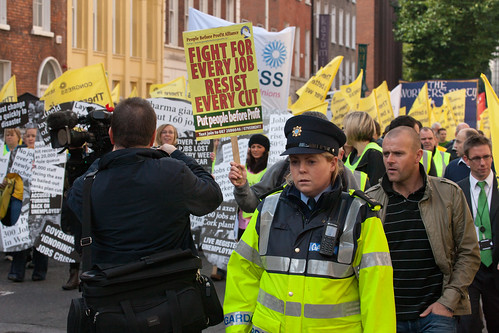
'Occupy London' pits bishop against bishop in Church of England

Today I paid a visit to the 'Occupy the London Stock Exchange' protestors who have camped out outside St. Paul's Cathedral in central London. It was a fascinating visit, I sat in on a 'general assembly' and also observed a conversation between an occupier and a banker that was being filmed for a British TV station. But what is perhaps the most interesting to me about the Occupy movement in London is the strange standoff it's not found itself in with the Church of England.

The 'occupy movement' has spread from its initial manifestation in August at Wall Street in New York to cities around the globe. On 15 October activists in London decided to stage their own version in the city's financial quarter ("the city"), the second most important financial centre in the world after Wall Street. They initially tried to occupy Paternoster Square, which is where the London Stock Exchange sits. But because the UK courts had already granted an injunction against public access to that particular square, police blocked their access to it.

So the 3,000 protestors moved to the nearby small open space next to St. Paul's Cathedral, the massive domed city landmark in the city built by Christopher Wren in 1697. The police surrounded the protestors in order to protect the cathedral. But the canon of St. Paul's told the police to leave. He said the church had decided to allow the protestors to protest peacefully on their land.

Thursday, 29 September 2011

What would the world look like without the EU?

They used to say that when America sneezes, Europe catches a cold. That’s certainly what they (and I) were saying during the 2008 economic crisis, when misadventures on Wall Street and the subsequent collapse of Lehman Brothers created a disaster that quickly spread to Europe. How the tables have turned. Now the US is waiting helplessly to see if Europe can avoid a disaster that would eclipse Lehman Brothers in scale and could throw the US back into recession.

It’s a testament to just how important Europe has become to the global economy that it is now Europe’s sneeze that can give the world a cold. The EU is now a larger market than the United States, and over the past twenty years it has literally become the world’s regulator. Is it conceivable that this entire project could now collapse?

This is the question that is now being asked in the United States. When I was home last weekend I was asked by friends, “Is the EU going to fall apart?” Trying to show a bit of false confidence, I assured them that it is not. Germany is in the end going to suck it up and do what needs to be done to save the euro, I insisted, because the alternative is complete economic meltdown. The vote for the increased bailout fund today in the German parliament seems to go some way in justifying that optimism. The truth is that Europe’s problems are not insurmountable.

Wednesday, 28 September 2011

EU banker tax? UK says no

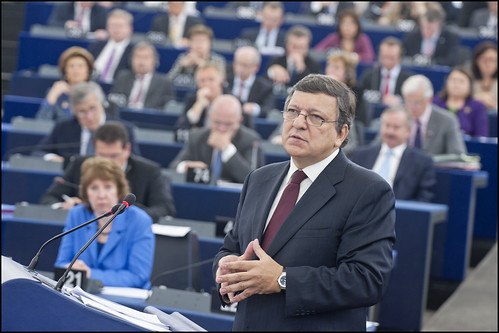
"In the last three years member states - I should say taxpayers - have granted aid and provided guarantees of €4.6 trillion to the financial sector. It is time for the financial sector to make a contribution back to society. That is why I am very proud to say that today, the Commission adopted a proposal for the Financial Transaction Tax."

With these words European Commission President Jose Manuel Barroso put forward what is bound to be an enormously controversial piece of EU legislation, a transaction tax on bankers and investors who invest in stocks, bonds and derivatives. Speaking to the European Parliament in Strasbourg today for his annual 'state of the union' address, Barroso said the tax would bring in €55 billion per year, starting from 2014.

The language used by the president was clearly populist in nature, emphasising a sense of fairness and responding to a public feeling that the bankers who caused the economic crisis of 2008 have never been called to account and have not been asked to contribute to the recovery from the pain they caused. Stock markets and investment firms have made remarkable recoveries over the past few years, and executive pay has steadily risen. But at the same time the economy as a whole has suffered enormously and continues to suffer.

Monday, 8 August 2011

Europe's choice: anger voters, or drop the euro

The Eurozone's finance chiefs took the extraordinary decision last night to "actively" buy up Italian and Spanish bonds, in a last-ditch attempt to try to stop the market freefall that is spiralling out of control. Following the downgrading of the United State's credit rating for the first time in history over the weekend, everyone is waiting this morning with baited breath to see whether the good news of the European bond buy-up will be enough to outweigh the bad news of the American downgrade.

The decision to have the European Central Bank buy up Italian and Spanish bonds is a huge step toward  fiscal union in Europe, and it did not come easily. Last week it looked like Europe's leaders were intending to reject any such move when they announced Thursday that they would buy only Irish and Portuguese bonds. This was effectively pointless because both of these countries are already getting EU bail-outs, and the markets took it as a sign that the ECB would not buy the Italian and Spanish bonds. This caused a panic, the bond yields of those countries plummeted even faster than they were earlier in the week.

The heart of the problem is this: the markets are demanding that the EU rapidly establish stronger fiscal union so that individual states don't collapse under the debt crisis and bring the common currency down with them. Essentially, the European Central Bank needs to take on the debt of the struggling economies. But European leaders are resisting doing so because the public mood for further European integration is so low right now. 

Tuesday, 2 August 2011

Is America too old to function?

One of the most frequent clichés I hear as an American living in Europe is that the US is a 'new country' while nations on this continent are 'old'. It is usually used to explain away American peculiarities, as if the US is a naïve child who just hasn't had the time to attain the wisdom of the more mature, centuries-old European states.

But however often it's repeated, this common wisdom is patently false. As a country, the United States is older than the vast majority of European states. At the time of the US declaration of independence in 1776, the states of Belgium, Germany, Italy, Finland, Romania, Slovakia, Greece and Latvia had all never existed yet in any form. And that's just to name a few. The fact is that European nations are actually quite young - and that is what makes them more agile in the face of modern problems than the United States.

Even the European countries which did exist in some form in 1776 - such as Spain, Portugal, the Netherlands and France - today barely resemble what they were at that time. The Kingdoms of France and Portugal in 1776 are now republics with completely different systems of government. And going in the other direction, the Dutch Republic in 1776 - a loose confederation of provinces - bears little resemblance to today's Kingdom of the Netherlands.

The US has had the same governing structure since 1789, the date that marks the founding of the current American republic with the adoption of the US constitution (which replaced the previous Articles of Confederation in place since 1776). The US has used the same government system since then. Contrast this with France - whose current republic has only been in place since 1958 – or the Federal Republic of Germany, which dates from 1949. Other founding dates of current European government systems include: Italy – 1947, Spain – 1978 and Poland – 1997.

In fact the only European governments that could legitimately claim to be older than the US government system are the constitutional monarchies of Britain, Denmark and Sweden – but even this is arguable since they have had significant constitutional changes over the past 200 years.

Wednesday, 13 July 2011

Eurozone in panic: Is Italy next domino to fall?

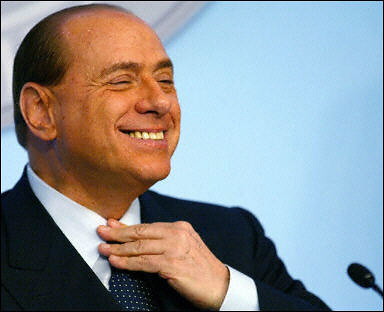
The Eurozone is looking at several doomsday scenarios this week after Italy emerged as the latest EU state to face serious and sudden attack by international bond and security markets. After a very public spat between Prime Minister Silvio Berlusconi and his finance minister, and with the continued political uncertainty over Berlusconi's position, the markets have decided Italy may not be safe to lend to any longer.

With the paralysis in the country's government likely to prevent decisive action to confront the crisis, some are saying Italy is perhaps days away from becoming an economic failed state. And unfortunately it is not too big to fail, but it is too big for the EU to bail out.

Such extreme rhetoric may or may not be justified, depending on who you talk to. But the risk is extreme. The countries that have so far fallen victim to the debt crisis and required an EU bailout – Portugal, Ireland and Greece – are relatively tiny and their debt makes up less than 5% of overall eurozone public debt. If worse came to worse, France and Germany could afford to buy back all of their debt combined.

Monday, 6 June 2011

Europe's left continues to disappear

Yet another centre-left European government was ousted yesterday as the Portuguese voted overwhelmingly for the country's conservatives. Prime Minister Jose Socrates' Socialists, who have been in power since 2005, received just 28% of the vote. The centre-right party, bizarrely named the 'Social Democrats' (a legacy of Portugal's desire to avoid conservative-sounding names reminiscent of the dictatorship) got 37% of the vote, just short of an overall majority. They will form a coalition with the further right People's Party who polled at 11%.

"Centre-right wins in _____" is becoming a familiar headline for European Monday mornings. Conservative governments are re-elected, while centre-left governments are voted out. The left hasn't won an election here since the Socialists took power in Greece in 2009. With the Portuguese Socialists gone, this leaves the EU with only five centre-left governments - Greece, Cyprus, Austria, Slovenia and Spain. Compare this to the 19 governments controlled by the centre-right - plus three controlled by the right-leaning free-market Liberals.

Given the disastrous local election results for Spain's Socialists two weeks ago one can assume they will fall from power in the country's general election next year, if not earlier. This will leave the left with essentially no presence in Europe. It is an unprecedented situation in modern European history - the first time since the advent of widespread Democracy that the European left has had no voice.

Wednesday, 18 May 2011

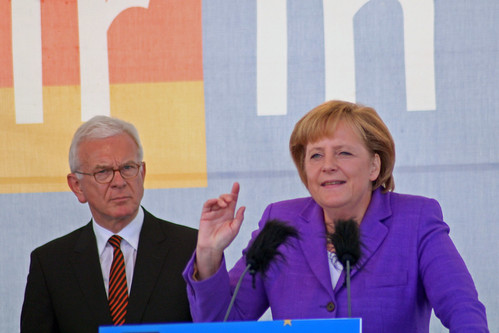
Merkel to Southern Europe: work more, play less

Workers in Southern Europe shouldn't enjoy more vacation and earlier retirement ages than their Northern European counterparts, German Chancellor Angela Merkel told a meeting of her Christian Democratic Union party last night. The comments, highly surprising coming from this usually cautious and analytical politician, have been greeted by applause from the right-leaning papers in Germany today.
"People in countries like Greece, Spain and Portugal should not retire earlier than in Germany. We should all make the same efforts, this is important," German press agency DPA quotes Merkel as saying. "We cannot have a common currency where some get lots of vacation time and others very little. That won't work in the long term."
The notoriously early retirement ages in Southern Europe have been a cause of serious griping in Germany since the country was forced to foot most of the bill to bail out Greece and Portugal over the past year.  In Greece and Italy, a person can retire as early as 57. In Germany a person can't retire earlier than 65, and Merkel's government has voted to raise that to 67 over the next three years. Part of the conditions of Greece receiving its EU-IMF bailout was that it introduce reforms to raise the retirement age to 63.

Monday, 24 January 2011

Irish government falls

Ireland is set to be the first country to see a government fall as a result of the eurozone crisis, following yesterday's announcement by the Green Party that it is deserting the governing coalition. The news has thrown Ireland into political turmoil as politicians tussle to set the date for an election whose result will be anything but certain.

In a hastily arranged press conference yesterday the leader of Ireland's Greens, an environmental party, said there had been a "breakdown in trust" between the two parties and the Greens patience had reached an end. The ruling Fianna Fail party, which has governed Ireland almost continuously since 1987, failed to get an outright majority at the last general election in 2007 and so formed a coalition government with the Green Party to put them over the edge.

But the government has been under fire over the past year because of its handling of the debt crisis. The Irish public largely blames Fianna Fail not only for presiding over the boom period of heavy borrowing and the housing bubble, but also for its decision to bail out the Irish banks by guaranteeing their holdings and for accepting an EU bailout fund with strict conditions attached. The pressure became so acute that on Saturday Prime Minister Brian Cowen (pictured above) resigned as leader of the party, though without resigning as the prime minister - a situation highly unusual in a parliamentary democracy. Apparently this was all too much for the Green Party, which announced it was bolting just 24 hours later.

Tuesday, 14 December 2010

Berlusconi, the Italian asbestos – hey, at least he isn't gay!

Incredible, he's done it again! Despite all logical odds, Italian prime minister Silvio Berlusconi has again narrowly escaped defeat like some kind of reality-defying illusionist. But this is Italy, and perhaps logical odds were never the right indicators to use here. After all this is a country where the prime minister can cling to power even after he's been caught lying to a police station to release from jail an underage Moroccan erotic dancer he’s having relations with. This is a country where half of the administration can be forced to resign after corruption scandals, and yet the leader himself is still left standing triumphantly.

How can one explain this bizarre land south of the Alps? As has often been noted, few other developed countries would tolerate this kind of extreme behavior from their elected leader. In the past this blog has been routinely wrong in predicting Berlusconi’s imminent defeat. I just couldn’t believe that someone could hold on to power after these kinds of revelations were out there. Last year, during the prime ministers scandal-plagued divorce from his wife, allegations of sex with minors, hiring prostitutes and lavish orgies at Silvio's Sardinian villa were everywhere - and the prime minister didn't even bother denying them.

This is why when these revelations about the Moroccan belly dancer (pictured below) came out in October - and Berlusconi issued his subsequent defense of, “Yes I’m passionate about beautiful girls, but it’s better than being gay,” - I didn’t even bother writing about it. Yes, the fact that he got his Moroccan Lolita released from jail by telling a police station she was the Egyptian president’s daughter might have seemed like surely the final step too far. But I had been burned too many times by prematurely predicting Berlusconi's demise.

Wednesday, 8 December 2010

Is Obama the world's worst negotiator?

Barack Obama is being attacked by his own party this week after a massive capitulation to Republicans giving large tax cuts to the wealthiest two percent of Americans. For Democrats, two years of frustration over the president's frequent urge to compromise with the opposition while getting nothing in return seems to have bubbled over and exploded in a torrent of anger.

From pundits to politicians, many Democrats were furious on Tuesday over what they see as Obama's lack of appetite for political fights. There was talk of a party revolt in the congress, with Democrats saying they would vote against the Obama-backed deal. The anger got so loud that the president was forced to summon a hastily arranged press conference where he forcefully defended himself against the accusations by his own party and insisted he is indeed a fighter. But his speech, which at times seemed dismissive of the disappointment  felt by his own party, has done little to quell the fury. Take a look some choice clips from the speech in this video clip below.

Monday, 22 November 2010

Ireland in crisis

Today was a dramatic day in Dublin. First came the news that the government was giving in and accepting an EU bail-out, prompting angry demonstrators to swarm government buildings in protest of the decision. But as the day went on Ireland’s financial crisis morphed into a political one. The Green Party, a junior partner in the governing coalition, announced it was pulling its support - prompting a collapse of the government and a general election. The Irish government now appears to be in complete meltdown.

Since last week Ireland has been under pressure from the EU to accept the bail-out as it became clear that Ireland’s banks were in so much trouble that the Irish government was going to be unable to borrow money. Brussels was afraid this insolvency would spread to the other vulnerable so-called “PIGS” countries, causing the euro currency to collapse. If such a crisis were to spread to Spain, the eurozone's fourth largest economy, it could spell the end of the euro and as a consequence, some leaders have suggested, the end of the EU. After spending a week denying that they would take the money, today the Irish government accepted a rescue package worth up to €90 billion ($124bn).

So why the initial resistance, and why the protests today? Surely Ireland getting money is a good thing for Ireland right? Well the rescue package comes with a lot of strings attached, and they will be painful strings for the Irish population. In exchange for the aid, Ireland must make €4.5 billion in public spending cuts and €1.5 billion in tax increases. Overall, the country will have to save €15 billion by 2014. This will undoubtedly cause an increase to the unemployment rate, aleady high at nearly 15%. Essentially, it doesn’t matter who the Irish public elects in the general election that will likely be called in January (after the bail-out has been approved by the current parliament). The country will be governed by the International Monetary Fund and the European Central Bank for the next three years.

Tuesday, 16 November 2010

David Cameron's lucky day

It's been a good day for UK Prime Minister David Cameron. This morning Britain's Prince William announced he will wed his long-time girlfriend Kate Middleton in a lavish royal wedding next year. Cameron was reportedly ecstatic when he announced the engagement to his cabinet, and it's not hard to see why. A royal wedding is exactly the sort of thing the Tories need to lift the spirits of the British public, who are suffering so much from the economic crisis and the budget cuts. In fact the engagement announcement already started fulfilling its role as a much-needed distraction today as it completely drowned out the simultaneous announcement from 10 Downing Street of a raft of new cuts including, ironically, the scrapping of legal aid for poor people getting a divorce. So while the royal family celebrates an upcoming wedding, their subjects learn it will now be harder for them to obtain an equitable separation.

Meanwhile over in Brussels, word came this morning that Cameron may get his wish for a complete freeze in the EU budget after all. Talks between member states and the European Parliament over the 2011 EU budget broke down last night. With no agreement in sight, it will mean that the 2010 budget will have to be used next year. Freezing the EU budget at 2010 levels was exactly what Cameron wanted, though this is probably not the way he wanted to get it. But Brussels was in despair today over the failure to reach an agreement, which will have very serious consequences for the EU. Both the commission and the parliament seemed to be shocked by the deliberate sabotaging of the budget that appears to have been led by the UK with the aid of their Dutch and Danish eurosceptic allies.

It was particularly shocking considering that parliament had broken precedent and completely capitulated to member states' demand that the budget not be raised by more than 3% (the parliament had originally called for a 6% raise). What appears to have happened is that certain member states are using the budget negotiations as a power play, seeking to sideline an increasingly assertive European Parliament that has sought to use the new powers it was granted by the Lisbon Treaty. The irony of the situation was lost on no one in Brussels today. The British Conservatives, who are constantly whining about the "democratic deficit" in the EU, are seeking to marginalise the only directly elected EU institution. And they are willing to play a dangerous game to do so.

Wednesday, 20 October 2010

UK cuts 1/5 of government spending - is it possible in the US?

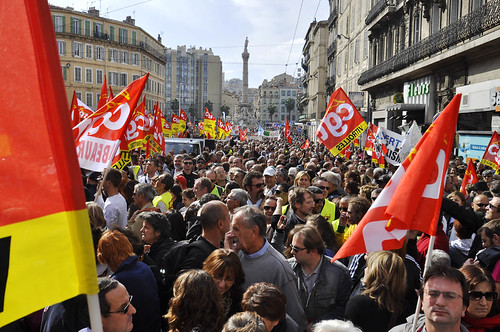
As rolling strikes and violent protests against austerity measures continue to cause chaos in France today, across the channel the new conservative government of David Cameron introduced their much-anticipated package of budget cuts, the biggest slash to the UK budget since World War II. Naturally, the stoic British public is not reacting in the same 'take to the streets' manner of the French in their reaction to Sarkozy's attempts at budget cuts. Instead, there seems to be a sense of profound sadness and anxiety in the UK today.

Put quite simply, the cuts are massive. £83 billion ($130 billion) in cuts were announced this afternoon, an average of 20% out of every government department. 490,000 government employees will lose their jobs. Government offices in London will be cut by a third. Rent will be increased for people in public housing, police services will be cut, local town councils will get less money, and prisons will have less space. The retirement age will be raised to 66 (compared to 62 in the US). Both the sales and income tax will rise, with most of the increases coming out of the salaries of top earners. University teaching budgets will be cut by 75%, meaning the cost of tuition will rise considerably. And the British military isn't immune either, it will see an 8% cut in its budget. Even the queen will have to make do with less. Cameron is giving her a 14% pay cut.

Friday, 2 July 2010

Angie takes a licking, but will she keep on ticking?

Angela Merkel may be riding high on the world stage, but at home in Germany she is in trouble. Deep trouble. Already heavily battered by her decision to provide money to Greece to prevent the euro collapsing, her current efforts to make drastic austerity cuts to the German budget caused a major revolt this week within her governing coalition.

The German parliament is this week voting to select a new president for the country. It's a largely ceremonial position, roughly equivalent to the Queen of England bar for the fact that nobody outside of Germany would know who their president is. Ordinarily the leader of the party in power selects the president, because he or she controls the majority of votes in the parliament. Merkel's selection was Lower Saxony governor Christian Wulff, perceived by the public as a rather uninspiring career politician.

Monday, 28 June 2010

When Dave met Barack

There’s been much speculation in the UK since the election victory of the Conservative Party’s David Cameron about how the new prime minister will get on with US president Barack Obama. The relationship between the men and women who have led the two partners in the so-called “special relationship” has been closely scrutinised for years.

There was the famously close relationship between Ronald Reagan and Maragaret Thatcher – two leaders whose ideologies had barely a hair’s length between them. Then there was the notoriously bizarre close friendship between Tony Blair and George W. Bush following September 11th - two men on opposite ends of the political spectrum united by their shared Christian evangelism and anti-terrorism crusade. That buddy-buddy relationship didn’t work out so well for Mr. Blair’s political career or for the UK as a whole.

Gordon Brown’s relationship with Barack Obama wasn’t exactly close (their first meeting was notoriously bungled) but the two men were singing from the same hymnsheet: during the economic downturn the best remedy was an injection of public spending and strong state action. Together they were able to convince the rest of the G20 nations that this was the best course of action, resulting in the consensus and unity of purpose displayed at the 2009 G20 summit in London.

Monday, 10 May 2010

Angie’s anguish

Poor Angela Merkel. You do have to sympathize with the conservative German chancellor, trapped between a rock and a hard place. The dire situation in Greece requires her to commit tons of German money to keep the crisis from spreading throughout the eurozone. But a bail-out of this Meditteranean nation that has behaved so badly is enormously distasteful to the German public.

It’s a bit like the fable of the grasshopper and the ant. Germany has held down wages and been frugal in its spending, while Greece has been profligate and irresponsible, spending far more than they had while at the same time not bothering to collect taxes appropriately. For the average German, it’s enfuriating that the squirell will now have to bail out the racoon.

But perhaps the more appropriate literary counterpart for Angie is Hamlet. Her foot-dragging and indecision during this crisis has been blamed by many for making the crisis get far worse. In the end she had to relent - so the delay accomplished nothing but exacerbated the problem. This weekend EU finance ministers agreed to establish a €962bn emergency crisis fund. It’s designed to stop the financial market turmoil as the situation in Greece deteriorates, reassuring jittery investors that the problem will be solved. Yet many are concerned that this fund is too late, and should have been agreed weeks ago before the situation got out of hand. Back then, it was Merkel who was the lone EU leader standing in the way. She knew the German people would punish her for agreeing to a bail-out.

Thursday, 7 January 2010

Iceland to vote on becoming pariah state

After seeing his house surrounded by a torch-wielding mob, Iceland’s president yesterday stunned the world by vetoing a parliament bill committing the country to paying back the €3.8 billion of British and Dutch citizens’ money it lost. The bold move triggered a shock wave of recrimination across the world: the country’s debt was instantly downgraded to junk status, the IMF hinted it may withhold the $2.1 billion it loaned the country in November and the UK threatened to veto Iceland’s bid to join the EU.

So now who’s going to make the incredibly difficult and complicated decision on whether or not to pay back the ‘other people’s money’ Iceland lost? Joe Q. Public, that’s who. The issue will now go to a public referendum on 20 February.