Today is Ash Wednesday, a day when Roman Catholic areas can witness in equal number people with ashes on their forehead and those with bags under their eyes. It is the first day of lent – the 40-day fasting period leading up to Easter. But it is also the day after Mardi Gras and the carnival week, a period of revelry which can lead to some serious hangovers at the finish.
This year I went to the carnival celebrations in Cologne, Germany – the largest street festival in Europe (pictured above). I think I’m going for a record at this point – I’ve now been to carnivals in six cities on three continents (I’m not sure if that’s a brag or an embarrassing confession). The carnivals that I’ve seen in Rio de Janeiro, Salvador, New Orleans, Venice, Binche, Maastricht and Cologne have all been remarkably different – reflecting the diversity of the global Catholic community.
An American asked me yesterday if Europeans celebrate the “American holiday of Mardi Gras.” In fact it’s Americans who are celebrating the European tradition of carnival, with Mardi Gras just being a local New Orleans variant. Carnivals have been celebrated in Europe in the days before Lent begins for 1,000 years. The term comes from the Latin carne vale, which means “goodbye to meat”. Traditionally during Lent Catholics were supposed to refrain from drinking or eating rich foods such as meat, dairy, fats and sugar. They were also not to engage in any partying or celebrations, to mark the 40 days that Jesus spent in the wilderness. So in the days before Lent, all rich food and drink had to be disposed of.
Showing posts with label Catholicism. Show all posts
Wednesday, 22 February 2012
Wednesday, 27 July 2011
Ireland's dramatic fallout with the Catholic Church
The Vatican took the unprecedented step of recalling its ambassador to Ireland on Monday following a fiery speech from the country's prime minister denouncing the church for covering up cases of child sex abuse. The row is an indication of just how much Ireland, once a loyal foot soldier for the pope, has changed over the past two decades.The fiery speech on the floor of the Irish Parliament by Prime Minister Enda Kenny last week was in reaction to the government's latest report on sex abuse in the Irish church. The report found that the Vatican had deliberately tried to downplay and cover up the rape and torture of children by priests in Ireland, and found that it was doing so as recently as 2009. It also found that the Vatican was trying to interfere with the Irish government's investigation into the matter. This was apparently all too much for Kenny. Denouncing the "dysfunction, disconnection, elitism and narcissism" of the Vatican, Kenny told the parliament:
"This is not Rome. Nor is it industrial-school or Magdalene Ireland, where the swish of a soutane smothered conscience and humanity and the swing of a thurible ruled the Irish-Catholic world. This is the Republic of Ireland 2011. A republic of laws, of rights and responsibilities; of proper civic order; where the delinquency and arrogance of a particular version, of a particular kind of 'morality,' will no longer be tolerated or ignored."
Monday, 30 May 2011
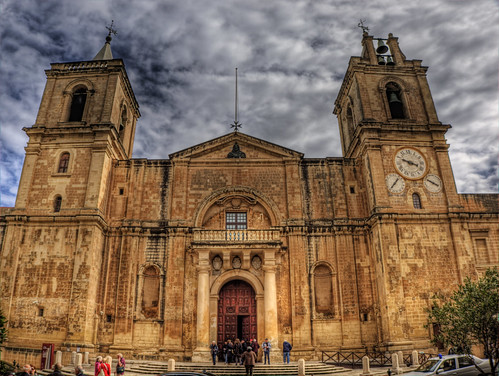
Malta says 'I do' to divorce
By a slim majority, the Maltese voted to legalise divorce in a referendum held Saturday in the tiny Mediterranean island nation. 52.6% of people voted 'yes' to make it legal to divorce your spouse, and the conservative prime minister, who campaigned for a 'no' vote, conceded that he will respect the will of the people and change the law. Malta is the only EU country in which divorce is illegal.
The referendum's result is being heralded as much more than a change in the country's marriage law. For many inside and outside of Malta the vote signals that the island, which for hundreds of years was run by a Catholic religious order with origins in the crusades, is ready to shed its identity as a 'Catholic state'. Apart from the Phillipines, the only other country in the world where divorce is illegal is Vatican City.
The country's Labour opposition leader called the vote, "the birth of a new Malta." The Malta Star wrote on Sunday, "The people haven’t just voted ‘Yes’ to divorce, they have signalled they are happy to embrace the modern age. The new Malta isn’t condemning and stifling, it is relaxed and open.” Saviour Balzan of Malta Today told the Associated Press that the vote will bring Malta closer to Europe culturally. "This is a conservative society, but Maltese still live like Europeans," he said. "This regularizes their lives."
The referendum's result is being heralded as much more than a change in the country's marriage law. For many inside and outside of Malta the vote signals that the island, which for hundreds of years was run by a Catholic religious order with origins in the crusades, is ready to shed its identity as a 'Catholic state'. Apart from the Phillipines, the only other country in the world where divorce is illegal is Vatican City.
The country's Labour opposition leader called the vote, "the birth of a new Malta." The Malta Star wrote on Sunday, "The people haven’t just voted ‘Yes’ to divorce, they have signalled they are happy to embrace the modern age. The new Malta isn’t condemning and stifling, it is relaxed and open.” Saviour Balzan of Malta Today told the Associated Press that the vote will bring Malta closer to Europe culturally. "This is a conservative society, but Maltese still live like Europeans," he said. "This regularizes their lives."
Monday, 2 May 2011
A royal weekend of symbolism
Wow, what a weekend – a royal wedding, beatification of a saint and now a martyrdom. What century are we living in again?
Last night's news that after a decade of efforts the United States has at long last killed Osama Bin Laden is just about the only news story people are talking about today. This is to be expected for such a symbolically important event – regardless of its actual real-world impact. The news finished off a weekend when the US was paying more attention than normal to events going on abroad, with the royal wedding in London and the huge mass in Rome that declared Pope John Paul II ready to be a saint. All three of these events were short on real-world impact but high on symbolic value.
Friday, 17 September 2010
As expected, pope visit courts controversy in Britain
This week Pope Benedict XVI is making the first state visit by a pontiff to the United Kingdom. Considering the UK was historically the most anti-Catholic country in Europe (they have a holiday devoted to burning effigies of a Catholic traitor for goodness sake!), no one should be too surprised that this visit is causing some controversy.
In fact from the television coverage, it looks like the pope’s visit could be attracting more protesters than worshipers. The protesters appear to have two objections to the pope's visit. One: because it’s a state visit, the taxpayers are paying for it. Two: they are angry about the child abuse scandal and the Catholic heirarchy’s efforts to cover it up. Those are the ostensible reasons at least. But I suspect that if the Dalai Lama or an imam visited Britain on a state visit it wouldn’t be met with such a protest. Perhaps old historical animosity toward the ‘papists’ has a bit to do with this huge backlash to the visit. A great many public figures and politicians have objected to the visit as well, and the controversy has been raging ever since the visit was first announced. It even became a subject during the prime minister debates during this year's election. Surveys have shown that 2/3 of the British public dissaprove of the visit.
Tuesday, 2 February 2010
No red carpet for pope in Britain
When I learned this week that the pope is planning a visit to the UK, another of Europe's most atheistic countries, I wondered how the visit will contrast to the ones I've witnessed in Paris and Prague. I suspect it will be an animal all its own, but disinterest may not be the main reaction from the public. The Czech Republic may be a majority atheist country, but it is still nominally Catholic. So it isn't so unusual or notable that the pope would visit. The UK is very much not a Catholic country. Historically it and Prussia were always the most virulently anti-Catholic states in Europe. Not only does the UK have a protestant state religion (with the Queen as church leader), it is also still technically illegal for an heir to the throne or a government leader to be a Catholic. One of the main holidays here actually celebrates burning Catholic effigies.
Thursday, 22 October 2009
The Pope makes a bid for Anglicans
The Vatican announced that it is going to make special arrangements for protestant Anglicans to defect and join the Catholic Church as full members, while still being able to preserve their Anglican traditions and practices including – most significantly – the right for priests to be married.
Many media outlets, including this really interesting article from the BBC, have billed this as a historic and unprecedented decision. Historic it may be, but not exactly unprecedented. Most of the media has failed to note the fact that the arrangement will be similar to that accorded to the Eastern Catholic Churches, the ancient Christian sects of the Middle East which are in full communion with the Catholic church yet retain their own customs, including different baptism rites and the right of priests to marry.
Thursday, 8 October 2009
"We Face an Aggressive Secular Attack"
The words above raised some eyebrows when they were bellowed yesterday at a conference at Georgetown University in Washington, but they weren’t from a fiery American evangelical – they were from former UK Prime Minister Tony Blair. The same Tony Blair who is currently the bookies’ favourite to become the first “president of Europe”.Continuing my look at the factors in the choice of the first person to take up the President of the European Council position, I thought I'd look at how these comments yesterday might affect the debate. Considering he is currently lobbying to be the symbolic leader of largely secular Europe, the speech seems remarkably ill-timed in its vitriolic attack on atheism (full text of the speach here). According to the Times, Blair said of the world’s religions:
“We face an aggressive secular attack from without. We face the threat of extremism from within.” Arguing that there was “no hope” from atheists who scorn God, he said the best way to confront the secularist agenda was for all faiths to unite against it. “Those who scorn God and those who do violence in God’s name, both represent views of religion. But both offer no hope for faith in the twenty first century.”Apparently to Blair, Atheists and terrorists are two sides of the same coin. To call the comments incendiary is an understatement, and they may well come up during the difficult deliberations over the next month over who should take up the position of Europe’s first symbolic “president”. And it certainly won’t help Blair with secular Europeans that his speech was delivered in ultra-religious America.
Indeed it is Blair’s ties with America that are proving the biggest stumbling block to his candidacy, particularly his relationship with former President George W. Bush. The European left already reviles him for tearing Europe apart in 2003 by being an unquestioning defender of the Iraq war.For me personally, there is just no way I could support someone for this position who said those words above. So my hesitation is over, I can unequivocally say that putting Tony Blair in that position would be a bad move for Europe, and it would not be worth the celebrity and energy he would bring to the role.
Contrary to the conclusions already drawn by the British tabloid media, I actually don’t even think it is very likely he will get the position. As the Economist’s Charlemagne column points out today, the fact that Tony Blair's name has been connected with this position for two years now actually works against him, as front-runners rarely secure euro-jobs in the end. And the reasons for various and disparate groups to oppose him are too high in number to see how he could overcome them easily. Small states don’t want to see the position go to anyone from the big three. The left hates him for the Iraq War, his abandonment of socialism to win UK elections and his sudden conversion to aggressive religiosity. The continental right is at best lukewarm toward him and at worst jealous of his celebrity. The British right reviles him. Who exactly is supporting this man?
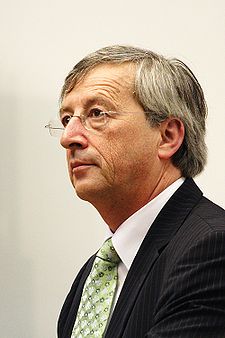
So even though I was on the fence, there’s just no way I can hold my nose and cast my lot for Blair after hearing what he said in Washington yesterday, no matter how much his celebrity would give the EU some much-needed glamour and cache. Juncker may not be a Barack Obama, but given the disillusion many American progressives are now feeling about that presidency across the pond, maybe celebrity presidencies aren’t all they’re cracked up to be.
Thursday, 3 September 2009
Ye Olde York
Driving up the A1 motorway yesterday, my friend and I had our eyes glued to the horizon, each of us hoping to be the first one to see the giant steel angel come soaring into the sky from beyond the hill. Considering my friend was driving, we realized this gazing perhaps wasn’t the smartest strategy as he had to slam on the brakes to avoid a rapid traffic slowdown ahead of us. Searching for angels in the sky can be dangerous!Eventually the massive Angel of the North, which has come to be a symbol of Northern England since it was erected outside Newcastle in 1998, did at last emerge. If I’m honest, I was a bit underwhelmed. Having been told that with its wingspan it’s as wide as the Statue of Liberty is tall, I was expecting something much bigger. I suppose it was big, sure, but not BIG! Perhaps that’s just my American expectations creeping in.
We were approaching Newcastle, the last stop on an eight-city tour of the Northern England, usually referred to in the UK both affectionately and derisively as just “the North.” It’s a strange land of rolling green meadows, windy moors and bulging dunes – a place where the local accent changes every 10 miles and people cling to their locality and roots with a fierce pride rarely seen in the South. It’s also a land of striking contrasts. This was the industrial heart of Victorian England, a place whose abundance of raw materials gave rise to a rapid overdevelopment, turning small villages like Manchester, Liverpool and Middlesbrough into bulging metropolises virtually overnight. That flurry of industrial activity has long since faded away, leaving the relics of a poverty-stricken rust belt concentrated around the Mersey river on the Irish Sea coast and the Tees river on the North Sea coast.At the same time the North, particularly Yorkshire, played a hugely important part in British history before industrialisation, and in between the urban conurbations lies some of the most beautiful, history-filled countryside in Britain. It was that contrast that I wanted to discover on this road trip.
Proud Manchester
I made the journey with two American friends who I know from New York but who are now fellow ex-pats in London with me. We first took a train up to Manchester, exploring the city Saturday morning before being entertained by the festivities of the annual Manchester Gay Pride in the afternoon. It’s universally acknowledged as Britain’s biggest and best pride celebration, and I have to say that description bore true. The dinky little London pride paled in comparison to this, and the city’s relatively small size meant that the pride celebration almost seemed to take it over. It was also clearly an activity for the whole city, with lots of straight families turning out for the parade and plenty of straight people at the pride celebration on Canal Street. Actually the whole area around Canal Street ws closed off and you had to pay 20 quid to get in! I had never heard of having to pay to get into Pride festivities, but my friend Lori says that's the way it's done in DC.
There were those in the parade who weren’t so happy with the increasingly celebratory/commercialised nature of gay pride, coming as it does now with corporate sponsorships and such. But when you take a step back, tt is pretty amazing how different a gay pride parade is in the UK than in Eastern Europe, for example, where the parades are still largely an expression of protest and are often met with violence (as happened last year in Budapest). I can sympathise with these marchers’ (pictured left) frustrations about the increasing commercialisation of the gay community and the phenomenon of the ‘pink pound’, but perhaps if they considered the alternative it wouldn’t seem so bad.
Beyond the Pride festivities, which were great, I was very impressed with Manchester as a city. Once a rotting industrial corpse just 15 years ago, today the city’s undergone a complete renovation that has made it England’s unrivalled second city. We went down to the old canals, which in the 19th century would have been heaving with ships bringing coals in to the factories, to find them completely fixed up into a beautiful business and entertainment district. The massive intersection of train tracks, roads and canals at Castlefields is actually quite beautiful, a truly stunning site hovering over the ruins of an ancient Roman fort. And though parts of the interior of the city have been turned into massive indoor shopping complexes, they were architecturally interesting and forgivable. The conversion of city centre spaces into massive indoor shopping malls was to be a theme for the rest of the trip.On the Road
On Sunday we rented a car to begin our slow journey northeast, diverting first over to Liverpool. Although some redevelopment has been undertaken, notably along the waterfront in preparation for the city’s year as a “European Capital of Culture” in 2008, the city is still a marked contrast to Manchester because it has retained much of its post-industrial squalor. Albert Dock has been the main focus of regeneration, and the area is now rife with Beatles kitsch. In addition to seeing a performance by the ‘Cheatles” right on the dock (pictured) you can also take a Beatles tour of the city to see the houses in which the Liverpool lads grew up (we declined, though we did go to the Beatles experience museum). We also visited the Tate Liverpool, which was otherwise unremarkable save for an AWESOME floor where you listened to disco music in headphones while looking at sexually suggestive sculptures, surrounded by countless disco balls, flashing lights, and even a light-up disco floor in the centre. I kind of wanted it to be my apartment.
Aside from the dock, the other main thing to see in the city is the two cathedrals, one Anglican and one Catholic, facing each other on opposite ends of Hope Street. They were both built at a feverish pace during a time of increasing conflict between Anglican Protestants of Liverpool, native English, and the Roman Catholics, descendants of the Irish immigrants who had flooded into the city during the industrial revolution (cousins of the Irish who left at the same time for America during the potato famine). Both the cathedrals are massive, with the two sides desperate to outdo each other. But looking at the two today, it’s clear who won. Though it is the fifth largest cathedral in the world, the Anglican Liverpool Cathedral is pretty bland and uninteresting, clearly trying to mimic older architectural styles even though it was just completed in the 1950’s. The Catholic Metropolitan Cathedral of Christ the King, on the other hand, is a stunning modernist achievement. The outside is rather strange-looking, with locals often deriding it as the “Liverpool funnel”, but I thought the inside was beautiful. It has a theatre-in-the-round style, with stunning lighting leading up the interior of the cone to the roof. I was very impressed. I have to say, the most interesting modernist cathedrals I’ve seen in Europe have all been Roman Catholic – defying that denomination’s reputation for a staid rigidity in embracing new ideas.We then checked out the inevitable massive indoor shopping centre complex next to the water, completed just a year ago. My friend Josh, who is an architect, was eager to see it. However it was pretty uninspiring, and in some parts heinously ugly.
However if we thought that was bad, we hadn’t seen anything yet. Our next stop was Leeds, which I can report has to be one of the most characterless cities I’ve ever seen in Europe. Like some of its Northern neighbours, Leeds has also undertaken a redevelopment project. However theirs has involved turning the city centre into a giant shopping mall. Almost the whole place has been turned into the massive indoor complexes. We arrived at night around six when the indoor centres were all closed. We found to our frustration that all of the restaurants were actually located inside the malls, so we had a hell of a time finding anywhere to eat. All we could find was street after street of bland high street chain stores, all closed. I suppose if you needed to do a whole lot of shopping in one day, Leeds would be a good place to go. Otherwise, the city seemed like a total waste of time to me. But then again, I don’t like shopping.I enquired of my friend Josh if any rust belt cities in the US were considering turning their empty city centres into indoor shopping malls. “What city centres?” he responded. It’s true, Americans don’t want to go into a city centre even if it’s to buy things, they prefer their shopping malls to be out in the suburbs where they live. And judging by the results of such a redevelopment in Leeds, I’m not sure I would endorse such a plan for cities in the US. Josh says the problem is that all these redevelopment plans are centred around shopping, and when something like the recession hits it puts the breaks on the whole project. It’s not that the developers can’t get financing any more. Since the only thing they’ve planned for development are shops, the plan is going to hit a hurdle when people stop shopping. From what we saw of Leeds, it appears the recession is having a pretty bad effect on the city. The place was deserted.
Winding, Windy Moors
Nearby the city of York, our next stop, couldn’t have been more of a contrast. A hugely important city from the 11th to the 18th century, it was almost entirely bypassed by the Industrial Revolution and remains remarkably preserved. Even the city walls (pictured) remain standing, as do an original Norman castle and a stunning, massive cathedral. It’s all a bit Disney, but it is truly beautiful.The Romans founded York about 2,000 years ago, and since then it’s had a sucession of rulers – first the Anglo-Saxons, then the Vikings, then the Normans. Each of the four rulers left their mark on the city (and progressively changed its name along the way – from Eboracum to Eoforwic to Jorvik to York. It was without a doubt the highlight of the trip, and a particular delight for us New Yorkers – an interesting view of the former glory of our city’s namesake.
We also stopped off at Harrogate, a town that was the first thing out of everyone’s mouths when I asked them what they recommended to do in Yorkshire. I have to say I don’t get why everyone was recommending it. It’s cute I guess, but there’s nothing to do there. We stopped and had the requisite tea and scones at Betty’s, and then headed over to the Royal Baths only to find the building had been taken over by a Chinese restaurant! So we headed out. Harrogate- am I missing something?From York we drove up to Castle Howard, the sprawling estate of one of Yorkshire’s most famous aristocratic families. The grounds are massive – I particularly enjoyed frolicking with the cows next to the ‘Temple of the Four Winds’. The Howard family still lives in the castle, though most of it has now been opened to visitors. As we entered the main staircase we learned about the current owner of the house, the Baron Howard who lives there with his wife and two daughters (he’s in the portrait on the left in the photo below in a rather funny aristocratic outfit). Later on the tour the guide remarked casually as he looked out the window, “ah there he is now.” Sure enough, there was the guy from the portrait out in front of the house playing with his dog. Weird!
Like many aristocratic families, the current owner’s father Baron George Howard opened up the house to the public in the 1960’s, knowing it was the only way to be able to maintain ownership of it. For the most part, those aristocratic families who didn’t open up their massive estates for public viewing back in the 50’s and 60’s later found that it was too late to do so and had to sell them to the state. Interesting foresight on George Howard’s part. He came back from fighting in WW2 to find his estate burned down and his two surviving brothers dead. He decided to open up the house to the public and to this day the family still lives there. I guess the lack of privacy for the Howard family is a small price to pay to live in such an amazing home.
Next we drove through the North York moors, which were stunningly beautiful. I still don’t quite understand what a moor is, I just know that the Kate Bush song ‘Wuthering Heights’ refers to them as being wild and windy. I’ve never read the book but I’m thinking maybe I should. At least now I can picture the landscape in which it takes place. Or maybe I’ll rent the movie. The film Brideshead Revisted was shot at Castle Howard, so many I can watch the two of them some time as some kind of Yorkshire double bill.We got the full moors experience at a little village called Hutton-le-Hole, where we stopped and had yet more tea and scones. The place was literally crawling with sheep, not fenced in or anything. One came up behind me while we were taking our tea and let out a deafening “BAAAAA!” right in my ear. It nearly scared the guts out of me.
We also stopped at Rievaulx Abbey in the moors as well, which was pretty amazing. It was established in the 12th century by a group of Cistercian monks from France, shortly after the Norman conquest. The ruins are in surprisingly good shape, and you’re really able to get a feel for the layout of the monastery as you walk around. The abbey was destroyed during the reformation by Henry VIII after he split from the Roman Catholic church and confiscated the property from most of the monasteries. This seemed to have a traumatic effect on the North akin to the “harrying of the North” by the Normans judging by the way it is described by the guides at the churches and monasteries up there. They all seemed ready to spit at the ground every time they mentioned Henry VIII’s name.Northumbrian by Nature
As we headed further North, the local accents became more and more difficult to understand. We had already been struggling to understand Manc, Scouse, and Tyke accents, and we were hardly prepared for the Teesside, Pitmatic and Geordie accents waiting for us in the Northeast. Luckily I recently discovered this handy guide to the 37 different English accents in the UK) The Teesside accent we encountered in Darlington was particularly difficult to understand. The whole Tees Valley was kind of a nasty place, a blighted post-Industrial conurbation.We spent the next night in Durham, another old city first set up by the Normans, with a remarkable Norman Castle and Cathedral. The Castle is in surprisingly good shape, but it is completely owned by the university at Durham and options to see it are fairly limited. As a town Durham was kind of underwhelming, it’s a university town and the fall term hasn’t yet started. Durham is considered the third best British university with a collegiate system (after Oxford and Cambridge), often derided as a fallback choice for people who didn’t get in to the first two (what we call “safety schools” in the US). I have to say if you were planning to go to Oxford or Cambridge and ended up at Durham instead, it would probably be a bit of a disappointment. The town is alright, but it just doesn’t compare to Oxford or Cambridge (and is obviously a lot further to London!).
We spent the first half of our last day looking at the ruins of Hadrian’s Wall, the defensive ramparts that marked the Northern boundary of the Roman Empire. The wall basically runs straight west from Newcastle to Carlisle, in the neck section of Great Britain that gets quite narrow before it becomes Scotland. We explored the ruins of a Roman Fort at Chesters, one of the border crossing points on the wall that would have served as a sort of immigration check and customs house of Celtic travellers wishing to enter and leave the Empire. Looking at the wall I thought a bit of the US-Mexico border, trying to imagine this line as the dividing point between wilderness and the greatest empire the world had ever seen to that point. The comparison probably isn’t too apt though because Mexico isn’t exactly barbarian wilderness, and even the areas to the South of the wall were still dangerous, wild places during Roman times. In fact the better comparison looking at the fort would probably have been to a small US base in Afghanistan, an outpost in the middle of a dangerous wilderness where the empire tried to recreate the comforts of home for the Roman troops. The bathhouse of the fort, located just to the side and by the river, is remarkably well-preserved. One can only imagine what the native Celtic population thought of these strange Romans and their bathing rituals. Perhaps it’s the same as what Afghanis think of the supermarkets and movie theatres set up on American bases. From my brother’s description of his time at Bagram Air Force Base, this is what it sounds like anyway.
The last stop was Newcastle, where we encountered the slightly underwhelming Angel offering us a greeting. Newcastle was pretty grimey, but they have made clear efforts to fix up the riverfront section along the Tyne. They’ve built this massive concert hall on the Gateshead side of the river that looks like some kind of giant glass worm. Neither me my architect friend cared for it.The thing in Newcastle that will stick in my head the most though is the bizarre situation of the Norman Castle, which gave the town its name when it was built as a “new castle” by William the Conquerer’s son shortly after the Norman conquest (an event featured in the Bayeux Tapestry). However all that is left of the castle today is the central keep, and it is now surrounded by a dizzying intersection of Victorian-era railway bridges, under which it is almost lost (pictured below). It would be a bit as if the only thing left of the Tower of London complex was the central keep (the tower itself), and the City of London completely surrounded it with motorways and rail tracks. Not exactly picturesque! Still, it was interesting to go inside, and to learn about all of the various strange uses the Geordies have put it to through the centuries (it at various points held a barber shop, brothel, mansion home, cess pit and trash heap).
We then took the three-hour train ride back, which I mostly spent grumbling about the lack of high-speed railways in Britain. People often fly from Newcastle to London actually, as absurd as that may seem.All in all it was a great trip, and I was able to experience a part of the UK I had very little knowledge of before. Living in London it often feels like you’re not really in England, and you can often feel like you’re in a little bubble separated from the rest of the country. So it’s good to get out into real Britain every once in awhile and see the sights.
View Larger Map
Friday, 29 May 2009
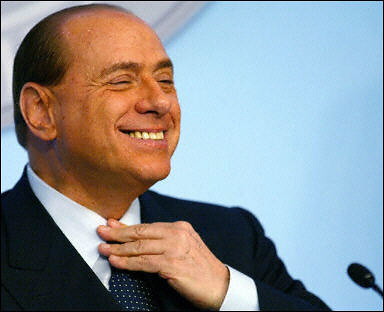
Emperor Silvio
This week I’ve been watching old episodes of I, Claudius on DVD, an old miniseries the BBC produced about the Roman Empire (specifically the Julio-Claudian dynasty and the first four emperors of Rome). It’s a fantastic series, and it’s been interesting to see how differently the British portray the Romans from the Americans (I never knew the Romans were so effete!). I have to say that watching this tale of decadent, power-mad Italian emperors has seened a bit familiar as I concurrently watched “Noemigate” unfold in Italy this week.
Really this is just the climax of a long unfolding scandal. After months of increasingly criticizing her husband in public for his philandering and his choice to put forward bikini-clad bimbos as Italian Senators, Berlusconi’s wife, Veronica Lario, finally decided she had had enough this month and publicly demanded a divorce from the eccentric prime minister. At first Italians weren’t paying all that much attention to the affair, as it was typical of the high drama involved in the prime minister’s personal life. But when Ms. Lazio revealed what the final straw had been, everything changed. She was finally leaving the 72-year-old Berlusconi, she said, because he has been unabashedly and publicly carrying on a relationship with a 17-year-old girl.
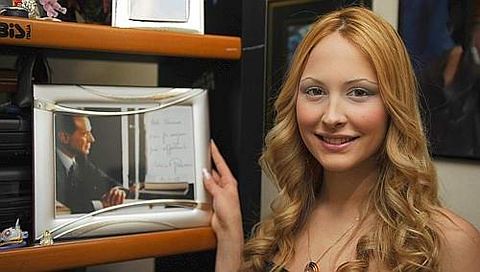
Incredibly, Berlusconi doesn’t deny it – though he insists the relationship has not been sexual. The young model at the centre of this storm, Noemi Letizia, has hardly been low-profile either. Giving an interview to the newspaper Corriere del Mezzogiorno, she giggled, “I often sing with Papi Silvio at the piano, or we do karaoke”. As the FT’s Tony Barber noted earlier this week, it’s hard to know who to feel more sorry for in this sad spectacle - Lario, Noemi’s ex-fiancé Gino Flaminio who was dumped once the prime minister came-a-calling, or the entire 60 million Italian people.
The official line from the prime minister’s office is this: Berlusconi knows Noemi’s father Benedetto Letizia, a functionary for the city of Naples, and he started a friendship with the young girl after meeting her through him. But the story the cast-away Flaminio told newspaper La Repubblica on Sunday – and the far more likely scenario - is that the prime minister first called Ms. Letizia last fall after seeing her picture in a modelling catalogue. Then, given that Berlusconi is the most powerful man in Italy – controlling both the government and the media – the parents kept silent about (and possibly even encouraged) the budding relationship between the two, and Noemi wasted no time in dumping Flaminio. Both Flaminio and Noemi's aunt have said Berlusconi and Mr. Letizia never knew each other before he decided to call their home to arrange a "meeting" with Noemi.
Berlusconi then invited Noemi and a schoolmate to a party at his private villa in Sardinia where other teenage girls were present. But finally, when Berlusconi showed up at the Noemi's 18th birthday party earlier this year, his wife decided she would end their marriage, which at 19 years began even before Noemi was born (and that was already Berlusconi’s second marriage!).
Even the Catholic church is too intimidated to criticize the most powerful man in Italy. The Italian Bishops Conference this week refused to comment on the matter, and when asked the bishops would only say that each person’s conduct was a matter “of individual conscience.” Oh really? That’s a new one coming from the Catholic Church!
Of course in the end the problem isn’t just about Berlusconi’s sex life, or his unbridled arrogance. It’s the fact that nobody seems to be paying any attention to Italy’s deep structural problems. The country’s economy is in a shambles. Reconstruction after an earthquake in central Italy left 70,000 people homeless has yet to begin in earnest.
The leader one Italian opposition party recently compared Berlusconi to Nero, fiddling while Rome burned. Yet Italians have convinced themselves that Berlusconi, though he may be increasingly losing his grip on reality, is the only man who can hold the country together. The situation bears more than a little resemblance to the BBC miniseries that’s been occupying my evenings this week.
Friday, 30 May 2008
Welcome to the religion century
Tony Blair made some interesting comments at a fundraising dinner in Toronto last night. Coming on the eve of the launch of his new Faith Foundation, which was unveiled to the world today in New York, it offered a stark and blunt assessment of the century we are entering. While probably true, his comments will no doubt be quite troubling to secular Europe.Speaking at the Women’s College Hospital in Toronto, Blair described the impetus behind his new faith foundation as an effort to “get faith in action,” saying that the goal of his new foundation is to help various religions work together to make the process of globalisation more humane. Sounds innocuous enough. But it was his blunt assessment of the power religion will have over the world over the next century that got my attention. Spoke Blair:
“Religious faith will be of the same significance to the 21st Century as political ideology was to the 20th Century.”
Monday, 18 September 2006
Ratzinger ratchets up the rhetoric
I'm very interested in the election results in Sweden, but I'm going to write about it later this week because the furor over the Pope's comments about Islam is getting more and more interesting and might at any moment explode into something similar to what was seen around the world in reaction to the Danish Mohamed cartoons.
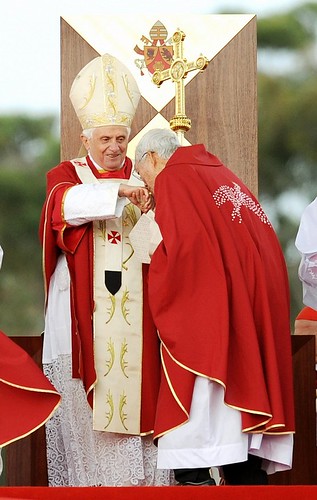
To recap, at a speech last Tuesday in Regensburg, Germany, which was devoted to denouncing science and insisting on a central role for religion in all academic and secular life, the pope formerly known as Joseph Ratzinger (now Pope Benedict XVI) made some pretty incendiary remarks about Islam. In making a point about the danger of fundamentalist Islam, the pope cited a quote by a Byzantine Emperor saying that the Prophet Mohammed brought "only evil and inhuman things" to the world. The full quote is below:
"Show me just what Mohammed brought that was new," Benedict said, quoting the Byzantine Emperor Manuel II, "and there you will find things only evil and inhuman, such as his command to spread by the sword the faith he preached."
Subscribe to:
Comments (Atom)