Showing posts with label Cold War. Show all posts

Thursday, 15 March 2018

Will Cyprus stay in perpetual division?

With EU-Turkey relations at an all-time low, the reunification of Cyprus seems like a distant prospect. This week I saw an island where the frozen conflict has become largely normalized. Unlike in Berlin, this wall doesn't look like its falling any time soon.


Sometimes, old wounds just won't heal. So it is with the island of Cyprus, where a 180 kilometer scar runs from shore to shore, and has been festering for four decades.

I visited the island for the first time this week, and those wounds were on display right from the start. As my plane flew across Greek Cyprus, over the capital Nicosia, I could see the giant Turkish flag painted on the mountains to the north, taunting the Greeks. It reminded me of the Alexanderplatz TV Tower in Berlin, built to be unavoidably visible everywhere in West Berlin during the Cold War.

The trip was, admittedly, somewhat of a box-checking exercise. Of the 32 European Union and EFTA countries, there are three left that I haven't visited - Cyprus, Slovenia and Romania. I'm heading to Slovenia next month for a conference, and have resolved to do a weekend in Bucharest before the year is done. Then - I win?

Sunday, 19 November 2017

Berlin: the uncapital

People often use 'Berlin' as shorthand for a powerful Germany. But in reality this is not a power center, economically or politically. And many people like it that way. 


I've been in Bonn, Germany the past two weeks, covering the UN climate talks. It's my first time in the former West German capital, and it's been a very eye-opening experience. 

One of my clients is Deutsche Welle, Germany's public international broadcaster (roughly the equivalent of the BBC World Service). I work for them in their Brussels and Berlin offices, but their headquarters are in Bonn. So these weeks were an opportunity to finally meet many of my colleagues in person for the first time. 

When I tell people outside Germany that DW's headquarters is in Bonn, and Berlin has a much smaller satellite office, they're surprised. "Why wouldn't they be based in Berlin?" they ask. In fact, DW's situation is not unusual. Very few German media companies are based in Berlin. The TV stations and national papers are often based in Hamburg or Cologne, maintaining only small 'Berlin bureaus'.

Thursday, 11 August 2016

Do the Olympics promote harmony, or suckle nationalism?

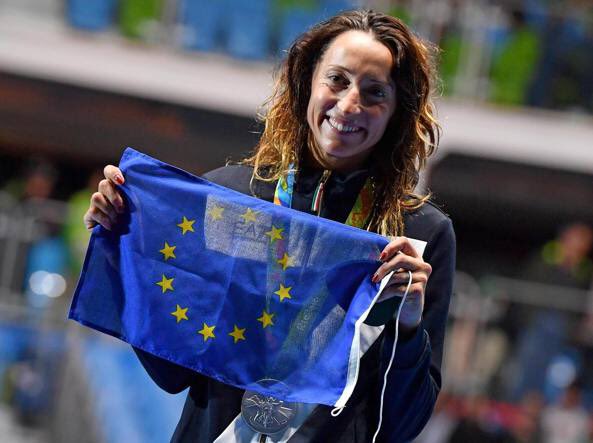
An Italian athlete has accepted her silver medal as a European, brandishing the EU flag and declaring "Europe exists!". Why is this such a daring act?

Over the past decade living here in Europe, I've noticed a curious phenomenon every four years. While my American friends back home get wildly excited about the Olympic Games, my friends in Europe seem to greet them with a collective yawn.

This pattern is being bourne out again this year. In the morning, while the Americans are sleeping, my Facebook timeline is bereft of Olympics information. Then, around 2pm, it starts. 'America won this. It lost that. Chinese people are bad at X. Australians are good at Y. Russians are cheaters. This Moldovan athlete is attractive so all Moldovans are attractive. What is Moldova again?' 

I posted this observation on Facebook and asked people why they thought the difference exists. No one in Europe disagreed that Europeans are not so into the games, particularly compared to the Olympics-obsessed Americans. Funny enough, I think Americans assume the rest of the world is watching the games as closely as they are. I certainly did until I moved to Europe.

Thursday, 17 September 2009

Obama Throws the Russians a Bone

In a major foreign policy move, President Obama announced today he is abandoning the Bush Administration's missile defence system plan for Eastern Europe. The plan, which would have seen long-range missiles installed in Poland and a radar system in the Czech Republic, had infuriated Russia, who saw it as a direct threat. The Bush administration had always insisted it was not meant to threaten Russia but rather to defend Europe from rogue states like Iran, but this seemed dubious to the Russians considering that the missiles themselves would have been pointed at Russia, been far more powerful than needed to take out the small-arms capability of Iran, and were to be placed just a few miles away from Russia’s border.

Obama said today that after a thorough review of the program he had decided that a more “cost-effective" system using land- and sea-based interceptors would be better suited to Iran's short- and medium-range missile threat. Though the administration stressed that this decision is “not about Russia”, the reality is that it largely is, and that’s not necessarily a bad thing. While it is true that the system Bush planned to install seemed geared more for the Cold War than for the realities of modern dangers, it is also true that it was proving to be a huge obstacle in US-Russian relations. Considering that those relations are in desperate need of improvement in order to have a peaceful world, dismantling this plan could be good for America’s security in more ways than one.

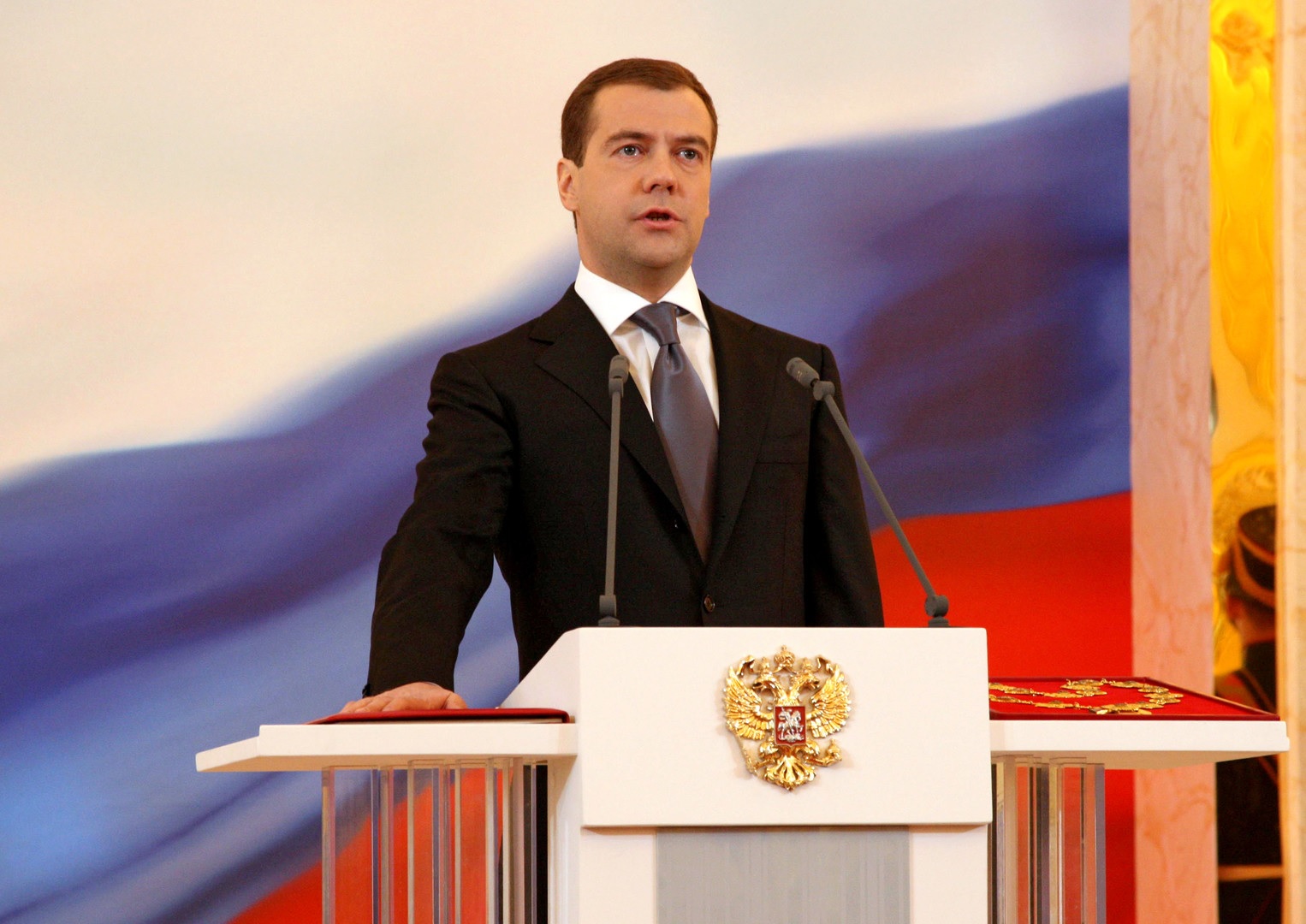
Shortly after Obama was elected Russia had made a bold move showing that they were serious about their objections to the missile system. President Dmitry Medvedev delivered a speech the day after the historic election saying that if the missile shield were installed Russia would install short-range missiles just off the Polish border in its territory of Kaliningrad, in response to the US "provocation." All indications were that they were serious about this threat, and the resulting tit-for-tat could have resulted in a missile defence arms race that no one wants to see.

Reaction from the American right was predictable, decrying Obama for “selling out” American allies (the narrative for the right seems to be that he is a lilly-livered coward abroad while being some kind of Hitler like tyrant at home). But reaction from the international community, and from Russia in particular, reflected a collective sigh of relief. Russia's ambassador to NATO called it a “breakthrough" for US-Russian relations, saying that with this obstacle removed the two countries could move ahead with talks about reducing their nuclear weapons stockpiles. NATO Secretary-General Anders Fogh Rasmussen said it was "a positive step", reflecting the fact that few in Europe were excited about this system which was ostensibly meant to protect them. The missile defence system, after all, was going to outside the scope of NATO and completely US-controlled.

And the conservative governments of Poland and the Czech Republic who had agreed these deals with the Bush Administration, although surely disappointed, were muted in their reaction. The Czech public on the other hand have expressed elation today, as the plan was very unpopular there. The Poles were more mixed in how they felt about the plan, but my Polish friend tells me the media reaction there so far hasn't been too dramatic.

So was this a big concession to Russia? As the title suggests, it was a 'bone', an easy gesture to make considering it wasn't in US defense interest to have it anyway. Essentially no one, including the US military, thought the missile defense system made any sense except the American and Polish right-wing. Iran does not have the capability to deploy or make long-range missiles, and it's never been proven that these systems being installed actually work. As Joe Cirincione told MSNBC last night, the Bush Administration was installing "a technology that doesn't work against a threat that doesn't exist".

Of course the missile defence system has just been one aspect of American foreign policy that Russia has seen as a provocation by the US. They've also seen US invitations to the nations of the caucasus and Central Asia to join NATO as an anti-Russian provocation. It's doubtful Obama will recognise the "Soviet sphere of influence" Russia is trying to claim, nor will he rule out the possibility of these nations joining. But he is unlikely to persue the NATO-expanding policy with the same irresponsible gusto that the Bush Administration did. That gusto was largely to blame for the Georgian War, an entirely avoidable conflict brought on by Georgia misinterpreting Bush's neocon rhetoric for actual promises of future military assistance.

So it seems as if everyone is happy with this announcement except the American Neo Conservatives. And as the never-confirmed limited-term ex-UN ambassador John Bolton makes the rounds today describing this as “a concession to the Russians with absolutely nothing in return” (I’ve never seen anyone get so much media exposure for themselves out of such a limited public career) you have to wonder what decade he’s living in. Altering this plan will result in a more cooperative Russia and probably in the long run a more logical defence capability for the United States.

Thursday, 10 July 2008

Merkel: Not so fast, Obama

Barack Obama’s planned visit to Europe later this month has been generating huge anticipation among politicians and the public alike. They are all eager for an answer to the question they’ve been asking for some time: Who is Barack Obama and what would his election mean for Europe?

Obama is expected to draw huge crowds in speeches in the three main European capitals, an unprecedented phenomenon for someone who is only a candidate. But then again, this is no usual election. However it would be incorrect, as some US media outlets have put it, to say that Obama enjoys huge “popularity” in Europe. I think a more accurate description would be “curiosity.” It’s safe to say that Europe isn’t enthused about a John McCain presidency (in the UK Obama is preferred over McCain five to one), but they do know what they would be getting with one. In many ways it would be a continuation of the Bush administration foreign policies, and that doesn’t get anyone here very excited. McCain would likely continue to push NATO’s missile defence plans and adopt a hard line on Iran. But at the same time he would likely be a more willing partner than his predecessor on the environment, and may be more prepared for trade concessions with Europe than Bush as well.

Saturday, 6 May 2006

Cheney's Russia Rant

At the “Common Vision for a Common Neighborhood” (sounds very common) conference in Lithuania yesterday,Vice President Dick Cheney essentially told a gathering of former Soviet and Eastern Bloc countries that Russia is an anti-democratic menace to Democracy and has a decision to make very soon: to be either an ally or an enemy to the West.

"From religion and the news media, to advocacy groups and political parties, the government has unfairly and improperly restricted the rights of the people," Cheney bellowed. He talked of the problems facing a country that, “has compromised the rule of law” and has “little official respect for human rights, a corrupt beaurocracy, and an intimidated press corps.”

Cheney knows that Russia-bashing is a popular sport in the former Eastern Bloc countries. For the last 15 years the former Eastern Bloc countries have been worshipfully devoted to the United States in a misconception that America single-handedly ended Soviet domination over them. But as they join the EU, neo-cons are increasingly concerned that they will fall into the European camp of geopolitical thought and develop interests contrary to those of the United States over the long term. These eastern bloc and ex-soviet countries were some of the most vocal and demonstrative supporters of the Iraq war, for instance. But of late that support has been slipping.