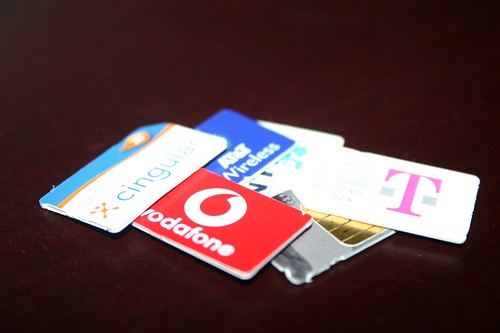
US mobile carriers now allow their customers to use data worldwide for free. Meanwhile, European carriers are still charging to roam within the EU. What's wrong with this picture?
When I first moved to Europe ten years ago, finding cell phone solutions while I was home visiting the US was a bi-annual challenge.
I go home twice a year - often enough to need a US cell phone while I'm there, but not often enough to maintain a monthly plan. While travelling in Europe, I would buy local prepaid sim cards for extended visits. But in the US, there were hardly any prepaid cell phone options and those that existed charged outrageous rates.
Showing posts with label roaming charges. Show all posts
Thursday, 28 January 2016
Sunday, 11 October 2015
In Berlin, it's better to have a Belgian bank account than a German one
While banks in Germany rake in ATM fees from customers of other German banks, EU law forbids them from charging citizens of other EU countries.
It's a 'Brussels week' for me this week, I'm in town to shoot a few videos and moderate some conferences. As the Autumn draws on, I'm finding myself here more often than I'm in Berlin. But this is fine, since I have apartments in both cities.
Strictly speaking, when I'm in Brussels I am "home". This is still my primary address - my Belgian phone is still my primary number, and I still use a Belgian bank account for all transactions. And actually, this last fact has made my life in Berlin easier.
It's a 'Brussels week' for me this week, I'm in town to shoot a few videos and moderate some conferences. As the Autumn draws on, I'm finding myself here more often than I'm in Berlin. But this is fine, since I have apartments in both cities.
Strictly speaking, when I'm in Brussels I am "home". This is still my primary address - my Belgian phone is still my primary number, and I still use a Belgian bank account for all transactions. And actually, this last fact has made my life in Berlin easier.
Wednesday, 20 May 2015
Teutonic telecommunications troubles
In 1999, when I moved from Boston to New York in order to transfer to a different university, there were a lot of logistical hassles along the way. I remember that one of the worst was changing my mobile phone.
Back then in the US, our mobile phone plans still had 'home ranges' outside of which you would pay a roaming surcharge to use your phone. This range was usually your state, or maybe a zone of three states. My mobile phone with a Massachusetts number would have been roaming in New York. So I had to change my phone plan. I also had to change my Massachusetts phone number to a New York one so that when people called me in New York they wouldn't be charged for a long-distance call.
Wednesday, 28 March 2012
EU internet roaming charges to be slashed
From 1 July this year using a mobile phone to surf the web in another EU country will be about 70% cheaper, following an agreement on rate caps reached today by European Parliament and member state negotiators.
For the first time, the EU roaming caps will limit the rates phone companies can charge you for using the internet in a different EU country. The cost per downloaded megabyte will be capped at 70 cents as of 1 July 2012, 45 cents in 2013 and 20 cents as of 1 July 2014. The current average cost of roaming within the EU is €2.23 per megabyte.
The EU first started limiting the rates EU carriers could charge for roaming within the EU back in 2009, limiting the charge for making calls to 45 cents a minute. That cap has steadily decreased over the past three years, and today's agreement will lower them a further 20% from the current 35 cents to 29 cents, dropping to 19 cents in 2014. Before then, it used to cost an average of €1.50 per minute to make a call elsewhere in the EU. Now, for the first time, internet usage will be capped as well.
Of course this only applies to people with an EU phone carrier. So if you're travelling to Europe from the United States, you'll still pay the high fees.
For the first time, the EU roaming caps will limit the rates phone companies can charge you for using the internet in a different EU country. The cost per downloaded megabyte will be capped at 70 cents as of 1 July 2012, 45 cents in 2013 and 20 cents as of 1 July 2014. The current average cost of roaming within the EU is €2.23 per megabyte.
The EU first started limiting the rates EU carriers could charge for roaming within the EU back in 2009, limiting the charge for making calls to 45 cents a minute. That cap has steadily decreased over the past three years, and today's agreement will lower them a further 20% from the current 35 cents to 29 cents, dropping to 19 cents in 2014. Before then, it used to cost an average of €1.50 per minute to make a call elsewhere in the EU. Now, for the first time, internet usage will be capped as well.
Of course this only applies to people with an EU phone carrier. So if you're travelling to Europe from the United States, you'll still pay the high fees.
Wednesday, 6 July 2011
EU sets goal to abolish roaming charges by 2015
The move is just the latest in a long-running battle between the mobile operators and the EU, but this is the most aggressive move yet. It is also an acknowledgement that the caps the EU set in 2007 and then extended in 2009 have not been successful in fixing the dysfunct in the market. Those caps lowered roaming rates to 45 eurocents (c) per minute within the EU. Previously the rate had been, on average, around 2 euros per minute.
Under the new plan, from July 2014 operators will be forced to open their networks to upstart competitors who can offer customers cut rate charges for roaming. They will also have to allow their customers to sign up to a seperate carrier for roaming if they so choose. The customer's phone would automatically switch to the other carrier when they go abroad, but they would keep the same number and sim card. They would then receive a separate bill from their 'roaming carrier'. Before it becomes law, the proposal must first be approved by the European Parliament and member states.
Thursday, 10 February 2011
Is the EU getting too excited over the common phone charger?
Within a year almost any type of data-enabled mobile phone you buy, anywhere in the world, is going to come with one common mobile phone charger – thanks to the EU. This week the 14 main mobile phone companies signed a binding agreement to all use a common Micro-USB charger port standardised by Brussels. And because the EU is the Western world's largest common market, this will mean all data phones worldwide will likely have this standard. Who says the EU doesn't have global influence?
The companies - which include Apple, Nokia, Samsung, Sony, Motorola and Qualcomm – were issued an ultimatum by the EU in 2009: voluntarily adopt a common charging system or be forced to do so by EU legislation. The companies agreed to go with the voluntary root. The common Micro-USB port standards were finalised in December, and the first phones with this port are expected to hit the market within months. According to the agreement, none of these manufacturers can market a new phone in the EU that does not have this common charging port.
I have to admit I've been a bit confused by this policy, and the unrestrained exuberance with which the European Commission has been celebrating it, since it started. After all, isn't Micro-USB the syncing/charging format most smartphones were moving to anyway? Is this just a case of the EU mandating something that was going to happen on its own?
The companies - which include Apple, Nokia, Samsung, Sony, Motorola and Qualcomm – were issued an ultimatum by the EU in 2009: voluntarily adopt a common charging system or be forced to do so by EU legislation. The companies agreed to go with the voluntary root. The common Micro-USB port standards were finalised in December, and the first phones with this port are expected to hit the market within months. According to the agreement, none of these manufacturers can market a new phone in the EU that does not have this common charging port.
I have to admit I've been a bit confused by this policy, and the unrestrained exuberance with which the European Commission has been celebrating it, since it started. After all, isn't Micro-USB the syncing/charging format most smartphones were moving to anyway? Is this just a case of the EU mandating something that was going to happen on its own?
Friday, 29 October 2010
EU just wants a little love
Let's face it, these days the EU is just not very popular with the European public. Gone are the heady days in the early 2000's when there was boundless and perhaps unrealistic ambition in Brussels for what the EU could accomplish. Today, as the financial crisis bites and people's confidence in the common market has been damaged, one of the EU's biggest problems is how to win the love of its public.
This week Justice and Citizenship Commissioner Vivane Reding and Internal Market Commissioner Michel Barnier unveiled a new bundle of consumer protection mesures, and the main message seemed to be, "Please, love us!" But Reding seems determined that this raft of new rules, coupled with the introduction of a new 'Single Market Act', will be accompanied by an assertive communication campaign that will try to make sure EU citizens know that these new benefits and protections are coming from Brussels.
Wednesday, 22 April 2009
The Roaming Battle Rages On
The parliament had already capped the roaming rates for calls back in 2007, capping rates at 45 euro cents (£0.39) per minute to make a call and (£0.19) per minute to receive a call. Before that some mobile operators were charging as much as £1.50 a minute to make a call while roaming in the EU. This new legislation goes even further and will require mobile operators to lower the roaming cap down to 35 euro cents (£0.30) to make a call within the EU. It would also set a cap on sending a text within the block at 11 euro cents (£.09). Given that T-Mobile now charges me £0.40 per text message I send while roaming in the EU, this is a significant cut. Additionally, the legislation will cap mobile internet data charges to 1 euro per megabite and force companies to round to the nearest second when charging for roaming rather than to the nearest minute. (Interesting sidenote: in Switzerland T-Mobile is still charging me about a pound per minute to use my phone, as they're not part of the EU).
This has been a pet issue of mine for awhile, but a few British MEPs making statements in parliament today got me thinking about the issue in a way I hadn't before. Conservative London MEP Syed Kamall addressed the chamber and made the argument that while this legislation may benefit the people in that room (MEPs, civil servants, journalists, businessmen), it could actually harm the poor, who rarely leave their own country and have no use for lower roaming charges. His fear, he said, was that the mobile operators would have to pass the lost profit from roaming costs on to the domestic customers, "robbing the poor to give to the rich." A teenager living on a council estate in his constiuency, he argued, was going to be charged more money so that an MEP can chat away on his mobile while in France.
While I do have to begrudgingly admit that yes, most Europeans don't use their mobiles for roaming (Kamall cited a figure that said 70 percent of European mobile users don't roam at all in a given year), really his assertion that somehow it is only the rich elite who would have any need for a telephone while in another EU country is rather strange. This is, after all, supposed to be a common market. Should it really be assumed that someone is some kind of monied aristocrat just because they leave their country every once in awhile?
But even beyond the logic of his original assertion, it also seems odd to be so concerned about a company passing on costs it shouldn't have been collecting in the first place. The mobile companies have been making a huge profit off of these roaming charges. According to the European Regulators Group, European mobile operators make up to 20 times more profit on customers when they're roaming as when they are in their home countries. It actually only costs the operator a few cents per minute to connect these calls, and even less if it's the same company (a T-Mobile UK customer roaming with T-Mobile Germany for instance). The high charge of roaming is not to make up for the expensive cost of connecting a customer's call when they're abroad, but rather it's been a cynical way to get loads of cash out of two small groups that won't raise a fuss about it: the occasional holiday traveller who doesn't think about money when he's on vacation, and the frequent international business traveller who probably doesn't even see his phone bill because his company pays for it.
In the end, Kamall's insistence that the MEPs are selfishly voting in legislation that benefits themselves and not Joe Six-Pack back in their constituencies doesn't hold water. It would be a legitimate argument if the rates the mobile operators were charging really reflected what it costs them to connect the call, but that is clearly not the case. They've instead been making a hefty profit off of a vulnerable group that can't complain about it. Even though we international travellers may be few in number, we can't be expected to subsidize everyone else's artificially low rates by being forced to pay exploitative roaming charges.
The new rates are set to take effect 1 July, so just in time for people's summer holidays. As Telecommunications Commissioner Viviane said earlier, "Today's vote marks the definite end of the roaming rip-off in Europe."
Friday, 13 April 2007
Just say no to EU roaming
This is funny, I’ve been complaining for the last week about how Europeans should demand an end to roaming mobile charges within the EU, and then the issue goes before the EU parliament today.
The assembly voted to restrict the amount that mobile phone carriers can charge EU consumers for roaming in other EU countries. Right now, if I wanted to use my phone when I go to France next weekend, for instance, I would have to pay over a dollar a minute to make or receive a call. Same with text messages or internet use.
I’ve been complaining about this because I gave in last week and signed up for a monthly mobile plan. I really shouldn’t have one, I don’t like talking on the phone very much (I really just have short conversations to make plans) so I don’t use many minutes, pay-as-you-go would have been the better system for me. But I really wanted the new N95, and without signing up for a plan it would have been $1,000.
I also got the free unlimited internet and GPS locating. But what’s annoying is that the times when I’ll most want to be using it, namely when I’m traveling, I can’t use it. Since the UK is a tiny country, when I’m traveling I’ll most likely be in a different country in Europe. At those times the rate for going online or using GPS would be outrageous, as would be any attempt to make a call.
I’ve been trying to get my British friends to understand how unfair and frustrating this is. In the US, when you travel you are most likely staying within the country. That means anywhere you go, you are never roaming. I can take a trip to LA, Seattle, Denver, Chicago, New Orleans, Miami, anywhere I like, and I will never be roaming. And, it isn’t any extra to call numbers in those places either. Every cell phone plan comes with nationwide calling, no long distance anywhere domestic, ever. That means when I moved around so much the past few years I was able to keep my New York number, because it wasn’t any extra for people in Chicago to call me.
This wasn’t always the case. When cell phones first came out most plans were just regional, meaning that if you left your individual coverage area (Connecticut, for instance) you were roaming. But eventually the market took action, one company offered nationwide coverage, and soon they all followed. Once again, the large unified market of the US worked to the benefit of consumers.
What angers me is that all of the big mobile carriers in Europe, TMobile, Vodaphone, and Orange for instance, operate all over the country. I have TMobile. But if I use the TMobile network in Germany, I get charged roaming. I think that’s pretty outrageous. So I’ve been asking, since the EU is trying to encourage open borders and an open trade zone, shouldn’t the force the mobile carriers to allow their customers to use their entire network?
Now I guess they’ve taken a step in the right direction by voting to cap roaming rates at 40 Euro cents a minute to make a call and 15 Euro cents a minute to receive one. If it passes the final hurdle the changes will hopefully go into effect by this summer.
While I welcome this decision, I think it doesn’t go far enough. I think the major carriers should be forced to allow consumers to use their entire network within the EU. I really don’t understand why one of them hasn’t done it. Think about it, if TMobile suddenly said we’re going to open up our entire European network, they would get tons of people switching to it. It would shut down their small local competitors and give them a huge edge in every market.
For all you Eurosceptics out there this is just another example of how not having a single market hurts you as a consumer. Think about the myriad advantages Americans have because we have such a gigantic open market. This point is rarely made by politicians here, but it would go a long way in swaying the public toward the EU project.
The assembly voted to restrict the amount that mobile phone carriers can charge EU consumers for roaming in other EU countries. Right now, if I wanted to use my phone when I go to France next weekend, for instance, I would have to pay over a dollar a minute to make or receive a call. Same with text messages or internet use.
I’ve been complaining about this because I gave in last week and signed up for a monthly mobile plan. I really shouldn’t have one, I don’t like talking on the phone very much (I really just have short conversations to make plans) so I don’t use many minutes, pay-as-you-go would have been the better system for me. But I really wanted the new N95, and without signing up for a plan it would have been $1,000.I also got the free unlimited internet and GPS locating. But what’s annoying is that the times when I’ll most want to be using it, namely when I’m traveling, I can’t use it. Since the UK is a tiny country, when I’m traveling I’ll most likely be in a different country in Europe. At those times the rate for going online or using GPS would be outrageous, as would be any attempt to make a call.
I’ve been trying to get my British friends to understand how unfair and frustrating this is. In the US, when you travel you are most likely staying within the country. That means anywhere you go, you are never roaming. I can take a trip to LA, Seattle, Denver, Chicago, New Orleans, Miami, anywhere I like, and I will never be roaming. And, it isn’t any extra to call numbers in those places either. Every cell phone plan comes with nationwide calling, no long distance anywhere domestic, ever. That means when I moved around so much the past few years I was able to keep my New York number, because it wasn’t any extra for people in Chicago to call me.
This wasn’t always the case. When cell phones first came out most plans were just regional, meaning that if you left your individual coverage area (Connecticut, for instance) you were roaming. But eventually the market took action, one company offered nationwide coverage, and soon they all followed. Once again, the large unified market of the US worked to the benefit of consumers.
What angers me is that all of the big mobile carriers in Europe, TMobile, Vodaphone, and Orange for instance, operate all over the country. I have TMobile. But if I use the TMobile network in Germany, I get charged roaming. I think that’s pretty outrageous. So I’ve been asking, since the EU is trying to encourage open borders and an open trade zone, shouldn’t the force the mobile carriers to allow their customers to use their entire network?
Now I guess they’ve taken a step in the right direction by voting to cap roaming rates at 40 Euro cents a minute to make a call and 15 Euro cents a minute to receive one. If it passes the final hurdle the changes will hopefully go into effect by this summer.
While I welcome this decision, I think it doesn’t go far enough. I think the major carriers should be forced to allow consumers to use their entire network within the EU. I really don’t understand why one of them hasn’t done it. Think about it, if TMobile suddenly said we’re going to open up our entire European network, they would get tons of people switching to it. It would shut down their small local competitors and give them a huge edge in every market.
For all you Eurosceptics out there this is just another example of how not having a single market hurts you as a consumer. Think about the myriad advantages Americans have because we have such a gigantic open market. This point is rarely made by politicians here, but it would go a long way in swaying the public toward the EU project.
Subscribe to:
Comments (Atom)