The British media is reeling today from the surprise announcement from Angela Merkel yesterday that Germany would institute a full private bank savings guarantee, a decision which seemed to directly contradict what Merkel committed to on Saturday at the emergency summit in Paris. Though the leaders seemed to jointly criticize Ireland's decision last week to unilaterally guarantee all the money in its private banks without consulting the EU, Merkel has gone ahead and done exactly that for Germany the next day. It would now appear the question of whether there will be a cohesive EU-level response to the economic crisis is back on the table, and Saturday's meeting has been rendered irrelevent.
There is still great confusion over whether Merkel was just making a vague political commitment or an actual change i policy, but the news has thrown European governments for a loop. The fear in the UK is that if other EU countries are allowed to guarantee the full savings in private bank accounts (whereas the UK only guarantees 50,000 pounds - raised from 35,000 last week), it will mark an unfair competitive advantage for them and UK consumers will rush to move their money into foreign banks. Germany's decision has embolden other EU countries to do the same thing. Denmark shortly followed suit, and Greece has also stepped in to guarantee ts banks. Today Iceland is considering the same thing, and the Spanish government just announced that if there is no joint EU action, it will also act unilaterally to guarantee Spanish banks.
Given that Germany is Europe's largest economy, the decision by Merkel means that it is inevitable that all European countries will have to guarnatee the entire amount of its citizens' savings in private banks. Given that reality, many in the UK today were concluding that the only solution is a pan-European bailout fund. Liberal Democrat leader Nick Clegg told the Independent today that he supports a pan-European system of deposit guarantees. But how will British and German taxpayers feel about the idea of using their money to bail out Italian or Greek banks? They probably wouldn't be too enthused. But considering the fact that it is the Northern European banks that are collapsing at the moment, perhaps now is not the time for geographic snobbery.
Incidentally, there is increasing chatter that the current crisis could be exactly the bad medicine Europe needs to get its act together and put realy momentum behind the unification project, convincing EU citizens of the real, practical need for a stronger EU that can deal with such emergencies. In today's Brussels Blog, the Financial Times quotes one EU diplomat as saying today that the current emergency could have the same effect as the 1992 crisis in the European exchange mechanism has in, in the long run, consolidating support behind a single European currency. Similarly, the FT points out, it took the 9/11 terrorist attacks to prompt EU leaders into agreeing, at a summit just three months later, on the principle of a European arrest warrant.
The collapse of a big cross-border European financial institution could be just around the corner, and if this were to occur, no serious economist would be able to argue that rescuing the company is the responsibility of only the country in which that company happens to have its headquarters. But so far European national governments have been very resistant to the idea of creating a pan-European regulatory system.
European finance ministers are meeting tonight, and from the turmoil today it's clear that the market is hungry for some signal of a cohesive coordinated EU response. But with each country appearing to be unilaterally going forward and doing its own thing, it seems unlikely any such strong signal will emerge.
Monday, 6 October 2008

Saturday, 4 October 2008
Verdict Is In: Europe will Respond Nationally
It looks like the question I posed in yesterday's post has been answered. In a press conference just now over at the Elysee Palace, the leaders of the European countries in the G8 laid out a very general plan for dealing with the crisis in Europe, after meeting all day to figure out what to do. And the verdict in, Europe will go forward with reforms on a national level, and there will be little in the way of a EU-wide policy. Sarkozy had reportedly been seeking an EU bailout fund similiar to the one just passed in the US, but apparently Angela Merkel was very opposed to any such plan. So European Commission President Jose Manuel Barroso announced that the EU will temporarily relax its competition rules to allow individual countries to undetake sweeping changes such as Ireland's decision last week to guarantee deposits in Irish banks.
So in the end, it appears the leaders decided the EU was just not ready to deal with a crisis of this magnitude. They said that the response by individual EU nations would be "coordinated," but they were short on details of what that might mean. At the same time, they were very specific about what they will be calling for when they meet with the wider G8.
So in the end, it appears the leaders decided the EU was just not ready to deal with a crisis of this magnitude. They said that the response by individual EU nations would be "coordinated," but they were short on details of what that might mean. At the same time, they were very specific about what they will be calling for when they meet with the wider G8.
Friday, 3 October 2008
Europe's Economic Solution: National or Federal?
As the US Congress debates today over the new version of the bailout bill, Europe is also scrambling to come up with solutions to the crisis which, although not of their making, has come to their shores. Despite overconfident assurances even recently that Europe would be immune to the American economic plague, it is clear now that the old world will be affected and there is consensus - unlike in the US - that drastic government action will be needed. But who should take the action? Right now the big debate raging is this: should there be a coordinated EU-level effort to deal with the crisis, or should each country deal with it in their own way tailored to their own situation?
 It is not a simple question, and goes well beyond traditional euroskeptic/eurofederalist divisions. With the way the EU is currently set up (and while it still runs on the pre-Lisbon Treaty system), it would likely not be able to act quickly enough for any kind of big pan-European action like the US's bailout bill. But on the other hand, if each county just does it's own thing it could result in chaos and conflicting actions, particularly for the countries within the Eurozone that use the same curency and are regulated by the European Central Bank.
The pitfalls with the 'every man for yourself' plan were already seen earlier this week when Ireland went ahead unilaterally in implementing a savings guarantee program for its banks (similiar to the FDIC in the US) without notifying Brussels. The EU was not too pleased about that, but Irish politicians said that consulting Brussels would have taken too long and the government needed to act quickly. However right after they did it other European countries, most notably the UK, filed objections, saying it gave Irish banks an unfair advantage over other ones. Many Irish banks operate in the UK and it is thought consumers might rush to move their money into UK-based Irish banks because their savings guarantee is higher.
On the other hand, other European governments have banded together to take action. Fortis received its bailout from a coalition of Belgium, the Netherlands and Luxembourg, and France, Belgium and Luxembourg together bailed out Dexia. And there's been plenty of other activity, reflected in this chart from McLatchy-Tribune above.
The sense of urgency aroud this issue has grown incredibly strong as new data suggests that a recession could be near in Europe's major economies. French President Nicolas Sarkozyis holding a summit tomorrow here in Paris with the other European members of the Group of Eight (UK, Germany and Italy) to reach some consensus on the reforms that are needed. The idea is that they should present a united Europan front when they meet with the larger Group of Eight shortly. But some other EU countries are not too happy about being left out of this meeting, most notably Spain which now has a larger economy than Italy but is not in the G8.
Already the EU has laid out the regualtory changes it is going to make to improve supervision over European banks that operate internationally, but this won't do anything to bail out banks and other financial companies that may fail in the coming weeks. One of these future changes, for instance, will be a requirement that people who sell loan packages must hold at least 5 percent of the investment.
However this works out, one thing is clear. This is new territory for the EU. Of course, globally this situation is quite new and is on a scale that hasn't been seen since the 1930's. But in Europe in particular, there are new institutions and new relationships that haven't been tested like this before. Will the EU be able to deal with the crisis effectively? Or will the magnitude of the problem be too much for the fledgling international body to handle, and will the solutions have to fall primarily on the national governments?
It is not a simple question, and goes well beyond traditional euroskeptic/eurofederalist divisions. With the way the EU is currently set up (and while it still runs on the pre-Lisbon Treaty system), it would likely not be able to act quickly enough for any kind of big pan-European action like the US's bailout bill. But on the other hand, if each county just does it's own thing it could result in chaos and conflicting actions, particularly for the countries within the Eurozone that use the same curency and are regulated by the European Central Bank.The pitfalls with the 'every man for yourself' plan were already seen earlier this week when Ireland went ahead unilaterally in implementing a savings guarantee program for its banks (similiar to the FDIC in the US) without notifying Brussels. The EU was not too pleased about that, but Irish politicians said that consulting Brussels would have taken too long and the government needed to act quickly. However right after they did it other European countries, most notably the UK, filed objections, saying it gave Irish banks an unfair advantage over other ones. Many Irish banks operate in the UK and it is thought consumers might rush to move their money into UK-based Irish banks because their savings guarantee is higher.
On the other hand, other European governments have banded together to take action. Fortis received its bailout from a coalition of Belgium, the Netherlands and Luxembourg, and France, Belgium and Luxembourg together bailed out Dexia. And there's been plenty of other activity, reflected in this chart from McLatchy-Tribune above.
The sense of urgency aroud this issue has grown incredibly strong as new data suggests that a recession could be near in Europe's major economies. French President Nicolas Sarkozyis holding a summit tomorrow here in Paris with the other European members of the Group of Eight (UK, Germany and Italy) to reach some consensus on the reforms that are needed. The idea is that they should present a united Europan front when they meet with the larger Group of Eight shortly. But some other EU countries are not too happy about being left out of this meeting, most notably Spain which now has a larger economy than Italy but is not in the G8.
Already the EU has laid out the regualtory changes it is going to make to improve supervision over European banks that operate internationally, but this won't do anything to bail out banks and other financial companies that may fail in the coming weeks. One of these future changes, for instance, will be a requirement that people who sell loan packages must hold at least 5 percent of the investment.
However this works out, one thing is clear. This is new territory for the EU. Of course, globally this situation is quite new and is on a scale that hasn't been seen since the 1930's. But in Europe in particular, there are new institutions and new relationships that haven't been tested like this before. Will the EU be able to deal with the crisis effectively? Or will the magnitude of the problem be too much for the fledgling international body to handle, and will the solutions have to fall primarily on the national governments?
Wednesday, 1 October 2008
Europe speculates on end of US 'Empire'
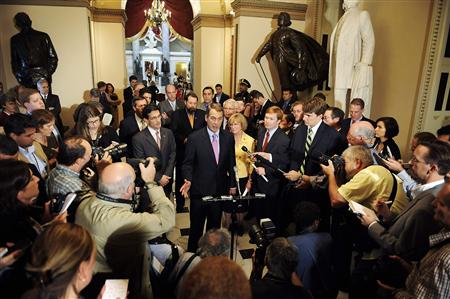 Watching the live coverage of the US house floor Monday night in Paris was a truly surreal experience. On my cable system I get both French and British news station, and every station from both countries was carrying live minute-by-minute coverage of the vote on the bailout package, waiting in suspense and watching the vote tally. When the bill didn't pass, there was absolute panic over here. The news anchors were absolutely shocked, as were the commentators.
It really underlined how much the European economy still depends on the American economy. As Angela Merkel pointed out yesterday, this crisis is a problem created by the United States, and the United States is the only one who can solve it. So Europe is now in the position of having to sit back and wait for the United States to take some action as it reels from a painful crisis that is not of its own making. As the saying goes, when America sneezes, the world catches a cold. But what happens when America refuses to take any medicine?
Monday, 29 September 2008
Bank Bailouts Come to Europe
Though just recently the European Central Bank said smugly that Europe would never see the kind of bailouts currently going on in the US, as many as predicted it now seems clear Europe will not be immune from the crisis. Yesterday brought the news that Belgian-Dutch group Fortis is being nationalized by the Benelux nations and British mortgage lender Bradford & Bingley is being nationalized by the UK government.
Though the UK was the first country to see a big bank bailout with the nationalization of Northern Rock, since the US institutions such as Lehman Brothers and AIG started started dropping like flies, Europe's banks had held firm. But no longer. Fortis is the first major continal European bank to falter.
Now analysts are saying the next phase of bank bailouts are likely to be seen in Europe. Joseph Kraft, head of Japan capital markets at Dresdner Kleinwort, told Reuters today,"It's definitely moving towards Europe. It's the beginning of the end and a necessary step, so we should see more institutions nationalised, absorbed or going into default."
At the same time it appears the US congress has been able to work out a deal with which they can approve the $700 billion bailout plan for the struggling banks.
Though the UK was the first country to see a big bank bailout with the nationalization of Northern Rock, since the US institutions such as Lehman Brothers and AIG started started dropping like flies, Europe's banks had held firm. But no longer. Fortis is the first major continal European bank to falter.
Now analysts are saying the next phase of bank bailouts are likely to be seen in Europe. Joseph Kraft, head of Japan capital markets at Dresdner Kleinwort, told Reuters today,"It's definitely moving towards Europe. It's the beginning of the end and a necessary step, so we should see more institutions nationalised, absorbed or going into default."
At the same time it appears the US congress has been able to work out a deal with which they can approve the $700 billion bailout plan for the struggling banks.
Friday, 26 September 2008
Global Economic Crisis: France to the Rescue?
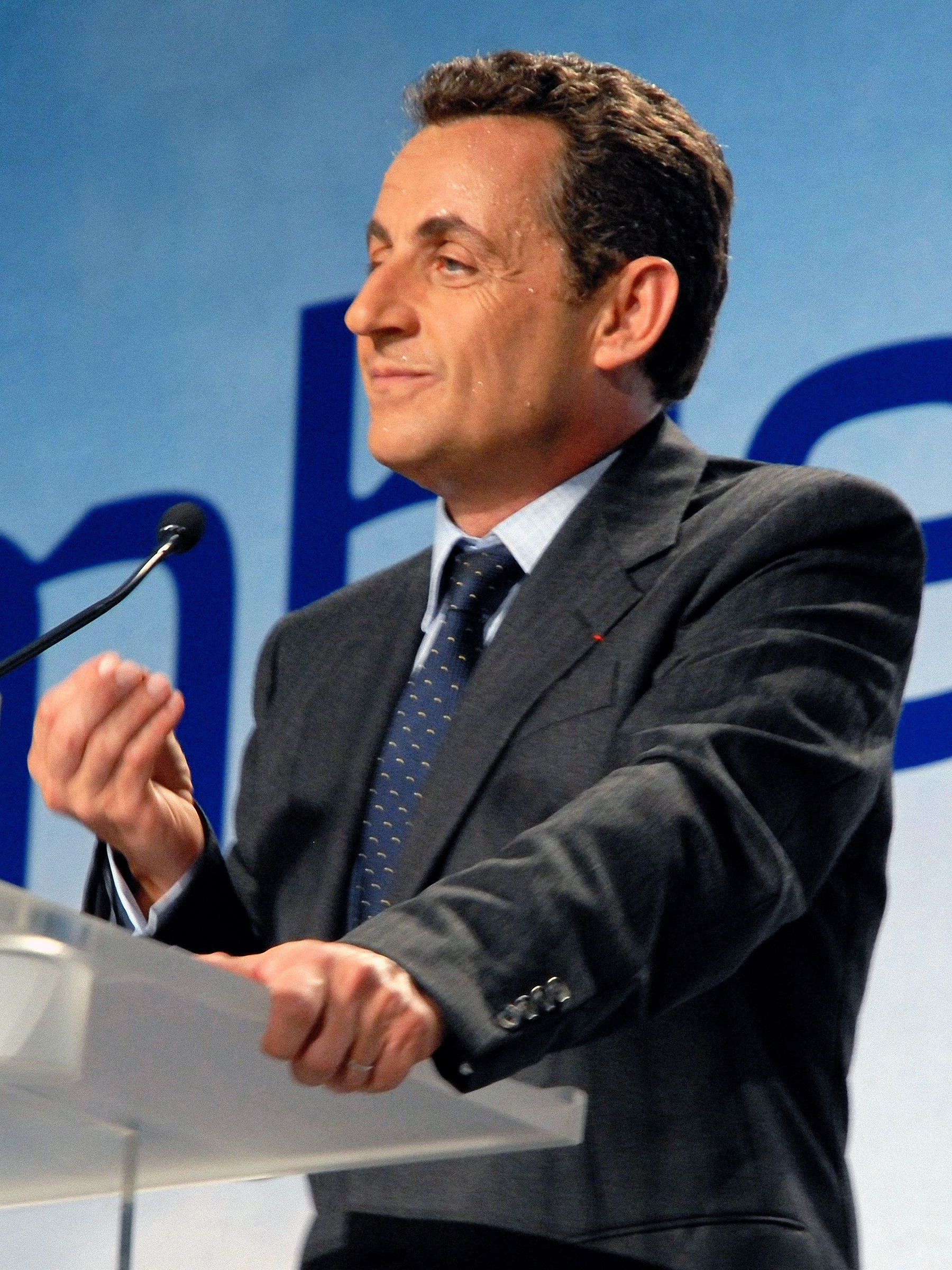 Over the past week I have been wondering if the current global economic meltdown, caused in part by the lack of US regulation over the financial services industry over the past decade, would have an impact on the way Europe's political winds are currently blowing. Judging from French president Nicolas Sarkozy's speech in Toulon yesterday, it would appear that for its part at least, the French right does not intend to scale back its ambitious plans for liberalizing reforms in France. But at the same time, Sarkozy intends to use the example of the crisis to sell to the Anglo-Saxon world a more Gallic system of economic regulation. The jist of his speech, it would seem, is that he wants to bring France's economy more toward liberalization and to bring the UK/North American economy more toward regulation, and perhaps the two can meet in the middle.
 The past few years in Europe have seen a fundamental shift toward the right, as Europeans grow anxious about generous social welfare programs that now seem unable to sustain themselves over the long term. First, Angela Merkel's Christian Democrat party wrested power from the socialists in Germany through a coalition goverment. Then Nicolas Sarkozy handily beat the socialist candidate Segolene Royal in the French presidential election last year. Italy's brief period with a leftist prime minister came to an abrupt end earlier this year with the return of Silvio Berlusconi. And in the UK, Conservative leader David Cameron seems likely to lead the Tories to a victory over Labour whenever the next election is called. The only big outlyer is Spain, where socialist prime minister Jose Luis Rodriguez Zapatero ousted the conservative government a few years ago and is still standing strong.
Both Merkel and Sarkozy have made reforming the country's social models a priority - undertaking a liberalization program for the economy. Sarkozy's has been the most aggressive. So with the near collapse of the credit market in the US exposing flaws in the free-market capitalsm that has prevailed in the Anglo-Saxon world over the past decade, I've wondered whether the ascendancy of the European right might be finished.
But Sarkozy seems to be quickly repositioning himself in the face of the crisis. The man the French left has dubbed "Sarko l'Americain" lambasted the US-inspired lack of regulation in the last few years yesterday, saying that the extreem free-market deregulation undertaken by the Bush adminsitration, "was a folly whose price is being paid today."
In his speech yesterday he warned Europe that it cannot escape shock waves from the US financial crisis and that to protect its future, it must take the initiative in rewriting worldwide banking rules to end the "folly" of an under-regulated system he said is now "finished."He said that at the EU's next meeting he would, as the current holder of the European presidency, propose swift action for the EU to tighten controls over European banks. And he said that the world's major parties should gather at a special summit before the end of the year and develop an entire new monetary and financial framework to replace the U.S.-dominated Bretton Woods system set up in 1944.
 So, I wouldn't count the European center-right out yet. After all, their opposition, European socialism, is largely adrift ideologically these days. If the European center-right can position itself as the political movement that can look out for Europe's interests during this crisis and strongarm the US into increasing regulation, it could end up even stronger from this crisis than it started. I have yet to see any reassuring plan of action from Europe's socialists.
Subscribe to:
Posts (Atom)