 By all accounts, the speech delivered by UK Prime Minister David Cameron this morning outlining his vision for a British disengagement with the EU was short on substance, contradictory and hackneyed. He mixed metaphors, made embarrassing errors reflecting a lack of EU knowledge and managed to enrage his EU partners even without having made specific demands.
But despite its rhetorical
flaws, Cameron’s speech will be one for the history books. With three words - "in/out
referendum" – Cameron has plunged the UK into four years of economic
uncertainty. The prime minister will have the dreaded ‘Brexit vote’, but only
in 2017, after the next election. With this he hopes to placate the fiercely eurosceptic
wing of his party while at the same time kicking the can down the road. But the
long time frame, business leaders and non-EU governments have warned, could be hugely damaging to the
British economy. Investors will likely be hesitant to invest in the UK when their
future in the European market is uncertain.
 Cameron defended his
timeline by saying that before have the referendum, he first has to try to negotiate a claw-back of powers for
the UK,
and then put that ‘new relationship’ to a vote. But this, as many have pointed
out, is a fantasy. EU leaders have already said a firm 'non' to the idea that the UK can
pick and choose what areas of EU law it will abide by.
Cameron defended his
timeline by saying that before have the referendum, he first has to try to negotiate a claw-back of powers for
the UK,
and then put that ‘new relationship’ to a vote. But this, as many have pointed
out, is a fantasy. EU leaders have already said a firm 'non' to the idea that the UK can
pick and choose what areas of EU law it will abide by.
The fact that what
Cameron is asking for is not feasible has been made clear for some time. But
despite this reality, Cameron tried to imply that it wasn’t just the UK,
but other EU countries that were demanding this repatriation of powers. He
quoted Angela Merkel’s often-repeated soft criticism of the welfare state, as if it somehow implied a desire to transform the EU. He pretended
that the Dutch Prime Minister Mark Rutte has said the EU should open talks
about repatriation of powers (he has not). He insisted that “other parties in
other European countries are arguing for powers to flow back to European states.”
But he did not name any of these parties, because none of them are mainstream
but are rather fringe parties.
Bizarrely, Cameron
lurched between insisting that everyone in the EU is asking for the same
claw-back of powers to then admitting that the core group of eurozone countries
will proceed with deeper integration. But this is no problem, he then asserted,
and people should be afraid of a two-speed Europe.
“Let’s stop all this talk of two-speed Europe, of fast lanes and slow lanes, of countries missing trains and buses, and consign the whole weary caravan of metaphors to a permanent siding,” he said with a smirk.
Just minutes after
issuing this decree, he said that the UK leaving the EU would be “a
one-way ticket, not a return.”
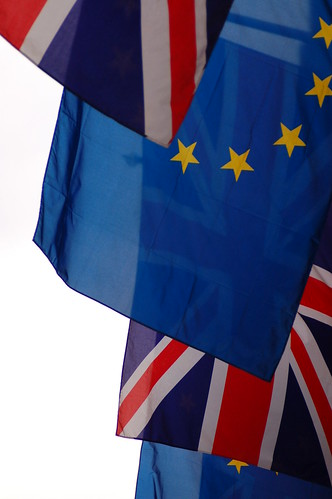
He then listed the fact that both the UK and Ireland aren’t part of the Schengen zone of passport-free travel, but failed to mention the fact that the UK forced Ireland to stay out because the two countries have an open border agreement. If Ireland were free to choose, it would be in Schengen.
Try as he might to
contortion facts to make it seem like the EU as a whole is demanding
dismantling, the fact is the only member state which is calling for this
wholesale revision of the EU treaties is the United Kingdom. Cameron is
notorious for his lack of allies on the continent, particularly after his bizarre veto of the fiscal pact in 2011. The idea that he could
single-handedly force all 27 other member states to open a grand discussion for
a new treaty purely for the UK’s
benefit is straight out of cloud coo coo land.
In fact much of the speech did not seem to comport with reality. Among its many flaws, the
speech was perhaps most noteworthy in its reflection of the embarrassing lack
of knowledge or engagement this government has with the EU. One of Cameron’s
few specific demands in the speech was to call for the establishment of a ‘single
market council’ configuration of ministers. “When the competitiveness of the
single market is so important, why is there an environment council, a transport
council, an education council but not a single market council?” he asked.
Apparently no one told
him that such a council already exists – it's called the Competitiveness
Council.
Europe's reaction
Europe's reaction
For their part, many on
the continent are greeting the announcement with a ‘don’t let the door hit you
on the way out.’ EU leaders reiterated that they want the UK to remain in the EU, but they
will not give in to blackmail to keep them in. “The EU does not need unwilling
Europeans,” said Italian Prime Minister Mario Monti. “We desperately need
willing Europeans.”
French foreign minister Laurent Fabius said, "If the UK decides to leave the EU, we will roll out the red carpet to businessmen," who want to leave the UK. The comment was particularly snarky considering Cameron said the same thing in the opposite direction last year in response to French president Francois Hollande's plans to raise the top tier tax rate to 75%.
French foreign minister Laurent Fabius said, "If the UK decides to leave the EU, we will roll out the red carpet to businessmen," who want to leave the UK. The comment was particularly snarky considering Cameron said the same thing in the opposite direction last year in response to French president Francois Hollande's plans to raise the top tier tax rate to 75%.
German foreign minister Guido
Westerwelle derided Cameron’s demands, saying, “we need more, not less
integration,” adding, “Cherry-picking is not an option.” Asked today if Cameron’s
speech heralds the beginning of the end for the European Union itself, European
Parliament President Martin Schultz laughed.
“Definitely not. It could be the beginning of the end of David Cameron. I get the impression that this speech was directed more at Britain’s Tories then the European Union. A prime minister who says I will hold a referendum, but only after the next elections, is eyeing the next elections and not the referendum. I find what Mr Cameron is doing very implausible.”
Schultz
added that Cameron “is playing a dangerous game for tactical, domestic
reasons.”
Among people here in Brussels lower down the hierarchy who don’t have to be so diplomatic,
I’m hearing much more exasperation expressed toward a confusing and contradictory UK which is
slowing down EU progress. An increasing number of my continental friends here,
both EU workers and those with jobs unrelated to the EU, have come to the
conclusion that the EU would be better off without the UK, and that the added
value of having the UK as a member does not outweigh the roadblock that the UK
now presents to moving forward.
For many, the UK has now begun to feel like an anchor weighing
Europe down. This is certainly not yet the
majority opinion here, and most people want to see the UK remain in
the union. But as this drama continues, over the next five painful years no
less, whatever good will remains for the UK
in Europe may quickly evaporate.

2 comments:
Excellent critique & analysis
@BenC42
Interesting. Do you think it will have an effect on the Scotland independence referendum? I assume the threat of "independent Scotland might not be accepted to the EU" will have much less power if the unified UK might also not be in the EU, and any kind of "why rock the boat? things are going reasonably well here" will now be impossible with this uncertainty.
Post a Comment