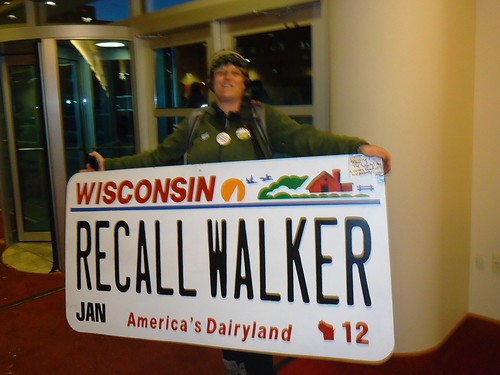
The US presidential primary race has attracted its usual amount of fascination here in Europe, and yesterday’s developments - with the Iowa race being re-called for Santorum and Rick Perry dropping out - were front page material. But behind the spectacle of the drawn-out US primaries, there is a far more interesting story going on in the state capitals.
Of course it’s not surprising that the European media is ignoring these huge developments at state level, because the Washington beltway media has also ignored them. They also ignored the unprecedented political revolution in 2010 that the recent events are a reaction to. While in Europe the media tends to ignore ‘federal’ (EU) politics and focus only on member state politics, in the US it is the opposite. The US media (even local state media) tends to focus on federal politics in Washington and there is little interest in what goes on in state capitals.
Thus, when the Republicans enjoyed an unprecedented victory in the 2010 midterm elections, the focus was almost entirely on the fact that they had taken control of the US House of Representatives. What was largely ignored was the fact that they had at the same time taken over state legislatures with unprecedented majorities – giving Republicans the most power in state governments they have had in decades. Republicans wrested six governorships from Democrats, giving them control of 30 of the 50 state executives. Five states saw both legislative chambers (state senate and state house) switch from Democrat to Republican majorities. In seven other states they gave themselves control of the entire legislature by picking up huge majorities in an additional chamber. The elections left Republicans controlling the entire government of half of US states, leaving them with Hungary-like majorities capable of passing whatever state legislation they like.
Showing posts with label abortion. Show all posts
Friday, 20 January 2012
Wednesday, 27 July 2011
Ireland's dramatic fallout with the Catholic Church
The Vatican took the unprecedented step of recalling its ambassador to Ireland on Monday following a fiery speech from the country's prime minister denouncing the church for covering up cases of child sex abuse. The row is an indication of just how much Ireland, once a loyal foot soldier for the pope, has changed over the past two decades.The fiery speech on the floor of the Irish Parliament by Prime Minister Enda Kenny last week was in reaction to the government's latest report on sex abuse in the Irish church. The report found that the Vatican had deliberately tried to downplay and cover up the rape and torture of children by priests in Ireland, and found that it was doing so as recently as 2009. It also found that the Vatican was trying to interfere with the Irish government's investigation into the matter. This was apparently all too much for Kenny. Denouncing the "dysfunction, disconnection, elitism and narcissism" of the Vatican, Kenny told the parliament:
"This is not Rome. Nor is it industrial-school or Magdalene Ireland, where the swish of a soutane smothered conscience and humanity and the swing of a thurible ruled the Irish-Catholic world. This is the Republic of Ireland 2011. A republic of laws, of rights and responsibilities; of proper civic order; where the delinquency and arrogance of a particular version, of a particular kind of 'morality,' will no longer be tolerated or ignored."
Friday, 16 July 2010
Dutch get green light to ban foreigners from coffee shops
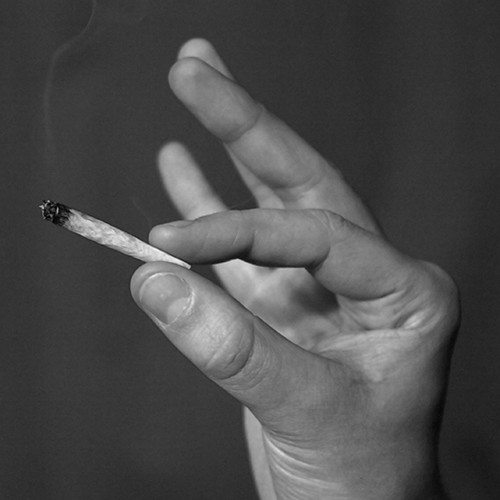
The Netherlands has long been known, particularly by many Americans, as a drug tourism destination. For years, the Dutch have complained that while they support the decision to end the prohibition on marijuana use, the fact that other countries don’t have the same policy means the country has become a magnet for wacked-out partiers and troublemakers.
One Dutch town decided it had had enough, and it banned foreigners from its ‘coffee shops’, the name for establishments that sell marijuana. That town is Maastricht, which says it is particularly vulnerable to drug-tourism because of its geography in the thin Dutch tail at the Southeast of the country. Sandwiched between Belgium and Germany, Maastricht, much like its border neighbor Breda, has gained a reputation as the place where Belgians, French and Germans go to buy weed. So Maastricht banned its coffee shops from selling to foreigners, and when a coffee shop was shut down for selling marijuana to two non-Dutch EU citizens, that coffee shop sued.
Right from when they established the law, Maastricht must have known they would have a legal fight on their hands. Banning EU citizens from other countries from consuming a product which Dutch citizens can consume is a blatant violation of EU free movement law, which stipulates that EU citizens must be given equal treatment to native citizens in any EU country. This right is perhaps the cornerstone of the European Union.
One Dutch town decided it had had enough, and it banned foreigners from its ‘coffee shops’, the name for establishments that sell marijuana. That town is Maastricht, which says it is particularly vulnerable to drug-tourism because of its geography in the thin Dutch tail at the Southeast of the country. Sandwiched between Belgium and Germany, Maastricht, much like its border neighbor Breda, has gained a reputation as the place where Belgians, French and Germans go to buy weed. So Maastricht banned its coffee shops from selling to foreigners, and when a coffee shop was shut down for selling marijuana to two non-Dutch EU citizens, that coffee shop sued.
Right from when they established the law, Maastricht must have known they would have a legal fight on their hands. Banning EU citizens from other countries from consuming a product which Dutch citizens can consume is a blatant violation of EU free movement law, which stipulates that EU citizens must be given equal treatment to native citizens in any EU country. This right is perhaps the cornerstone of the European Union.
Subscribe to:
Posts (Atom)