Showing posts with label Barack Obama. Show all posts

Friday, 26 May 2017

Hurricane Trump comes to Brussels

While the current US president bullied and berated in Brussels, Obama awed and inspired in Berlin. Which man truly represents the American people?

Perhaps no image of Donald Trump's visit to Brussels will be more enduring than the now-notorious video of him pushing the prime minister of Montenegro out of the way so that he could get to the front of a shot of NATO leaders.

As an US citizen, I felt a deep sense of shame watching the incident. There was something painfully American about it. The worst part was his expression after the shove - the brash sense of entitlement, the obscene strutting. In just a few seconds Trump had confirmed the stereotypes that so many Europeans have about Americans. And it was consistent with his behavior during the entire Brussels visit - bullying, gloating, preening.

Tuesday, 17 January 2017

May's Brexit vision depends on the goodwill of Australians

Brexit Britain will cut itself off from Europe and 'turn to the world'. But does the world want them? In Australia, feelings are ambivalent.

This morning in London, Theresa May will make what is probably the most important speech of her political career.

The British people "voted to leave the European Union and embrace the world" she will say, outlining a vision for the UK to completely cut itself off from the EU and instead focus on rebuilding a globally-focused maritime trading empire. The first focus will be on the countries which share a monarch with Britain - Australia, New Zealand and Canada. 

I've been travelling through Australia for the past two weeks as part of a month-long visit, and I've been asking Australians how they feel about being part of Britain's glorious new trading vision. The reaction has largely been bemusement. But more on that later.

Wednesday, 31 August 2016

The rank hypocrisy of Obama’s ‘Appletax’ reaction

The US claims the EU's Apple decision is “political”, but it is the American reaction that is guided by politics. And US disrespect for EU law has a long history.

In the summer of 2001, the US government was furious with the European Union.

Iconic American firm General Electric had just seen a multi-billion dollar merger with Honeywell, which had already been cleared by the US, blocked by the European Commission on competition grounds. US politicians were furious, business leaders were flabbergasted. 

Two years later, the newly-emboldened Commission struck again. It slapped a €497 million fine on American tech giant Microsoft for abusing its dominant market position. Again, there was much sabre-rattling in Washington.

Saturday, 23 April 2016

Obama bursts Britain’s post-imperial hubris

The crux of the Brexiters' argument is an anglosphere alliance. Yesterday the US president told them it’s not going to happen.

That sound you heard yesterday across the United Kingdom was the collective wince of a nation finally made to accept an uncomfortable truth – he’s just not that into you.

Americans are largely unaware of what’s happening with the Brexit debate, but whether they know it or not they are central to the case for the UK seceding from the European Union. They are also largely unaware that they are in a “special relationship” with the UK, a term which, as I’ve written before, is obsessed over in the UK but unknown in the US.

For years US politicians have indulged the British in their fantasies of a two-way relationship between equal partners. But in light of the severe risk a Brexit presents, Barack Obama had no choice but to fly to the UK and finally break the bad news to the Brits.

Wednesday, 3 February 2016

Please, Europeans, stop obsessing over the US election

"American exceptionalism itself has something of a Sunset Boulevard feel to it, a black comedy where a faded silent movie star believes she is still the most luminous presence on the screen."

Over my decade in Europe I've seen a lot of BBC correspondents come and go from their American postings. But none has seemed to grasp the real affliction facing America like Nick Bryant (quoted above).

His observations during this absolute farce of an election season have been particularly spot-on. And Europeans, who tend to be far more interested in American politics than they really should be, should give him a read.

Thursday, 8 August 2013

Russia's '1936 games'?

Relations between the United States and Russia seemed to hit a post-cold-war low this week when president Barack Obama cancelled a bilateral meeting with Vladimir Putin ahead of next month's G20 summit in St. Petersburg.

 After years of tension over Syria, missile defense and human rights, Russia's decision to grant asylum to NSA leaker Edward Snowdon was the straw that broke the camel's back. But the real low point in relations may have come during an appearance this week by the US president on America's most watched comedy show.

 During an interview on The Tonight Show on Tuesday (6 August), the US president sat impassively as the show's long-time host Jay Leno compared the Russian regime to the Nazis and Vladimir Putin to Hitler. Leno was referring specifically to Russia's recent passage of a law banning the ‘promotion' of homosexuality and an accompanying rise of gruesome vigilante attacks on Russian gays by far-right groups.

Tuesday, 11 June 2013

US snooping, seen through a European PRISM

There are few things that can unite the quarrelling factions of the European Parliament, but somehow US President Barack Obama managed to accomplish it this morning. One by one, MEPs from various political factions denounced in the strongest terms the recent revelations of US government access to user activity data from internet giants like Google, Facebook and Microsoft – a programme that went under the codename PRISM.

Interestingly, it was the assurances the US President gave to the American people this weekend that seemed to infuriate the European lawmakers the most. The PRISM programme “does not apply to US citizens and it does not apply to people living the United States,” he told a press conference on 7 June. 

These words may have reassured many Americans, but they have put America's allies in an awkward position. Sites like Google and Facebook are global, after all, and widely used in Europe. If they aren't spying on Americans' internet use, then that means they are spying on people in other countries - including allies in Europe.

“What is coming from other side of the Atlantic is very worrying because they are justifying this system by saying it is not applicable to US citizens, only to foreigners,” Belgian Liberal MEP Guy Verhofstadt said in Strasbourg this morning. “Who are the foreigners? I think we are the foreigners, the Europeans.”

Wednesday, 10 April 2013

Thatcher's rose-tinted American legacy

The American media’s reverential depiction of Margaret Thatcher this week says much about how the US and UK differ when looking at history.

As I’ve watched the international media coverage of the death of Margaret Thatcher over the past few days, I’ve almost felt like we're talking about different women.

In America, the wall-to-wall coverage – quite unusual for a foreign leader – has been downright worshipful. This tone has been matched by politicians on both sides of the aisle. "The world has lost one of the great champions of freedom and liberty, and America has lost a true friend,” declared Barack Obama on Monday. “She helped restore the confidence and pride that has always been the hallmark of Britain at its best."

Here in continental Western Europe, where Thatcher was far less popular, the coverage couldn’t be more different. One French politician remarked that Thatcher will see the miners she put out of work in hell, while German MP Michael Roth declared "her radical market policies and her Europe-sceptical politics will certainly not be missed.”

In the UK the coverage has been more nuanced. As people say, she was a bit like Marmite – you either loved her or you hated her. The political persuasions of British papers has determined which side they’ve chosen to emphasise. But no media outlet has ignored the fact that she split opinions. Even Conservative Prime Minister David Cameron’s statement to the Parliament on Monday acknowledged this.

Thursday, 8 November 2012

A relief for Europe - but will gridlock persist?

Anxious Europeans have been able to breathe easier the past two days, after Tuesday’s reelection of US president Barack Obama. But the relief has much more to do with the defeat of Mitt Romney than with Obama himself.

Europe isn’t the only place feeling relieved because of a dislike for Romney. Outside Israel, there probably wasn’t one country on the globe that was excited about the prospect of a Romney presidency.

The Republican candidate's dangerous rhetoric seemed almost guaranteed to launch a war with Iran which no US allies would have been keen to sign up to. He had described Russia as America’s “greatest geopolitical foe” and had spoken of China as if it was the evil empire, promising to “get tough” with them in a way Obama hadn’t (although he never provided details about what that would mean). Latin America recoiled at his extreme anti-immigration rhetoric, and Africa was less than excited about his promises to cut US overseas aid.

In Brussels, there is a sense that long-stalled bilateral issues that were waiting until the resolution of the election can finally be taken off the back burner. There is (perhaps naïve) hope that a second-term Obama can show up to the UN climate summit in Doha next month with a reverse-course on the US intransigence in taking action to combat global warming. Negotiations on a US-EU free trade deal can now begin. Most importantly – fears that Europe was about to see a return to the trans-Atlantic tensions that marked the George W. Bush era have now been allayed.

Tuesday, 6 November 2012

The case for four more years? Look at the previous four

Rachel Maddow had an excellent review of Obama's first term last night. It's bizarre that anyone would say the American president "hasn't done anything" in his first term. Historic legislative actions were taken during the first two years. And even after the Republican takeover of the US Congress in 2010 ground all legislative activity to a halt, Obama still took important executive decisions over the following two years that could bypass the congress. Let's take a little stroll down memory lane, shall we?


Europeans are very anxious about the result of today's election in the US. It would appear that it is now up to 8 million people in Ohio to decide the fate of the world. Hopefully they will make the right decision.

Wednesday, 25 July 2012

Romney's 'apology for the apology' tour

Mitt Romney has arrived in London today, the first stop on a three-country tour meant to shore up his foreign policy credentials. His tour opened with a remarkably tone-deaf gaffe by a campaign staffer, who told British newspaper The Telegraph that Barack Obama cannot understand the common “Anglo-Saxon heritage” of the US and the UK.

The advisor was likely using the term in the continental European context, which refers to the free-market economic heritage of English-speaking countries. He was likely trying to make some 'Obama as Socialist' characterisation. But this definition is unknown in the English-speaking countries themselves, where the term is a seldom-used ethnic description of English descent (ie, from the Germanic tribes who settled in Southwest England). So it ended up just coming off as shockingly racist. Stephen Colbert hilariously summed up the bemused reaction of Americans to the comment.

It’s a bad start to what is a very important foreign tour for Romney. Over the next few days he will be meeting with virtually every high level politician in the UK. On Friday he will attend the Olympics opening ceremony, surely excited about the prospects for his horse-dancer in the dressage competition.

The Republican presidential candidate’s choice of three countries for this visit is highly significant. After his visit to the UK he will fly to Israel, where he will make a series of high-profile appearances. He will then finish his tour in Poland. All three are countries which the Romney campaign has accused the Obama administration of at best ignoring, and at worst insulting.

Monday, 25 June 2012

As US awaits "Obamacare" court ruling, some US-EU comparisons

This week the US Supreme Court will issue a landmark ruling on the constitutionality of “Obamacare”. It is still a mystery what the conservative-dominated court will decide.

There is speculation that the court may rule that just parts of the legislation are unconstitutional. The main provision everyone is watching is the requirement for all people to get health insurance or face fines. Republicans are arguing that it is illegal to force people to buy health insurance. But Democrats say that throwing out even just this one piece of the legislation will make the whole thing fall apart.

The healthcare reform changed the law to make it illegal for insurance companies to deny someone coverage because they are sick. Experience has shown that such a requirement has to be coupled with a requirement for everyone to have health insurance – otherwise healthy people would wait until they get sick to buy coverage. Eliminating the requirement to purchase insurance could send the whole system into the so-called “insurance death spiral” – where sick people suddenly flood the insurance market and send costs soaring.

Friday, 18 May 2012

Obama gets tough with Merkel, but is it too late?


Now that German Chancellor Angela Merkel has been hobbled by the loss of her key ally in France, it seems the Obama administration is wasting no time in pressuring her into a course correction. The chorus of anti-austerity (and by extension anti-Merkel) voices is growing louder by the minute.

At next week’s G8 summit at Camp David, Barack Obama is reportedly going to put pressure on Germany to drop its insistence on the Eurozone economies adopting a severe austerity regime. He will ask Merkel to instead pursue a policy of stimulus and growth. He will apparently do so in no uncertain terms – warning Merkel that if she does not change course quickly she risks plunging the world into another deep recession that would be even worse than the Lehman Bros collapse in 2008.

The Guardian reports that the Obama administration is expected to try to forge close ties with new French President Francois Hollande at the first meeting of the two leaders on Tuesday. They are keen to rapidly establish Hollande as an ally in exerting pressure on Merkel to change course.

Obama already has the support of UK Prime Minister David Cameron, who while unwavering in his demand for austerity at home, publicly chastised the German chancellor in a speech yesterday for her lack of flexibility. Saying that the eurozone either had to “make up…or break up”, he said urgent steps are needed quickly to prevent an economic implosion of epic proportions in the coming weeks. He will reportedly tell Merkel this weekend to use Germany's wealth to rescue Southern Europe before it is too late.

Friday, 20 January 2012

The biggest American political story Europeans haven't heard of

The US presidential primary race has attracted its usual amount of fascination here in Europe, and yesterday’s developments - with the Iowa race being re-called for Santorum and Rick Perry dropping out - were front page material. But behind the spectacle of the drawn-out US primaries, there is a far more interesting story going on in the state capitals.

Of course it’s not surprising that the European media is ignoring these huge developments at state level, because the Washington beltway media has also ignored them. They also ignored the unprecedented political revolution in 2010 that the recent events are a reaction to. While in Europe the media tends to ignore ‘federal’ (EU) politics and focus only on member state politics, in the US it is the opposite. The US media (even local state media) tends to focus on federal politics in Washington and there is little interest in what goes on in state capitals.

Thus, when the Republicans enjoyed an unprecedented victory in the 2010 midterm elections, the focus was almost entirely on the fact that they had taken control of the US House of Representatives. What was largely ignored was the fact that they had at the same time taken over state legislatures with unprecedented majorities – giving Republicans the most power in state governments they have had in decades. Republicans wrested six governorships from Democrats, giving them control of 30 of the 50 state executives. Five states saw both legislative chambers (state senate and state house) switch from Democrat to Republican majorities. In seven other states they gave themselves control of the entire legislature by picking up huge majorities in an additional chamber. The elections left Republicans controlling the entire government of half of US states, leaving them with Hungary-like majorities capable of passing whatever state legislation they like.

Friday, 4 November 2011

Who is the villain in the eurocrisis movie?

Cannes has seen its fair share of cinematic flops over the years. But this red carpet-laden city on France's south coast has never seen a political flop like the one it witnessed over the past two days. It had all the elements of an edge-of-your-seat political thriller: high stakes, sudden plot twists, personal rivalries and looming global disaster. But who is the villain in this particular script? Today there was plenty of finger-pointing to go around.

The leaders of the world's 20 richest countries intended to come to Cannes to come up with a solution to global economic crisis which is quickly spiraling out of control. But a shock announcement Tuesday from the Greek prime minister that he would hold a referendum on Greece's acceptance of the bailout package worked out last week changed all that. The resulting outcry threw the Greek government into disarray, putting it near collapse - which could have precipitated a global emergency. The leaders of the 20 richest countries in the world ended up working out nothing, spending the entire summit glued to their blackberries waiting for news from a tiny country in the Mediterranean.

The leaders left Cannes tonight with nothing to show for their meeting. No plan to save the eurozone, no funding, and no consensus. Indeed the G20 summit has ended with the world in a worse state than it was in when it started. Europe, and the world, could be just days away from economic collapse if the Greek government collapses tonight in a no-confidence vote scheduled for midnight.

Thursday, 3 November 2011

Was it all for nought?

Greek Prime Minister George Papandreou is getting an earful today at the G20 summit in Cannes from world leaders furious at his shocking and sudden call for a referendum on the Greek bailout on Tuesday. The surprise announcement sent markets into a tailspin and seemed to, in an instant, eviscerate the deal painstakingly crafted last week by European leaders to save the euro. Now for the first time EU leaders are today openly talking about Greece leaving the Euro. Was last week's all-night negotiating session all for nothing?

Papandreou is facing the same level of fury at home, much of it coming from within his own party. His own finance minister broke ranks shortly after the announcement and reacted with incredulity to the idea of calling a referendum. Papandreou's Socialist government is now hanging by a thread as it looks like he will have to step down or face an imminent vote of no confidence.

Reports coming out of the G20 meeting this afternoon indicate that Papandreou may have been convinced to cancel his call for a referendum. But whether he cancels the referendum or his soon-to-come replacement does, it will only serve to enrage the Greek public further. Promising them a referendum and then snatching it away is undoubtedly worse than having never promised a referendum at all.

Wednesday, 26 October 2011

US-EU trade war looming over airline emissions

This week the US House of Representatives passed a bill that would ban US airlines from participating in the EU's emissions cap-and-trade scheme. It is just the opening shot in what is likely to be a nasty trade war between the two blocs over the coming months. The winner will determine whether 72 million tonnes of CO2 are emitted into the Earth's atmosphere over the next eight years.

While international climate talks have stalled the EU has pushed ahead with its own unilateral action on climate change, the keystone of which is the Emissions Trading Scheme (ETS). Under the scheme industries with heavy emissions are capped on the amount of greenhouse gases they can produce, and if they want to emit more they must buy credits from others who are using less than their cap. The scheme is already up and running, but starting in January airlines will be included. The decision to include airlines in the scheme was taken back in 2008.

This will mean all airlines that fly in or out of the EU must purchase carbon permits. The plan has not met with significant resistance from the European airline industry, but it has met ferocious resistance from American, Indian and Chinese airlines. US Airlines have challenged the law at the European Court of Justice, but the court has already indicated it will rule against them. So the airlines have now turned to the US Congress, and they have found a receptive ear.

Wednesday, 14 September 2011

US tells Europe to act quickly on euro crisis

Barack Obama delivered some sobering words to Europe this week, saying the world economy will remain weak and destabilised unless EU leaders take action to stem the Euro crisis. It's not the first time the US has expressed frustration with what they say is a slow and inadequate European response to the situation, but the president's words were the most stark to date.

Obama said he will put the issue at the top of the agenda for the G20 meeting in France in November. "[European leaders] are taking some steps to slow the crisis but not solve the crisis," the president told a group of journalists at the White House. "The bigger problem is what happens in Spain and Italy if the markets keep making a run at those very big countries?" Few would disagree with the president on these sentiments, but it might be hard to take from a country which almost deliberately drove itself to default because of its broken political system.

Tuesday, 2 August 2011

Is America too old to function?

One of the most frequent clichés I hear as an American living in Europe is that the US is a 'new country' while nations on this continent are 'old'. It is usually used to explain away American peculiarities, as if the US is a naïve child who just hasn't had the time to attain the wisdom of the more mature, centuries-old European states.

But however often it's repeated, this common wisdom is patently false. As a country, the United States is older than the vast majority of European states. At the time of the US declaration of independence in 1776, the states of Belgium, Germany, Italy, Finland, Romania, Slovakia, Greece and Latvia had all never existed yet in any form. And that's just to name a few. The fact is that European nations are actually quite young - and that is what makes them more agile in the face of modern problems than the United States.

Even the European countries which did exist in some form in 1776 - such as Spain, Portugal, the Netherlands and France - today barely resemble what they were at that time. The Kingdoms of France and Portugal in 1776 are now republics with completely different systems of government. And going in the other direction, the Dutch Republic in 1776 - a loose confederation of provinces - bears little resemblance to today's Kingdom of the Netherlands.

The US has had the same governing structure since 1789, the date that marks the founding of the current American republic with the adoption of the US constitution (which replaced the previous Articles of Confederation in place since 1776). The US has used the same government system since then. Contrast this with France - whose current republic has only been in place since 1958 – or the Federal Republic of Germany, which dates from 1949. Other founding dates of current European government systems include: Italy – 1947, Spain – 1978 and Poland – 1997.

In fact the only European governments that could legitimately claim to be older than the US government system are the constitutional monarchies of Britain, Denmark and Sweden – but even this is arguable since they have had significant constitutional changes over the past 200 years.
Wednesday, 20 July 2011

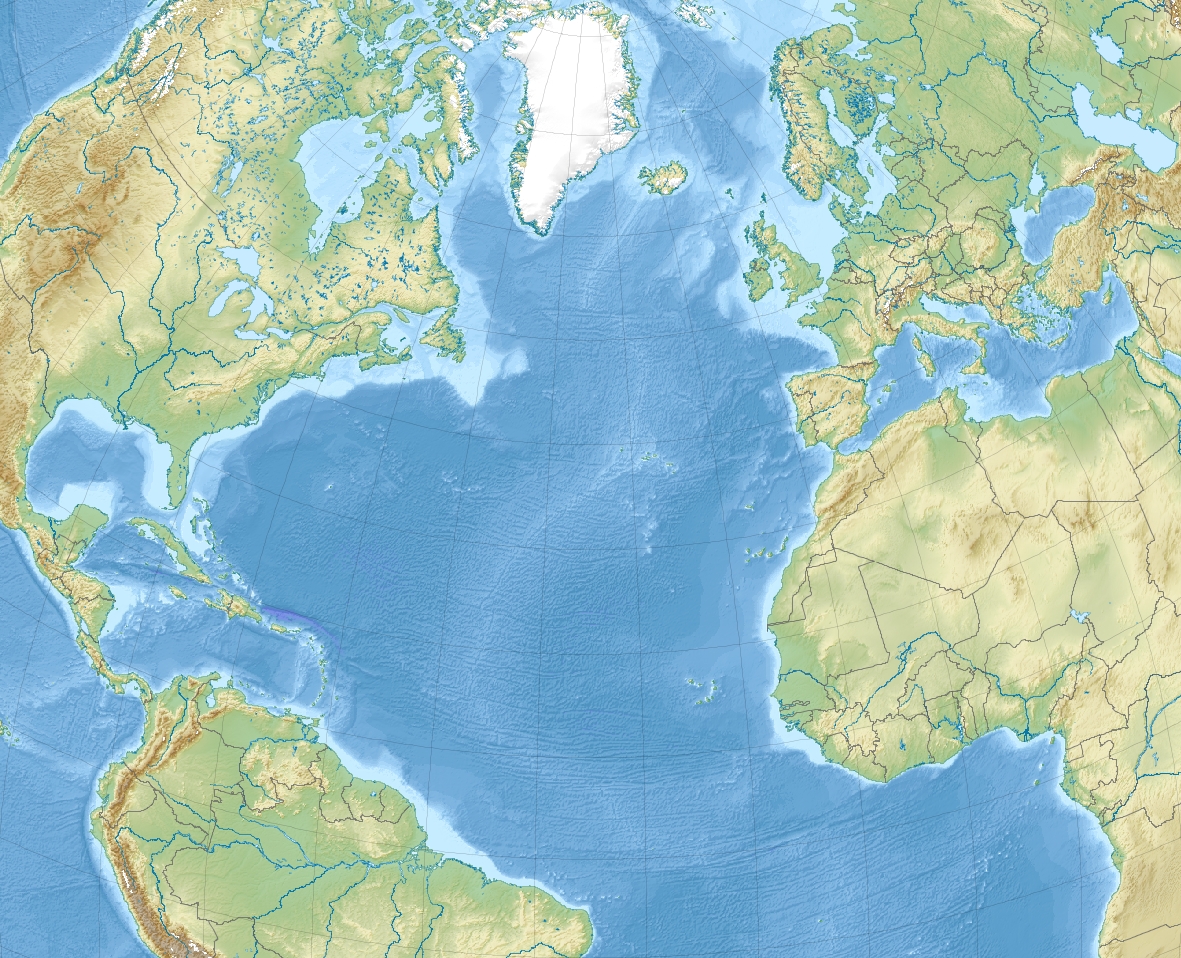
North Atlantic crisis: US, Europe edge toward economic disaster

Normally at this time of year, politicians on both sides of the Atlantic would be preparing for their August break. But there will be no relaxing getaways this year, in what is turning into probably the most anxiety-packed summer of my lifetime.

Both Europe and the US may be just days away from serious financial troubles. And if situations on either continent spin out of control, a worldwide economic panic could be ahead.

On both sides, there are obvious and straightforward solutions that could avert disaster. But in the US, the recent electoral success of a Tea Party movement that wants to see the US default on its debts has rendered the political process incapable of taking action. In Europe, the recent surge toward nationalism and a lack of political courage has rendered the EU incapable of confronting the debt crisis head on. It is a massive failure of the political systems of the Western world.